
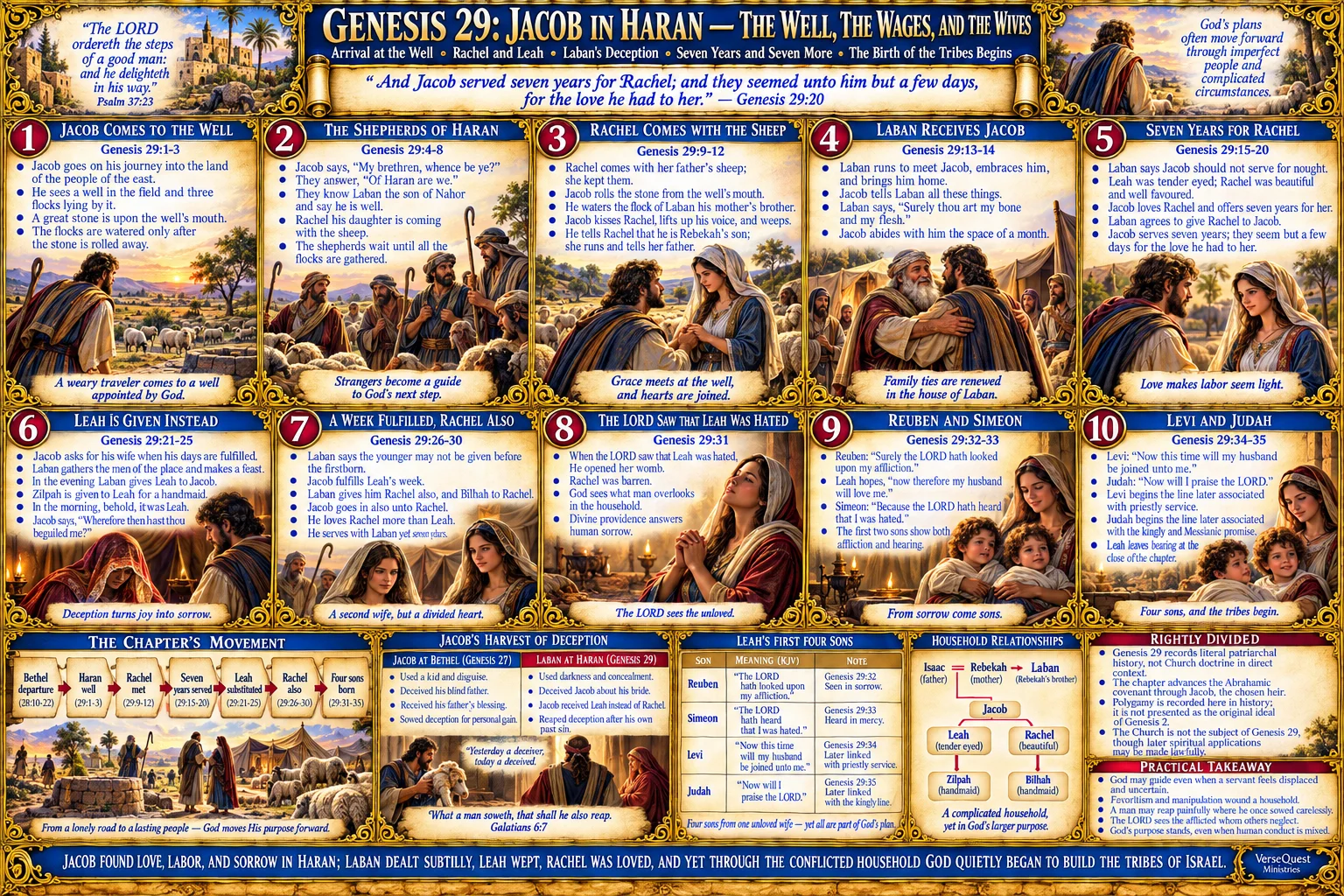
Genesis 29 – Jacob in Haran: Rachel and Leah, Laban’s Deception, Fourteen Years of Service, and the Birth of the Tribes Begins (KJV Bible Study Chart)
Explore Genesis 29 with this detailed KJV Bible study chart tracing Jacob’s arrival in Haran, his meeting with Rachel at the well, his agreement to serve Laban seven years, and the deception that gives him Leah instead. Follow Jacob through another seven years of service as the household becomes divided between Rachel and Leah. The chart also examines the LORD’s compassion toward Leah, Jacob’s favoritism, and the births of Reuben, Simeon, Levi, and Judah—the first sons in the developing family of Israel. It highlights the striking sowing-and-reaping parallels between Jacob’s earlier deception and Laban’s treatment of him while showing that God’s covenant purpose continues through imperfect people and painful circumstances. Ideal for Bible study, homeschool, Sunday school, sermon preparation, family studies, and patriarchal teaching.
$4.99
Description
Genesis 29: Jacob in Haran—The Well, the Wages, and the Wives is a detailed KJV Bible study chart tracing Jacob’s arrival in Haran, his meeting with Rachel at the well, his service to Laban, the deception involving Leah, and the beginning of the family from which the tribes of Israel will emerge. The chapter combines providence, love, labor, deception, family conflict, and God’s compassion toward the overlooked.
Jacob arrives in the land of the people of the east and finds a well surrounded by three flocks of sheep. After speaking with the shepherds of Haran, he learns that Rachel, Laban’s daughter, is approaching with her father’s flock. Jacob rolls the stone from the well, waters the sheep, kisses Rachel, lifts up his voice, and weeps. He identifies himself as Rebekah’s son, and Rachel runs to tell her father.
Laban welcomes Jacob into his household. After Jacob remains with him for a month, Laban asks what wages he desires. Jacob loves Rachel and offers to serve seven years for her. Scripture gives one of the chapter’s most memorable statements: “they seemed unto him but a few days, for the love he had to her.”
When the seven years are complete, however, Laban deceives Jacob. At the wedding feast he gives Leah to Jacob instead of Rachel. The deceiver of Genesis 27 now experiences deception himself. Jacob asks, “Wherefore then hast thou beguiled me?” The chapter illustrates the biblical principle later expressed in Galatians 6:7: “whatsoever a man soweth, that shall he also reap.”
Laban explains that local custom requires the elder daughter to marry before the younger. Jacob fulfills Leah’s bridal week and receives Rachel also, then serves another seven years. The household is now deeply divided. Jacob loves Rachel more than Leah, while Leah lives with the pain of being less loved.
Yet the LORD sees Leah. Genesis 29:31 declares that when He sees she is hated, He opens her womb while Rachel remains barren. Leah bears Reuben, Simeon, Levi, and Judah. Each son’s name reflects her sorrow, longing, hope, or praise. By Judah’s birth she declares, “Now will I praise the LORD.”
These sons become foundational to Israel’s future. Levi’s line will later be associated with priestly service, while Judah’s line will receive royal and Messianic promises.
Genesis 29 therefore shows God advancing His covenant purpose through an imperfect household. Jacob finds love and labor in Haran, but also discovers that deception produces painful consequences. Leah is neglected by man but seen by God, and through the conflicted family the beginnings of the tribes of Israel quietly emerge.
Genesis 29, Jacob in Haran, Jacob and Rachel, Jacob and Leah, Laban, Rachel at the well, shepherds of Haran, seven years for Rachel, Laban’s deception, Leah substituted, fourteen years of service, family favoritism, Leah hated, Rachel loved, Reuben, Simeon, Levi, Judah, tribes of Israel, sowing and reaping, divine providence, God sees the afflicted, Messianic line, patriarchal family
Genesis 29 begins with Jacob reaching the land of the people of the east after his encounter with God at Bethel. He arrives at a well where shepherds are waiting for all the flocks to gather before rolling away the large stone. Rachel approaches with Laban’s sheep, and Jacob immediately assists by rolling away the stone and watering the flock. Providence has brought Jacob directly into contact with the family from which he is to take a wife.
Jacob kisses Rachel, weeps, and tells her that he is Rebekah’s son. Rachel runs to tell Laban, who receives Jacob warmly and calls him “my bone and my flesh.” Jacob remains in Laban’s household for a month before the discussion turns to wages.
Jacob loves Rachel and offers seven years of service for her. Scripture says those years seem “but a few days, for the love he had to her.” When the agreed time ends, Laban holds the marriage feast but secretly substitutes Leah for Rachel. The darkness of the evening and bridal customs allow the deception to succeed.
There is a deliberate moral echo of Genesis 27. Jacob once used clothing, concealment, and his father’s impaired senses to deceive Isaac; now Laban uses concealment to deceive Jacob concerning the identity of his bride. Scripture does not explicitly say God caused Laban’s deceit as punishment, but the narrative strongly illustrates the principle that sinful methods often return painful consequences.
Laban explains that local custom does not permit the younger daughter to marry before the firstborn. Jacob completes Leah’s bridal week and then receives Rachel, agreeing to another seven years of service. The result is a divided household that immediately produces rivalry and sorrow.
Genesis 29:30 says Jacob loved Rachel “more than Leah.” Verse 31 then says the LORD saw that Leah was “hated.” Read together, the wording describes Leah’s painful position as the less-loved wife. God sees what Jacob’s preference has produced and opens Leah’s womb.
Leah’s first four sons reveal her emotional and spiritual journey. Reuben’s birth reflects her hope that Jacob will now love her. Simeon’s name connects with the LORD hearing that she is hated. With Levi, she hopes her husband will become joined unto her. When Judah is born, her focus turns upward: “Now will I praise the LORD.”
These sons become far more significant than Leah could yet know. Levi’s descendants later receive priestly responsibilities, while Judah becomes the tribe associated with kingship and ultimately the Messianic line.
Genesis 29 is literal patriarchal history, not Church doctrine. Polygamy is recorded as part of the fallen household situation, not presented as God’s original marital ideal. Yet through imperfect people, deception, sorrow, and divided relationships, God continues advancing the covenant line that will produce Israel and ultimately the promised Seed.
Genesis 29 is useful for teaching God’s providence in ordinary circumstances, the consequences of deception, patience in labor, family favoritism, the pain caused by divided affections, and God’s compassion toward those whom others overlook. It also provides important background for the formation of Israel’s tribes, Levi’s later priestly line, Judah’s royal and Messianic line, and Jacob’s years under Laban. The chart is valuable for personal Bible study, Sunday school, homeschool instruction, Bible institutes, sermon preparation, marriage and family studies, discipleship, patriarchal history, and lessons on integrity, patience, providence, and sowing and reaping.
King James Bible, Strong’s Concordance, Thompson Chain-Reference Bible, Treasury of Scripture Knowledge, Nave’s Topical Bible, Genesis 28–31 study notes, Jacob life timelines, Rachel and Leah comparison studies, patriarchal genealogy charts, maps of Haran and Padan-aram, twelve tribes of Israel charts, Levi and priesthood studies, Judah and Messianic-line studies, Galatians 6 sowing-and-reaping studies, biblical marriage and family studies, VerseQuest Genesis charts
Related products
-
Spritual Dryness
-
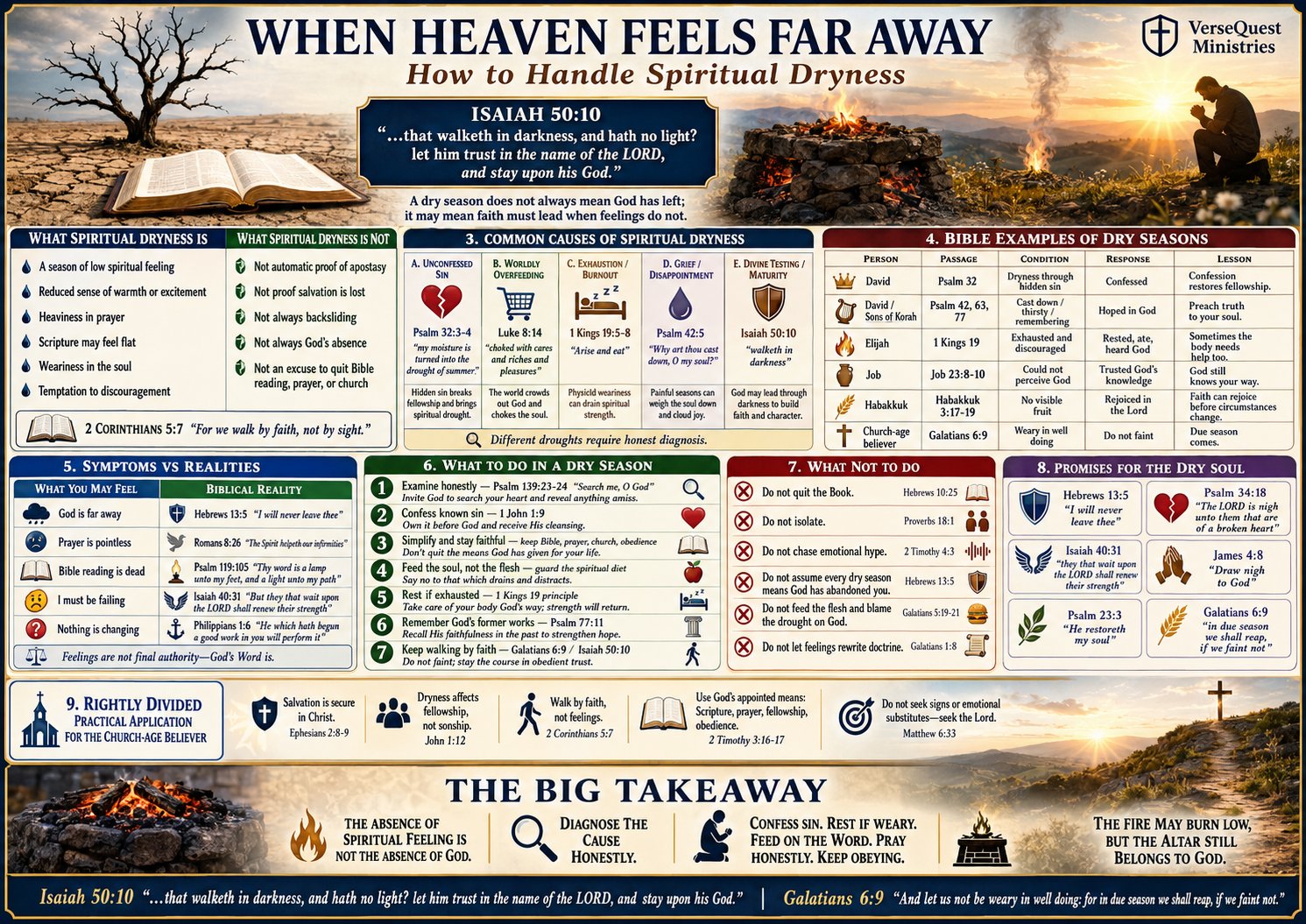
- When Heaven Feels Far Away – How to Handle Spiritual Dryness and Walk by Faith (KJV Bible Study Chart)
- Walk through spiritual dryness with this detailed KJV Bible study chart covering its causes, biblical examples, warning signs, promises, faithful habits, and the difference between feelings and truth.
- $3.99
- Add to cart
-
-
Cain and Abel
-
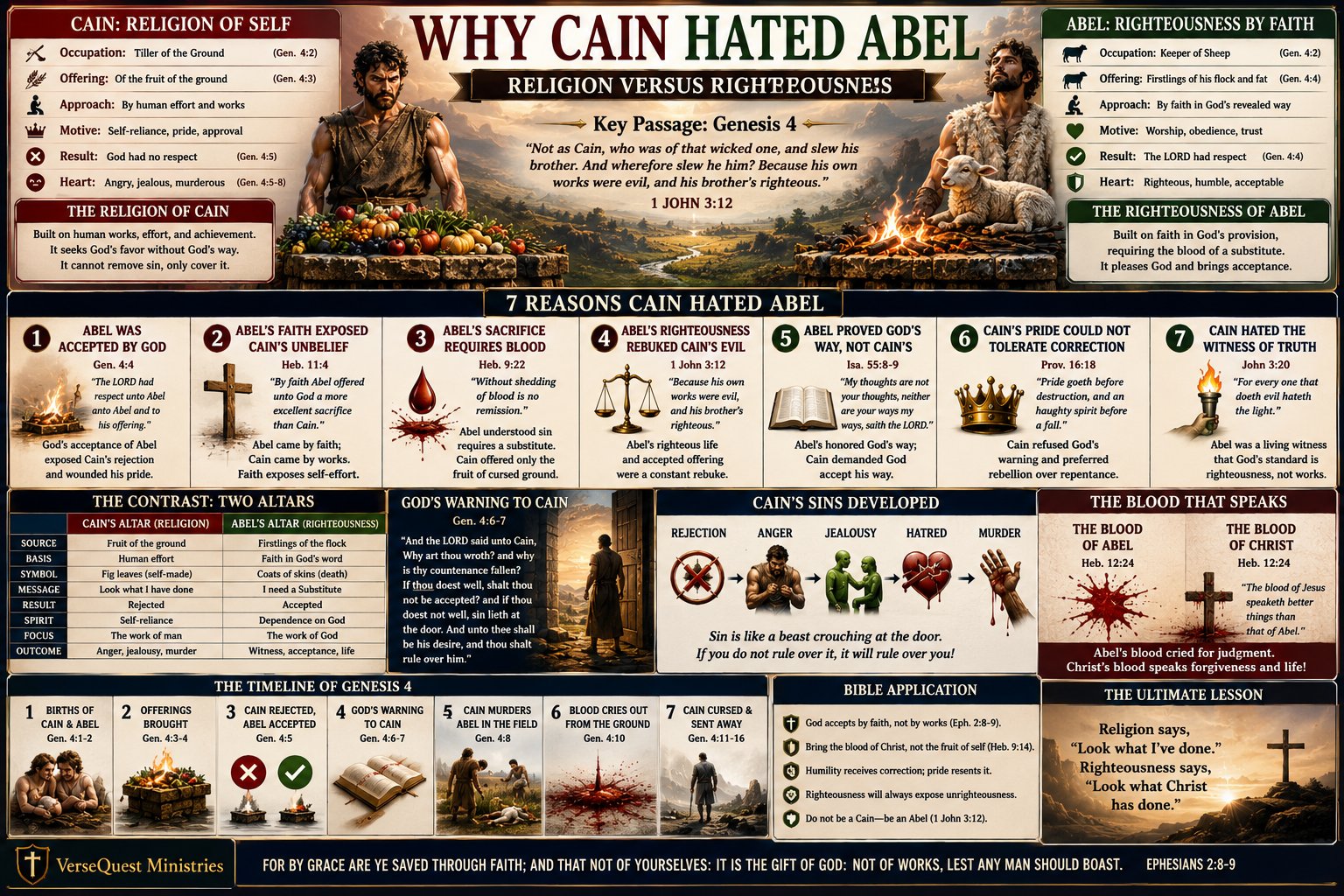
- Why Cain Hated Abel Bible Study Chart – Religion Versus Righteousness, Faith, Works, and Blood Sacrifice (KJV)
- Discover why Cain hated Abel with this detailed KJV Bible study chart comparing religion and righteousness, human works and faith, rejected worship, blood sacrifice, pride, jealousy, and salvation through Christ.
- $3.99
- Add to cart
-
-
Chart Collections
-
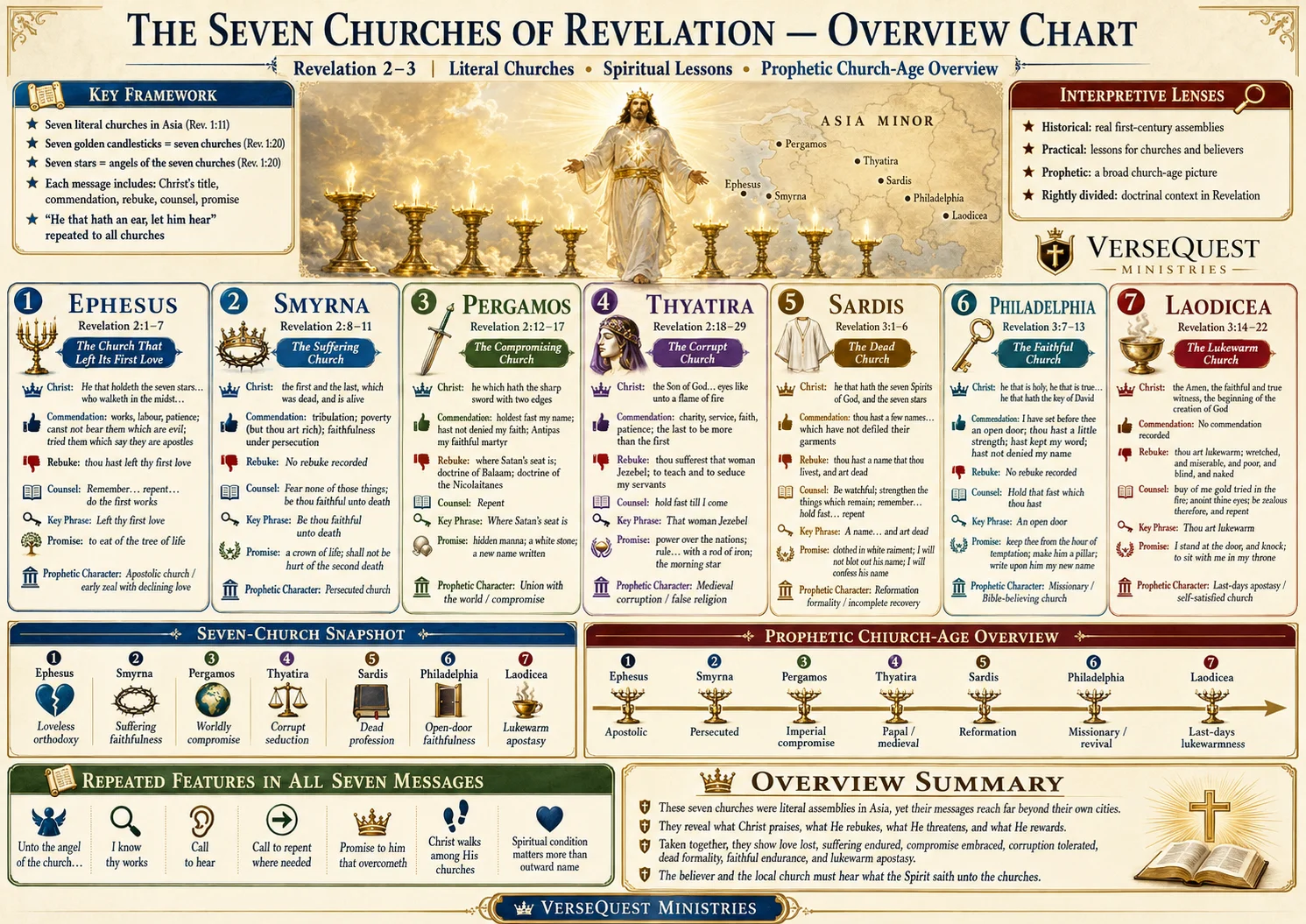
- The Seven Churches of Revelation Chart Collection – Christ Walking Among the Candlesticks
- A premium VerseQuest Ministries™ PDF chart collection covering the Seven Churches of Revelation in Revelation 2–3. Includes one overview chart plus individual KJV Bible study charts for Ephesus, Smyrna, Pergamos,…
- $12.99
- Add to cart
-
-
Biblical Submission
-
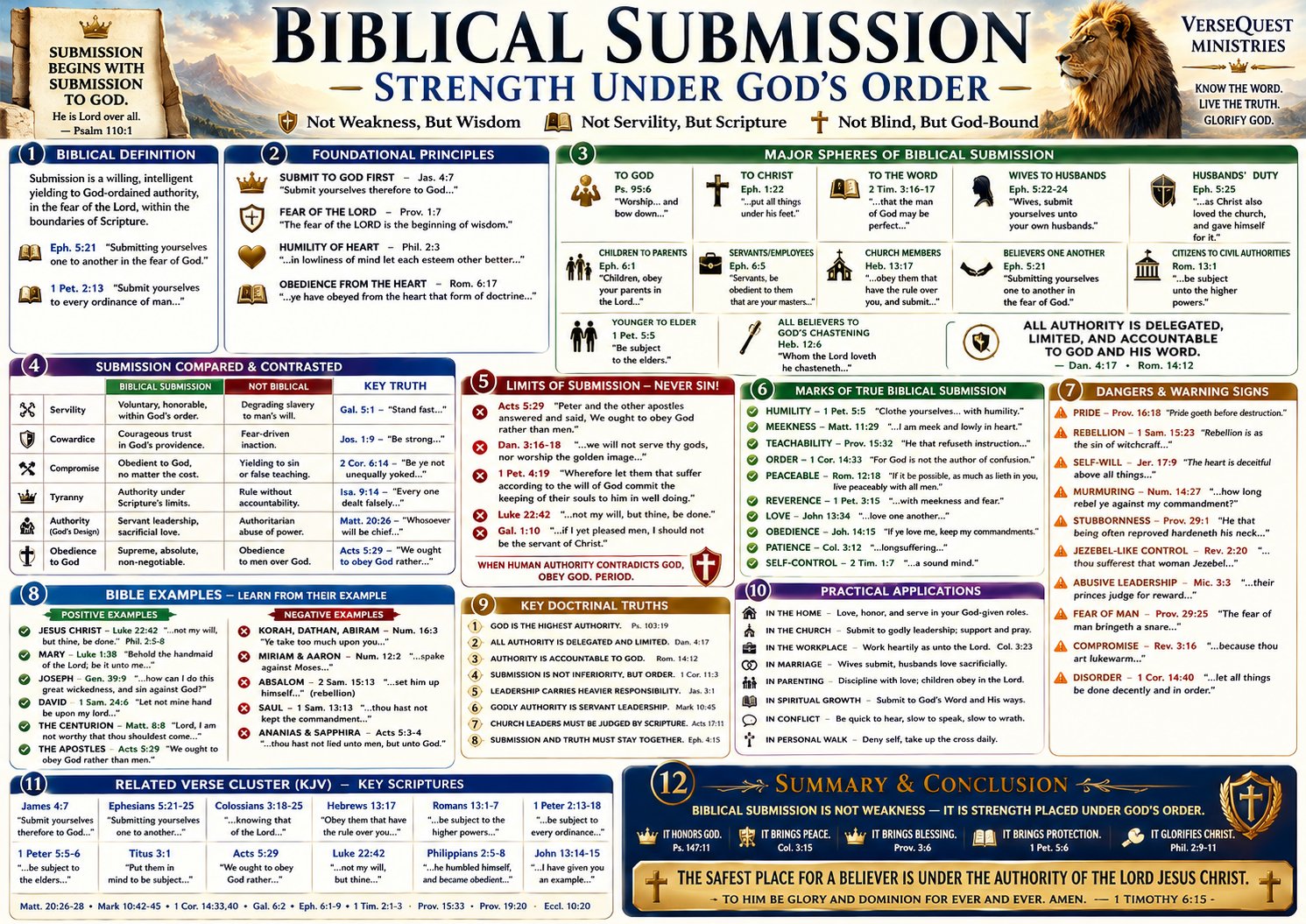
- Biblical Submission Bible Study Chart – Strength Under God’s Order, Authority, and Scriptural Limits (KJV) Product Description
- Study biblical submission with this detailed KJV chart covering God-ordained authority, servant leadership, obedience, marriage, church, government, and the Scriptural limits of submission.
- $3.99
- Add to cart
-
-
Bitterness
-
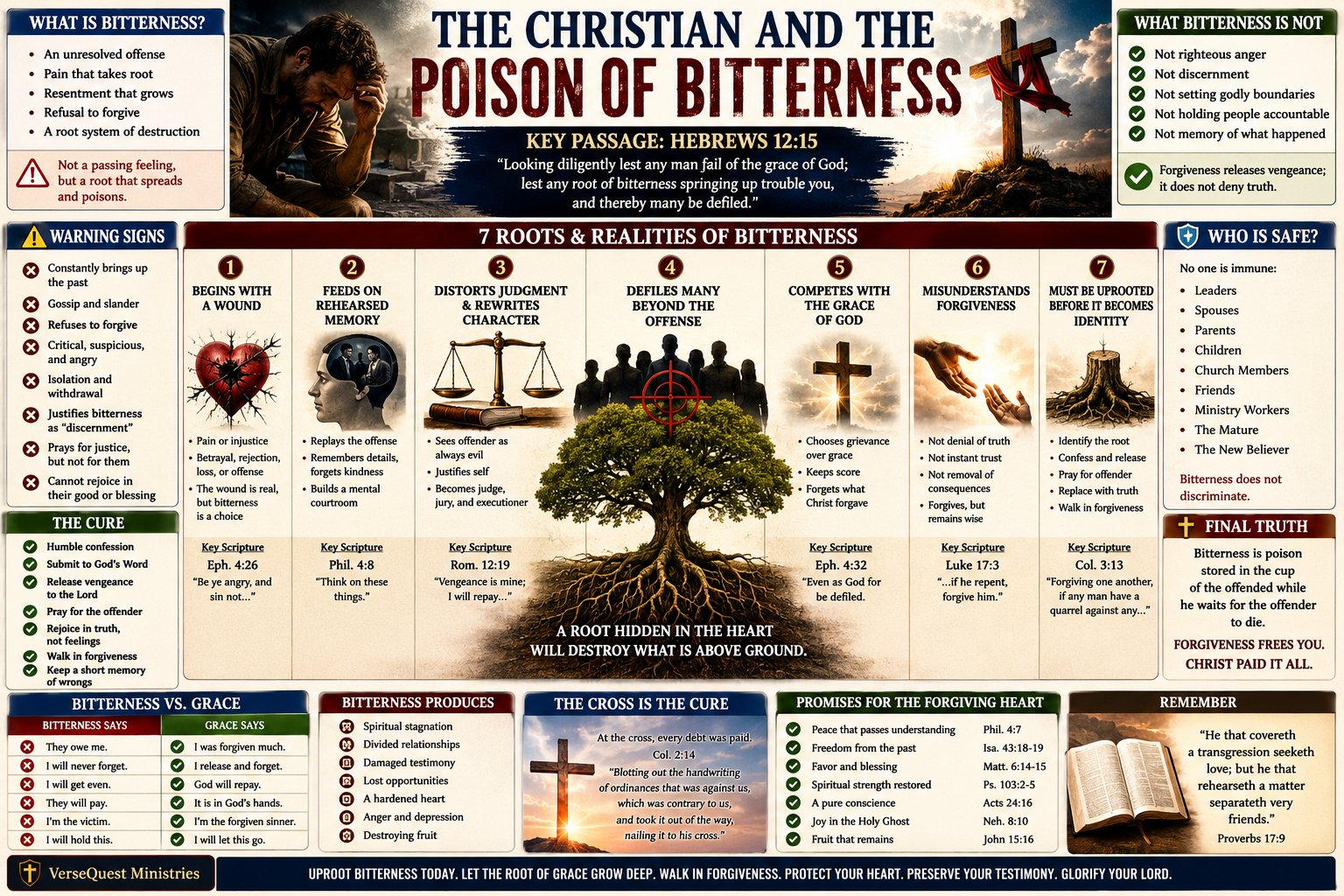
- The Christian and the Poison of Bitterness Bible Study Chart – Forgiveness, Grace, and Healing the Heart (KJV)
- Expose and uproot bitterness with this detailed KJV Bible study chart covering unresolved offenses, warning signs, forgiveness, grace, wise boundaries, the cross, and healing for the Christian heart.
- $3.99
- Add to cart
-