
How to Stay Humble When God Promotes You – Biblical Humility, Success, and Faithful Stewardship (KJV Bible Study Chart)
Learn how to remain humble when God increases your influence with this detailed KJV Bible study chart covering pride, praise, responsibility, private devotion, servant leadership, and faithful stewardship.
$3.99
Description
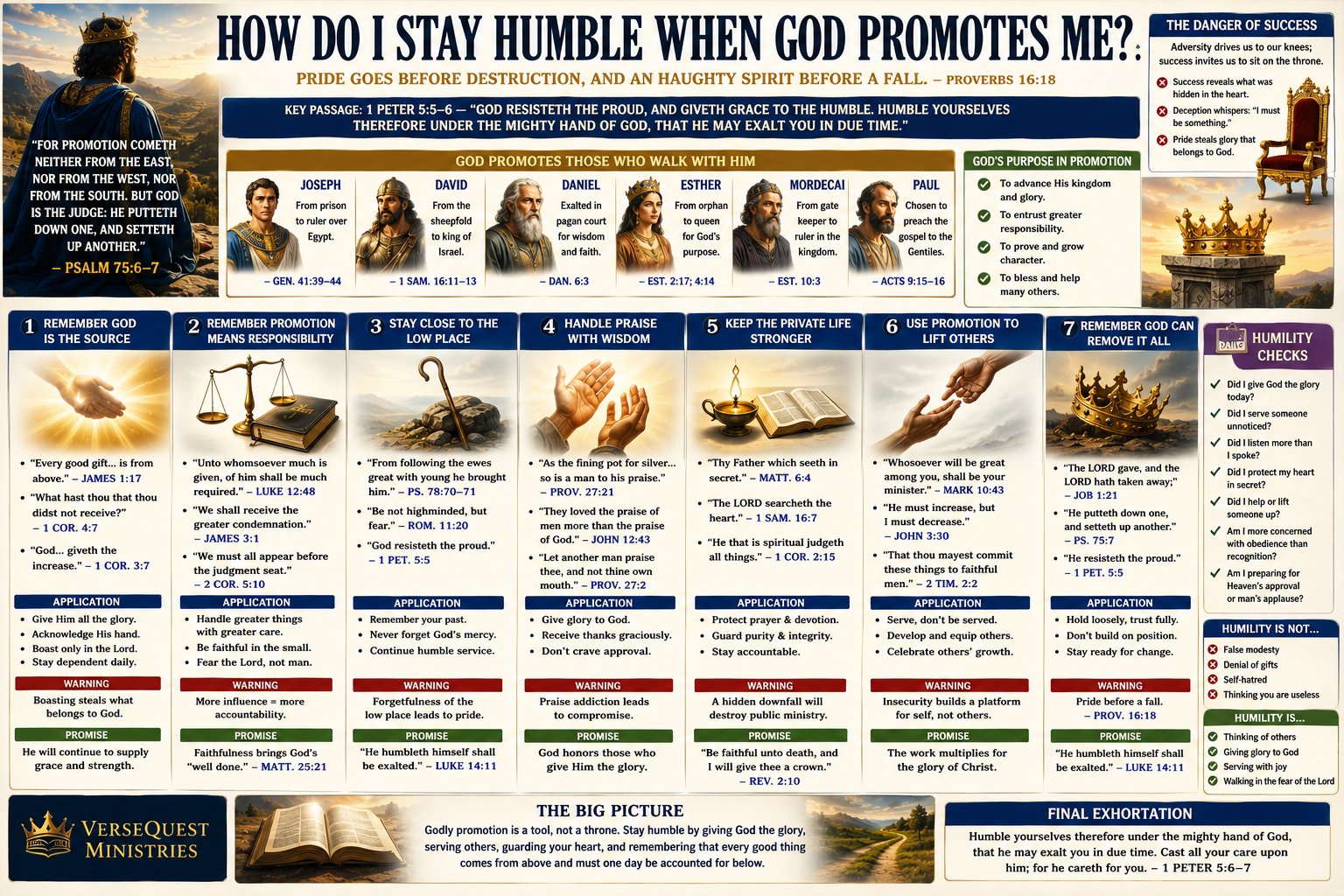
How Do I Stay Humble When God Promotes Me? is a detailed KJV Bible study chart addressing one of the most dangerous tests in the Christian life: remaining humble when God increases a believer’s influence, opportunity, responsibility, recognition, or usefulness.
Adversity often drives people to their knees, but success can tempt them to sit upon the throne. Promotion may reveal pride that remained hidden during seasons of struggle. A believer who once prayed for an opportunity can begin acting as though his talent, intelligence, personality, connections, or hard work alone created it.
Built around 1 Peter 5:5–6, this chart teaches that God resists the proud but gives grace to the humble. Biblical exaltation comes in God’s time and under God’s mighty hand. The believer’s responsibility is not to manufacture a platform, demand recognition, or promote himself, but to walk faithfully, serve humbly, and trust God with the results.
The chart begins by establishing that promotion comes from God. Psalm 75:6–7 declares that promotion comes neither from the east, west, nor south, but that God is the Judge who puts down one and raises another. Every position, opportunity, gift, influence, and open door must therefore be received as a stewardship rather than personal ownership.
A major section presents biblical examples of people whom God elevated for His purposes. Joseph moved from prison to authority in Egypt. David went from shepherding sheep to ruling Israel. Daniel was exalted in a pagan court because of wisdom, faithfulness, and an excellent spirit. Esther moved from obscurity to the palace for a providential purpose. Mordecai rose from the king’s gate to governmental honour, while Paul was chosen to carry the gospel to the Gentiles.
These examples demonstrate that divine promotion is not primarily about comfort, applause, wealth, or status. God promotes people to advance His purposes, increase their responsibility, test and develop their character, bless others, defend truth, and accomplish work that could not be completed from their former position.
The chart presents seven practical principles for remaining humble after promotion. First, remember that God is the source of every good gift. A believer possesses nothing that he did not ultimately receive. Pride is irrational because it boasts in borrowed breath, borrowed ability, borrowed opportunity, and borrowed time.
Second, remember that promotion means greater responsibility. Increased authority brings increased accountability. Those who teach, lead, influence, manage, or speak publicly must answer for how they use what God has entrusted to them. A larger platform does not reduce the need for faithfulness; it increases it.
Third, stay close to the low place. David never needed to despise the sheepfold simply because God gave him a throne. Remembering former weakness, past dependence, answered prayer, and undeserved mercy protects the heart from imagining that advancement proves personal superiority.
Fourth, learn to handle praise with wisdom. Compliments may be received graciously without becoming spiritual food. Proverbs 27:21 teaches that praise tests a man as surely as fire tests metal. A humble believer thanks others kindly, gives glory to God, and refuses to become addicted to approval.
Fifth, make the private life stronger as the public life grows. Promotion increases visibility, pressure, temptation, and opportunity for hypocrisy. Prayer, Bible reading, purity, honest self-examination, and accountability must deepen as influence expands. A hidden spiritual collapse can eventually destroy public usefulness.
Sixth, use promotion to lift others. Biblical greatness serves rather than demands service. A godly leader develops people, shares opportunities, equips faithful workers, encourages growth, and celebrates the usefulness of others. Insecurity builds a platform around self; humility builds people for the glory of Christ.
Seventh, remember that God can remove what He has given. Positions, influence, health, wealth, applause, and public opportunities are temporary. Job confessed that the LORD gives and takes away. Holding promotion loosely protects the believer from turning a gift into an idol.
The chart also contains practical humility checks. These questions examine whether the believer gave God glory, served someone without being noticed, listened more than he spoke, protected his private heart, helped another person rise, valued obedience above recognition, and prepared for heaven’s approval rather than man’s applause.
False humility is clearly distinguished from biblical humility. Humility is not denying genuine gifts, pretending to be useless, speaking badly about oneself, or refusing responsibility. True humility thinks of others, gives glory to God, serves with joy, walks in the fear of the Lord, and uses every ability as a stewardship.
The chart’s central warning comes from Proverbs 16:18: pride goes before destruction and a haughty spirit before a fall. Success reveals what was hidden in the heart, invites deceptive whispers of self-importance, and tempts the believer to take glory that belongs exclusively to God.
The final message is that godly promotion is a tool, not a throne. The believer should humble himself under God’s mighty hand, cast every care upon Him, continue serving faithfully, and remember that every earthly advancement must eventually be accounted for before the Lord.
This resource is ideal for personal Bible study, pastors, ministry workers, Christian leaders, business owners, teachers, church staff, young adults, leadership classes, discipleship, sermon preparation, pastoral counseling, and anyone learning to handle success without surrendering to pride.
Biblical humility, divine promotion, pride before destruction, God as the source, increased responsibility, faithful stewardship, handling praise, servant leadership, private devotion, spiritual accountability, helping others succeed, remembering former weakness, resisting self-glory, dependence upon grace, temporary positions, Christian success, influence, obedience, God’s timing, eternal reward
Promotion is not proof that a believer has become spiritually superior. It is evidence that greater responsibility has been placed into his hands. What appears to be honour from man’s perspective may be a serious stewardship test from God’s perspective.
Every good gift comes from above. Intelligence, strength, personality, opportunity, education, health, influence, and supportive relationships are not self-created. Humility acknowledges the hand of God without denying the work and discipline involved.
Success often exposes pride that adversity kept restrained. During hardship, a person knows he needs God. After advancement, he may begin treating prayer as optional and his own judgment as sufficient.
Praise should be received graciously but returned upward. The believer need not reject every compliment awkwardly, but he must never feed upon applause or measure obedience by public response.
The private life must grow stronger as the public platform becomes larger. Increased visibility cannot compensate for decreased prayer, neglected Scripture, hidden sin, weakened family relationships, or lack of accountability.
Promotion should increase service. Christ defined greatness by ministry to others. The believer who uses advancement only to enlarge his comfort, reputation, or control has misunderstood why God entrusted it to him.
Remembering the low place protects the heart. Past weakness, former obscurity, answered prayers, faithful helpers, and undeserved mercy should never be forgotten once circumstances improve.
A humble leader is not threatened by the success of others. He trains, delegates, encourages, and rejoices when those around him become more useful to God.
God may remove any position He has given. Therefore, titles, influence, opportunities, and recognition should be held with gratitude rather than desperation. Identity must remain rooted in Christ, not in a role.
Humility is not pretending to have no ability. It is recognizing that ability is a trust from God and must be exercised under His authority for His glory and the blessing of others.
The safest response to promotion is deeper prayer, greater accountability, quieter service, careful obedience, and deliberate gratitude. The higher God permits a person to rise, the more carefully he must remain beneath the mighty hand of God.
Christian leadership training, pastoral development, ministry preparation, business leadership, discipleship classes, character studies, young adult ministry, church staff instruction, handling success, spiritual accountability, servant leadership, avoiding pride, mentoring, personal Bible study, Sunday school lessons, homeschool Bible curriculum, Bible institute classes, sermon preparation
King James Bible, Strong’s Concordance, Thompson Chain-Reference Bible, Treasury of Scripture Knowledge, Nave’s Topical Bible, personal prayer journal, leadership accountability worksheet, Scripture memory cards, Christian character notebook, servant leadership studies, pastoral counseling resources, studies on David and Joseph, Philippians 2 study materials, VerseQuest Christian Living charts
Related products
-
Two Witnesses of Revelation
-
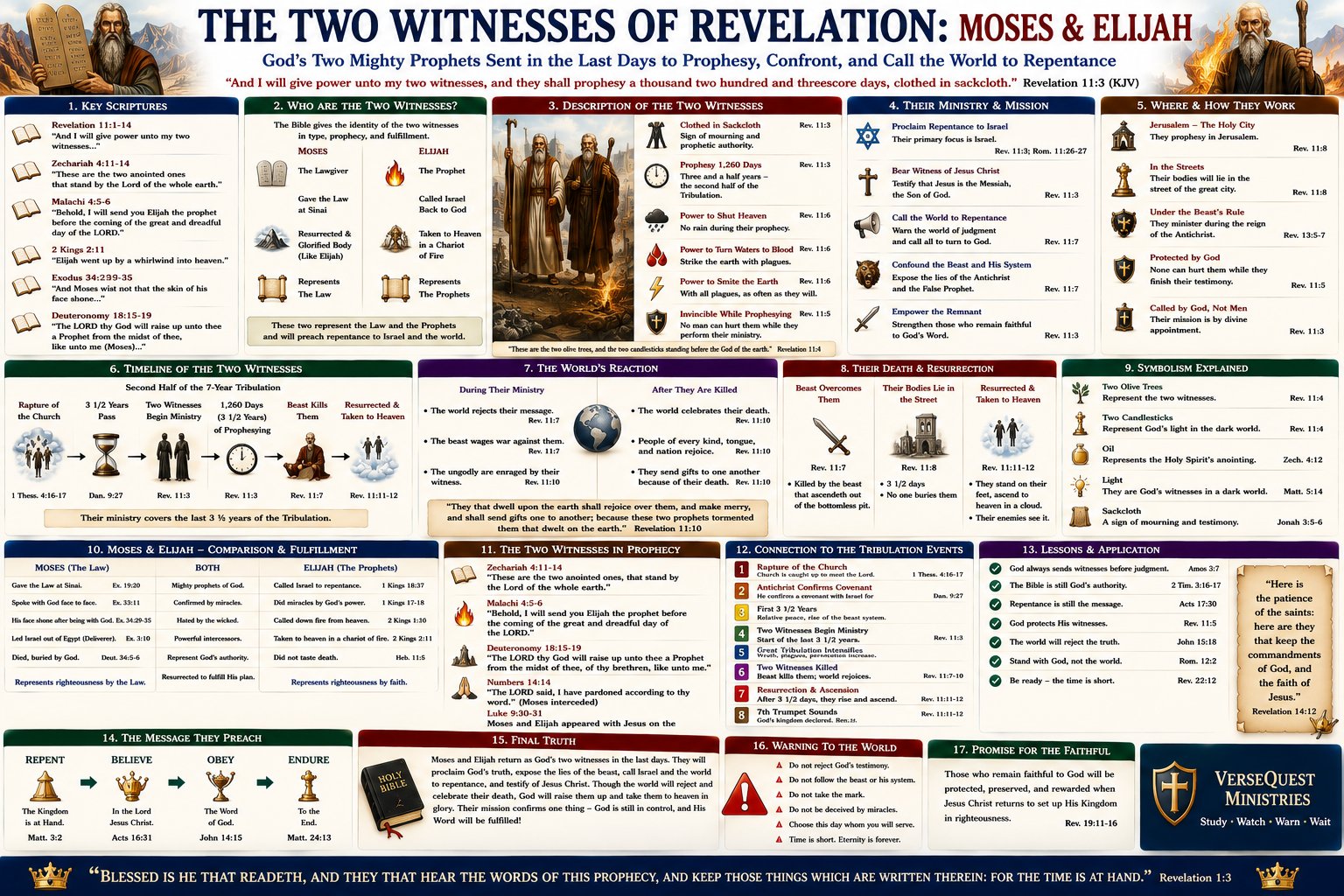
- The Two Witnesses of Revelation – Moses and Elijah, 1,260 Days of Prophecy, Their Death, Resurrection, and Ascension (KJV Bible Study Chart)
- Understand the two witnesses of Revelation with this detailed KJV chart examining the strong Moses-and-Elijah identification, their 1,260-day Tribulation ministry, sackcloth, supernatural powers, Jerusalem setting, conflict with the beast, public…
- $4.99
- Add to cart
-
-
Uncategorized
-
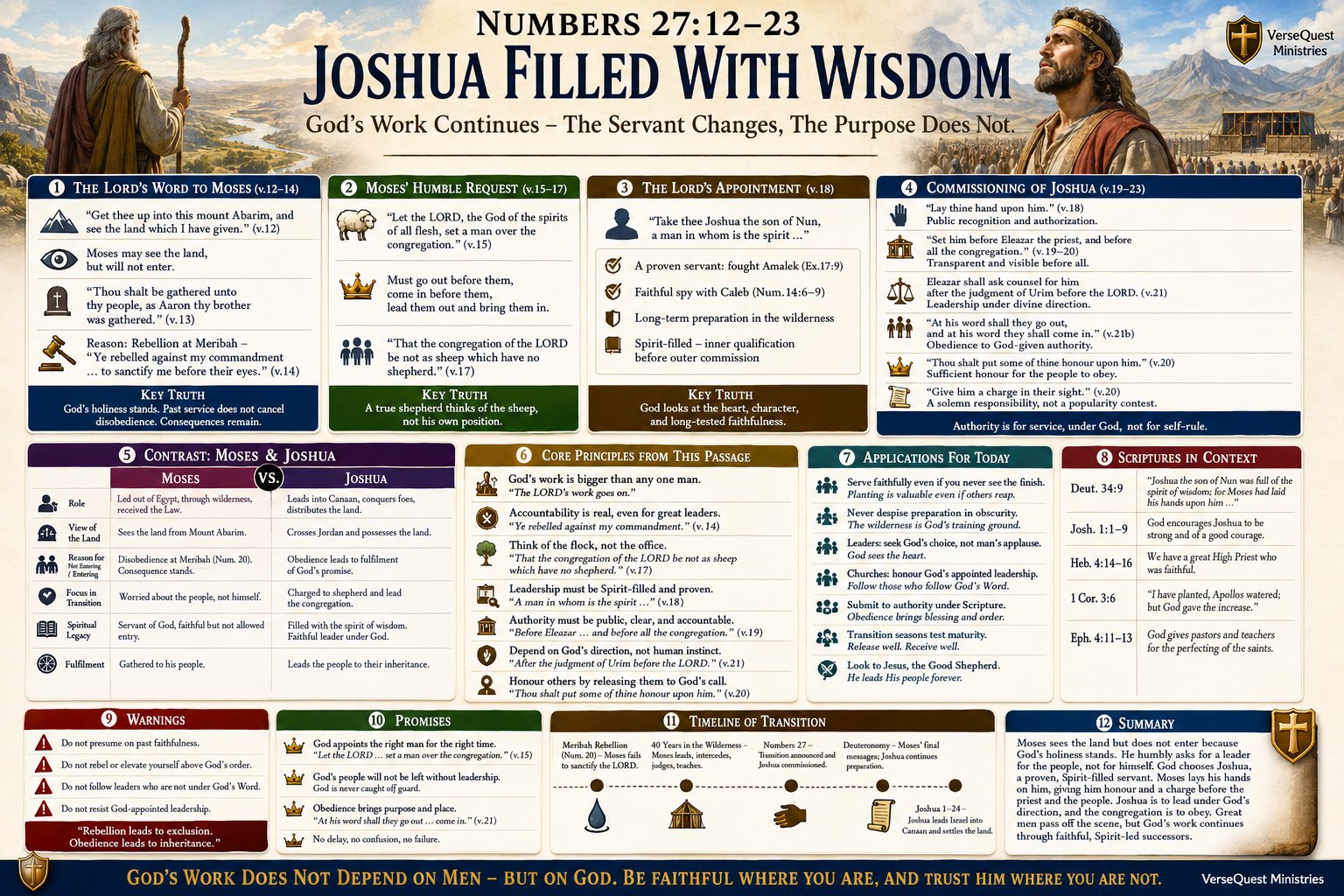
- Numbers 27:12–23 Bible Study Chart – Joshua Filled with Wisdom and Commissioned to Lead Israel (KJV)
- Study Numbers 27:12–23 with this detailed KJV chart covering Moses’ final request, Joshua’s appointment, the spirit of wisdom, public commissioning, leadership transition, and God’s continuing purpose.
- $3.99
- Add to cart
-
-
Patience
-
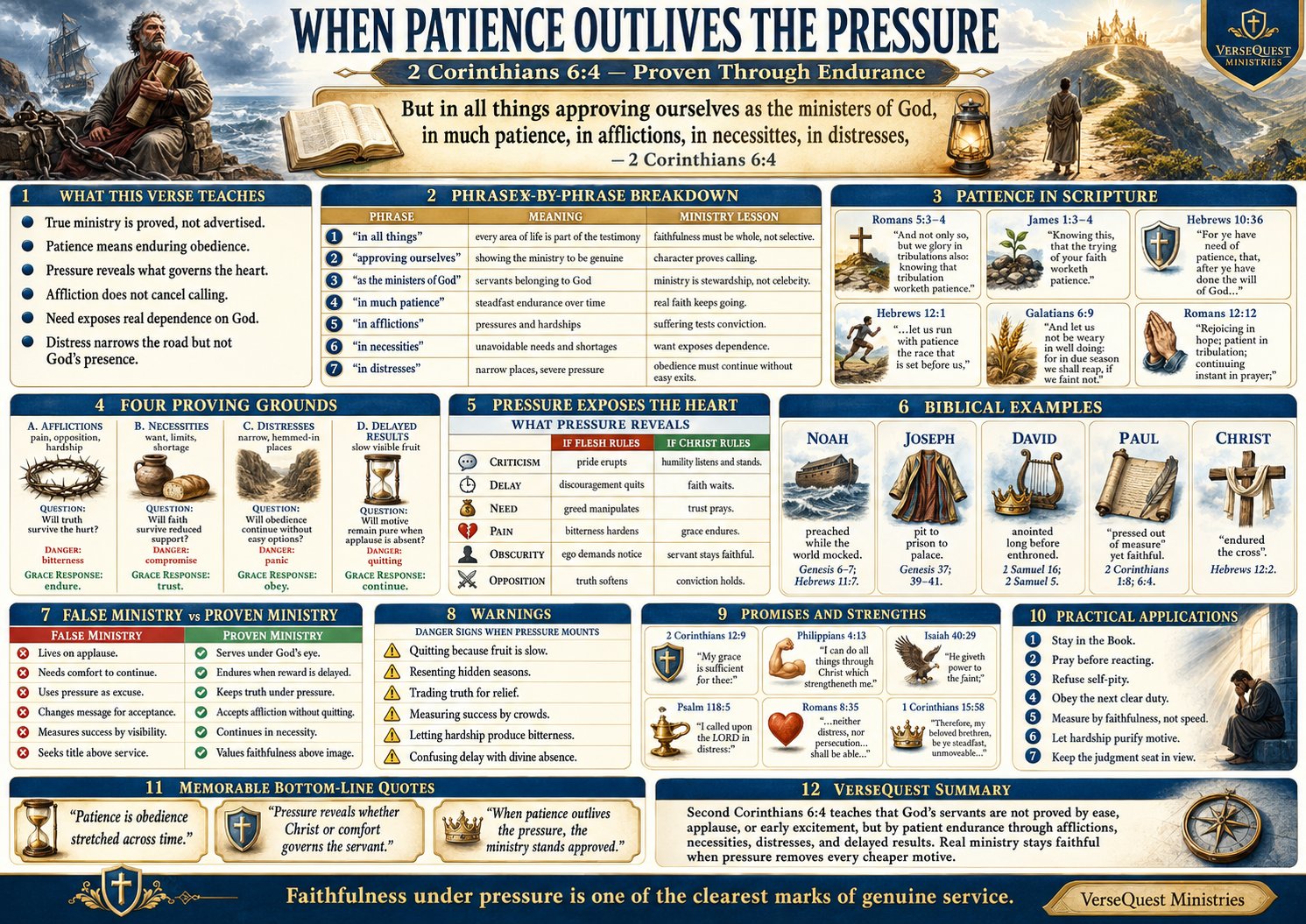
- When Patience Outlives the Pressure – Proven Through Endurance in 2 Corinthians 6:4 (KJV Bible Study Chart)
- Learn how patience proves genuine ministry with this detailed KJV chart covering 2 Corinthians 6:4, afflictions, necessities, distresses, delayed results, pressure, endurance, and faithful Christian service.
- $3.99
- Add to cart
-
-
Overcoming Temptation
-

- Victory Over the Flesh — 50-Essay KJV Study Book PDF | 307 Pages
- Victory Over the Flesh is a 307-page premium digital study book containing fifty thorough KJV essays about the believer’s war against the old nature. It exposes lust, anger, bitterness, pride,…
- $9.99
- Add to cart
-
-
Christian Living
-
-50%

- The Whole Armor of God Chart — KJV Bible Study
- Premium printable KJV Bible study chart explaining the whole armor of God from Ephesians 6, including the helmet, breastplate, belt, shield, shoes, sword, prayer, and spiritual victory in Christ.
- Original price was: $10.00.$4.99Current price is: $4.99.
- Add to cart
-
-50%