
Israel and the Church: Earthly and Heavenly Callings – KJV Bible Study Chart
Printable digital KJV Bible study chart comparing Israel’s earthly promises and kingdom hope with the Church’s heavenly calling in Christ. Covers prophecy and mystery, biblical covenants, law and grace, the Body of Christ, the Rapture, and the future reign of Jesus Christ.
$3.99
Description
This downloadable educational Bible study chart is designed for personal study and church teaching. It visually compares Israel’s earthly promises with the Church’s heavenly calling using references from the King James Bible.
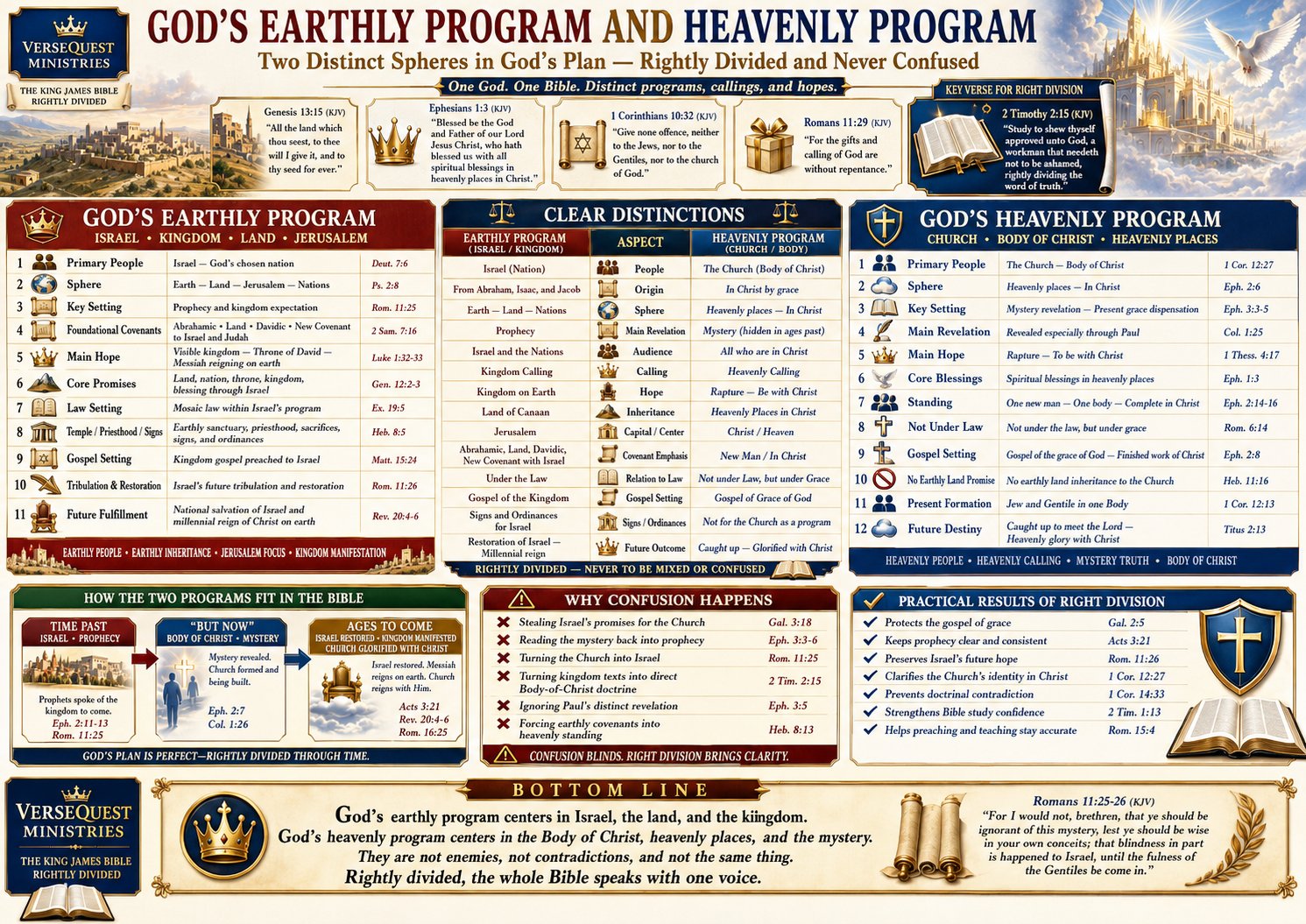
God’s Earthly Program and Heavenly Program: Two Distinct Spheres in God’s Plan is a detailed KJV Bible study chart explaining the difference between God’s prophetic dealings with Israel and His mystery program for the Church, the Body of Christ. It shows how these two programs belong to one sovereign biblical plan while possessing distinct peoples, spheres, promises, covenants, callings, hopes, inheritances, and future fulfillments.
Built around 2 Timothy 2:15, this chart demonstrates why believers must rightly divide the Word of Truth rather than blend every promise, command, covenant, and prophetic passage into one undifferentiated program. Right division does not create divisions that are absent from Scripture. It recognizes the distinctions God placed within His revelation and allows each passage to remain in its proper setting.
God’s earthly program centres upon Israel, the promised land, Jerusalem, the throne of David, and the visible Kingdom of Jesus Christ upon the earth. Israel originated through the physical descendants of Abraham, Isaac, and Jacob and was separated from the nations as God’s chosen covenant people.
The Abrahamic Covenant promised Abraham a seed, a great nation, worldwide blessing, and a literal land inheritance. The Land Covenant, Davidic Covenant, and New Covenant further establish Israel’s future possession, national restoration, righteous King, and spiritual renewal. These promises are connected with Israel and should not be reassigned to the Church.
Israel’s earthly program unfolds primarily through prophecy. The Old Testament prophets spoke about Israel’s scattering, tribulation, repentance, restoration, national salvation, and future Kingdom. Jesus Christ will return visibly as King, overthrow His enemies, restore Israel, reign from Jerusalem, and fulfill the promises connected with David’s throne.
The gospel of the Kingdom belongs naturally within this earthly setting. It announced the nearness of Israel’s King and promised Kingdom and was accompanied by signs, healings, wonders, water baptism, and other credentials associated with Israel’s prophetic program.
God’s heavenly program centres upon the Church, the Body of Christ, spiritual blessings in heavenly places, the revelation of the mystery, and the believer’s heavenly hope. The Church is not a physical nation descended from Abraham but one spiritual Body composed of believing Jews and Gentiles who are saved by grace and placed into Christ.
The Body of Christ possesses a heavenly identity and inheritance. Its members are blessed with all spiritual blessings in heavenly places, made complete in Christ, reconciled in one Body, and seated together in heavenly places in Him. The Church receives no national land grant and is not commissioned to establish Israel’s promised Kingdom through political, religious, or cultural power.
The primary revelation governing the Church was especially committed to the apostle Paul. Ephesians and Colossians describe the mystery as truth hidden in previous ages and later revealed. This revelation concerns the one Body, the equality of believing Jews and Gentiles in Christ, the present dispensation of grace, and the Church’s heavenly calling.
The gospel setting of this program is the gospel of the grace of God, centred upon the finished work of Jesus Christ. Christ died for sins, was buried, rose again, and now offers salvation freely through faith apart from religious works, national identity, circumcision, Mosaic ordinances, or human merit.
The Church is not under the Mosaic law as its covenant rule of standing. Believers are under grace and are taught to walk through the indwelling Holy Spirit, sound doctrine, the written Word, and their new identity in Jesus Christ. Grace does not promote sin; it saves, justifies, teaches holiness, and produces thankful obedience.
The Church’s hope is also distinct. Israel awaits the visible return of Christ as King and the fulfillment of its earthly promises. The Body of Christ awaits the Rapture, when believers will be caught up to meet the Lord and remain with Him. The Church’s destiny is heavenly glory with Christ.
A central comparison distinguishes the two programs in people, origin, sphere, revelation, audience, calling, inheritance, capital, covenants, relationship to law, gospel setting, signs, ordinances, and future outcome. Israel is a nation connected with the land and Kingdom; the Church is a Body connected with Christ and heavenly places.
The chart also shows how these programs fit within biblical history. Time Past emphasizes Israel, prophecy, and covenant distinction. But Now reveals the mystery and formation of the Body of Christ. Ages to Come will display the restoration of Israel, the manifestation of the Kingdom, and the glorified Church reigning with Christ.
Confusion arises when Israel’s promises are stolen for the Church, the mystery is read backward into prophecy, the Church is turned into Israel, Kingdom commands are imposed directly upon the Body of Christ, Paul’s distinct revelation is ignored, or earthly covenants are forced into a heavenly calling.
Maintaining these distinctions protects the gospel of grace, preserves Israel’s prophetic hope, clarifies the Church’s identity, prevents manufactured contradictions, and strengthens confidence in Scripture. God’s programs are distinct, but they are not rivals. Both reveal the wisdom and faithfulness of the same God.
The bottom line is that God’s earthly program centres upon Israel, the land, Jerusalem, and the Kingdom, while His heavenly program centres upon the Body of Christ, heavenly places, and mystery truth. They are not enemies, contradictions, or interchangeable names for the same people.
Designed for personal Bible study, church teaching, small-group discussion, doctrinal reference, and visual comparison of Israel and the Church.
God’s earthly program, God’s heavenly program, Israel and the Church, earthly Kingdom, heavenly calling, promised land, Jerusalem, throne of David, Body of Christ, mystery revelation, prophecy and mystery, Abrahamic Covenant, Davidic Covenant, New Covenant, law and grace, gospel of the Kingdom, gospel of grace, Rapture of the Church, restoration of Israel, millennial reign of Christ
God’s earthly and heavenly programs should be distinguished without being treated as competing plans. They belong to one God, one inspired Bible, and one sovereign purpose, but they concern different peoples, spheres, callings, and promises.
The earthly program centres upon Israel as a nation descended from Abraham, Isaac, and Jacob. Its covenants include literal promises involving land, national restoration, Jerusalem, David’s throne, and the earthly reign of the Messiah.
The heavenly program concerns the Church, the Body of Christ. The Church is formed through spiritual union with Christ and includes believing Jews and Gentiles placed into one Body by the Holy Spirit.
Israel’s central revelation is connected with prophecy—truth spoken by the prophets concerning the nation and its Kingdom. The Church’s distinctive calling is connected with mystery truth that was hidden in previous ages and later revealed through Paul.
Israel’s inheritance concerns the land of Canaan and the future Kingdom. The Church’s blessings are described as spiritual blessings in heavenly places in Christ.
The Church does not replace Israel. Romans 11 teaches that Israel’s present blindness is partial and temporary and that God’s gifts and calling are without repentance.
The creation of the one Body does not cancel the Abrahamic, Davidic, or New Covenant promises. God remains faithful to the exact people and purposes named in His Word.
The Church should not be placed under Israel’s Mosaic covenant, Kingdom ordinances, national sign program, or prophetic tribulation responsibilities. It stands under grace and receives direct Church-age doctrine through Paul’s epistles.
The gospel of the Kingdom announced Israel’s approaching King and Kingdom. The gospel of the grace of God proclaims Christ’s finished death, burial, and resurrection as the basis of present salvation.
The Rapture concerns Christ gathering the Church to Himself. The Second Coming concerns His visible return to earth as King, Israel’s restoration, the defeat of His enemies, and the establishment of the Kingdom.
Right division prevents believers from stealing Israel’s promises while also protecting the Church from legalism and misplaced prophetic commands.
Time Past, But Now, and Ages to Come show how the programs unfold through history. God’s plan progresses without contradiction when each revelation is placed where Scripture assigns it.
The earthly and heavenly programs ultimately unite in glorifying Jesus Christ. Israel will honour Him as its promised King, while the glorified Church will reign with Him according to its heavenly calling.
Israel and Church comparison, dispensational Bible study, Pauline doctrine, prophecy study, earthly Kingdom study, heavenly calling, law and grace, gospel distinctions, Rapture and Second Coming, replacement theology evaluation, Sunday school, church teaching, small-group study, personal Bible study, doctrinal reference
King James Bible, Strong’s Concordance, Thompson Chain-Reference Bible, Treasury of Scripture Knowledge, Nave’s Topical Bible, dispensational timeline charts, Israel and Church comparison notes, Abrahamic Covenant studies, Romans 9–11 resources, Pauline epistle outlines, prophecy and mystery studies, Rapture and Second Coming comparison charts, law-and-grace resources, VerseQuest right-division and doctrine charts
Related products
-
Prophecy vs Mystery
-
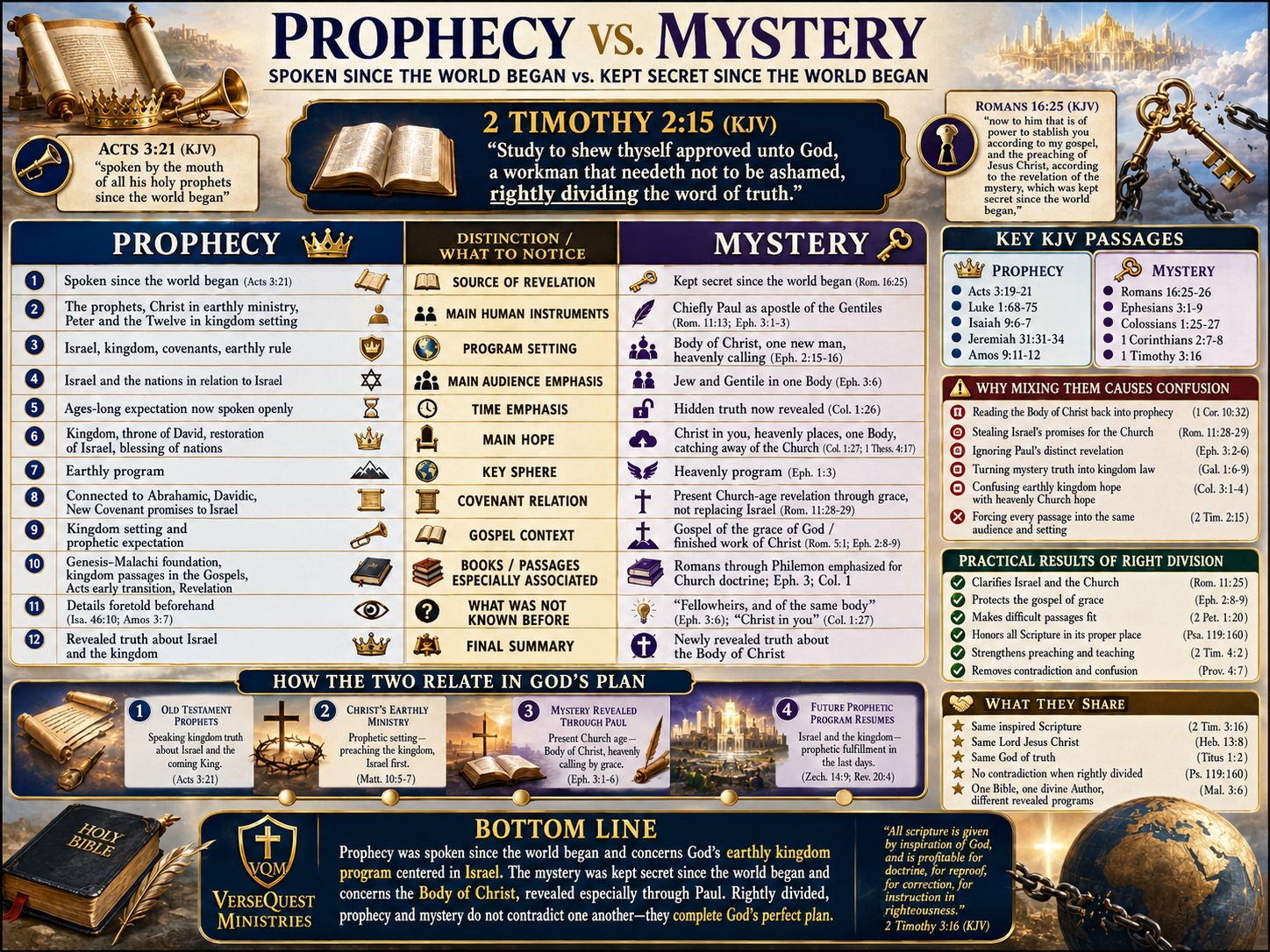
- Prophecy vs. Mystery Bible Study Chart – Spoken Since the World Began vs. Kept Secret Since the World Began (KJV)
- Compare prophecy and mystery with this detailed KJV chart explaining Israel’s earthly Kingdom program, the Body of Christ, Paul’s revelation, the heavenly calling, and the importance of right division.
- $3.99
- Add to cart
-
-
Hebrews Rightly Divided
-
-71%
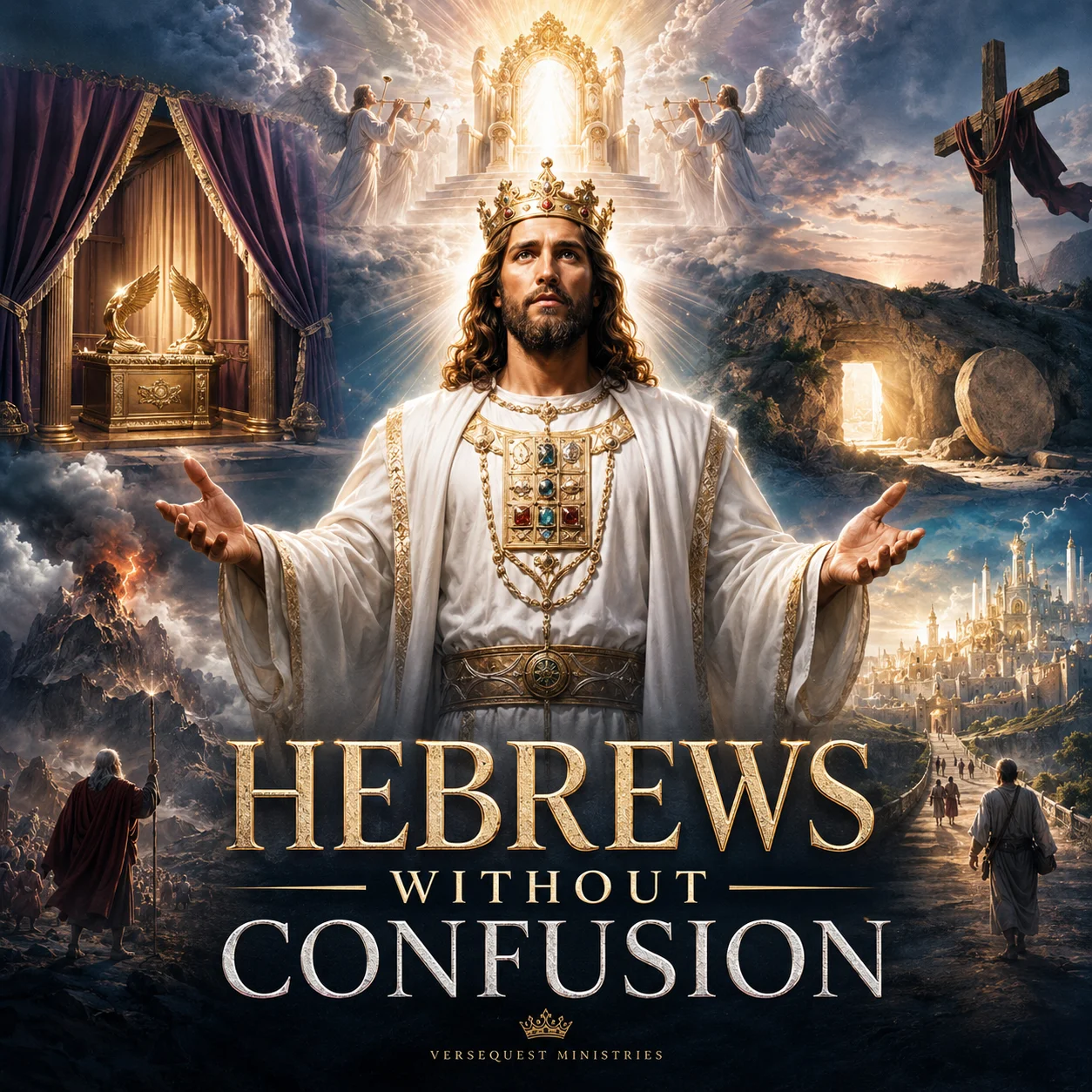
- Hebrews Without Confusion – 833-Page, 120-Study KJV PDF Commentary
- Hebrews Without Confusion is an enormous 833-page digital KJV commentary containing 120 detailed studies through all thirteen chapters of Hebrews. This rightly divided study explains Christ’s supremacy, His eternal priesthood,…
- Original price was: $34.99.$9.99Current price is: $9.99.
- Add to cart
-
-71%
-
Sabbath Bible Study
-
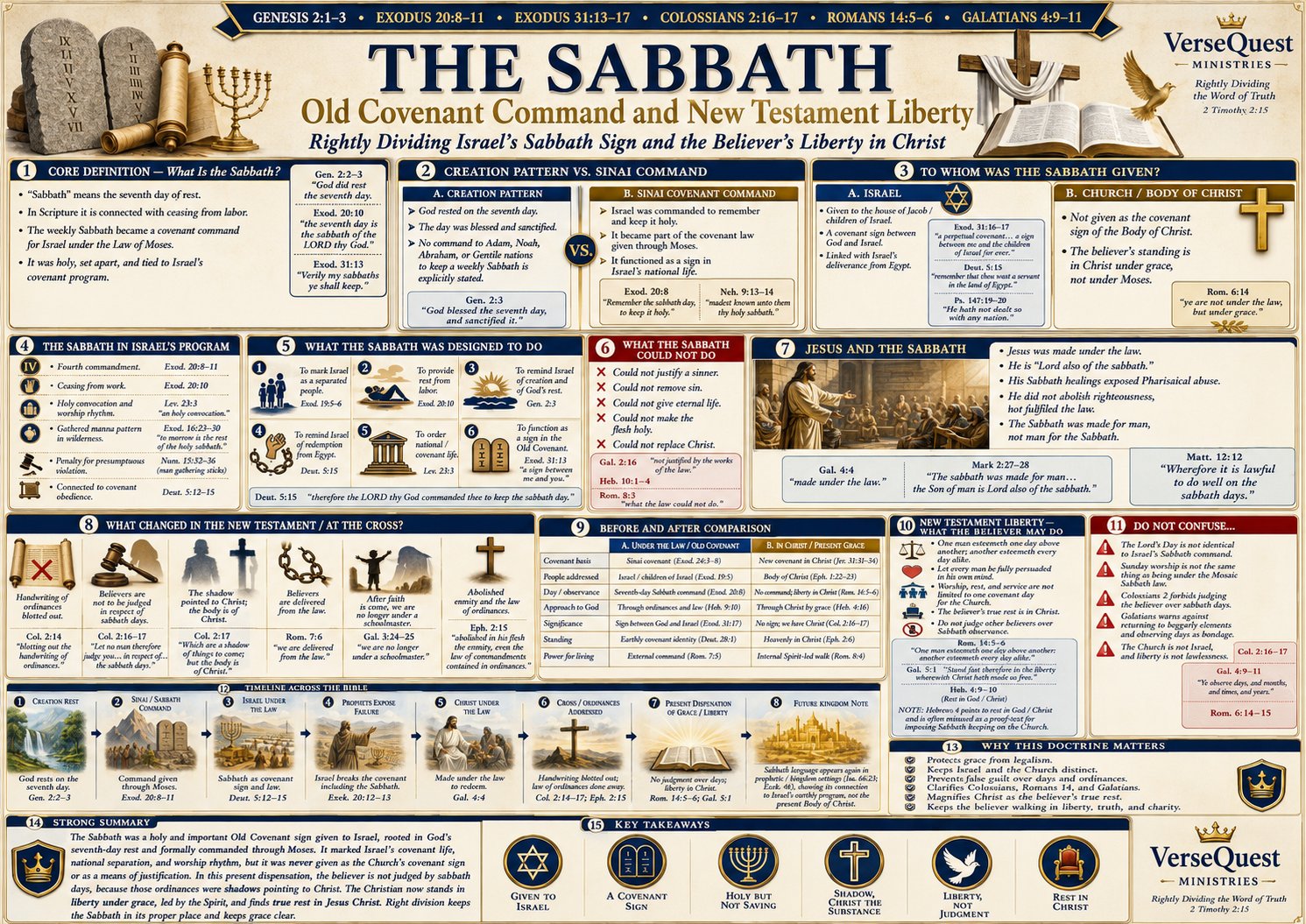
- The Sabbath – Israel’s Old Covenant Command and the Believer’s New Testament Liberty in Christ (KJV Bible Study Chart)
- Understand the Sabbath with this detailed KJV chart covering creation rest, Israel’s covenant sign, the fourth commandment, Christ’s fulfillment, Sabbath versus Sunday, and New Testament liberty.
- $3.99
- Add to cart
-
-
The Rapture
-
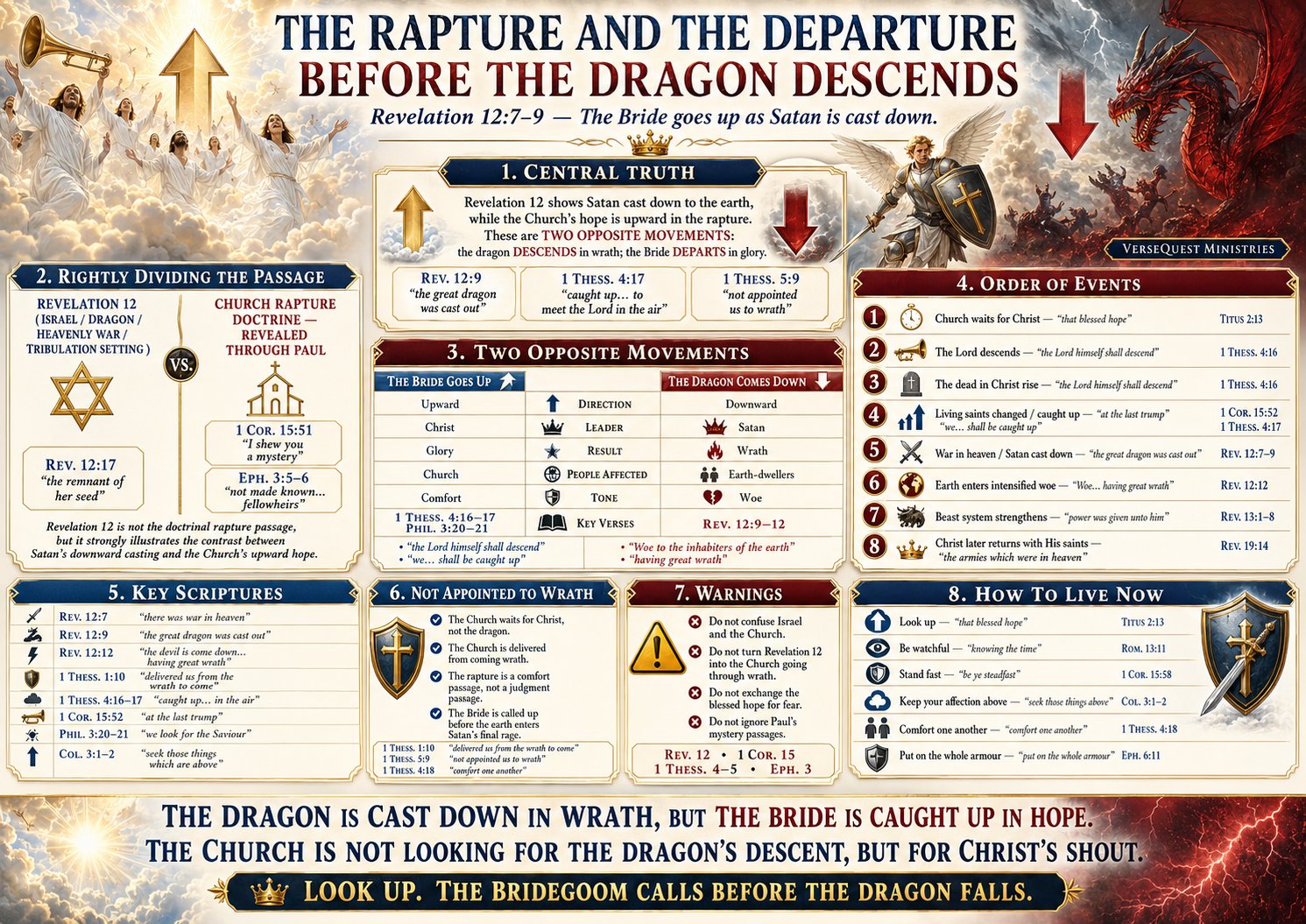
- The Rapture and the Departure Before the Dragon Descends – Printable Bible Study Chart
- Printable KJV Bible study chart on The Rapture and the Departure Before the Dragon Descends, showing the Bride caught up before Satan is cast down in wrath. This premium VerseQuest…
- $4.99
- Add to cart
-
-
The Rapture
-
-67%
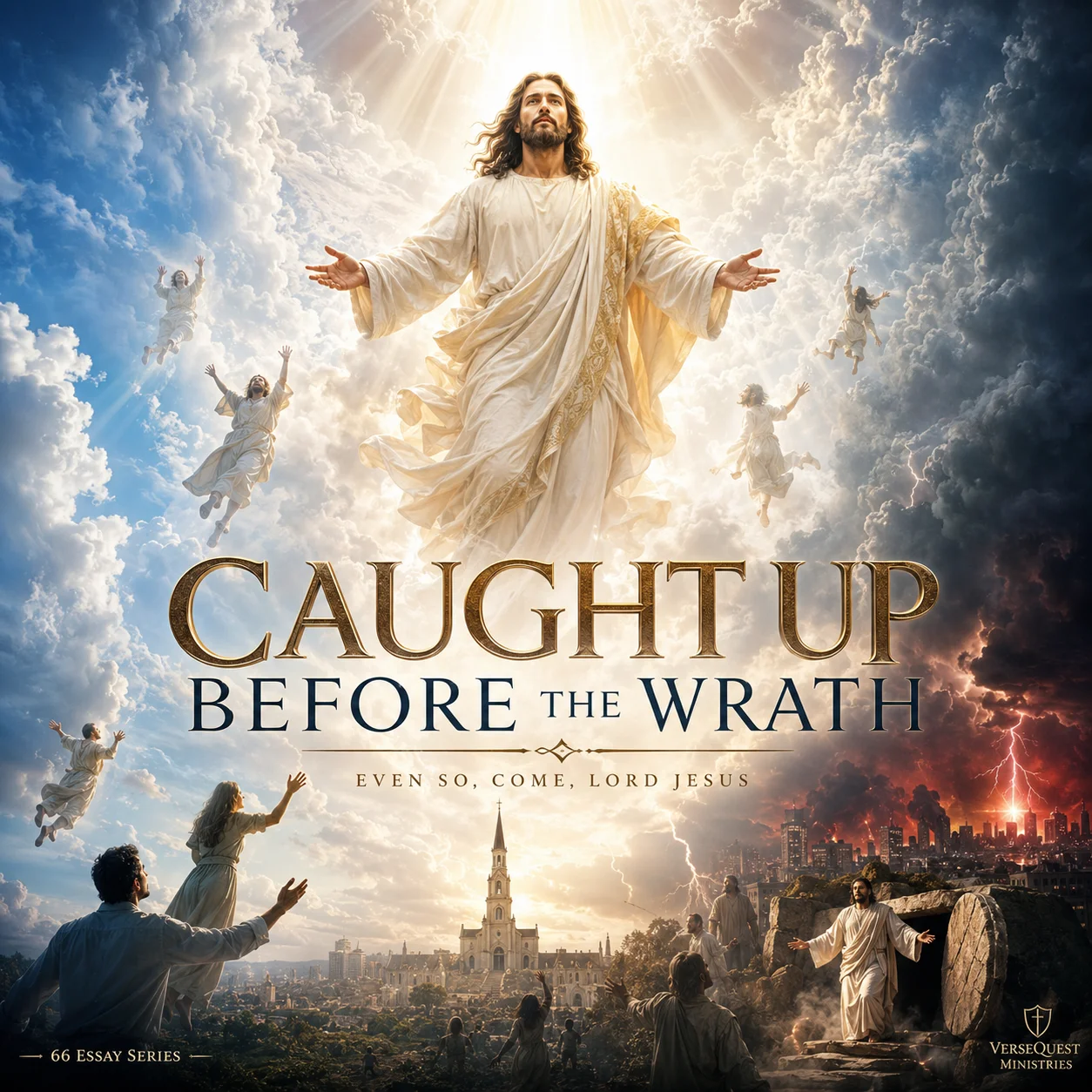
- Caught Up Before the Wrath – 66-Essay KJV Rapture Study
- Caught Up Before the Wrath is a 430-page premium KJV Bible study defending the pre-tribulation Rapture of the Church from a rightly divided, dispensational perspective. This 66-essay VerseQuest Ministries book…
- Original price was: $29.99.$9.99Current price is: $9.99.
- Add to cart
-
-67%