
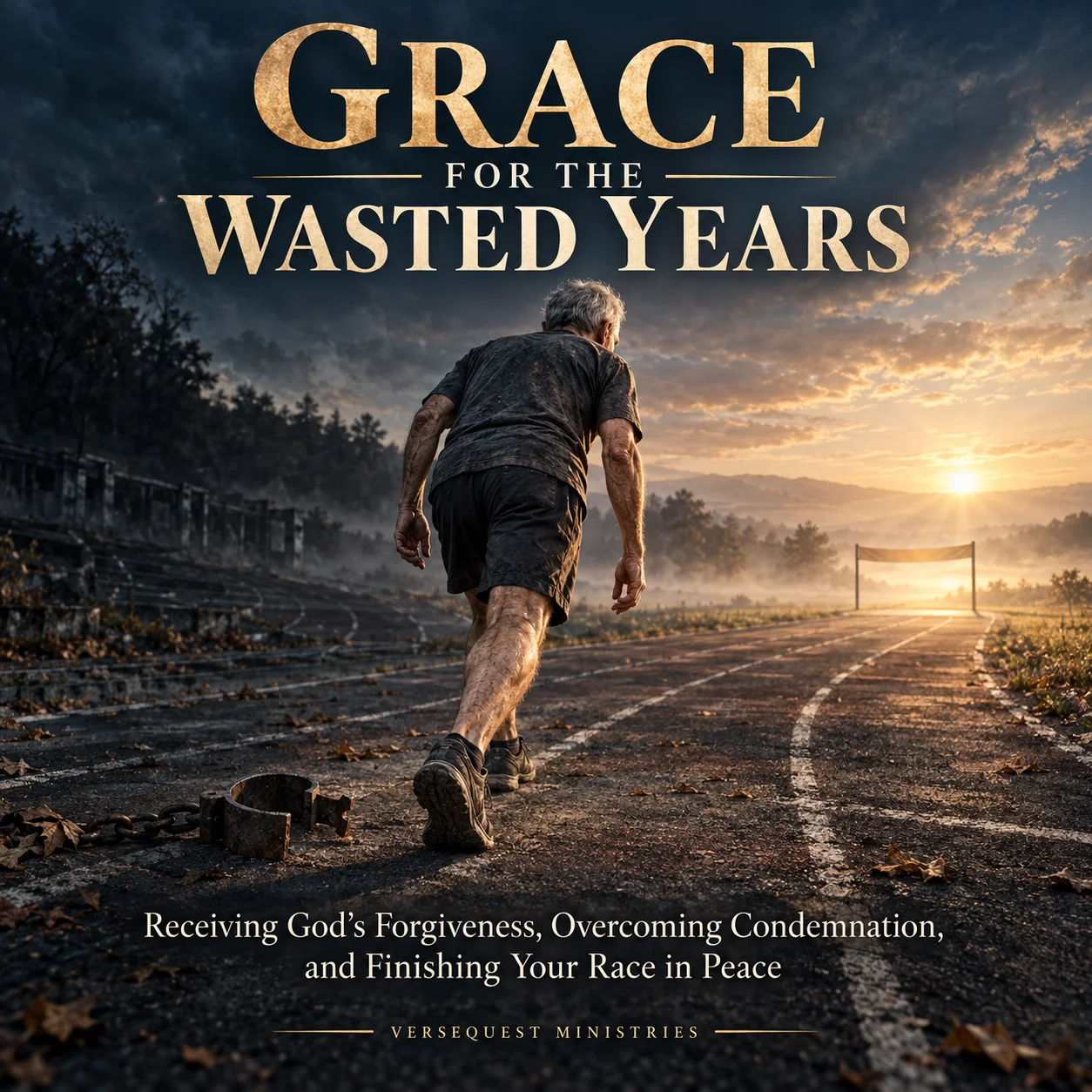
Grace for the Wasted Years — 237-Page KJV Bible Study PDF
Grace for the Wasted Years is a 237-page downloadable KJV Bible study for believers burdened by lingering guilt, painful memories, damaged relationships, lost opportunities, and the fear that too much life has been wasted. Through thirty substantial essays, it examines forgiveness, justification, condemnation, confession, repentance, chastening, consequences, restitution, reconciliation, restored usefulness, and redeeming the time that remains.
The book includes a thorough introduction, thirty complete studies, a substantial conclusion, and a detailed doctrinal summary chart. It carefully distinguishes eternal standing from present fellowship, conviction from accusation, forgiveness from restored trust, and restitution from penance.
This digital PDF is available for $19.99 and is designed for personal Bible study, sermon preparation, Sunday school teaching, discipleship, pastoral ministry, small groups, and serious biblical instruction. Grace does not rewrite yesterday—but through the finished work of Jesus Christ, it can redeem what remains.
$19.99
Description
Grace for the Wasted Years is a comprehensive 237-page downloadable PDF book written for believers who know that God forgives sin but still struggle beneath the memory of years spent in rebellion, selfishness, spiritual neglect, foolish decisions, damaged relationships, and missed opportunities. This study does not minimize the seriousness of sin or pretend that every earthly consequence disappears at salvation. Instead, it opens the King James Bible and carefully distinguishes what Christ has settled eternally from what the believer must still face honestly in time.
Across thirty substantial essays, the book examines forgiveness, justification, confession, repentance, restoration, chastening, restitution, reconciliation, damaged trust, lingering consequences, lost opportunities, spiritual usefulness, and the Judgment Seat of Christ. It explains why a believer’s peace must rest upon the finished work of Jesus Christ rather than unstable feelings, wounded memories, religious condemnation, or the accusations of the devil. The conscience needs more than a comforting slogan. It needs the doctrinal certainty that the debt was answered, the charge was removed, and the blood of Christ satisfied the righteous demands of God.
This book carefully distinguishes the conviction of the Holy Ghost from hopeless condemnation. Biblical conviction identifies a definite wrong, agrees with Scripture, leads to confession, receives cleansing, and returns the believer to obedience. Satanic accusation continually repeats the charge, conceals the sufficiency of Calvary, and attempts to keep the believer spiritually paralyzed. Yesterday may prove that the believer failed, but it cannot prove that the blood failed. The accuser may present accurate evidence while drawing a spiritually false conclusion.
The study also separates eternal standing, present fellowship, fatherly chastening, temporal consequences, damaged testimony, and future reward. A saved person may walk out of fellowship, suffer correction, lose opportunities, injure relationships, and forfeit reward without losing the eternal life received through faith in Jesus Christ. Eternal security is not permission to live carelessly, and fatherly chastening is not proof that God has disowned His child. A dirty child needs a bath, not another birth certificate.
Several chapters confront the practical responsibilities that follow genuine repentance. Grace does not demand that a believer pay again for a sin Christ already paid for, but grace does require honesty, confession, changed conduct, and appropriate restitution wherever restoration remains possible. The book explains the difference between restitution and penance, forgiveness and reconciliation, forgiveness and restored trust, private confession and reckless public disclosure, and restored usefulness and automatic reinstatement to a former position. Grace never recruits Calvary as an accomplice to continued disobedience.
The biblical records of David, Manasseh, Peter, Paul, Rahab, Zacchaeus, Onesimus, John Mark, the prodigal son, the woman taken in adultery, Samson, and the dying thief demonstrate that a damaged past does not have to become the final chapter. David received pardon, although the sword remained in his house. Manasseh found mercy after years of monstrous wickedness. Peter denied the Lord publicly and was restored publicly. Paul could not unstone Stephen, yet he did not spend the remainder of his life refusing the ministry Christ had given him. These examples show that grace does not falsify the record, but neither does it permit the record to dictate the remainder of the race.
Special attention is given to memories that return through names, places, anniversaries, dreams, conversations, familiar objects, and unexpected moments of silence. Remembering forgiven sin does not mean that God has reopened the case. The purpose is not manufactured amnesia but a conscience educated by Scripture. The believer must learn to remember the past from the safe side of Calvary, where yesterday becomes a warning against pride and a testimony to mercy rather than a fresh sentence of condemnation.
The book concludes by addressing lost years and irrecoverable opportunities without offering sentimental promises that every earthly loss will be reproduced. A missed childhood, broken marriage, neglected calling, wasted decade, or damaged relationship may never return in its original form. Scripture does not promise a second copy of every opportunity. It commands the believer to redeem the time that remains. Regret becomes another form of waste when it consumes today while mourning yesterday. The past has already taken enough.
The downloadable book includes a thorough introduction, thirty complete essays, a substantial conclusion, and a detailed full-color doctrinal summary chart. It is suitable for personal Bible study, pastoral instruction, discipleship, sermon preparation, Sunday school teaching, family study, small groups, prison ministry, recovery-related biblical instruction, and ministry to believers carrying the weight of a painful past.
Grace for the Wasted Years is offered as a downloadable 237-page PDF for $19.99. Its central message is direct and scriptural: grace does not rewrite yesterday, but it does redeem what remains. The record may be ruined, the consequences may be real, and the scars may remain—but the blood of Jesus Christ is sufficient, the verdict of God is final, and a badly spent beginning does not require a badly finished race.
The complete forgiveness provided through the blood of Jesus Christ Justification as God’s judicial declaration rather than an emotional experience The difference between divine conviction and Satanic accusation The distinction between godly sorrow and self-centered regret Receiving God’s forgiveness by faith The conscience purged from dead works Eternal security and the believer’s unchanging standing in Christ Broken fellowship and confession after salvation Fatherly chastening distinguished from judicial condemnation Temporal consequences that may remain after forgiveness The law of sowing and reaping in the Christian life Repentance demonstrated through changed conduct Restitution distinguished from penance and self-punishment Wise confession without unnecessary or destructive disclosure Forgiveness distinguished from reconciliation Reconciliation distinguished from restored fellowship Forgiveness distinguished from rebuilt trust Righteous boundaries following serious injury or betrayal Accepting consequences without doubting the sufficiency of Calvary Responding biblically when damage cannot be repaired Freedom from religious condemnation and self-righteous judgment The misuse of grace as an excuse for continued disobedience Forgiving others while resting in God’s mercy Answering recurring memories with Scripture Lost opportunities and irrecoverable years Redeeming the time that remains Restored usefulness without automatic reinstatement Loss of reward at the Judgment Seat of Christ Late repentance and the mercy of God Finishing the Christian race in faith, obedience, and peace
Central Argument
Grace does not rewrite the believer’s history or pretend that sin was harmless. It declares that the penalty for the believer’s sin was fully answered by Jesus Christ. The past may affect earthly circumstances, relationships, testimony, health, opportunity, and reward, but it cannot reverse the believer’s justification or defeat the sufficiency of Christ’s blood.
Major Doctrinal Distinctions
- Justification concerns standing before God; fellowship concerns the believer’s present walk with God.
- Judicial condemnation was borne by Christ; fatherly chastening trains God’s children in time.
- Forgiveness removes guilt before God; consequences may continue within earthly government and relationships.
- Conviction identifies sin and leads toward cleansing; accusation repeats sin and leads toward hopelessness.
- Godly sorrow turns toward God; worldly sorrow circles endlessly around personal embarrassment, exposure, and loss.
- Restitution demonstrates repentance; penance attempts to purchase what Christ already paid for.
- Forgiveness releases personal vengeance; reconciliation requires truth and participation from both sides.
- Trust is not automatically restored by an apology; it is rebuilt through demonstrated faithfulness.
- Restored usefulness does not guarantee reinstatement to a former position.
- Remembering sin is not the same as being condemned for sin.
- Loss of reward is serious, but it is not the loss of eternal life.
- Redeeming the time does not recover yesterday; it brings today under the government of God.
Important Observations
- God’s forgiveness is grounded in Christ’s payment, not in the believer’s emotional condition.
- The cross did not lower God’s standard; it satisfied that standard completely in Jesus Christ.
- A believer does not strengthen the blood by continually punishing himself.
- Grace never requires people injured by sin to pretend that no damage occurred.
- Confession should extend to those genuinely affected, but wisdom must govern its manner and scope.
- Some consequences can be repaired, some can be partially addressed, and others cannot be reversed.
- When exact restitution is impossible, the believer must do what remains possible without inventing an endless personal punishment.
- A biblical conscience takes sin seriously, receives cleansing gratefully, and returns to service.
- The accuser’s evidence may be historically accurate while his conclusion remains doctrinally false.
- The believer’s former identity may remain known to people without defining his standing before God.
- Grace does not provide a hall pass for continued rebellion.
- A painful scar may testify both that the wound was real and that the wound was not final.
- The past becomes another thief when regret is allowed to steal the present.
- God’s work is larger than the position, platform, relationship, or opportunity a person once possessed.
- A bad beginning does not require a bad finish.
Memorable Teaching Points
- Grace does not falsify the record, but neither does it permit the record to dictate the remainder of the race.
- Yesterday may testify that the believer failed, but it cannot testify that the blood failed.
- A dirty child needs washing, not another birth certificate.
- The Holy Ghost puts His finger on the wound so it can be treated; the accuser claws at the scar so it can never heal.
- Grace removes the chains of sin so the believer can walk, not so he can decorate the chains and continue wearing them.
- Reconciliation cannot be forced with a Bible verse used as a crowbar.
- Paul could not unstone Stephen, but he could obey Christ with the life that remained.
- The past has already taken enough; do not pay it interest by surrendering the present.
- Usefulness is measured by obedience, not merely by visibility.
- Peace comes from trusting the blood, accepting the truth, obeying today, and finishing the race looking unto Jesus.
Questions for Further Study
- What is the biblical difference between forgiveness and justification?
- How can conviction be distinguished from Satanic accusation?
- What does the blood of Christ accomplish for the conscience?
- Can a believer be eternally secure while out of fellowship with God?
- How does fatherly chastening differ from judicial punishment?
- Which consequences should be accepted, and which damages should be repaired?
- When does restitution become an attempt at penance?
- Who genuinely needs to hear a confession?
- When is public acknowledgment biblically necessary?
- Can forgiveness exist without restored contact or rebuilt trust?
- How should a church respond to a repentant believer with a damaged testimony?
- Does restoration to fellowship require restoration to leadership?
- How should recurring memories of forgiven sin be answered?
- What does it mean to redeem the time when earlier opportunities are permanently gone?
- What can David, Manasseh, Peter, Paul, Samson, and the dying thief teach about finishing well?
Personal Bible Study: Readers can work through the thirty essays individually, examining the controlling passages and comparing every conclusion with the King James Bible. The book is especially useful for believers struggling with lingering guilt, recurring memories, damaged testimony, or the fear that too much life has been wasted.
Sermon Preparation: Pastors and preachers can use the essays as a foundation for messages on forgiveness, justification, repentance, confession, chastening, consequences, restitution, reconciliation, restored usefulness, and redeeming the time. Each subject is developed through Scripture and reinforced with biblical examples.
Sunday School and Adult Bible Classes: The thirty-essay structure can be adapted into a thirty-week teaching series or grouped into shorter units dealing with salvation, the conscience, repentance, relationships, biblical examples of restoration, and finishing well.
Discipleship Ministry: The book can help new converts and restored believers understand the difference between their eternal standing and present fellowship. It provides a doctrinal framework for addressing failure without weakening eternal security or turning grace into permission for careless living.
Small-Group Study: Groups can read one essay before each meeting, examine the related passages, discuss the doctrinal distinctions, and consider the practical responsibilities that follow forgiveness and repentance.
Family Bible Study: Mature families can use selected chapters to discuss confession, consequences, forgiveness, responsibility, damaged trust, and the importance of obeying God while opportunities remain.
Pastoral Care: The study provides pastors and ministry leaders with scriptural material for helping believers burdened by former addiction, broken relationships, moral failure, criminal history, lost years, or serious mistakes that cannot be completely repaired.
Prison and Recovery Ministry: The book’s treatment of irreversible consequences, restitution, late repentance, restored usefulness, and remaining opportunities makes it particularly relevant for people rebuilding their lives after destructive choices.
Ministry Training: Bible institutes and church leadership classes can use the book to train workers in handling restoration cases carefully. It guards against both cheap grace and merciless religion while preserving biblical qualifications, accountability, wisdom, and compassion.
Topical Teaching: The detailed doctrinal chart at the end of the book can be used as a visual review, teaching aid, classroom reference, or summary handout for the major doctrines and practical distinctions developed throughout the series.
The Authorized King James Bible should remain the final authority for every doctrinal conclusion and practical application. Readers should carefully compare the passages listed throughout the book and observe their immediate contexts.
A complete concordance can help trace biblical terms such as forgiveness, justification, condemnation, repentance, confession, chastening, restoration, reconciliation, reward, and conscience throughout Scripture.
The Treasury of Scripture Knowledge is useful for comparing related passages and allowing Scripture to interpret Scripture across both Testaments.
A reliable Bible dictionary can assist with the historical meaning of biblical places, customs, offices, legal terms, sacrifices, and figures discussed in the book.
Nave’s Topical Bible can help readers expand their study of forgiveness, mercy, restitution, repentance, chastening, Christian service, and perseverance.
A Bible cross-reference system will help readers trace the doctrinal connections among Romans, Galatians, Ephesians, Colossians, Hebrews, and 1 John.
VerseQuest’s Law vs. Grace study provides complementary instruction on the distinction between legal condemnation and the believer’s standing under grace.
VerseQuest’s Understanding the Will of God study can help readers apply present obedience, wise decision-making, surrender, and faithful service to the years that remain.
VerseQuest studies concerning salvation, eternal security, Christian service, and the Judgment Seat of Christ can be used to develop further the doctrinal categories introduced in this book.
A personal study notebook is recommended for recording key passages, unresolved responsibilities, appropriate steps of restitution, necessary boundaries, present opportunities, and specific areas of obedience.
Related products
-
KJV Bible Study Resources
-
-60%
- Practical Christianity for Daily Battles – 329-Page KJV Study PDF
- A premium 329-page KJV study PDF with 40 full essays applying sound, rightly divided Bible doctrine to real daily Christian battles. Topics include temptation, anxiety, marriage, parenting, pornography, grief, church…
- Original price was: $24.99.$9.99Current price is: $9.99.
- Add to cart
-
-60%
-
Pastoral Ministry
-
-50%
- Jesus Is Not Your Therapist—He Is Your Saviour
- Jesus Is Not Your Therapist—He Is Your Saviour is an extensive 440-page King James Bible study examining how modern therapeutic language has reshaped Christian teaching about sin, guilt, identity, suffering,…
- Original price was: $19.99.$9.99Current price is: $9.99.
- Add to cart
-
-50%
-
The Word of God
-
- Spiritual Warfare by the Word of God — 50-Study KJV Bible Book
- A 380-page, 50-study KJV guide showing how believers resist Satan, defeat deception, guard the mind, test false teaching, and stand through the written Word of God.
- $9.99
- Add to cart
-
-
Christian Living
-
-50%
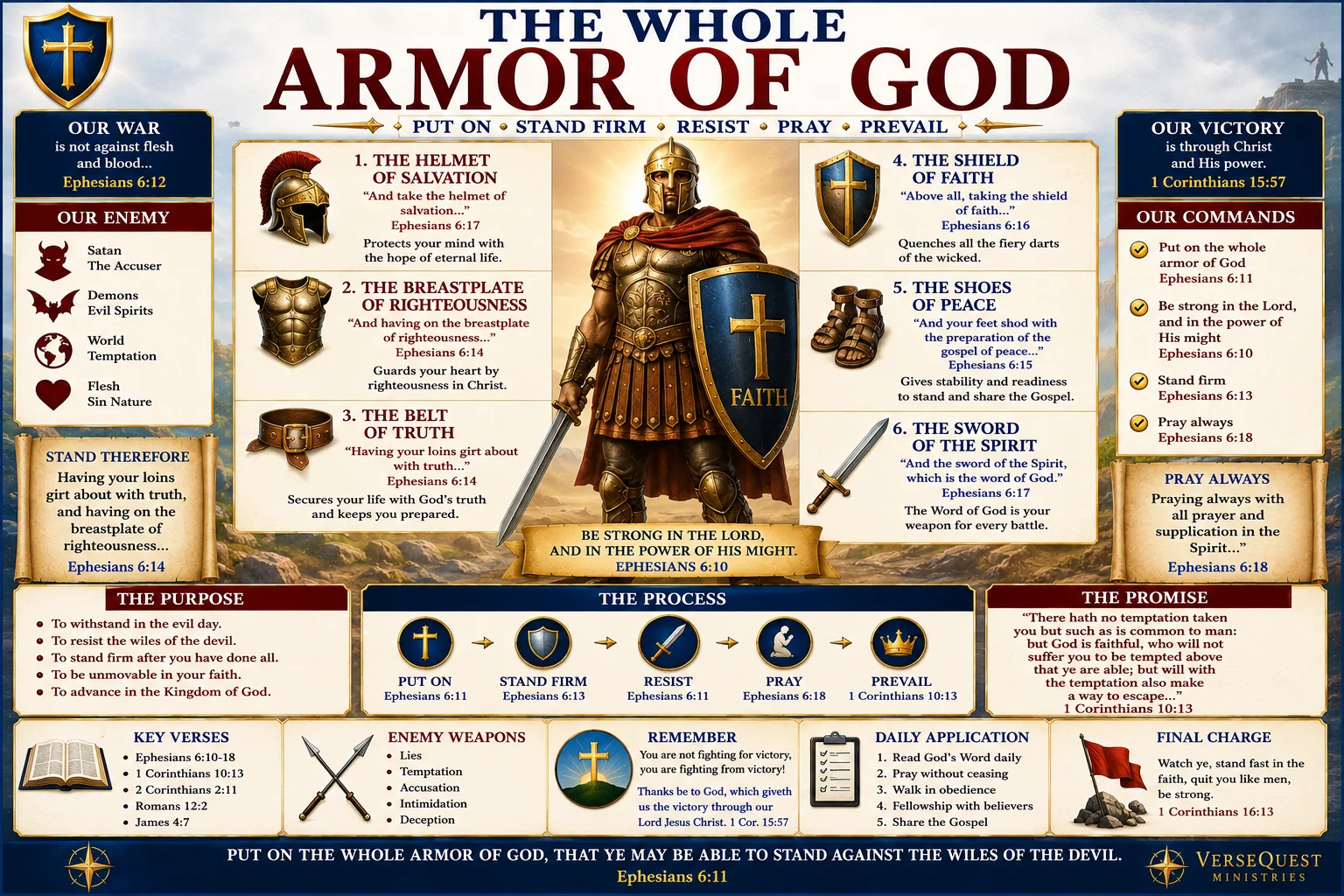
- The Whole Armor of God Chart — KJV Bible Study
- Premium printable KJV Bible study chart explaining the whole armor of God from Ephesians 6, including the helmet, breastplate, belt, shield, shoes, sword, prayer, and spiritual victory in Christ.
- Original price was: $10.00.$4.99Current price is: $4.99.
- Add to cart
-
-50%
-
Overwhelming Fear
-
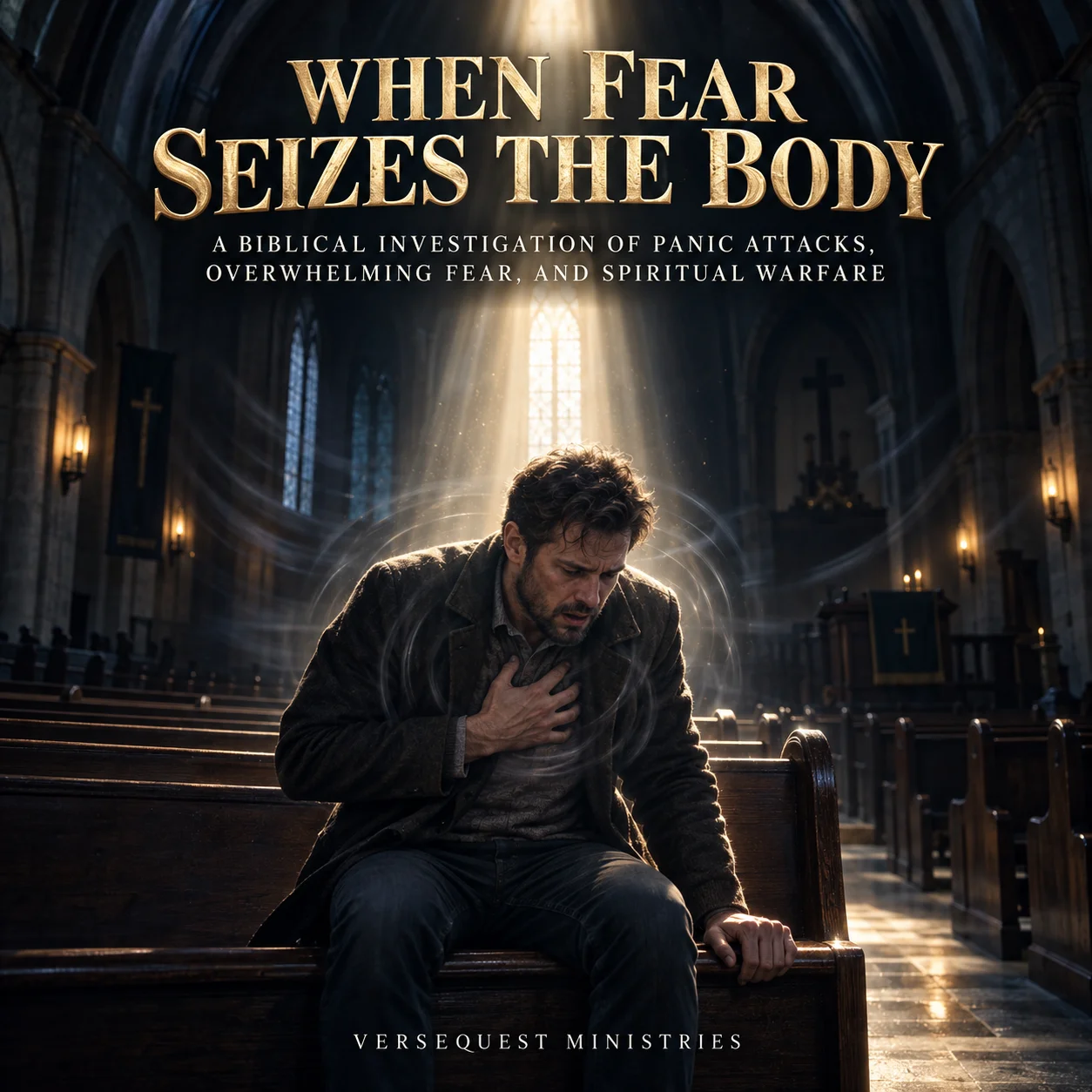
- When Fear Seizes the Body: A Biblical Investigation of Panic Attacks, Overwhelming Fear, and Spiritual Warfare
- When Fear Seizes the Body is a 160-page downloadable KJV Bible-study book examining panic attacks, overwhelming bodily fear, faith, prayer, spiritual warfare, historical explanations, compassionate ministry, and responsible practical help.…
- $14.99
- Add to cart
-