
Why Cain Hated Abel Bible Study Chart – Religion Versus Righteousness, Faith, Works, and Blood Sacrifice (KJV)
Discover why Cain hated Abel with this detailed KJV Bible study chart comparing religion and righteousness, human works and faith, rejected worship, blood sacrifice, pride, jealousy, and salvation through Christ.
$3.99
Description
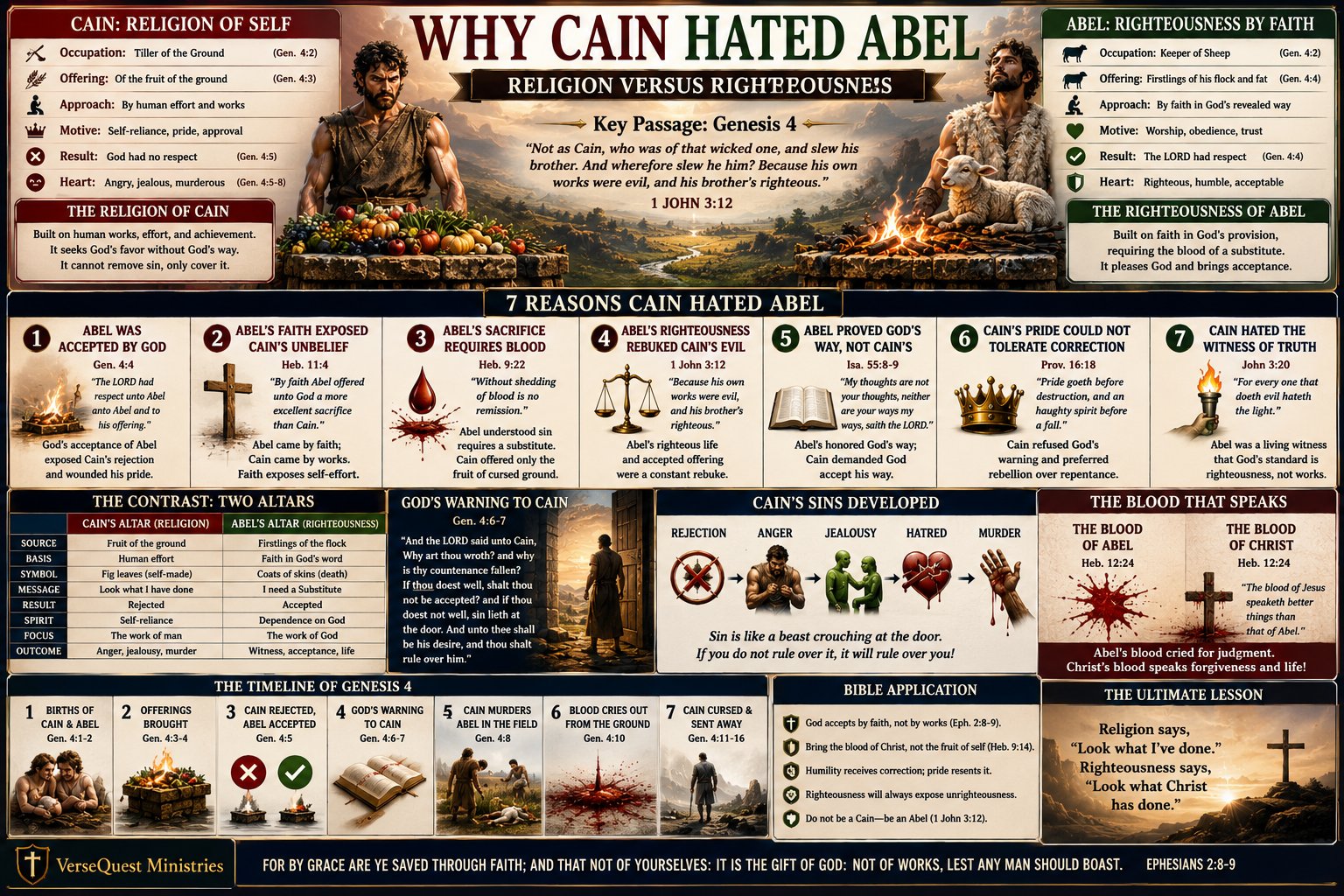
Why Cain Hated Abel: Religion Versus Righteousness is a detailed KJV Bible study chart examining the spiritual conflict behind the first murder recorded in Scripture. More than a story about jealousy between two brothers, Genesis 4 exposes the great division between man-made religion and righteousness by faith, human effort and God’s revealed way, self-justification and acceptable sacrifice.
Cain and Abel were born into the same family, raised by the same parents, and taught about the same God. Yet they approached the LORD in entirely different ways. Cain, a tiller of the ground, brought an offering from the fruit of the earth. Abel, a keeper of sheep, brought the firstlings of his flock and the fat thereof. The LORD had respect unto Abel and his offering, but He did not respect Cain and his offering.
The chart compares Cain’s religion of self with Abel’s righteousness by faith. Cain approached through human effort, personal achievement, self-reliance, and the fruit of a ground already placed under the curse. Abel approached by faith, obedience, and sacrifice. Hebrews 11:4 explains that Abel offered unto God “a more excellent sacrifice than Cain” and obtained witness that he was righteous.
Cain’s anger was not merely directed toward Abel as a brother. Abel’s acceptance exposed Cain’s rejection. Abel’s faith exposed Cain’s unbelief. Abel’s sacrifice testified that sin required death and blood, while Cain’s offering represented the work of his own hands. Abel’s righteousness became a living rebuke to Cain’s self-directed religion.
The chart presents seven reasons Cain hated Abel. Abel was accepted by God, Abel’s faith exposed Cain’s unbelief, Abel’s sacrifice involved blood, Abel’s righteousness condemned Cain’s evil works, Abel proved that God’s way was right, Cain’s pride refused correction, and Cain hated the witness of truth. First John 3:12 explains that Cain slew his brother “because his own works were evil, and his brother’s righteous.”
A detailed comparison of the two altars demonstrates the opposing messages of religion and righteousness. Cain’s altar says, “Look what I have done.” Abel’s altar says, “I need a substitute.” Cain emphasizes the work of man; Abel points toward the work God requires and ultimately toward the finished work of Jesus Christ.
God graciously warned Cain before the murder. The LORD asked why he was angry and told him that sin lay at the door. Cain was neither abandoned nor forced into evil. He received warning, correction, and opportunity to respond. Pride, however, resented correction and allowed rejection to develop into anger, jealousy, hatred, and murder.
The chart traces this downward progression step by step. Rejected worship produces wounded pride. Wounded pride produces anger. Anger feeds jealousy. Jealousy becomes hatred. Hatred finally expresses itself in violence. Sin is pictured as a beast crouching at the door: if a man refuses to rule it, it will eventually rule him.
Abel’s blood crying from the ground is compared with the blood of Jesus Christ in Hebrews 12:24. Abel’s blood cried for judgment, but Christ’s blood speaks of forgiveness, reconciliation, and eternal life. Abel therefore stands not only as the first murdered righteous man but also as an early biblical witness to the necessity of faith and acceptable sacrifice.
The chart concludes with a direct gospel application. God accepts the sinner by grace through faith, not through human merit or religious achievement. Religion boasts, “Look what I have done.” Biblical righteousness declares, “Look what Christ has done.” Salvation rests entirely upon the finished work of Jesus Christ rather than the fruit of fallen human effort.
This resource is ideal for personal Bible study, gospel teaching, salvation lessons, Cain and Abel studies, Sunday school, homeschool Bible curriculum, discipleship, apologetics, Bible institutes, sermon preparation, studies on blood atonement, and teaching against works-based religion.
Cain and Abel, religion versus righteousness, faith versus works, acceptable sacrifice, rejected worship, blood sacrifice, human effort, self-righteousness, pride, jealousy, hatred, murder, God’s warning, sin at the door, righteousness by faith, substitution, blood atonement, Abel’s blood, the blood of Christ, salvation by grace
Genesis 4 reveals that sincerity alone does not make worship acceptable. Cain and Abel both brought offerings, but God accepted only Abel and his sacrifice. Worship must approach God according to revealed truth rather than personal preference.
Hebrews 11:4 explains the decisive difference: Abel offered by faith. Biblical faith is not vague religious sincerity. It believes what God has revealed and responds through obedience. Cain substituted his own way for God’s way and then became angry when God refused to approve it.
Cain’s offering represented human labor and achievement. Abel’s offering involved the life and blood of a substitute. The two altars therefore picture the difference between works-based religion and righteousness received by faith.
Abel’s acceptance exposed Cain’s spiritual condition. Instead of humbling himself, correcting his approach, and receiving God’s warning, Cain resented the righteous witness standing beside him. Pride would rather silence the truth than submit to it.
God warned Cain that sin lay at the door. Cain was responsible for his response. Anger was already crouching near him, but murder was not inevitable. He chose to feed his resentment instead of ruling it.
First John 3:12 states that Cain murdered Abel because Cain’s works were evil and Abel’s were righteous. Righteousness exposes evil without speaking a word. This explains why the world often hates faithful believers whose lives testify against its rebellion.
Cain’s sins developed progressively: rejection, anger, jealousy, hatred, and murder. Sin rarely remains where it begins. What is tolerated inwardly eventually seeks expression outwardly.
The blood of Abel cried from the ground for judgment. Hebrews 12:24 contrasts it with the blood of Jesus Christ, which speaks better things. Christ’s blood provides the forgiveness and reconciliation that Abel’s blood could not provide.
The account also exposes the failure of religion without repentance. Cain wanted God to respect his offering without requiring him to approach on God’s terms. Many religious systems repeat the same error by presenting morality, ceremony, effort, or personal goodness in place of Christ.
Salvation is not God rewarding the finest produce human nature can grow. It is God saving guilty sinners by grace through faith in the finished work and shed blood of Jesus Christ. Religion points to man’s altar; righteousness points to Christ’s cross.
Gospel presentation, salvation by grace teaching, faith versus works studies, Cain and Abel lessons, blood atonement instruction, warnings against self-righteousness, pride and jealousy studies, anger and hatred counseling, Sunday school lessons, homeschool Bible curriculum, Christian school instruction, Bible institute classes, discipleship training, sermon preparation, apologetics, personal evangelism, biblical counseling, Christian living instruction
King James Bible, Strong’s Concordance, Thompson Chain-Reference Bible, Treasury of Scripture Knowledge, Nave’s Topical Bible, Genesis commentary notes, salvation study materials, blood atonement resources, Scripture cross-reference guide, gospel presentation notes, studies on Hebrews 11, studies on 1 John 3, VerseQuest Genesis charts, VerseQuest salvation and doctrine charts
Related products
-
Biblical Repentance
-
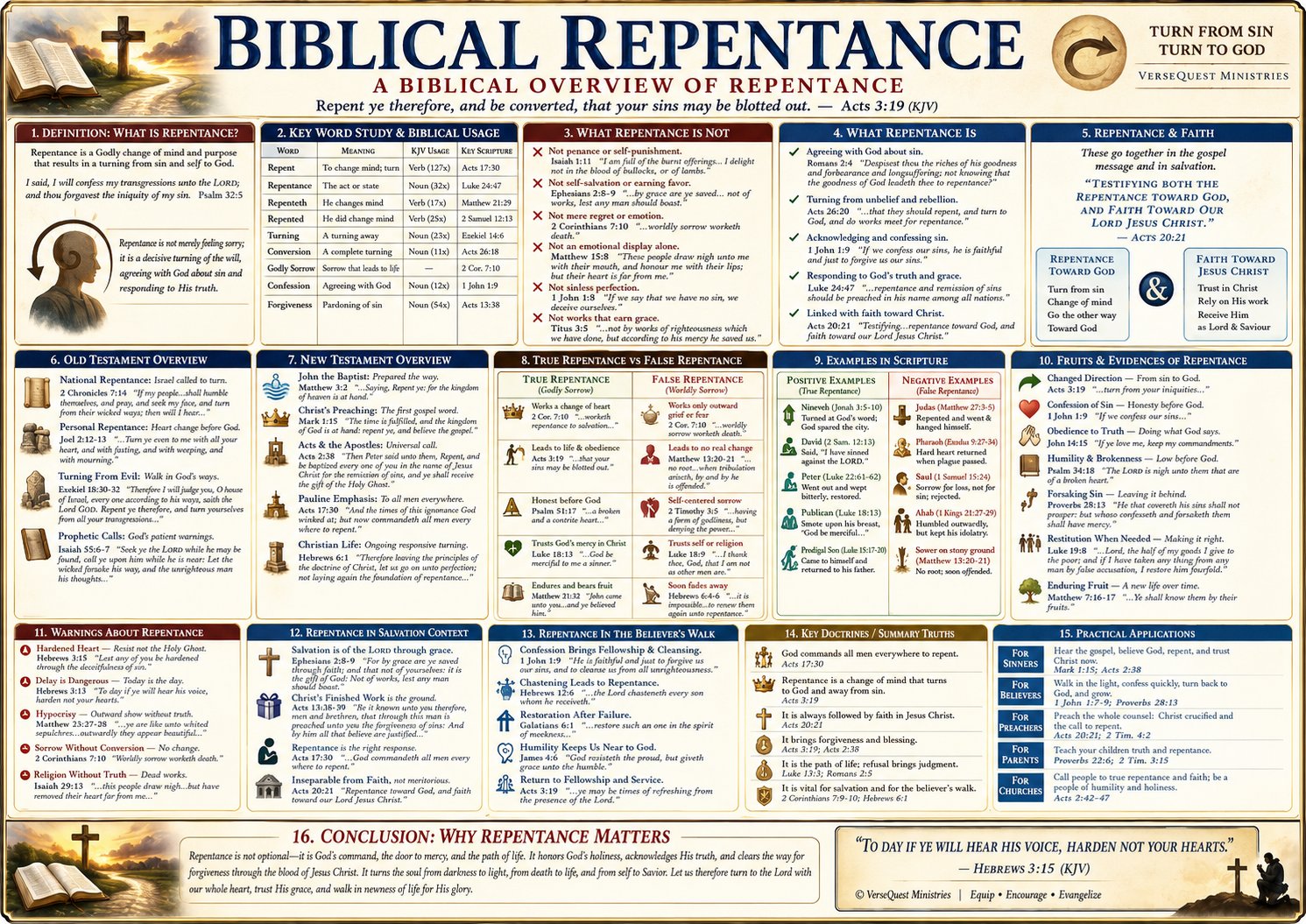
- Biblical Repentance Bible Study Chart – Turning from Sin to God with Faith Toward Jesus Christ (KJV)
- Understand biblical repentance with this detailed KJV chart covering godly sorrow, confession, turning from sin to God, faith in Jesus Christ, false repentance, spiritual restoration, and enduring fruit.
- $3.99
- Add to cart
-
-
Abassadors For Christ
-
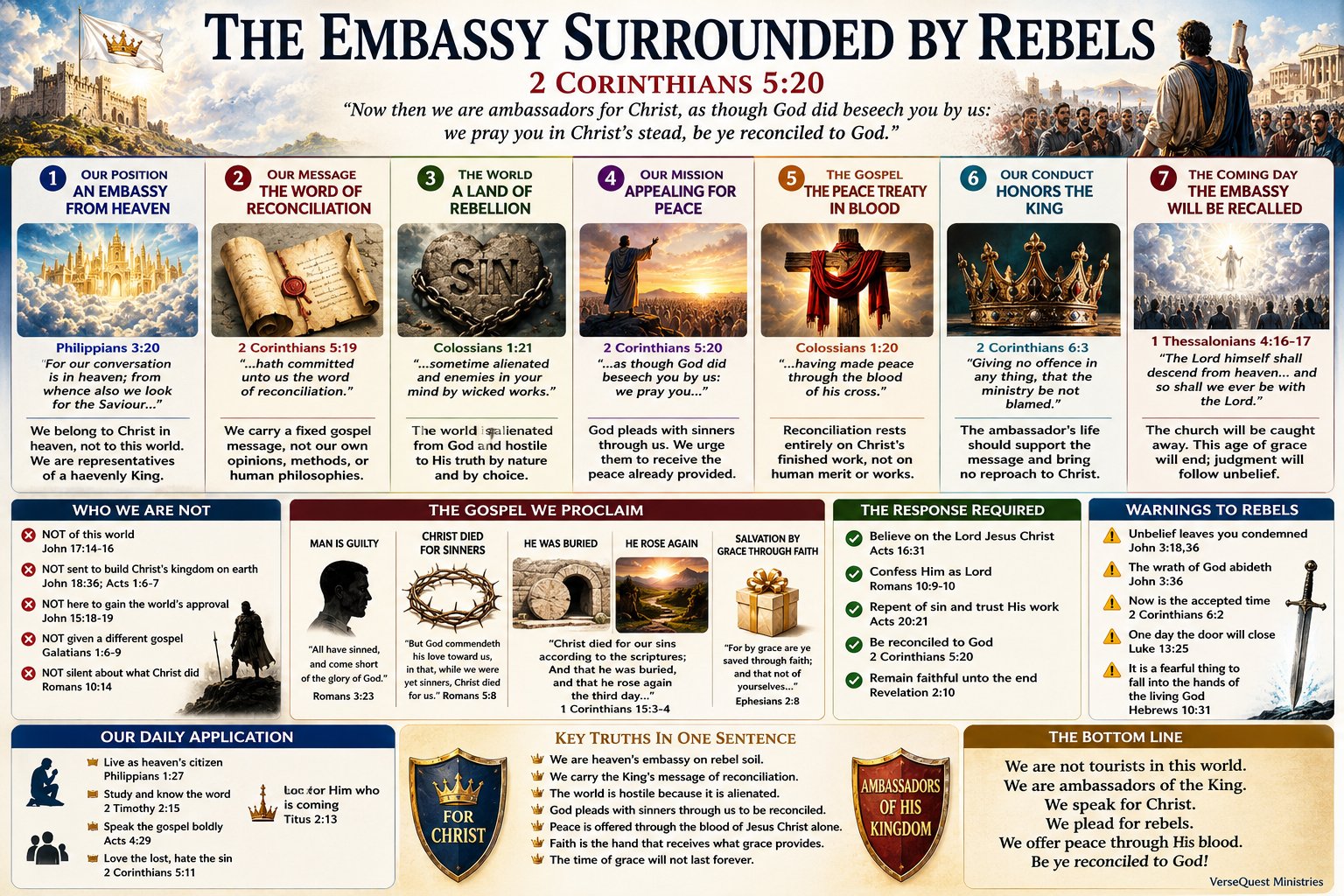
- The Embassy Surrounded by Rebels Bible Study Chart – Ambassadors for Christ and the Ministry of Reconciliation (KJV)
- Understand the Christian’s mission with this detailed KJV chart covering ambassadors for Christ, heavenly citizenship, the gospel of reconciliation, faithful conduct, evangelism, and the coming Rapture.
- $3.99
- Add to cart
-
-
Doctrine
-
-50%
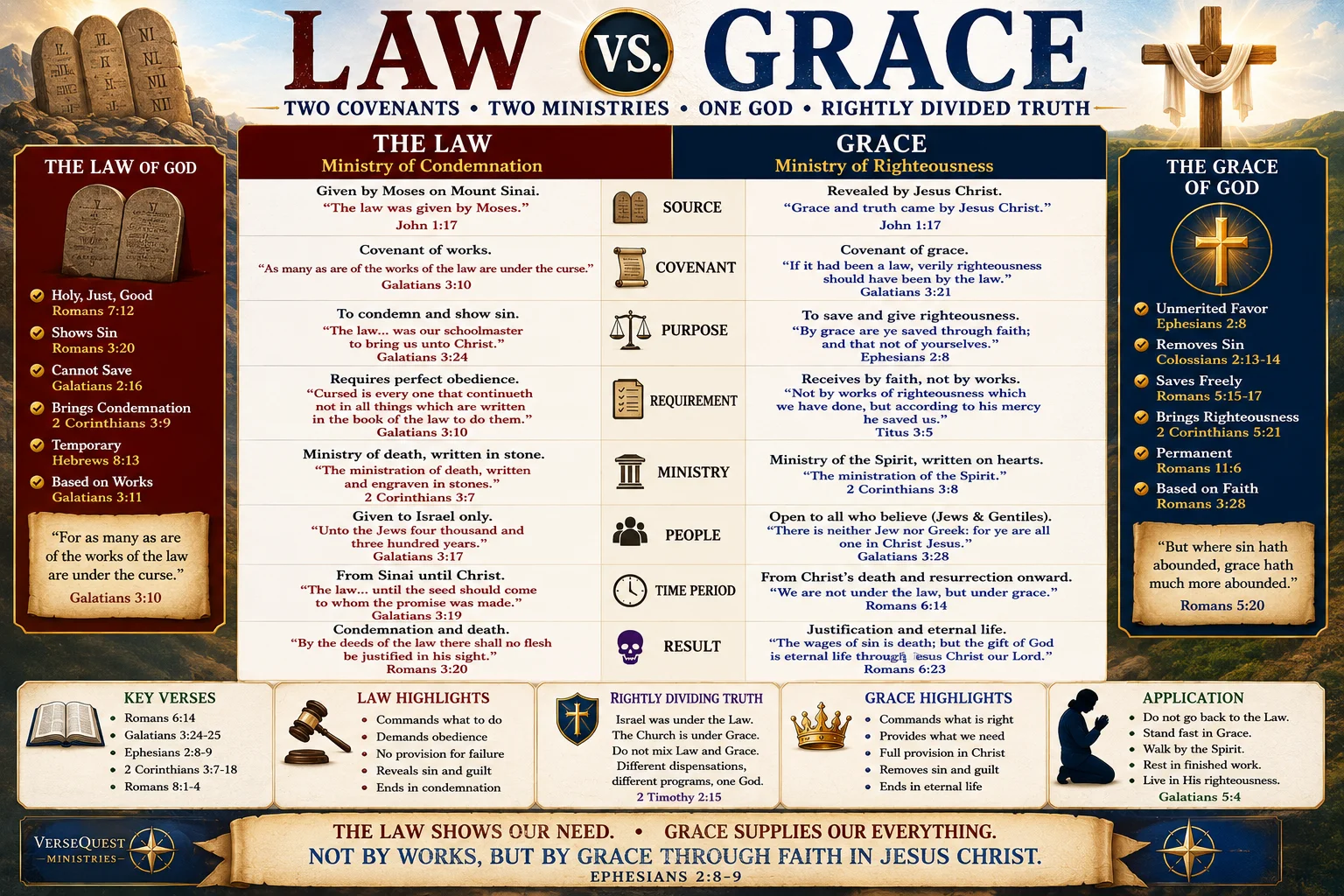
- Law vs. Grace Chart — KJV Rightly Divided
- Premium printable KJV Bible study chart comparing Law and Grace from a rightly divided perspective, showing works versus faith, condemnation versus righteousness, and Moses versus Christ.
- Original price was: $10.00.$4.99Current price is: $4.99.
- Add to cart
-
-50%
-
Romans and James
-
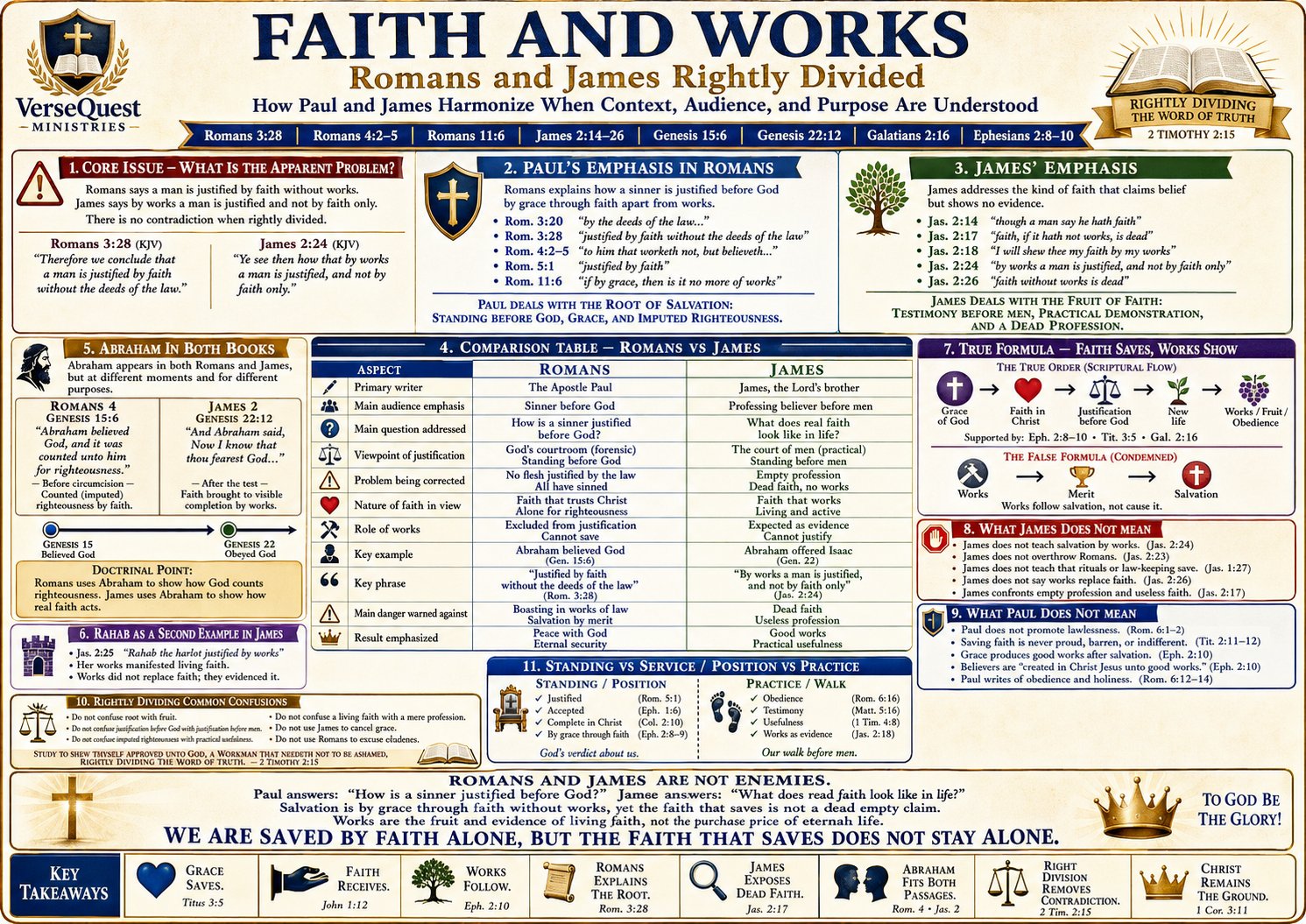
- Faith and Works – Romans and James Rightly Divided: Justification Before God and the Evidence of Living Faith (KJV Bible Study Chart)
- Understand how Romans and James harmonize with this detailed KJV chart covering justification by faith, dead profession, Abraham, Rahab, grace versus works, and the difference between salvation’s root and its…
- $3.99
- Add to cart
-
-
Ages To Come
-
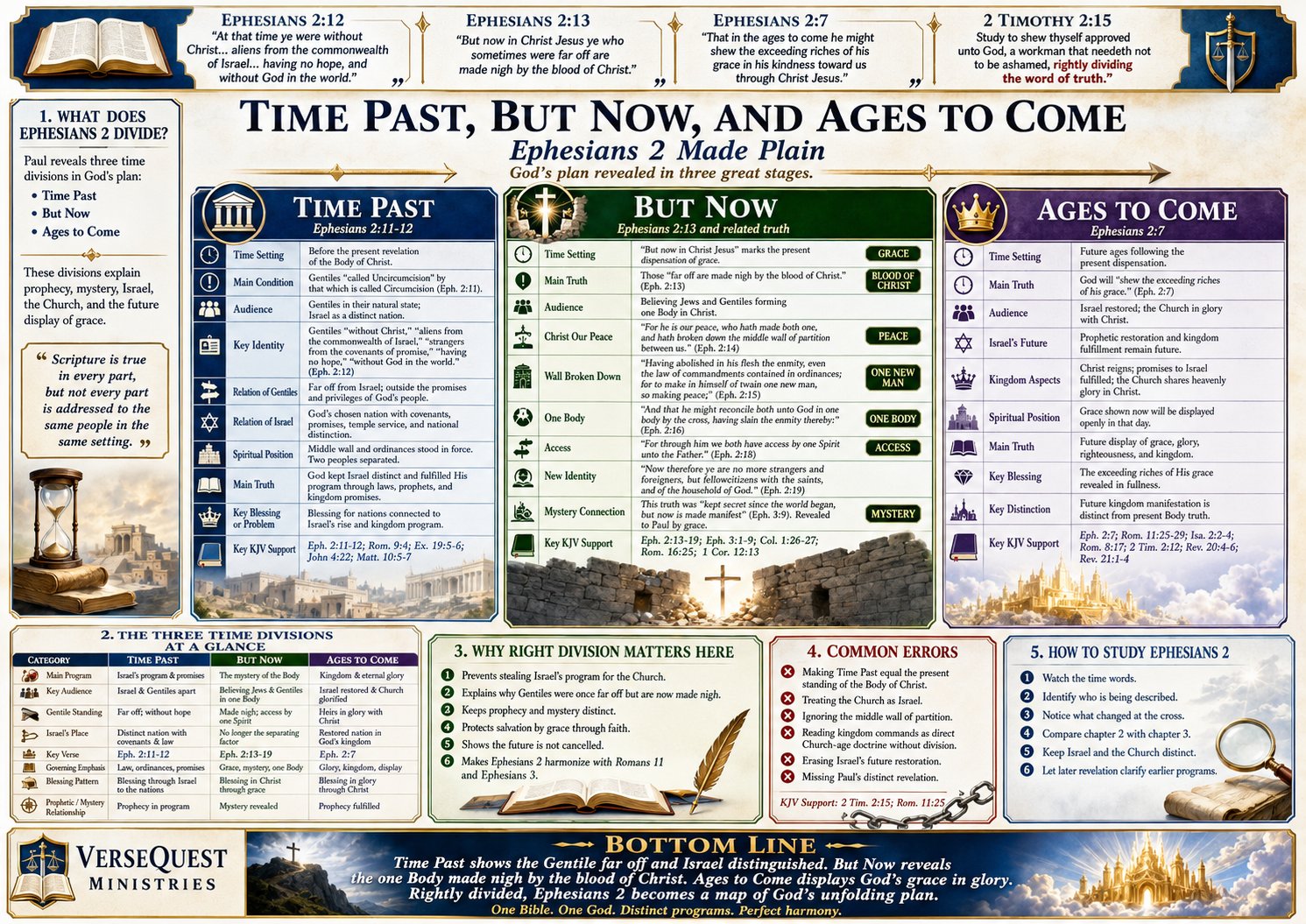
- Time Past, But Now, and Ages to Come – Ephesians 2 Rightly Divided KJV Bible Study Chart
- Understand Ephesians 2 with this detailed KJV chart explaining Time Past, But Now, Ages to Come, Gentile distance, the one Body, Israel’s future, and the importance of right division.
- $3.99
- Add to cart
-