
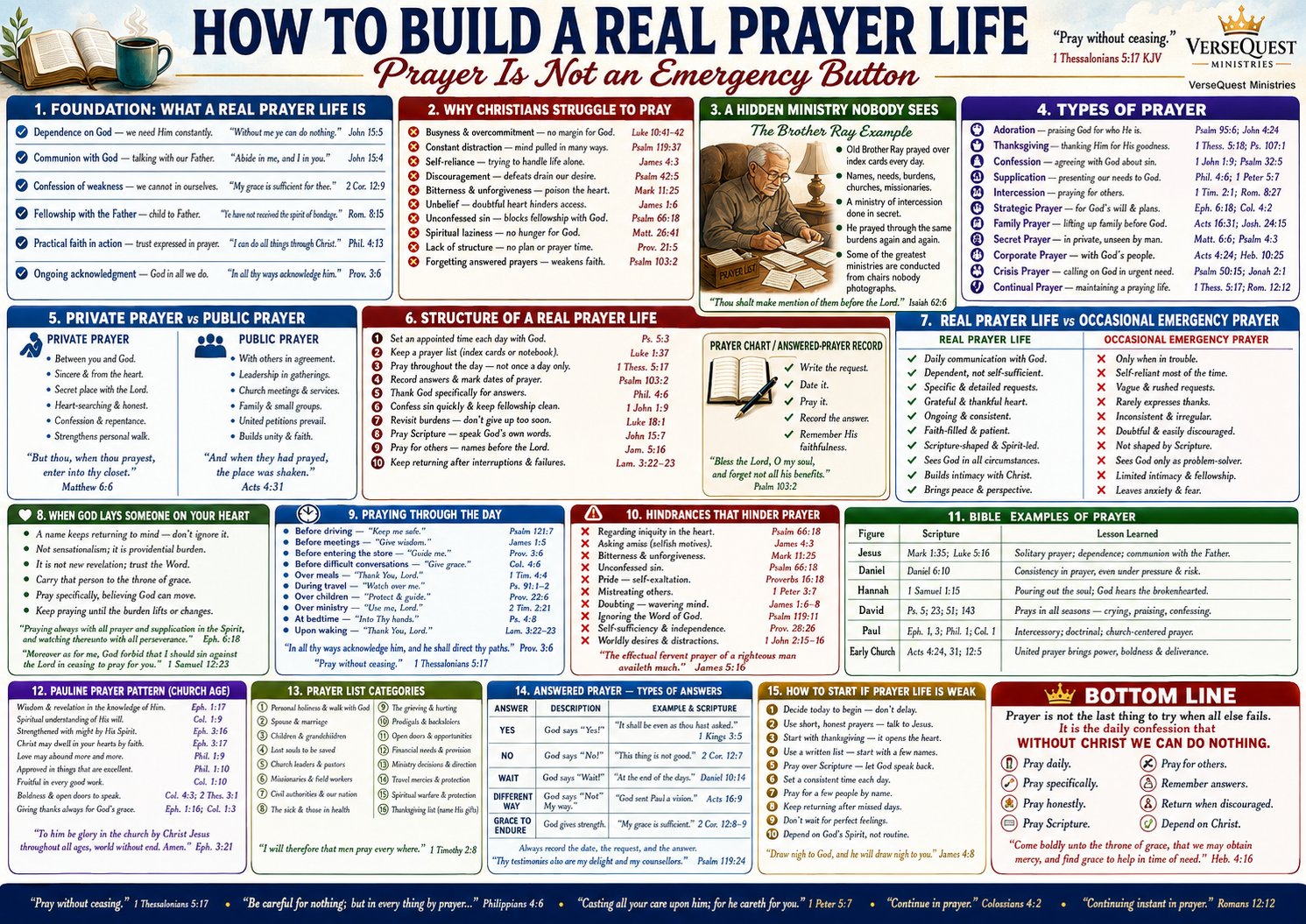
Born to Grow – Seven Essential Steps Every Christian Must Take After Salvation (KJV Bible Study Chart)
Help new and growing believers follow seven essential steps after salvation with this detailed KJV chart on Scripture, church, spiritual warfare, prayer, obedience, service, grace, and assurance.
$3.99
Description
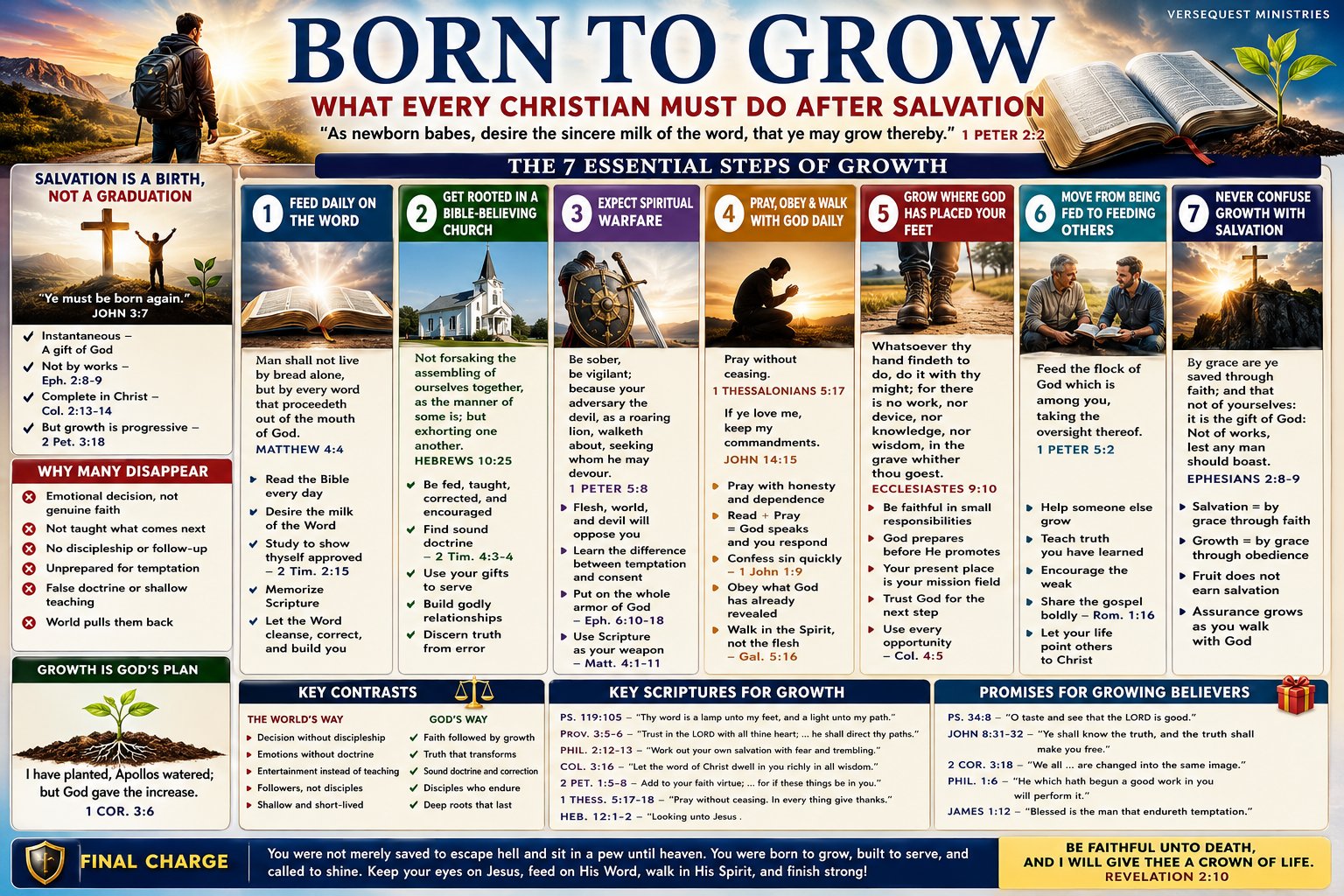
Born to Grow: What Every Christian Must Do After Salvation is a detailed KJV Bible study chart explaining how a newly saved believer can develop from spiritual infancy into a faithful, discerning, fruitful, and useful servant of Jesus Christ.
Built around 1 Peter 2:2, this chart teaches that salvation is a birth, not a graduation. The moment a sinner trusts the Lord Jesus Christ, he receives eternal life as the free gift of God and becomes complete in Christ. However, spiritual maturity does not appear instantly. The new believer must desire the sincere milk of the Word, learn sound doctrine, walk in obedience, resist spiritual opposition, serve others, and continue growing in grace.
The chart carefully distinguishes salvation from Christian growth. Salvation is instantaneous, entirely by grace, and received through faith in the finished work of Jesus Christ. Growth is progressive and develops through Scripture, prayer, church fellowship, obedience, spiritual warfare, service, correction, endurance, and daily dependence upon God.
A believer does not study, pray, serve, or obey in order to become saved. He does these things because he has already been saved. Good works do not create eternal life, but a healthy spiritual life should produce obedience, fruit, maturity, and increasing usefulness.
The first essential step is to feed daily upon the Word of God. Jesus declared that man shall not live by bread alone but by every word that proceeds from the mouth of God. Just as a newborn child requires nourishment, the new Christian needs regular Bible reading, study, memorization, meditation, correction, and doctrinal instruction.
The believer should develop the habit of opening the Bible every day rather than waiting for an emotional desire to appear. He should desire the Word, study to show himself approved unto God, memorize key passages, compare Scripture with Scripture, and allow the Bible to cleanse, correct, and build his thinking.
The second step is to become rooted in a Bible-believing local church. Hebrews 10:25 warns believers not to forsake assembling together. God uses faithful pastors, teachers, mature Christians, fellowship, correction, public preaching, corporate worship, and opportunities for service to strengthen His people.
A sound church does more than provide social activity. It teaches biblical doctrine, warns against error, encourages obedience, provides accountability, develops spiritual gifts, and surrounds the believer with relationships that promote faithfulness. A Christian separated from sound teaching and fellowship becomes especially vulnerable to discouragement, deception, isolation, and spiritual drift.
The third step is to expect spiritual warfare. Salvation does not remove the believer from conflict. It places him within a battle involving the world, the flesh, and the devil. First Peter 5:8 commands Christians to remain sober and vigilant because their adversary walks about seeking whom he may devour.
New believers must learn the difference between temptation and consent. Temptation itself is not the same as surrendering to sin. Christians are instructed to recognize spiritual attacks, put on the whole armour of God, use Scripture as the sword of the Spirit, resist the devil, and avoid becoming discouraged when opposition appears.
The fourth step is to pray, obey, and walk with God daily. Prayer should become an honest expression of dependence rather than an emergency button used only during crisis. The believer should read God’s Word, respond in prayer, confess sin quickly, obey what God has revealed, and walk in the Spirit rather than fulfilling the lusts of the flesh.
Christian growth requires more than accumulating information. Knowledge must become obedience. Jesus said, “If ye love me, keep my commandments.” A believer who learns doctrine but continually refuses its application may become informed without becoming mature.
The fifth step is to grow faithfully where God has placed him. Ecclesiastes 9:10 teaches believers to perform present duties with diligence. Many Christians desire a larger ministry, greater influence, or a more visible opportunity while neglecting the responsibilities already placed before them.
God often prepares His servants through ordinary faithfulness. Small assignments, unnoticed obedience, difficult relationships, secular work, family responsibilities, church service, and hidden seasons may become God’s training ground for later usefulness. The present place is not necessarily an obstacle to God’s purpose; it may be the classroom in which He develops character.
The sixth step is to move from being fed to feeding others. Spiritual growth should eventually produce service. Mature believers help weaker Christians, teach truths they have learned, encourage the discouraged, share the gospel, use their gifts, and point others toward Jesus Christ.
First Peter 5 describes the responsibility to feed the flock of God. Although pastoral oversight belongs to qualified leaders, every growing Christian can help someone else. A believer may explain a verse, pray with another person, share a testimony, encourage faithfulness, assist a ministry, or help a new Christian avoid an error he once faced.
The seventh step is to never confuse spiritual growth with salvation. Salvation remains the gift of God, received by grace through faith and not by works. Growth also depends upon grace, but it operates through obedience, discipline, Scripture, fellowship, and faithful response to God.
Spiritual fruit does not purchase salvation or keep a believer eternally secure. The Christian is secure because of Christ’s finished work, eternal life, and divine sealing. Nevertheless, spiritual growth strengthens assurance because the believer increasingly understands God’s Word, recognizes the Lord’s work in his life, and learns to rest confidently in biblical promises.
The chart also explains why many professing converts disappear. Some make an emotional decision without genuine faith. Others receive little instruction concerning what follows salvation. Some are never discipled, remain unprepared for temptation, encounter shallow or false doctrine, or return quickly to worldly influences.
The answer is not to weaken the gospel or make works part of salvation. The answer is to preach the gospel clearly and then teach saved people how to live. Evangelism must be followed by discipleship, doctrine, fellowship, correction, service, and continued spiritual care.
A major contrast shows the difference between the world’s way and God’s way. The world offers decisions without discipleship, emotions without doctrine, entertainment without teaching, followers rather than disciples, and shallow excitement that quickly fades.
God’s way produces faith followed by growth, truth that transforms, sound doctrine and correction, disciples who endure, and spiritual roots capable of surviving pressure. Genuine growth is not sustained by excitement alone but by continuing in the truth.
The chart gathers essential Scriptures for Christian growth concerning the light of God’s Word, trust in the LORD, pressing toward spiritual maturity, allowing Christ’s Word to dwell richly within, adding Christian virtues, praying continually, and looking unto Jesus.
Promises for growing believers include tasting the goodness of the LORD, knowing the liberating truth of Scripture, being transformed into Christ’s likeness, God completing the work He began, and receiving blessing through faithful endurance.
The chart’s final charge is direct: believers were not saved merely to escape hell and sit passively until heaven. They were born to grow, built to serve, and called to shine. Every Christian should feed upon the Word, walk in the Spirit, remain in fellowship, serve faithfully, resist error, and finish strongly.
This resource is ideal for new-believer discipleship, personal Bible study, church membership classes, youth ministry, Christian schools, homeschool Bible curriculum, Sunday school, pastoral counseling, evangelism follow-up, Bible institutes, sermon preparation, and anyone seeking a clear visual roadmap for Christian growth after salvation.
Christian growth after salvation, born again to grow, spiritual maturity, new-believer discipleship, feeding on God’s Word, daily Bible reading, Bible-believing church, Christian fellowship, spiritual warfare, prayer and obedience, walking in the Spirit, faithfulness in small things, Christian service, feeding other believers, salvation by grace, assurance of salvation, sound doctrine, resisting temptation, enduring discipleship, finishing the Christian race
Salvation is a spiritual birth rather than the completion of Christian maturity. A newborn believer possesses eternal life immediately, but he must grow through nourishment, instruction, correction, fellowship, and obedience.
The believer is saved entirely by grace through faith. Spiritual disciplines do not earn salvation, improve Christ’s finished work, or keep the believer eternally secure.
Growth is progressive. Christians mature at different rates, but no believer should treat continued spiritual infancy as normal or desirable.
First Peter 2:2 compares God’s Word to milk desired by a newborn child. Spiritual appetite should be cultivated through regular reading rather than governed only by changing emotion.
Daily Bible reading gives the Holy Spirit truth to use in correction, comfort, discernment, temptation, worship, and decision-making.
The local church is God’s appointed setting for preaching, teaching, fellowship, accountability, service, and mutual encouragement. Online content cannot fully replace biblical fellowship with a sound congregation.
A believer should examine doctrine carefully. Not every church bearing the name Christian teaches the gospel clearly or handles Scripture faithfully.
Spiritual warfare should be expected. Temptation, discouragement, false doctrine, worldly pressure, and opposition do not prove that salvation failed.
The believer must distinguish temptation from consent. Jesus Christ was tempted without sin. Sin occurs when desire is welcomed, nourished, and obeyed.
Prayer and Scripture should work together. God speaks through His Word, and the believer responds through prayer, confession, thanksgiving, petition, and obedience.
Confession should be prompt. Hidden sin weakens fellowship, hardens the conscience, and interrupts spiritual usefulness.
Christian maturity is demonstrated through obedience rather than information alone. Knowing doctrine without submitting to it may produce pride rather than growth.
God often prepares believers through hidden faithfulness. Small responsibilities reveal character and teach lessons required for larger opportunities.
Every believer has opportunities to serve. Service does not require a title, platform, large audience, or public ministry.
A growing Christian should eventually help another believer. Spiritual nourishment is not meant to terminate with the person receiving it.
Teaching others strengthens personal understanding because it requires the believer to organize, explain, and apply truth carefully.
Salvation and growth must remain distinct. Weak growth may damage joy, testimony, usefulness, fellowship, and reward, but it does not undo the new birth.
Assurance should be grounded in Scripture rather than spiritual performance. Growth can strengthen understanding, but Christ remains the foundation of security.
Many people disappear after an emotional religious response because they were never grounded in the gospel, discipled, prepared for opposition, or connected with sound teaching.
Healthy evangelism should include follow-up. The Great Commission includes teaching believers to observe what Christ commanded.
Christian growth requires endurance. Temporary excitement may begin a habit, but steady obedience develops lasting roots.
The believer’s goal is increasing conformity to Jesus Christ. Knowledge, ministry, and activity are incomplete when they do not produce holiness, charity, humility, discernment, and obedience.
The Christian must keep looking unto Jesus. Growth is not achieved through self-reliance but through grace, Scripture, the Holy Spirit, fellowship, and continued dependence upon Christ.
New-believer follow-up, Christian discipleship classes, church membership instruction, daily Bible-reading habits, prayer training, spiritual-warfare teaching, local-church involvement, developing Christian service, teaching salvation and growth distinctions, youth ministry, family discipleship, evangelism follow-up, Sunday school lessons, homeschool Bible curriculum, Christian school teaching, Bible institute classes, pastoral counseling, sermon preparation
King James Bible, Strong’s Concordance, Thompson Chain-Reference Bible, Treasury of Scripture Knowledge, Nave’s Topical Bible, daily Bible-reading plan, personal prayer journal, Scripture memory cards, new-believer discipleship workbook, local-church doctrine classes, spiritual-gifts study materials, Ephesians 6 armour-of-God resources, 1 Peter study notes, 2 Peter 1 growth worksheet, VerseQuest salvation and Christian Living charts
Related products
-
Biblical Repentance
-
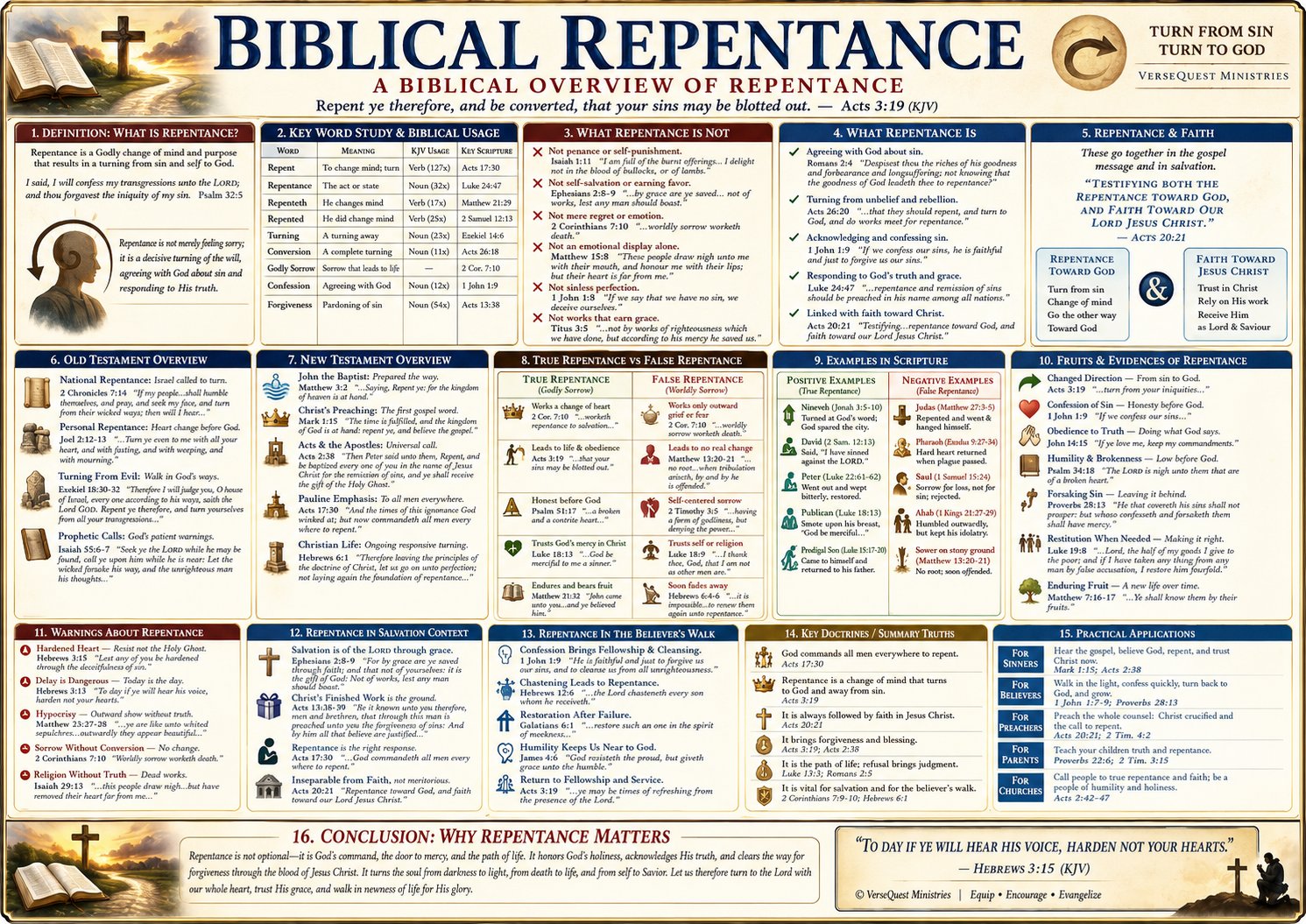
- Biblical Repentance Bible Study Chart – Turning from Sin to God with Faith Toward Jesus Christ (KJV)
- Understand biblical repentance with this detailed KJV chart covering godly sorrow, confession, turning from sin to God, faith in Jesus Christ, false repentance, spiritual restoration, and enduring fruit.
- $3.99
- Add to cart
-
-
Precious Blood of Christ
-
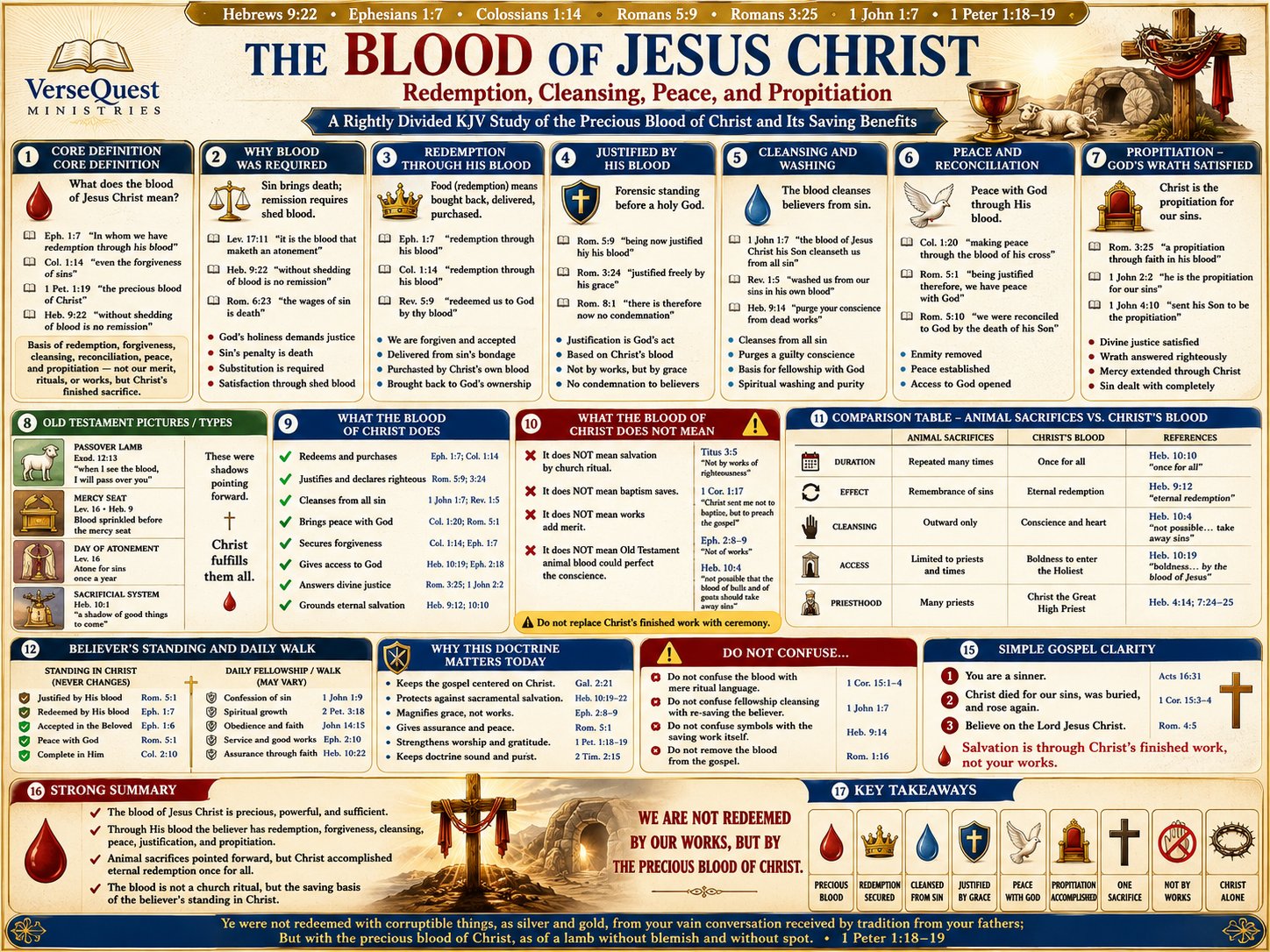
- The Blood of Jesus Christ – Redemption, Cleansing, Justification, Peace, and Propitiation (KJV Bible Study Chart)
- Study the saving power of the blood of Jesus Christ with this detailed KJV chart covering redemption, forgiveness, justification, cleansing, peace, reconciliation, propitiation, Old Testament sacrifices, and Christ’s one sufficient…
- $3.99
- Add to cart
-
-
Lordship Salvation Exposed
-
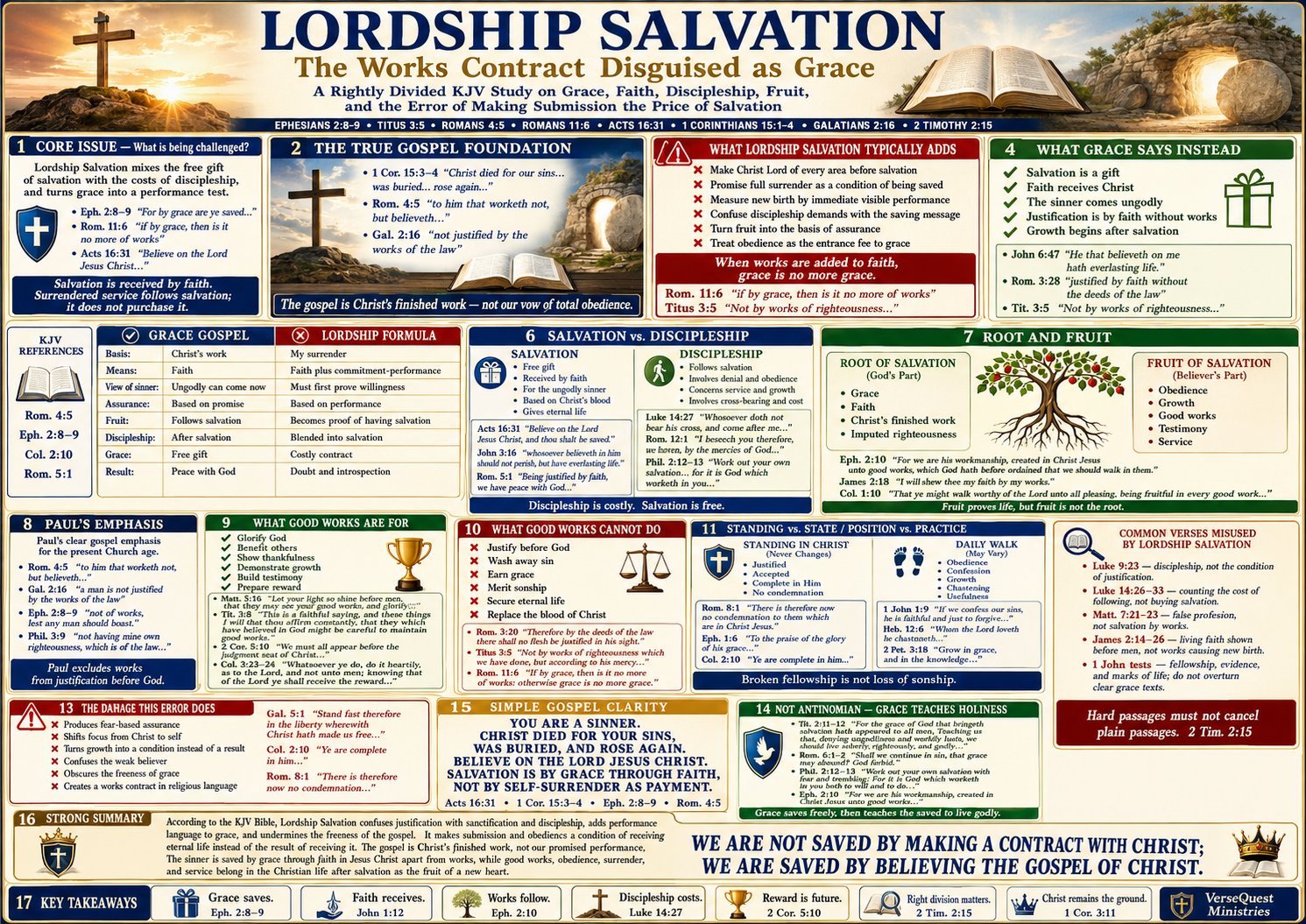
- Lordship Salvation Exposed – The Works Contract Disguised as Grace and the Difference Between Salvation and Discipleship (KJV Bible Study Chart)
- Examine Lordship Salvation with this detailed KJV chart distinguishing the free gift of salvation from costly discipleship, justification from sanctification, and the root of grace from the fruit of Christian…
- $3.99
- Add to cart
-
-
Baptismal Regeneration
-
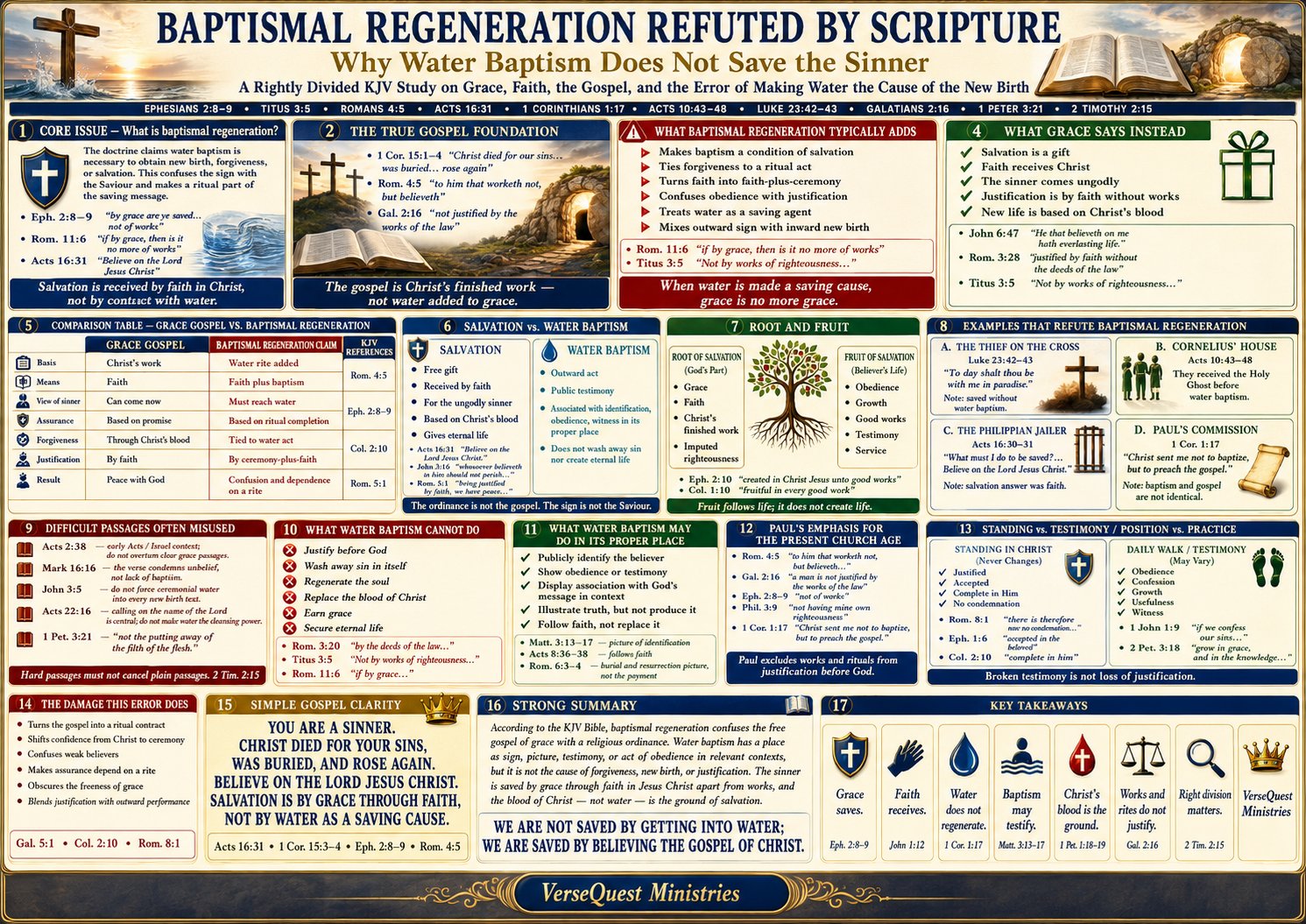
- Baptismal Regeneration Refuted by Scripture – Why Water Baptism Does Not Save the Sinner (KJV Bible Study Chart)
- See why water baptism does not save with this detailed KJV chart covering the gospel of grace, faith versus ritual, the thief on the cross, Cornelius, Paul’s commission, difficult baptism…
- $3.99
- Add to cart
-
-
Doctrine
-
-50%

- Law vs. Grace Chart — KJV Rightly Divided
- Premium printable KJV Bible study chart comparing Law and Grace from a rightly divided perspective, showing works versus faith, condemnation versus righteousness, and Moses versus Christ.
- Original price was: $10.00.$4.99Current price is: $4.99.
- Add to cart
-
-50%