
Law vs. Grace Bible Study Chart – Why Mixing Them Produces Confusion (KJV)
Compare law and grace with this detailed KJV Bible study chart explaining salvation, justification, holiness, Israel’s Mosaic covenant, Christian liberty, and the danger of mixing law with the gospel.
$3.99
Description
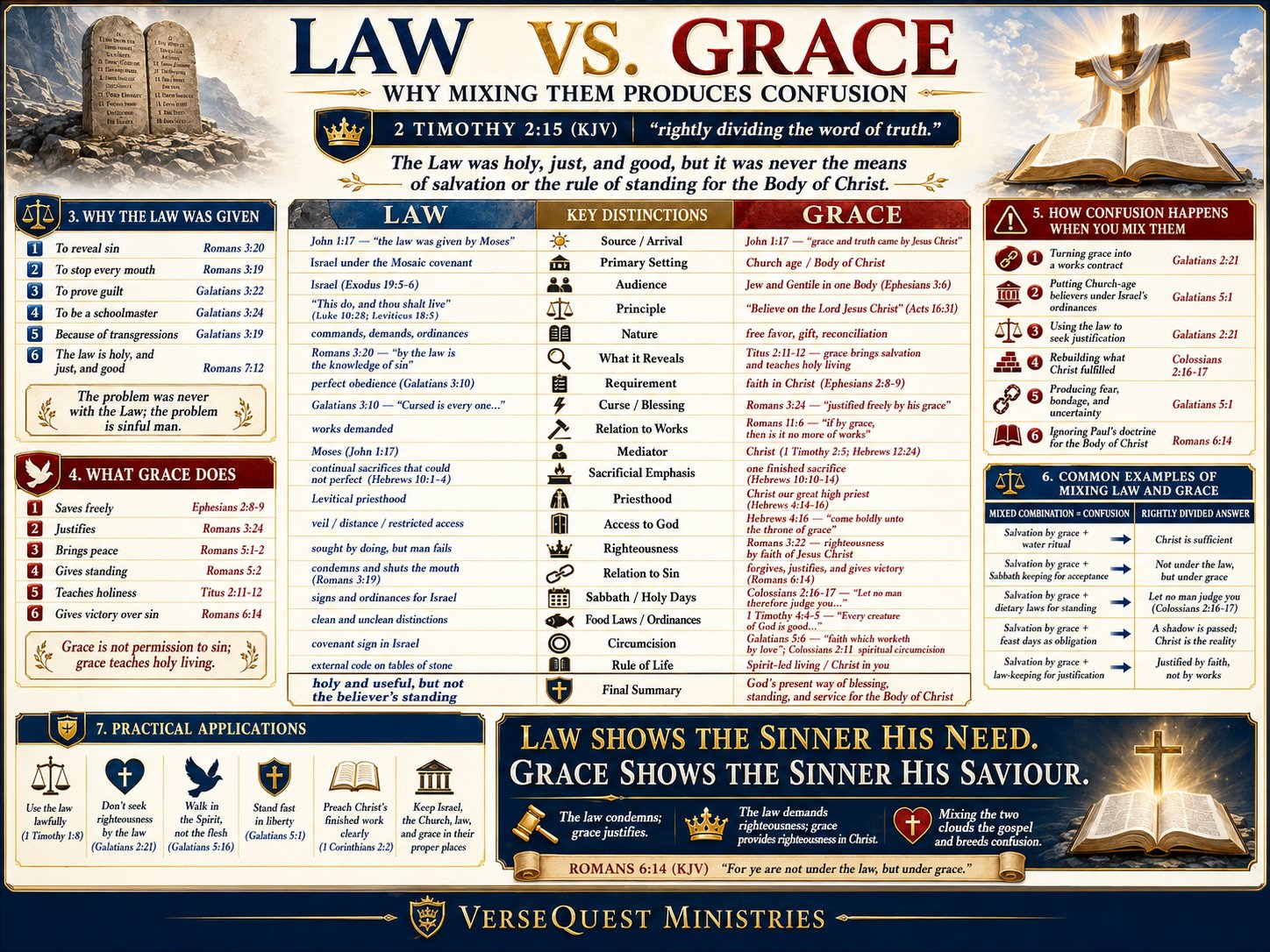
Law vs. Grace: Why Mixing Them Produces Confusion is a detailed KJV Bible study chart explaining the vital biblical distinction between Israel’s Mosaic law and the grace given to the Body of Christ through Jesus Christ. Built around 2 Timothy 2:15 and Romans 6:14, this chart shows how rightly dividing law and grace protects the gospel, strengthens assurance, and prevents believers from being placed under a covenant program that God did not give to the Church.
The law was holy, just, and good. Its weakness was not found in God’s commandments but in sinful man, who could not meet their perfect standard. The law revealed sin, stopped every mouth, established guilt, exposed transgression, and functioned as a schoolmaster pointing toward the need for Christ.
The law was given through Moses within God’s covenant dealings with Israel. It contained commandments, ordinances, sacrifices, priestly regulations, dietary distinctions, holy days, circumcision, Sabbath requirements, and national responsibilities. Its governing principle demanded obedience: “This do, and thou shalt live.”
Grace and truth came by Jesus Christ. Under grace, the sinner is not told to establish righteousness through law-keeping. He is directed to believe on the Lord Jesus Christ and receive the righteousness God provides through faith in Christ’s finished work.
The chart compares law and grace across their source, setting, audience, governing principle, nature, requirements, relationship to works, mediator, sacrifice, priesthood, access to God, righteousness, treatment of sin, ordinances, and rule of life. These distinctions reveal why law and grace cannot be blended without weakening both.
The law commands but does not give fallen man the power to obey perfectly. Grace saves freely, justifies the ungodly, brings peace with God, establishes the believer’s standing in Christ, teaches holy living, and provides victory over sin. Grace is not permission to live carelessly; according to Titus 2, the grace that saves also teaches believers to deny ungodliness and live soberly, righteously, and godly.
Under the law, repeated sacrifices could never permanently take away sins. Under grace, Jesus Christ offered one finished and sufficient sacrifice. The Levitical priesthood was temporary and imperfect, but Christ is the believer’s eternal Great High Priest, seated at God’s right hand and able to save to the uttermost.
The law maintained distance through the veil, priesthood, altar, and restricted access. Through Christ’s shed blood, believers are invited to come boldly to the throne of grace. Access to God is no longer based upon an earthly priesthood or ceremonial system but upon the completed mediation of Jesus Christ.
The law reveals the sinner’s guilt; grace reveals the Saviour who paid the debt. The law demands righteousness; grace provides righteousness in Christ. The law condemns the guilty; grace justifies the believer freely through the redemption found in Jesus Christ.
A major section explains why the law was given. It reveals sin, stops human boasting, proves guilt, exposes transgression, and demonstrates mankind’s inability to establish righteousness through personal performance. The problem was never with God’s righteous standard; the problem was the sinful nature of man.
The chart also identifies common ways law and grace are mixed. These include turning grace into a works contract, placing Church-age believers under Israel’s ordinances, using law-keeping as a means of justification, rebuilding what Christ fulfilled, producing fear and uncertainty, and ignoring Paul’s doctrine for the Body of Christ.
Common examples include adding Sabbath observance, dietary restrictions, feast days, circumcision, or Mosaic law-keeping to salvation by grace. The rightly divided answer is that Christ is sufficient, the believer is not under the law but under grace, and no ritual or ordinance can improve the complete standing already possessed in Him.
This distinction does not mean Christians are free to steal, lie, commit adultery, worship idols, or live after the flesh. Grace does not remove holiness; it establishes a new basis for it. The believer walks in the Spirit, serves through love, obeys Christ from the heart, and lives according to the truth of the written Word rather than seeking acceptance through an external covenant code.
The law should still be used lawfully. It reveals God’s holiness, exposes sin, provides historical and doctrinal instruction, and teaches believers about God’s righteous standards. The error comes when Israel’s covenant law is made the believer’s means of justification or rule of standing before God.
This chart is ideal for personal Bible study, right-division classes, dispensational teaching, salvation studies, Christian discipleship, pastoral training, Sunday school, homeschool Bible curriculum, Bible institutes, sermon preparation, and believers seeking clarity about law, grace, legalism, assurance, holiness, and the finished work of Christ.
Law versus grace, Mosaic law, gospel of grace, salvation by grace through faith, justification by faith, Israel and the Church, right division, law and works, Christ’s finished sacrifice, Christian liberty, legalism, righteousness in Christ, access to God, Great High Priest, grace and holiness, Body of Christ, Pauline doctrine, Church-age standing, biblical ordinances, assurance of salvation
The law and grace both reveal the holy character of God, but they do not function as the same biblical administration. The law was given through Moses to Israel, while the present Body of Christ stands in the grace revealed through Jesus Christ and explained especially in Paul’s epistles.
The law was never defective. Romans 7 calls it holy, just, and good. Its inability to justify came from sinful man, not from any flaw in God’s commandments.
The law exposes sin but cannot regenerate the sinner. It operates like a mirror that reveals defilement without possessing the power to cleanse it. Grace directs the guilty sinner to the blood and finished work of Jesus Christ.
Justification cannot come through law-keeping because the law requires complete obedience. Breaking the law at any point places the transgressor under its condemnation. Christ alone fulfilled its righteous demands perfectly.
Grace is not God lowering His standard. The cross demonstrates how seriously God regards sin. Jesus Christ bore the judgment demanded by divine righteousness so that believing sinners could be justified without God compromising His holiness.
Romans 6:14 declares that believers are not under the law but under grace. This concerns their standing, covenant position, and governing relationship before God. It does not grant permission to live in sin.
Grace teaches holiness from within. The indwelling Holy Spirit, the written Word, gratitude for redemption, and the believer’s identity in Christ produce obedience that external commandments could never create in an unregenerate heart.
The sacrifices under the law pointed forward to Christ but could not permanently remove sin. Jesus offered Himself once, completed redemption, and sat down because the sacrificial work was finished.
The believer does not require an earthly priest to gain access to God. Jesus Christ is the Great High Priest, and His blood opens the way to the throne of grace.
Mixing law and grace produces uncertainty because the believer begins measuring acceptance by performance rather than resting in Christ. Assurance weakens whenever human works are added to the sufficiency of the cross.
Sabbaths, dietary laws, circumcision, and feast days belonged within Israel’s covenant program. They should be studied as Scripture but not imposed upon the Church as requirements for justification or spiritual standing.
The law may still be used lawfully to reveal sin, teach righteousness, and provide spiritual instruction. Right division does not discard the law; it keeps the law in the place God assigned it.
The Christian’s rule of life is not lawless self-indulgence. It is Christ living through the believer, the Holy Spirit producing fruit, and the saved person walking in obedience to sound Church-age doctrine.
Law shows the sinner his need. Grace shows the sinner his Saviour. Law condemns; grace justifies. Law demands righteousness; grace provides righteousness through faith in Jesus Christ.
Law-and-grace comparison studies, salvation teaching, refuting legalism, explaining Christian liberty, Israel and Church distinctions, dispensational Bible classes, Pauline doctrine, justification by faith, assurance of salvation, teaching the lawful use of the law, holiness under grace, Sunday school lessons, homeschool Bible curriculum, Bible institute classes, pastoral training, sermon preparation, discipleship, biblical counseling
King James Bible, Strong’s Concordance, Thompson Chain-Reference Bible, Treasury of Scripture Knowledge, Nave’s Topical Bible, Romans study notes, Galatians study materials, Hebrews comparison charts, Pauline epistle outlines, Israel and Church comparison resources, dispensational timeline charts, law-and-grace verse worksheets, salvation assurance studies, VerseQuest right-division and doctrine charts
Related products
-
Prophecy vs Mystery
-
- Prophecy vs. Mystery Bible Study Chart – Spoken Since the World Began vs. Kept Secret Since the World Began (KJV)
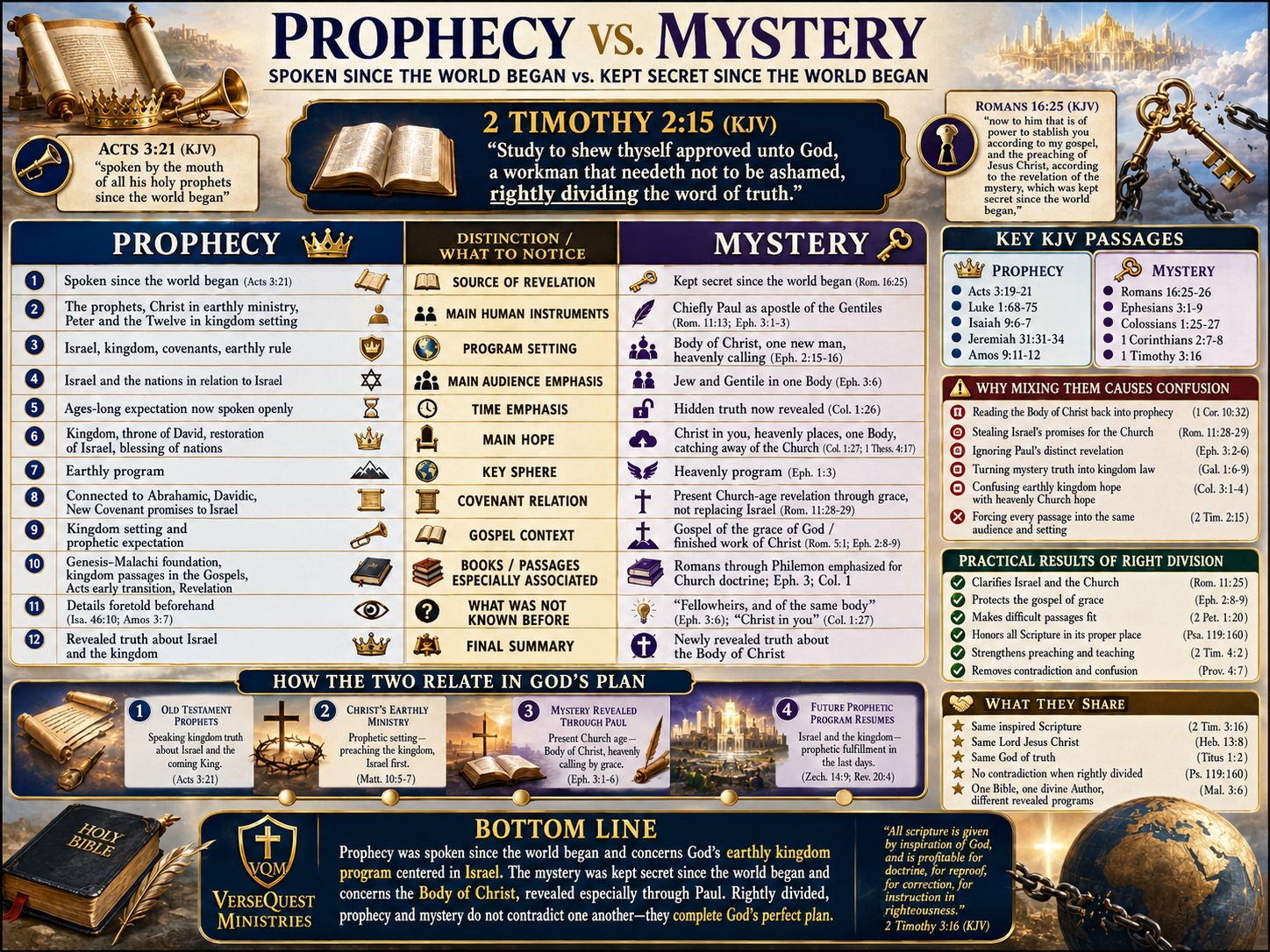
- Compare prophecy and mystery with this detailed KJV chart explaining Israel’s earthly Kingdom program, the Body of Christ, Paul’s revelation, the heavenly calling, and the importance of right division.
- $3.99
- Add to cart
-
-
Matthew Without Confusion
-
- Matthew Without Confusion: A Rightly Divided Guide to the Gospel of Matthew
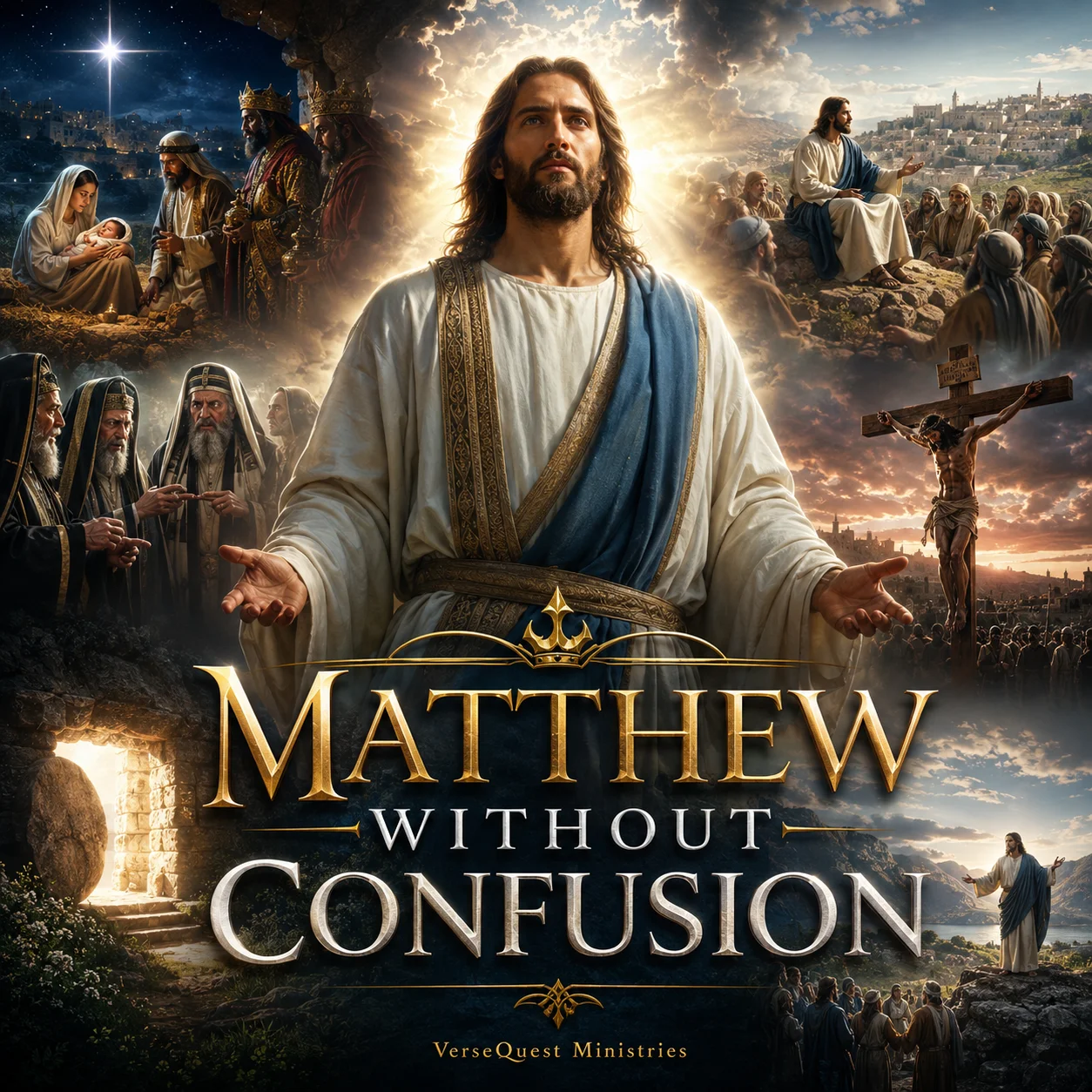
- Understand the Gospel of Matthew without mixing Israel, the Church, the kingdom, the Tribulation, and the Second Advent. Matthew Without Confusion is a massive 936-page KJV Bible commentary containing 72…
- $9.99
- Add to cart
-
-
Doctrine
-
-50%
- Israel, the Church, and the Gentiles Chart — KJV Rightly Divided
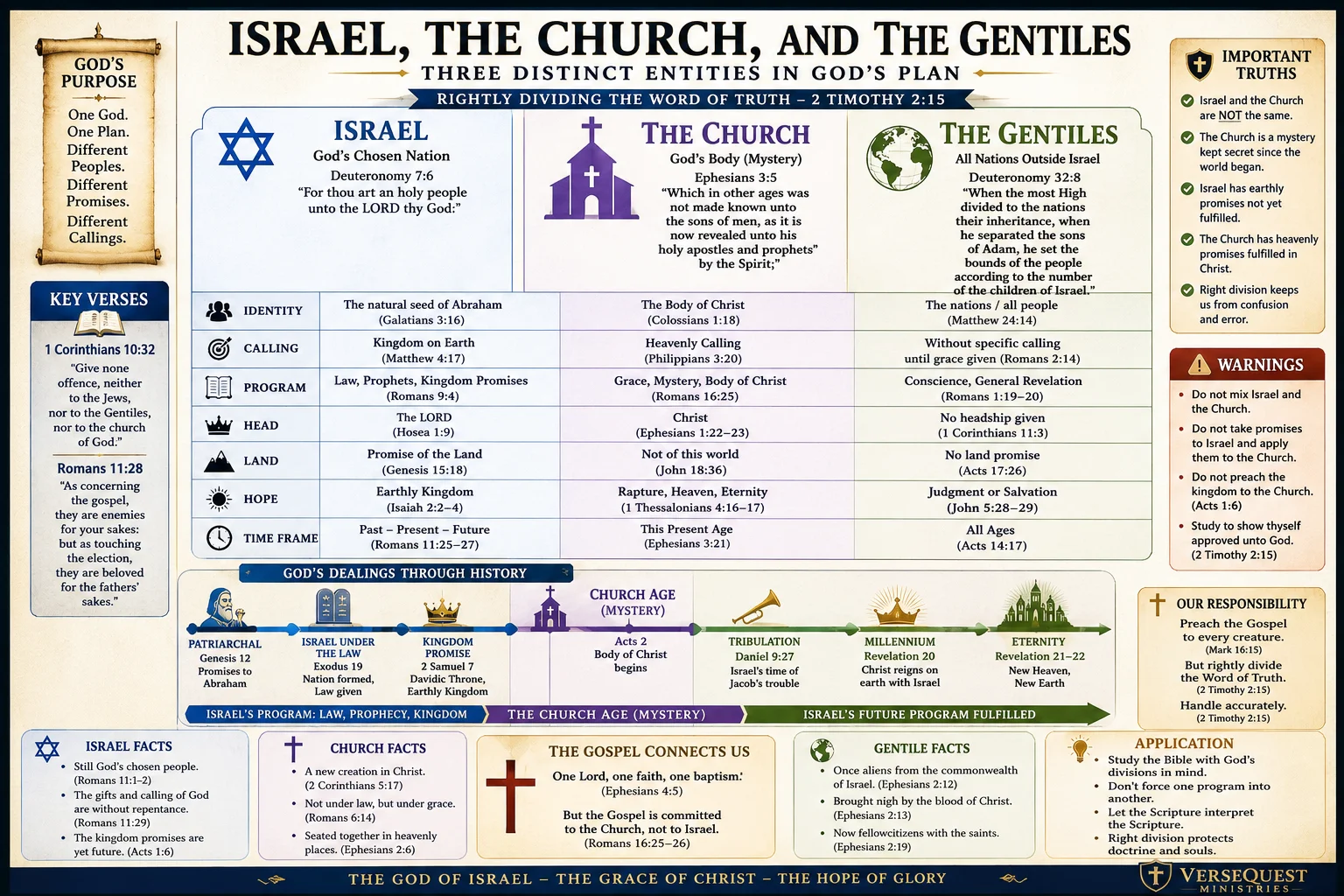
- Premium printable KJV Bible study chart comparing Israel, the Church, and the Gentiles as three distinct entities in God’s plan. Rightly divided, visually organized, and designed for teaching and personal…
- Original price was: $10.00.$4.99Current price is: $4.99.
- Add to cart
-
-50%
-
Jesus Christ Studies
-
-67%
- Jesus Christ Prophet Priest and King – 441-Page PDF Study
- A 441-page premium KJV PDF study on Jesus Christ as Prophet, Priest, and King. This detailed VerseQuest book covers Christ’s prophetic ministry to Israel, His finished sacrifice and present intercession…
- Original price was: $29.99.$9.99Current price is: $9.99.
- Add to cart
-
-67%
-
The Rapture
-
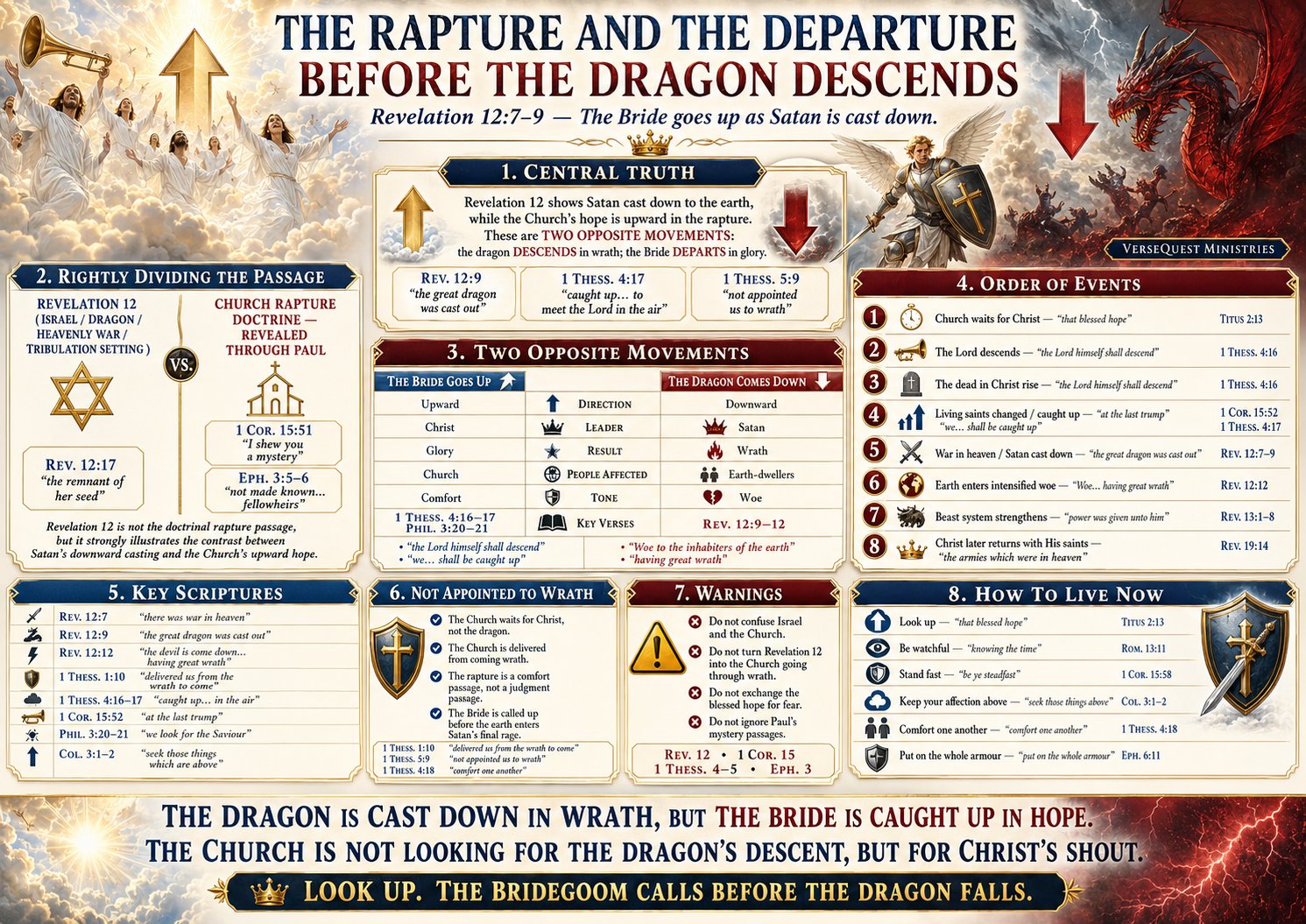
- The Rapture and the Departure Before the Dragon Descends – Printable Bible Study Chart
- Printable KJV Bible study chart on The Rapture and the Departure Before the Dragon Descends, showing the Bride caught up before Satan is cast down in wrath. This premium VerseQuest…
- $4.99
- Add to cart
-