
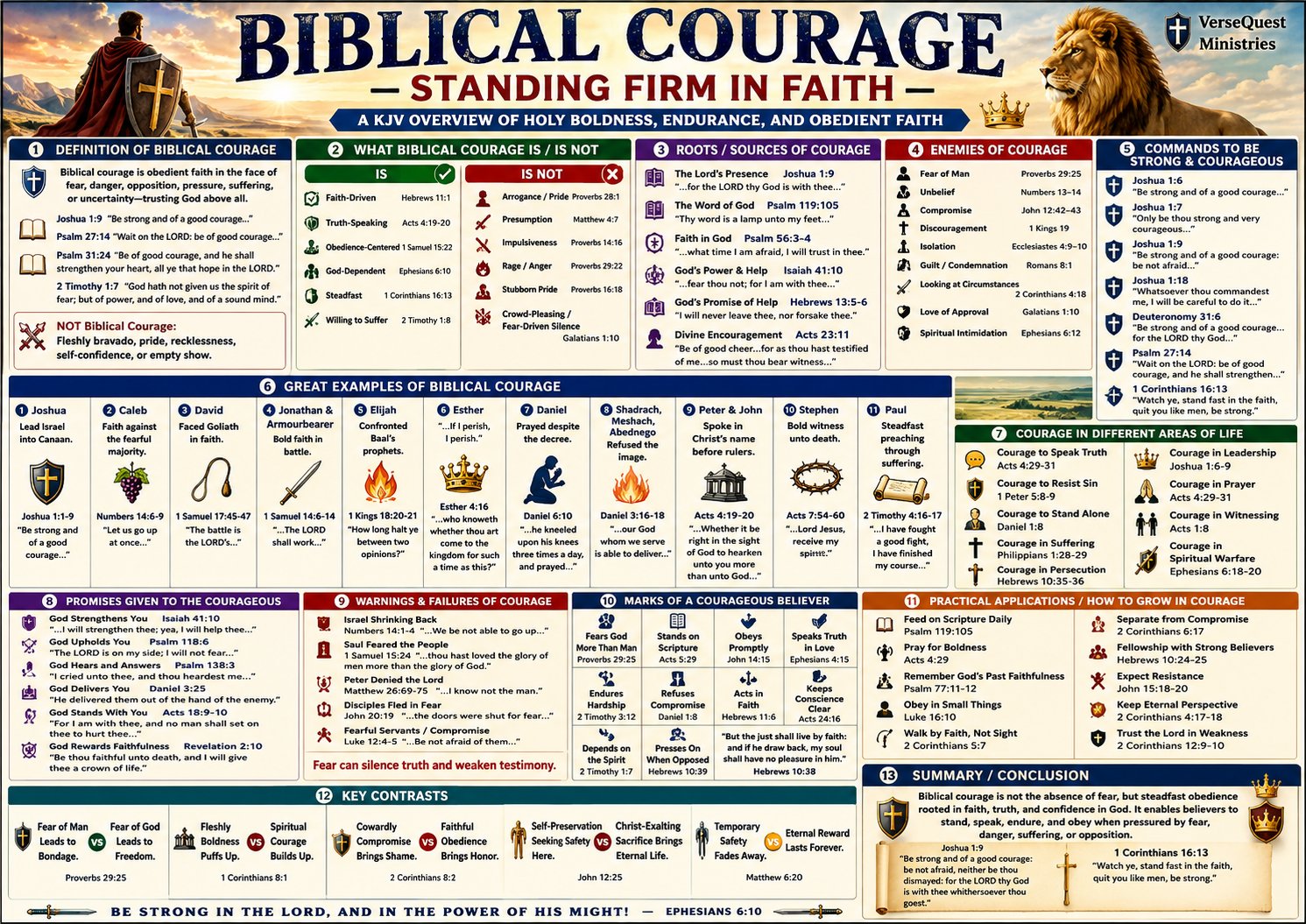
Biblical Courage Bible Study Chart – Standing Firm in Faith, Holy Boldness, and Obedient Endurance (KJV)
Stand firm in faith with this detailed KJV Bible study chart covering biblical courage, holy boldness, fear, endurance, obedient faith, spiritual warfare, persecution, and courageous Bible examples.
$3.99
Description
Biblical Courage: Standing Firm in Faith is a detailed KJV Bible study chart explaining how believers can remain faithful when confronted by fear, danger, opposition, suffering, pressure, persecution, uncertainty, and spiritual warfare. It presents courage not as natural fearlessness or reckless self-confidence, but as steadfast obedience rooted in faith in God and submission to His written Word.
Built around passages such as Joshua 1:9, Psalm 27:14, 1 Corinthians 16:13, and Ephesians 6:10, this chart establishes that biblical courage begins with confidence in the Lord rather than confidence in human strength. Courage does not mean a believer never feels afraid. It means fear is not permitted to overrule truth, silence testimony, control decisions, or prevent obedience.
The chart defines biblical courage as obedient faith in the presence of fear, danger, opposition, pressure, suffering, or uncertainty. A courageous believer does not pretend that threats are imaginary. He sees the danger clearly but chooses to obey God because the Lord is greater than the danger.
A major section distinguishes what biblical courage is from what it is not. True courage is faith-driven, truth-speaking, obedience-centred, God-dependent, steadfast, and willing to suffer. It is not arrogance, pride, presumption, impulsiveness, rage, stubbornness, crowd-pleasing, or fear-driven silence.
Fleshly boldness attempts to prove personal strength. Spiritual courage depends upon the power of God. Fleshly bravado may be loud, rash, defensive, and self-promoting, while biblical courage remains controlled, obedient, truthful, and willing to endure consequences for righteousness.
The chart identifies several roots and sources of courage. The presence of the Lord gave Joshua confidence to enter the land. The Word of God provides light when circumstances appear uncertain. Faith enables the believer to trust when afraid. God’s power supplies strength to the weak, His promises provide assurance, and divine encouragement enables His servants to continue when opposition intensifies.
Enemies of courage are also exposed. These include the fear of man, unbelief, compromise, discouragement, isolation, guilt, preoccupation with circumstances, desire for human approval, spiritual intimidation, and failure to recognize the unseen conflict described in Ephesians 6.
The chart gathers direct commands to be strong and courageous from Joshua, Deuteronomy, Psalms, and the New Testament. These commands demonstrate that courage is not merely a personality trait possessed by a fortunate few. It is a biblical duty that grows through trust, obedience, truth, prayer, and reliance upon the Lord.
A central section presents eleven great examples of biblical courage. Joshua led Israel into Canaan. Caleb stood against a fearful majority. David faced Goliath in the name of the LORD. Jonathan and his armourbearer advanced in faith. Elijah confronted the prophets of Baal. Esther risked her life to intercede for her people.
Daniel continued praying despite the royal decree. Shadrach, Meshach, and Abednego refused to bow before Nebuchadnezzar’s image. Peter and John preached Christ before hostile rulers. Stephen remained faithful unto death, and Paul continued preaching through opposition, imprisonment, rejection, and suffering.
These examples demonstrate that courage appears in many forms. Sometimes it leads an army. Sometimes it stands alone against popular opinion. Sometimes it speaks truth before rulers, refuses compromise, continues praying, suffers quietly, resists sin, or remains faithful when deliverance does not immediately come.
The chart also applies courage to different areas of Christian life. Believers need courage to speak truth, resist temptation, stand alone, endure suffering, face persecution, lead responsibly, pray boldly, witness for Christ, and engage in spiritual warfare. Courage belongs not only on a battlefield but in the home, workplace, church, prayer closet, and daily walk.
Promises given to the courageous remind believers that God strengthens, upholds, hears, delivers, remains present, stands with His servants, and rewards faithfulness. These promises do not guarantee escape from every hardship, but they assure believers that no faithful act is unseen or unsupported by God.
Warnings and failures show what happens when fear rules the heart. Israel shrank back from entering Canaan. Saul feared the people. Peter denied the Lord. The disciples hid behind closed doors. Fearful servants compromised rather than obeying. Fear can silence truth, weaken testimony, and cause believers to abandon opportunities God placed before them.
The marks of a courageous believer include fearing God more than man, standing upon Scripture, obeying promptly, speaking truth in love, enduring hardship, refusing compromise, acting in faith, maintaining a clear conscience, depending upon the Holy Spirit, and pressing forward when opposed.
The chart concludes with practical instructions for growing in courage: feed upon Scripture daily, pray for boldness, remember God’s past faithfulness, obey in small matters, walk by faith rather than sight, separate from compromise, fellowship with strong believers, expect resistance, maintain an eternal perspective, and trust the Lord in weakness.
This resource is ideal for personal Bible study, Christian leadership, discipleship, youth ministry, spiritual-warfare instruction, persecution studies, pastoral counseling, Sunday school, homeschool Bible curriculum, Bible institutes, sermon preparation, and anyone who wants to stand faithfully when obedience becomes costly.
Biblical courage, standing firm in faith, holy boldness, obedient faith, faith over fear, fear of God, fear of man, truth-speaking, endurance, perseverance, courage under persecution, spiritual warfare, resisting compromise, Christian leadership, bold prayer, witnessing for Christ, courage in suffering, dependence upon God, promises to the courageous, eternal reward
Biblical courage is not the absence of fear. It is obedience to God when fear is present. Courage acknowledges danger without granting danger authority over the believer’s conduct.
The source of Christian courage is the Lord’s presence. Joshua was commanded to be strong because God promised to remain with him. The command rested upon divine companionship rather than Joshua’s natural ability.
Courage must be governed by Scripture. A rash act performed without biblical authority is presumption, not faith. Jesus refused to tempt God by creating unnecessary danger merely to prove divine protection.
The fear of God overcomes the fear of man. When believers become more concerned about pleasing people than obeying Christ, truth is softened, testimony is silenced, and compromise follows.
Caleb demonstrated courage by standing against the fearful majority. Majority opinion cannot determine truth. A believer may stand nearly alone and still stand correctly when he stands upon God’s Word.
David’s confidence before Goliath rested upon the honour of God’s name and remembrance of previous deliverance. Past faithfulness provides evidence for present trust.
Esther’s courage involved accepting personal risk for the good of others. Biblical courage is not self-centred heroism; it is often sacrificial service undertaken for people who need protection, truth, or intercession.
Daniel’s courage appeared through continued faithfulness in an ordinary spiritual habit. He did not create a dramatic display after the decree. He simply continued praying as he had done before.
Shadrach, Meshach, and Abednego trusted God whether He delivered them from the furnace or permitted them to die. The highest form of courage obeys without demanding a preferred outcome.
Peter and John spoke boldly because they had been with Jesus. Christian boldness grows from fellowship with Christ, confidence in the resurrection, and filling by the Holy Spirit.
Stephen’s courage demonstrates that faithfulness is not measured only by visible deliverance. He died with a clear testimony, a forgiving spirit, and his eyes fixed upon the glory of God.
Paul’s endurance reveals courage over a lifetime. Momentary boldness may impress people, but persistent faithfulness through years of opposition, suffering, rejection, and responsibility demonstrates mature courage.
Believers grow in courage through Scripture, prayer, obedience, fellowship, remembrance, and practice. Courage increases when Christians obey God in small matters before greater tests arrive.
Biblical courage does not seek conflict unnecessarily, but it refuses to purchase peace through disobedience. It speaks truth in love, remains controlled under pressure, and accepts the cost of faithfulness.
Christian courage studies, overcoming fear, leadership training, spiritual-warfare instruction, courage in witnessing, persecution preparation, youth discipleship, standing against peer pressure, resisting compromise, bold prayer, enduring hardship, faith during uncertainty, Sunday school lessons, homeschool Bible curriculum, Christian school teaching, Bible institute classes, pastoral counseling, sermon preparation
King James Bible, Strong’s Concordance, Thompson Chain-Reference Bible, Treasury of Scripture Knowledge, Nave’s Topical Bible, personal prayer journal, Scripture memory cards, studies on Joshua and Caleb, David and Goliath study materials, Daniel and Esther character studies, Acts persecution notes, Ephesians 6 spiritual-warfare resources, Hebrews 11 faith studies, VerseQuest Christian Living charts
Related products
-
Biblical Assurance
-
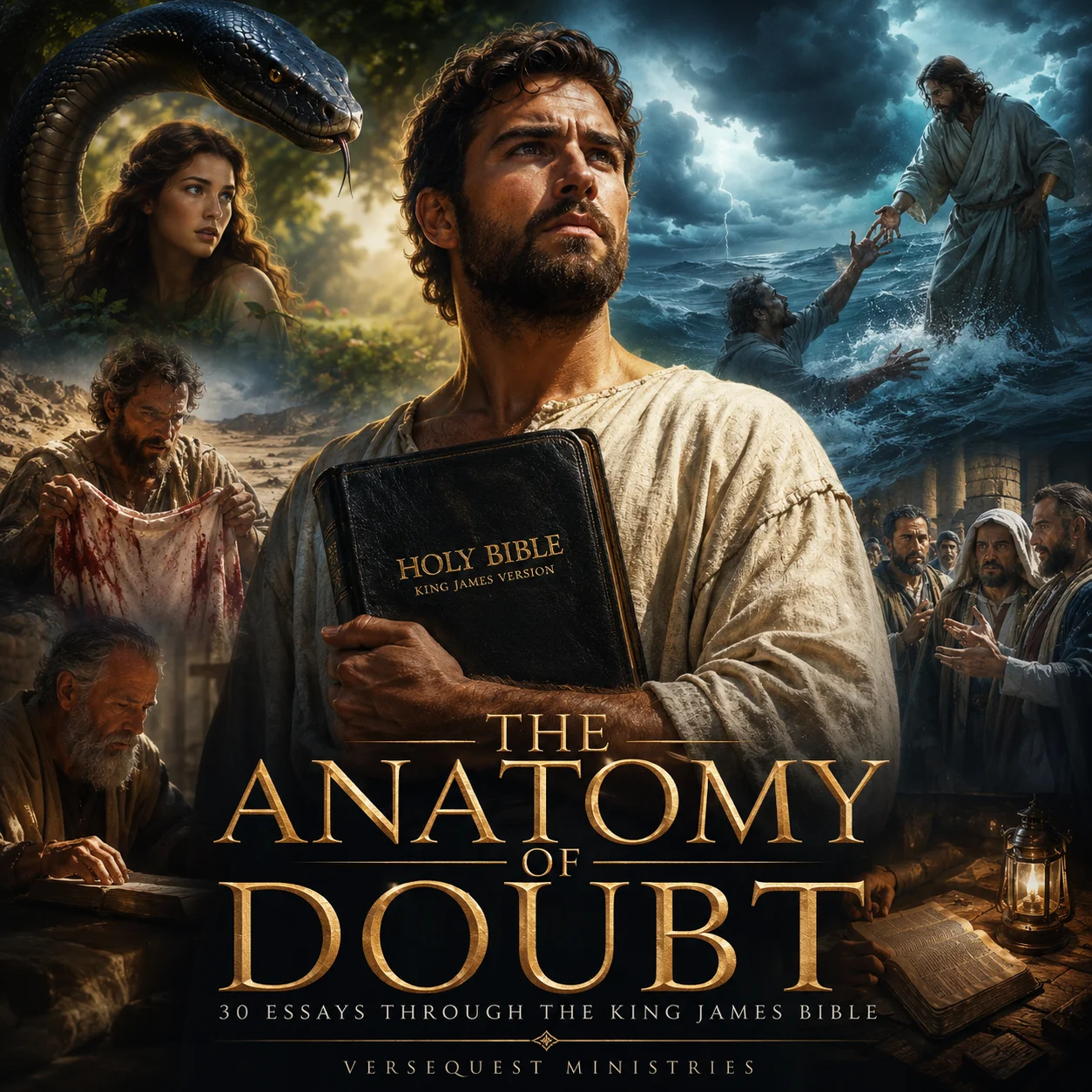
- The Anatomy of Doubt: A 30-Essay KJV Bible Study on Fear, Faith, False Certainty, and the Authority of God’s Word
- The Anatomy of Doubt is a 216-page downloadable PDF Bible study book containing 30 full KJV-based essays, an introduction, a conclusion, and a detailed Bible study chart. This resource examines…
- $9.99
- Add to cart
-
-
Christian Growth
-
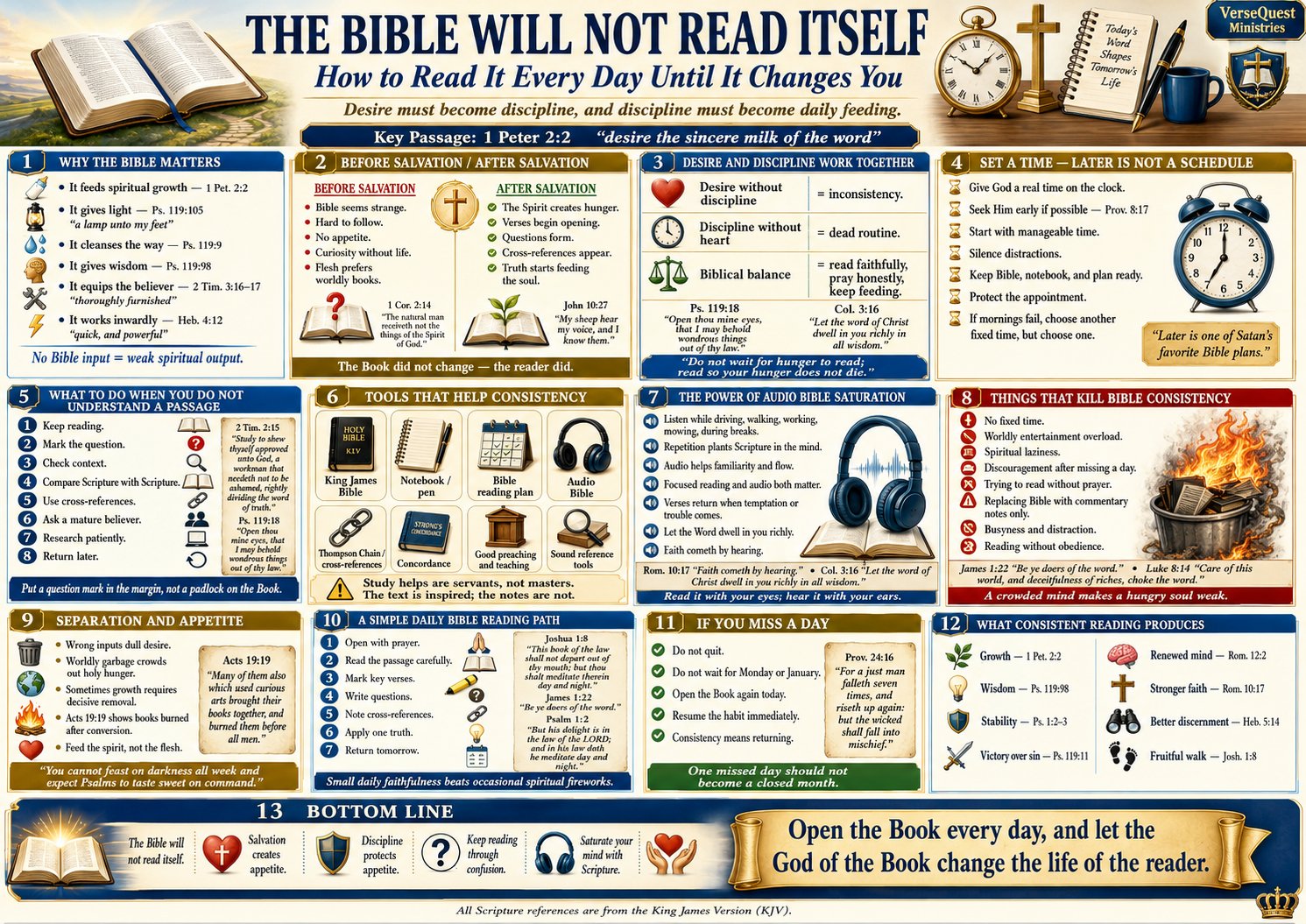
- The Bible Will Not Read Itself – How to Read the Bible Every Day Bible Study Chart (KJV)
- Build a consistent daily Bible reading habit with this detailed KJV Bible study chart. Learn practical steps for reading Scripture faithfully, overcoming inconsistency, understanding difficult passages, and growing spiritually through…
- $3.99
- Add to cart
-
-
Grace for the Wasted Years
-
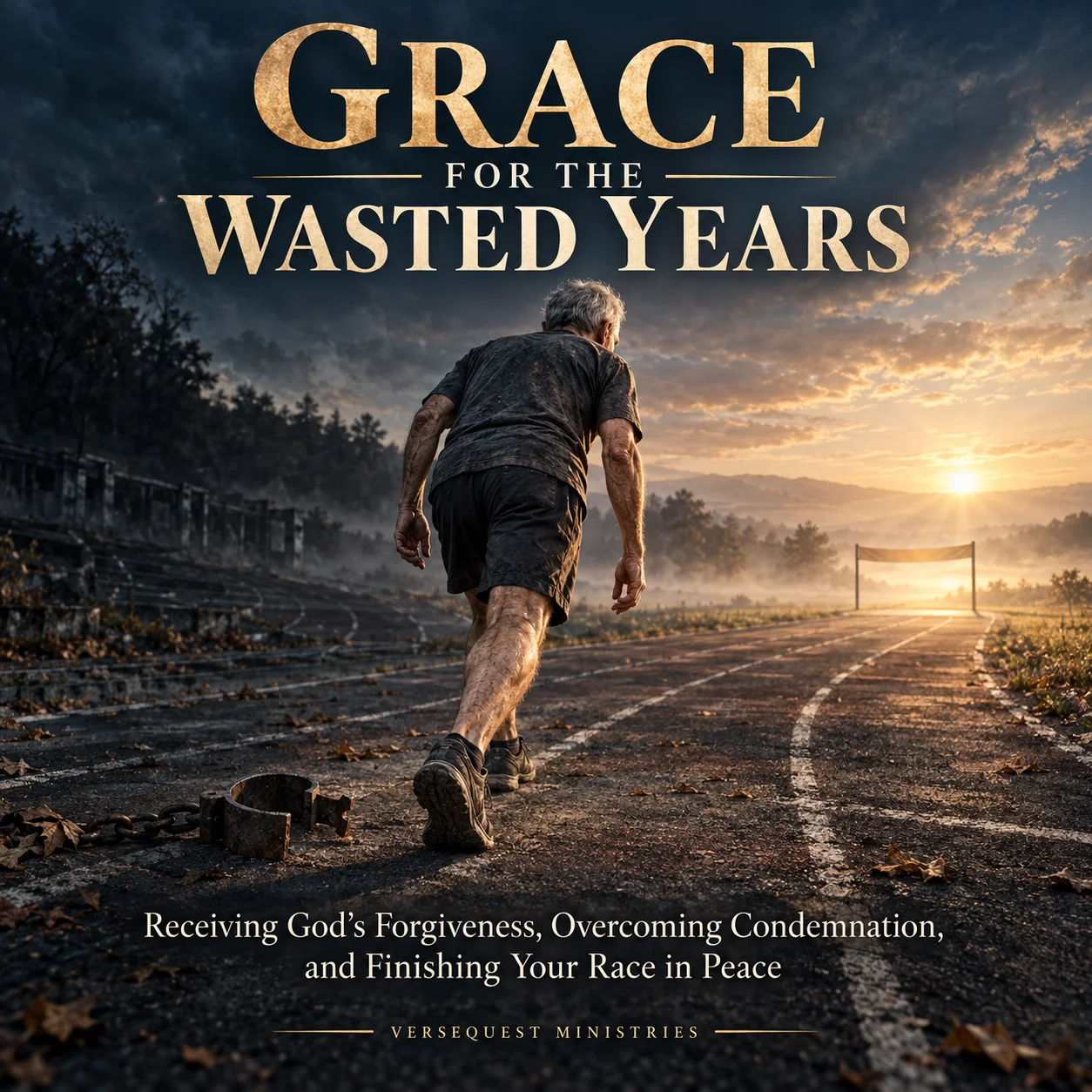
- Grace for the Wasted Years — 237-Page KJV Bible Study PDF
- Grace for the Wasted Years is a 237-page downloadable KJV Bible study for believers burdened by lingering guilt, painful memories, damaged relationships, lost opportunities, and the fear that too much…
- $19.99
- Add to cart
-
-
Prayer
-
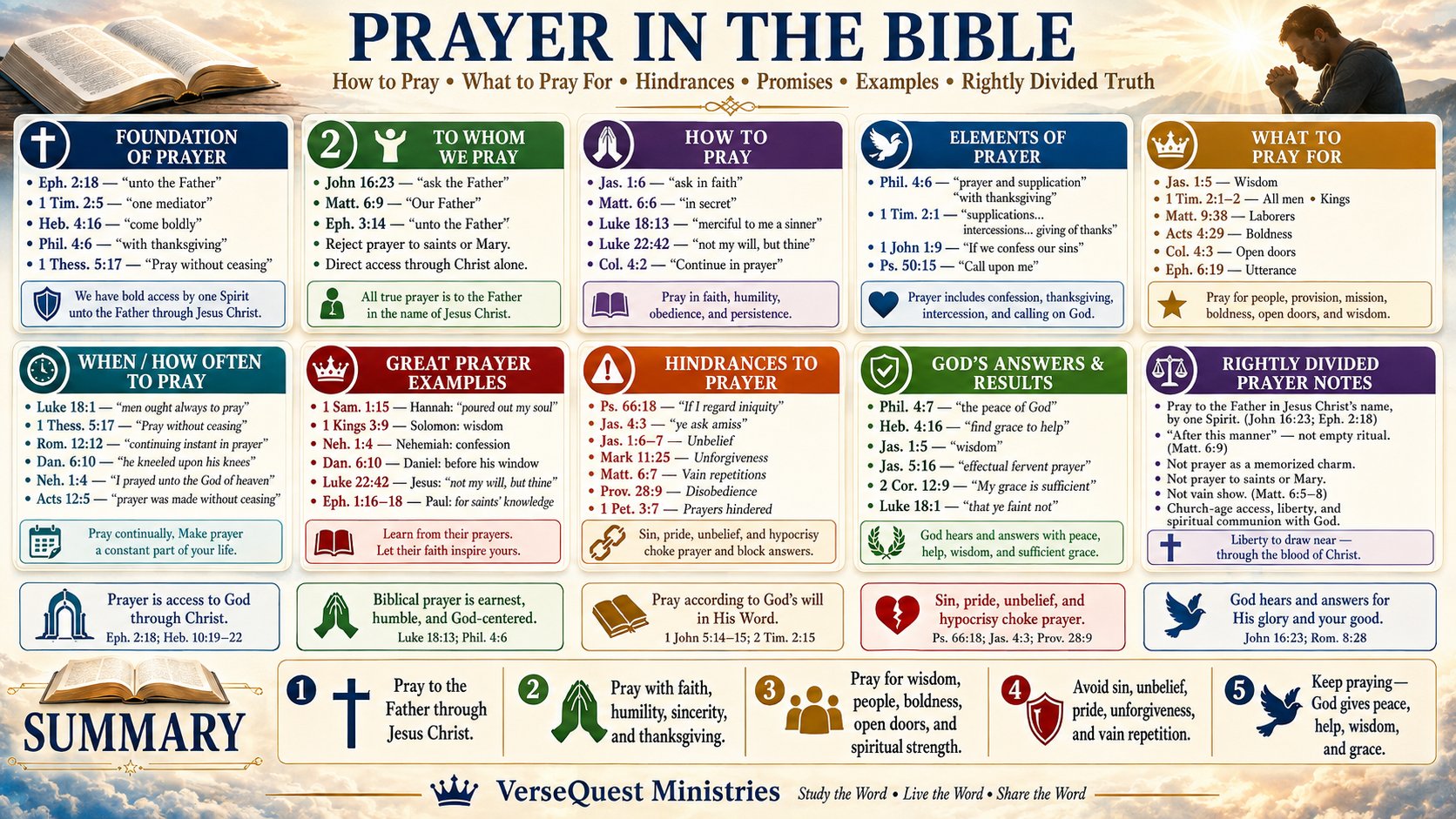
- Prayer in the Bible Chart – How to Pray According to Scripture
- Discover what the Bible teaches about prayer through this easy-to-follow VerseQuest study chart. Learn who to pray to, how to pray, what hinders prayer, what to pray for, and key…
- $4.99
- Add to cart
-
-
Christian Living
-
-50%
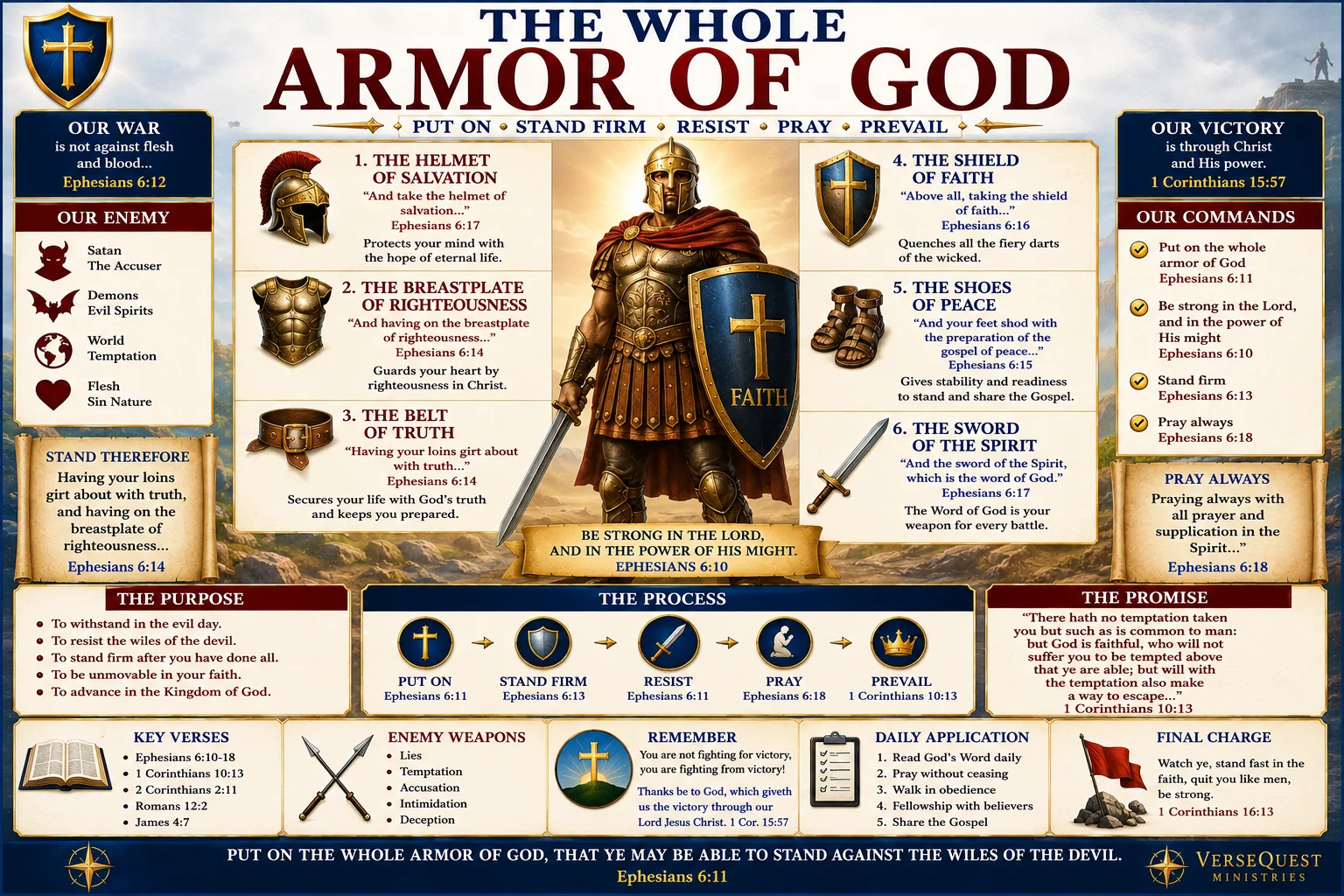
- The Whole Armor of God Chart — KJV Bible Study
- Premium printable KJV Bible study chart explaining the whole armor of God from Ephesians 6, including the helmet, breastplate, belt, shield, shoes, sword, prayer, and spiritual victory in Christ.
- Original price was: $10.00.$4.99Current price is: $4.99.
- Add to cart
-
-50%