The Wealth of Rome Bible Study Chart – A 12-Part KJV Examination of Wealth, Power, Doctrine, and Religious Commerce
Examine the wealth, power, doctrines, indulgences, relics, revenue systems, and political influence of Rome with this detailed twelve-part KJV Bible study chart.
$3.99
Description
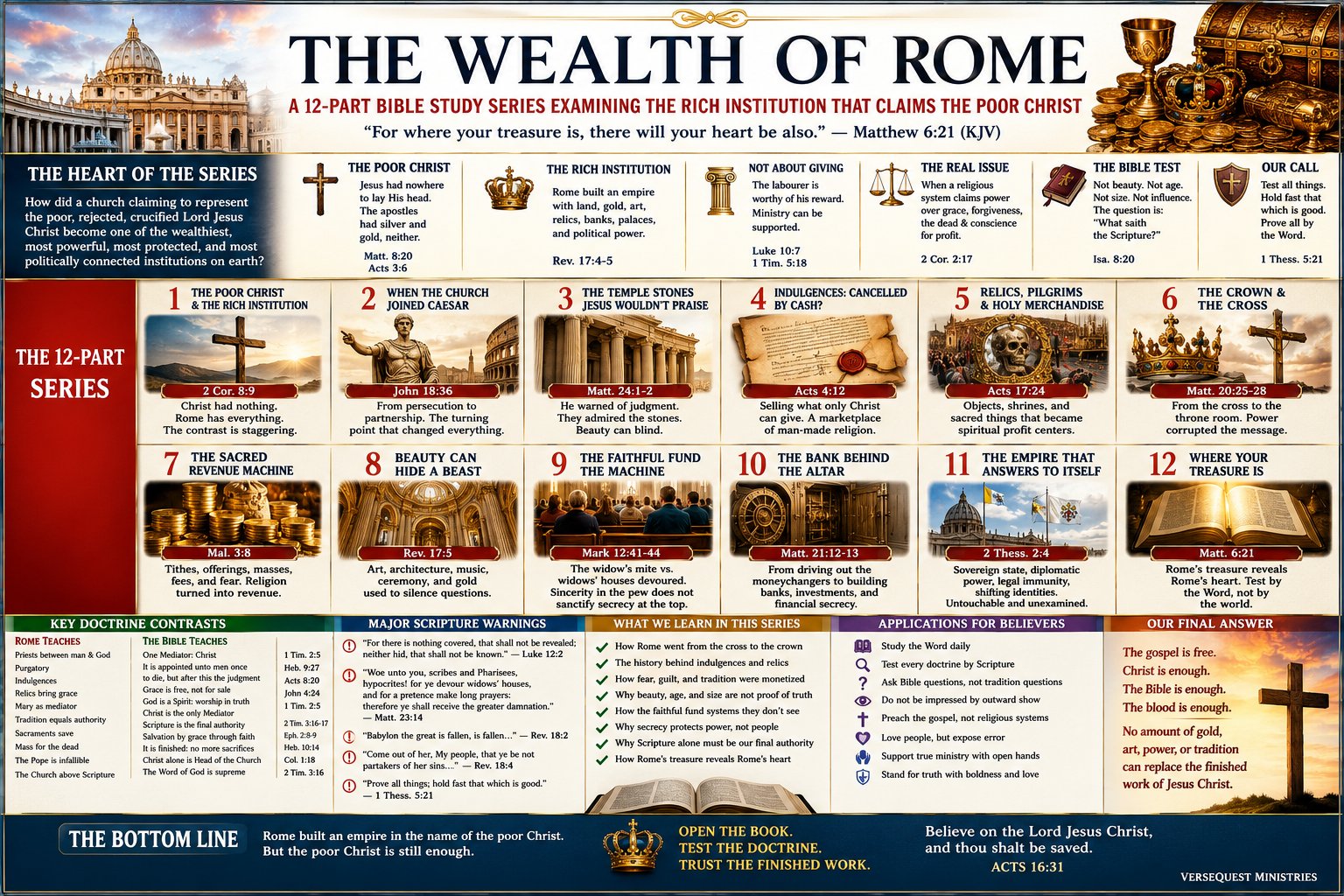
The Wealth of Rome is a detailed KJV Bible study chart introducing a twelve-part series that examines how an institution claiming to represent the poor, rejected, and crucified Lord Jesus Christ became one of the wealthiest, most powerful, most protected, and most politically connected religious systems on earth.
Built around Christ’s warning in Matthew 6:21, “For where your treasure is, there will your heart be also,” the chart contrasts the earthly poverty and humility of Jesus Christ with the accumulated land, gold, artwork, treasures, palaces, political influence, diplomatic privilege, financial machinery, and ceremonial splendour associated with Rome.
Jesus Christ said that He had nowhere to lay His head. The apostles testified that they possessed neither silver nor gold. They preached the gospel freely, endured persecution, and served without building a religious empire. Rome, by contrast, developed into a wealthy institution surrounded by priceless art, royal imagery, banking structures, real estate, ceremonial objects, relics, and political authority.
The chart’s central question is not whether Christians may support faithful ministers or whether labourers deserve proper compensation. Scripture plainly teaches that the labourer is worthy of his hire and that genuine ministry may be supported. The issue is what happens when a religious institution turns grace, forgiveness, conscience, fear, devotion, suffering, and access to supposedly sacred benefits into sources of income and control.
The twelve-part series begins with The Poor Christ and the Rich Institution, contrasting Christ’s poverty with Rome’s accumulated wealth. The second part, When the Church Joined Caesar, examines the historical shift from a persecuted fellowship of believers to an institution joined with political power and imperial influence.
The Temple Stones Jesus Wouldn’t Praise considers the danger of assuming that impressive buildings prove divine favour. Jesus warned that Jerusalem’s admired Temple stones would be thrown down. Architecture may inspire awe, but outward beauty cannot establish doctrinal truth or spiritual authority.
Indulgences: Cancelled by Cash? examines the monetization of forgiveness and the sale of supposed spiritual benefits. The chart compares such practices with the apostolic declaration that the gift of God cannot be purchased with money and that salvation is freely received through faith in Jesus Christ.
Relics, Pilgrims, and Holy Merchandise investigates the transformation of objects, shrines, bones, sacred locations, pilgrimages, and religious experiences into centres of revenue. Scripture repeatedly warns against idolatry, superstition, and the commercial exploitation of spiritual hunger.
The Crown and the Cross contrasts the suffering Saviour with the royal imagery, political crowns, thrones, titles, and outward majesty adopted by religious rulers. Christ taught servant leadership, while institutional religion repeatedly borrowed the symbols and methods of earthly monarchy.
The Sacred Revenue Machine examines income generated through offerings, fees, masses, ceremonies, fear, religious obligation, and institutional systems. The problem is not voluntary giving to true ministry but the manipulation of conscience and the turning of devotion into dependable revenue.
Beauty Can Hide a Beast addresses the power of magnificent art, music, buildings, gold, ceremony, clothing, and pageantry to silence necessary doctrinal questions. A religious system may appear beautiful while teaching doctrines that contradict the written Word of God.
The Faithful Fund the Machine contrasts the widow who gave sacrificially with wealthy religious leaders who devoured widows’ houses. Sincerity among ordinary worshippers does not automatically prove the righteousness of the institution receiving their offerings.
The Bank Behind the Altar examines the development of financial power from religious moneychanging to modern banking, investment, property, and commercial systems. It asks whether spiritual authority should be reinforced through vast financial networks hidden behind sacred language and imagery.
The Empire That Answers to Itself investigates Rome’s status as a sovereign political entity possessing diplomatic power, legal privileges, governmental immunity, and institutional independence. The chart encourages believers to ask whether such power resembles apostolic Christianity or an earthly religious empire.
The final study, Where Your Treasure Is, brings the examination back to the words of Christ. Wealth does not automatically prove corruption, but treasure reveals priorities. The location, accumulation, defence, and use of wealth provide evidence concerning what an institution values and protects.
The chart also compares major Roman Catholic teachings with the plain testimony of Scripture. It addresses priestly mediation, purgatory, indulgences, relics, Marian mediation, tradition, sacramental salvation, masses for the dead, papal infallibility, and claims that institutional authority stands alongside or above the Bible.
Scripture presents Jesus Christ as the one Mediator between God and men. It declares that man dies once and afterward faces judgment, that grace is freely given rather than sold, that God is worshipped in spirit and truth, and that salvation is received by grace through faith rather than through religious works or sacramental systems.
The chart does not condemn honest labour, voluntary generosity, support for faithful ministry, or responsible stewardship. Its target is religious commercialization, institutional self-protection, doctrinal corruption, and any system that profits from fear while claiming authority over the conscience.
Believers are encouraged to test every doctrine by Scripture, ask biblical rather than merely traditional questions, reject intimidation by outward beauty or ancient claims, preach the gospel rather than a religious system, support genuine ministry willingly, and expose error with both courage and love.
The final answer remains centred upon Jesus Christ. The gospel is free. Christ is sufficient. The Bible is enough. The blood of Jesus is enough. No amount of gold, art, political power, ceremonial splendour, inherited tradition, or institutional authority can replace His finished work.
This chart is ideal for personal Bible study, Roman Catholic apologetics, church-history discussions, doctrinal comparison, pastoral teaching, Sunday school, homeschool Bible curriculum, Bible institutes, sermon preparation, evangelism, and believers seeking to test religious power and wealth by the King James Bible.
The wealth of Rome, poor Christ and rich institution, Roman Catholic wealth, religious commercialization, indulgences, relics and pilgrimages, sacred merchandise, crowns and political power, church and state, religious revenue, Vatican banking, institutional wealth, ceremonial splendour, outward beauty and doctrinal error, faithful giving, widows’ offerings, biblical authority, Christ as one Mediator, salvation by grace, testing doctrine by Scripture
The central issue is not whether a religious institution owns property or receives voluntary support. Scripture permits believers to support faithful labourers. The issue is whether spiritual authority, forgiveness, fear, ceremonies, and conscience have been turned into tools of profit and institutional control.
Jesus Christ lived without earthly wealth, royal splendour, political protection, or an institutional treasury. His apostles preached freely, endured hardship, and directed attention toward Christ rather than material magnificence.
Religious wealth does not automatically prove divine favour. Laodicea claimed to be rich while Christ described it as spiritually poor, blind, and naked. Outward prosperity may hide inward corruption.
Beautiful buildings, artwork, music, vestments, and ceremonies may affect the senses without proving that the doctrines taught within them agree with Scripture. Beauty should never silence biblical examination.
The sale of indulgences illustrates the danger of monetizing spiritual fear. Forgiveness cannot be bought because Christ paid the full price through His blood. Grace ceases to be grace when religious payment is added as a condition.
Relics and pilgrimages can redirect faith from the living Christ toward objects, locations, bones, shrines, and ceremonies. The New Testament sends believers directly to Jesus Christ rather than to sacred merchandise.
Christ’s crown followed His cross. Religious rulers who pursue crowns, titles, influence, and worldly honour reverse the pattern of the suffering Servant and risk adopting the methods of earthly kingdoms.
The widow’s sacrificial giving proves her devotion, not the righteousness of every leader who receives the gift. Faithful people may sincerely support systems whose doctrines and financial practices they have never been encouraged to examine.
Institutional independence can remove meaningful accountability. A religious empire that possesses political sovereignty, diplomatic power, wealth, and legal protection may become increasingly difficult to question or correct.
Matthew 6:21 makes treasure a heart test. The accumulation, protection, display, and use of wealth reveal priorities more accurately than public claims of humility.
The Bible remains the final test. Age, wealth, architecture, political influence, historical continuity, and worldwide membership cannot transform false teaching into biblical truth.
The gospel cannot be purchased, sold, inherited, dispensed through an institution, or earned through ceremony. Salvation is God’s gift received through faith in the finished work of Jesus Christ.
Believers should love people while examining systems. Biblical apologetics must speak truth without hatred, distinguish individuals from institutional doctrine, and continually direct sinners toward Christ.
No amount of earthly treasure can purchase forgiveness, shorten judgment, replace the blood, or improve the completed redemption secured by Jesus Christ.
Roman Catholic apologetics, church-history studies, biblical stewardship, testing religious institutions, doctrine versus tradition, salvation by grace teaching, one-Mediator studies, exposing religious commercialization, discernment concerning relics and indulgences, pastoral training, evangelism with Catholics, Sunday school lessons, homeschool Bible curriculum, Christian school instruction, Bible institute classes, sermon preparation, personal Bible study, biblical worldview instruction
King James Bible, Strong’s Concordance, Thompson Chain-Reference Bible, Treasury of Scripture Knowledge, Nave’s Topical Bible, Roman Catholic doctrine comparison notes, church-history resources, studies on Revelation 17 and 18, biblical stewardship materials, Scripture worksheets on Christ’s poverty, studies on indulgences and relics, gospel presentation resources, one-Mediator study materials, VerseQuest Catholic apologetics and doctrine charts
Related products
-
Baptismal Regeneration
-
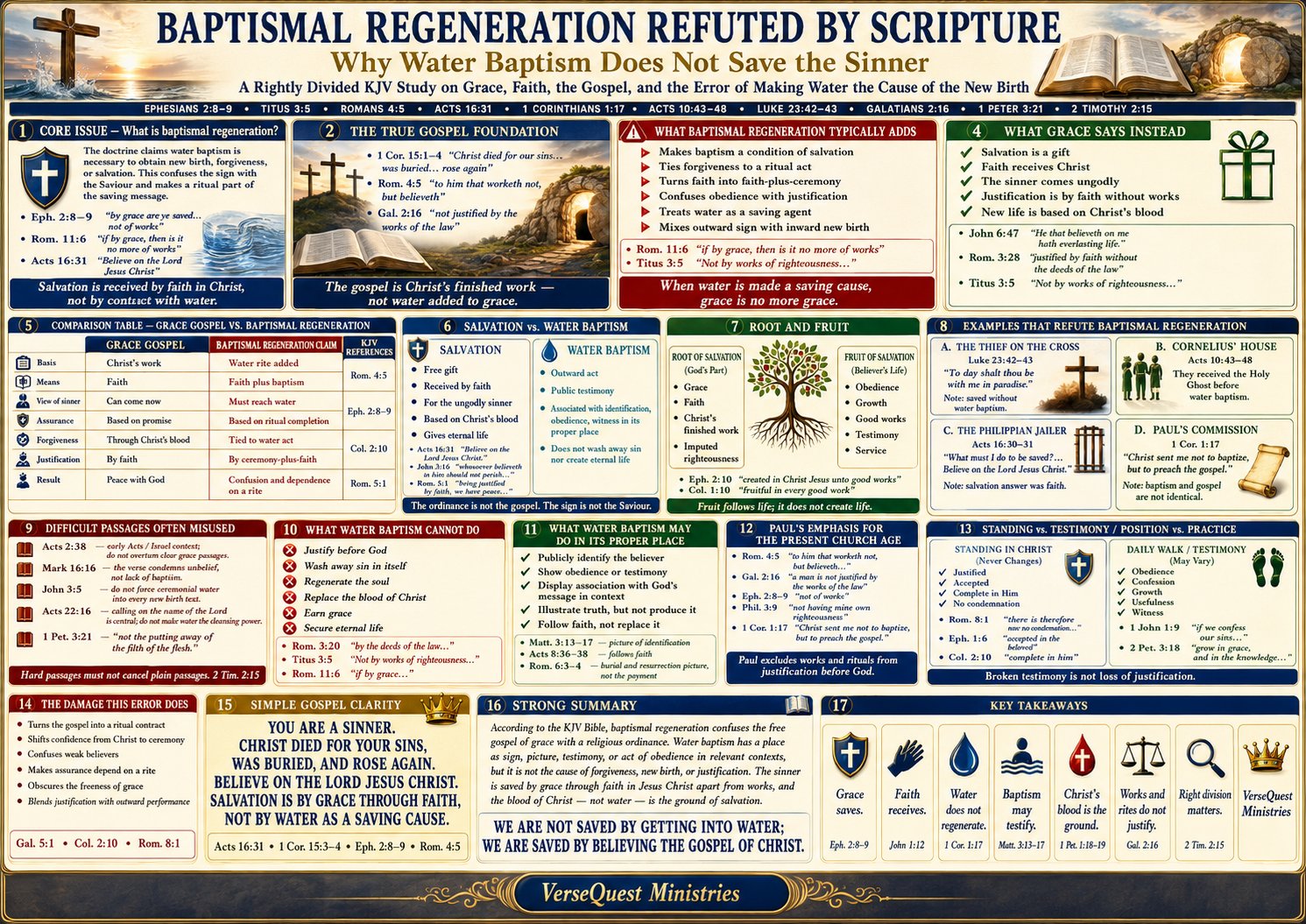
- Baptismal Regeneration Refuted by Scripture – Why Water Baptism Does Not Save the Sinner (KJV Bible Study Chart)
- See why water baptism does not save with this detailed KJV chart covering the gospel of grace, faith versus ritual, the thief on the cross, Cornelius, Paul’s commission, difficult baptism…
- $3.99
- Add to cart
-
-
Christian Growth After Salvation
-
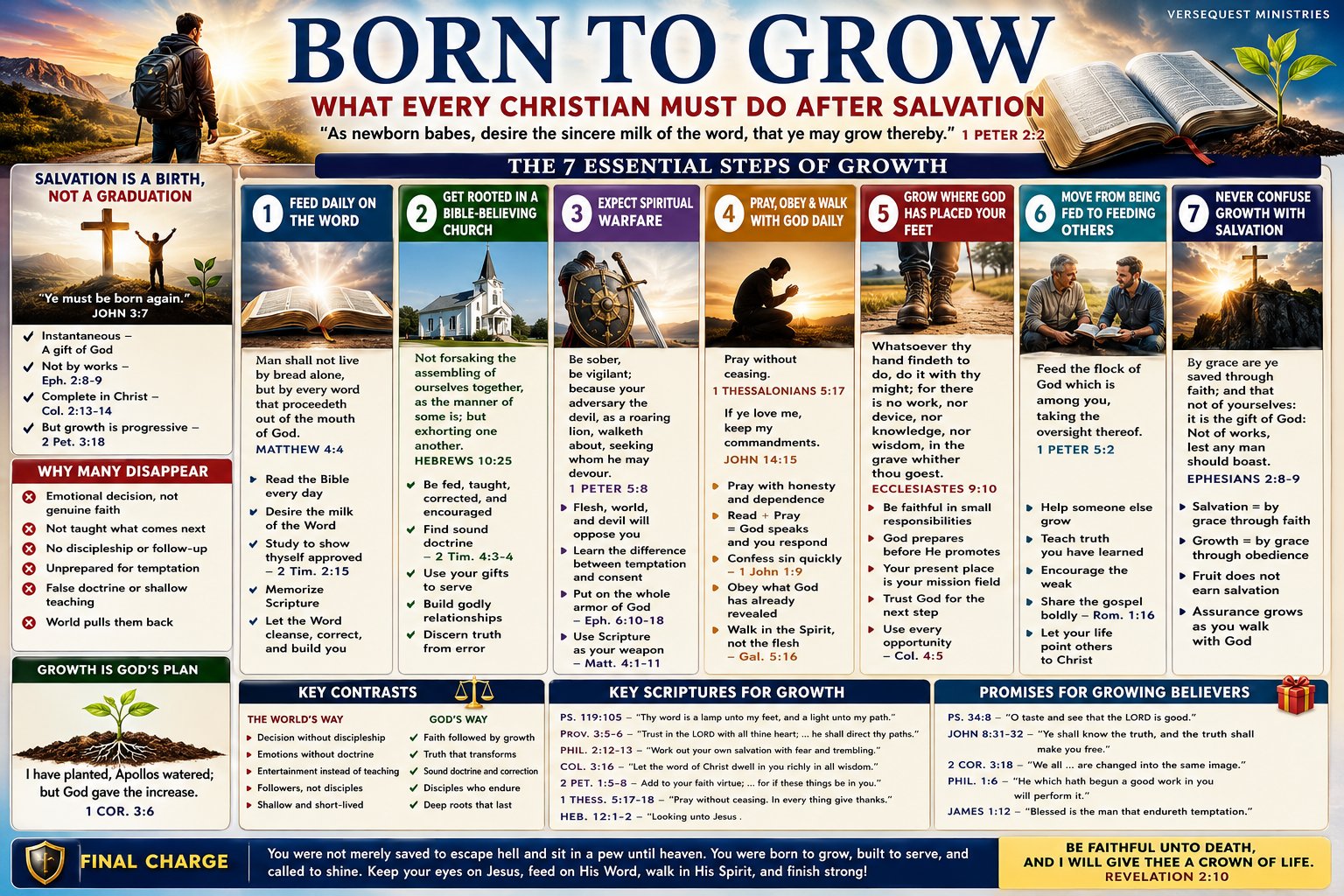
- Born to Grow – Seven Essential Steps Every Christian Must Take After Salvation (KJV Bible Study Chart)
- Help new and growing believers follow seven essential steps after salvation with this detailed KJV chart on Scripture, church, spiritual warfare, prayer, obedience, service, grace, and assurance.
- $3.99
- Add to cart
-
-
No Condemnation
-
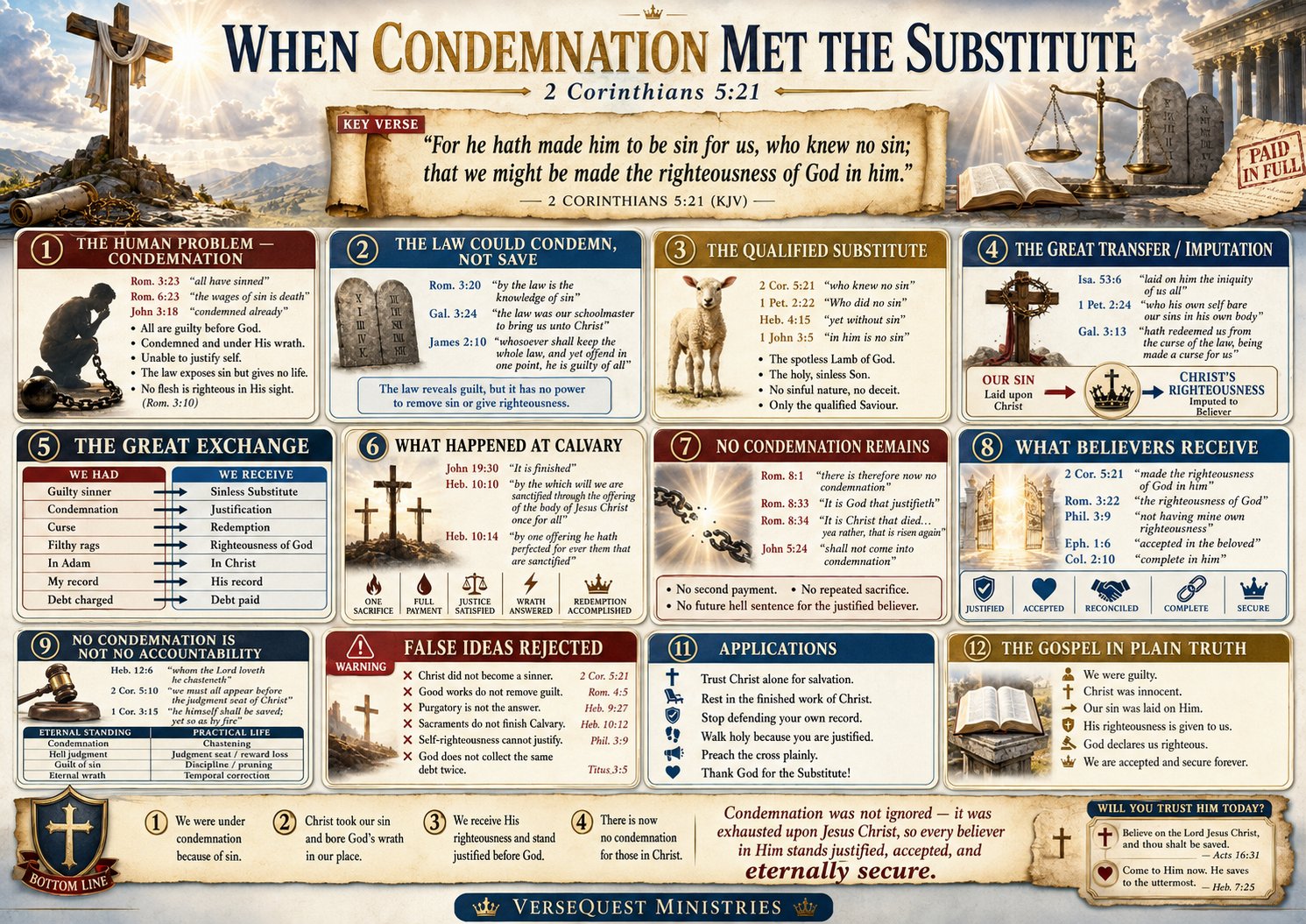
- When Condemnation Met the Substitute – 2 Corinthians 5:21, Imputed Righteousness, and No Condemnation in Christ (KJV Bible Study Chart)
- Understand 2 Corinthians 5:21 with this detailed KJV Bible study chart covering condemnation, Christ the sinless Substitute, imputed righteousness, justification, the great exchange, and eternal security.
- $3.99
- Add to cart
-
-
Lordship Salvation Exposed
-
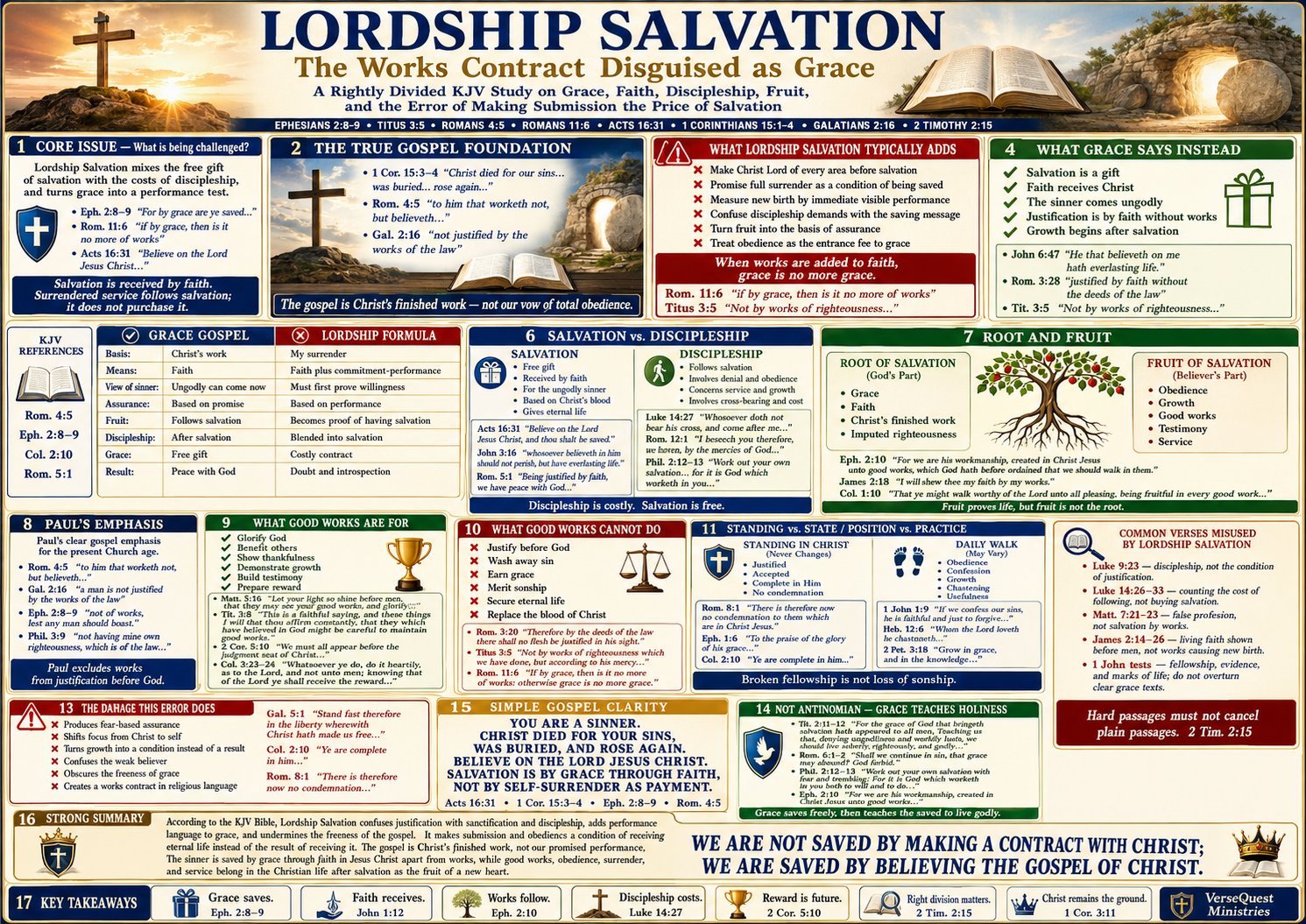
- Lordship Salvation Exposed – The Works Contract Disguised as Grace and the Difference Between Salvation and Discipleship (KJV Bible Study Chart)
- Examine Lordship Salvation with this detailed KJV chart distinguishing the free gift of salvation from costly discipleship, justification from sanctification, and the root of grace from the fruit of Christian…
- $3.99
- Add to cart
-
-
Biblical Repentance
-
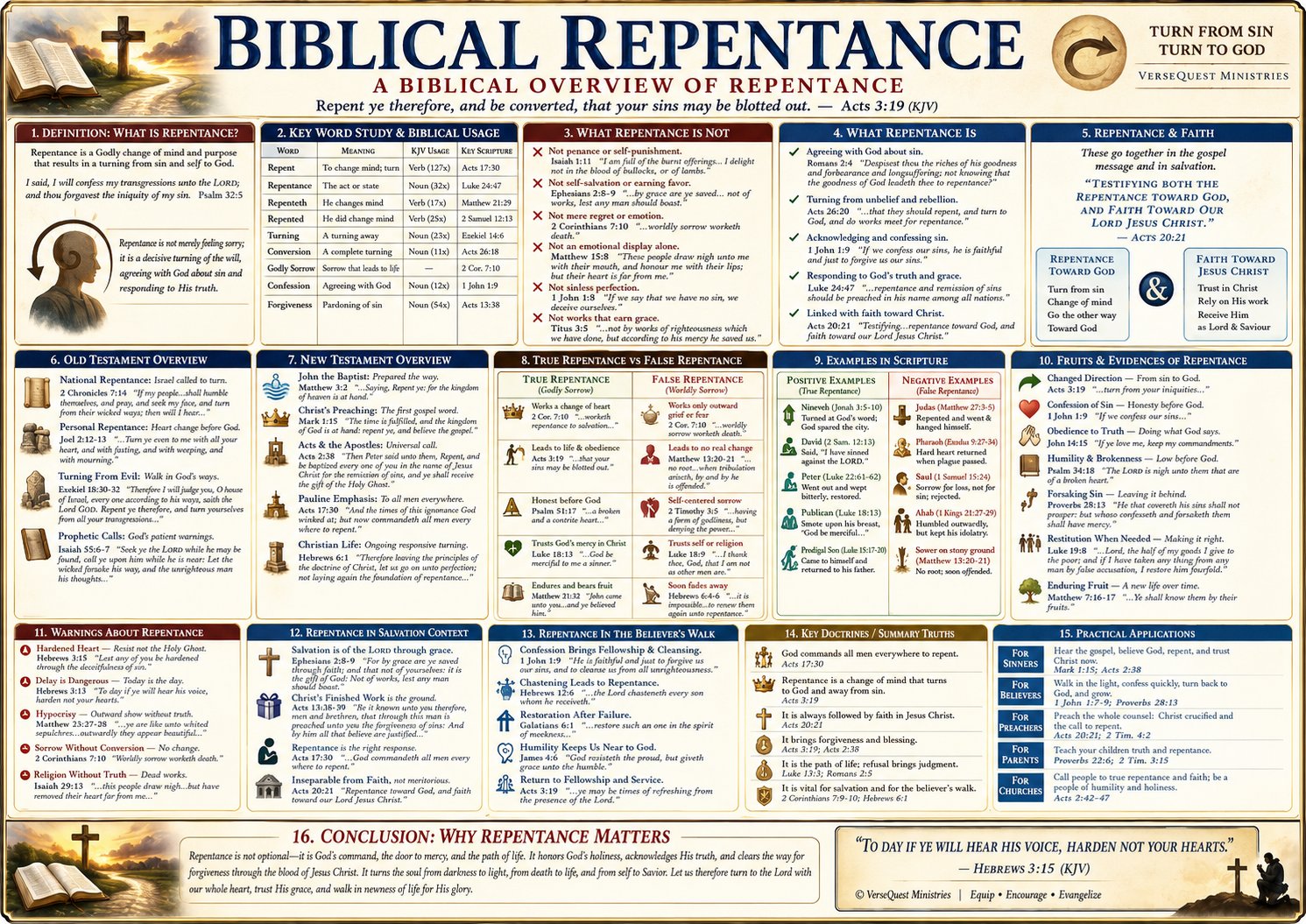
- Biblical Repentance Bible Study Chart – Turning from Sin to God with Faith Toward Jesus Christ (KJV)
- Understand biblical repentance with this detailed KJV chart covering godly sorrow, confession, turning from sin to God, faith in Jesus Christ, false repentance, spiritual restoration, and enduring fruit.
- $3.99
- Add to cart
-