
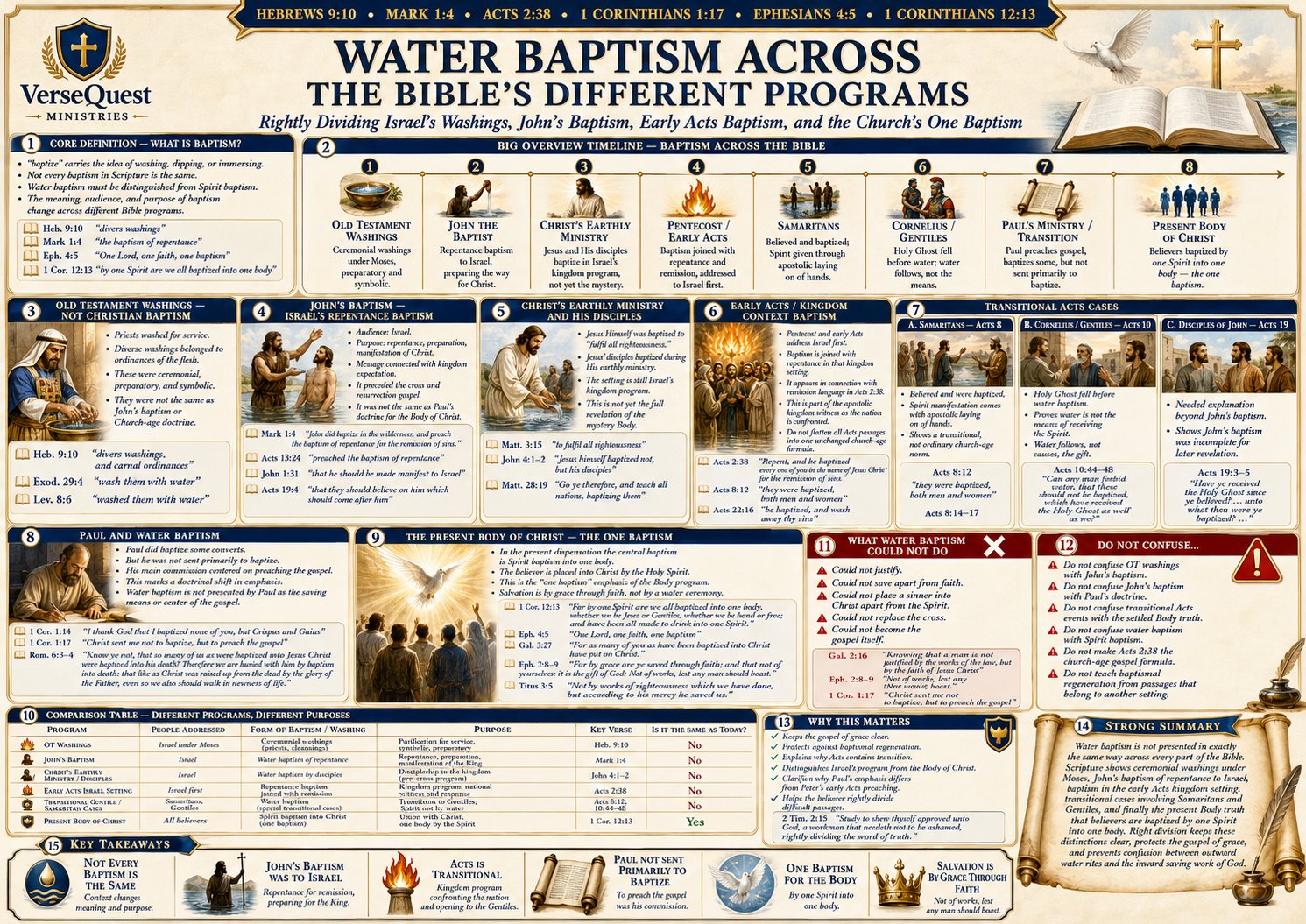
Baptismal Regeneration Refuted by Scripture – Why Water Baptism Does Not Save the Sinner (KJV Bible Study Chart)
See why water baptism does not save with this detailed KJV chart covering the gospel of grace, faith versus ritual, the thief on the cross, Cornelius, Paul’s commission, difficult baptism passages, Spirit baptism, and right division.
$3.99
Description
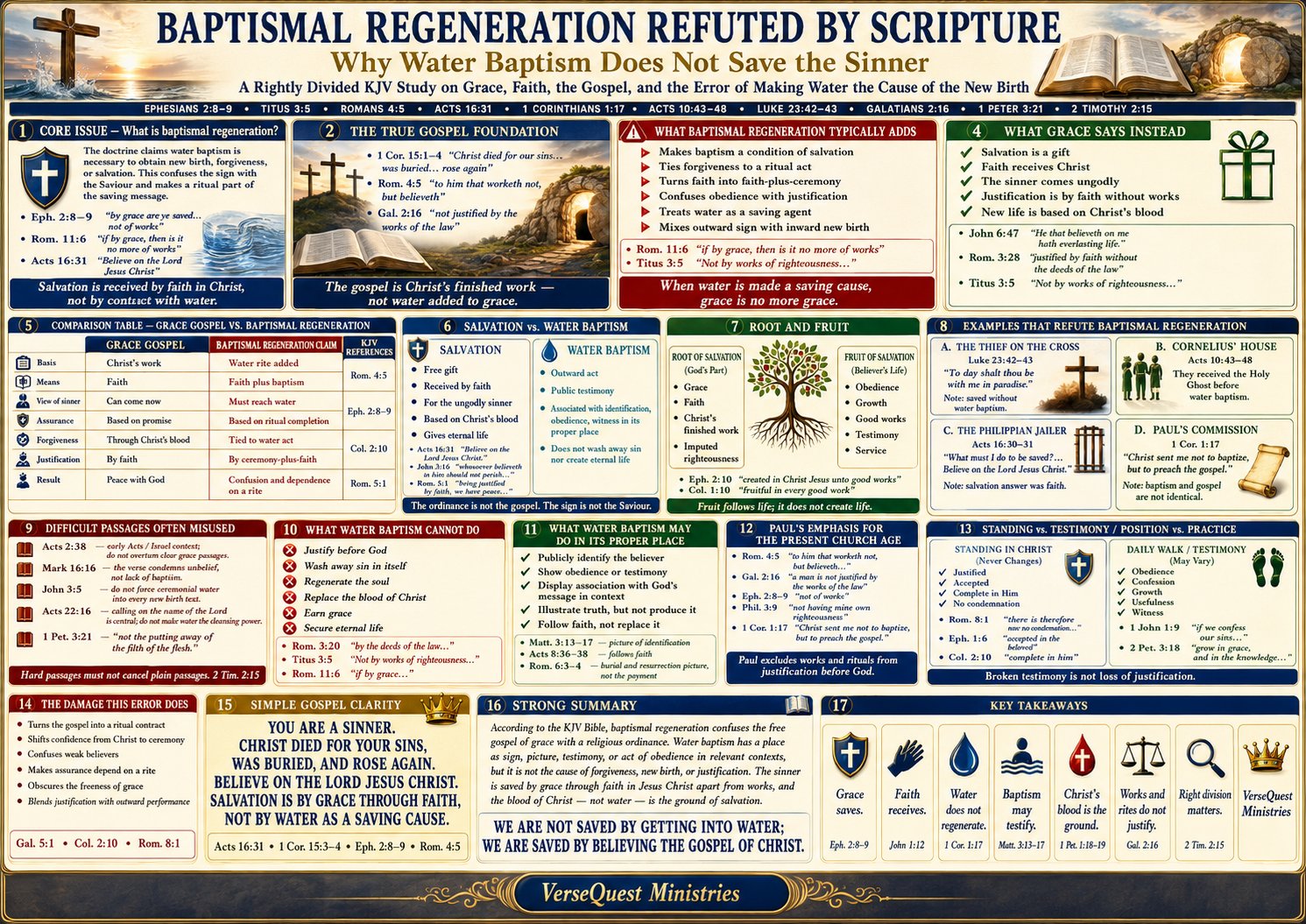
Baptismal Regeneration Refuted by Scripture: Why Water Baptism Does Not Save the Sinner is a detailed KJV Bible study chart examining the claim that water baptism is necessary to obtain regeneration, forgiveness, justification, or eternal salvation.
Built around Ephesians 2:8–9, Titus 3:5, Romans 4:5, Romans 11:6, Acts 16:31, 1 Corinthians 1:17, Acts 10:43–48, Luke 23:42–43, Galatians 2:16, 1 Peter 3:21, and 2 Timothy 2:15, this chart distinguishes the saving gospel of Jesus Christ from an outward religious ordinance.
The central issue is not whether water baptism appears in Scripture or whether it may serve a meaningful purpose in its proper biblical context. The issue is whether physical water performs the inward saving work that the Bible attributes to Jesus Christ, His blood, His gospel, God’s grace, faith, regeneration by the Holy Spirit, and the believer’s spiritual identification with Christ.
Baptismal regeneration teaches that water baptism is necessary for the new birth, forgiveness of sins, justification, or eternal salvation. This doctrine confuses the sign with the Saviour and makes an outward ceremony part of the saving cause.
The chart begins with the true gospel foundation. First Corinthians 15:1–4 declares that Jesus Christ died for our sins according to the Scriptures, was buried, and rose again the third day. Salvation rests upon Christ’s completed redemptive work—not upon water added to His cross.
The gospel is not Christ’s death, burial, and resurrection plus a humanly administered rite. Jesus Christ paid the full price for sin through His blood. His resurrection demonstrated that the sacrifice was accepted and that He possesses the power to give eternal life to everyone who believes.
Romans 4:5 describes the person who “worketh not, but believeth on him that justifieth the ungodly.” The sinner does not first become ceremonially cleansed, morally improved, or religiously initiated before God justifies him. He comes as ungodly and believes on the God who justifies through faith.
Galatians 2:16 repeatedly excludes the works of the law from justification. A person is justified through faith in Jesus Christ rather than through law-keeping, ceremony, religious performance, or outward ritual.
The chart explains what baptismal regeneration commonly adds to the gospel. It makes baptism a condition of salvation, ties forgiveness to a ritual act, transforms faith into faith plus ceremony, confuses obedience with justification, treats water as a saving agent, and blends an outward sign with the inward new birth.
When water is made a saving cause, grace is no longer presented as grace. Romans 11:6 states that grace and works cannot share the same foundation. If salvation rests partly upon Christ and partly upon a ceremony performed through human hands, the sinner’s confidence has been divided between the Saviour and the ordinance.
Titus 3:5 declares, “Not by works of righteousness which we have done, but according to his mercy he saved us.” Baptism may be viewed as a righteous religious act, but no righteous act performed by the sinner can become the cause of regeneration.
Ephesians 2:8–9 teaches that salvation is by grace through faith, the gift of God, and not of works. A gift is received rather than purchased, earned, completed, or activated through a ritual.
The chart presents what grace says instead. Salvation is a gift. Faith receives Jesus Christ. The sinner comes as ungodly. Justification is by faith without works. New life rests upon Christ’s blood, resurrection, and saving power.
John 6:47 gives Christ’s promise: “He that believeth on me hath everlasting life.” Romans 3:28 concludes that a man is justified by faith without the deeds of the law. Titus 3:5 points toward God’s mercy rather than human religious achievement.
A comparison between the grace gospel and baptismal regeneration makes the difference clear. The grace gospel rests upon Christ’s finished work; baptismal regeneration adds water to the saving foundation.
Grace receives salvation through faith. Baptismal regeneration requires faith plus baptism. Grace permits the ungodly sinner to come immediately; the ritual system requires the person to complete a ceremony.
Grace grounds assurance in God’s promise. Baptismal regeneration places assurance partly upon whether the rite was performed correctly, by the proper administrator, through the correct mode, with the correct words, and under the correct institutional authority.
The grace gospel teaches forgiveness through Christ’s blood. Baptismal regeneration connects forgiveness with an outward water act. Grace teaches justification by faith; ritual salvation teaches justification through a combination of belief and ceremony.
The result of the gospel is peace with God through Jesus Christ. The result of ritual dependence is often uncertainty, denominational dependence, repeated examination of baptismal details, and fear that the ceremony may have been incomplete.
A major section distinguishes salvation from water baptism. Salvation is the free gift of God, received through faith, offered to the ungodly sinner, based upon Christ’s blood, and resulting in eternal life.
Water baptism is an outward act. In its appropriate setting it may publicly identify a believer, testify to obedience, display association with a biblical message, or illustrate death, burial, and resurrection.
The ordinance is not the gospel. The picture is not the payment. The sign is not the Saviour. The ceremony may illustrate truth, but it cannot create the spiritual reality it portrays.
Acts 16 records the Philippian jailer asking, “What must I do to be saved?” Paul and Silas answered, “Believe on the Lord Jesus Christ, and thou shalt be saved.” They did not answer, “Believe and remain unsaved until water completes the process.”
The jailer was later baptized, but the direct answer to his salvation question was faith in Jesus Christ. Baptism followed belief and did not replace the Saviour as the object of saving trust.
The chart’s root-and-fruit illustration keeps the biblical order clear. The root of salvation is God’s grace, faith, Christ’s finished work, and imputed righteousness.
The fruit of salvation includes obedience, growth, good works, testimony, and service. Baptism, where practised as an act of obedience or testimony, belongs with the fruit rather than the root.
Ephesians 2:10 teaches that those saved by grace are created in Christ Jesus unto good works. Works follow spiritual life; they do not create it.
The chart presents several biblical examples that refute baptismal regeneration. The first is the thief on the cross. He turned to Jesus Christ in faith and received the promise, “To day shalt thou be with me in paradise.”
The thief could not descend from the cross, receive water baptism, join an assembly, perform restitution, or complete a religious ordinance. Yet Christ Himself promised him Paradise.
Some attempt to dismiss this example by arguing that the thief lived before the cross was completed. Yet the example still demonstrates that Jesus Christ possesses authority to save through faith without water and that physical baptism is not inherently capable of producing regeneration.
The second example is the household of Cornelius in Acts 10. Peter preached forgiveness through the name of Jesus Christ to everyone who believed. While he was still speaking, the Holy Ghost fell upon those who heard the Word.
The Gentiles received the Holy Spirit before water baptism. Their reception of the Spirit proved that God had accepted them through faith apart from first completing the ceremony.
Water followed the Spirit’s reception. Therefore, water could not have caused the new birth, brought the Spirit, or produced their acceptance before God.
The third example is the Philippian jailer. His question received a direct gospel answer: believe on the Lord Jesus Christ. Salvation was connected with faith in Christ rather than water as a co-saviour.
The fourth example is Paul’s commission. First Corinthians 1:17 states, “Christ sent me not to baptize, but to preach the gospel.” Paul did baptize some converts, but he plainly distinguished baptism from his central gospel commission.
If water baptism were the means by which sinners were regenerated, forgiven, placed into Christ, or completed in salvation, Paul could never have separated baptism from preaching the gospel.
Paul even thanked God that he had baptized relatively few Corinthians because the assembly was dividing around personalities. Such language would be impossible if those baptisms had been the act through which eternal life was conferred.
The chart explains what water baptism cannot accomplish. It cannot justify before God, wash away sin through physical water, regenerate the soul, replace Christ’s blood, earn grace, secure eternal life, or complete what Jesus declared finished.
Romans 3:20 excludes the deeds of the law from justification. Titus 3:5 excludes righteous works from regeneration. Romans 11:6 excludes works from grace.
First Peter 1 teaches that believers are redeemed through the precious blood of Christ, not through corruptible material. First John likewise declares that the blood of Jesus Christ cleanses from all sin.
Physical water can wash the body, but it cannot cleanse the conscience, remove legal guilt, impute righteousness, reconcile an enemy to God, or place a sinner spiritually into Jesus Christ.
Only God can regenerate. Only Christ’s blood can redeem. Only the gospel can reveal the saving work. Only the Holy Spirit can place believers spiritually into the Body of Christ.
The chart also explains what water baptism may do in its proper place. It may identify the believer publicly, provide an outward testimony, demonstrate association with a biblical message, picture death and resurrection, and follow faith as an obedient response.
Matthew 3 presents baptism within John’s ministry to Israel. Acts records water baptism throughout its transitional history. Romans 6 uses burial-and-resurrection language to explain the believer’s spiritual identification with Christ.
A picture may be valuable without becoming the reality. A wedding ring symbolizes marriage but does not create the marriage covenant by itself. In the same way, water may testify to a spiritual truth without possessing the power to cause regeneration.
A major section addresses difficult passages frequently used to support baptismal regeneration. These passages must be interpreted according to audience, context, program, wording, and the fuller testimony of Scripture.
Acts 2:38 belongs to the early Acts setting in which Peter addressed Israel at Pentecost concerning the rejected and risen Messiah. The audience, Kingdom setting, national responsibility, apostolic signs, and transitional nature of Acts must not be ignored.
Acts 2:38 should not be isolated from Peter’s later declaration in Acts 10 that whoever believes in Christ receives remission of sins. Nor should it overturn Paul’s plain gospel doctrine concerning justification by faith apart from works.
Mark 16:16 appears within an apostolic sign commission that includes casting out devils, speaking with tongues, handling serpents, surviving poison, and healing the sick. Those who make baptism the Church-age test of salvation rarely apply the full accompanying sign context consistently.
The verse also says that the person who does not believe is condemned. Unbelief is identified as the condemning issue. The passage must not be used to replace faith in Christ with faith in a ceremony.
John 3:5 speaks of being born of water and of the Spirit. The surrounding context contrasts physical birth and spiritual birth. Nicodemus had asked about entering his mother’s womb a second time.
Water in the passage should not automatically be redefined as Christian baptism, especially when no baptismal ceremony is mentioned and the new birth is attributed to the Spirit’s sovereign work.
Acts 22:16 records Ananias telling Saul to arise, be baptized, and wash away his sins, calling on the name of the Lord. The verse must be read in light of Saul’s already having encountered the risen Christ, his prayer, and the wider Pauline doctrine of forgiveness through Christ’s blood.
The cleansing power rests in the Lord upon whom Saul called, not in physical water treated as a saving chemical.
First Peter 3:21 specifically guards against a physical interpretation by stating, “not the putting away of the filth of the flesh.” Peter points toward the answer of a good conscience toward God through the resurrection of Jesus Christ.
The saving power rests in Christ’s resurrection, not in the outward removal of bodily filth. The water of Noah’s Flood judged the old world, while Noah and his family were preserved in the ark.
The chart stresses that hard passages must not cancel plain passages. Second Timothy 2:15 requires believers to rightly divide the Word of Truth rather than forcing every baptismal verse into one universal formula.
The chart presents Paul’s emphasis for the present Church Age. Romans 4 teaches justification through faith. Galatians 2 excludes law works. Ephesians 2 excludes human boasting. Philippians 3 rejects personal righteousness.
First Corinthians 1 distinguishes Paul’s gospel commission from water baptism. These passages do not make obedience unimportant; they protect Christ’s finished work from religious additions.
Paul’s doctrine also explains the baptism that places believers into the Body of Christ. First Corinthians 12:13 states, “For by one Spirit are we all baptized into one body.”
This is the work of the Holy Spirit, not an act performed by a minister with water. Every saved believer is spiritually placed into Christ and made a member of His Body.
Romans 6 describes believers as baptized into Jesus Christ and into His death. Water may picture burial, but only the Holy Spirit can unite a sinner spiritually with the death and resurrection of Christ.
The chart distinguishes standing from testimony, or position from practice. The believer’s standing in Christ includes justification, acceptance, completeness in Him, and freedom from eternal condemnation.
The daily Christian walk includes obedience, confession, growth, usefulness, service, testimony, and fellowship. A damaged testimony does not reverse justification, though disobedience may bring chastening and loss of reward.
Baptism, when understood as an outward act of obedience, belongs to testimony and practice. It should not be moved into the believer’s eternal standing as though Christ remains unable to justify until the ceremony is completed.
The chart explains the damage done by baptismal regeneration. It converts the gospel into a ritual contract, shifts confidence from Jesus Christ to a ceremony, confuses weak believers, makes assurance dependent upon an ordinance, obscures the freeness of grace, and blends justification with outward performance.
It may also create institutional dependence. If salvation is obtained through baptism, the next question becomes who possesses authority to administer the saving water. The sinner’s confidence may then shift from Christ to a priesthood, denomination, church succession, or sacramental system.
The gospel gives direct access to Jesus Christ. There is one Mediator between God and men, the man Christ Jesus. Salvation does not depend upon finding an institution capable of activating grace through water.
The chart does not teach that Christian obedience is unnecessary. Grace is not antinomianism. The saved believer should study Scripture, walk in holiness, serve faithfully, confess sin, love others, and obey God.
The proper issue is order. Obedience follows salvation; it does not purchase salvation. Good works display new life but do not produce it.
The sinner’s simple saving message remains unchanged: You are a sinner. Jesus Christ died for your sins, was buried, and rose again. Believe on the Lord Jesus Christ.
Salvation is by grace through faith—not by water treated as a saving cause. The sinner is not saved by entering a baptistry; he is saved by trusting the finished gospel of Jesus Christ.
The strong summary is clear: baptismal regeneration confuses the free gospel of grace with an outward ordinance. Water baptism has a place as a sign, picture, testimony, or act of obedience in relevant biblical contexts, but it is not the cause of forgiveness, new birth, justification, or eternal life.
Jesus Christ is the Saviour. His blood is the payment. His resurrection is the victory. Faith receives His gift. The Holy Spirit performs the inward work. Water must never be elevated to a position Scripture gives only to Christ.
This resource is ideal for personal Bible study, baptismal-regeneration apologetics, gospel teaching, salvation counseling, water-baptism studies, Acts transition classes, Pauline doctrine, new-believer discipleship, Sunday school, homeschool Bible curriculum, Bible institutes, sermon preparation, and anyone seeking a clear KJV explanation of salvation apart from religious ritual.
Baptismal regeneration, water baptism does not save, salvation by grace, justification by faith, gospel of Jesus Christ, Christ’s finished work, forgiveness through Christ’s blood, faith versus ritual, water baptism versus Spirit baptism, salvation versus testimony, root and fruit, Acts 2:38, Mark 16:16, John 3:5, Acts 22:16, 1 Peter 3:21, Paul and water baptism, one Spirit baptism, Body of Christ, rightly dividing Scripture
Baptismal regeneration teaches that water baptism causes or completes regeneration, forgiveness, justification, or salvation.
The Bible places saving power in Jesus Christ, His blood, His finished work, His resurrection, and the gospel—not in physical water.
First Corinthians 15:1–4 defines the gospel as Christ’s death for sins, burial, and resurrection.
Water baptism is not included in Paul’s definition of the saving gospel.
First Corinthians 1:17 distinguishes Paul’s commission to preach the gospel from the act of baptizing.
If water baptism caused regeneration, Paul could not have thanked God that he baptized relatively few Corinthians.
Ephesians 2:8–9 teaches salvation by grace through faith and excludes works as the ground of boasting.
Titus 3:5 excludes works of righteousness from the cause of salvation and attributes salvation to God’s mercy.
Romans 4:5 teaches that God justifies the ungodly person who believes rather than the person who first completes religious works.
Romans 11:6 teaches that grace and works cannot be blended as the saving foundation.
Baptism may be an outward act, public identification, testimony, or picture in its appropriate setting.
An outward picture cannot produce the inward spiritual reality it represents.
Water can cleanse the flesh externally but cannot remove guilt, impute righteousness, or regenerate the soul.
The blood of Jesus Christ cleanses from sin. Physical water must not be given the office of Christ’s blood.
The thief on the cross received Christ’s promise of Paradise without water baptism.
Cornelius and his household received the Holy Ghost before they were baptized in water.
The Spirit’s reception demonstrated that God had already accepted the believing Gentiles.
The Philippian jailer was told to believe on the Lord Jesus Christ in answer to his salvation question.
Paul’s later baptism of the jailer followed belief and did not replace faith as the saving response.
Acts is a transitional book and contains different baptismal sequences involving Jews, Samaritans, Gentiles, and disciples who knew only John’s baptism.
Not every historical sequence in Acts should be made the permanent saving formula for the Body of Christ.
Acts 2:38 must be read within its Jewish, Pentecostal, national, Kingdom, and transitional context.
Mark 16 includes an apostolic sign setting involving tongues, serpents, poison, and healing.
John 3:5 does not mention Christian baptism. Its context contrasts natural birth with spiritual birth.
Acts 22:16 places the emphasis upon calling on the Lord rather than treating water as a saving substance.
First Peter 3:21 specifically says the saving reality is not the putting away of the filth of the flesh.
The saving power in First Peter 3 is connected with the resurrection of Jesus Christ and the answer of a good conscience toward God.
First Corinthians 12:13 teaches that the Holy Spirit baptizes believers into one Body.
Spiritual baptism into Christ is performed by God, not by a human administrator using water.
Romans 6 describes the believer’s spiritual union with Christ’s death and resurrection. Water may illustrate that truth but cannot create it.
Standing in Christ must be distinguished from outward testimony and daily obedience.
The believer is justified, accepted, complete, and free from condemnation through Christ.
Christian obedience, testimony, growth, service, and good works follow salvation.
Baptismal regeneration damages assurance by making salvation depend partly upon the correctness of a ritual.
It may create dependence upon an institution, administrator, formula, mode, or church succession.
Jesus Christ is the one Saviour and Mediator. No religious institution can complete what He finished.
Right division allows every baptism passage to retain its proper audience, setting, meaning, and purpose.
The central truth is simple: grace saves, faith receives, Christ’s blood redeems, the Spirit regenerates, and water does not become a co-saviour.
Baptismal-regeneration apologetics, water-baptism studies, salvation-by-grace teaching, explaining Acts 2:38, interpreting Mark 16:16, teaching John 3:5, explaining Acts 22:16, studying 1 Peter 3:21, distinguishing water and Spirit baptism, Pauline doctrine classes, gospel-clarity instruction, new-believer discipleship, refuting ritual salvation, assurance counseling, Sunday school lessons, homeschool Bible curriculum, Christian school teaching, Bible institute classes, sermon preparation
King James Bible, Strong’s Concordance, Thompson Chain-Reference Bible, Treasury of Scripture Knowledge, Nave’s Topical Bible, Acts transition outlines, Romans 3–6 study notes, First Corinthians baptism passages, Ephesians 2 grace worksheets, First Peter 3 commentary notes, water-versus-Spirit-baptism charts, grace-versus-works studies, Pauline epistle outlines, salvation-assurance resources, gospel presentation materials, VerseQuest salvation and right-division charts
Related products
-
Repentance Rightly Divided
-
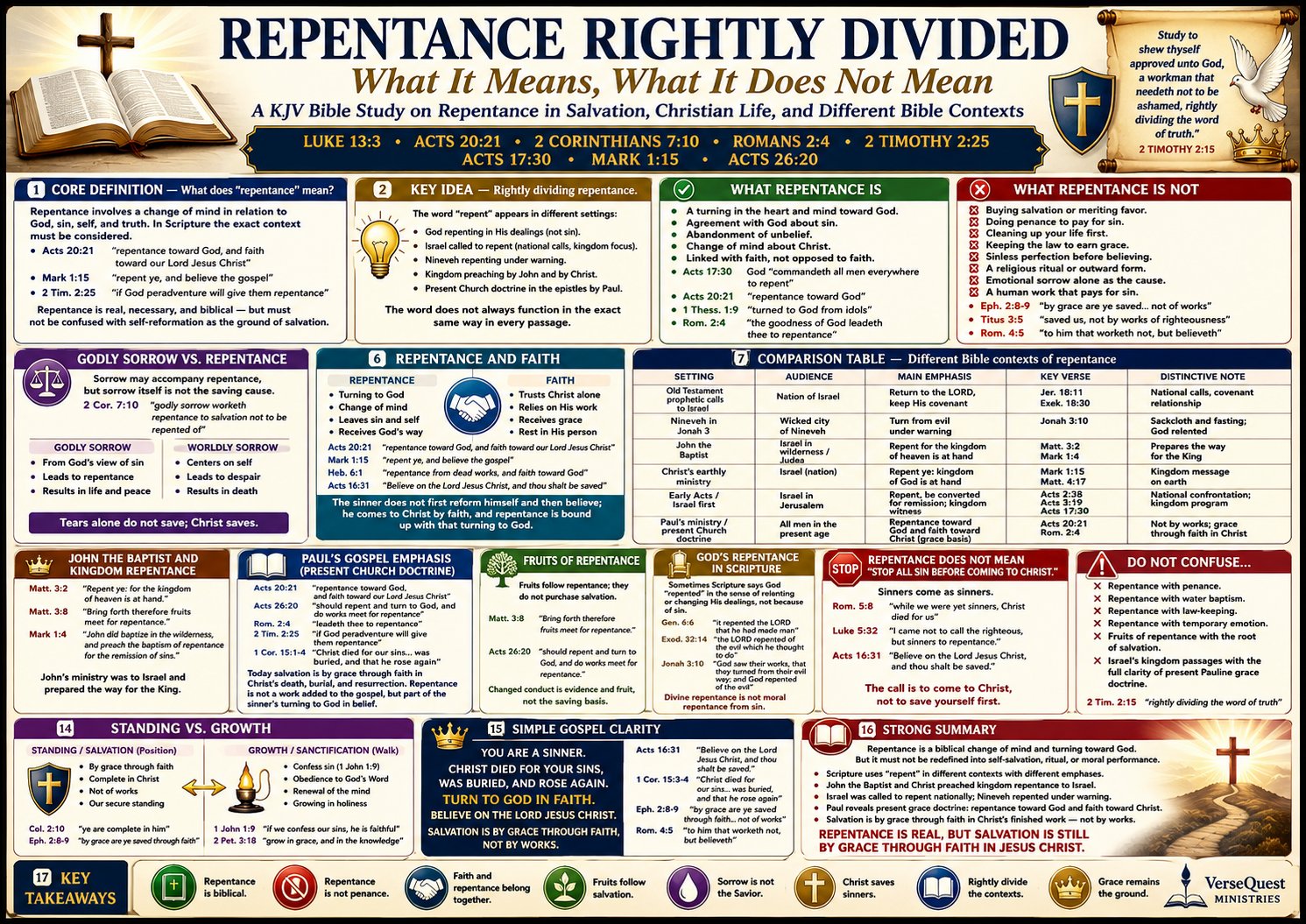
- Repentance Rightly Divided – What It Means, What It Does Not Mean, and Its Place in Salvation and Christian Life (KJV Bible Study Chart)
- Understand repentance rightly divided with this detailed KJV chart covering change of mind, repentance and faith, godly sorrow, fruits of repentance, Kingdom contexts, Christian growth, and salvation by grace through…
- $3.99
- Add to cart
-
-
Doctrine
-
-50%
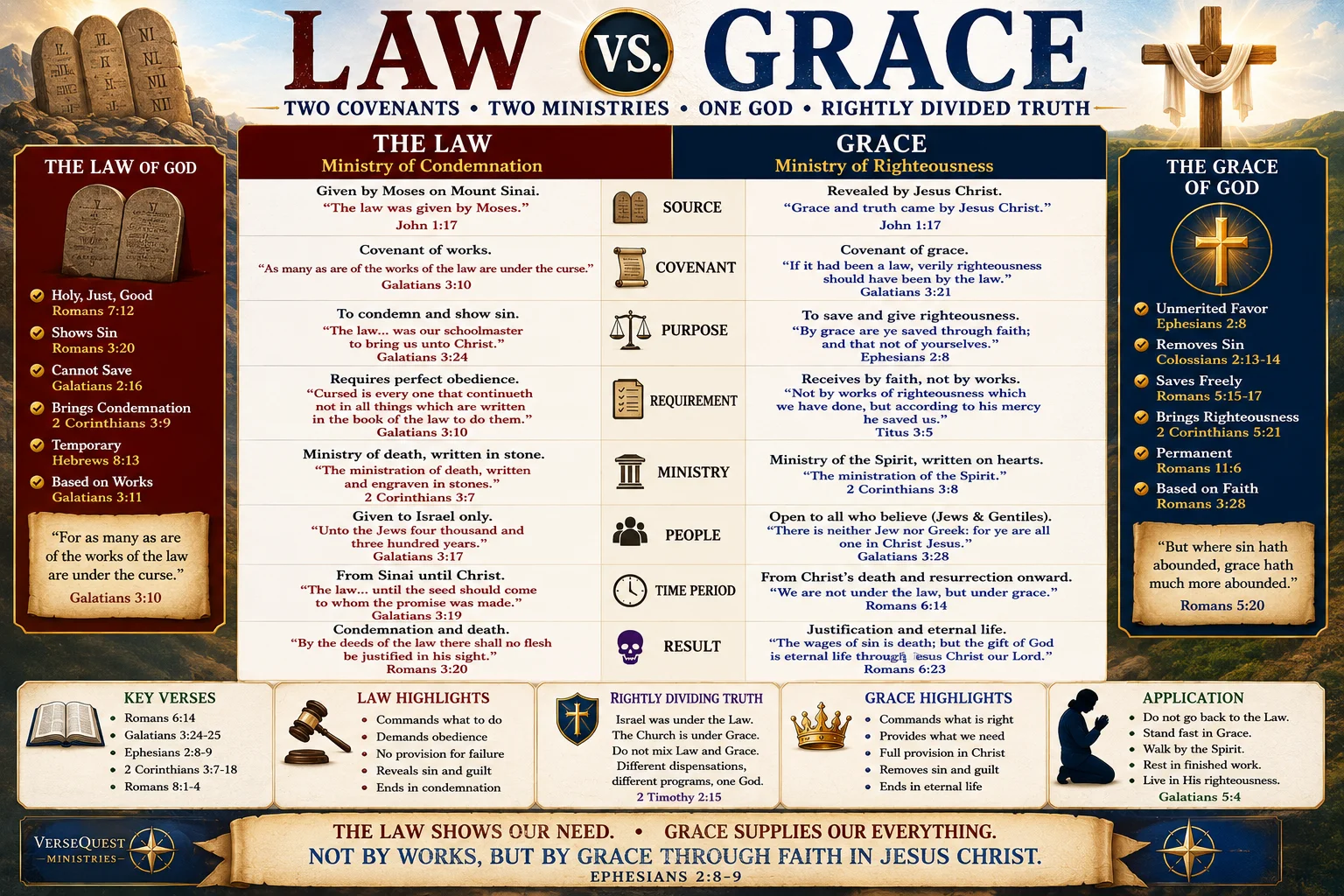
- Law vs. Grace Chart — KJV Rightly Divided
- Premium printable KJV Bible study chart comparing Law and Grace from a rightly divided perspective, showing works versus faith, condemnation versus righteousness, and Moses versus Christ.
- Original price was: $10.00.$4.99Current price is: $4.99.
- Add to cart
-
-50%
-
The Gospel of the Kingdom
-
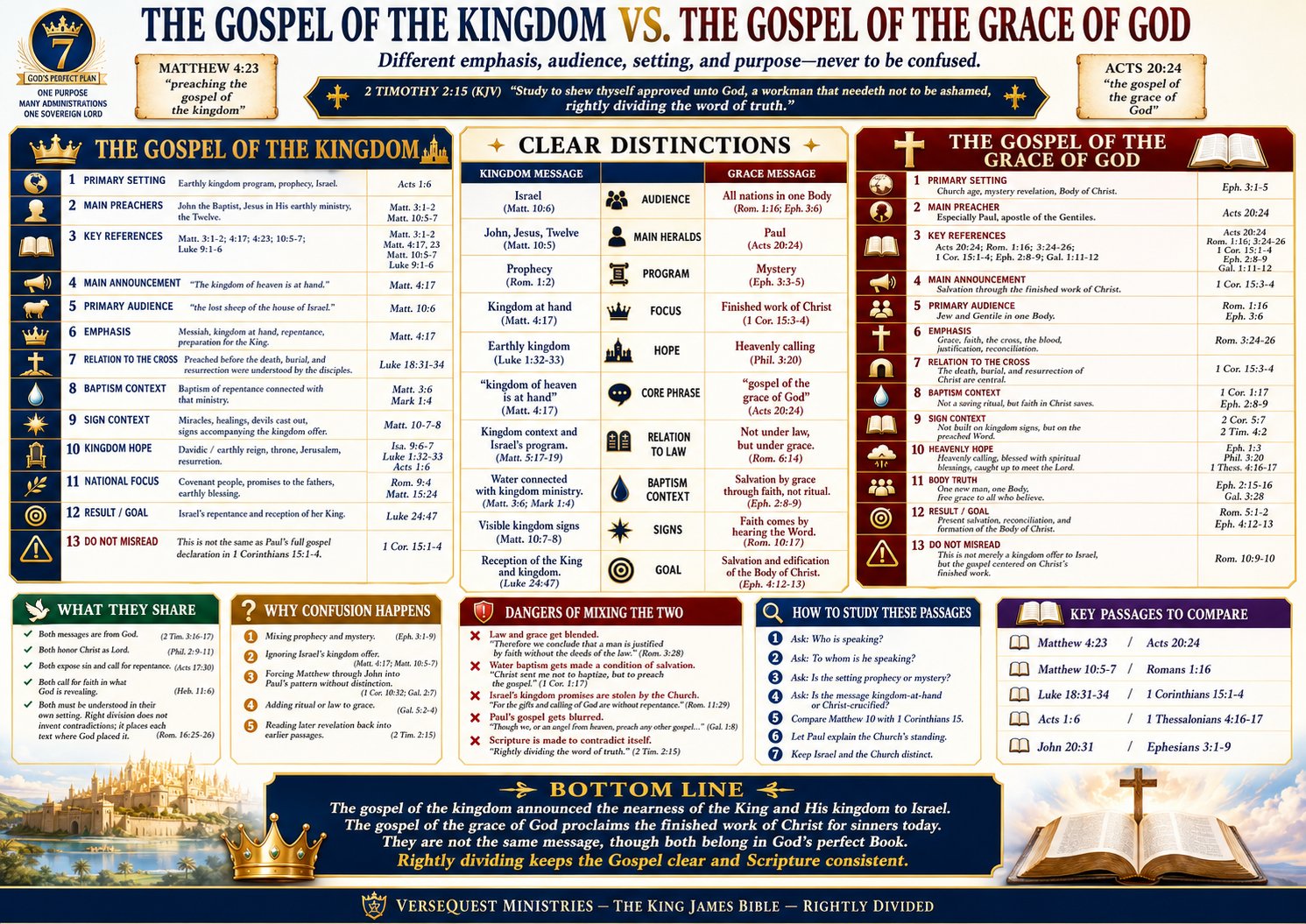
- The Gospel of the Kingdom vs. the Gospel of the Grace of God – KJV Right Division Bible Study Chart
- Compare the gospel of the kingdom and the gospel of the grace of God with this detailed KJV chart covering audience, message, prophecy, mystery, baptism, signs, salvation, and right division.
- $3.99
- Add to cart
-
-
Biblical Repentance
-
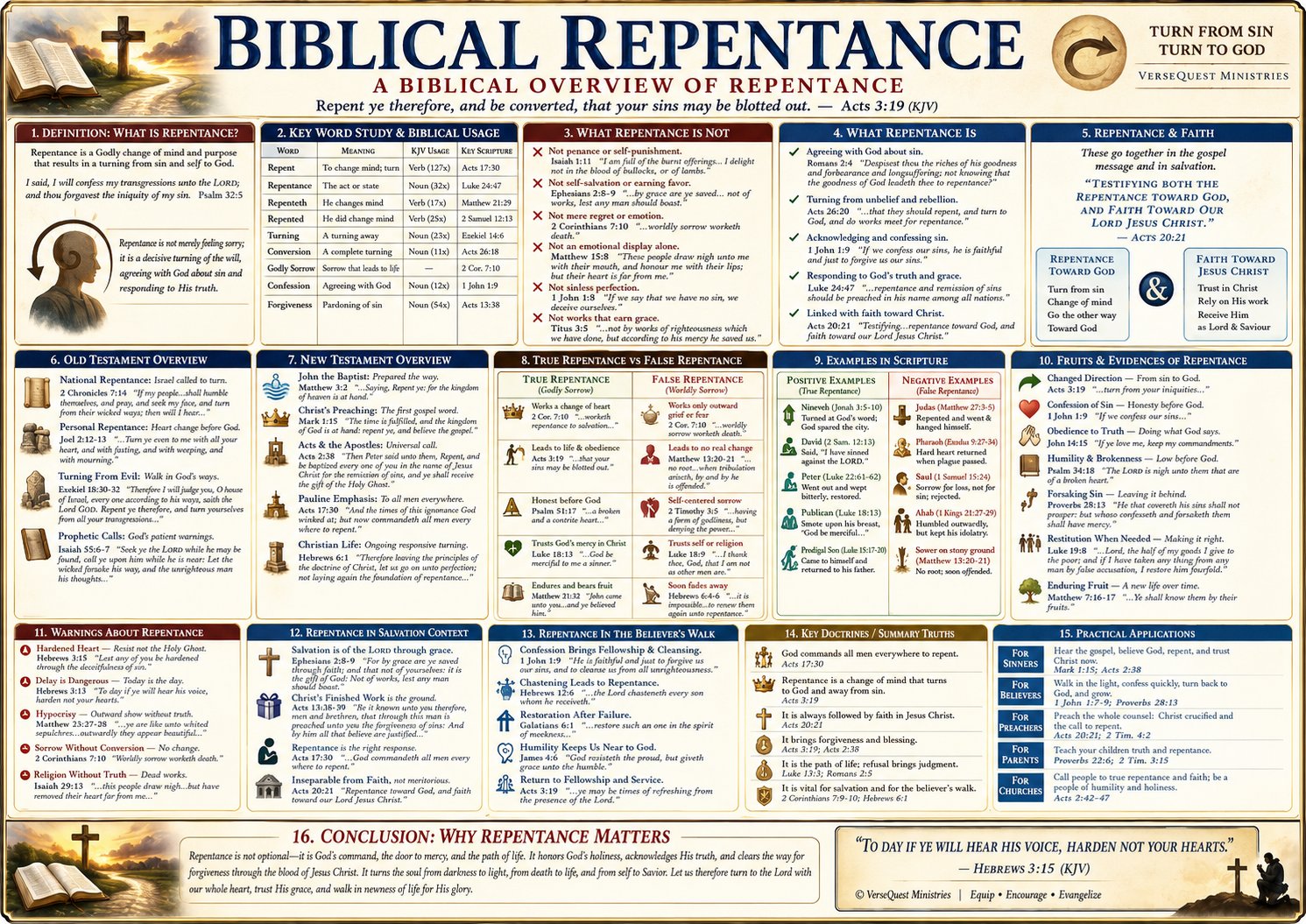
- Biblical Repentance Bible Study Chart – Turning from Sin to God with Faith Toward Jesus Christ (KJV)
- Understand biblical repentance with this detailed KJV chart covering godly sorrow, confession, turning from sin to God, faith in Jesus Christ, false repentance, spiritual restoration, and enduring fruit.
- $3.99
- Add to cart
-
-
Righteousness of Christ
-
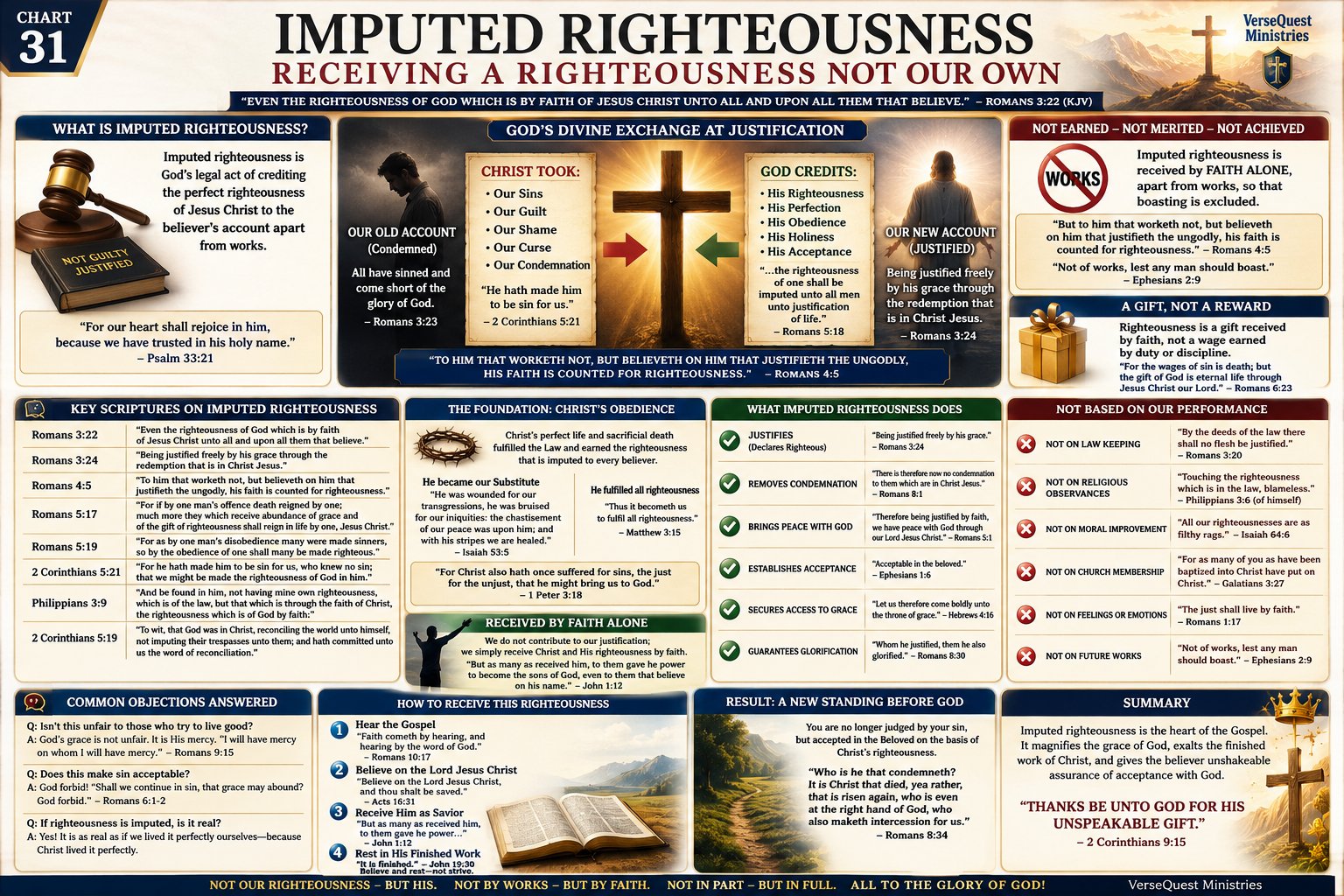
- Imputed Righteousness – The Righteousness of Jesus Christ Credited to the Believer by Faith Alone (KJV Bible Study Chart)
- Understand imputed righteousness with this detailed KJV chart explaining the divine exchange, justification by faith, Christ’s righteousness credited to the believer, peace with God, no condemnation, and acceptance apart from…
- $3.99
- Add to cart
-