
Time Past, But Now, and Ages to Come – Ephesians 2 Rightly Divided KJV Bible Study Chart
Understand Ephesians 2 with this detailed KJV chart explaining Time Past, But Now, Ages to Come, Gentile distance, the one Body, Israel’s future, and the importance of right division.
$3.99
Description
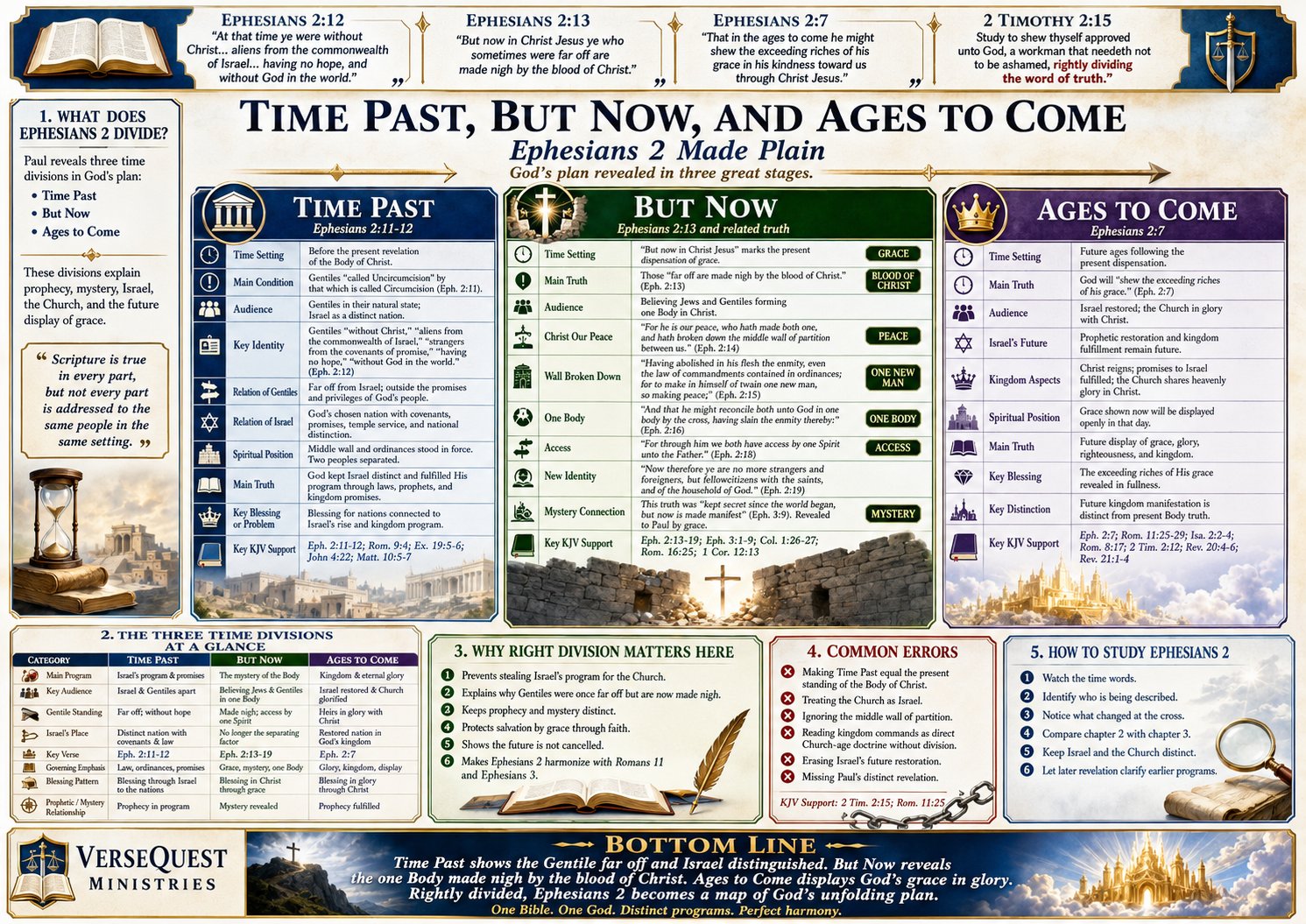
Time Past, But Now, and Ages to Come: Ephesians 2 Made Plain is a detailed KJV Bible study chart explaining the three great time divisions revealed in Ephesians 2 and showing how they clarify God’s dealings with Israel, the Gentiles, the Body of Christ, and the future display of His grace.
The chart is built around three expressions used by the apostle Paul: “time past” in Ephesians 2:11–12, “but now” in Ephesians 2:13, and “the ages to come” in Ephesians 2:7. These divisions provide a clear dispensational framework for understanding what Gentiles once were, what believing Jews and Gentiles now possess in Christ, and what God will reveal in future ages.
Time Past describes the former position of the Gentiles before the revelation of the one Body. Gentiles were called Uncircumcision by Israel, were without Christ, aliens from the commonwealth of Israel, strangers from the covenants of promise, without hope, and without God in the world. Israel remained God’s covenant nation with promises, law, worship, priesthood, and national distinction.
This does not mean that God never saved Gentiles before the present dispensation. It means that Gentiles, as Gentiles, stood outside Israel’s covenant privileges and national program. Blessing was connected with God’s dealings through Israel rather than through a previously unrevealed spiritual Body in which Jewish and Gentile believers possessed equal standing.
The words “But now in Christ Jesus” announce a decisive dispensational change. Believing Gentiles who were once far off have been made nigh by the blood of Christ. Jesus Christ is their peace, the middle wall of partition has been broken down, and believing Jews and Gentiles are reconciled unto God in one Body through the cross.
The Church is therefore not Gentiles being absorbed into Israel’s national identity. It is one new man, created in Christ through the blood of the cross. Former distinctions connected with covenant nearness no longer determine a believer’s standing within the Body of Christ. Both Jews and Gentiles now have access by one Spirit unto the Father.
This But Now truth reveals the believer’s present identity. Saved people are no longer strangers and foreigners but fellowcitizens with the saints and members of the household of God. Their peace, access, reconciliation, and position are found entirely in Christ rather than in physical descent, national covenant privilege, or observance of Israel’s ordinances.
The chart also connects Ephesians 2 with the mystery revealed in Ephesians 3. The one Body was not simply another stage of Israel’s prophetic kingdom program. Paul describes it as truth hidden in God and later revealed by grace. Understanding this mystery protects the distinction between Israel’s national promises and the Church’s spiritual and heavenly position.
Ages to Come points toward God’s future purpose after the present dispensation. Ephesians 2:7 declares that God will display the exceeding riches of His grace in His kindness toward believers through Christ Jesus. The Church will be glorified with Christ, while God’s prophetic purposes concerning Israel and the Kingdom will also move toward fulfillment.
Future ages do not erase the distinctions established in Scripture. Israel’s restoration and promised Kingdom remain connected with prophecy, while the Church’s glorified position displays the riches of grace revealed through the mystery. God’s programs harmonize without being confused.
A three-part comparison summarizes the distinctions. Time Past emphasizes Israel’s covenant program and Gentile distance. But Now emphasizes grace, the blood of Christ, one new man, one Body, peace, and access. Ages to Come emphasize glory, the future Kingdom, Israel’s restoration, and the open display of God’s grace.
The chart also explains why right division matters. It prevents believers from stealing Israel’s program, keeps prophecy and mystery distinct, protects salvation by grace through faith, preserves Israel’s future restoration, and helps Ephesians 2 agree perfectly with Romans 11 and Ephesians 3.
Common errors are addressed directly. These include treating Time Past as the present standing of the Church, turning the Church into Israel, ignoring the middle wall of partition, applying Kingdom commands without proper distinction, erasing Israel’s future, and overlooking Paul’s distinct revelation.
A practical study section teaches readers to watch the time words, identify the people being discussed, notice what changed at the cross, compare Ephesians 2 with Ephesians 3, distinguish Israel from the Church, and allow later revelation to clarify earlier programs.
This chart is ideal for personal Bible study, dispensational teaching, Pauline doctrine, right-division classes, Israel and Church studies, Sunday school, homeschool Bible curriculum, Bible institutes, pastoral training, sermon preparation, and believers seeking a clear visual explanation of Ephesians 2.
Time Past, But Now, Ages to Come, Ephesians 2, right division, dispensational Bible study, Israel and the Church, Gentiles without Christ, commonwealth of Israel, covenants of promise, blood of Christ, one new man, one Body, middle wall of partition, peace through Christ, access by one Spirit, mystery revelation, salvation by grace, Israel’s future restoration, future Kingdom, exceeding riches of grace
Ephesians 2 contains three inspired time expressions that should be allowed to carry their natural meaning: Time Past, But Now, and Ages to Come. These phrases organize the chapter and provide a framework for understanding changes within God’s revealed program.
Time Past describes the former dispensational position of Gentiles. They were outside Israel’s covenant privileges, separated from the national promises, and without the hope associated with Israel’s Messiah and Kingdom.
Gentile distance did not mean that no Gentile could ever believe God. It described the general standing of the nations in relation to Israel’s covenant program before the revelation of the Body of Christ.
The words “But now in Christ Jesus” identify a real change. Gentiles are not brought near through Israel’s law, circumcision, priesthood, or national covenants. They are brought near by the blood of Christ.
Jesus Christ created one new man rather than converting Gentiles into Israel. Believing Jews and Gentiles possess equal spiritual standing in one Body through the cross.
The middle wall of partition has been abolished as a barrier within the one Body. Church-age believers should not rebuild the religious divisions Christ removed by placing Gentiles under Israel’s covenant ordinances.
Both Jew and Gentile have access to the Father through Christ by one Spirit. This access is spiritual, direct, and grounded in grace rather than nationality or ceremonial standing.
Ephesians 3 explains that the one Body belongs to mystery truth revealed through Paul. It was not fully known in previous ages and should not be read backward into every Old Testament prophecy.
Ages to Come demonstrate that God’s purpose does not end with the present Church Age. He will display the exceeding riches of His grace and continue fulfilling His prophetic purposes.
Israel’s future is not cancelled by the creation of the Church. Romans 11 teaches that Israel’s present blindness is partial and temporary and that God’s gifts and calling are without repentance.
Right division allows Time Past, But Now, and Ages to Come to remain distinct without dividing the Bible into contradictory messages. Each stage belongs to one harmonious plan under one sovereign God.
The practical lesson is to watch the time words. Many doctrinal errors begin when a reader ignores when a passage applies, whom it addresses, and what revelation governs its setting.
Ephesians chapter study, Pauline doctrine, dispensational Bible teaching, Israel and Church distinctions, prophecy and mystery studies, salvation by grace instruction, one Body teaching, new-believer discipleship, Sunday school lessons, homeschool Bible curriculum, Christian school instruction, Bible institute classes, pastoral training, sermon preparation, right-division workshops, biblical interpretation, Church identity studies, Romans 9–11 comparisons
King James Bible, Strong’s Concordance, Thompson Chain-Reference Bible, Treasury of Scripture Knowledge, Nave’s Topical Bible, Ephesians commentary notes, Romans 9–11 study materials, Pauline epistle outlines, dispensational timeline charts, Israel and Church comparison studies, prophecy and mystery notes, one Body Scripture worksheets, right-division study resources, VerseQuest dispensational and doctrine charts
Related products
-
The Seven Dispensations
-
- The Seven Dispensations Bible Study Chart – God’s Administrations from Innocence to the Kingdom (KJV)
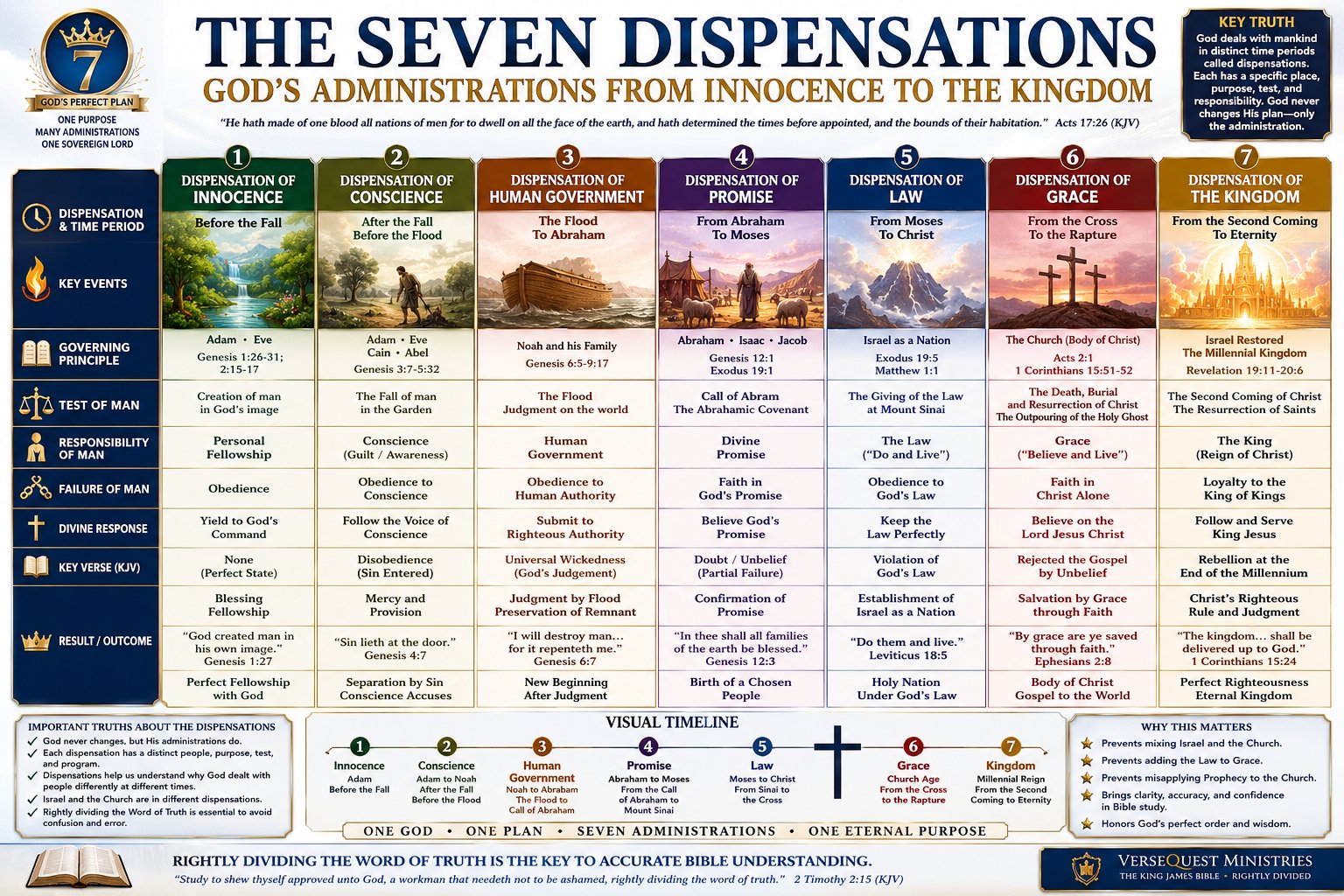
- Explore the seven dispensations with this detailed KJV Bible study chart covering Innocence, Conscience, Human Government, Promise, Law, Grace, the Kingdom, and the importance of rightly dividing Scripture.
- $3.99
- Add to cart
-
-
Matthew Without Confusion
-
- Matthew Without Confusion: A Rightly Divided Guide to the Gospel of Matthew
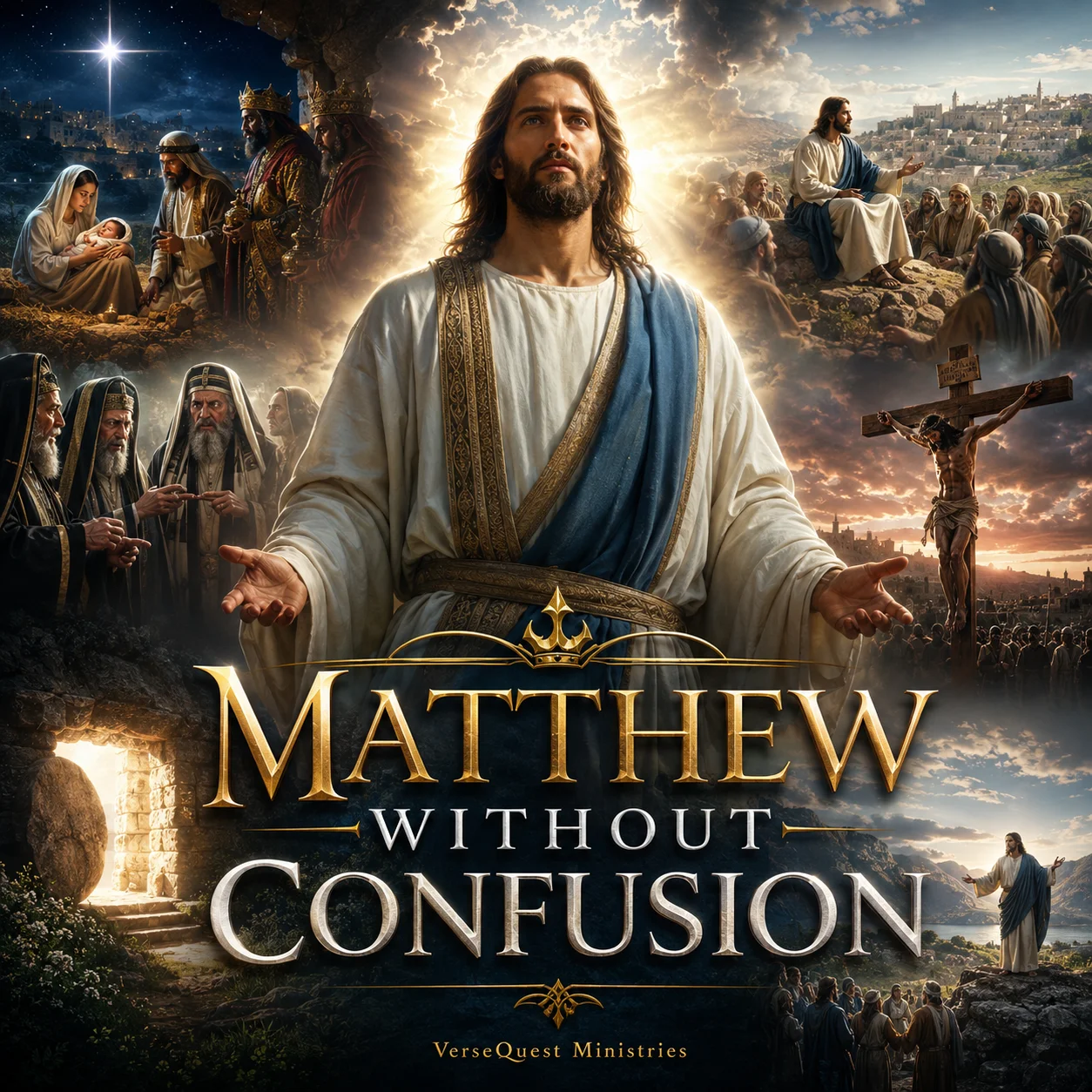
- Understand the Gospel of Matthew without mixing Israel, the Church, the kingdom, the Tribulation, and the Second Advent. Matthew Without Confusion is a massive 936-page KJV Bible commentary containing 72…
- $9.99
- Add to cart
-
-
Prophecy vs Mystery
-
- Prophecy vs. Mystery Bible Study Chart – Spoken Since the World Began vs. Kept Secret Since the World Began (KJV)
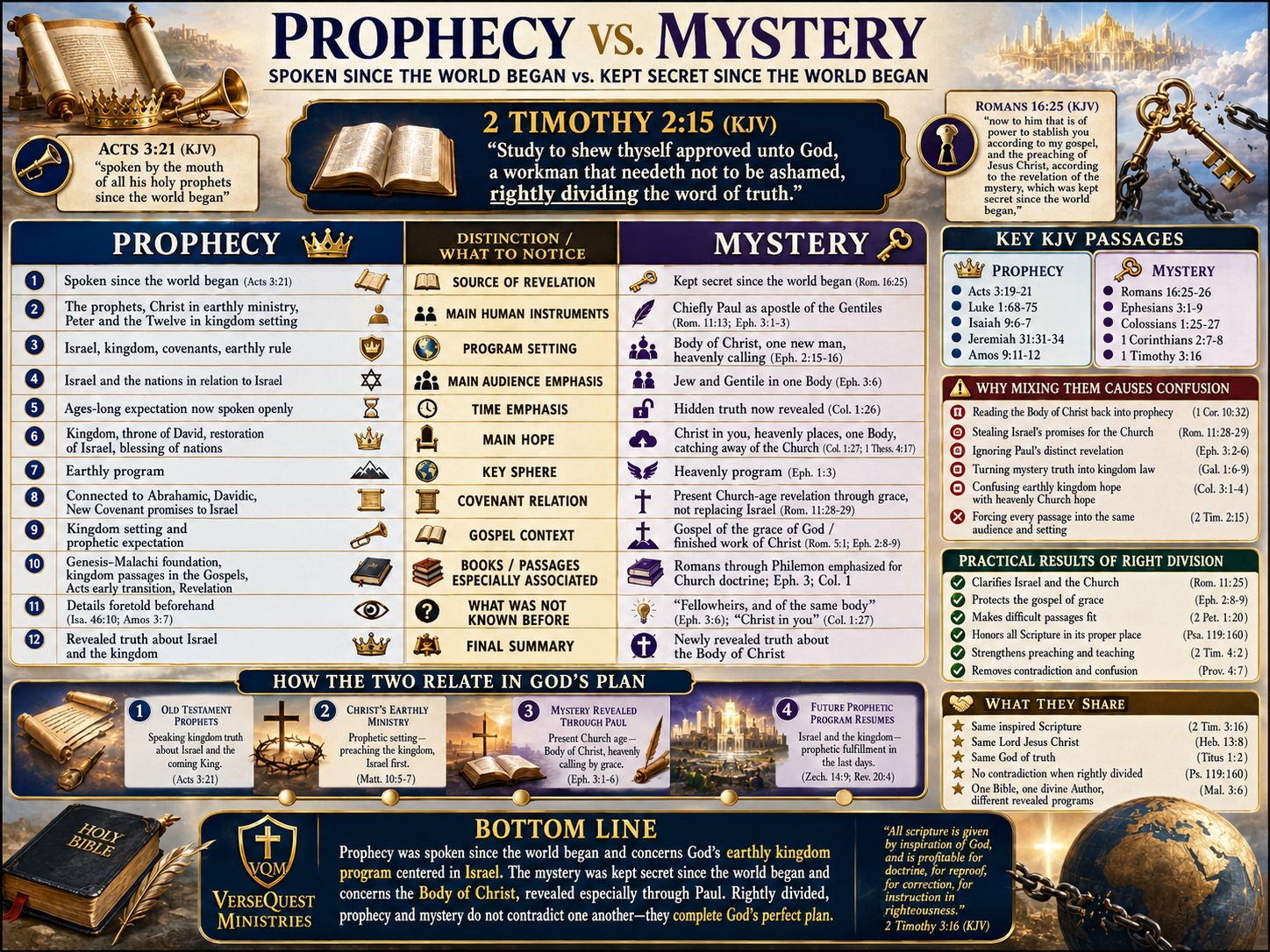
- Compare prophecy and mystery with this detailed KJV chart explaining Israel’s earthly Kingdom program, the Body of Christ, Paul’s revelation, the heavenly calling, and the importance of right division.
- $3.99
- Add to cart
-
-
The Church Age vs The Tribulation
-
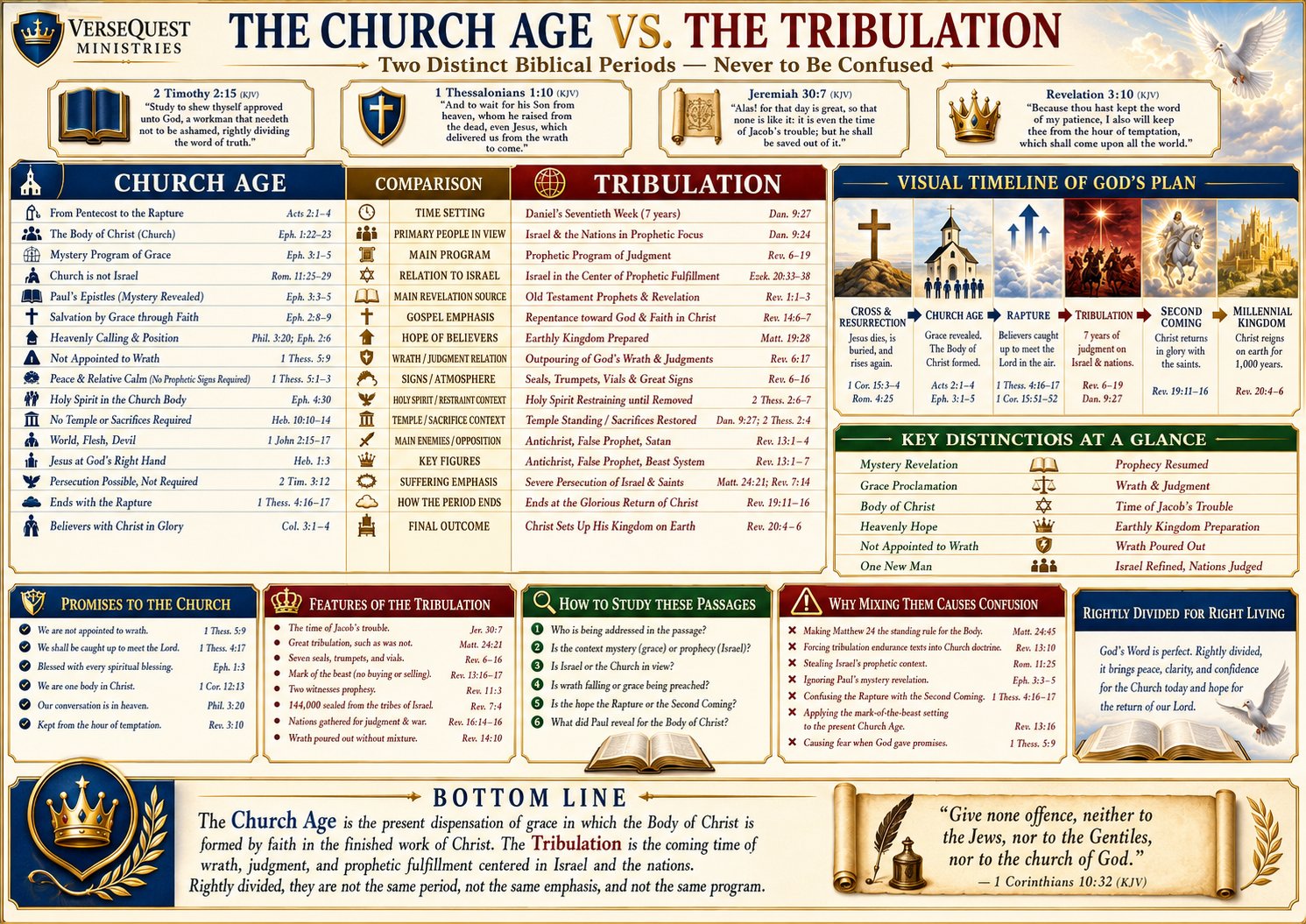
- The Church Age vs. the Tribulation – Two Distinct Biblical Periods KJV Bible Study Chart
- Compare the Church Age and the Tribulation with this detailed KJV chart covering the Body of Christ, Israel, grace, wrath, the Rapture, Antichrist, the Second Coming, and the millennial Kingdom.
- $3.99
- Add to cart
-
-
The Rapture
-
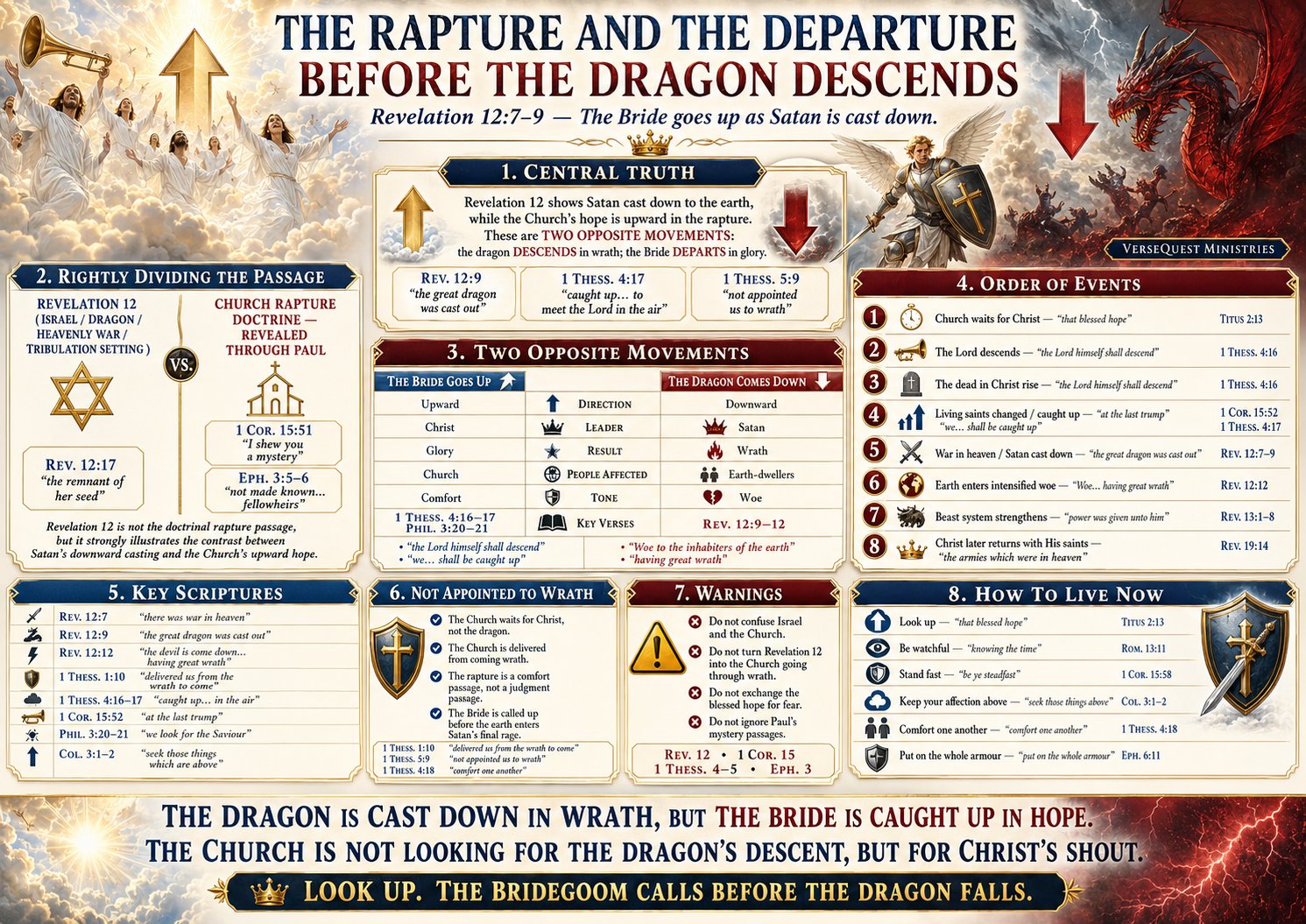
- The Rapture and the Departure Before the Dragon Descends – Printable Bible Study Chart
- Printable KJV Bible study chart on The Rapture and the Departure Before the Dragon Descends, showing the Bride caught up before Satan is cast down in wrath. This premium VerseQuest…
- $4.99
- Add to cart
-