
The Christian and the Poison of Bitterness Bible Study Chart – Forgiveness, Grace, and Healing the Heart (KJV)
Expose and uproot bitterness with this detailed KJV Bible study chart covering unresolved offenses, warning signs, forgiveness, grace, wise boundaries, the cross, and healing for the Christian heart.
$3.99
Description
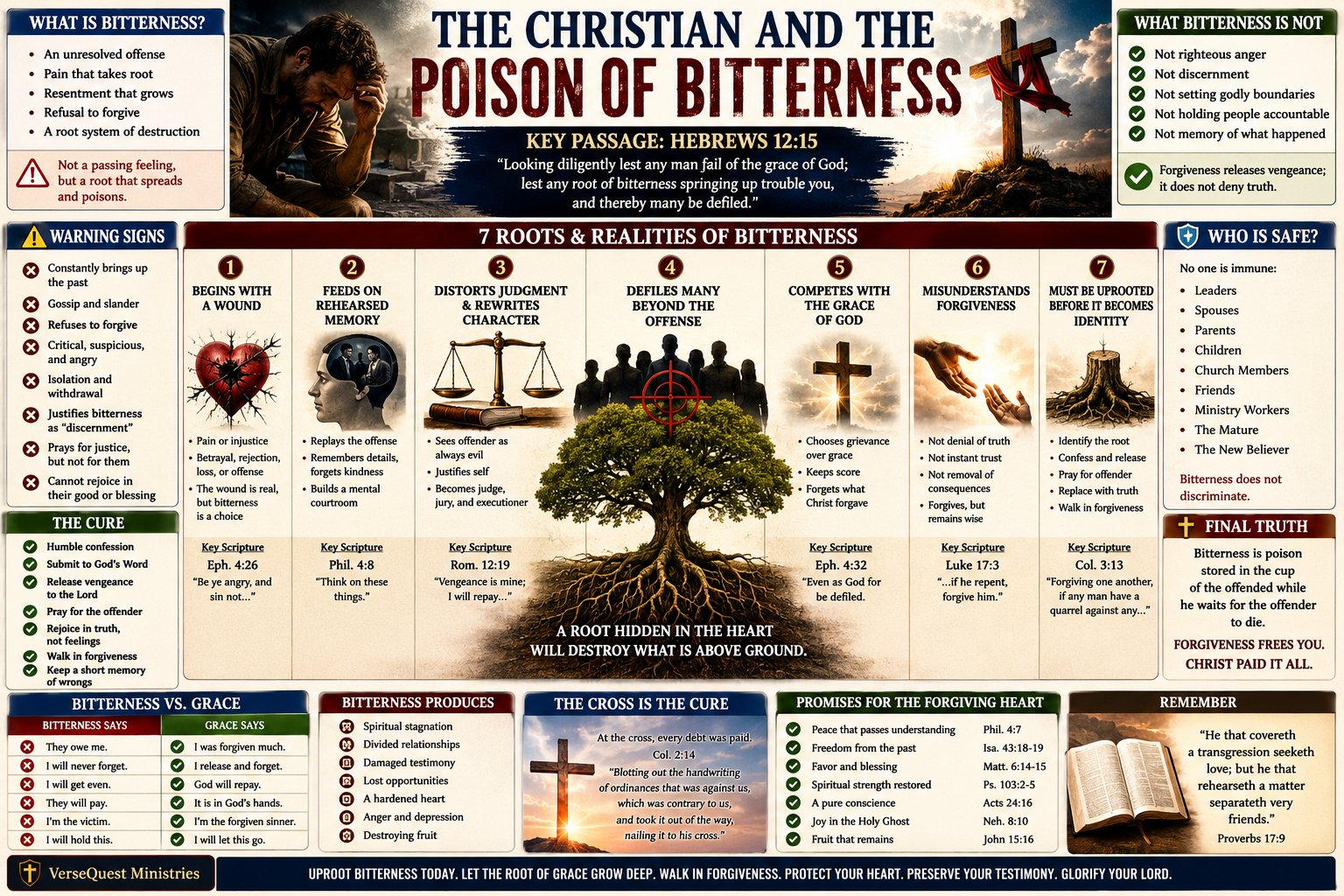
The Christian and the Poison of Bitterness is a detailed KJV Bible study chart exposing how unresolved offenses can develop into resentment, spiritual poison, damaged relationships, distorted judgment, and a hardened identity. Built around Hebrews 12:15, the chart warns believers to look diligently lest a root of bitterness spring up, cause trouble, and defile many people beyond the original offense.
Bitterness often begins with a real wound. A person may experience betrayal, rejection, humiliation, injustice, disappointment, loss, slander, or mistreatment. Scripture does not require believers to pretend that these experiences never happened or that evil should be called good. The danger begins when pain is allowed to take root and resentment becomes a chosen response.
The chart defines bitterness as an unresolved offense that is repeatedly rehearsed, emotionally preserved, and used to justify ongoing anger or refusal to forgive. It is not merely a passing feeling. Like a hidden root beneath the ground, bitterness may remain concealed in the heart while gradually producing destructive fruit in thoughts, words, relationships, decisions, and spiritual fellowship.
A major section presents seven roots and realities of bitterness. It begins with a wound, feeds upon rehearsed memories, distorts judgment, defiles people beyond the original offense, competes with the grace of God, misunderstands forgiveness, and must be uprooted before it becomes part of a person’s identity.
Bitterness feeds upon memory by replaying the offense, preserving every painful detail, forgetting acts of kindness, and constructing a mental courtroom in which the offended person becomes judge, jury, prosecutor, and executioner. Philippians 4:8 provides a biblical alternative by directing the mind toward things that are true, honest, just, pure, lovely, and worthy of praise.
As resentment grows, it rewrites the character of the offender and the offended. The offender may be viewed as permanently evil and beyond grace, while the offended person begins to justify sinful attitudes because of genuine pain. Romans 12:19 removes vengeance from human hands and places judgment with the Lord, who alone possesses complete knowledge and perfect justice.
Bitterness rarely remains confined to two people. Hebrews 12:15 warns that many may be defiled. Families divide, friendships collapse, churches develop factions, conversations become poisoned, and people who were not involved in the original offense are recruited into the conflict. A private root can eventually produce public destruction.
The chart contrasts bitterness with the grace of God. Bitterness keeps score, chooses grievance, demands repayment, and remembers every wrong. Grace remembers how much Christ has forgiven and releases personal vengeance into God’s hands. Ephesians 4:32 commands believers to forgive one another as God for Christ’s sake has forgiven them.
Forgiveness is carefully distinguished from denial, instant trust, removal of consequences, or refusal to establish wise boundaries. Biblical forgiveness does not erase truth or prevent appropriate accountability. It releases personal revenge, refuses to nourish hatred, and places final judgment with God.
The chart also identifies warning signs of bitterness. These include constantly returning to the past, gossiping or slandering, refusing to forgive, becoming suspicious and critical, withdrawing from others, disguising resentment as discernment, praying for judgment without praying for the offender, and being unable to rejoice when the other person receives good.
No group is immune. Leaders, spouses, parents, children, church members, friends, ministry workers, mature believers, and new Christians can all allow bitterness to enter. Spiritual position, knowledge, experience, or public ministry does not remove the need to guard the heart.
A direct comparison between bitterness and grace exposes their opposing voices. Bitterness says, “They owe me,” “I will never forget,” “I will get even,” and “I am the victim.” Grace answers, “I was forgiven much,” “I release vengeance,” “God will repay,” and “I am a forgiven sinner.”
The consequences of bitterness include spiritual stagnation, divided relationships, damaged testimony, lost opportunities, hardness of heart, anger, depression, and destroyed spiritual fruit. Bitterness promises strength and protection, but it gradually imprisons the person who continues to hold it.
The cross stands at the center of the cure. Jesus Christ paid the believer’s unpayable debt and blotted out the handwriting that stood against him. The Christian does not forgive because the offense was insignificant; he forgives because Christ bore the greater debt and supplied the grace needed to release personal vengeance.
The cure includes humble confession, submission to God’s Word, releasing vengeance to the Lord, praying for the offender, rejoicing in truth rather than feelings, walking deliberately in forgiveness, and refusing to preserve a detailed personal record of wrongs.
Forgiveness may need to be reaffirmed whenever painful memories return. The believer may still experience grief, caution, or consequences, but he refuses to reopen the case for personal revenge. Healing is often a walk of repeated surrender rather than one emotional moment.
The chart concludes with promises for the forgiving heart, including peace, freedom from the past, restored spiritual strength, a pure conscience, renewed joy, and fruit that remains. Its final warning is unforgettable: bitterness is poison stored in the cup of the offended while he waits for the offender to die.
This resource is ideal for personal Bible study, Christian counseling, marriage and family ministry, church conflict resolution, discipleship, forgiveness studies, pastoral care, Sunday school, small groups, homeschool Bible curriculum, sermon preparation, and anyone seeking freedom from resentment through the grace of Jesus Christ.
Root of bitterness, unresolved offenses, resentment, rehearsed memories, refusal to forgive, vengeance, distorted judgment, damaged relationships, spiritual defilement, grace of God, forgiveness through Christ, healing the heart, releasing the past, wise boundaries, accountability, prayer for offenders, freedom from resentment, Christian reconciliation, guarding the heart, spiritual restoration
Bitterness frequently begins with a legitimate wound, but the wound and the root are not the same thing. Pain may be inflicted by another person; bitterness develops when the heart repeatedly nourishes resentment and refuses to surrender vengeance to God.
Hebrews 12:15 describes bitterness as a root. Roots grow beneath the surface before their fruit becomes visible. A person may appear calm outwardly while anger, suspicion, contempt, and rehearsed accusations deepen inwardly.
Rehearsed memory strengthens bitterness. Each mental replay gives the offense fresh emotional power. Biblical healing does not require pretending the event never happened, but it does require refusing to use memory as fuel for hatred.
Bitterness distorts judgment. The offended person may begin interpreting everything through the original wound, assuming the worst, dismissing evidence of change, and justifying his own sinful reactions.
Personal vengeance belongs to God. Romans 12:19 does not deny justice; it places justice in the hands of the One who knows every motive, fact, consequence, and hidden detail.
Forgiveness is not the same as immediate trust. Trust may need to be rebuilt through repentance, honesty, time, and changed conduct. Forgiveness releases revenge while wisdom continues to evaluate character and establish proper boundaries.
Forgiveness does not remove every consequence. Civil, family, church, or relational accountability may still be necessary. The believer can forgive while still telling the truth, protecting others, and responding appropriately to ongoing misconduct.
Bitterness defiles many because wounded people often recruit others into their resentment. Gossip, repeated accusations, division, and demands for loyalty can spread one offense throughout an entire family, ministry, or congregation.
The grace of God is the believer’s pattern. Christians forgive not because every offender deserves restored fellowship, but because God for Christ’s sake forgave an immeasurable debt that they could never repay.
Prayer for the offender weakens bitterness’s control. Prayer does not call evil good, but it forces the heart to place the person before God instead of continually placing him before an imaginary personal court.
The cross exposes both the seriousness of sin and the greatness of forgiveness. Christ did not dismiss guilt; He paid the debt. Christian forgiveness is therefore grounded in truth, justice, mercy, and accomplished redemption.
Uprooting bitterness requires confession, renewed thinking, released vengeance, prayer, truth, and repeated obedience. Feelings may take time to follow, but the believer can choose to walk in forgiveness before emotional healing is complete.
Personal forgiveness studies, biblical counseling, marriage counseling, family reconciliation, church conflict resolution, discipleship training, pastoral care, overcoming resentment, anger counseling, relationship restoration, small-group Bible studies, Sunday school lessons, homeschool Bible curriculum, Christian school instruction, Bible institute classes, sermon preparation, ministry leadership training, spiritual growth instruction
King James Bible, Strong’s Concordance, Thompson Chain-Reference Bible, Treasury of Scripture Knowledge, Nave’s Topical Bible, personal prayer journal, forgiveness worksheet, biblical counseling resources, marriage and family study materials, Scripture memory cards, conflict-resolution studies, Ephesians 4 study notes, Hebrews 12 cross-reference notes, VerseQuest Christian Living charts
Related products
-
Spiritual Growth
-
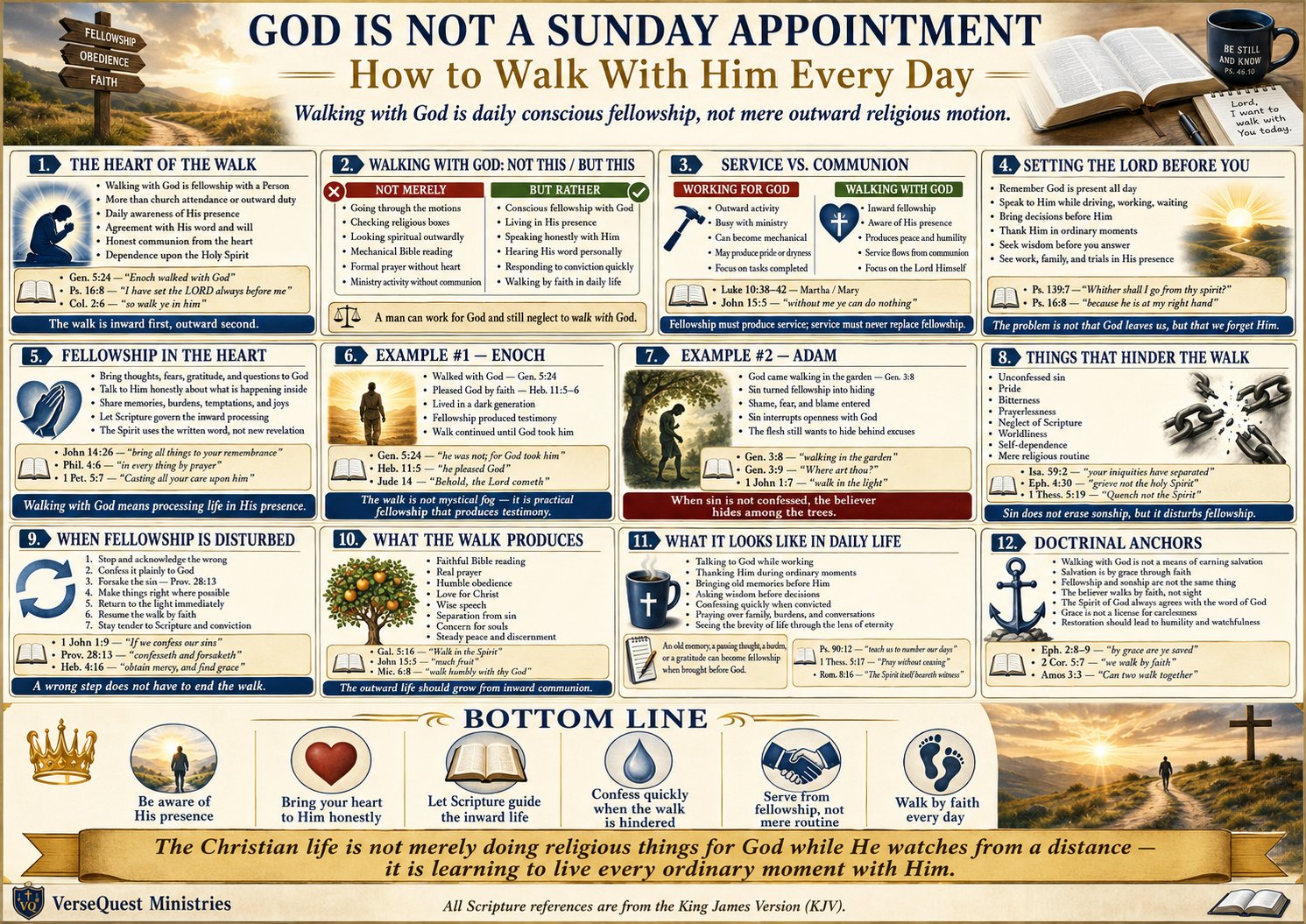
- God Is Not a Sunday Appointment – Walking With God Bible Study Chart
- Discover what it truly means to walk with God every day—not merely performing religious duties, but living in conscious fellowship with Him. This detailed KJV Bible study chart explains the…
- $3.99
- Add to cart
-
-
Christian Backsliding
-
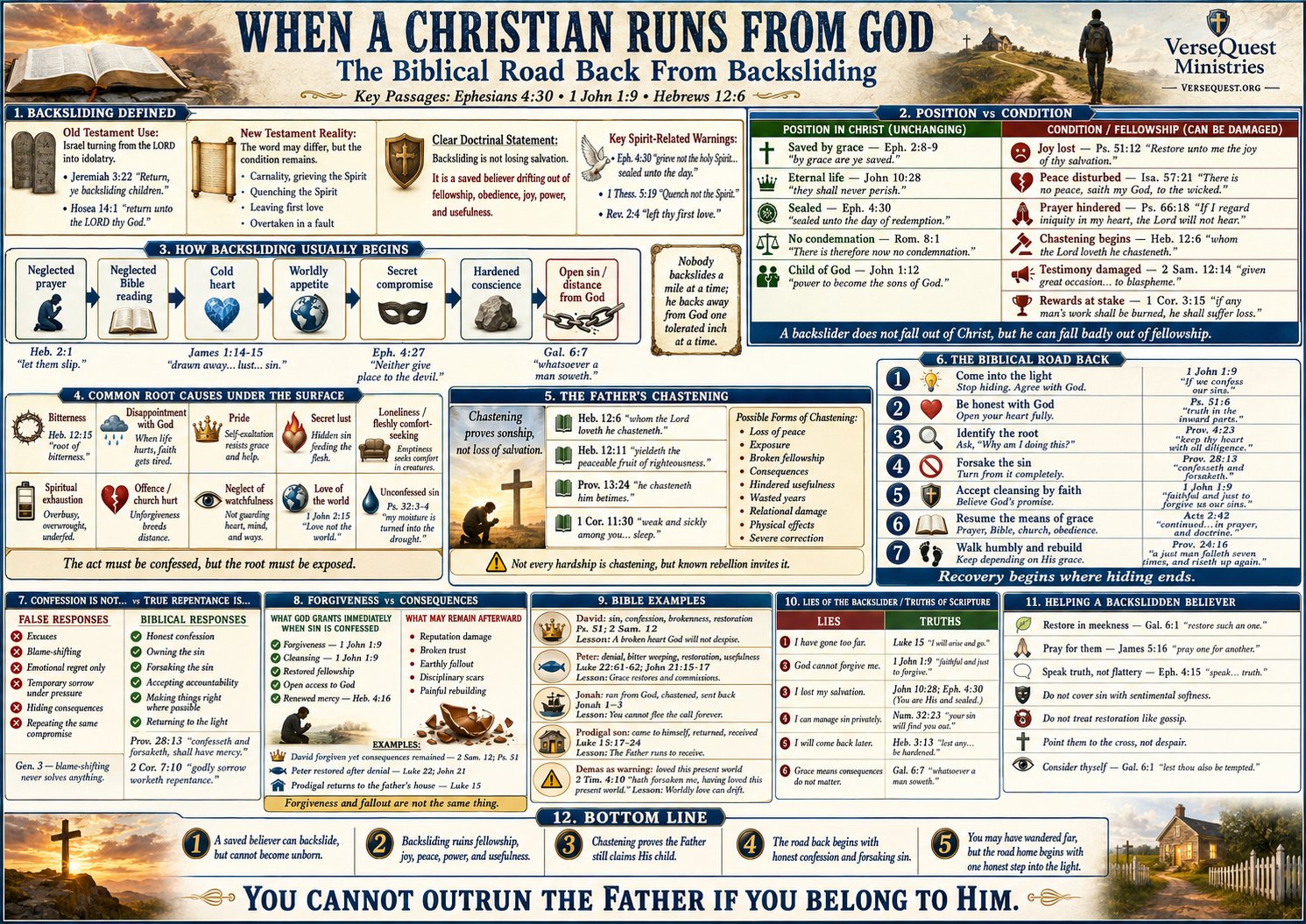
- When a Christian Runs from God – The Biblical Road Back from Backsliding, Chastening, and Broken Fellowship (KJV Bible Study Chart)
- Understand Christian backsliding with this detailed KJV chart covering position versus fellowship, spiritual decline, root causes, chastening, confession, consequences, restoration, and the biblical road back to God.
- $3.99
- Add to cart
-
-
The Clock Is Eating Your Life
-
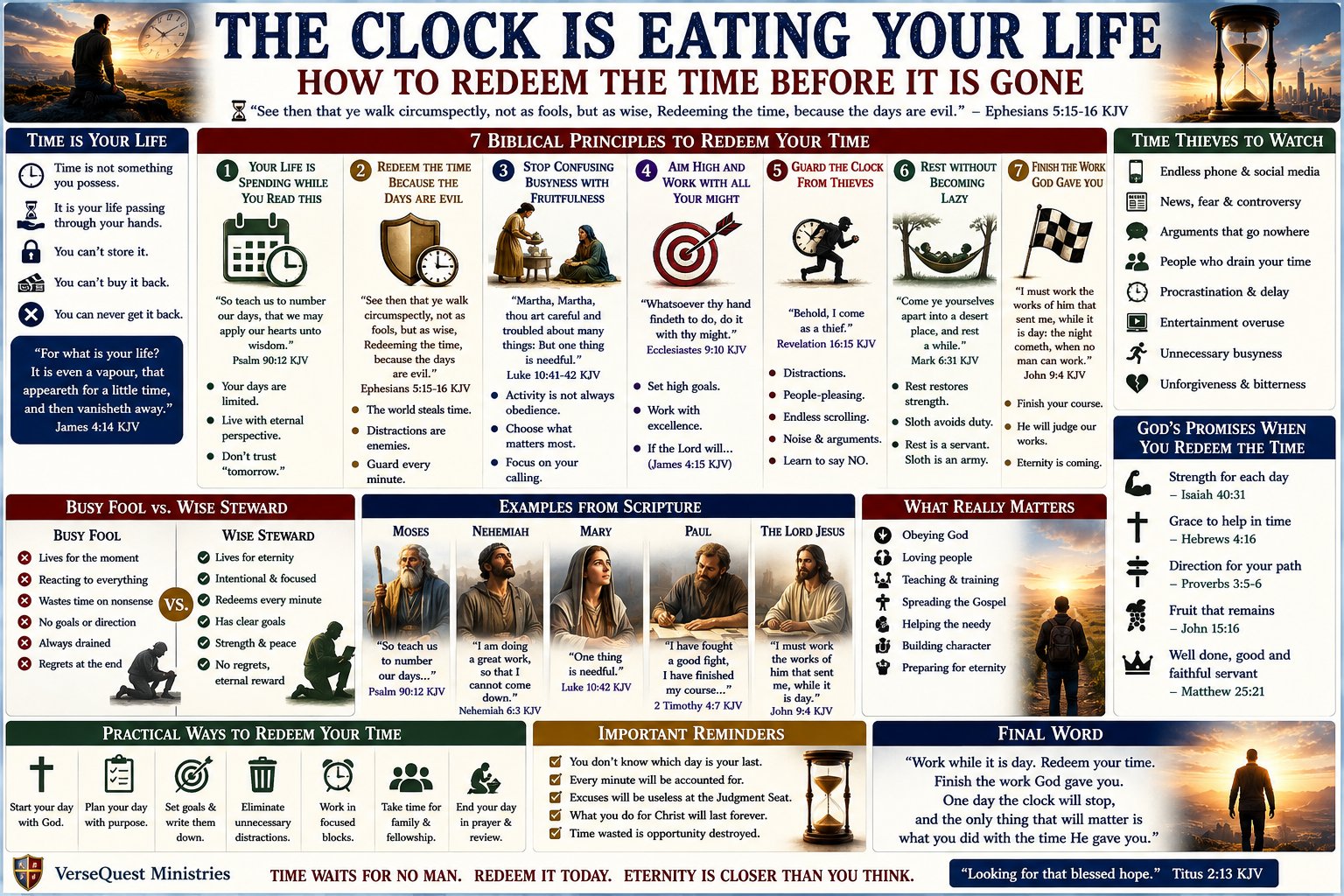
- The Clock Is Eating Your Life – How to Redeem the Time Before It Is Gone (KJV Bible Study Chart)
- Learn how to redeem the time with this detailed KJV chart covering biblical priorities, busyness versus fruitfulness, time thieves, diligence, proper rest, practical scheduling, eternal purpose, and finishing the work…
- $3.99
- Add to cart
-
-
Biblical Submission
-
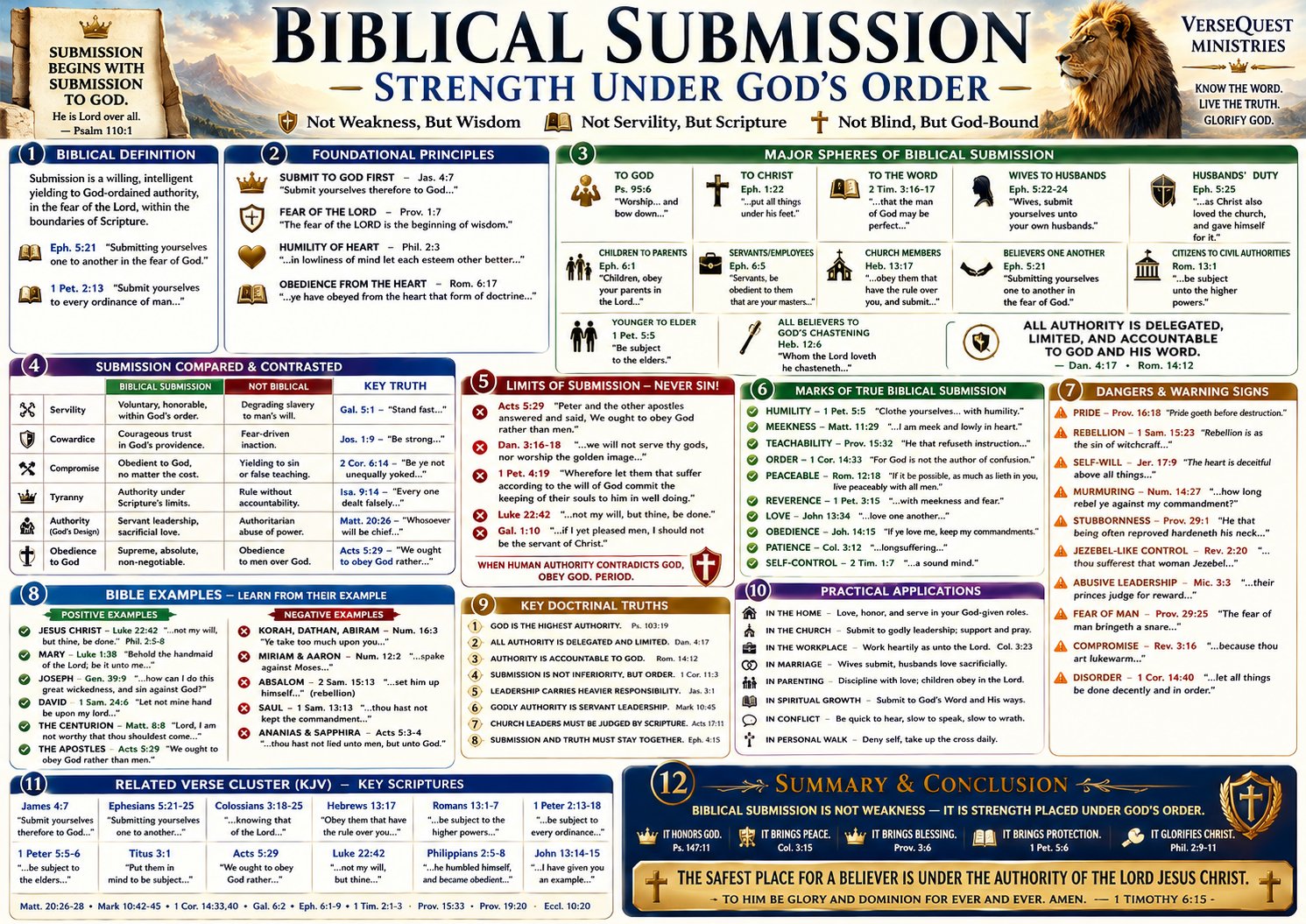
- Biblical Submission Bible Study Chart – Strength Under God’s Order, Authority, and Scriptural Limits (KJV) Product Description
- Study biblical submission with this detailed KJV chart covering God-ordained authority, servant leadership, obedience, marriage, church, government, and the Scriptural limits of submission.
- $3.99
- Add to cart
-
-
When Fear of God Vanishes
-
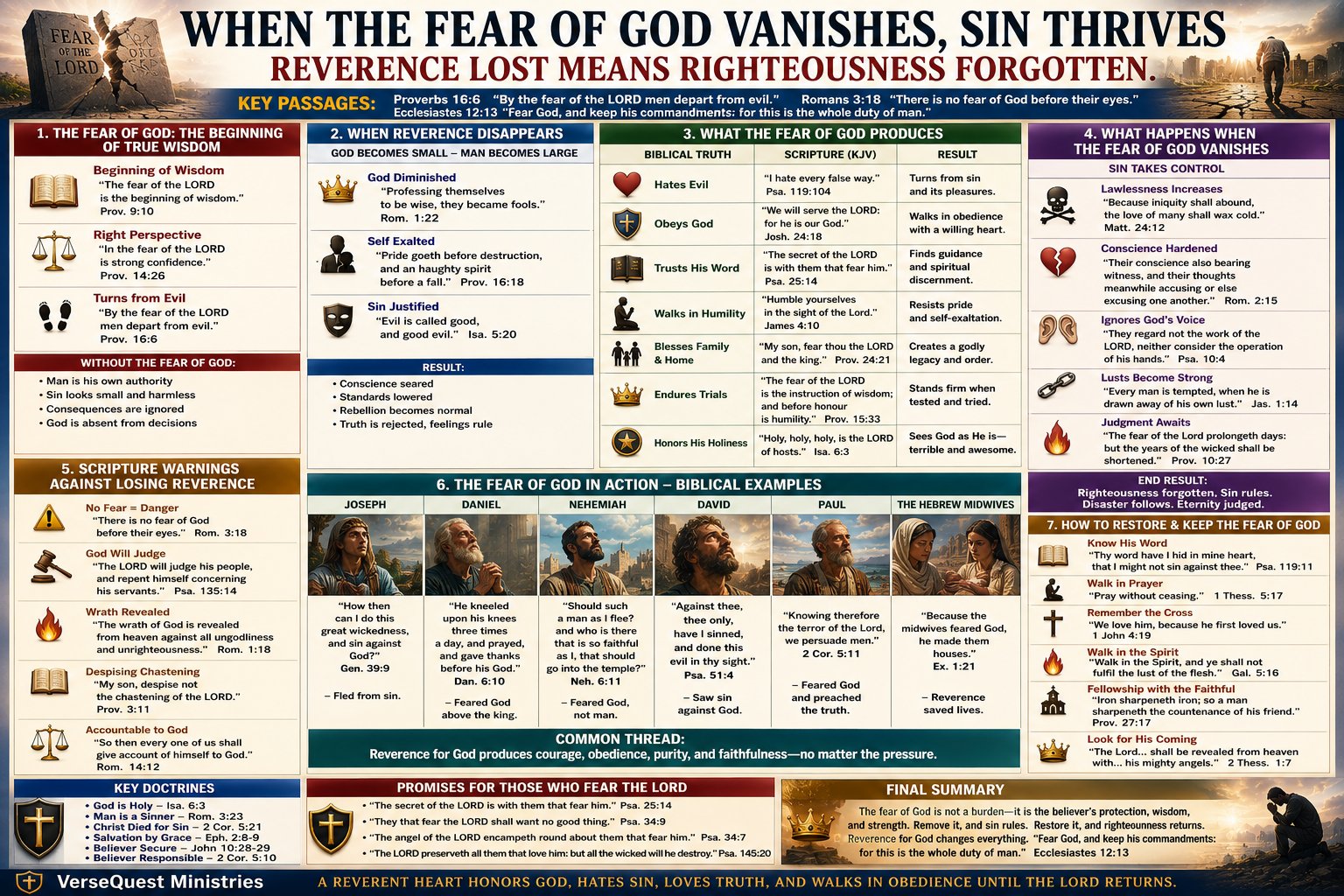
- When the Fear of God Vanishes, Sin Thrives – Reverence, Wisdom, Holiness, and Obedience (KJV Bible Study Chart)
- Understand the fear of God with this detailed KJV Bible study chart covering reverence, wisdom, holiness, obedience, hardened conscience, divine judgment, biblical examples, and restoring godly fear.
- $3.99
- Add to cart
-