
Assurance of Salvation – How the Believer Can Know He Has Eternal Life in Jesus Christ (KJV Bible Study Chart)
Learn how the believer can know he is saved with this detailed KJV chart covering Christ’s finished work, the gospel, God’s promises, the Holy Spirit’s seal, standing versus fellowship, doubt, and eternal-life assurance.
$3.99
Description
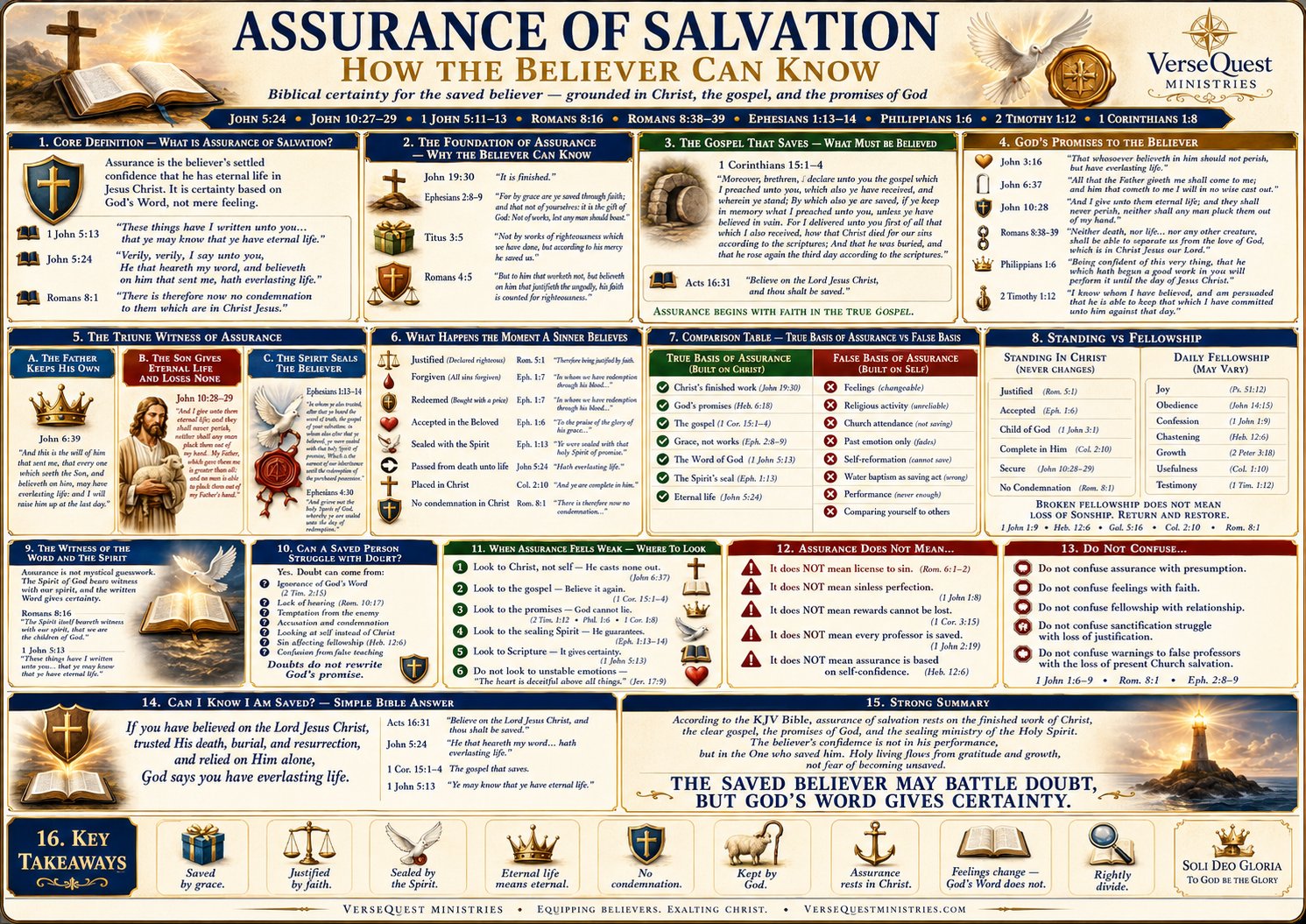
Assurance of Salvation: How the Believer Can Know is a detailed KJV Bible study chart explaining how a genuinely saved believer can possess biblical certainty that he has eternal life through faith in the Lord Jesus Christ.
Built around 1 John 5:11–13, John 5:24, John 10:27–29, Romans 8:16, Romans 8:38–39, Ephesians 1:13–14, Philippians 1:6, 2 Timothy 1:12, and 1 Corinthians 1:8, this chart establishes that assurance rests upon Christ’s finished work, the true gospel, God’s written promises, and the sealing ministry of the Holy Spirit—not upon changing feelings, religious activity, human performance, or self-confidence.
Assurance is the believer’s settled confidence that he possesses eternal life in Jesus Christ. It is not merely hoping that salvation will remain intact until death. It is believing what God has plainly written concerning those who trust His Son.
First John 5:13 declares, “These things have I written unto you that believe on the name of the Son of God; that ye may know that ye have eternal life.” God does not require His children to live beneath perpetual uncertainty. He gave a written record so believers could know rather than guess.
Assurance is not arrogance. Arrogance trusts personal goodness and looks down upon others. Biblical assurance confesses that the sinner could never save or preserve himself and rests entirely upon the sufficiency of Jesus Christ.
A believer who says, “I know I have eternal life because God promised it,” is not boasting in himself. He is honouring the truthfulness of God. Refusing to believe God’s promise does not produce humility; it produces unbelief disguised as caution.
The chart explains the foundation of assurance by first presenting the gospel that saves. First Corinthians 15:1–4 declares that Christ died for our sins according to the Scriptures, was buried, and rose again the third day.
Salvation is not confidence in a religious experience detached from the gospel. Assurance begins with knowing what was believed. A person cannot possess biblical certainty while trusting an incomplete or corrupted message.
The gospel is centred upon the Person and work of Jesus Christ. He is the sinless Son of God who bore the sinner’s guilt, shed His blood, died, was buried, and rose bodily from the dead. The sinner is commanded to believe on Him.
Acts 16:31 gives the direct answer: “Believe on the Lord Jesus Christ, and thou shalt be saved.” Salvation is received by faith in Christ rather than earned through moral reform, law-keeping, sacraments, church membership, or personal effort.
The chart identifies the finished work of Christ as the first great foundation of assurance. Jesus declared from the cross, “It is finished.” Redemption was completed, divine justice was satisfied, and the debt of sin was paid.
Ephesians 2:8–9 teaches that salvation is by grace through faith and not of works. Titus 3:5 excludes works of righteousness performed by the sinner. Romans 4 presents God justifying the ungodly who believes.
If salvation began through grace but depended finally upon human performance, the believer could never possess certainty. Every failure would reopen the question of acceptance. The gospel removes that uncertainty by placing the entire saving foundation in Christ.
A major section presents God’s promises to the believer. John 3:16 promises everlasting life to everyone who believes. John 6:37 promises that Christ will never cast out the one who comes to Him.
John 10:28 declares that Christ gives eternal life to His sheep and that they shall never perish. Romans 8 teaches that nothing in creation can separate the believer from the love of God in Christ Jesus.
Philippians 1:6 promises that God will complete the work He began. Second Timothy 1:12 expresses confidence that Christ is able to keep what has been committed unto Him.
These promises shift assurance away from the believer’s weakness and place it upon God’s faithfulness. The question is not whether the Christian feels strong enough to preserve salvation but whether God is faithful enough to fulfill His Word.
The chart presents a triune witness of assurance. The Father keeps His own, the Son gives eternal life and loses none, and the Holy Spirit seals the believer unto the day of redemption.
John 6 records the Father’s will that Christ should lose nothing entrusted to Him. John 10 presents the believer held securely in the hands of both the Son and the Father.
Ephesians 1:13–14 teaches that the believer is sealed with the Holy Spirit of promise after trusting the gospel. The Spirit is the earnest, pledge, or guarantee of the promised inheritance.
Ephesians 4:30 states that believers are sealed “unto the day of redemption.” The Holy Spirit’s seal does not remain only until the Christian’s next spiritual struggle. It continues until God completes bodily redemption.
Romans 8:16 explains that the Spirit bears witness with the believer’s spirit that he is a child of God. This witness never contradicts Scripture or replaces the gospel. The Spirit assures through the truth He inspired.
The chart lists what happens the moment a sinner believes. He is justified, forgiven, redeemed, accepted in the Beloved, sealed with the Holy Spirit, passed from death unto life, placed into Christ, and delivered from eternal condemnation.
Justification means God declares the believer righteous on the basis of Jesus Christ. Forgiveness means the sinner’s offenses are pardoned through Christ’s blood. Redemption means the full price of deliverance has been paid.
Acceptance in the Beloved means the Christian’s position rests in Christ rather than in his daily performance. The Spirit’s seal identifies the believer as God’s possession and guarantees the future inheritance.
Passing from death unto life describes a decisive change of spiritual position. Being placed into Christ gives the believer a new identity and standing that cannot be produced by earthly religion.
No condemnation means the eternal sentence has been answered. Romans 8:1 does not say there is less condemnation or a possibility that condemnation may return. It declares that there is now no condemnation to those in Christ.
The chart compares the true basis of assurance with false foundations. True assurance rests upon Christ’s finished work, God’s promises, the gospel, grace, Scripture, the Spirit’s seal, and the gift of eternal life.
False assurance rests upon feelings, religious activity, church attendance, a past emotional moment, moral performance, self-reformation, water baptism as a saving act, comparison with others, or confidence in personal sincerity.
Feelings are changeable. A Christian may feel strong one day and discouraged the next. Emotional instability cannot change God’s settled verdict.
Religious activity may be unreliable. A person may serve faithfully for a season and later become weary. Assurance cannot depend upon maintaining a flawless record of church attendance, prayer, Bible reading, giving, or ministry involvement.
A past emotional experience cannot provide certainty by itself. Tears, peace, joy, fear, relief, or excitement may accompany salvation, but they do not become the Saviour.
Self-reformation cannot save because improved behaviour does not erase former guilt or provide perfect righteousness. Water baptism cannot wash away the guilt of the soul or complete Christ’s finished sacrifice.
Comparison with other people produces either pride or despair. God’s promise—not another person’s conduct—is the proper foundation of assurance.
The chart carefully distinguishes standing in Christ from daily fellowship. The believer’s standing never changes, but his daily condition may vary.
His settled standing includes justification, acceptance, sonship, completeness in Christ, security, no condemnation, and peace with God.
His daily fellowship may involve joy, obedience, confession, chastening, spiritual growth, usefulness, testimony, and Christian service. These may rise or fall according to the believer’s conduct.
Broken fellowship does not mean lost sonship. A disobedient child remains a child, though he may lose joy, peace, closeness, usefulness, and reward.
First John 1:9 provides cleansing and renewed fellowship when believers confess their sins. Hebrews 12 teaches that God chastens His children. Chastening proves relationship rather than cancellation of salvation.
The chart explains why a saved person may struggle with doubt. Possible causes include ignorance of God’s Word, confusing salvation with feelings, temptation from the enemy, accusation and condemnation, looking at sin instead of Christ, unresolved sin affecting fellowship, and false teaching that presents salvation as temporary.
Doubt does not rewrite God’s promise. A believer may struggle emotionally while remaining eternally secure in Christ. The answer is not endless attempts to be saved again but clearer understanding of the gospel and God’s promises.
When assurance feels weak, the chart directs believers to look in the correct places. Look to Christ, not self. Look to the gospel, not religious achievement. Look to God’s promises, not human opinion.
Look to the Spirit’s seal rather than emotional fluctuation. Look to Scripture because it provides objective certainty. Do not treat the deceitful human heart as the final authority over eternal life.
Jeremiah warns that the heart is deceitful. Feelings should therefore be interpreted through Scripture rather than Scripture being interpreted through feelings.
The chart also explains what assurance does not mean. It does not provide license to sin, promise sinless perfection, guarantee that Christian rewards cannot be lost, or prove that every outward professor is genuinely saved.
Assurance does not mean the believer’s daily walk is unimportant. Grace establishes salvation securely and then teaches holy, grateful, obedient living.
A secure believer may still grieve the Spirit, damage testimony, break fellowship, lose reward, and experience chastening. Eternal security removes fear of damnation, not the seriousness of disobedience.
Assurance is not based upon self-confidence. The believer does not say, “I will never fail.” He says, “Christ will never fail, and His promise is true.”
The chart warns against several doctrinal confusions. Assurance should not be confused with presumption. Feelings should not be confused with faith. Fellowship should not be confused with relationship.
Practical sanctification struggles should not be confused with loss of justification. Warnings to false professors should not be applied automatically to genuine believers, and passages from other biblical programs should not overturn direct Church-age doctrine.
Right division protects assurance by allowing clear Pauline salvation doctrine to govern the believer’s standing. Romans through Philemon explain justification, redemption, sealing, security, Christian growth, service, chastening, and reward.
The chart gives a simple Bible answer to the question, “Can I know I am saved?” If a person has believed on the Lord Jesus Christ, trusted His death, burial, and resurrection, and relied upon Him alone, God says that person possesses everlasting life.
Assurance does not rest upon remembering the exact date, location, words, or emotional intensity of conversion. It rests upon present faith in the true Christ and the promises of God.
A believer may battle doubt, but God’s Word gives certainty. The proper response is to believe the gospel, rest in Christ’s finished work, confess known sin, reject false condemnation, and live as someone who has been saved by grace.
The strong summary is clear: according to the King James Bible, assurance of salvation rests upon the finished work of Jesus Christ, the true gospel, God’s written promises, and the Holy Spirit’s seal.
The believer’s confidence is not in his performance but in the One who saved him. Holy living then flows from gratitude, growth, love, and obedience—not from terror that eternal life will vanish after every failure.
This resource is ideal for personal Bible study, assurance counseling, eternal-security teaching, new-believer discipleship, gospel follow-up, salvation classes, pastoral counseling, Sunday school, homeschool Bible curriculum, Bible institutes, sermon preparation, church membership instruction, and anyone struggling with doubts concerning eternal life.
Assurance of salvation, how to know you are saved, eternal life, everlasting life, Christ’s finished work, salvation by grace through faith, gospel of Jesus Christ, promises of God, Holy Spirit’s seal, triune security, justified by faith, accepted in Christ, no condemnation, standing versus fellowship, feelings versus Scripture, doubt and assurance, eternal security, confession and restoration, Christian confidence, rightly dividing salvation doctrine
Assurance is the believer’s settled confidence that God has given him eternal life through Jesus Christ.
The foundation of assurance is objective truth rather than subjective emotion. Feelings may change, but God’s Word remains settled.
First John 5:13 states that believers may know they possess eternal life. Certainty is therefore a biblical possibility rather than spiritual arrogance.
Assurance must begin with the true gospel. Christ died for sins, was buried, and rose again according to the Scriptures.
The sinner is saved by grace through faith. Religious works, ceremonies, moral improvement, and personal merit cannot become the saving foundation.
Jesus declared, “It is finished.” Redemption was completed by Christ and does not require further payment from the believer.
The Father keeps those who belong to Him. The Son gives eternal life and promises to lose none. The Holy Spirit seals the believer until redemption.
The triune God’s involvement makes assurance stronger than any promise based upon human determination.
The Holy Spirit’s seal is God’s mark of ownership and guarantee. It does not depend upon changing moods or flawless Christian performance.
At salvation, the believer is justified, forgiven, redeemed, accepted, sealed, placed into Christ, and passed from death unto life.
These saving accomplishments occur because of Christ and are not repeatedly reversed by daily spiritual weakness.
True assurance rests upon Christ’s work, God’s promises, Scripture, grace, and the Spirit’s seal.
False assurance may rest upon feelings, family religion, church membership, water baptism, past emotion, personal morality, or comparison with others.
A religious experience without faith in the gospel cannot provide biblical assurance.
Standing and fellowship must be distinguished. Standing concerns the believer’s unchanging position in Christ. Fellowship concerns his daily walk.
Sin can damage fellowship, joy, peace, testimony, usefulness, and reward without undoing justification or spiritual birth.
Confession restores fellowship. It does not cause God to regenerate the believer again.
Chastening proves that God deals with the believer as His child. It is fatherly correction rather than eternal condemnation.
A saved person may struggle with doubt because of poor teaching, spiritual accusation, ignorance of Scripture, emotional instability, or unconfessed sin affecting fellowship.
Doubt does not possess authority to rewrite God’s promises. The believer should answer doubt with Scripture rather than introspection alone.
The Christian should look to Christ rather than self. Continual examination of personal weakness without attention to Christ’s sufficiency produces instability.
Assurance does not mean license to sin. Grace produces gratitude and should motivate holiness.
Assurance does not mean sinless perfection. Believers continue growing and remain capable of failure.
Assurance does not guarantee reward. Christian service will be evaluated even though eternal life remains secure.
False professors should not be protected by the doctrine of assurance. Assurance belongs to those who have genuinely trusted Jesus Christ.
The believer should not confuse conviction with loss of salvation. The Holy Spirit exposes sin to restore obedience and fellowship.
The believer should not confuse fluctuating feelings with faith. Faith rests upon what God has revealed.
Right division prevents warnings addressed to other people and settings from being used to destroy clear Church-age promises.
The proper response is to believe the gospel, rest in Christ, trust God’s promises, confess known sin, reject false condemnation, and live with gratitude.
Assurance-of-salvation studies, eternal-security instruction, helping Christians overcome doubt, gospel follow-up, new-believer discipleship, distinguishing salvation from feelings, teaching the Holy Spirit’s seal, standing-versus-fellowship lessons, pastoral counseling, altar-worker training, church membership classes, youth discipleship, salvation doctrine, Sunday school lessons, homeschool Bible curriculum, Christian school teaching, Bible institute classes, sermon preparation
Assurance-of-salvation studies, eternal-security instruction, helping Christians overcome doubt, gospel follow-up, new-believer discipleship, distinguishing salvation from feelings, teaching the Holy Spirit’s seal, standing-versus-fellowship lessons, pastoral counseling, altar-worker training, church membership classes, youth discipleship, salvation doctrine, Sunday school lessons, homeschool Bible curriculum, Christian school teaching, Bible institute classes, sermon preparation
Related products
-
The Gospel of the Kingdom
-
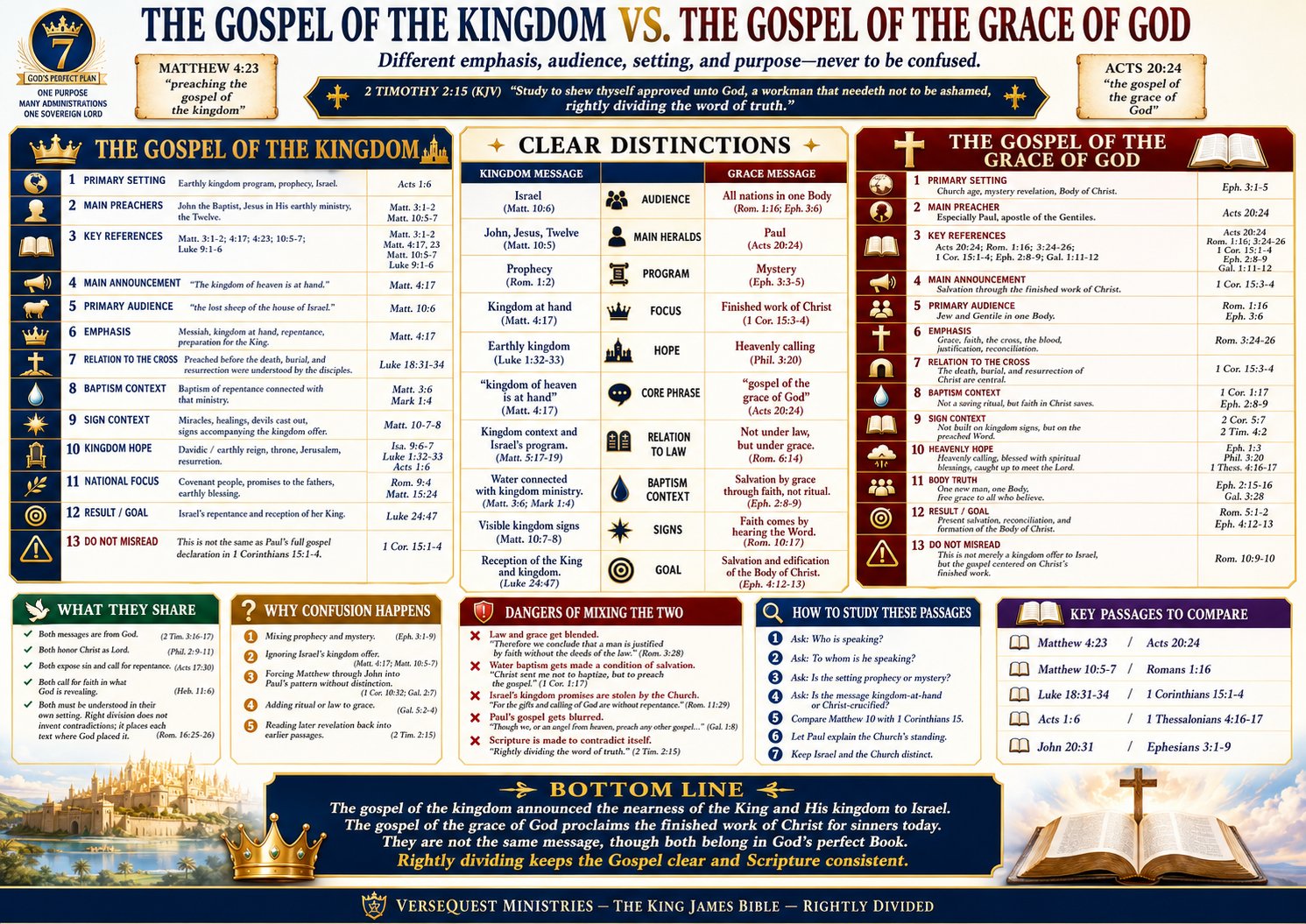
- The Gospel of the Kingdom vs. the Gospel of the Grace of God – KJV Right Division Bible Study Chart
- Compare the gospel of the kingdom and the gospel of the grace of God with this detailed KJV chart covering audience, message, prophecy, mystery, baptism, signs, salvation, and right division.
- $3.99
- Add to cart
-
-
Righteousness of Christ
-
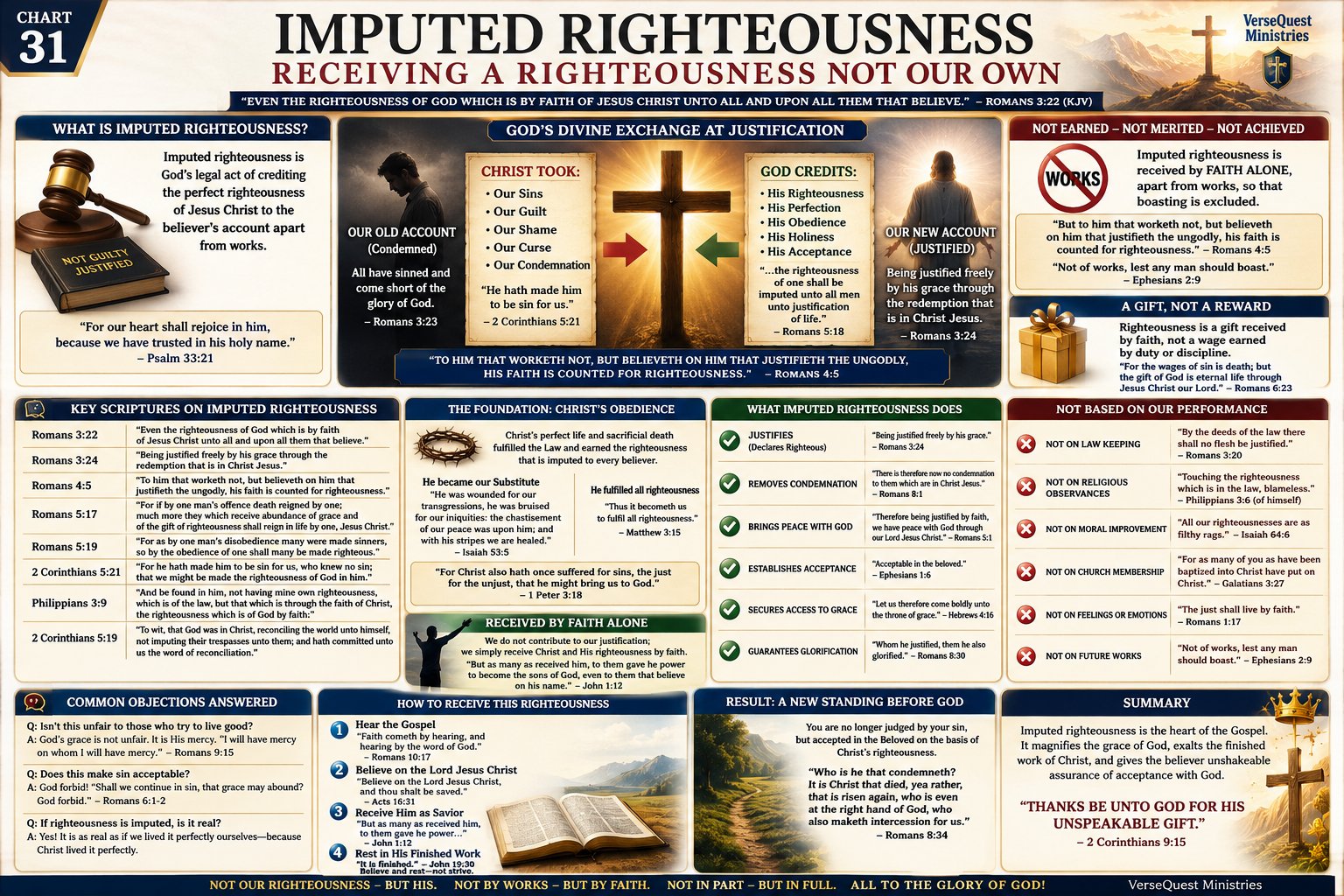
- Imputed Righteousness – The Righteousness of Jesus Christ Credited to the Believer by Faith Alone (KJV Bible Study Chart)
- Understand imputed righteousness with this detailed KJV chart explaining the divine exchange, justification by faith, Christ’s righteousness credited to the believer, peace with God, no condemnation, and acceptance apart from…
- $3.99
- Add to cart
-
-
Doctrine
-
-50%
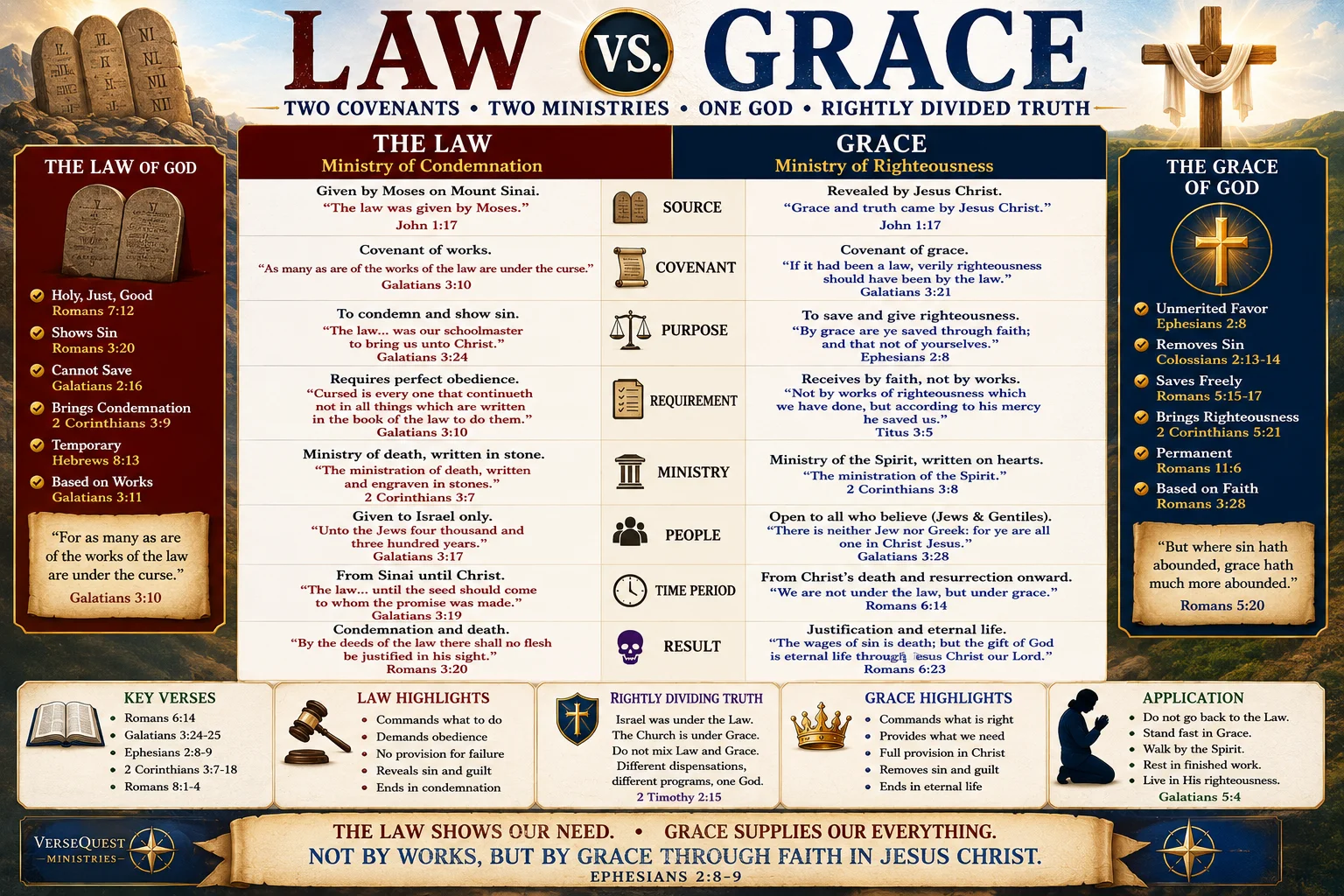
- Law vs. Grace Chart — KJV Rightly Divided
- Premium printable KJV Bible study chart comparing Law and Grace from a rightly divided perspective, showing works versus faith, condemnation versus righteousness, and Moses versus Christ.
- Original price was: $10.00.$4.99Current price is: $4.99.
- Add to cart
-
-50%
-
Proper Role of Works
-
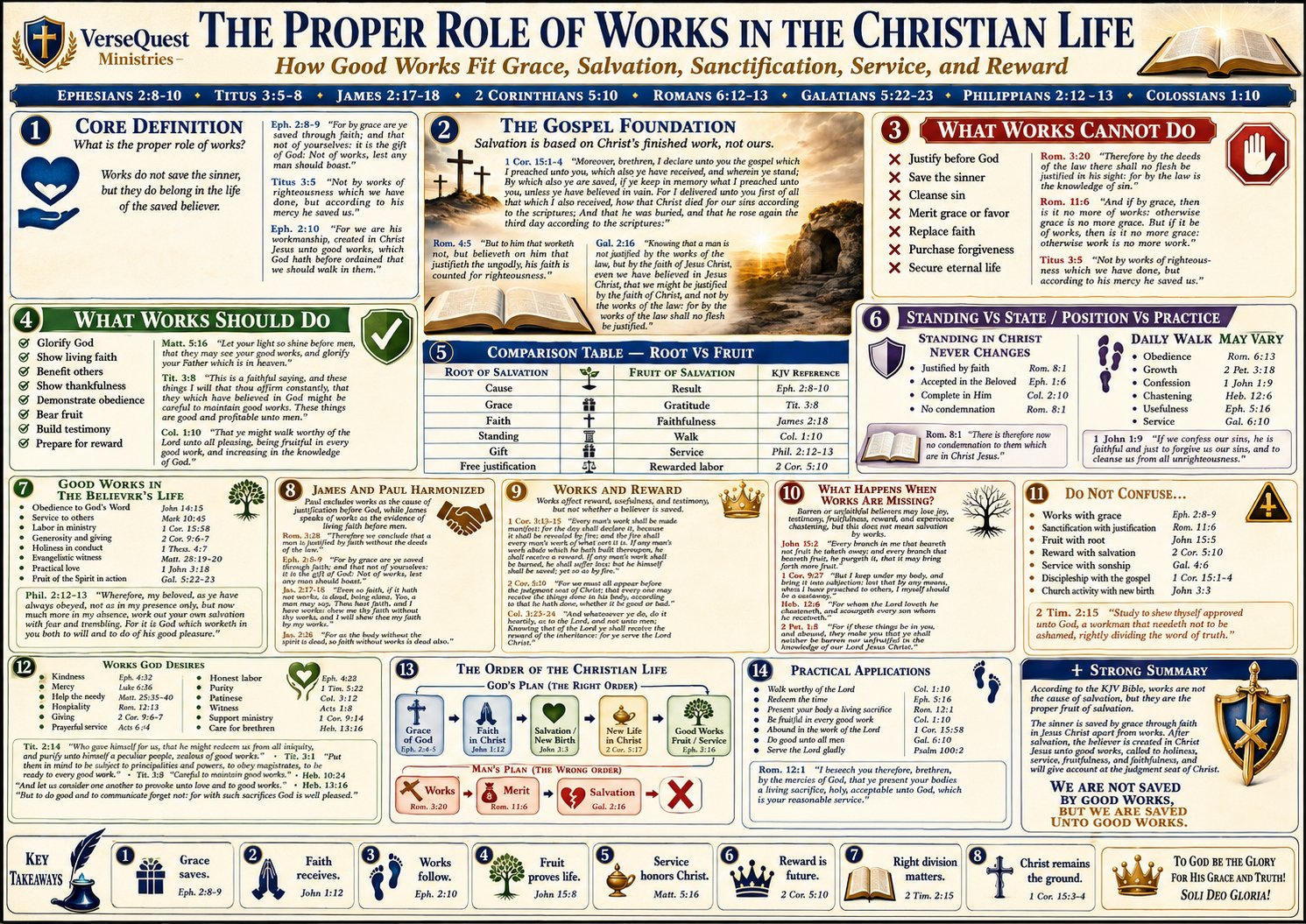
- The Proper Role of Works in the Christian Life – Grace, Salvation, Sanctification, Service, Fruit, and Reward (KJV Bible Study Chart)
- Understand the proper role of good works with this detailed KJV chart covering salvation by grace, sanctification, service, living faith, spiritual fruit, standing versus practice, the judgment seat of Christ,…
- $3.99
- Add to cart
-
-
Precious Blood of Christ
-
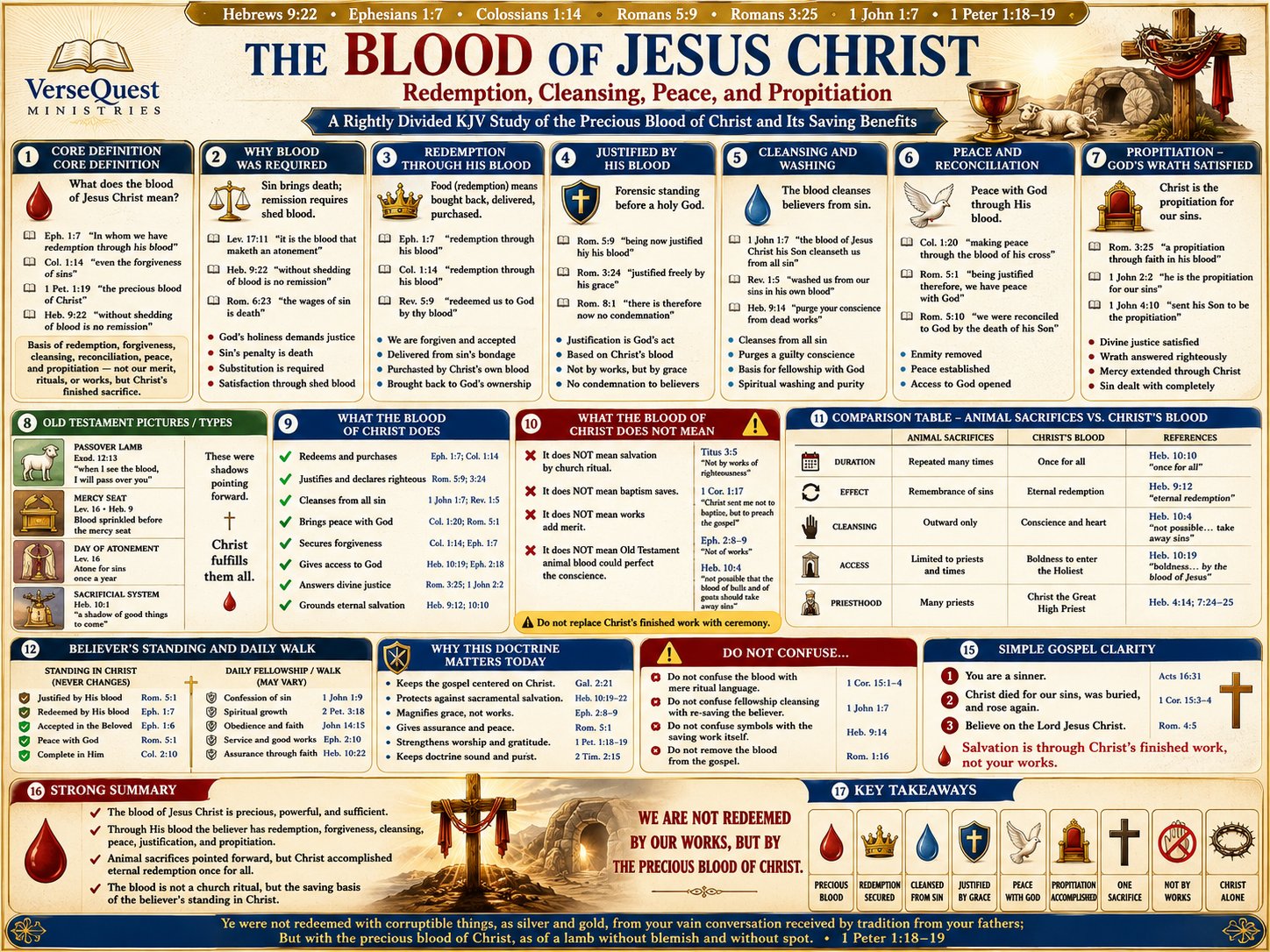
- The Blood of Jesus Christ – Redemption, Cleansing, Justification, Peace, and Propitiation (KJV Bible Study Chart)
- Study the saving power of the blood of Jesus Christ with this detailed KJV chart covering redemption, forgiveness, justification, cleansing, peace, reconciliation, propitiation, Old Testament sacrifices, and Christ’s one sufficient…
- $3.99
- Add to cart
-