
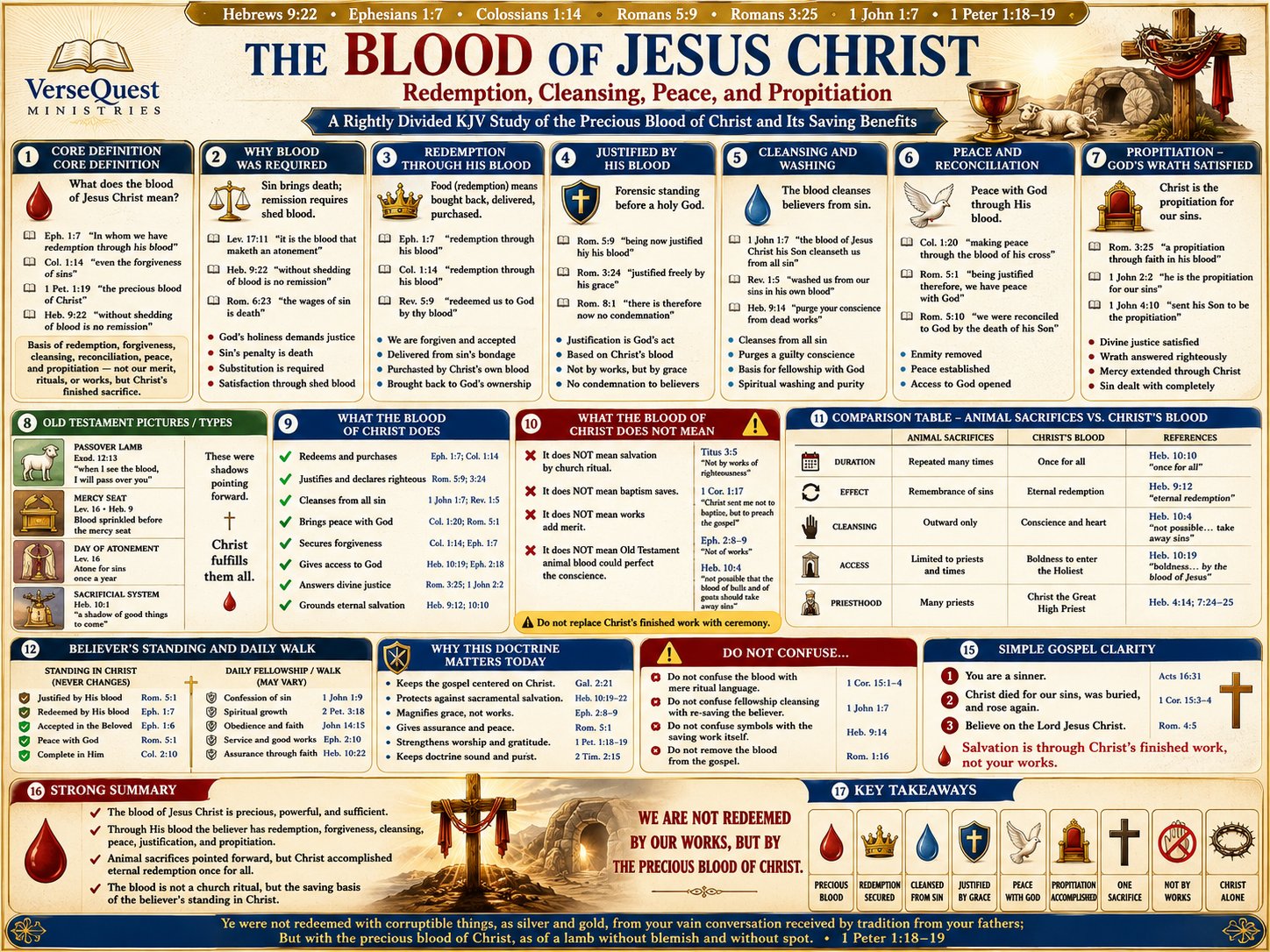
The Blood of Jesus Christ – Redemption, Cleansing, Justification, Peace, and Propitiation (KJV Bible Study Chart)
Study the saving power of the blood of Jesus Christ with this detailed KJV chart covering redemption, forgiveness, justification, cleansing, peace, reconciliation, propitiation, Old Testament sacrifices, and Christ’s one sufficient offering.
$3.99
Description
The Blood of Jesus Christ: Redemption, Cleansing, Peace, and Propitiation is a detailed KJV Bible study chart explaining why the precious blood of the Lord Jesus Christ stands at the heart of salvation, forgiveness, justification, reconciliation, access to God, and eternal redemption.
Built around Hebrews 9:22, Ephesians 1:7, Colossians 1:14, Romans 5:9, Romans 3:25, 1 John 1:7, and 1 Peter 1:18–19, this chart presents the blood of Christ not as an empty religious symbol, church tradition, or emotional expression, but as the biblical basis of the believer’s redemption and acceptance before God.
Ephesians 1:7 declares, “In whom we have redemption through his blood, the forgiveness of sins, according to the riches of his grace.” The sinner is not redeemed through religious achievement, moral improvement, sacraments, law-keeping, church membership, or personal sacrifice. Redemption comes through the blood Jesus Christ shed upon the cross.
The chart begins by defining what the blood of Jesus Christ means doctrinally. It is the basis of redemption, forgiveness, cleansing, justification, reconciliation, peace, access to God, and propitiation. These saving benefits arise from Christ’s completed sacrifice rather than anything performed by the sinner.
Hebrews 9:22 states, “without shedding of blood is no remission.” Sin is not a minor flaw that can be overlooked without satisfaction. It is rebellion against the holiness of God and carries the penalty of death.
Romans 6:23 declares that the wages of sin is death. God’s justice cannot simply ignore guilt. The biblical pattern requires substitution: an innocent life given in the place of the guilty.
The necessity of blood runs throughout Scripture. From the coats God provided after Adam’s fall, through Abel’s accepted offering, the Passover lamb, the Levitical sacrifices, the mercy seat, and the Day of Atonement, God repeatedly demonstrated that sinful man cannot approach Him casually or cleanse himself.
Yet the blood of animals could never accomplish eternal redemption. The Old Testament sacrifices pointed forward to the perfect sacrifice of Jesus Christ, the spotless Lamb of God.
Animal blood provided ceremonial cleansing and covenant atonement within Israel’s law, but it could not remove sin permanently, perfect the conscience, or provide complete access into the holiest.
Jesus Christ fulfilled what every sacrifice anticipated. He was without blemish, without sin, and completely qualified to stand in the sinner’s place.
First Peter 1:18–19 declares that believers were not redeemed with corruptible things such as silver and gold, but “with the precious blood of Christ, as of a lamb without blemish and without spot.”
The blood is precious because the One who shed it is precious. It was not the blood of another fallen descendant of Adam, but the blood of the sinless Son of God who willingly gave Himself for sinners.
A major section of the chart explains redemption through His blood. Redemption means to purchase, deliver, ransom, or buy back.
Humanity is enslaved by sin, under condemnation, and unable to purchase freedom. Jesus Christ paid the redemption price through His own blood.
Colossians 1:14 states, “In whom we have redemption through his blood, even the forgiveness of sins.” Redemption and forgiveness are therefore grounded in Christ rather than human merit.
The believer has been purchased out of sin’s bondage and brought back into God’s ownership. Revelation declares that Christ redeemed His people to God by His blood.
Redemption is not a continuing payment plan. Christ did not make the first instalment and leave the sinner responsible for completing the debt. He obtained eternal redemption through one sufficient sacrifice.
The chart next explains justification by His blood. Romans 5:9 states, “Much more then, being now justified by his blood, we shall be saved from wrath through him.”
Justification is God’s legal declaration that the believer is righteous in Jesus Christ. The sinner’s standing changes from guilty to justified because Christ bore the judgment and supplied the righteousness God demands.
Justification is God’s act, not man’s achievement. It is received by faith, based upon Christ’s blood, provided by grace, and results in freedom from condemnation.
Romans 8:1 declares that there is no condemnation to those who are in Christ Jesus. The believer’s eternal sentence has been answered by the blood of the Substitute.
The blood of Christ also provides cleansing and washing. First John 1:7 declares, “the blood of Jesus Christ his Son cleanseth us from all sin.”
This cleansing reaches beyond outward ceremony. It cleanses the guilty conscience, removes the legal stain of sin, and provides restored fellowship with God.
Revelation speaks of believers washed from their sins in Christ’s own blood. Hebrews explains that Christ’s blood purges the conscience from dead works to serve the living God.
Physical water can cleanse the body outwardly, but only Christ’s blood answers the guilt of the soul. Church rituals, baptismal water, penance, and religious observances cannot perform the inward work Scripture attributes to the Saviour.
The blood cleanses from all sin. Christ’s sacrifice does not cover only respectable failures, early mistakes, or sins committed before salvation. Its sufficiency rests upon His infinite worth rather than the limited size of the sinner’s record.
This truth must not be used to excuse sin. The believer should confess, forsake, and judge sin honestly. Yet confession rests upon a completed sacrifice rather than an attempt to persuade God to provide another payment.
The chart also explains peace and reconciliation through the blood. Colossians 1:20 speaks of Christ “having made peace through the blood of his cross.”
Sin created enmity between God and man. Humanity does not naturally possess peace with God merely because it feels sincere or religious.
Romans 5:1 teaches that being justified by faith, believers have peace with God through the Lord Jesus Christ. This is not merely emotional calm but the objective removal of hostility through Christ’s sacrifice.
Reconciliation means that those who were enemies are brought near and restored to a peaceful relationship with God.
Romans 5:10 declares that believers were reconciled to God by the death of His Son. Christ did not die to convince a reluctant God to become loving; God Himself provided the Son through whom justice and mercy meet.
The blood removes the barrier caused by sin, establishes peace, and gives believers access to the Father.
Hebrews teaches that Christians may enter the holiest with boldness by the blood of Jesus. This access is not granted through an earthly priesthood, religious institution, human mediator, or personal worthiness.
The believer approaches God through the one Mediator, Jesus Christ, whose blood has opened the way.
Another major doctrine presented in the chart is propitiation. Romans 3:25 identifies Jesus Christ as the One God set forth “to be a propitiation through faith in his blood.”
Propitiation means that God’s righteous judgment against sin has been satisfied through Christ’s sacrifice. Divine wrath was not dismissed, denied, or negotiated away. It was answered righteously at the cross.
First John 2:2 states that Christ is the propitiation for our sins. First John 4:10 declares that God sent His Son to be the propitiation for our sins.
Propitiation reveals both God’s holiness and His love. God is too holy to ignore sin and too loving to leave sinners without a Saviour.
The cross therefore displays perfect justice and perfect mercy. God remains just while justifying the sinner who believes in Jesus Christ.
The chart explains that the blood answers divine justice, satisfies wrath, provides mercy through Christ, and deals fully with sin’s legal charge.
A major Old Testament section presents pictures and types that point forward to Christ. The Passover lamb protected Israel’s firstborn when God said, “When I see the blood, I will pass over you.”
The blood upon the door was not decorative. It marked the household as standing beneath the substitute God had appointed.
The mercy seat was sprinkled with blood on the Day of Atonement. This pictured the place where divine holiness, judgment, mercy, and substitution met.
The Day of Atonement involved sacrifice, priesthood, blood, cleansing, and access. Yet it had to be repeated every year because the work was not final.
The entire sacrificial system was a shadow of good things to come. Its repetition demonstrated that the final sacrifice had not yet appeared.
Jesus Christ fulfilled these shadows. He is the true Passover Lamb, the perfect sacrifice, the great High Priest, and the One whose blood obtained eternal redemption.
The chart compares animal sacrifices with Christ’s blood. Animal sacrifices were repeated many times; Christ’s sacrifice was offered once for all.
Animal sacrifices brought sins to remembrance; Christ obtained eternal redemption. Animal blood cleansed outwardly within the covenant system; Christ’s blood purges the conscience and heart.
Access under the law was limited to priests and appointed times. Through Jesus Christ, believers possess bold access into the holiest.
The old system required many mortal priests. The believer now has one eternal great High Priest who lives forever.
This comparison does not mock or dismiss the Old Testament sacrifices. God commanded them for Israel and used them to teach holiness, substitution, atonement, priesthood, and the coming work of Christ.
Right division honours the shadows while refusing to rebuild them after the Substance has come.
The chart presents what the blood of Jesus Christ accomplishes. It redeems and purchases, justifies and declares righteous, cleanses from all sin, brings peace with God, secures forgiveness, opens access to God, answers divine justice, and grounds eternal salvation.
It also presents what the blood does not mean. The blood does not teach salvation by church ritual, baptismal regeneration, religious works, repeated animal sacrifice, or outward performance.
Christ’s blood is not an addition to human merit. It is the complete saving basis upon which God receives the believer.
The chart distinguishes the believer’s permanent standing from his daily walk. In Christ, the believer is justified by blood, redeemed, accepted in the Beloved, at peace with God, and complete in Christ.
The believer’s daily walk involves confession, spiritual growth, obedience, service, good works, and continued assurance through faith.
Standing does not fluctuate with daily performance. Fellowship may be disturbed by sin, but the believer’s justification rests upon the completed blood sacrifice of Jesus Christ.
This distinction does not make Christian conduct unimportant. The redeemed believer should glorify the One who bought him at such a price.
The blood of Christ should produce humility because salvation was not earned. It should produce gratitude because the payment was complete. It should produce holiness because believers have been purchased for God.
The doctrine protects the gospel from sacramental salvation. No church ceremony can duplicate, continue, or complete the sacrifice of Christ.
It also protects salvation by grace from works. Ephesians 2:8–9 declares that salvation is not of works. Galatians warns against mixing law or human merit with the gospel.
The blood gives assurance because the believer’s confidence rests upon Christ rather than self. Peace cannot come from endlessly asking whether one has done enough, suffered enough, confessed perfectly enough, or performed enough religious duties.
The believer rests in the declaration that Jesus Christ shed sufficient blood, offered the sufficient sacrifice, and completed the sufficient work.
The chart warns against confusing the blood with mere ritual language. Repeating religious phrases about the blood without believing the gospel does not save.
It also warns against confusing daily fellowship cleansing with the believer’s eternal standing. First John addresses confession and fellowship, while the broader gospel establishes permanent redemption through Christ.
Symbols must not be confused with saving reality. A cup, altar, ceremony, image, or religious object cannot become the blood of Christ or reproduce Calvary.
Neither should the blood be removed from the gospel. Modern religious language may speak of love, acceptance, example, spirituality, or social improvement while avoiding sin, judgment, substitution, and shed blood.
A bloodless gospel is powerless because it removes the God-appointed payment for sin.
The simple gospel remains clear: every person is a sinner. Jesus Christ died for our sins, was buried, and rose again. The sinner must believe on the Lord Jesus Christ.
Salvation is through Christ’s finished work rather than human works. The blood is the purchase price, the cross is the place of payment, and the resurrection is the declaration of victory.
The strong summary is unmistakable: the blood of Jesus Christ is precious, powerful, sufficient, and central. Through His blood, the believer possesses redemption, forgiveness, cleansing, peace, justification, access to God, reconciliation, propitiation, and eternal salvation.
Animal sacrifices pointed forward, but Jesus Christ accomplished eternal redemption once for all. The believer is not redeemed with corruptible things, religious ceremony, or personal merit, but with the precious blood of Christ.
This resource is ideal for personal Bible study, gospel teaching, salvation counseling, blood-atonement doctrine, Old Testament sacrifice studies, Pauline doctrine, grace-versus-works instruction, new-believer discipleship, Sunday school, homeschool Bible curriculum, Christian schools, Bible institutes, sermon preparation, and evangelism.
Blood of Jesus Christ, precious blood of Christ, redemption through His blood, forgiveness of sins, justified by His blood, cleansing from all sin, peace through the blood of the cross, reconciliation with God, propitiation for sin, substitutionary atonement, without shedding of blood, Passover lamb, mercy seat, Day of Atonement, animal sacrifices versus Christ, one sacrifice for sins, access to God, eternal redemption, salvation by grace, finished work of Christ
The blood of Jesus Christ is the scriptural basis of redemption, forgiveness, justification, cleansing, peace, reconciliation, access, and propitiation.
Sin produces guilt and death. God’s holiness requires that sin be judged rather than ignored.
Hebrews 9:22 teaches that without shedding of blood there is no remission.
The requirement of blood is rooted in substitution. An innocent life is given in place of the guilty.
Old Testament sacrifices were commanded by God and taught Israel about holiness, sin, substitution, priesthood, cleansing, and atonement.
Animal sacrifices could not remove sin eternally or perfect the conscience.
The repetition of sacrifices proved that their work was not final.
Jesus Christ is the spotless Lamb of God who fulfilled every legitimate sacrificial shadow.
Christ’s blood is precious because He is the sinless and eternal Son of God.
Redemption means purchase, ransom, deliverance, and being bought back from bondage.
Believers possess redemption and forgiveness through Christ’s blood.
The redemption price was paid completely by Jesus Christ. The sinner does not complete the payment through works.
Justification by Christ’s blood means God declares the believer righteous on the basis of the Substitute’s sacrifice.
Justification is by grace through faith rather than law-keeping, ceremony, or moral performance.
No condemnation remains for the believer because Christ bore the judicial sentence.
The blood cleanses from all sin. Its sufficiency rests upon Christ’s worth rather than the size of the sinner’s record.
First John 1:7 teaches continuing cleansing and fellowship through the blood of Jesus Christ.
Christ’s blood purges the conscience from dead works so the believer may serve the living God.
Peace with God is an objective result of justification, not merely a temporary emotional feeling.
Christ made peace through the blood of His cross.
Reconciliation means that enemies are brought into peace with God through the death of His Son.
The blood opens access to God. Believers approach the Father through Christ rather than an earthly priesthood.
Propitiation means God’s righteous judgment against sin has been satisfied through Christ.
God’s wrath was answered rather than ignored. The cross displays justice and mercy together.
The Passover lamb pictured deliverance through the blood of an appointed substitute.
The mercy seat pictured the place where blood met the demands of divine holiness.
The Day of Atonement pictured priesthood, substitution, blood, cleansing, and access.
Christ fulfilled these pictures through one final and sufficient sacrifice.
Animal sacrifices were repeated; Christ’s sacrifice was once for all.
Animal blood provided outward and ceremonial cleansing; Christ’s blood reaches the conscience.
The Aaronic priesthood involved many mortal priests; Jesus Christ is the eternal great High Priest.
Water baptism cannot replace Christ’s blood or become the cause of regeneration.
Church ritual, sacraments, and religious works cannot complete the cross.
The believer’s standing rests in Christ, while daily fellowship involves confession, growth, obedience, and service.
Sin may damage fellowship and testimony, but it does not make Christ’s blood insufficient.
The blood should produce humility, gratitude, holiness, assurance, and worship.
A gospel that removes the blood removes the biblical answer to sin and judgment.
The central saving message remains Christ’s death for sins, burial, resurrection, and salvation through faith in Him.
Blood-of-Christ Bible studies, gospel presentation, salvation counseling, redemption teaching, justification-by-faith instruction, propitiation studies, reconciliation and peace lessons, Old Testament sacrifice studies, Passover teaching, Day of Atonement studies, Christ as the Lamb of God, grace-versus-works instruction, refuting sacramental salvation, baptismal-regeneration apologetics, new-believer discipleship, Sunday school lessons, homeschool Bible curriculum, Christian school teaching, Bible institute classes, sermon preparation
King James Bible, Strong’s Concordance, Thompson Chain-Reference Bible, Treasury of Scripture Knowledge, Nave’s Topical Bible, Leviticus sacrifice outlines, Passover study materials, Day of Atonement charts, Hebrews 7–10 commentary notes, Romans 3–5 study resources, Ephesians 1 redemption worksheets, Colossians 1 study notes, propitiation word studies, blood-atonement resources, gospel presentation materials, VerseQuest salvation and doctrine charts
Related products
-
Christian Growth After Salvation
-
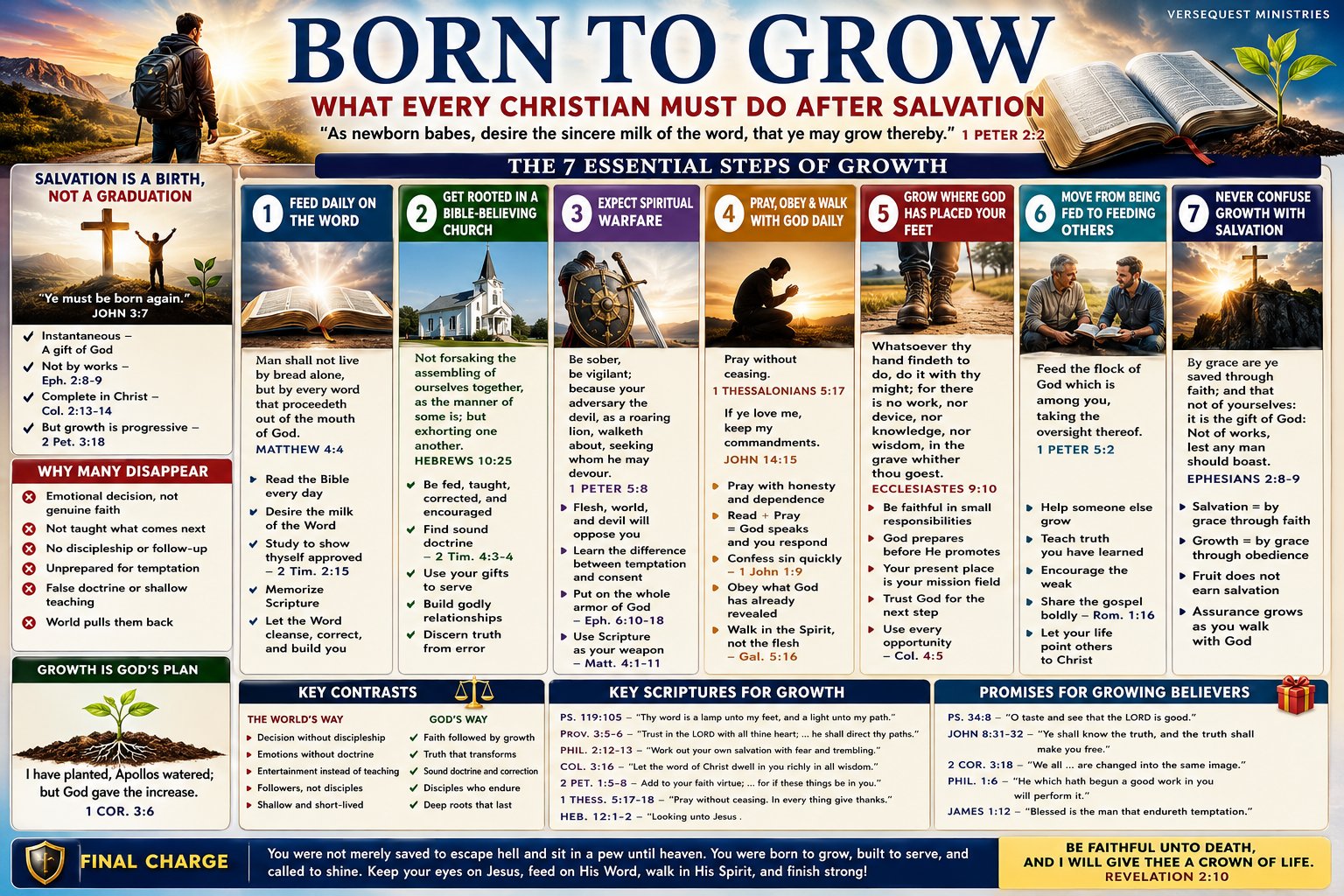
- Born to Grow – Seven Essential Steps Every Christian Must Take After Salvation (KJV Bible Study Chart)
- Help new and growing believers follow seven essential steps after salvation with this detailed KJV chart on Scripture, church, spiritual warfare, prayer, obedience, service, grace, and assurance.
- $3.99
- Add to cart
-
-
Baptismal Regeneration
-
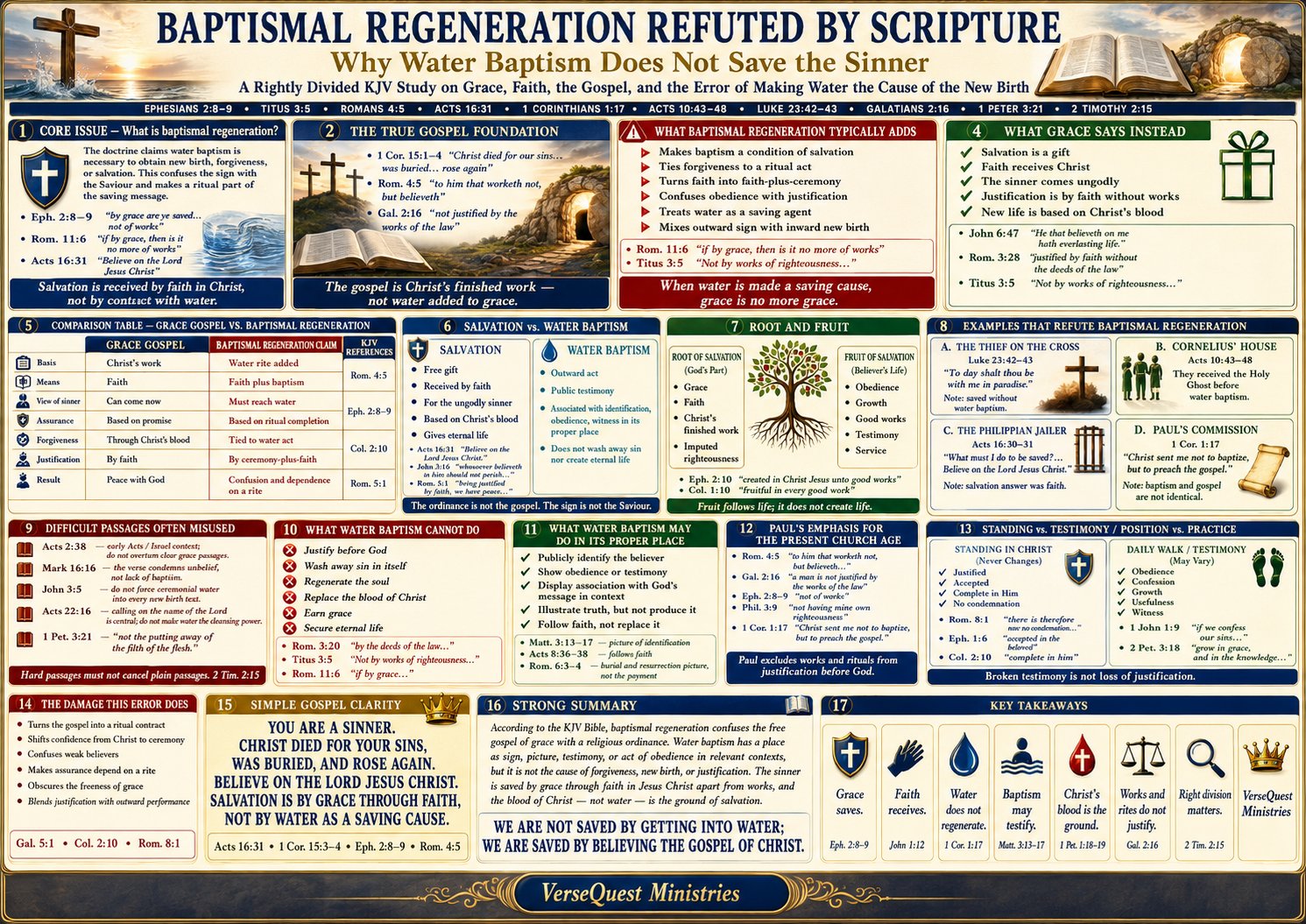
- Baptismal Regeneration Refuted by Scripture – Why Water Baptism Does Not Save the Sinner (KJV Bible Study Chart)
- See why water baptism does not save with this detailed KJV chart covering the gospel of grace, faith versus ritual, the thief on the cross, Cornelius, Paul’s commission, difficult baptism…
- $3.99
- Add to cart
-
-
Law vs Grace
-
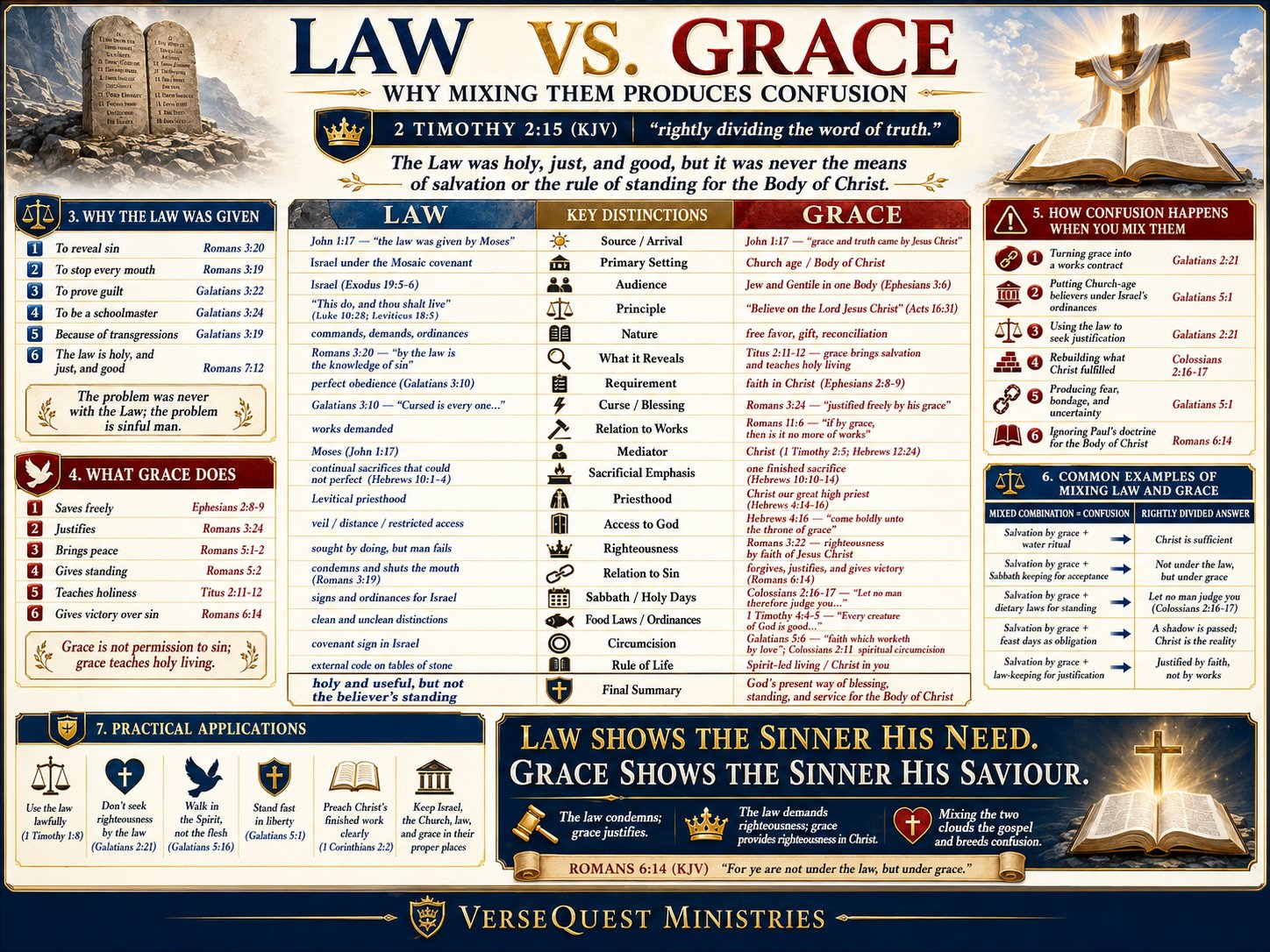
- Law vs. Grace Bible Study Chart – Why Mixing Them Produces Confusion (KJV)
- Compare law and grace with this detailed KJV Bible study chart explaining salvation, justification, holiness, Israel’s Mosaic covenant, Christian liberty, and the danger of mixing law with the gospel.
- $3.99
- Add to cart
-
-
Holy Spirit of Promise
-
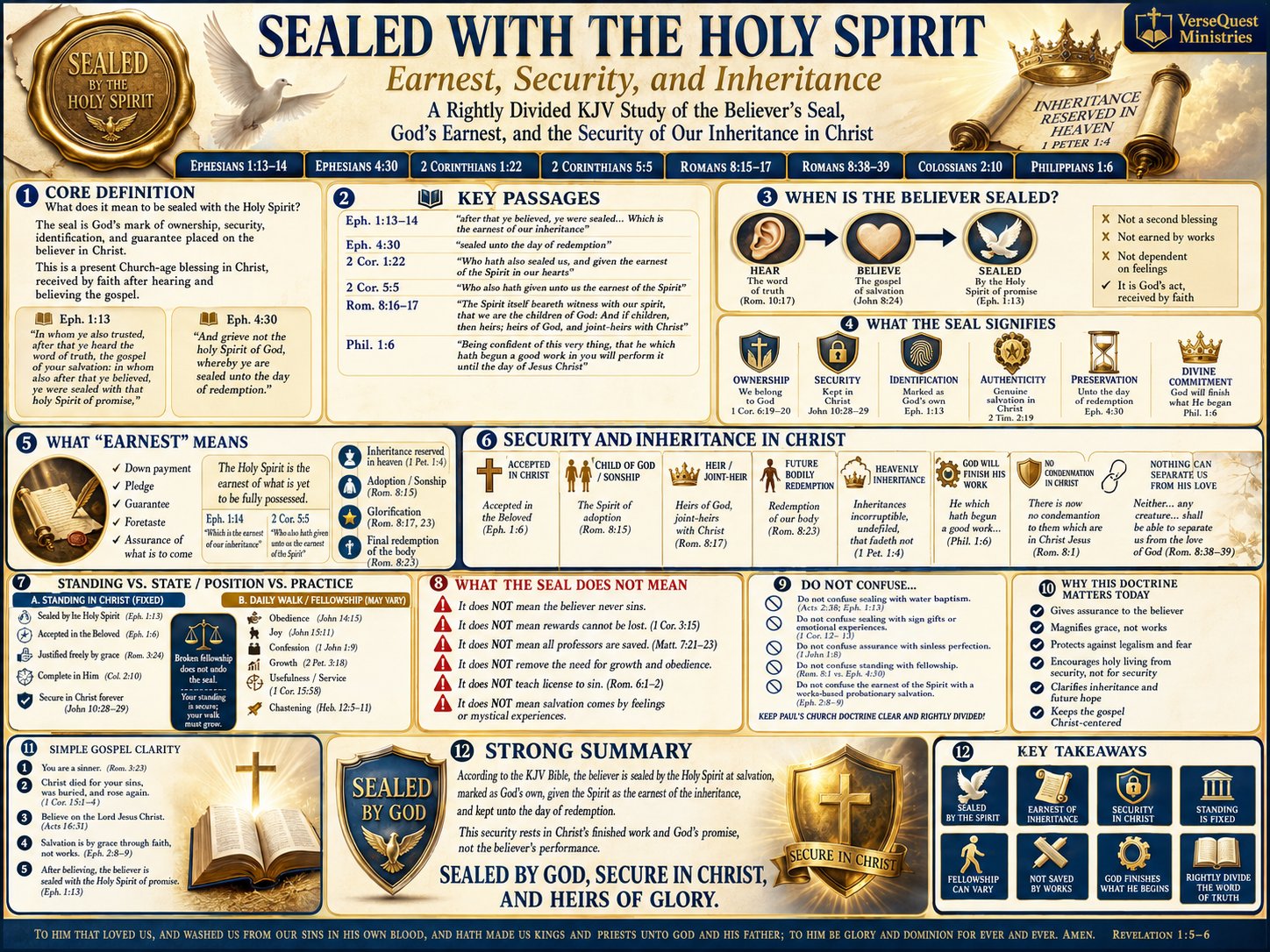
- Sealed with the Holy Spirit – God’s Earnest, the Believer’s Security, and Our Guaranteed Inheritance in Christ (KJV Bible Study Chart)
- Understand what it means to be sealed with the Holy Spirit with this detailed KJV chart covering God’s ownership, the earnest of the inheritance, eternal security, sonship, bodily redemption, standing…
- $3.99
- Add to cart
-
-
Biblical Repentance
-
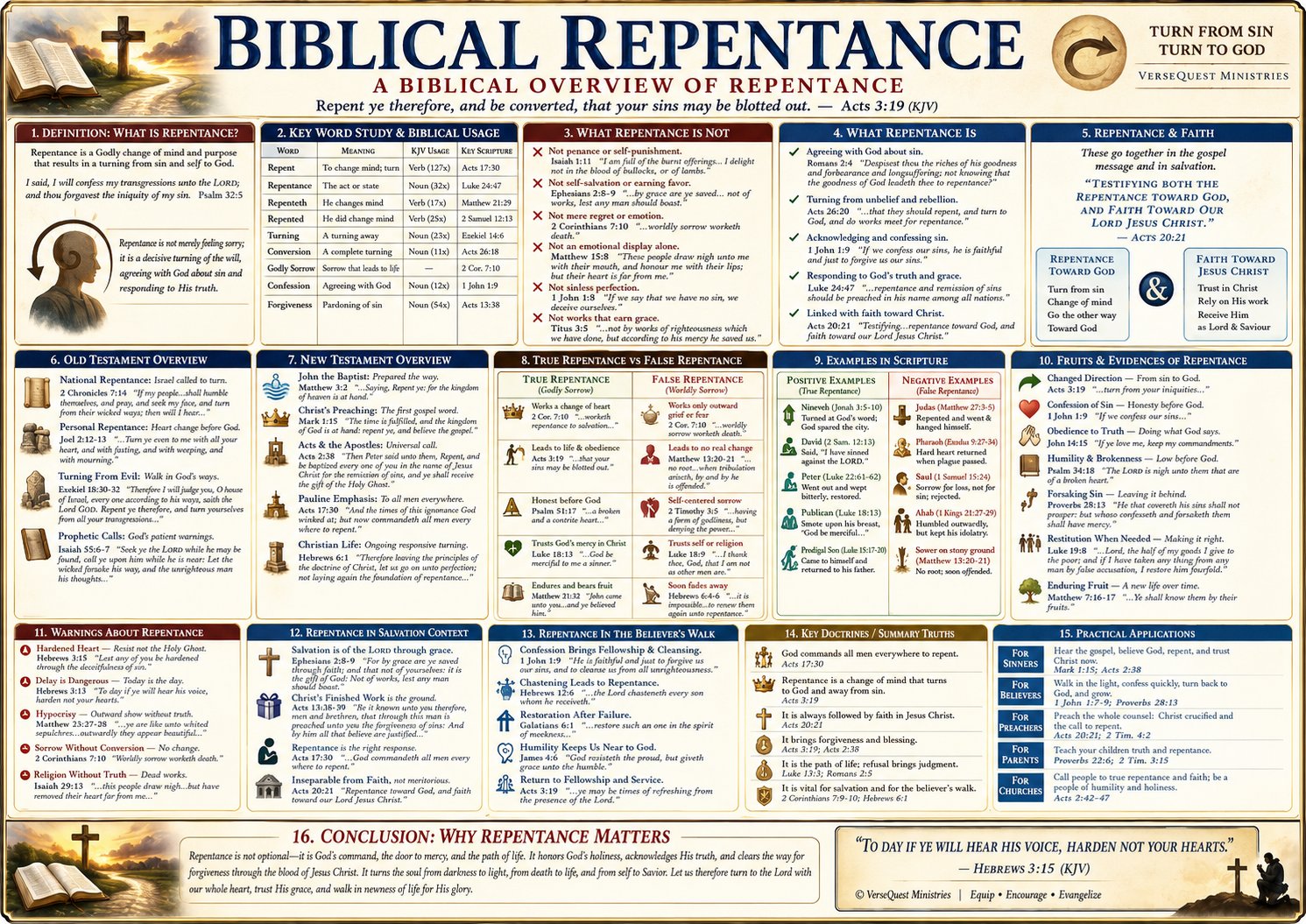
- Biblical Repentance Bible Study Chart – Turning from Sin to God with Faith Toward Jesus Christ (KJV)
- Understand biblical repentance with this detailed KJV chart covering godly sorrow, confession, turning from sin to God, faith in Jesus Christ, false repentance, spiritual restoration, and enduring fruit.
- $3.99
- Add to cart
-