
When Heaven Feels Far Away – How to Handle Spiritual Dryness and Walk by Faith (KJV Bible Study Chart)
Walk through spiritual dryness with this detailed KJV Bible study chart covering its causes, biblical examples, warning signs, promises, faithful habits, and the difference between feelings and truth.
$3.99
Description
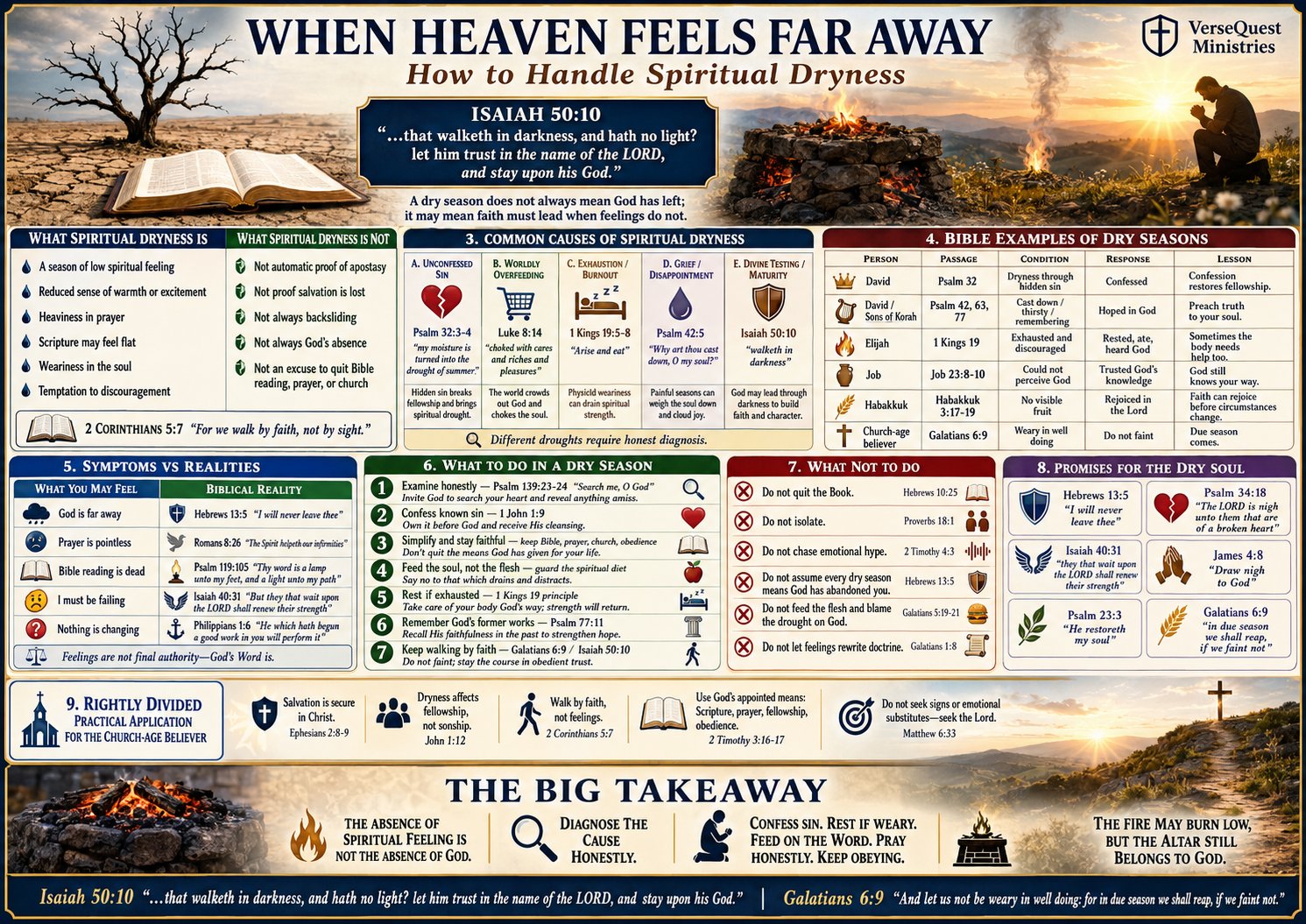
When Heaven Feels Far Away: How to Handle Spiritual Dryness is a detailed KJV Bible study chart designed to help Christians understand seasons when prayer feels heavy, Bible reading seems flat, spiritual warmth is reduced, and the presence of God feels distant. Built around Isaiah 50:10, the chart teaches believers to trust in the name of the LORD and stay upon God even when they walk through darkness without visible light.
Spiritual dryness is a season of reduced spiritual feeling, emotional weariness, heaviness in prayer, discouragement, or diminished excitement in Christian service. It may feel as though nothing is changing and that familiar spiritual habits are no longer producing the same emotional response. Yet Scripture teaches that feelings are not the final authority and that a dry season does not automatically mean God has abandoned the believer.
The chart carefully distinguishes what spiritual dryness is from what it is not. It is not automatic proof of apostasy, lost salvation, permanent backsliding, or the absence of God. It is also not an excuse to stop reading the Bible, praying, attending church, obeying known truth, or fellowshipping with other believers. A Christian may experience emotional dryness while still remaining secure in Jesus Christ.
A major section examines common causes of spiritual dryness. Unconfessed sin may hinder fellowship and bring spiritual drought. Worldly overfeeding may crowd the mind with cares, entertainment, riches, distractions, and endless noise. Physical exhaustion or burnout may drain emotional strength. Grief and disappointment may weigh down the soul. At other times, God may permit a season of darkness to mature faith and teach the believer to walk by truth rather than feeling.
Because different causes require different responses, the chart warns against treating every dry season in the same way. Hidden sin requires confession. Exhaustion may require rest. Worldly distraction requires separation and renewed spiritual appetite. Grief requires patience, prayer, and biblical comfort. Divine testing calls for continued trust and obedient endurance.
The chart presents several biblical examples of dry seasons. David experienced hidden sin and needed confession and restoration. The writers of Psalms 42 and 63 faced discouragement, thirst, and distance yet continued hoping in God. Elijah became exhausted and discouraged after intense spiritual conflict. Job could not perceive what God was doing but trusted His knowledge. Habakkuk rejoiced even when visible fruit disappeared. Church-age believers are commanded not to faint in well doing.
A practical comparison addresses the difference between symptoms and biblical realities. The believer may feel that God is far away, but Hebrews 13:5 records His promise never to leave or forsake His own. Prayer may feel pointless, but Romans 8 teaches that the Spirit helps believers in their infirmities. Bible reading may feel lifeless, but Psalm 119 declares that God’s Word remains a lamp and light.
The believer may assume that spiritual dryness proves personal failure, yet Isaiah 40 promises renewed strength to those who wait upon the LORD. He may think nothing is changing, while Philippians 1:6 assures him that God continues the work He began. Feelings describe an experience, but they do not possess authority to rewrite doctrine.
The chart offers seven practical steps for handling a dry season. First, examine the heart honestly and invite God to reveal anything that needs confession. Second, confess known sin and receive cleansing through the promises of Scripture. Third, simplify and remain faithful to the basic means God has provided: Bible reading, prayer, church fellowship, and obedience.
Fourth, feed the soul rather than the flesh. A spiritual diet overloaded with entertainment, social media, worldly conversation, anxiety, and constant stimulation can weaken hunger for Scripture. Fifth, rest when genuinely exhausted. Elijah’s experience demonstrates that physical weariness may require food, sleep, and renewed strength before further service.
Sixth, remember God’s former works. Recalling answered prayer, past deliverance, previous seasons of growth, and God’s faithfulness strengthens hope. Seventh, continue walking by faith. Galatians 6:9 and Isaiah 50:10 encourage believers not to faint, because due season comes to those who continue in obedient trust.
The chart also identifies what believers should not do. They should not quit the Bible, isolate themselves, chase emotional hype, assume every dry season proves abandonment, feed the flesh while blaming God, or allow temporary feelings to overturn established doctrine. Emotional substitutes may produce a momentary spark without cultivating lasting spiritual strength.
Promises for the dry soul include God’s abiding presence, His nearness to the brokenhearted, renewed strength for those who wait, restored fellowship, grace to draw near, and the assurance of a coming harvest for those who do not faint. These promises do not guarantee constant emotional excitement, but they provide solid ground beneath changing feelings.
The rightly divided application emphasizes that the Church-age believer’s salvation is secure in Christ. Spiritual dryness affects fellowship, joy, perception, and usefulness, but it does not dissolve the finished work of Jesus Christ or remove a saved believer from the Body. The Christian must therefore diagnose dryness biblically without turning every low season into a crisis of eternal security.
The chart’s central message is that the absence of spiritual feeling is not the absence of God. Faith continues when emotion grows quiet. The fire may burn low, but the altar still belongs to the Lord. The believer should confess sin if necessary, rest if weary, feed upon the Word, pray honestly, remain in fellowship, and keep obeying until renewed strength comes.
This resource is ideal for personal Bible study, Christian counseling, discipleship, pastoral care, spiritual-growth classes, Sunday school, homeschool Bible curriculum, church small groups, sermon preparation, and believers walking through discouragement, grief, exhaustion, burnout, or seasons of reduced spiritual feeling.
Spiritual dryness, when God feels distant, walking by faith, emotional weariness, heaviness in prayer, Bible reading difficulties, discouragement, unconfessed sin, worldly distraction, exhaustion and burnout, grief and disappointment, divine testing, Christian perseverance, remembering God’s faithfulness, spiritual restoration, eternal security, obedient trust, waiting upon the LORD, promises for the weary soul, faith over feelings
Spiritual dryness should be diagnosed honestly rather than answered with panic. A low emotional state may come from sin, physical exhaustion, grief, distraction, disappointment, spiritual testing, or several causes working together.
Not every dry season is evidence of backsliding. Isaiah 50:10 describes a person who fears the LORD and obeys His servant yet still walks in darkness and has no light. The instructed response is to trust in the LORD and stay upon God.
Feelings are real, but they are not doctrinal authority. A believer may feel deserted while God has promised never to leave him. He may feel that prayer is useless while the Holy Spirit continues helping his infirmities.
Unconfessed sin must not be ignored. David’s experience demonstrates that hidden sin can dry the spiritual life, weaken joy, and trouble fellowship. Confession restores openness with God, though it does not purchase salvation again.
Worldly overfeeding can choke spiritual appetite. A mind continually filled with entertainment, fear, controversy, buying, scrolling, and worldly desire may struggle to delight in quiet Scripture meditation.
Physical exhaustion should not always be treated as spiritual rebellion. Elijah needed sleep, food, and renewed strength. The body can become weary enough to affect prayer, concentration, emotion, and perspective.
Grief and disappointment may produce heaviness without proving unbelief. The Psalms repeatedly show faithful people bringing sorrow, confusion, and honest questions before God while continuing to hope in Him.
God may permit darkness as a test of mature faith. Walking by faith means obeying because God’s Word is true even when emotional confirmation is absent.
The ordinary means of grace should not be abandoned during dryness. Scripture, prayer, fellowship, church attendance, obedience, rest, and honest confession are not less important because they feel less exciting.
Emotional hype is not the same as revival. Chasing constant excitement can make ordinary faithfulness appear lifeless. Genuine maturity learns to remain steady when emotional intensity rises and falls.
Memory can strengthen faith. Recalling God’s past provision, answered prayers, previous deliverance, and biblical promises helps the believer interpret the present season through truth rather than fear.
Spiritual dryness affects fellowship and perception, not the believer’s secure position in Christ. Salvation rests upon the finished work of Jesus Christ, not upon the daily measurement of spiritual emotion.
The believer should continue walking, praying, reading, serving, and trusting. Galatians 6:9 promises a harvest in due season to those who do not faint.
The fire may burn low, but the altar still belongs to God. Dryness is not permission to quit; it is an invitation to trust the LORD more deeply than changing feelings.
Personal spiritual growth, pastoral counseling, Christian discipleship, helping discouraged believers, burnout recovery, grief ministry, teaching faith over feelings, restoring devotional habits, Sunday school lessons, homeschool Bible curriculum, church small groups, new-believer instruction, ministry-worker encouragement, sermon preparation, Bible institute classes, prayer ministry, Christian counseling, spiritual-maturity studies
King James Bible, Strong’s Concordance, Thompson Chain-Reference Bible, Treasury of Scripture Knowledge, Nave’s Topical Bible, personal prayer journal, spiritual self-examination worksheet, Scripture memory cards, Psalms study notes, Elijah study materials, Christian burnout resources, biblical counseling materials, devotional reading plan, church fellowship and accountability, VerseQuest Christian Living charts
Related products
-
Ages To Come
-
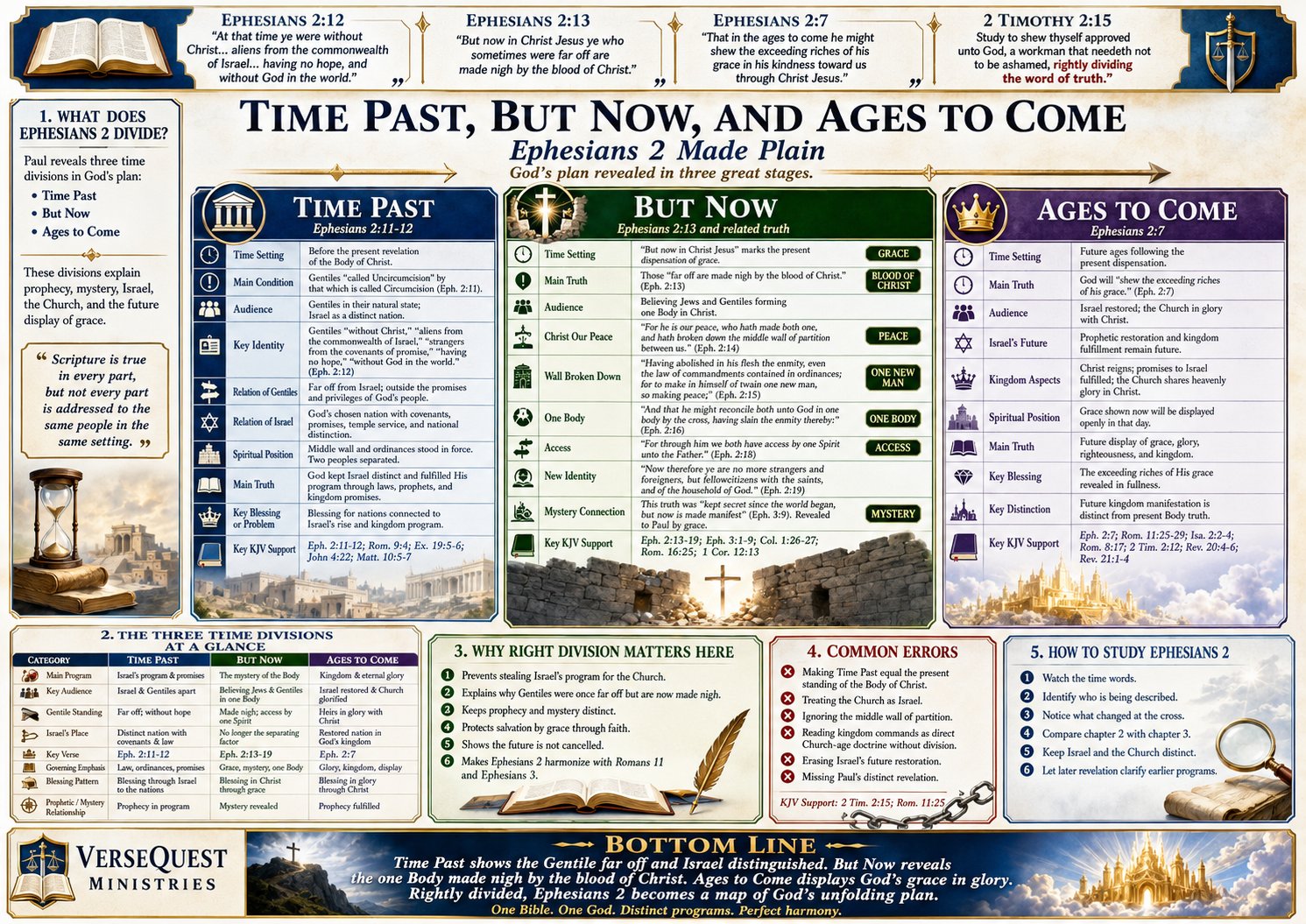
- Time Past, But Now, and Ages to Come – Ephesians 2 Rightly Divided KJV Bible Study Chart
- Understand Ephesians 2 with this detailed KJV chart explaining Time Past, But Now, Ages to Come, Gentile distance, the one Body, Israel’s future, and the importance of right division.
- $3.99
- Add to cart
-
-
Genesis Chapter 2
-
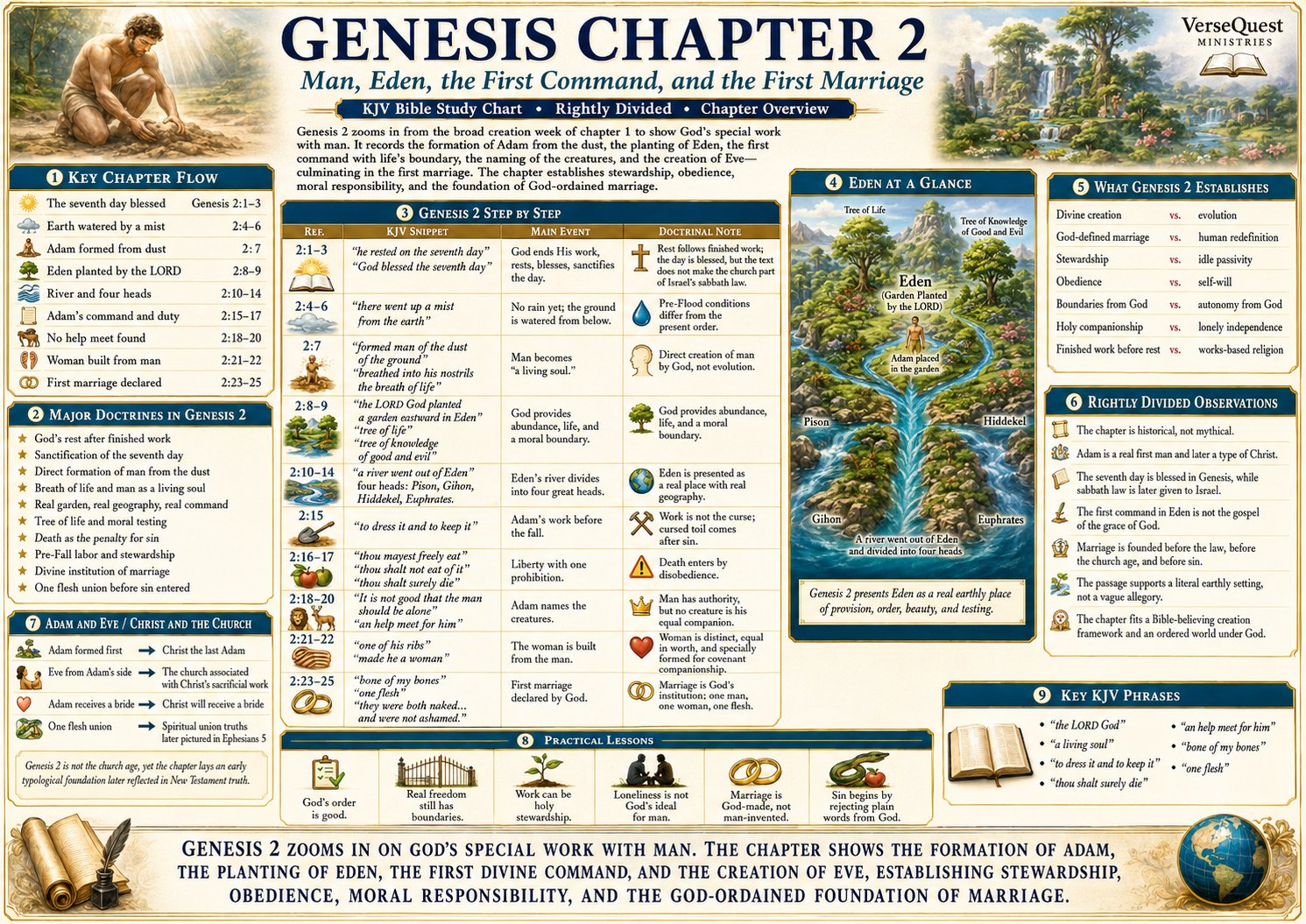
- Genesis Chapter 2 Bible Study Chart – Adam, Eden, the First Command, and the First Marriage (KJV)
- Explore Genesis Chapter 1 with this detailed KJV Bible study chart covering the six days of creation, the firmament, light, fixed kinds, man in God’s image, major doctrines, recurring phrases,…
- $3.99
- Add to cart
-
-
Christian Growth
-
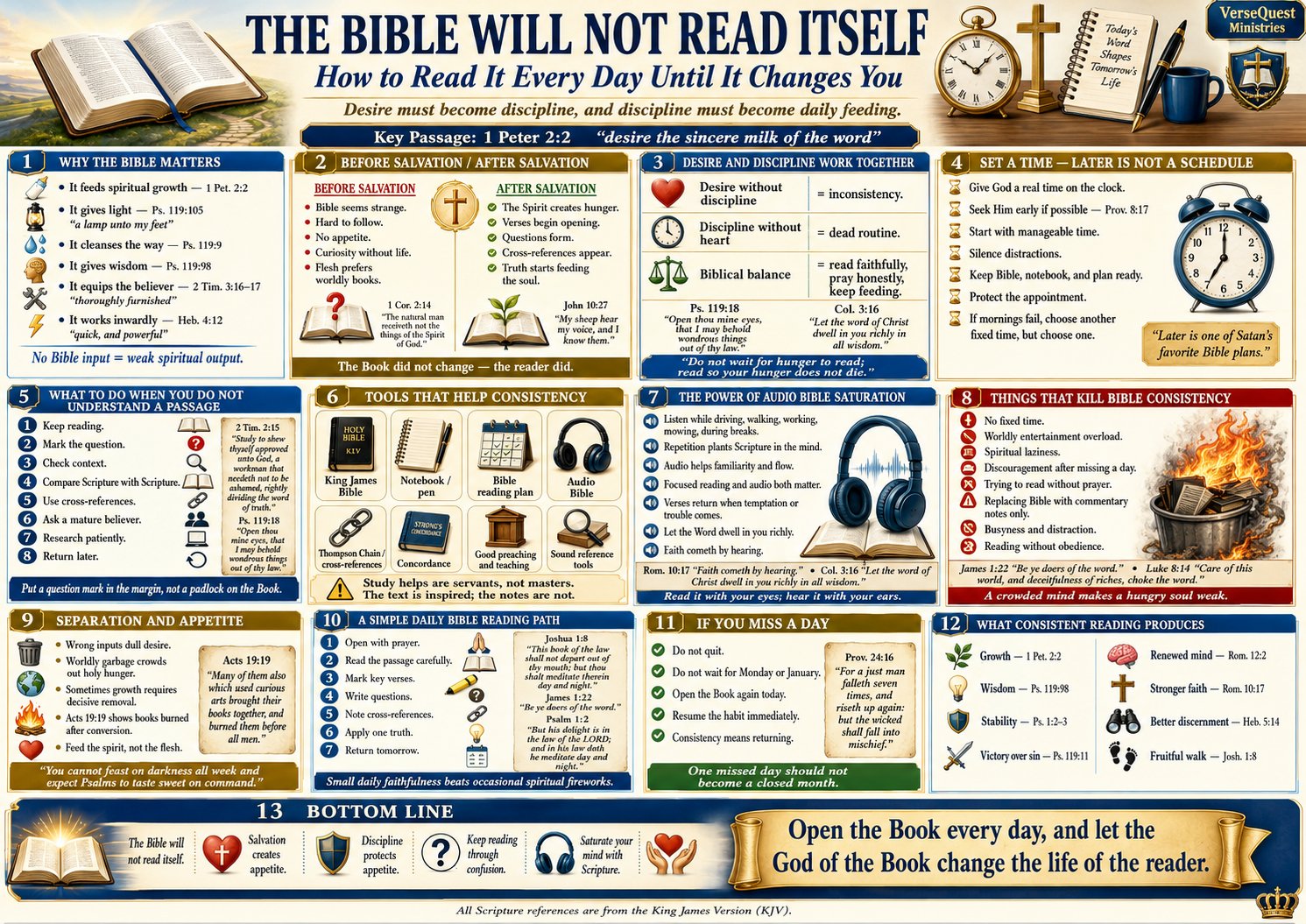
- The Bible Will Not Read Itself – How to Read the Bible Every Day Bible Study Chart (KJV)
- Build a consistent daily Bible reading habit with this detailed KJV Bible study chart. Learn practical steps for reading Scripture faithfully, overcoming inconsistency, understanding difficult passages, and growing spiritually through…
- $3.99
- Add to cart
-
-
Spiritual Growth
-
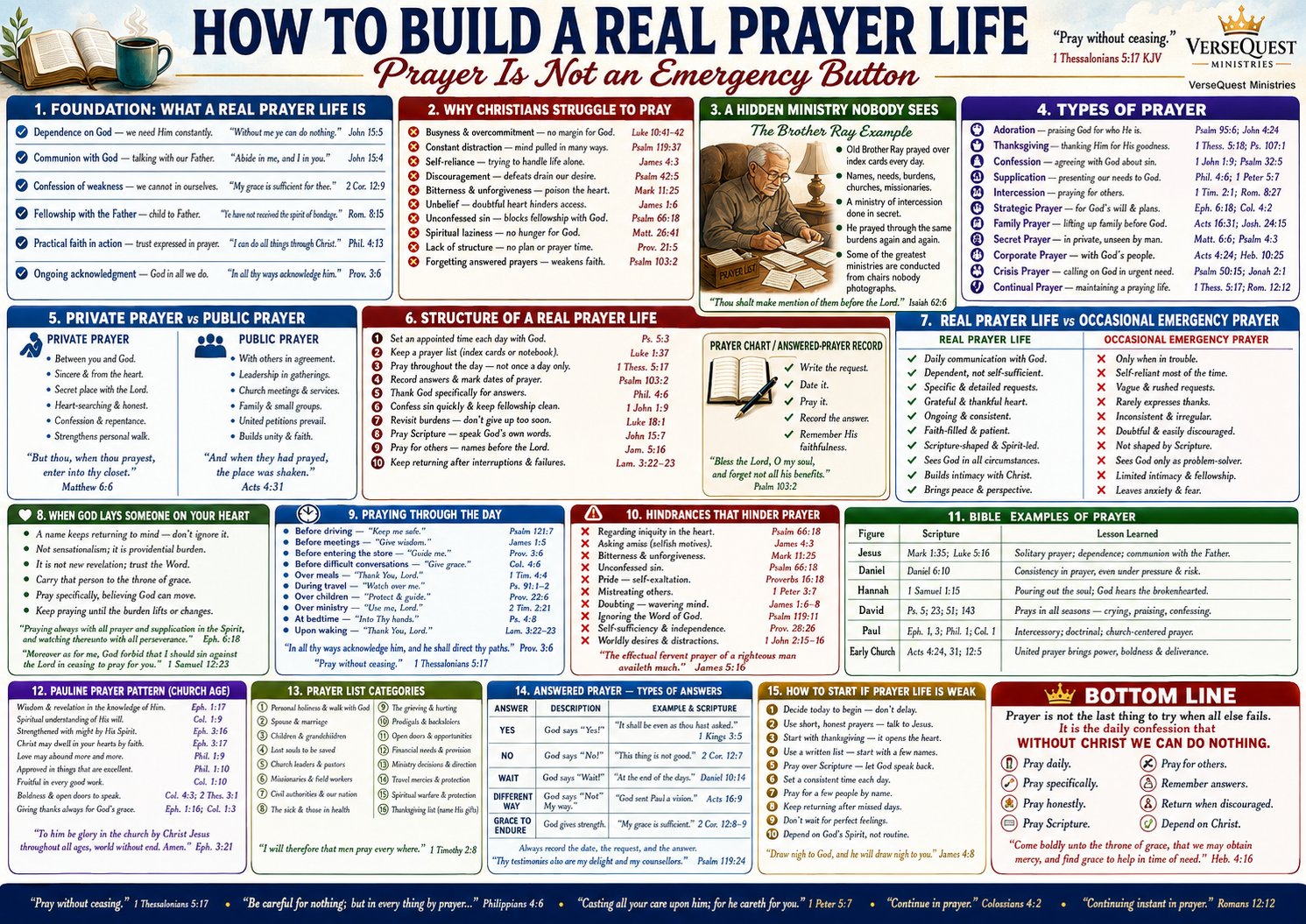
- How to Build a Real Prayer Life – Biblical Prayer Guide and KJV Bible Study Chart
- Build a consistent, biblical prayer life with this detailed KJV Bible study chart. Explore the foundations of prayer, types of prayer, common hindrances, answered prayer, Bible examples, and practical ways…
- $3.99
- Add to cart
-
-
Abassadors For Christ
-
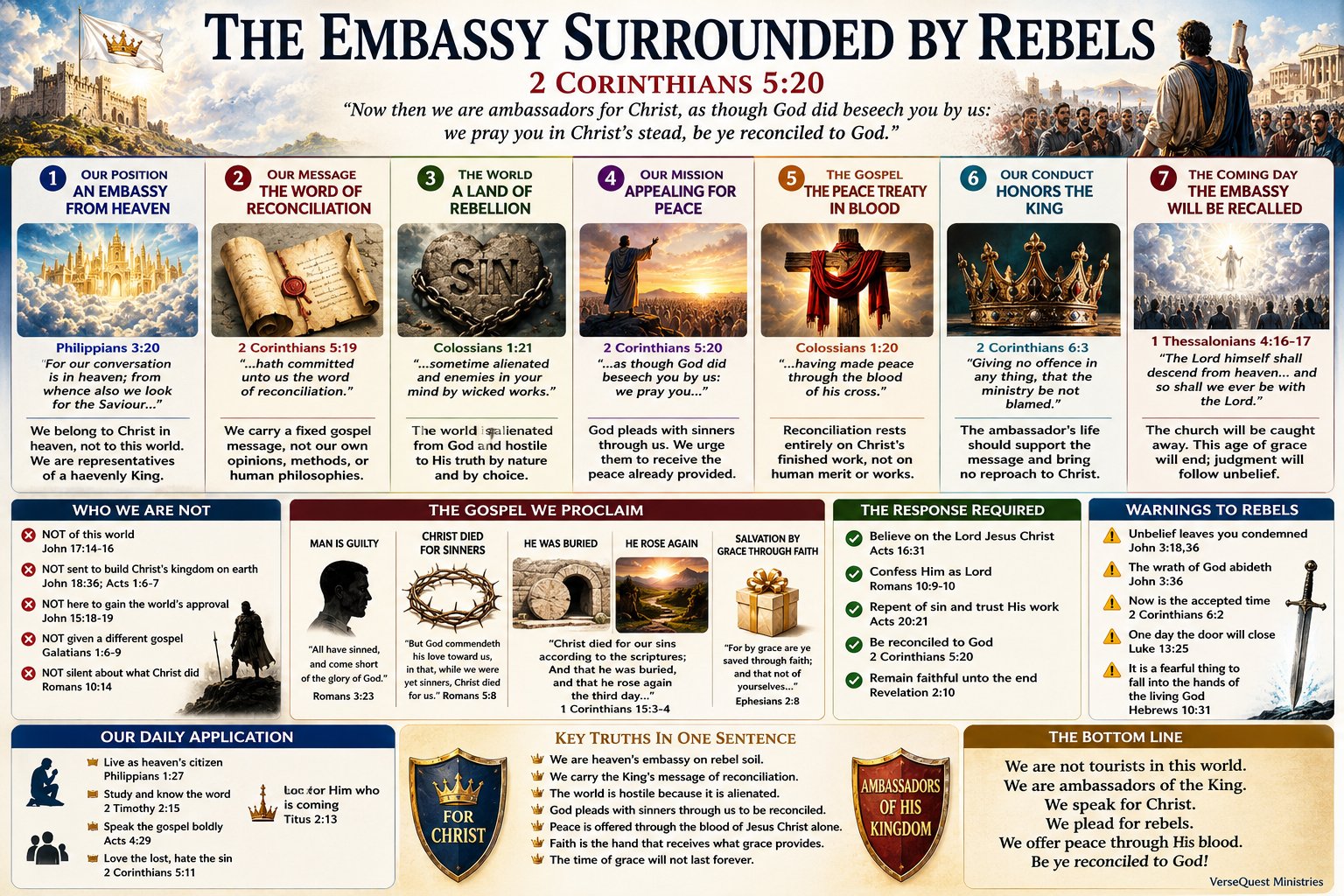
- The Embassy Surrounded by Rebels Bible Study Chart – Ambassadors for Christ and the Ministry of Reconciliation (KJV)
- Understand the Christian’s mission with this detailed KJV chart covering ambassadors for Christ, heavenly citizenship, the gospel of reconciliation, faithful conduct, evangelism, and the coming Rapture.
- $3.99
- Add to cart
-