
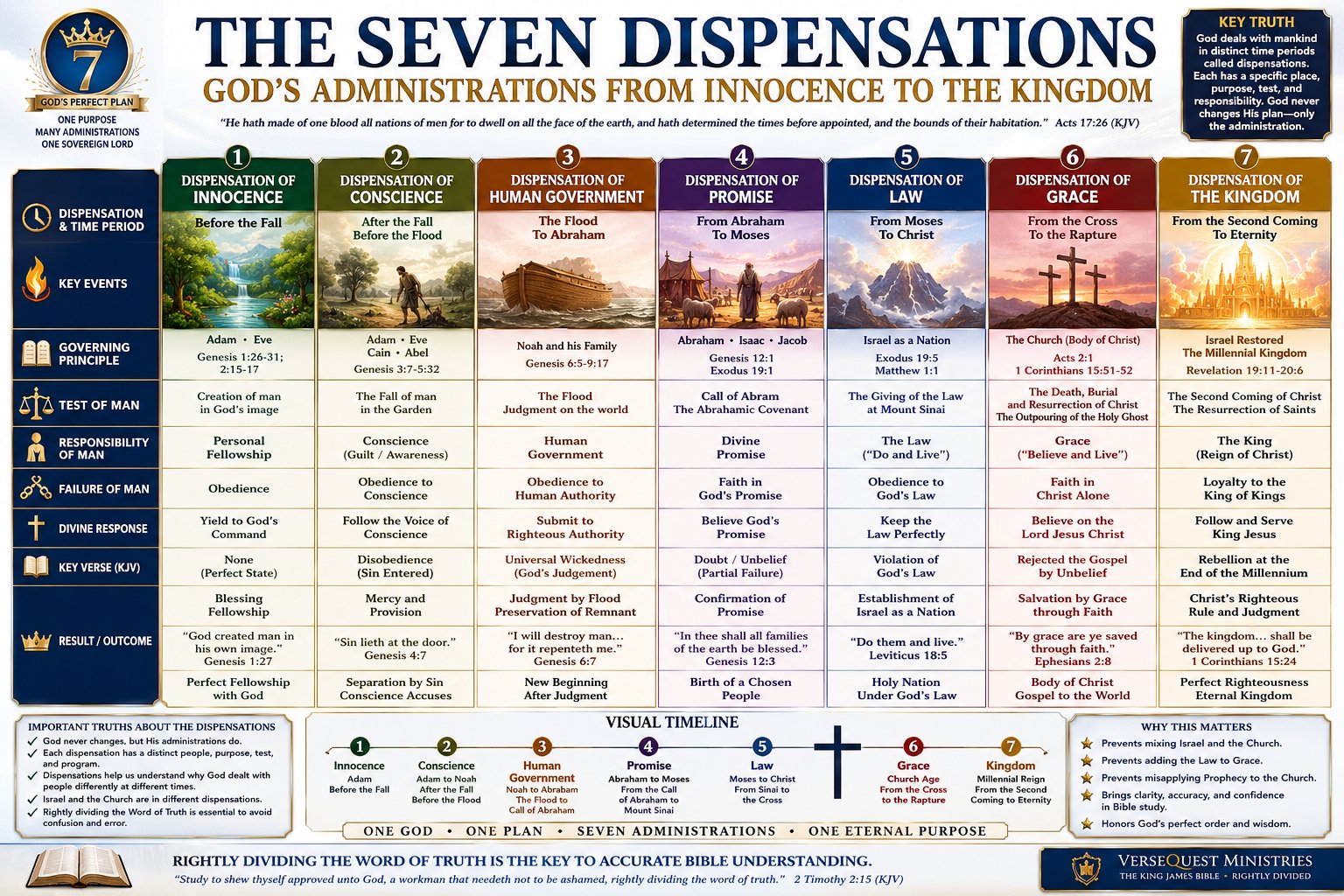
The Seven Dispensations Bible Study Chart – God’s Administrations from Innocence to the Kingdom (KJV)
Explore the seven dispensations with this detailed KJV Bible study chart covering Innocence, Conscience, Human Government, Promise, Law, Grace, the Kingdom, and the importance of rightly dividing Scripture.
$3.99
Description
The Seven Dispensations: God’s Administrations from Innocence to the Kingdom is a detailed KJV Bible study chart presenting the broad dispensational structure of Scripture in one organized visual overview. It traces seven distinct administrations—Innocence, Conscience, Human Government, Promise, Law, Grace, and the Kingdom—and shows how God tests mankind under different responsibilities while continuing His one sovereign and eternal purpose.
Built around the principle of rightly dividing the Word of Truth, this chart helps believers understand that God never changes in His holy character, but His revealed administrations, human responsibilities, covenant arrangements, and governing instructions differ throughout biblical history. Recognizing these distinctions helps prevent passages addressed to Israel, the nations, or future kingdom subjects from being confused with doctrine for the Body of Christ.
The first dispensation is Innocence, extending from the creation of Adam and Eve to the fall. Man enjoyed perfect fellowship with God and was responsible to obey one clear command. The test ended in disobedience, sin, separation, and expulsion from Eden. This dispensation establishes the holiness of God, the responsibility of man, and the entrance of sin into human history.
The second dispensation is Conscience, extending from the fall to the Flood. Fallen mankind possessed an awakened knowledge of good and evil and was responsible to respond to conscience and the revelation already given. Instead of improving spiritually, humanity descended into violence and corruption until every imagination of man’s heart was only evil continually. Judgment came through the worldwide Flood, while Noah and his family were preserved by grace.
The third dispensation is Human Government, beginning after the Flood and extending to the call of Abraham. God established human accountability for bloodshed and gave mankind responsibility to administer civil justice. Humanity again rebelled, centralized itself at Babel, and attempted to make a name apart from God. The LORD confounded the languages and scattered the nations across the earth.
The fourth dispensation is Promise, beginning with Abraham and continuing to Moses. God called Abram, established the Abrahamic covenant, promised a chosen seed, and granted a literal land inheritance. Abraham, Isaac, Jacob, and their descendants were called to trust God’s promises. Human weakness repeatedly appeared, yet God faithfully preserved the covenant line and brought Israel toward national formation.
The fifth dispensation is Law, extending from Moses to the earthly ministry and finished work of Jesus Christ. Israel received the commandments, ordinances, sacrifices, priesthood, tabernacle, and national covenant responsibilities. The law revealed God’s righteous standard and exposed human sin, but fallen man could not keep it perfectly. Israel’s repeated violation of the law demonstrated the need for a perfect Redeemer.
The sixth dispensation is Grace, extending from the finished work of Christ and the revelation committed through Paul to the catching away of the Church. Salvation is offered freely by grace through faith in the death, burial, and resurrection of Jesus Christ. The Body of Christ is composed of believing Jews and Gentiles reconciled in one body, possessing heavenly blessings and awaiting the Lord’s return.
The chart carefully distinguishes grace from law without teaching that God lacked grace in earlier ages. God has always been gracious, but the present dispensation is uniquely characterized by the preaching of the gospel of the grace of God and the revelation of the mystery concerning the Body of Christ.
The seventh dispensation is the Kingdom, beginning with the Second Coming of Jesus Christ and extending through His thousand-year reign. Israel will be restored, Christ will rule the nations in righteousness, and the promises concerning the earthly kingdom will be fulfilled. The dispensation concludes with final rebellion, judgment, and the transition into God’s eternal order.
Each dispensational section identifies its time period, central people, major events, governing principle, human responsibility, failure, divine response, key Scripture, and final outcome. This allows the reader to compare the administrations without confusing their distinct purposes.
A visual timeline reinforces the progression from Adam to Noah, Noah to Abraham, Abraham to Moses, Moses to Christ, the present Church Age, and the future millennial Kingdom. It provides a practical framework for placing major biblical events and doctrines within their proper historical setting.
The chart also explains why dispensational study matters. It prevents mixing Israel with the Church, adding the law to grace, misapplying prophecy to the Body of Christ, and forcing kingdom commands or tribulation passages into the present dispensation. These distinctions strengthen doctrinal accuracy and allow the Bible to speak consistently.
Dispensationalism does not teach seven different gods, seven unrelated plans, or seven independent ways of salvation. There is one God, one sovereign purpose, and one unfolding revelation. God’s administrations change, but every true blessing rests upon His grace and ultimately upon the redemptive work of Jesus Christ.
This chart is ideal for personal Bible study, dispensational teaching, Sunday school, homeschool Bible curriculum, Bible institutes, pastoral training, prophecy classes, new-believer discipleship, sermon preparation, and anyone seeking a clear overview of biblical history from Creation to the millennial reign of Christ.
Seven dispensations, dispensational Bible study, Innocence, Conscience, Human Government, Promise, Law, Grace, Kingdom, biblical administrations, rightly dividing Scripture, Israel and the Church, Abrahamic covenant, Mosaic law, Body of Christ, Church Age, millennial Kingdom, human responsibility, failure and judgment, divine grace, God’s eternal purpose
A dispensation is a God-given administration in which mankind receives particular revelation, responsibility, testing, and accountability. The word concerns stewardship and administration rather than merely a measured period of time.
God’s character never changes. He remains holy, righteous, gracious, truthful, and sovereign throughout every dispensation. What changes is the administration under which mankind is tested and the specific revelation governing that stewardship.
The dispensations reveal a repeated human pattern. God provides truth, responsibility, and blessing; mankind fails under the test; judgment follows; and God graciously moves His purpose forward.
Innocence demonstrates that even perfect surroundings do not guarantee obedience. Adam and Eve possessed fellowship, provision, and one clear command, yet they chose the serpent’s word over God’s Word.
Conscience demonstrates that inward moral awareness cannot regenerate fallen man. Human wickedness intensified until the earth became corrupt and filled with violence.
Human Government establishes civil authority after the Flood. Government can restrain outward evil, but it cannot transform the sinful heart. Babel shows government and collective power turning against God.
Promise begins God’s special covenant dealings with Abraham and his seed. The Abrahamic promises concerning land, nation, seed, and blessing must be allowed to stand as God gave them.
Law revealed God’s righteous standard and exposed sin. The law was holy, but fallen mankind could not attain righteousness through its works. It served as a schoolmaster pointing toward Christ.
Grace emphasizes the finished work of Jesus Christ and the gospel committed through Paul. The believer is saved by grace through faith and placed into the Body of Christ, not placed under Israel’s Mosaic covenant.
The Kingdom is a future earthly administration under the personal rule of Jesus Christ. It should not be confused with the present Church Age or reduced to a merely spiritual influence within human society.
Salvation has never been earned through human goodness. God’s grace is present throughout Scripture, though the content of revealed faith and the responsibilities attached to each administration must be rightly distinguished.
Right division prevents contradiction by identifying who is speaking, to whom the passage is addressed, when it applies, and what administration governs its commands and promises.
The seven dispensations reveal one God carrying forward one eternal purpose through several distinct administrations. The proper response is to believe God’s Word, honour His distinctions, and faithfully obey the doctrine given for the present age.
Dispensational Bible classes, right-division teaching, Bible history overviews, Israel and Church distinctions, law and grace studies, prophecy instruction, Church Age doctrine, millennial Kingdom teaching, new-believer discipleship, Sunday school lessons, homeschool Bible curriculum, Christian school instruction, Bible institute classes, pastoral training, sermon preparation, doctrinal comparison, biblical chronology, personal Bible study
King James Bible, Strong’s Concordance, Thompson Chain-Reference Bible, Treasury of Scripture Knowledge, Nave’s Topical Bible, dispensational timeline notes, biblical chronology resources, Israel and Church comparison studies, Pauline epistle study materials, prophecy charts, Abrahamic covenant notes, law and grace studies, Revelation 19–20 study resources, VerseQuest right-division and doctrine charts
Related products
-
Jesus Christ Studies
-
-67%
- Jesus Christ Prophet Priest and King – 441-Page PDF Study
- A 441-page premium KJV PDF study on Jesus Christ as Prophet, Priest, and King. This detailed VerseQuest book covers Christ’s prophetic ministry to Israel, His finished sacrifice and present intercession…
- Original price was: $29.99.$9.99Current price is: $9.99.
- Add to cart
-
-67%
-
Bible Study Chart
-
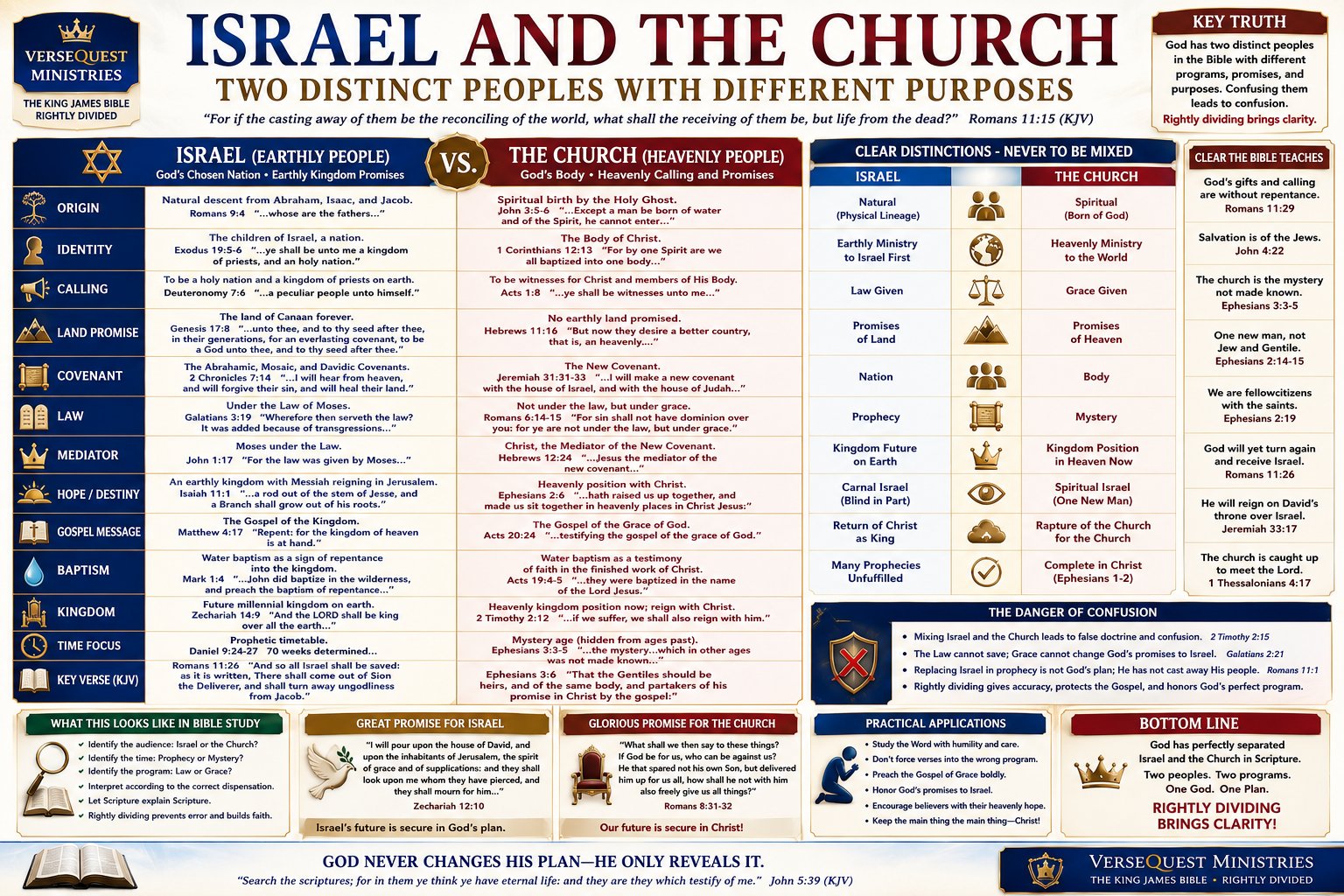
- Israel and the Church Bible Study Chart – Two Distinct Peoples with Different Purposes (KJV)
- Compare Israel and the Church with this detailed KJV Bible study chart covering their distinct origins, identities, covenants, callings, promises, gospel programs, and future destinies.
- $3.99
- Add to cart
-
-
The Gospel of the Kingdom
-
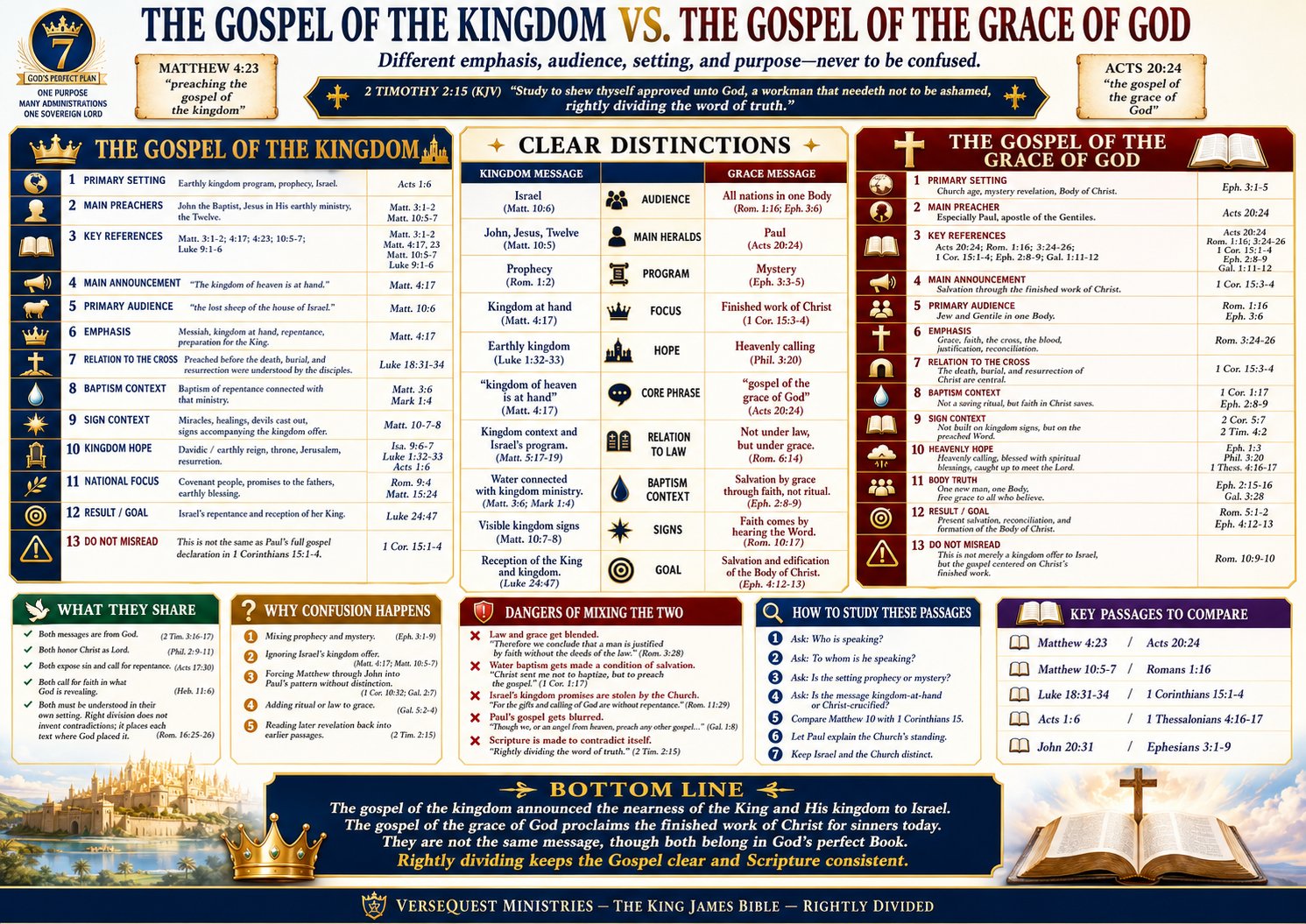
- The Gospel of the Kingdom vs. the Gospel of the Grace of God – KJV Right Division Bible Study Chart
- Compare the gospel of the kingdom and the gospel of the grace of God with this detailed KJV chart covering audience, message, prophecy, mystery, baptism, signs, salvation, and right division.
- $3.99
- Add to cart
-
-
Doctrine
-
-50%
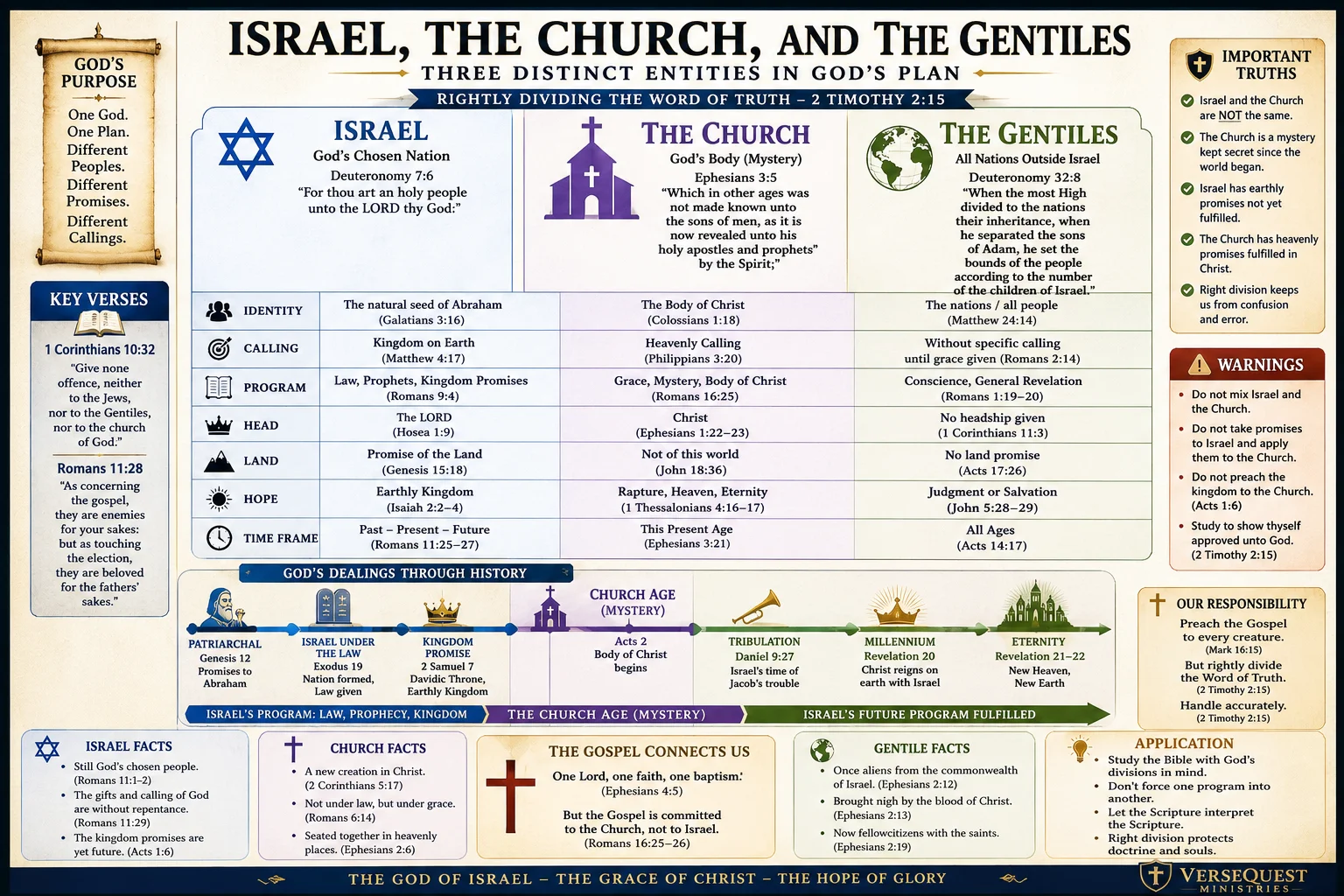
- Israel, the Church, and the Gentiles Chart — KJV Rightly Divided
- Premium printable KJV Bible study chart comparing Israel, the Church, and the Gentiles as three distinct entities in God’s plan. Rightly divided, visually organized, and designed for teaching and personal…
- Original price was: $10.00.$4.99Current price is: $4.99.
- Add to cart
-
-50%
-
Not Under Law But Grace
-
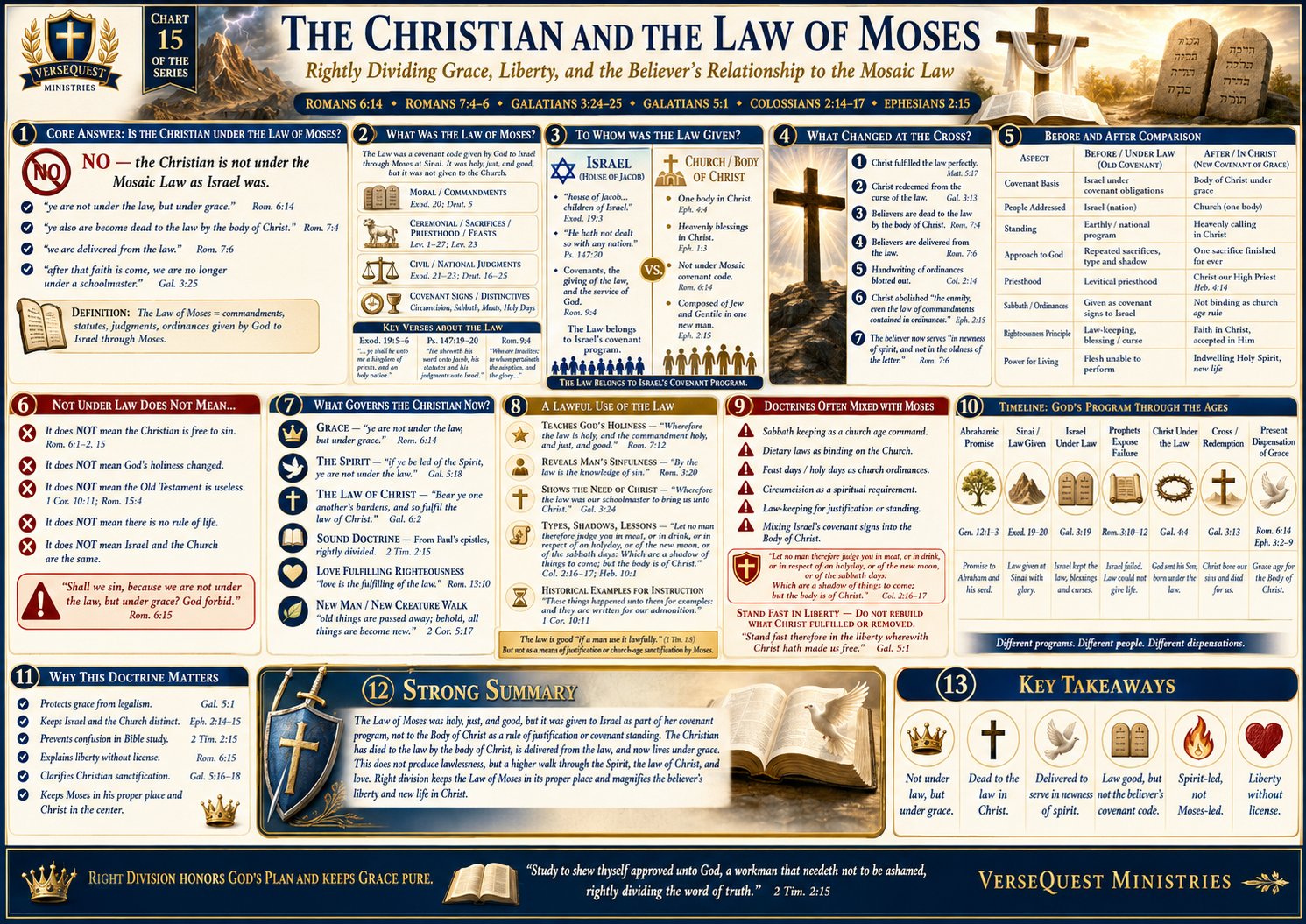
- The Christian and the Law of Moses – Grace, Liberty, and the Believer’s Relationship to the Mosaic Law (KJV Bible Study Chart)
- Understand the Christian’s relationship to the law of Moses with this detailed KJV chart covering Israel’s covenant, grace, liberty, the cross, the law of Christ, and Spirit-led living.
- $3.99
- Add to cart
-