
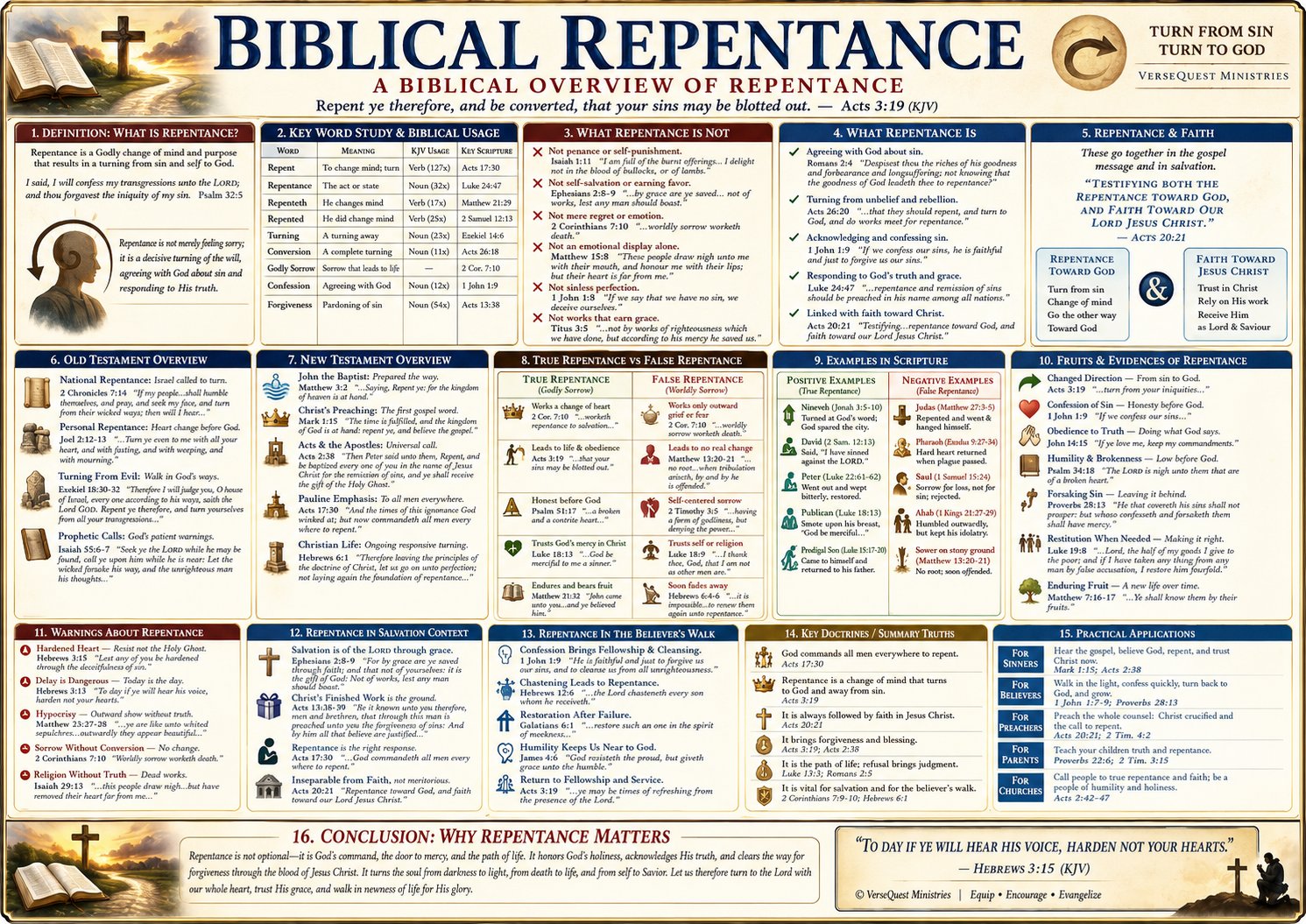
Biblical Repentance Bible Study Chart – Turning from Sin to God with Faith Toward Jesus Christ (KJV)
Understand biblical repentance with this detailed KJV chart covering godly sorrow, confession, turning from sin to God, faith in Jesus Christ, false repentance, spiritual restoration, and enduring fruit.
$3.99
Description
Biblical Repentance: A Biblical Overview of Repentance is a detailed KJV Bible study chart explaining what repentance means, what it does not mean, how it relates to faith and salvation, and what genuine repentance produces in the believer’s life.
Built around Acts 3:19, this chart presents repentance as a God-directed change of mind and purpose that results in turning from sin, self, rebellion, and unbelief toward God and His revealed truth. Biblical repentance is not merely feeling sad, becoming emotionally upset, or regretting painful consequences. It involves agreeing with God about sin and responding honestly to His Word.
The chart begins with a clear definition. Repentance acknowledges that God is right, sin is wrong, and the sinner cannot continue defending what the Lord condemns. It is illustrated by the change in direction that follows when a person stops resisting God and turns toward Him.
A detailed word-study section examines the biblical language connected with repentance, including repent, repentance, repenteth, repented, turning, conversion, godly sorrow, confession, and forgiveness. These words help readers distinguish the inward change of mind from the outward conduct that follows it.
The chart also explains what repentance is not. It is not penance, self-punishment, religious payment, or an attempt to suffer enough to earn forgiveness. The sinner cannot purchase mercy through personal pain, ceremonies, offerings, or works. Jesus Christ alone paid the full price for sin.
Repentance is not self-salvation. Ephesians 2:8–9 declares that salvation is by grace through faith and not of works. Repentance does not become an additional meritorious work that completes an insufficient cross. Christ finished redemption, and the sinner responds to God’s truth rather than earning acceptance through reform.
Repentance is also more than regret or worldly sorrow. Second Corinthians 7:10 distinguishes godly sorrow from the sorrow of the world. Worldly sorrow may grieve over humiliation, punishment, exposure, or loss while leaving the heart unchanged. Godly sorrow agrees with God and leads toward genuine repentance.
Emotional intensity alone is not repentance. A person may cry, tremble, feel guilty, make promises, or become temporarily frightened without submitting to God. Scripture records people who displayed emotion while continuing in unbelief, pride, or rebellion.
Repentance is not sinless perfection. A repentant believer may still struggle, stumble, and require correction. The evidence of repentance is not that temptation disappears forever but that the heart stops defending sin and becomes willing to confess, forsake, and resist it.
Neither is repentance a system of works that earns grace. Good conduct is the fruit of repentance, not the purchase price of salvation. The transformed life follows God’s saving work rather than competing with the finished work of Jesus Christ.
The chart presents positively what biblical repentance is. It means agreeing with God about sin, turning from unbelief and rebellion, acknowledging and confessing wrongdoing, responding to God’s truth and grace, and joining repentance toward God with faith toward the Lord Jesus Christ.
Acts 20:21 places “repentance toward God” and “faith toward our Lord Jesus Christ” together. These are not competing methods of salvation. Repentance turns the heart from its false confidence and rebellion toward God, while faith rests upon the Person and finished work of Jesus Christ.
The sinner is not saved by achieving perfect reformation before coming to Christ. He comes guilty, helpless, and unable to justify himself. He hears the gospel, acknowledges God’s verdict concerning sin, and trusts Jesus Christ as the crucified and risen Saviour.
The Old Testament overview demonstrates that repentance was repeatedly preached to Israel. National repentance involved humbling themselves, seeking the LORD, turning from wicked ways, and returning to covenant obedience. Personal repentance involved brokenness, confession, and a sincere return to God.
The prophets called people to turn from evil ways while warning that judgment would follow continued refusal. Isaiah invited the wicked to forsake his way and return unto the LORD, who would abundantly pardon. Ezekiel called Israel to turn from transgression rather than continue toward ruin.
The New Testament continues the call to repentance. John the Baptist prepared Israel for the coming King. Jesus preached repentance during His earthly ministry. The apostles called hearers to turn toward God, and Paul declared that God commands all men everywhere to repent.
The chart carefully places these passages in their proper settings. Calls to Israel within the Kingdom program should not be carelessly converted into a works-based formula for the Body of Christ. At the same time, the present gospel never gives sinners permission to cling proudly to unbelief while claiming intellectual faith.
A central comparison distinguishes true repentance from false repentance. True repentance involves godly sorrow, honest confession, changed direction, humility, trust in God’s mercy, and enduring fruit. False repentance may involve temporary regret, outward grief, fear of consequences, self-centred sorrow, excuses, or emotional promises without lasting change.
Positive biblical examples include Nineveh responding to Jonah’s warning, David confessing his sin, Peter weeping bitterly after denying Christ, the publican appealing for mercy, and the prodigal son returning to his father. These examples show humility, confession, changed direction, and dependence upon mercy.
Negative examples include Judas regretting the consequences of betrayal without turning to Christ in faith, Pharaoh repeatedly hardening his heart, Saul admitting sin while protecting his reputation, Ahab displaying temporary humility, and the sorrow described in Hebrews 12 that could not reverse Esau’s surrendered birthright.
The fruits and evidences of repentance include changed direction, honest confession, obedience to truth, humility, forsaking sin, restitution where possible, and enduring fruit over time. These works do not purchase salvation; they reveal that the heart is no longer defending its former rebellion.
The chart also distinguishes repentance in the sinner’s salvation from repentance within the believer’s walk. The sinner hears the gospel, turns toward God, and trusts Jesus Christ. The saved believer remains secure in Christ but must continue confessing sin, receiving correction, restoring fellowship, and returning to obedient service when he fails.
Repentance restores fellowship and usefulness, but it does not repeatedly recreate eternal salvation. First John 1:9 concerns honest confession and cleansing within the believer’s relationship with God. Galatians 6 presents the restoration of a fallen brother in meekness.
Warnings concerning repentance include the danger of a hardened heart, delayed obedience, hypocrisy, worldly sorrow, and religion without truth. Repeated resistance can dull the conscience and make the sinner increasingly unwilling to respond to God’s voice.
The chart’s conclusion is direct: repentance is not optional religious decoration. It honours God’s holiness, acknowledges His truth, opens the heart to mercy, and belongs wherever sinners and believers are called to stop defending sin and respond honestly to God.
This resource is ideal for personal Bible study, gospel teaching, salvation studies, discipleship, pastoral counseling, Christian living classes, Sunday school, homeschool Bible curriculum, Bible institutes, sermon preparation, and anyone seeking a clear KJV overview of repentance, faith, confession, forgiveness, and spiritual restoration.
Biblical repentance, repentance toward God, faith toward Jesus Christ, turning from sin, change of mind, godly sorrow, worldly sorrow, confession of sin, forgiveness, conversion, salvation by grace, fruits of repentance, true repentance, false repentance, spiritual restoration, hardened heart, forsaking sin, obedience to truth, Christian accountability, reconciliation with God
Biblical repentance begins when a person stops arguing with God. The sinner acknowledges that God’s verdict is true, that sin is not harmless, and that human excuses cannot overturn divine judgment.
Repentance includes a change of mind, but biblical usage shows that this inward change affects direction, attitude, confession, allegiance, and conduct. It is more than replacing one opinion with another while continuing unchanged.
Repentance is not penance. Penance attempts to pay for wrongdoing through suffering, ritual, or religious performance. Repentance turns to the God whose mercy is available because Jesus Christ already paid for sin.
Repentance must never be presented as a meritorious work added to faith. Salvation remains entirely by grace through faith in Jesus Christ. The repentant sinner does not boast that he changed enough to deserve salvation.
Acts 20:21 joins repentance toward God with faith toward Jesus Christ. The heart turns from rebellion and false confidence toward God while resting upon Christ as the only Saviour.
Worldly sorrow grieves over consequences. Godly sorrow grieves because sin has offended God and violated His truth. One may produce despair or temporary reform; the other leads toward life and obedience.
Emotional displays are not reliable proof of repentance. Tears may accompany genuine repentance, but Scripture also records tears, fear, confession, and regret that did not produce lasting submission.
True repentance becomes honest. It names sin rather than disguising it, blaming circumstances, attacking the reprover, or hiding behind vague language.
Repentance does not require sinless perfection before a sinner may trust Christ. No sinner could ever meet that condition. The sinner comes as he is, but he does not come demanding that God approve his rebellion.
The fruits of repentance follow the change of heart. Changed conduct, restitution, obedience, humility, and forsaking known sin provide evidence, but they are not the ground of justification.
Nineveh demonstrates that repentance takes warning seriously. David demonstrates that repentance confesses guilt. Peter demonstrates that failure need not be final. The publican demonstrates dependence upon mercy.
Judas demonstrates that regret is not saving faith. Pharaoh demonstrates how repeated resistance hardens the heart. Saul demonstrates the emptiness of confession concerned more with reputation than obedience.
The believer continues to need repentance in his daily walk. Salvation is secure in Christ, but fellowship, joy, service, testimony, and reward may be damaged by unconfessed sin.
First John 1:9 calls believers to honest confession. Confession does not mean informing God of something He does not know; it means agreeing with His judgment and refusing to cover the offense.
Restitution should be made where possible and appropriate. Repentance seeks to repair harm rather than using the language of forgiveness as an excuse to avoid responsibility.
A hardened heart develops through delayed response. Each refusal makes future obedience easier to postpone. Scripture therefore warns, “To day if ye will hear his voice, harden not your hearts.”
Repentance and faith magnify grace. The sinner abandons self-defence and trusts the Saviour. The believer abandons excuses and returns to fellowship. In both cases, the glory belongs to God.
Gospel presentation, salvation teaching, repentance and faith studies, Christian discipleship, pastoral counseling, restoration of fallen believers, confession and forgiveness, overcoming a hardened heart, distinguishing godly sorrow from regret, Sunday school lessons, homeschool Bible curriculum, Christian school instruction, Bible institute classes, sermon preparation, evangelism, new-believer instruction, church restoration ministry, personal spiritual examination
King James Bible, Strong’s Concordance, Thompson Chain-Reference Bible, Treasury of Scripture Knowledge, Nave’s Topical Bible, personal prayer journal, repentance and confession worksheet, Scripture memory cards, Psalm 51 study notes, Acts 2–3 study materials, Romans salvation outlines, 2 Corinthians 7 cross-reference notes, biblical counseling resources, gospel presentation materials, VerseQuest salvation and Christian Living charts
Related products
-
Ages To Come
-
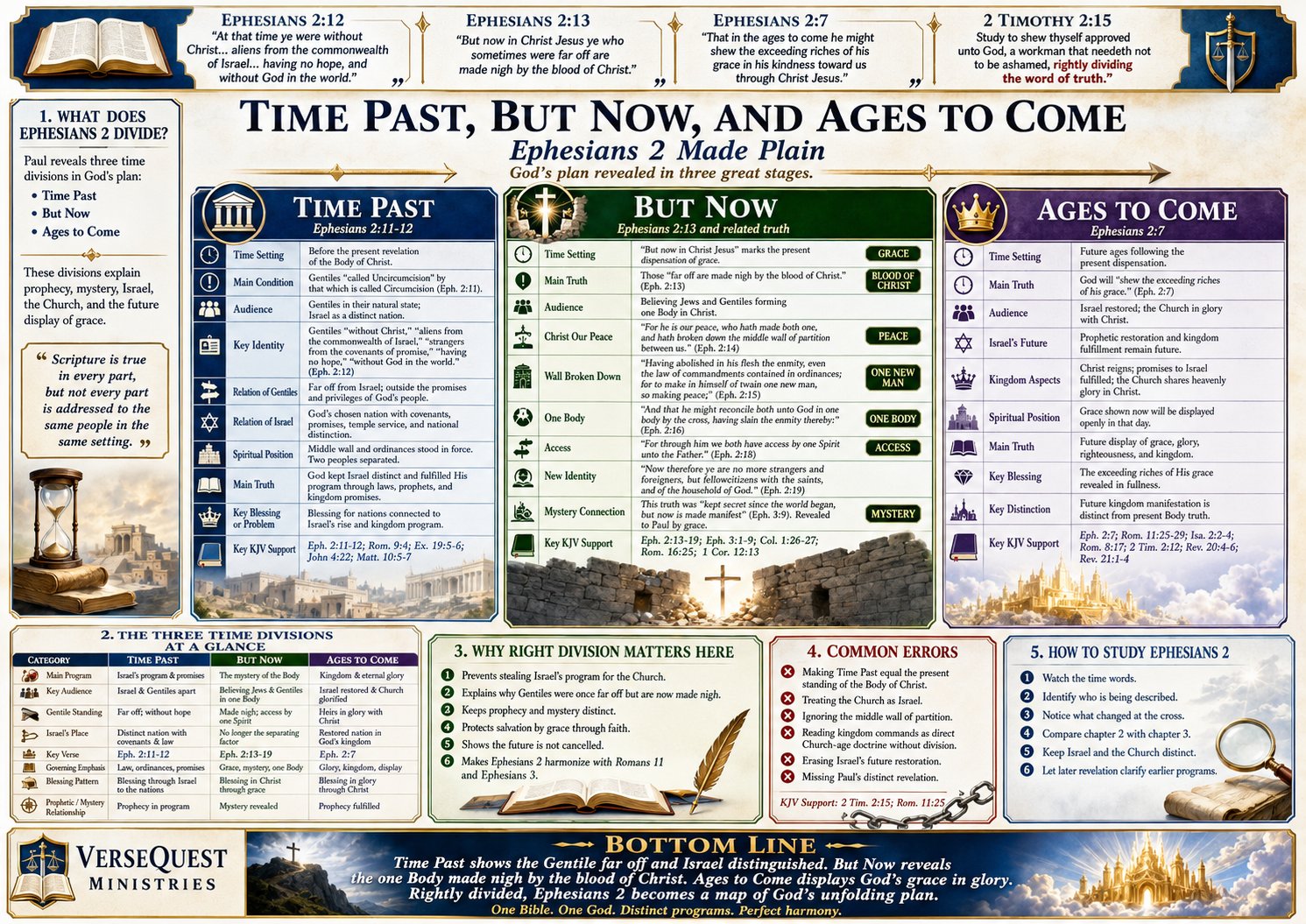
- Time Past, But Now, and Ages to Come – Ephesians 2 Rightly Divided KJV Bible Study Chart
- Understand Ephesians 2 with this detailed KJV chart explaining Time Past, But Now, Ages to Come, Gentile distance, the one Body, Israel’s future, and the importance of right division.
- $3.99
- Add to cart
-
-
Wealth of Rome
-
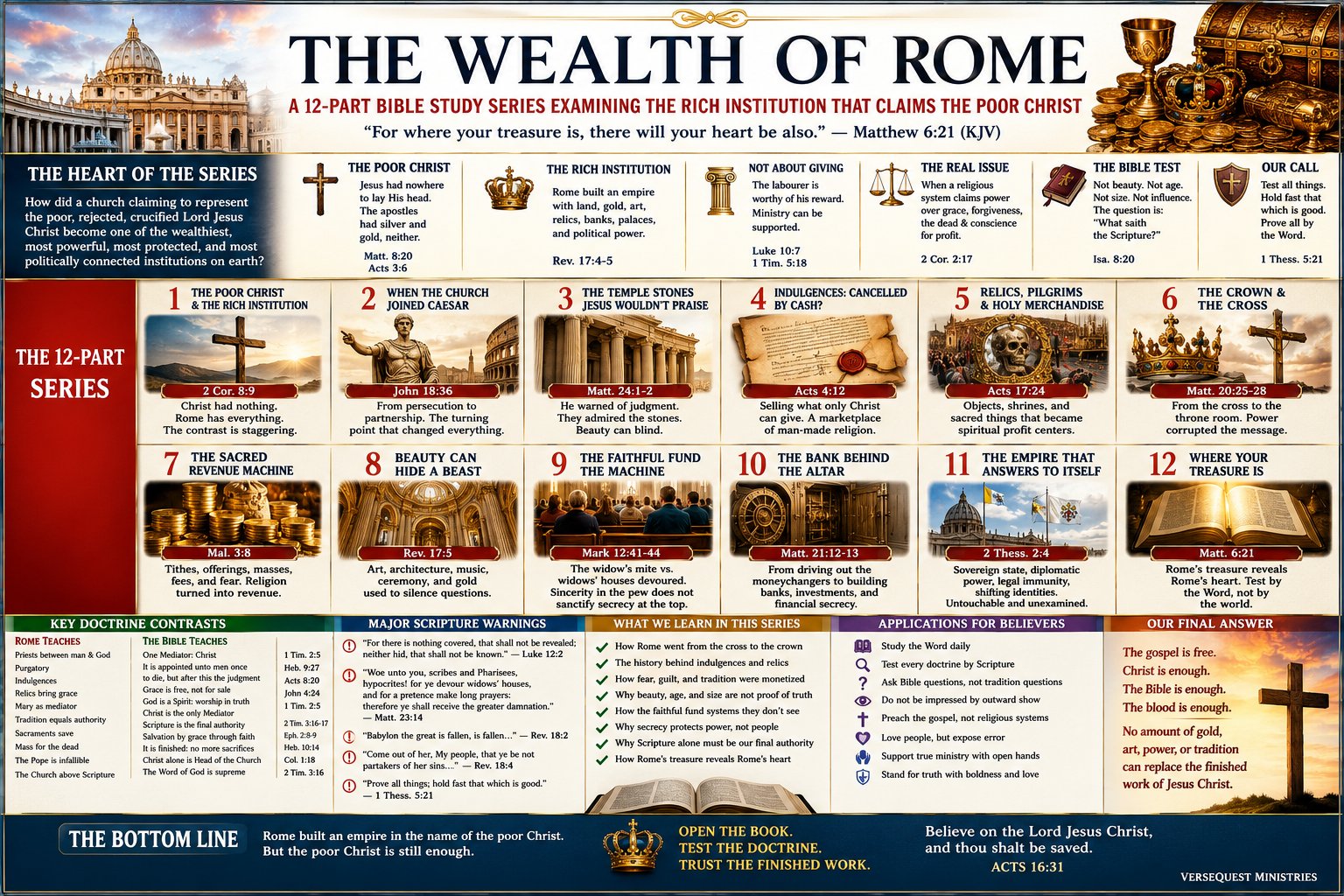
- The Wealth of Rome Bible Study Chart – A 12-Part KJV Examination of Wealth, Power, Doctrine, and Religious Commerce
- Examine the wealth, power, doctrines, indulgences, relics, revenue systems, and political influence of Rome with this detailed twelve-part KJV Bible study chart.
- $3.99
- Add to cart
-
-
Baptismal Regeneration
-
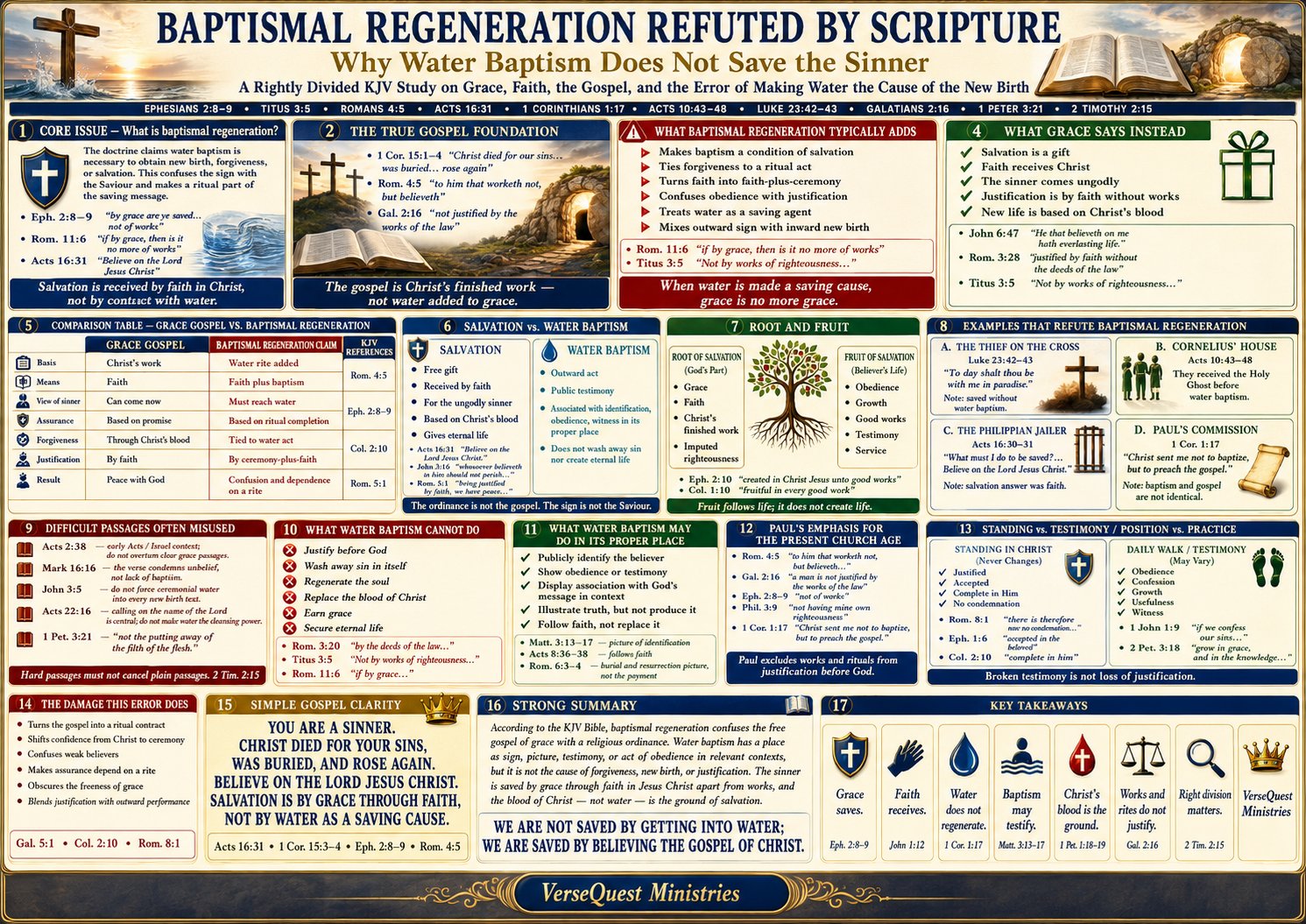
- Baptismal Regeneration Refuted by Scripture – Why Water Baptism Does Not Save the Sinner (KJV Bible Study Chart)
- See why water baptism does not save with this detailed KJV chart covering the gospel of grace, faith versus ritual, the thief on the cross, Cornelius, Paul’s commission, difficult baptism…
- $3.99
- Add to cart
-
-
Repentance Rightly Divided
-
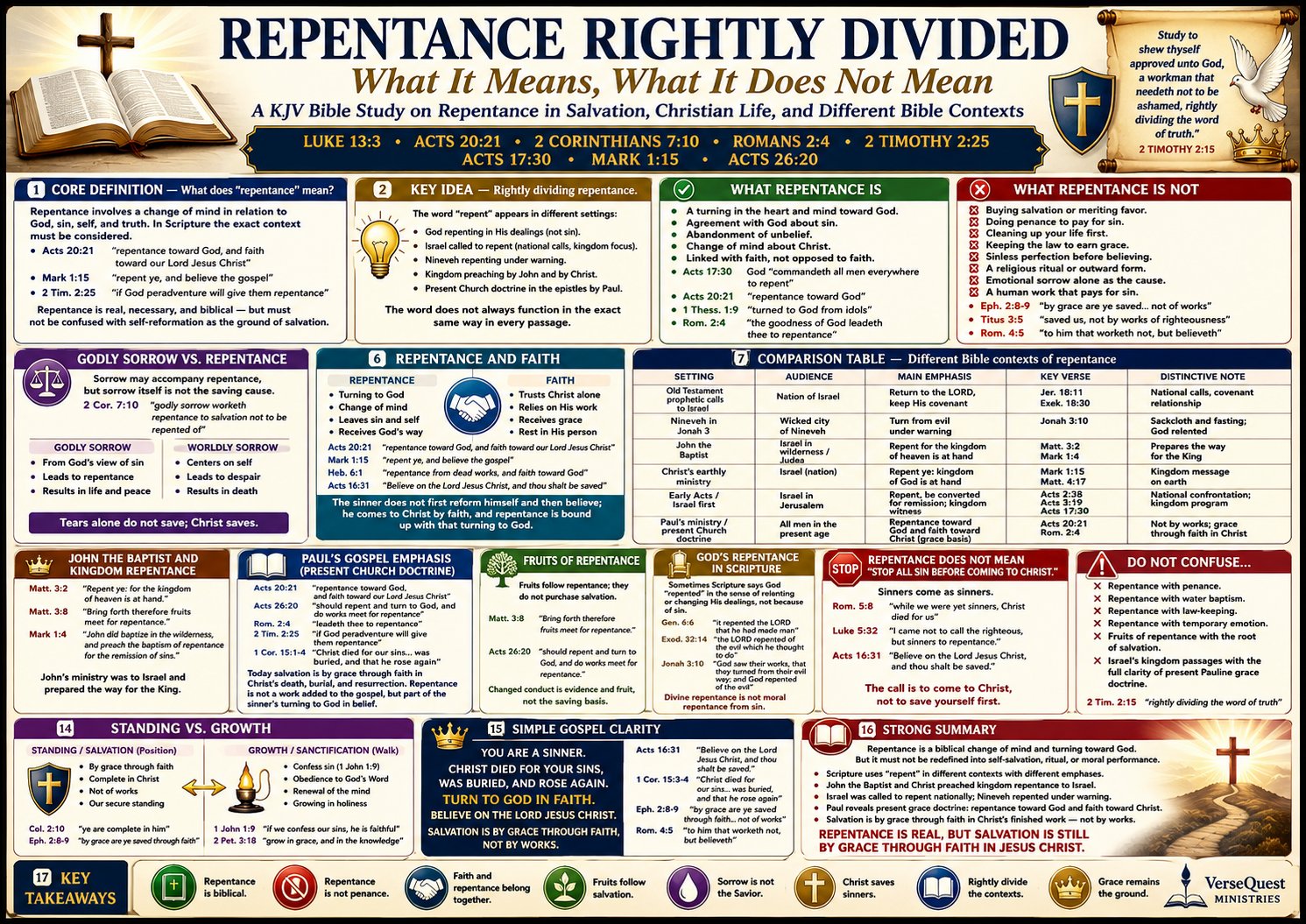
- Repentance Rightly Divided – What It Means, What It Does Not Mean, and Its Place in Salvation and Christian Life (KJV Bible Study Chart)
- Understand repentance rightly divided with this detailed KJV chart covering change of mind, repentance and faith, godly sorrow, fruits of repentance, Kingdom contexts, Christian growth, and salvation by grace through…
- $3.99
- Add to cart
-
-
Precious Blood of Christ
-
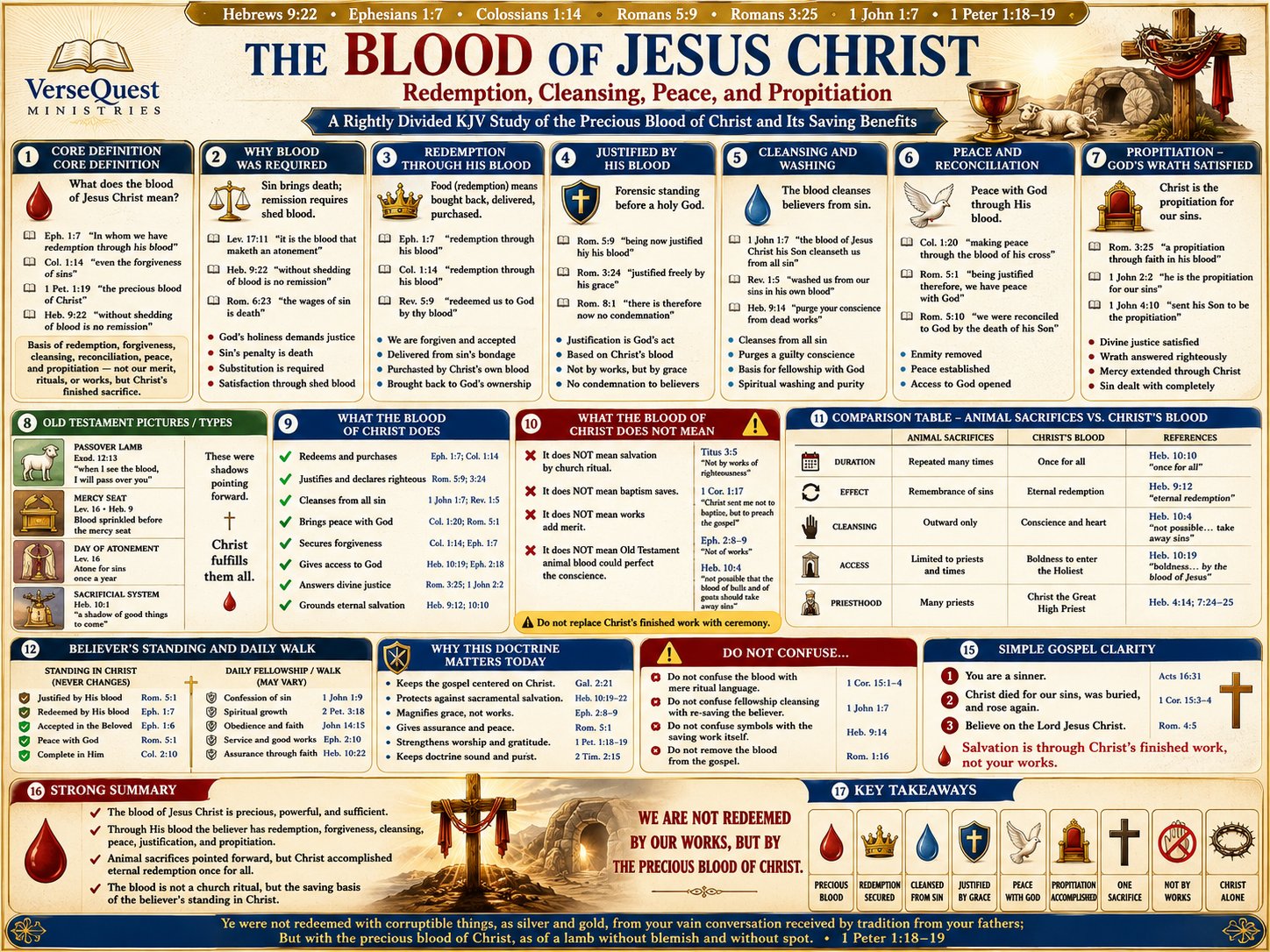
- The Blood of Jesus Christ – Redemption, Cleansing, Justification, Peace, and Propitiation (KJV Bible Study Chart)
- Study the saving power of the blood of Jesus Christ with this detailed KJV chart covering redemption, forgiveness, justification, cleansing, peace, reconciliation, propitiation, Old Testament sacrifices, and Christ’s one sufficient…
- $3.99
- Add to cart
-