
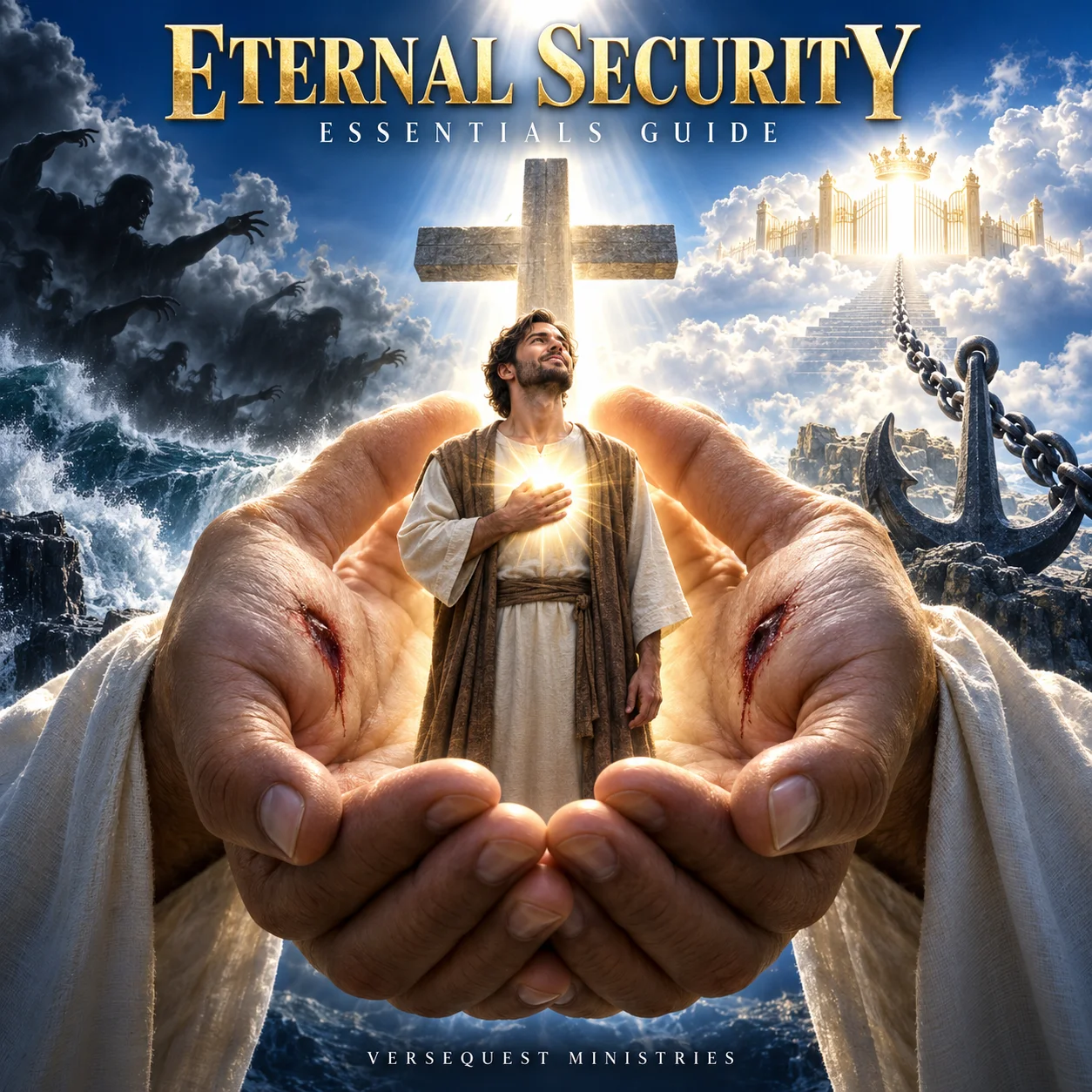
Eternal Security – Essentials Guide
Eternal Security – Essentials Guide is a concise downloadable and printable KJV Bible study explaining why a person who has truly trusted Jesus Christ possesses everlasting life. It presents salvation, justification, the new birth, the believer’s position in Christ, the sealing of the Holy Spirit, divine preservation, chastening, and future reward in clear language suitable for beginners.
The Scripture passages used in the study are printed in full, so readers can follow the biblical evidence without continually stopping to look up references. This $14.99 Essentials Guide is ideal for new believers, Christians struggling with assurance, personal Bible study, discipleship, Sunday school teaching, and sermon preparation.
$14.99
Description
Eternal Security – Essentials Guide is a concise, beginner-friendly KJV Bible study explaining why a person who has truly been saved by Jesus Christ possesses everlasting life. This downloadable and printable PDF presents the doctrine simply, directly, and from the words of the King James Bible.
Many believers know that Christ saved them but continue living with the fear that one failure, temptation, doubt, or serious sin could cause God to take salvation away. Others have been confused by difficult warning passages that are removed from their proper audience and used to place a born-again Christian back under condemnation. This guide establishes assurance upon what Christ accomplished—not upon human feelings, religious performance, or personal perfection.
The study examines salvation by grace through faith, justification, regeneration, the new birth, spiritual circumcision, the indwelling Holy Spirit, the believer’s position in Christ, and the sealing of the Holy Spirit unto the day of redemption. It explains that salvation is a completed work received by faith, not a temporary arrangement maintained through good behavior.
Eternal security does not give Christians permission to live carelessly. The guide distinguishes salvation from fellowship, sonship from service, condemnation from chastening, and eternal life from future reward. A disobedient believer may lose fellowship, testimony, usefulness, joy, reward, and even physical life, but those consequences must not be confused with losing the eternal life God has already given.
The doctrine of eternal security magnifies Jesus Christ because it places the entire weight of salvation upon His finished sacrifice, present intercession, and unfailing promises. If salvation depends upon the believer holding onto Christ, assurance rests upon human strength. If salvation depends upon Christ holding the believer, assurance rests upon the power and faithfulness of God.
As part of the VerseQuest Essentials Study Guides, this resource is designed for new believers, readers unfamiliar with Bible doctrine, and anyone who needs the subject explained in a nutshell. The Scripture passages used in the study are printed in full from the King James Bible, allowing readers to follow the teaching without repeatedly stopping to locate each passage.
This guide can be used for personal Bible study, discipleship, family devotions, Sunday school instruction, sermon preparation, new-believer classes, and discussions with Christians who struggle with assurance. It is short enough to remain approachable while providing the biblical foundation necessary for deeper study.
Salvation by grace through faith The finished work of Jesus Christ Everlasting life as a present possession Justification and the righteousness of Christ Regeneration and the new birth The believer’s position in Christ Spiritual circumcision without hands Baptism by the Holy Spirit into Christ’s Body The permanent indwelling of the Holy Spirit Sealing unto the day of redemption The earnest of the believer’s inheritance Preservation by the power of God Christ’s continuing intercession The believer’s adoption and sonship Assurance based upon Scripture rather than emotion Salvation distinguished from Christian fellowship Sonship distinguished from faithful service Chastening distinguished from eternal condemnation Loss of reward distinguished from loss of salvation The Judgment Seat of Christ God’s discipline of disobedient believers The believer’s responsibility to live godly The danger of using grace as an excuse for sin The proper handling of biblical warning passages Confidence in God’s faithfulness rather than human performance
- Eternal security means that a person who has genuinely trusted Jesus Christ possesses everlasting life and is kept by the power and faithfulness of God.
- Eternal life is not temporary life with the possibility of later cancellation. If it can expire, it was never everlasting.
- The believer’s assurance rests upon Christ’s completed work rather than the believer’s changing feelings or imperfect performance.
- Salvation is received by grace through faith without works. Good works follow salvation but do not purchase or preserve it.
- The believer is placed into Christ’s Body by the Holy Spirit and becomes a member of Christ.
- The Holy Spirit seals the believer unto the day of redemption, not merely until the believer’s next failure.
- The believer is complete in Christ and spiritually circumcised through an operation performed by God.
- Christ continues as the believer’s advocate and intercessor. His ministry did not end when the sinner first believed.
- God deals with a disobedient Christian as a Father correcting a son, not as a judge condemning an unforgiven criminal.
- A believer can lose fellowship, joy, testimony, usefulness, reward, and physical life without losing his position as a child of God.
- The Judgment Seat of Christ evaluates the saved believer’s service. First Corinthians 3 expressly distinguishes burned works from the salvation of the believer.
- Christian liberty must never become an excuse for sin. Eternal security gives the believer a reason to serve God from gratitude rather than terror.
- Difficult warning passages must be interpreted according to their audience, context, doctrinal setting, and threatened loss.
- A passage concerning fellowship should not be made to cancel salvation. A passage concerning reward should not be made to cancel eternal life.
- A passage concerning physical judgment or chastening should not automatically be interpreted as eternal damnation.
- Assurance should come from believing God’s written testimony concerning His Son.
- The strongest question is not whether the believer can keep himself saved, but whether Jesus Christ can keep those whom He has saved.
Subjects worthy of deeper study include the difference between standing and state, spiritual circumcision, the earnest of the Spirit, Christ’s intercession, adoption, the Judgment Seat of Christ, divine chastening, rewards, inheritance, and the doctrinal setting of difficult warning passages.
This guide can be used as a personal Bible study for believers who struggle with fear, doubt, or uncertainty about their salvation. The printed KJV passages allow the reader to examine God’s promises directly and build assurance upon Scripture.
Pastors and preachers can use the guide when preparing sermons about salvation, assurance, the sealing of the Holy Spirit, Christian chastening, the Judgment Seat of Christ, and the believer’s position in Christ.
Sunday school teachers and discipleship leaders can use it with new believers who need to understand the difference between receiving salvation and growing after salvation. It can also help answer questions about whether a Christian can lose salvation through failure or sin.
Families and small groups can read the passages together and discuss the difference between relationship and fellowship, salvation and service, discipline and condemnation, or reward and eternal life.
Bible institutes and ministry-training classes can use the guide as an introductory doctrinal resource before assigning more advanced studies concerning soteriology, Pauline doctrine, spiritual circumcision, the Body of Christ, and difficult warning passages.
The King James Bible should remain the final authority for every doctrine concerning salvation, assurance, preservation, and Christian living.
A complete KJV concordance can help readers trace important words such as saved, justified, redeemed, sealed, preserved, eternal, everlasting, adoption, earnest, inheritance, chastening, condemnation, and reward.
A KJV cross-reference Bible or Treasury of Scripture Knowledge can help readers connect Christ’s promises in John with the doctrinal explanations found in Romans, Corinthians, Ephesians, Colossians, and the other Church epistles.
A Bible dictionary can help define important doctrinal terms such as justification, redemption, reconciliation, regeneration, adoption, sanctification, intercession, and glorification.
The VerseQuest Dispensational Truth – Essentials Guide complements this study by explaining right division, Acts as a transitional book, Pauline revelation, salvation in the present Church Age, and the importance of placing difficult passages within their proper biblical settings.
Additional study should concentrate on John 5 and 10, Romans 5 and 8, Ephesians 1 and 4, Colossians 2 and 3, Hebrews 7 and 10, and 1 John 5.
Related products
-
Doctrine
-
-50%
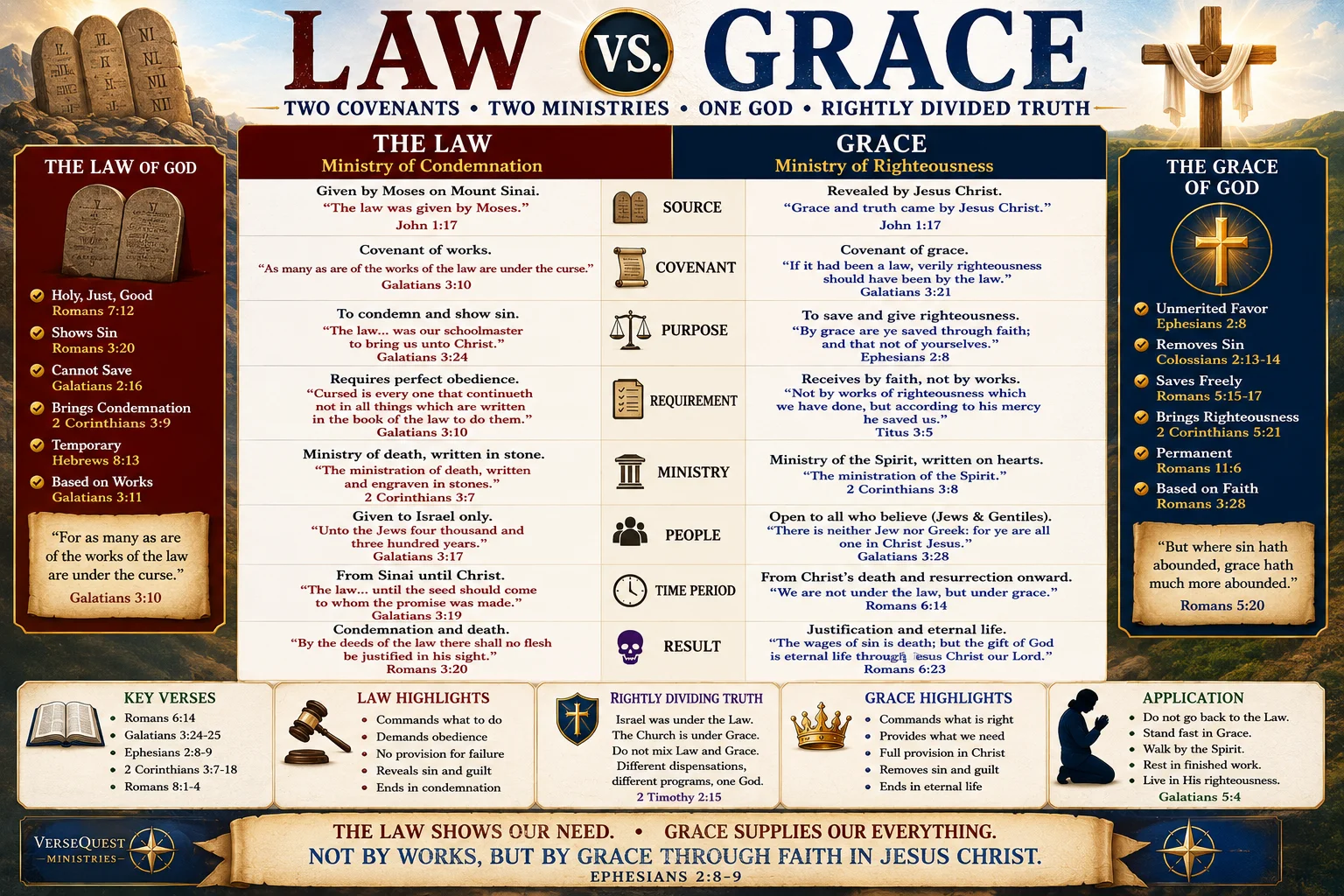
- Law vs. Grace Chart — KJV Rightly Divided
- Premium printable KJV Bible study chart comparing Law and Grace from a rightly divided perspective, showing works versus faith, condemnation versus righteousness, and Moses versus Christ.
- Original price was: $10.00.$4.99Current price is: $4.99.
- Add to cart
-
-50%
-
Precious Blood of Christ
-
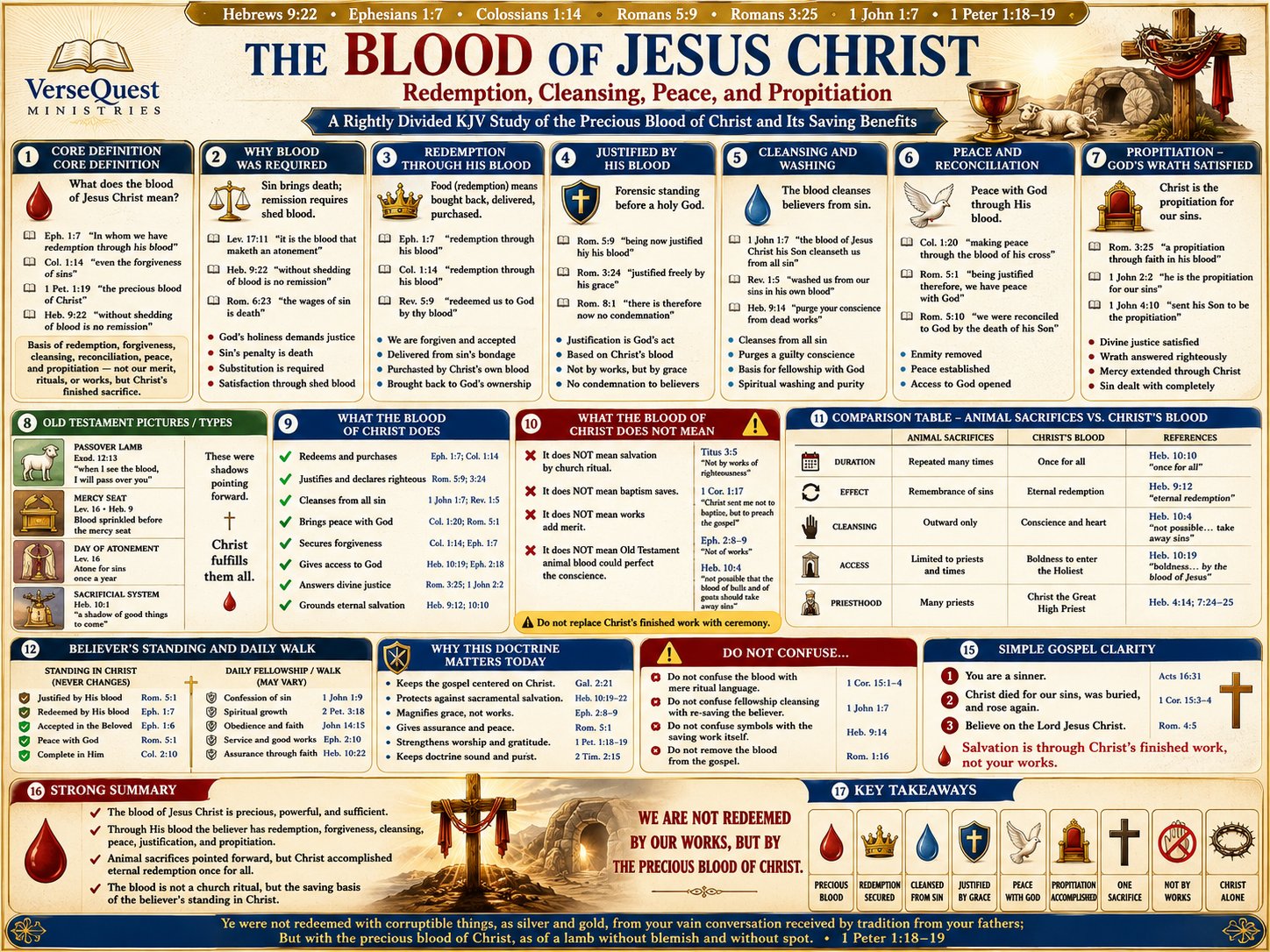
- The Blood of Jesus Christ – Redemption, Cleansing, Justification, Peace, and Propitiation (KJV Bible Study Chart)
- Study the saving power of the blood of Jesus Christ with this detailed KJV chart covering redemption, forgiveness, justification, cleansing, peace, reconciliation, propitiation, Old Testament sacrifices, and Christ’s one sufficient…
- $3.99
- Add to cart
-
-
Assurance of Salvation
-
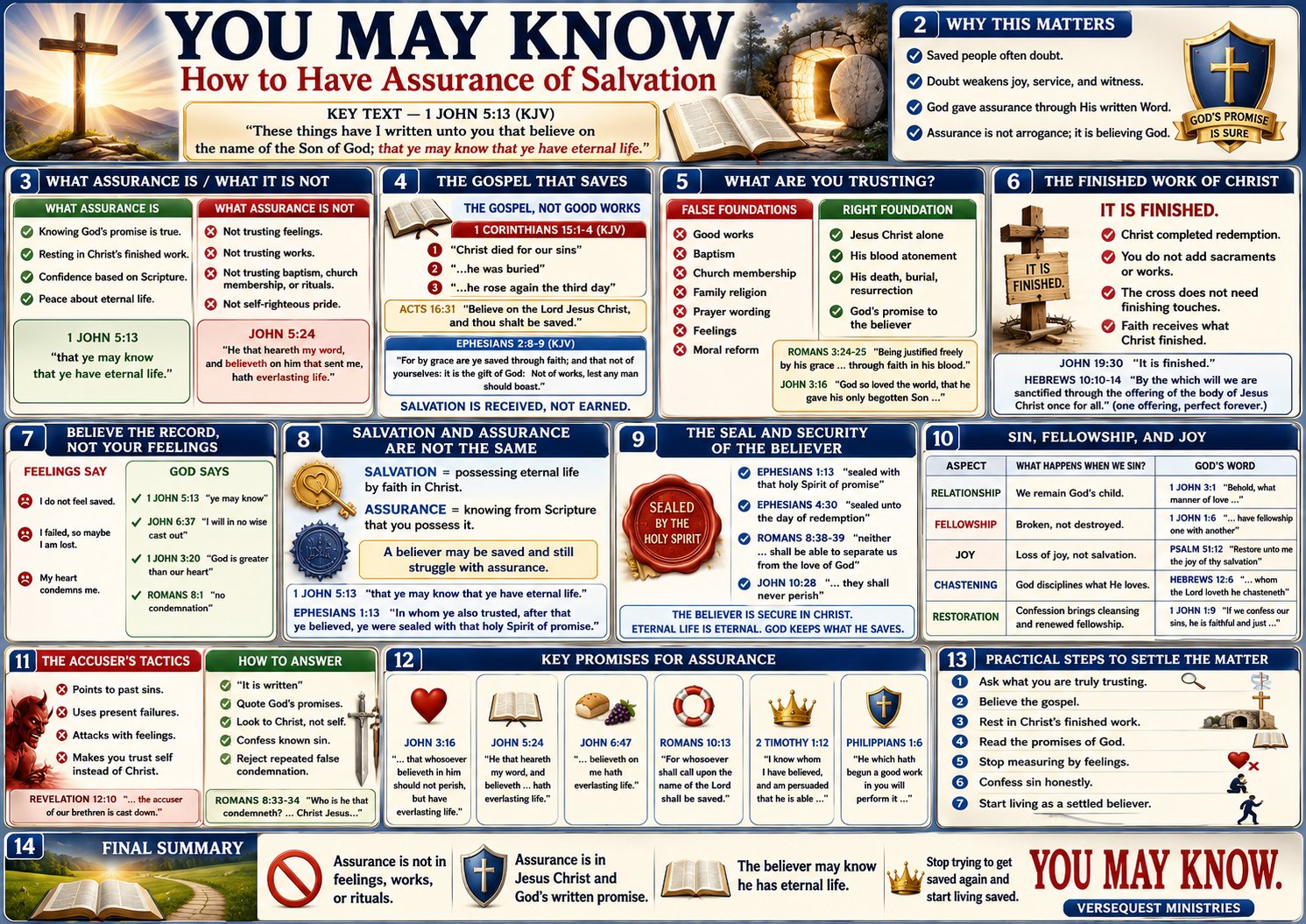
- You May Know – Assurance of Salvation, Eternal Security, and the Finished Work of Christ (KJV Bible Study Chart)
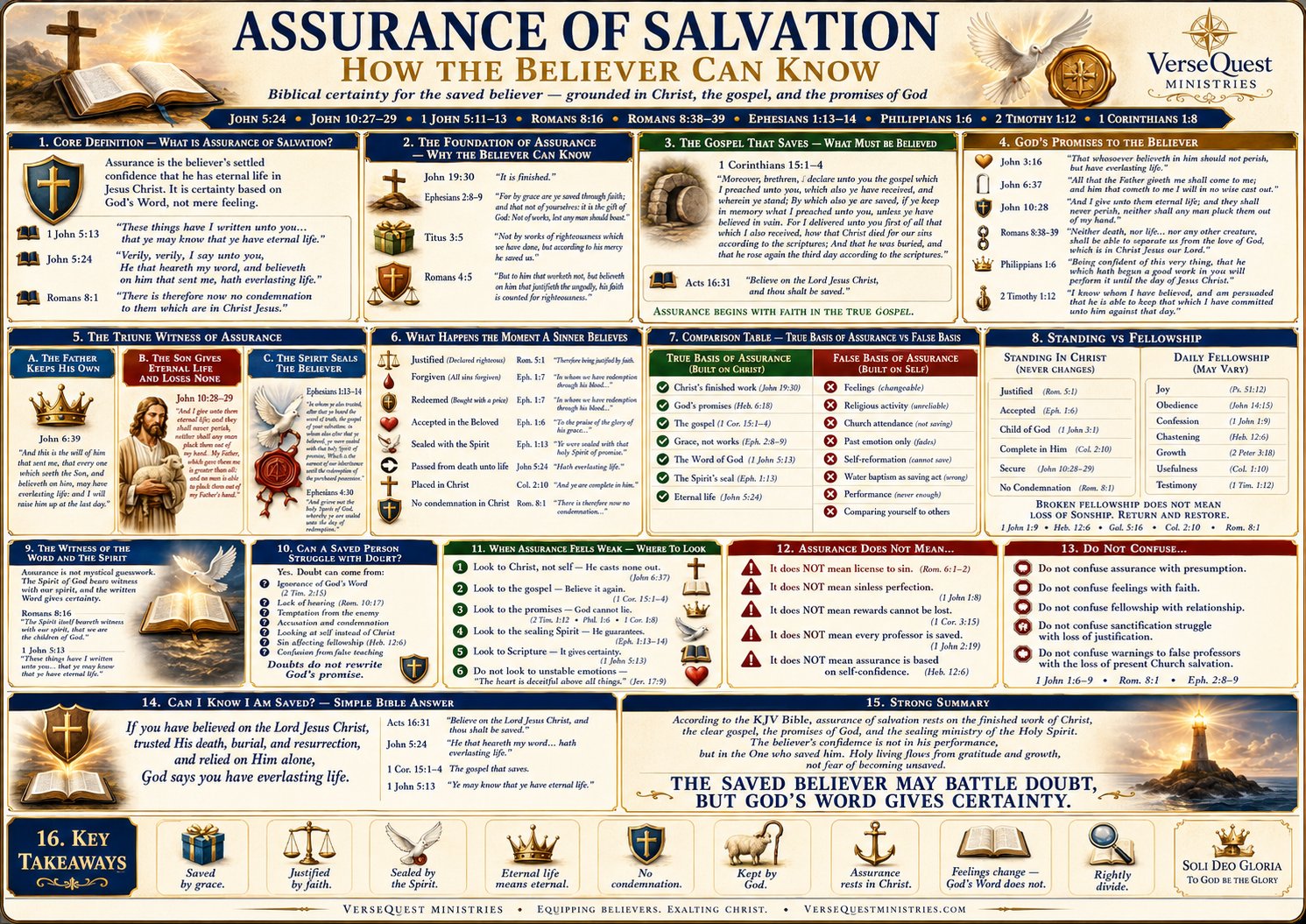
- Gain biblical assurance of salvation with this detailed KJV chart covering Christ’s finished work, eternal life, grace through faith, the Holy Spirit’s seal, sin and fellowship, confession, and God’s promises.
- $3.99
- Add to cart
-
-
Abassadors For Christ
-
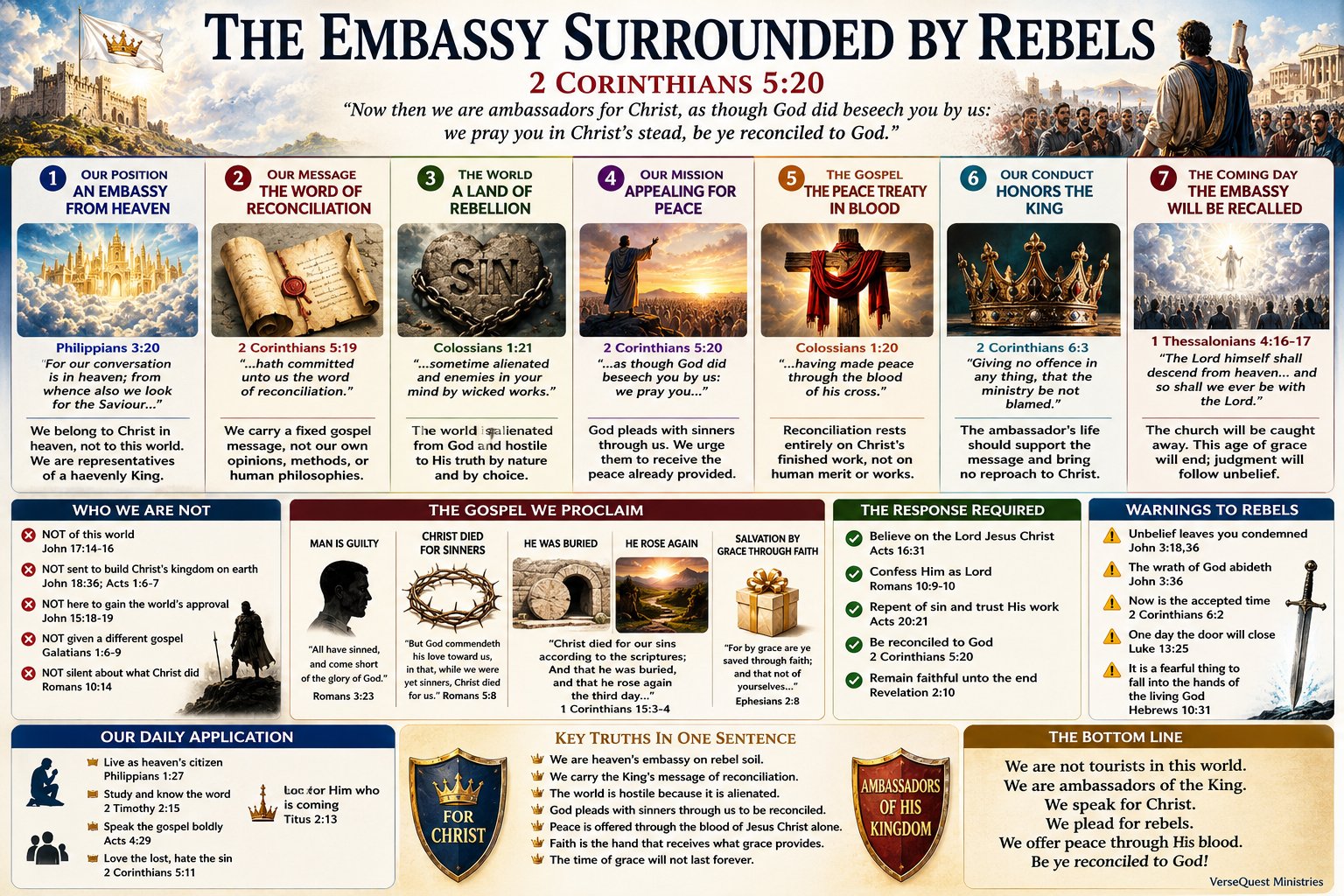
- The Embassy Surrounded by Rebels Bible Study Chart – Ambassadors for Christ and the Ministry of Reconciliation (KJV)
- Understand the Christian’s mission with this detailed KJV chart covering ambassadors for Christ, heavenly citizenship, the gospel of reconciliation, faithful conduct, evangelism, and the coming Rapture.
- $3.99
- Add to cart
-
-
Baptismal Regeneration
-
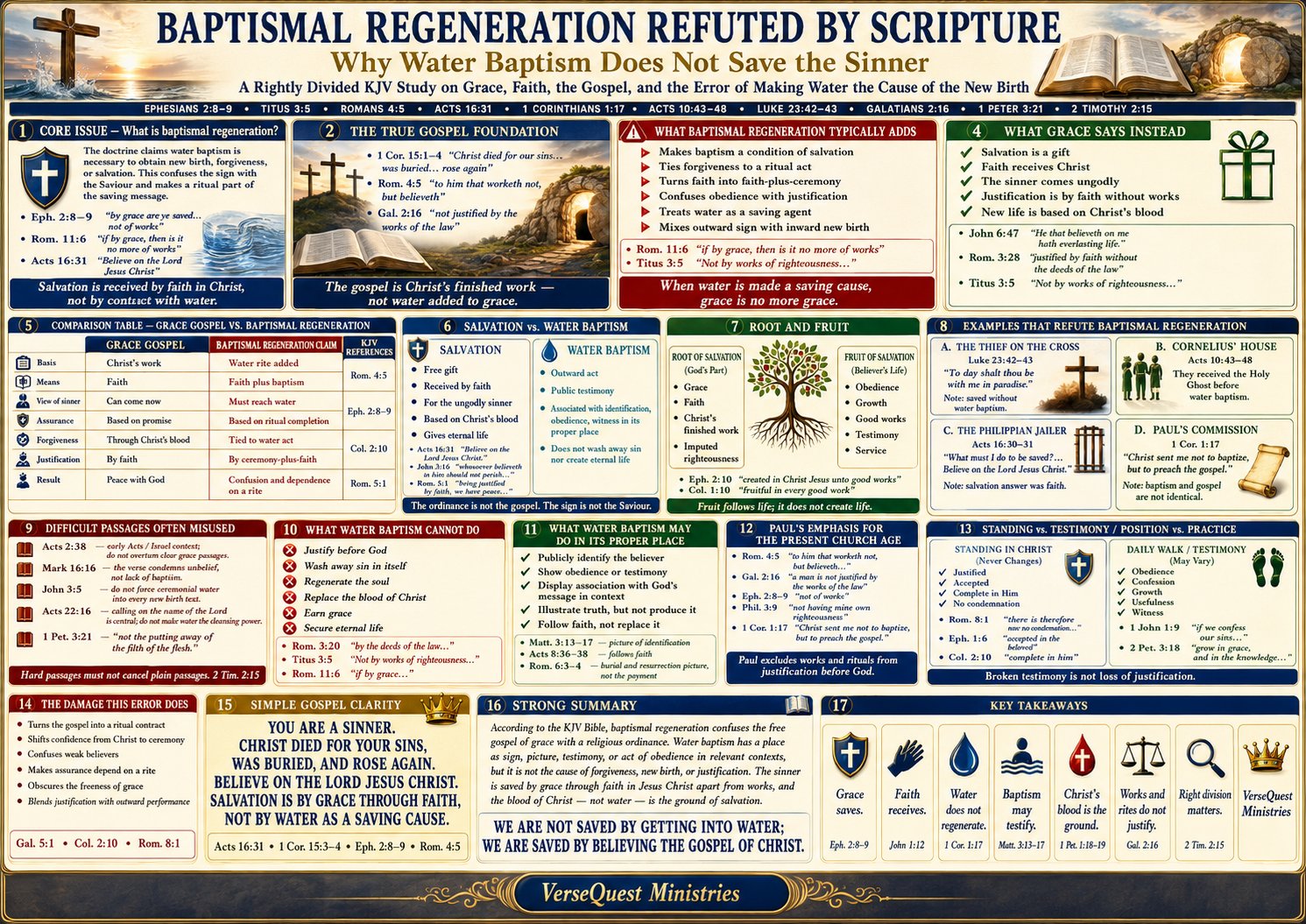
- Baptismal Regeneration Refuted by Scripture – Why Water Baptism Does Not Save the Sinner (KJV Bible Study Chart)
- See why water baptism does not save with this detailed KJV chart covering the gospel of grace, faith versus ritual, the thief on the cross, Cornelius, Paul’s commission, difficult baptism…
- $3.99
- Add to cart
-