
Genesis 5 – The Generations of Adam: The Reign of Death, Enoch’s Translation, Methuselah, and Noah’s Coming Comfort (KJV Bible Study Chart)
Explore Genesis 5 with this detailed KJV chart tracing the ten generations from Adam to Noah, the repeated reign of death, Seth’s appointed line, Enoch’s walk with God and translation, Methuselah’s extraordinary lifespan, overlapping patriarchal witnesses, and Lamech’s hope in Noah before the Flood.
$4.99
Description
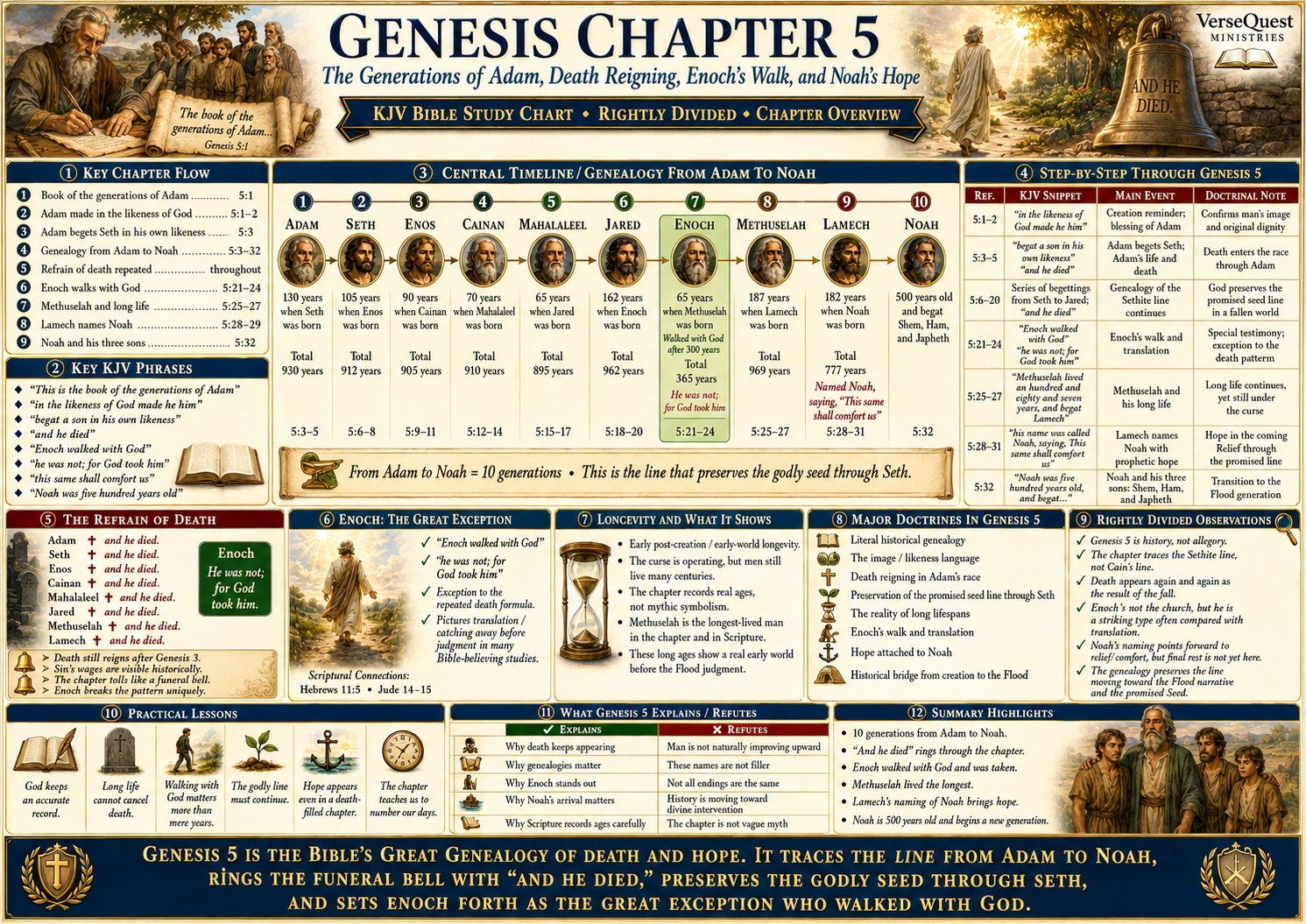
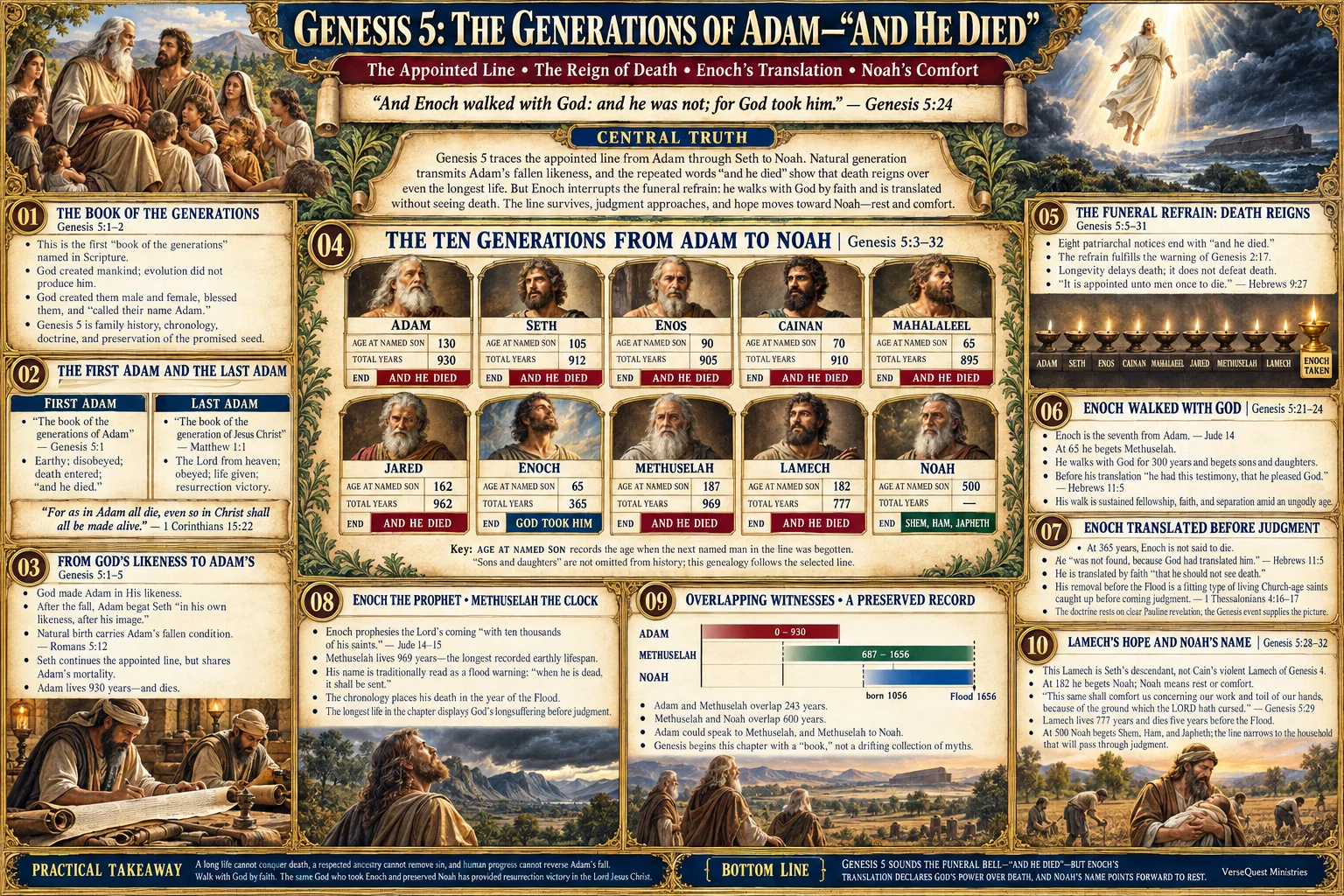
Genesis 5: The Generations of Adam — “And He Died” is a detailed KJV Bible study chart tracing the appointed line from Adam through Seth, Enos, Cainan, Mahalaleel, Jared, Enoch, Methuselah, Lamech, and Noah. The chapter records far more than ancient names and extraordinary lifespans. It preserves the promised line, demonstrates the reign of death introduced through Adam’s transgression, highlights Enoch’s remarkable walk with God and translation without seeing death, and moves the biblical narrative toward Noah and the coming Flood.
Genesis 5 opens with Scripture’s first named “book of the generations.” God created mankind rather than mankind emerging through evolutionary development, and the chapter preserves actual genealogy, chronology, doctrine, and history. Adam was originally made in the likeness of God, but after the Fall he fathers Seth “in his own likeness, after his image.” The human race now continues through fallen Adamic generation. Romans 5 later explains that sin entered the world by one man and death by sin, so Adam’s descendants inherit a world already under mortality.
The repeated expression “and he died” becomes the funeral refrain of the chapter. Adam lives 930 years, Seth 912, Enos 905, Cainan 910, Mahalaleel 895, Jared 962, Methuselah 969, and Lamech 777—yet extraordinary longevity does not defeat the sentence pronounced in Eden. Long life cannot conquer death. Human strength, civilization, ancestry, and centuries of experience cannot reverse Adam’s Fall.
Enoch suddenly interrupts that refrain. Genesis says, “And Enoch walked with God: and he was not; for God took him.” Hebrews 11 explains that Enoch was translated “that he should not see death” and that before his translation he had testimony that he pleased God. Jude also identifies Enoch as the seventh from Adam and records his prophecy concerning the Lord coming with ten thousands of His saints. His life therefore combines fellowship, faith, testimony, prophecy, and supernatural translation.
Within a pre-Tribulation framework, Enoch provides a striking picture of believers being caught away before coming judgment. The parallel should be treated as typology rather than an explicit identification made by Genesis, but the resemblance is powerful: Enoch walks with God in a corrupting world, is translated without death, and disappears before the Flood judgment that later overtakes mankind.
Methuselah, Enoch’s son, lives 969 years, the longest lifespan directly recorded in Scripture. His life reaches the year of the Flood according to the Genesis chronology. His name has traditionally been connected with a warning regarding approaching judgment, although Scripture does not itself define the name’s meaning. What the chronology clearly demonstrates is God’s extraordinary longsuffering before judgment falls.
Genesis 5 also preserves remarkable overlapping testimony. Adam and Methuselah’s lives overlap for 243 years, while Methuselah and Noah overlap for 600 years. The genealogy therefore does not picture isolated generations separated by vast historical gaps. The record could be transmitted through remarkably few overlapping lives, reinforcing Genesis as preserved history rather than a late collection of disconnected myths.
The chapter closes with Lamech naming his son Noah, expressing hope that this child would bring comfort concerning the toil and sorrow of the cursed ground. Noah becomes the tenth man in the named line from Adam, and the genealogy narrows toward the household through which God will preserve human life when the Flood arrives. Genesis 5 sounds the funeral bell again and again—“and he died”—but Enoch’s translation declares God’s power over death, while Noah’s name points forward toward rest, preservation, and hope.
Genesis 5, generations of Adam, Adam genealogy, ten generations Adam to Noah, appointed seed, Sethite line, reign of death, and he died, Adamic mortality, Adam and Christ, Enoch walked with God, Enoch translated, Enoch prophecy, Methuselah, longest lifespan in Bible, Noah genealogy, Lamech and Noah, Flood chronology, biblical genealogy, pre-Flood patriarchs, preservation of the promised line, pre-Tribulation typology
Genesis 5 preserves the appointed genealogical line from Adam through Seth to Noah. It is historical, chronological, and doctrinal rather than a decorative list of names. The chapter deliberately follows Seth rather than Cain because Genesis is tracing the line through which God’s promised redemptive purpose continues. The ten named generations are Adam, Seth, Enos, Cainan, Mahalaleel, Jared, Enoch, Methuselah, Lamech, and Noah.
Genesis 5:1–2 recalls that God originally created mankind in His likeness, male and female, blessed them, and called their name Adam. Genesis 5:3 then records that fallen Adam fathers Seth “in his own likeness, after his image.” Within the larger biblical doctrine developed in Romans 5, natural generation now proceeds through Adam’s fallen race, with sin and mortality affecting his descendants.
The repeated phrase “and he died” becomes the dominant refrain of Genesis 5. Extraordinary lifespans do not cancel the sentence of Genesis 2:17 or reverse the consequences of the Fall. Adam reaches 930 years, Jared 962, and Methuselah 969, yet death ultimately overtakes every named patriarch in the line except Enoch. The chapter therefore demonstrates the reign of death before Paul later explains that doctrine explicitly in Romans.
Enoch forms the great exception. He walks with God and is taken without experiencing death. Hebrews 11:5 states that he was translated and had testimony that he pleased God. Jude 14–15 also identifies Enoch as the seventh from Adam and preserves his prophecy concerning the Lord coming with ten thousands of His saints. Enoch’s life therefore joins fellowship with God, faith, prophecy, and translation.
Within a pre-Tribulation dispensational framework, Enoch’s translation before the Flood provides a fitting picture of the Church being caught away before divine wrath. This is typology rather than an explicit statement that Enoch represents the Church, so the distinction should be maintained. The doctrinal teaching of the Church’s catching away rests directly upon First Thessalonians 4 and First Corinthians 15.
Methuselah lives 969 years and reaches the year of the Flood according to the Genesis chronology. His name has traditionally been interpreted as carrying a warning connected with the coming judgment, but Scripture does not supply that definition explicitly and the Hebrew derivation is disputed. The chronology itself nevertheless displays God’s longsuffering immediately before catastrophic judgment.
The patriarchal lifespans create remarkable historical overlap. Adam and Methuselah overlap for 243 years, and Methuselah and Noah overlap for 600 years. The Genesis record therefore requires very few generational links between Adam and Noah and provides a natural means for historical testimony to be preserved across the pre-Flood world.
Lamech belongs to Seth’s line and should not be confused with the violent Lamech descended from Cain in Genesis 4. Seth’s Lamech names his son Noah and expresses hope for comfort concerning mankind’s work and toil because of the ground cursed by the LORD. Noah’s name therefore turns the genealogy toward approaching judgment, preservation, rest, and the Flood narrative of Genesis 6–9.
Genesis 5 ultimately joins death and hope. Adam’s descendants repeatedly die, demonstrating the consequences of sin, yet the appointed line survives. Enoch shows that God possesses power over death, and Noah prepares the reader for preservation through judgment. The chapter points beyond itself toward the resurrection victory ultimately revealed in Jesus Christ.
Genesis 5 Bible studies, Adam-to-Noah genealogy teaching, biblical chronology, pre-Flood patriarch studies, death-through-Adam lessons, Enoch Bible studies, translation and Rapture typology, Methuselah studies, Noah preparation lessons, biblical genealogy classes, Adam-versus-Christ teaching, death and resurrection studies, Flood chronology, Genesis homeschool curriculum, Sunday school lessons, Christian school teaching, Bible institute classes, pastoral training, creation studies, sermon preparation
King James Bible, Strong’s Concordance, Thompson Chain-Reference Bible, Treasury of Scripture Knowledge, Nave’s Topical Bible, Genesis 4–6 study notes, Adam-to-Noah genealogy charts, biblical chronology resources, Romans 5 Adam-and-Christ studies, First Corinthians 15 resurrection outlines, Hebrews 11 faith studies, Enoch Scripture chains, Jude commentary notes, Noah and Flood timelines, pre-Flood lifespan charts, Rapture comparison studies, VerseQuest Genesis and creation charts
Related products
-
Premium Studies
-
-25%
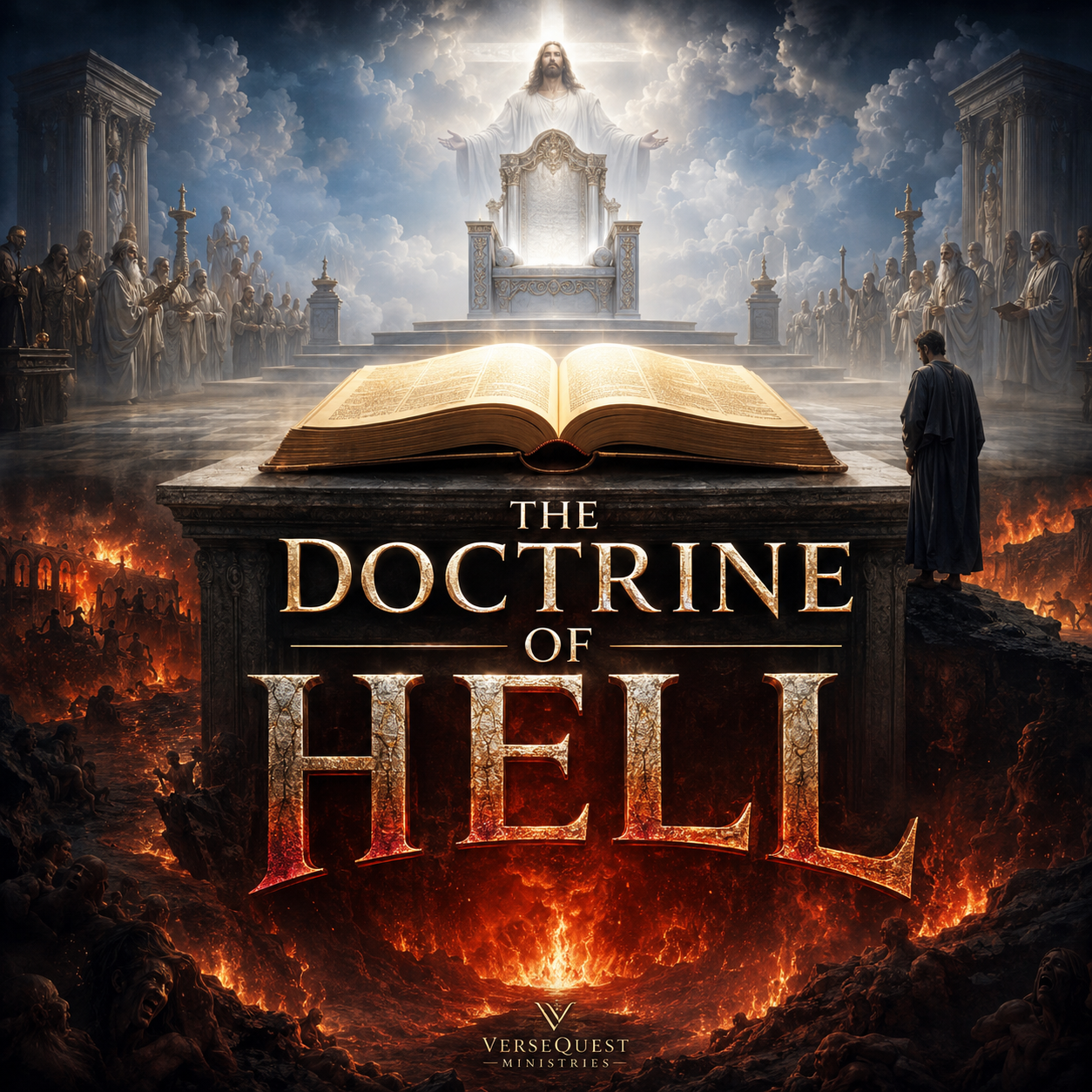
- The Doctrine of Hell — Premium Essay Series PDF
- A 383-page premium VerseQuest PDF study book containing 54 KJV essays on hell, fire, darkness, judgment, the lake of fire, the second death, and Jesus Christ as the only escape.
- Original price was: $39.99.$29.99Current price is: $29.99.
- Add to cart
-
-25%
-
Doctrine Series
-
-14%
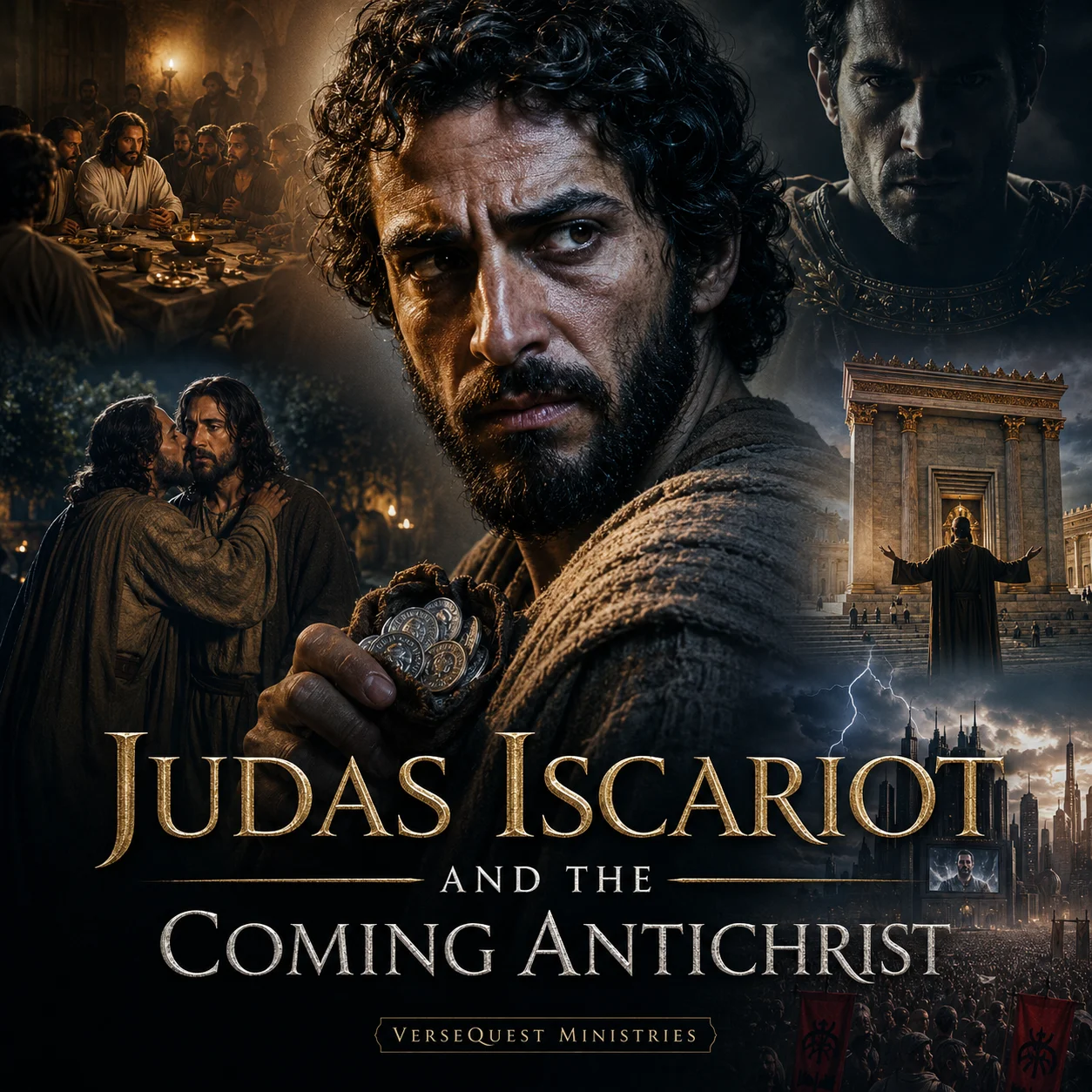
- Judas Iscariot and the Coming Antichrist – Premium KJV Prophecy Study
- A massive 459-page premium KJV prophecy study tracing the biblical connection between Judas Iscariot, the son of perdition, and the coming Antichrist. This detailed VerseQuest Ministries PDF examines Judas’ betrayal,…
- Original price was: $34.99.$29.99Current price is: $29.99.
- Add to cart
-
-14%
-
Jesus Christ
-
-10%

- The Lord Jesus Christ Made Plain – 637-Page KJV Bible Study
- A massive 637-page, 100-part KJV Bible study on the Person and work of the Lord Jesus Christ. This premium VerseQuest resource covers His deity, incarnation, blood, cross, resurrection, present ministry,…
- Original price was: $39.00.$34.99Current price is: $34.99.
- Add to cart
-
-10%
-
The Rapture
-
-67%
- Caught Up Before the Wrath – 66-Essay KJV Rapture Study
- Caught Up Before the Wrath is a 430-page premium KJV Bible study defending the pre-tribulation Rapture of the Church from a rightly divided, dispensational perspective. This 66-essay VerseQuest Ministries book…
- Original price was: $29.99.$9.99Current price is: $9.99.
- Add to cart
-
-67%
-
Bible Prophecy Charts
-
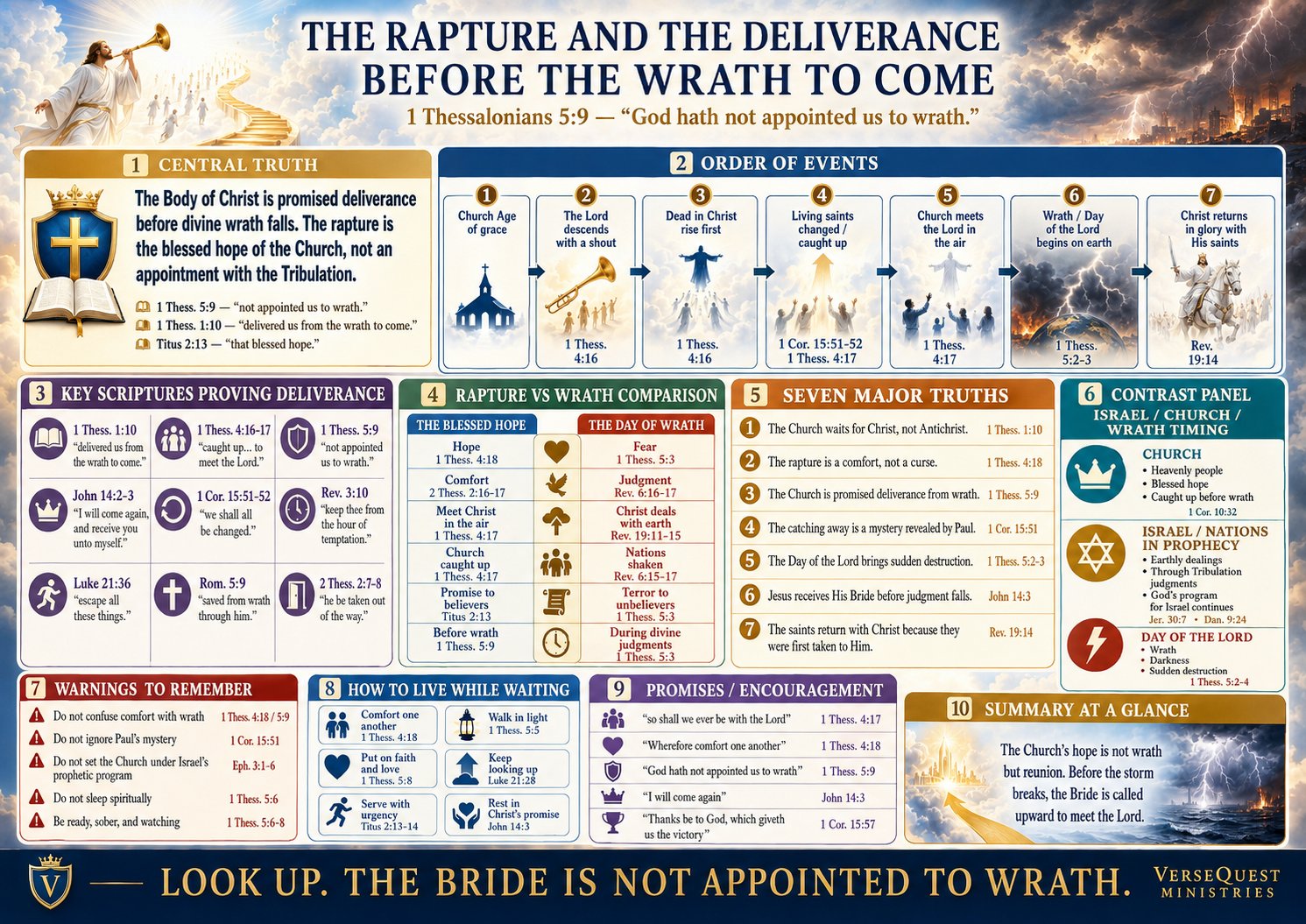
- The Rapture and the Deliverance Before the Wrath to Come – Printable Bible Study Chart
- Printable KJV Bible study chart on The Rapture and the Deliverance Before the Wrath to Come, showing from 1 Thessalonians 5:9 that the Church is not appointed to wrath. This…
- $4.99
- Add to cart
-