Genesis Chapter 5 Bible Study Chart – The Generations of Adam, Enoch’s Walk, and Noah’s Hope (KJV)
Explore Genesis Chapter 5 with this detailed KJV Bible study chart tracing Adam to Noah, the repeated reign of death, Enoch’s walk with God, Methuselah’s longevity, and hope through the preserved godly line.
$3.99
Description
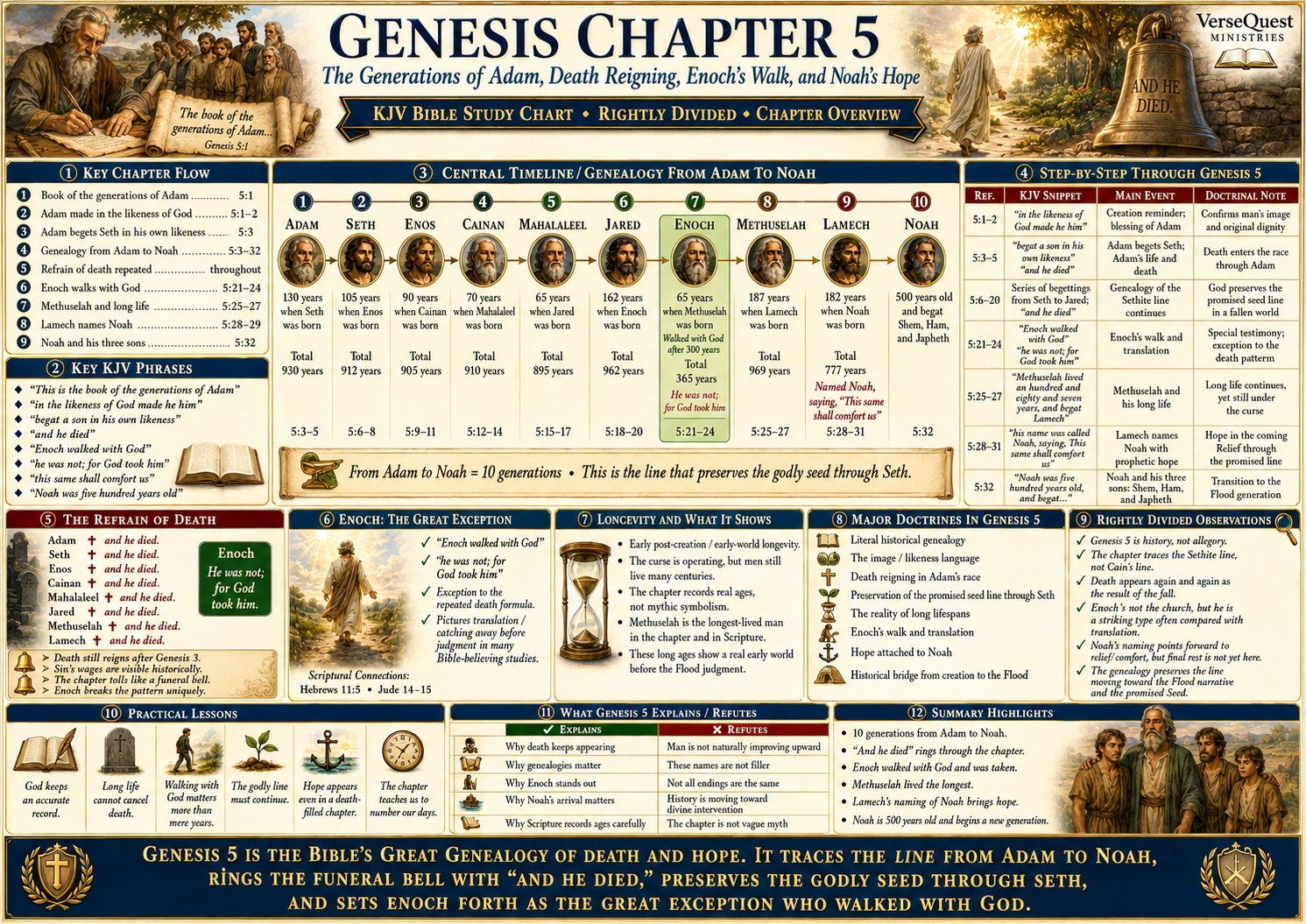
Genesis Chapter 5: The Generations of Adam, Death Reigning, Enoch’s Walk, and Noah’s Hope is a detailed KJV Bible study chart tracing the preserved line from Adam through Seth to Noah. Far from being a list of names to hurry past, Genesis 5 is one of the Bible’s most important genealogical chapters. It records ten generations, emphasizes the reality of death after the fall, preserves the godly line through which the promised Seed would come, and introduces Enoch as the remarkable exception who “walked with God.”
The chart follows the chapter step by step, beginning with the book of the generations of Adam and the repeated language of likeness and image. Adam was created in the likeness of God, but Seth is begotten in Adam’s own likeness after the fall. This distinction reinforces both the dignity of man’s original creation and the transmission of fallen human nature through Adam’s race.
A central genealogy and timeline visually traces Adam, Seth, Enos, Cainan, Mahalaleel, Jared, Enoch, Methuselah, Lamech, and Noah. Each generation includes the age at which the next named son was born, the total lifespan, and the verses where the record appears. This section makes the structure of Genesis 5 easy to follow and shows that the genealogy forms a deliberate historical bridge from creation to the generation of the Flood.
The repeated words “and he died” ring throughout the chapter like a funeral bell. Adam dies. Seth dies. Enos dies. Cainan dies. Mahalaleel dies. Jared dies. Methuselah dies. Lamech dies. The repetition is not empty formula. It is the visible outworking of the warning given in Eden and the proof that death entered the human race through sin.
Against this repeated pattern stands Enoch. He walks with God, and then “he was not; for God took him.” Enoch is presented as the great exception to the normal death pattern of the chapter. His life provides a powerful picture of fellowship with God and is frequently connected with translation and catching-away themes in later Bible study.
The chart also explores the remarkable longevity of the early patriarchs. These ages are presented as literal historical lifespans, not symbolic figures. The long lives reflect the early post-creation world while still showing that the curse remained active and death continued to reign.
Methuselah, the longest-lived man recorded in Scripture, stands near the end of the genealogy, while Lamech names his son Noah in hope of future comfort. Noah’s name introduces expectation into a chapter dominated by death. The promised line continues, and the narrative begins moving directly toward the Flood.
Additional sections identify the major doctrines of Genesis 5, rightly divided observations, practical lessons, key KJV phrases, and the truths the chapter explains and refutes. The chart shows why genealogies matter, why death keeps appearing, why Enoch is different, why Noah’s arrival matters, and why Scripture records names and ages with such care.
This chart is ideal for personal Bible study, Genesis teaching, genealogy studies, Sunday school, homeschool curriculum, Christian schools, Bible institute classes, sermon preparation, discipleship, prophecy studies, creation studies, and teaching on death, Enoch, Noah, and the preserved godly line.
The generations of Adam, biblical genealogy, Adam to Noah, the line of Seth, death reigning, “and he died,” inherited mortality, Enoch walking with God, Enoch’s translation, Methuselah’s long life, Lamech naming Noah, hope in a death-filled chapter, preserved godly seed, literal history, early human longevity, the coming Flood generation
Genesis 5 is not filler. It is a carefully preserved historical record connecting Adam to Noah and preparing the reader for the Flood. The names, ages, generations, and repeated formulas provide continuity in the biblical narrative and demonstrate that Scripture treats these men as real historical individuals.
The chapter begins by reminding the reader that Adam was made in the likeness of God. Seth, however, is begotten in Adam’s own likeness. This does not erase the image of God in man, but it does show that the fallen race now descends through Adam and inherits mortality.
The repeated words “and he died” reveal the continuing effect of the fall. Genesis 3 announced death, and Genesis 5 records it generation after generation. The long lifespans do not cancel the curse. Each life still ends in death.
Enoch is the great exception. He walks with God, and God takes him. His life demonstrates that fellowship with God is possible even in a fallen world. His translation also provides an important pattern frequently compared with the catching away of believers.
Walking with God is presented as more important than merely living a long life. Methuselah lives the longest, but Enoch receives the chapter’s most striking testimony. The lesson is plain: spiritual fellowship matters more than the number of years a person remains on earth.
The early patriarchs’ lifespans are presented as literal ages. The text records when each man fathered the next named descendant and how long he lived afterward. The careful numerical structure supports a real historical genealogy rather than symbolic storytelling.
Lamech names Noah with the expectation of comfort concerning the cursed ground. His words introduce hope and move the narrative toward the next major event. Noah’s birth shows that God’s redemptive purpose continues despite the reign of death.
The line through Seth preserves the promised seed and keeps the narrative moving toward the coming Redeemer. Human beings die, generations pass, but God keeps His word and maintains the line through which His purposes will be fulfilled.
Genesis chapter study, biblical genealogy lessons, doctrine of death, Adamic sin teaching, Enoch and translation studies, Noah and Flood preparation, Sunday school instruction, homeschool Bible curriculum, Christian school teaching, Bible institute classes, sermon preparation, discipleship training, prophecy teaching, creation studies, historical Bible chronology, family lineage studies, biblical worldview instruction
King James Bible, Strong’s Concordance, Thompson Chain-Reference Bible, Treasury of Scripture Knowledge, Nave’s Topical Bible, Bible genealogy charts, Genesis commentary notes, biblical chronology resources, Scripture cross-reference guide, Bible dictionary, Enoch study notes, Noah and Flood studies, VerseQuest Genesis chapter charts
Related products
-
Angels
-
-67%
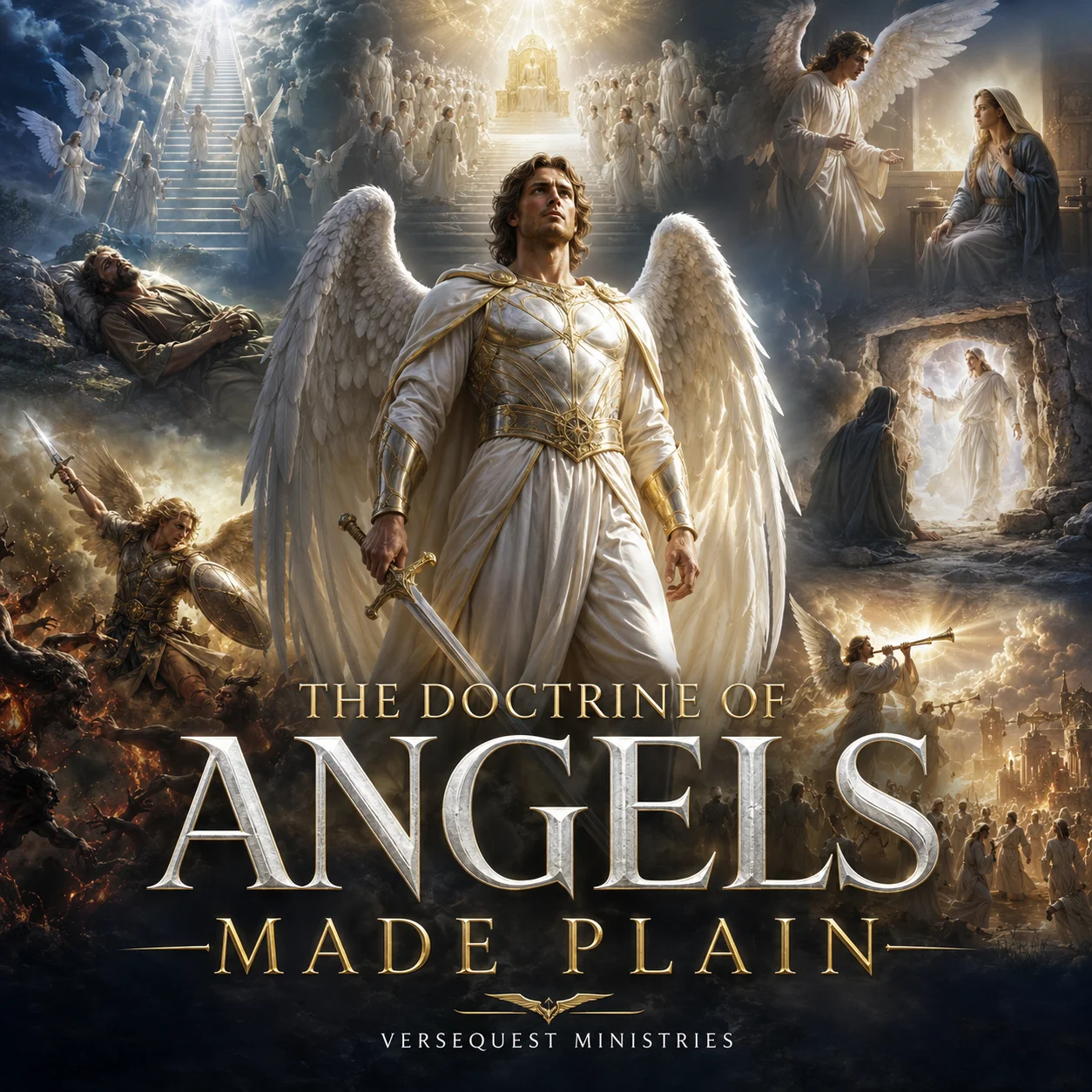
- The Doctrine of Angels Made Plain – 620-Page KJV Bible Study PDF
- The Doctrine of Angels Made Plain is a 620-page KJV Bible study that traces angels from Genesis to Revelation. This premium VerseQuest PDF explains holy angels, Christ’s supremacy over angels,…
- Original price was: $29.99.$9.99Current price is: $9.99.
- Add to cart
-
-67%
-
Prophecy Studies
-

- The Resurrection of Jesus Christ Made Plain – 501-Page KJV Bible Study
- A massive 501-page VerseQuest Ministries PDF Bible study defending and explaining the bodily resurrection of Jesus Christ from a KJV, rightly divided perspective. This 80-essay study covers the empty tomb,…
- $34.99
- Add to cart
-
-
The Rapture
-
-67%
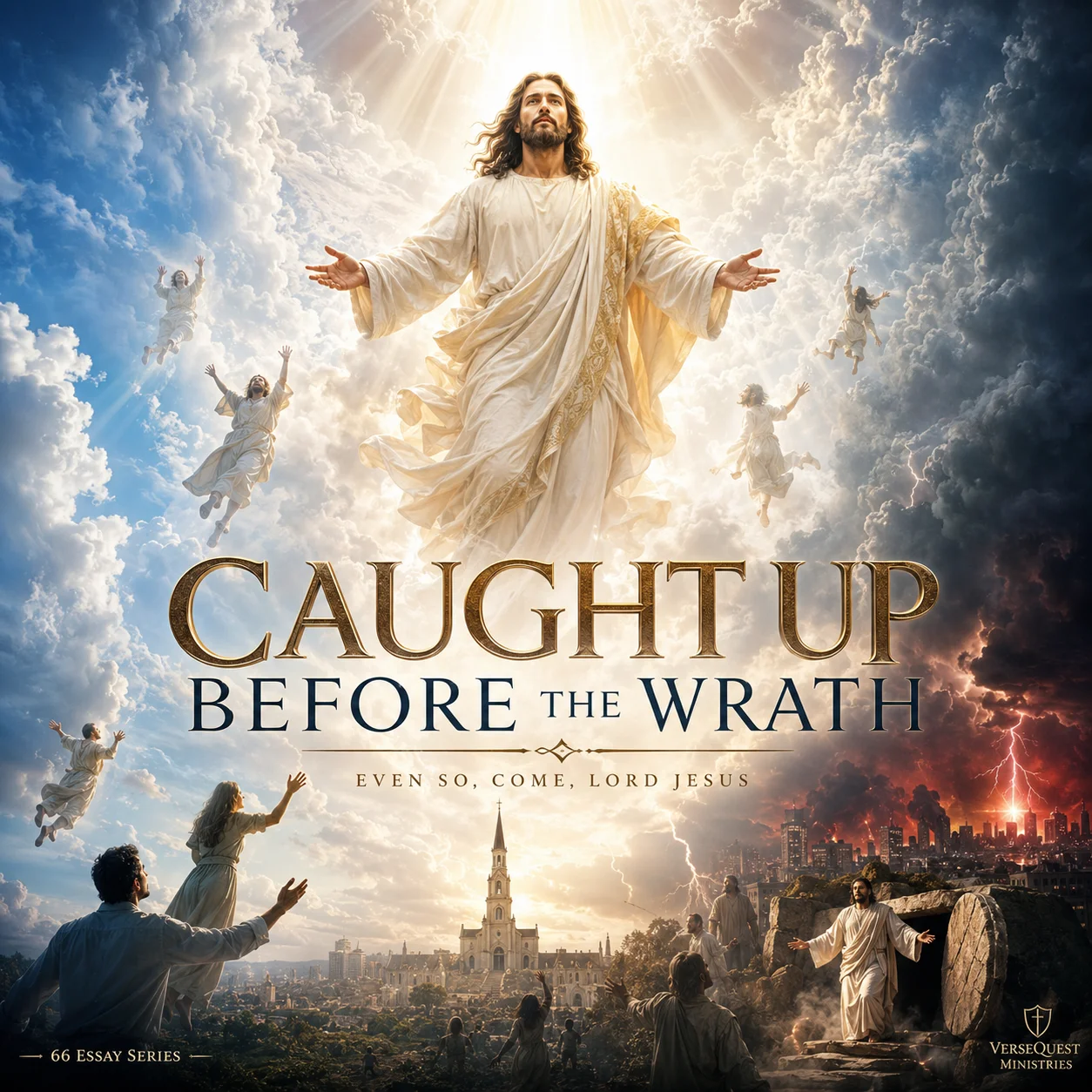
- Caught Up Before the Wrath – 66-Essay KJV Rapture Study
- Caught Up Before the Wrath is a 430-page premium KJV Bible study defending the pre-tribulation Rapture of the Church from a rightly divided, dispensational perspective. This 66-essay VerseQuest Ministries book…
- Original price was: $29.99.$9.99Current price is: $9.99.
- Add to cart
-
-67%
-
Bible Overview Series
-
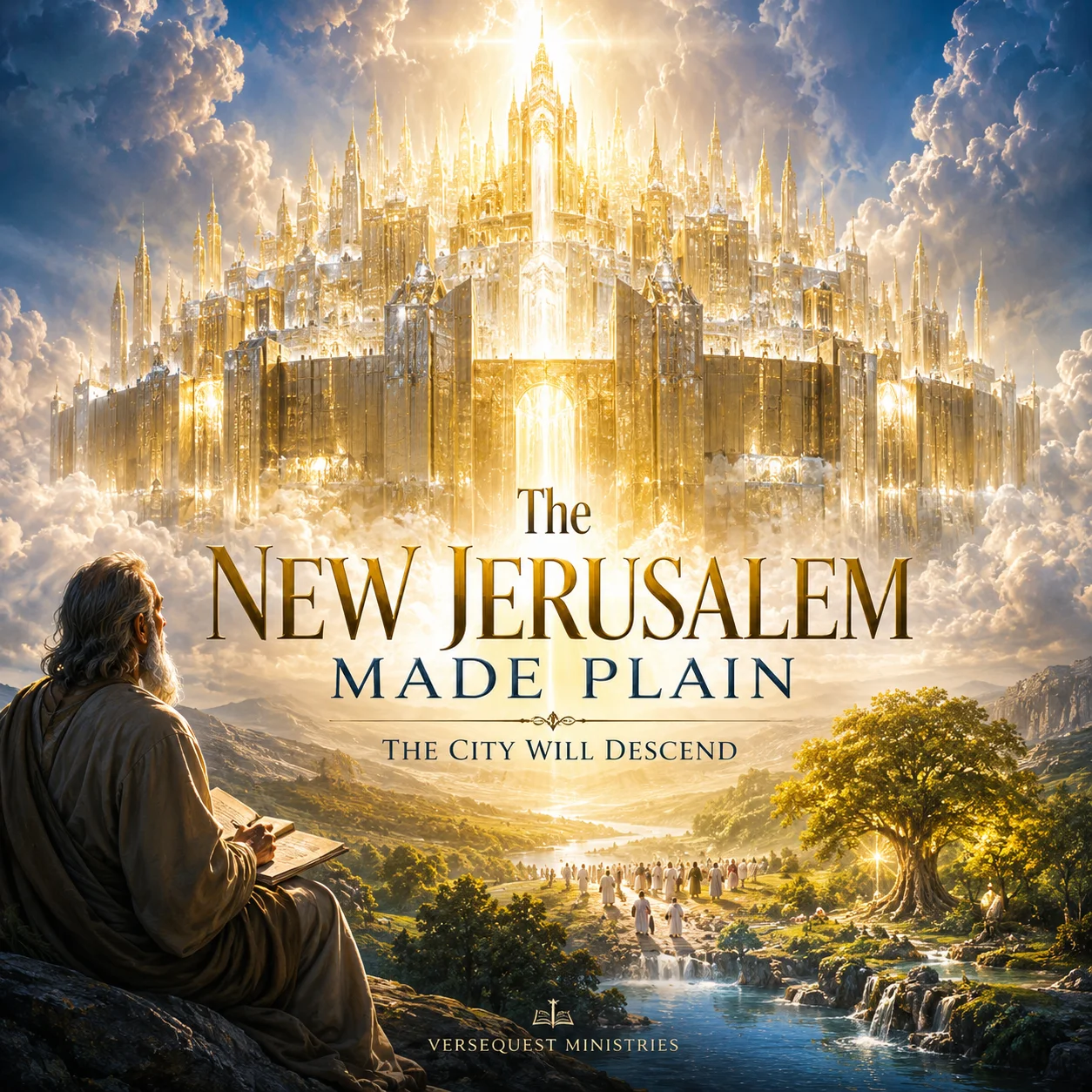
- The New Jerusalem Made Plain — 621-Page PDF Study
- The New Jerusalem Made Plain is a massive 621-page KJV/rightly divided PDF study on the literal holy city revealed in Revelation 21–22. This 100-essay book makes the New Jerusalem plain…
- $34.99
- Add to cart
-
-
Doctrine Series