
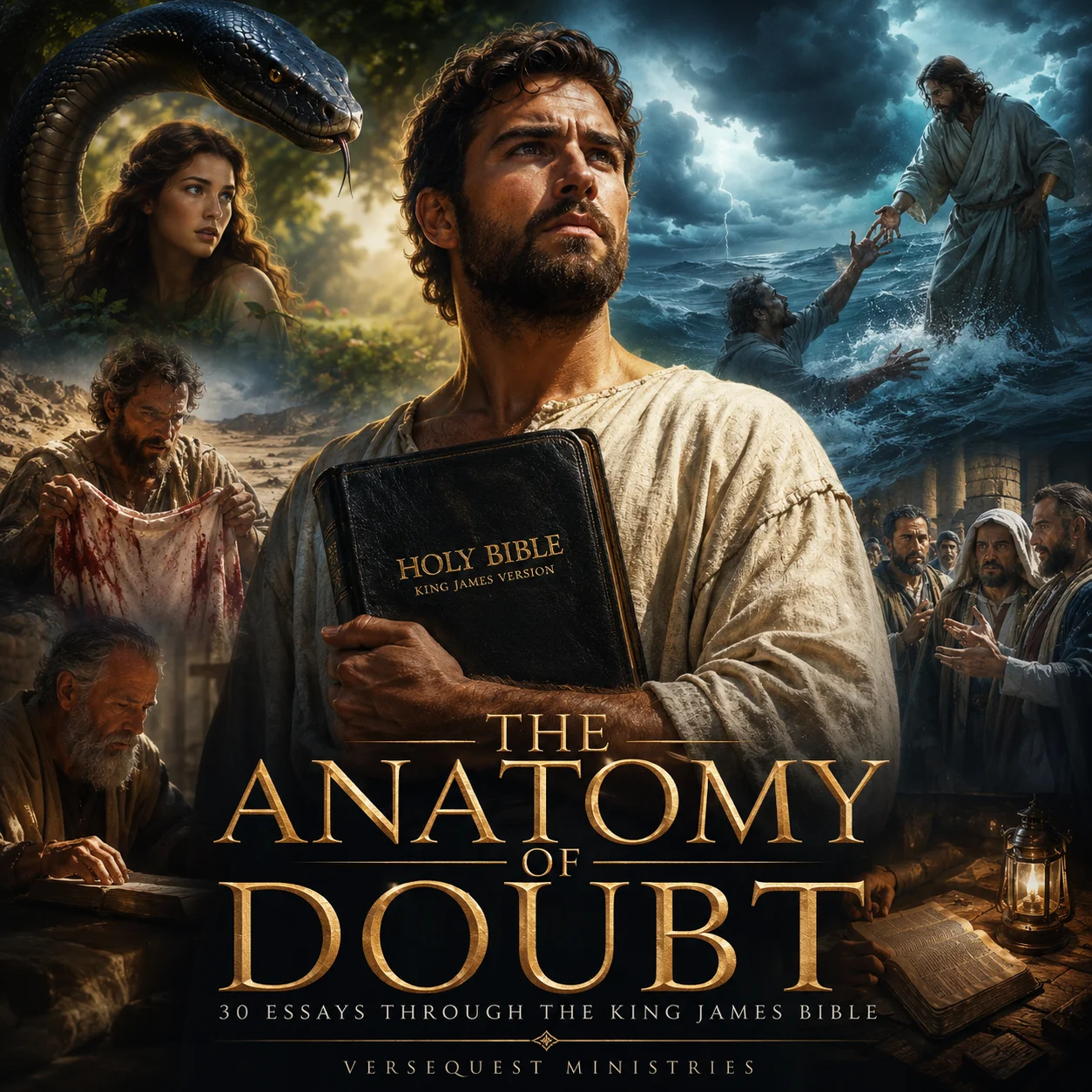
The Anatomy of Doubt: A 30-Essay KJV Bible Study on Fear, Faith, False Certainty, and the Authority of God’s Word
The Anatomy of Doubt is a 216-page downloadable PDF Bible study book containing 30 full KJV-based essays, an introduction, a conclusion, and a detailed Bible study chart. This resource examines doubt throughout the King James Bible, including weak faith, false certainty, honest questions, conscience trouble, doctrinal instability, spiritual warfare, and biblical assurance.
Designed for serious Bible students, pastors, teachers, families, and ministry leaders, this study shows that doubt is one of the devil’s oldest tactics, but it does not have to rule the believer. The answer is not fear, fog, feeling, or speculation. The answer is bringing every doubt under the final authority of God’s word.
$9.99
Description
The Anatomy of Doubt is a 216-page downloadable PDF Bible study book from VerseQuest Ministries, built around a thorough King James Bible examination of doubt, doubting, doubtful disputations, conscience trouble, false certainty, trembling faith, proud unbelief, and the devil’s oldest tactic: weakening confidence in what God said. This resource contains 30 full essays, an introduction, a conclusion, and a detailed Bible study chart at the end.
This study does not treat doubt as one flat emotional problem. The King James Bible shows that doubt can appear in many different forms. Peter doubted while walking toward Christ on the water. The crowd at Pentecost was “in doubt” and asked, “What meaneth this?” Paul stood in doubt of the Galatians because they were drifting from grace into bondage. Romans 14 warns the believer not to act against conscience, because “whatsoever is not of faith is sin.” Jacob said Joseph was “without doubt rent in pieces,” while Joseph was alive in God’s providence. The barbarians saw a viper on Paul’s hand and said, “No doubt this man is a murderer,” while their conclusion was completely wrong. This book follows those distinctions carefully and shows why a Bible believer must diagnose doubt by Scripture instead of treating every question, fear, hesitation, and uncertainty the same way.
The study also exposes doubt as one of the devil’s oldest weapons. Genesis 3 does not use the word doubt, but the anatomy is sitting there in the garden: “Yea, hath God said?” Satan does not always begin by denying God outright. He often begins by loosening the soul’s confidence in God’s words, God’s goodness, and God’s authority. This book shows how that old serpent’s method still operates through fear, fog, false evidence, religious pressure, conscience confusion, doctrinal instability, and unbelief dressed up as respectable inquiry.
This resource is especially useful for Bible students, pastors, teachers, preachers, Sunday school teachers, families, discipleship leaders, and serious readers who want a KJV-centered topical study that goes beyond shallow encouragement. It is doctrinal, practical, pastoral, and sharp. It helps readers distinguish honest questions from rebellion, weak faith from dead unbelief, biblical assurance from arrogance, conscience from legalism, and spiritual caution from double minded instability.
The central lesson of the book is clear: doubt must be brought under the authority of God’s word. The Christian life cannot be lived by fear, fog, feeling, speculation, mystical impressions, or secondhand religion. Faith comes by hearing, and hearing by the word of God. This 216-page PDF is designed for personal study, sermon preparation, teaching, discipleship, family discussion, ministry training, and serious topical Bible study.
Price: $9.99
Format: Downloadable PDF
Length: 216 pages
Includes: Introduction, 30 essays, conclusion, and bonus Bible study chart
Doubt as a spiritual tactic — The book traces how doubt can be used by the devil to weaken confidence in God’s word, beginning with Genesis 3. The authority of the King James Bible — The study treats God’s words as final authority and shows that doubt must be judged by Scripture rather than emotion, tradition, or speculation. Trembling faith versus dead unbelief — Peter’s sinking doubt is distinguished from the hostile unbelief of those who resisted Christ’s words and works. False certainty — The book shows how men can be absolutely confident and absolutely wrong when they interpret life by partial evidence, grief, superstition, or pride. Honest questions versus rebellion — Acts 2 and Acts 10 show honest confusion, while John 10 exposes proud unbelief pretending to seek clarity. Conscience and Christian liberty — Romans 14 is used to show that weak brethren must be received, conscience must not be violated, and liberty must not become pride. Doubtful disputations — The study warns against arguments that unsettle weak believers rather than edify them in truth. Doctrinal drift — Galatians 4 shows how a preacher may rightly stand in doubt of those being moved from grace into bondage. Double minded instability — James 1 shows how unresolved doubt can become instability in every area of life. Biblical assurance — The book distinguishes sinful doubt from holy confidence when God has spoken clearly. The cure for doubt through Scripture — Romans 10:17 anchors the study’s answer: faith comes by hearing the word of God. Pastoral handling of doubters — The book teaches how to help sinking saints without coddling unbelief or crushing bruised reeds.
The central argument of this book is that doubt must be diagnosed biblically and brought under the final authority of God’s word. Doubt is not always the same spiritual condition. Sometimes it comes from fear, grief, confusion, conscience trouble, weak faith, doctrinal drift, false certainty, or rebellion. The Bible gives enough categories to handle each form carefully.
One of the major observations in the study is that false certainty can be just as dangerous as uncertainty. Jacob was certain Joseph was dead, but he was wrong. The barbarians were certain Paul was a murderer, but they were wrong. Job’s friends were certain they understood Job’s suffering, but they were wrong. Confidence is only as good as its authority.
The study makes an important distinction between Peter’s doubt and the unbelief of Christ’s enemies. Peter doubted while moving toward Christ and cried, “Lord, save me.” The Jews in John 10 demanded plain speech while rejecting Christ’s words and works. The difference between trembling faith and dead unbelief is one of the most important distinctions in the book.
Romans 14 supplies a major practical lesson: a believer must not violate conscience. “Whatsoever is not of faith is sin.” At the same time, conscience must be trained by Scripture. A weak conscience should not be crushed, but it also should not be enthroned as final authority.
James 1 shows that doubt tolerated long enough becomes instability. The double minded man is unstable in all his ways because divided trust cannot produce steady living. A believer must learn to ask God for wisdom in faith, nothing wavering.
The book also emphasizes that assurance is not arrogance. Biblical confidence rests on what God has written. Humility does not mean pretending the Bible is unclear where God has spoken plainly. True humility submits to Scripture.
The central cure for doubt is not emotion, mystical impressions, signs, or religious atmosphere. Romans 10:17 gives the answer: faith comes by hearing the word of God. The Book gives light, doctrine, promises, examples, warnings, and correction.
Questions for further study include: What kind of doubt am I dealing with? Is it fear, ignorance, conscience, pride, rebellion, or false certainty? Has God already spoken clearly on this matter? Am I asking for light, or am I delaying obedience? Is my conscience trained by Scripture? Am I confusing assurance with arrogance? Am I letting fear or feeling outrank the word of God?
This resource can be used for personal Bible study by readers who want to understand what the King James Bible actually says about doubt, fear, faith, conscience, false certainty, and assurance. Each essay can be read devotionally, studied with an open Bible, or used as a topical chapter for deeper meditation.
Pastors and preachers can use the book for sermon preparation, especially when teaching on fear, faith, spiritual warfare, Genesis 3, Peter walking on the water, Romans 14, James 1, assurance of salvation, or the danger of unbelief. The essays provide doctrinal categories, memorable lines, KJV cross-reference direction, and strong teaching flow.
Sunday school teachers and small group leaders can use this PDF for a multi-week topical Bible study. The 30 essays naturally divide into a month-long study, a 10-week class with three essays per week, or a shorter series focused on selected themes such as weak faith, false certainty, conscience, and spiritual stability.
Families can use the book for family discipleship, especially with older children, teens, and adults who are learning how to handle questions, fears, and spiritual uncertainty biblically. The book helps distinguish honest questions from unbelief and trains readers to bring fear and confusion to Scripture.
Bible teachers and discipleship leaders can use it for ministry training, particularly when helping wounded believers, weak brethren, or Christians struggling with assurance, conscience, or doctrinal confusion. The essays provide practical guidance on correcting doubt without crushing sincere believers.
The included chart can be used as a visual review tool for classrooms, sermon handouts, Bible study summaries, or printed reference material. It gives a condensed overview of the major forms of doubt and the biblical answer to each.
A King James Bible should remain the primary resource for this study, especially the passages listed in the Related Scriptures section.
A Strong’s Concordance or complete KJV concordance is useful for tracing the words doubt, doubted, doubteth, doubtful, faith, believe, wavering, double minded, assurance, and conscience.
A Bible dictionary can help readers study related terms such as faith, conscience, unbelief, temptation, assurance, and doctrine, while keeping Scripture as the final authority.
A cross-reference Bible is recommended for following connections between Genesis 3, Matthew 14, John 10, Romans 14, James 1, and 1 John.
A topical Bible index can help expand the study into related doctrines such as spiritual warfare, fear, prayer, faith, Christian liberty, assurance of salvation, and the authority of Scripture.
The included The Anatomy of Doubt KJV Bible Study Chart should be used as a visual companion to the 30 essays.
Related study areas to pursue after this book include faith and prayer, Christian liberty, assurance of salvation, spiritual warfare, the authority of Scripture, the conscience of the believer, and law versus grace.
Related products
-
Bible Study Guide For Joshua
-
- Joshua Essentials Guide: A Beginner’s KJV Guide to Courage, Conquest, Inheritance, and Covenant
- The Joshua Essentials Guide is a 120-page downloadable and printable KJV study designed for beginners, growing Christians, Bible teachers, and anyone seeking a clear overview of Joshua without beginning with…
- $14.99
- Add to cart
-
-
Premium Studies
-
-25%
- The Doctrine of Hell — Premium Essay Series PDF
- A 383-page premium VerseQuest PDF study book containing 54 KJV essays on hell, fire, darkness, judgment, the lake of fire, the second death, and Jesus Christ as the only escape.
- Original price was: $39.99.$29.99Current price is: $29.99.
- Add to cart
-
-25%
-
2 Timothy Bible Commentary
-
- First and Second Timothy Without Confusion – 200-Essay KJV Bible Study
- First and Second Timothy Without Confusion is a massive 1,531-page downloadable PDF Bible-study book containing 200 detailed essays on Paul’s two inspired epistles to Timothy. Written from a firm King…
- $41.99
- Add to cart
-
-
Jude Bible Study
-
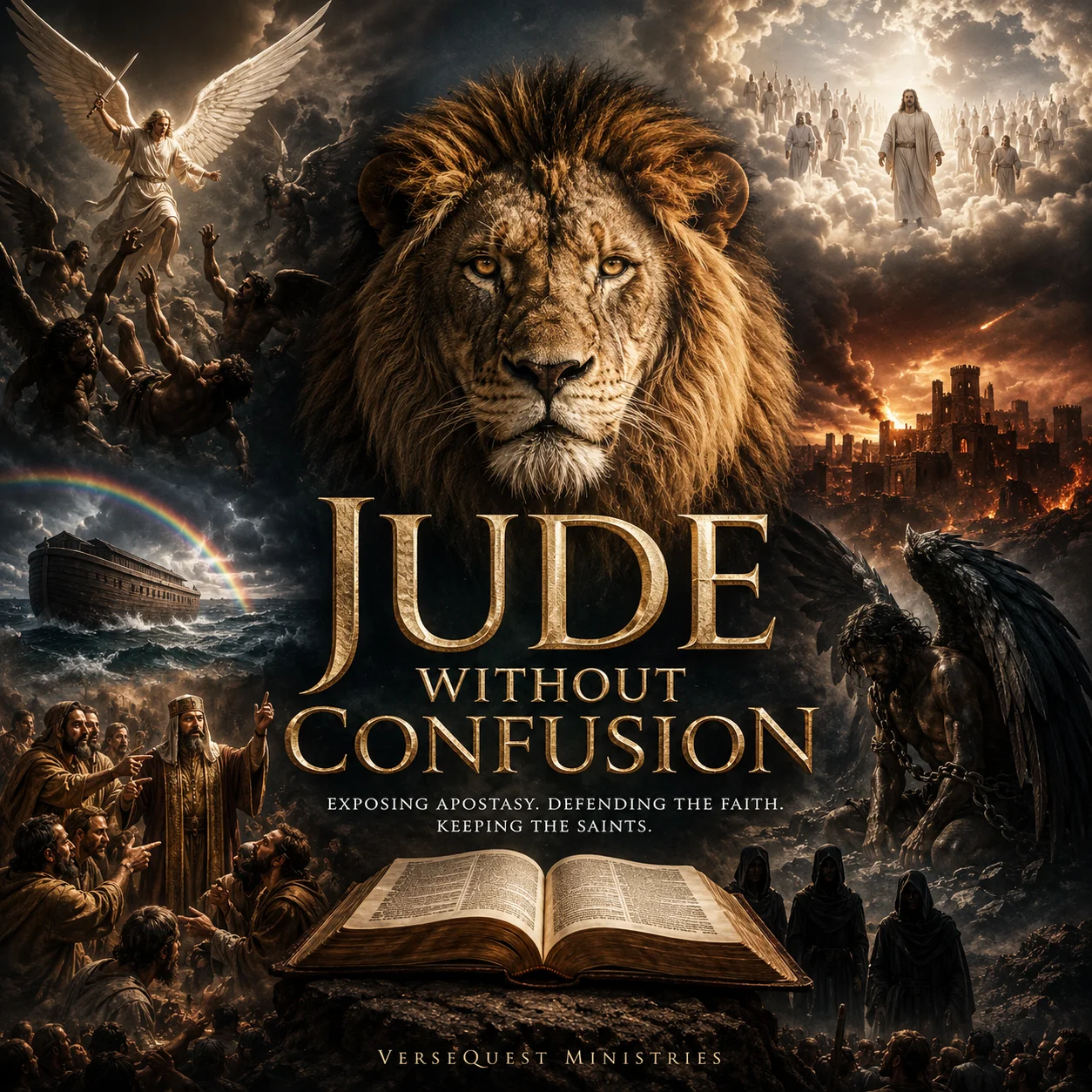
- Jude Without Confusion: Exposing Apostasy, Defending the Faith, and Keeping the Saints
- Jude Without Confusion is a 333-page, verse-centered study exposing apostasy, false teachers, fallen angels, spiritual rebellion, the prophecy of Enoch, and the believer’s responsibility to contend for the faith. Written…
- $9.99
- Add to cart
-
-
Overwhelming Fear
-
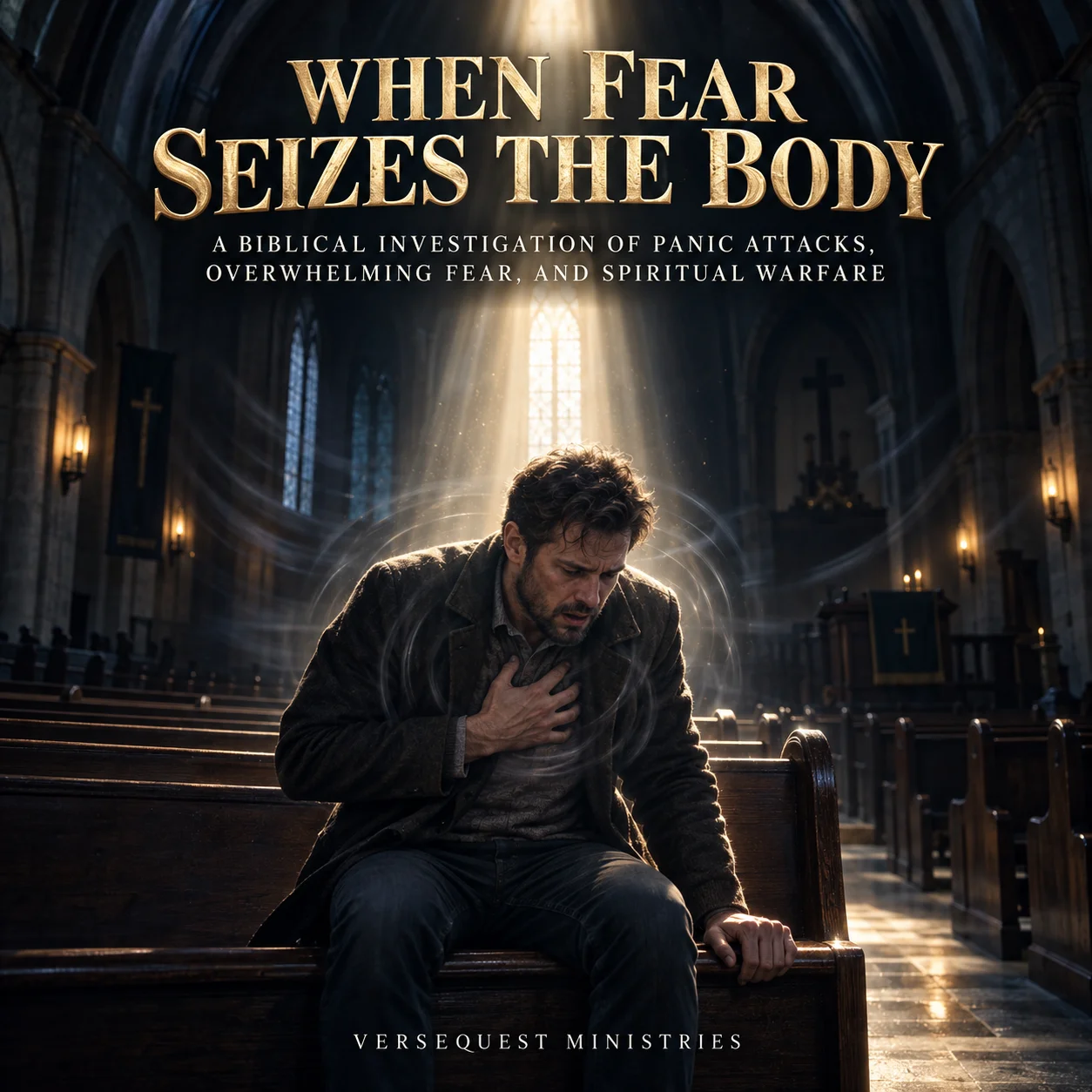
- When Fear Seizes the Body: A Biblical Investigation of Panic Attacks, Overwhelming Fear, and Spiritual Warfare
- When Fear Seizes the Body is a 160-page downloadable KJV Bible-study book examining panic attacks, overwhelming bodily fear, faith, prayer, spiritual warfare, historical explanations, compassionate ministry, and responsible practical help.…
- $14.99
- Add to cart
-