
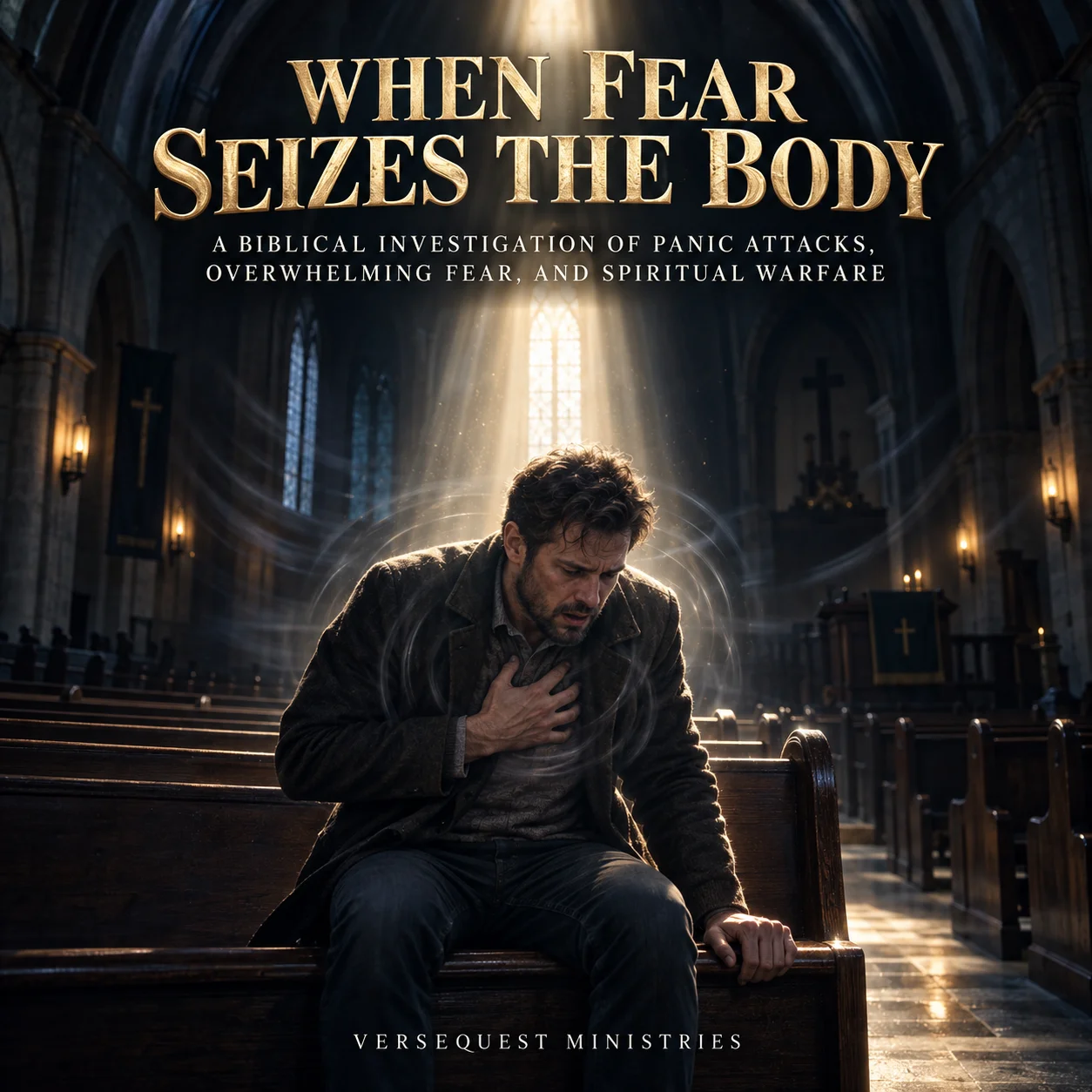
When Fear Seizes the Body: A Biblical Investigation of Panic Attacks, Overwhelming Fear, and Spiritual Warfare
When Fear Seizes the Body is a 160-page downloadable KJV Bible-study book examining panic attacks, overwhelming bodily fear, faith, prayer, spiritual warfare, historical explanations, compassionate ministry, and responsible practical help.
Through twenty detailed studies, the book considers the terrifying physical experience of panic, the fear of another attack, the influence of past danger, “soldier’s heart,” Elijah’s exhaustion, David’s overwhelming horror, Paul’s inward fears, panic before the pulpit, speechless prayer, spiritual discernment, and grace for the next breath.
The PDF includes a complete introduction, twenty chapters, a thorough conclusion, and a richly illustrated VerseQuest reference chart. It is designed for personal Bible study, pastors, preachers, teachers, ministry workers, families, and serious readers seeking a compassionate, doctrinally grounded treatment of this difficult subject.
Format: Downloadable PDF
Length: 160 pages
Price: $14.99
$14.99
Description
When Fear Seizes the Body is a substantial 160-page downloadable PDF book examining panic attacks, overwhelming bodily fear, spiritual warfare, biblical faith, compassionate ministry, and responsible practical help. Written from a King James Bible-centered perspective, this study takes seriously both the physical reality of panic and the spiritual questions frightened believers often face.
A panic attack is not ordinary worry dressed in a Sunday suit. It can seize the entire body with a pounding heart, tightening chest, trembling limbs, confused thoughts, choking sensations, dizziness, weakness, and the terrifying certainty that death, collapse, or loss of control is near. Telling a person in that condition to “calm down” is about as useful as telling a drowning man to stop being wet. This book begins where compassionate ministry must begin: by listening carefully to what the sufferer is experiencing before rushing to correct, condemn, or diagnose.
The study explains why the body’s natural alarm system may continue sounding when no immediate danger can be identified. It considers how exhaustion, prolonged pressure, earlier hostility, physical weakness, fearful interpretations, and past danger may contribute to overwhelming reactions. It refuses to reduce man to nerves, chemicals, or brain tissue while also refusing to pretend that the body is an imaginary attachment to the spiritual life. Man is a living soul with a spirit and a body, and biblical discernment must take the whole person seriously.
Important distinctions are established throughout the book. A single panic attack is not automatically panic disorder. Bodily terror is not always the same as spiritual cowardice. Experiencing fear does not prove the absence of faith. Inability to speak or pray coherently during severe distress does not mean that God has abandoned the believer. Seeking responsible evaluation or competent assistance is not necessarily unbelief. Modern terminology may help describe recurring patterns, but a diagnosis must never become a prison, an identity, or a substitute for understanding the individual person.
Several chapters investigate how earlier generations attempted to explain overwhelming fear before the modern term “panic attack” became common. The book follows descriptions of distress from ancient and medieval explanations through melancholy, nervous exhaustion, anxiety neurosis, “soldier’s heart,” “irritable heart,” effort syndrome, and the eventual classification of panic disorder. These historical chapters demonstrate that the symptoms are old even when the terminology is new. Changing the name on the folder does not solve every mystery contained inside it.
The biblical heart of the study examines David’s description of a heart “sore pained,” the “terrors of death,” fearfulness, trembling, and overwhelming horror in Psalm 55. It considers the troubled silence of Psalm 77, the trusting fear of Psalm 56, Elijah’s exhaustion beneath the juniper tree, Paul’s admission that “within were fears,” and the Holy Ghost’s help when believers do not know what they should pray for as they ought. Scripture does not airbrush its servants, manufacture plastic saints, or pretend that mature believers never tremble. It records human weakness honestly while directing the sufferer toward the sufficiency of God.
The book also establishes careful biblical boundaries concerning spiritual warfare. Satan can exploit fear, exhaustion, isolation, confusion, physical weakness, painful memories, and distorted conclusions. That does not prove that every racing heart is directly produced by a devil. The Christian must reject both secular blindness and religious superstition. Spiritual warfare is real, but religious guesswork does not become discernment merely because somebody carries a Bible while doing it.
Special attention is given to panic before the pulpit. Some preachers and teachers endure their most severe symptoms immediately before standing to proclaim the word of God. Public responsibility, physical sensitization, fear of failure, exhaustion, spiritual pressure, and possible opposition from the enemy can converge at the very moment a servant is expected to appear composed. A preacher who walks into the pulpit while his body is begging him to run may demonstrate more courage than the confident man who has never fought that battle.
This book also exposes the damage caused by lazy religious answers. Statements such as “Just trust God,” “Real Christians have peace,” “You must have unconfessed sin,” or “Rebuke the devil” can crush someone who is already frightened and ashamed. Biblical compassion does not agree with every fearful conclusion, but it listens, remains steady, speaks truth gently, prays without performing, and refuses to turn another person’s suffering into a platform for religious superiority.
The final chapters bring prayer, physicians, pastoral care, fellowship, rest, practical assistance, and spiritual discernment into their proper relationship. Scripture supplies final doctrinal authority and spiritual truth, while qualified professionals may investigate physical or psychological conditions. The book neither bows blindly before human expertise nor condemns every form of professional assistance as unbelief. God may provide help through prayer, Scripture, rest, nourishment, fellowship, corrected habits, wise counsel, competent care, or several means working together.
The 160-page digital book contains a thorough introduction, twenty complete studies, a substantial conclusion, and a richly illustrated VerseQuest reference chart summarizing the book’s central distinctions and lessons. It is designed for personal study, pastoral preparation, ministry training, sermon development, Sunday school instruction, small-group discussion, family study, and compassionate Christian care.
This is a downloadable PDF product priced at $14.99. It can be read digitally or printed for personal study. It is a biblical teaching resource rather than a medical handbook and does not attempt to diagnose or prescribe treatment for individual conditions.
The physical reality of panic — Panic may involve a pounding heart, breathlessness, dizziness, trembling, weakness, confused thinking, and the terror of death or collapse. The body’s danger alarm — A protective physical response may sound without an identifiable present threat or remain active after the original danger has passed. The whole nature of man — Biblical understanding must account for spirit, soul, and body without reducing man to chemistry or treating the body as irrelevant. Panic attacks and panic disorder — One episode must not automatically be confused with a recurring disorder involving repeated attacks, anticipatory fear, avoidance, and behavioral change. The fear of another attack — Fear can create a secondary prison in which the sufferer constantly inspects bodily sensations and reorganizes life around avoidance. Past danger and present watchfulness — Hostility, violence, instability, humiliation, deprivation, and prolonged pressure can leave the body expecting another blow. Historical explanations of panic — The book surveys ancient theories, melancholy, nervous disorders, “soldier’s heart,” neurasthenia, anxiety neurosis, and modern classifications. Honesty in Scripture — David, Elijah, Paul, and other biblical servants were not presented as emotionless religious statues. Faith operating during fear — Biblical trust is not always an immediate feeling of calm; it may be obedience and confidence in God while the body is still trembling. Standing and state — Panic may disturb a believer’s state, feelings, concentration, and sense of assurance without altering his standing and security in Christ. Speechless prayer — God is not dependent upon polished sentences, and the Holy Ghost helps believers when distress disrupts coherent prayer. Spiritual warfare — Satan may exploit bodily weakness and fear, but Scripture does not authorize blaming every physical episode directly upon a devil. Discernment without superstition — Bodily factors, past experiences, fearful interpretations, circumstances, exhaustion, sin, and spiritual opposition must not be carelessly confused. Panic in Christian service — Preachers, teachers, missionaries, and other servants may endure overwhelming symptoms immediately before fulfilling spiritual responsibilities. Compassion before correction — Steady presence, patient listening, prayer, and truthful reassurance should precede lectures and accusations. The danger of religious clichés — Careless spiritual statements can increase fear, isolation, guilt, and shame. Prayer and responsible assistance — Prayer, pastoral support, rest, wise counsel, physical evaluation, and competent care may work together without contradicting faith. Grace for gradual progress — Help may come through one breath, one prayer, one decision, and one faithful day at a time. Security in Jesus Christ — A racing heart cannot reach into heaven, erase the blood-bought record, or remove a redeemed soul from Christ’s hand.
Central Argument
Panic attacks are genuine, overwhelming experiences that may involve the body, thoughts, circumstances, past experiences, and spiritual pressures. Scripture does not require believers to deny the reality of those experiences. It requires them to bring every conclusion under the authority of God’s word while receiving truth, compassion, prayer, wise companionship, and responsible assistance.
Major Observations
- A bodily alarm can be real even when the danger it announces is not present.
- The absence of visible danger does not make the sufferer’s physical experience imaginary.
- Panic may arise suddenly, leaving the mind scrambling to explain what the body is doing.
- Severe distress may interfere with speech, concentration, movement, and coherent prayer.
- One panic attack does not automatically establish panic disorder.
- Repeated fear of another attack may become more restrictive than the original episode.
- Avoidance can provide temporary relief while gradually allowing fear to control increasingly large portions of life.
- Earlier danger may train the body to remain watchful after the threat has ended.
- Historical labels have changed repeatedly, but the underlying human suffering is not new.
- Strong believers may experience inward fear without losing salvation, usefulness, or the grace of God.
Important Distinctions
- Fear and unbelief are not always identical. A believer may feel afraid and still choose to trust God.
- Weakness and wickedness are not interchangeable. Human infirmity should not automatically be treated as deliberate rebellion.
- Panic attack and panic disorder are not synonymous. A single event must not be turned into a permanent self-diagnosis.
- Physical symptoms and spiritual causes are not identical. Spiritual warfare may be involved without being the direct source of every symptom.
- Standing and state must remain distinct. A believer’s feelings may fluctuate while his position in Christ remains secure.
- Compassion and agreement are not the same. Christians can take suffering seriously without affirming every fearful conclusion.
- Professional assistance and unbelief are not synonymous. Responsible evaluation does not require surrendering biblical authority.
- A label and an identity are not the same. Terminology may describe a pattern, but it must not define the entire person.
Doctrinal Conclusions
God knows the difference between rebellion and infirmity. He understands the believer’s frame and remembers that man is dust. Christ remains touched with the feeling of human infirmities, and the Holy Ghost helps when coherent prayer becomes difficult.
Faith is not emotional anesthesia. It is confidence in God’s word exercised in a fallen world through a weak body. The shield of faith is carried because fiery darts are flying, not because the battlefield has disappeared.
Satan is real, spiritual warfare is real, and believers must remain sober and vigilant. Nevertheless, blaming every physical symptom directly upon a devil is superstition rather than biblical discernment.
The believer’s salvation rests in Christ rather than in a steady pulse, perfect emotional calm, uninterrupted concentration, or freedom from bodily distress. Panic may disrupt feelings of assurance, but it cannot alter the finished work of Jesus Christ.
Memorable Teaching Points
- A panic attack is not ordinary worry wearing a Sunday suit.
- Telling a panicking person to calm down is about as useful as telling a drowning man to stop being wet.
- An alarm can be false and still be loud enough to wake the entire house.
- Yesterday’s battlefield can continue firing ammunition into today.
- Faith is not always the absence of trembling; sometimes it is obedience while trembling.
- A cracked vessel can still carry good water, and a trembling hand can still hold a sharp sword.
- Religious guesswork is still guesswork, even when it carries a Bible under its arm.
- The devil is not a gentleman, and war is not a church picnic with darker tablecloths.
- God’s armour is not opposed to common sense.
- A racing heart cannot outrun the preserving hand of Jesus Christ.
Subjects for Further Study
- How does Scripture distinguish sinful fear from bodily weakness?
- What can David’s psalms teach believers about honest prayer during overwhelming distress?
- Why did God address Elijah’s physical depletion before giving him further work?
- How does Romans 8 describe the Holy Ghost’s ministry during human infirmity?
- What does Paul’s admission of “fears within” teach about mature Christian service?
- How can churches respond compassionately without abandoning doctrinal truth?
- What forms of avoidance allow fear to gain authority over daily decisions?
- How can Christians practice spiritual vigilance without becoming superstitious?
- What does eternal security contribute to the believer’s stability during frightening bodily experiences?
- How should prayer, pastoral care, fellowship, rest, and responsible professional assistance relate to one another?
11. PRODUCT SHORT DESCRIPTION
When Fear Seizes the Body is a 160-page downloadable KJV Bible-study book examining panic attacks, overwhelming bodily fear, faith, prayer, spiritual warfare, historical explanations, compassionate ministry, and responsible practical help.
Through twenty detailed studies, the book considers the terrifying physical experience of panic, the fear of another attack, the influence of past danger, “soldier’s heart,” Elijah’s exhaustion, David’s overwhelming horror, Paul’s inward fears, panic before the pulpit, speechless prayer, spiritual discernment, and grace for the next breath.
The PDF includes a complete introduction, twenty chapters, a thorough conclusion, and a richly illustrated VerseQuest reference chart. It is designed for personal Bible study, pastors, preachers, teachers, ministry workers, families, and serious readers seeking a compassionate, doctrinally grounded treatment of this difficult subject.
Format: Downloadable PDF
Length: 160 pages
Price: $14.99
Personal Bible study: Readers can work through the twenty studies individually, examining the principal passages and comparing fearful sensations with the unchanging truths of Scripture. The studies provide language for honest prayer while helping readers distinguish bodily experiences from spiritual conclusions.
Sermon preparation: Pastors and preachers can use the book to prepare messages on fear, infirmity, prayer, spiritual warfare, compassion, Christian service, Elijah’s exhaustion, David’s distress, Paul’s inward fears, and the sufficiency of grace.
Sunday school instruction: Teachers can develop topical lessons that correct common misconceptions about fear and faith. The material is particularly valuable for showing that biblical strength does not require believers to lie about human weakness.
Pastoral care: Ministers can use the book to become more careful listeners and avoid reducing every frightening episode to weak faith, hidden sin, or direct demonic activity. It provides a balanced framework for offering Scripture, prayer, companionship, and responsible practical direction.
Small-group discussion: Churches and Bible-study groups can examine one chapter at a time, discuss the related passages, and consider how believers should respond when someone is overwhelmed by fear.
Discipleship: Mature Christians can use the material to help frightened believers understand their security in Christ, test fearful conclusions by Scripture, recognize avoidance patterns, and take faithful steps without pretending the struggle is unreal.
Family study: Families can use selected chapters to discuss bodily fear, prayer, compassion, spiritual warfare, and the importance of seeking help without shame. Sensitive subjects should be presented according to the age and understanding of those involved.
Ministry training: Pastors, teachers, counselors, and ministry workers can use the historical and biblical distinctions to improve how they respond to suffering people. The book is especially useful for training workers not to confuse assumption with discernment.
Topical teaching: The included reference chart provides a visual summary of the book’s leading principles and can support lessons on panic, faith, prayer, the whole person, spiritual warfare, and compassionate Christian care.
A King James Bible for examining every passage in its complete biblical context.
A Strong’s Exhaustive Concordance for tracing words connected with fear, trembling, horror, anguish, infirmity, comfort, trust, and courage.
A reliable Bible dictionary for studying biblical terms, historical settings, physical customs, and the circumstances surrounding David, Elijah, Paul, Timothy, and Job.
A treasury of cross-references for following the Bible’s interconnected teaching concerning fear, bodily weakness, spiritual warfare, prayer, suffering, and divine comfort.
A dispensational Bible study resource that preserves the distinctions between Israel and the Church, salvation and discipleship, standing and state, and doctrinal interpretation and practical application.
A topical study of the armour of God in Ephesians 6:10–18 for understanding submission, resistance, truth, righteousness, faith, salvation, Scripture, and prayer in spiritual conflict.
A detailed study of Romans 8 for the ministry of the Spirit, the believer’s security in Christ, divine intercession, suffering, hope, and inseparable love.
A character study of Elijah in 1 Kings 17–19 for examining courage, exhaustion, isolation, physical need, spiritual discouragement, and God’s patient restoration.
A study of David’s psalms of distress for biblical language that acknowledges fear honestly while turning toward God.
A study of Paul’s sufferings in 2 Corinthians for a biblical understanding of weakness, pressure, fear, comfort, grace, and power.
The included VerseQuest illustrated reference chart for reviewing the book’s primary distinctions, Scripture lessons, practical counsel, and central doctrinal conclusion.
Related products
-
guarding your thoughts
-

- The Guarded Mind – 50 KJV Biblical Studies on Fear, Anxiety, Lies, and Spiritual Strongholds
- Guard your heart and mind with fifty thorough, Scripture-filled studies confronting fear, anxiety, accusation, temptation, bitterness, distraction, comparison, false guidance, and spiritual strongholds. This 351-page digital PDF uses the King…
- $9.99
- Add to cart
-
-
Grace for the Wasted Years
-

- Grace for the Wasted Years — 237-Page KJV Bible Study PDF
- Grace for the Wasted Years is a 237-page downloadable KJV Bible study for believers burdened by lingering guilt, painful memories, damaged relationships, lost opportunities, and the fear that too much…
- $19.99
- Add to cart
-
-
Biblical Courage
-
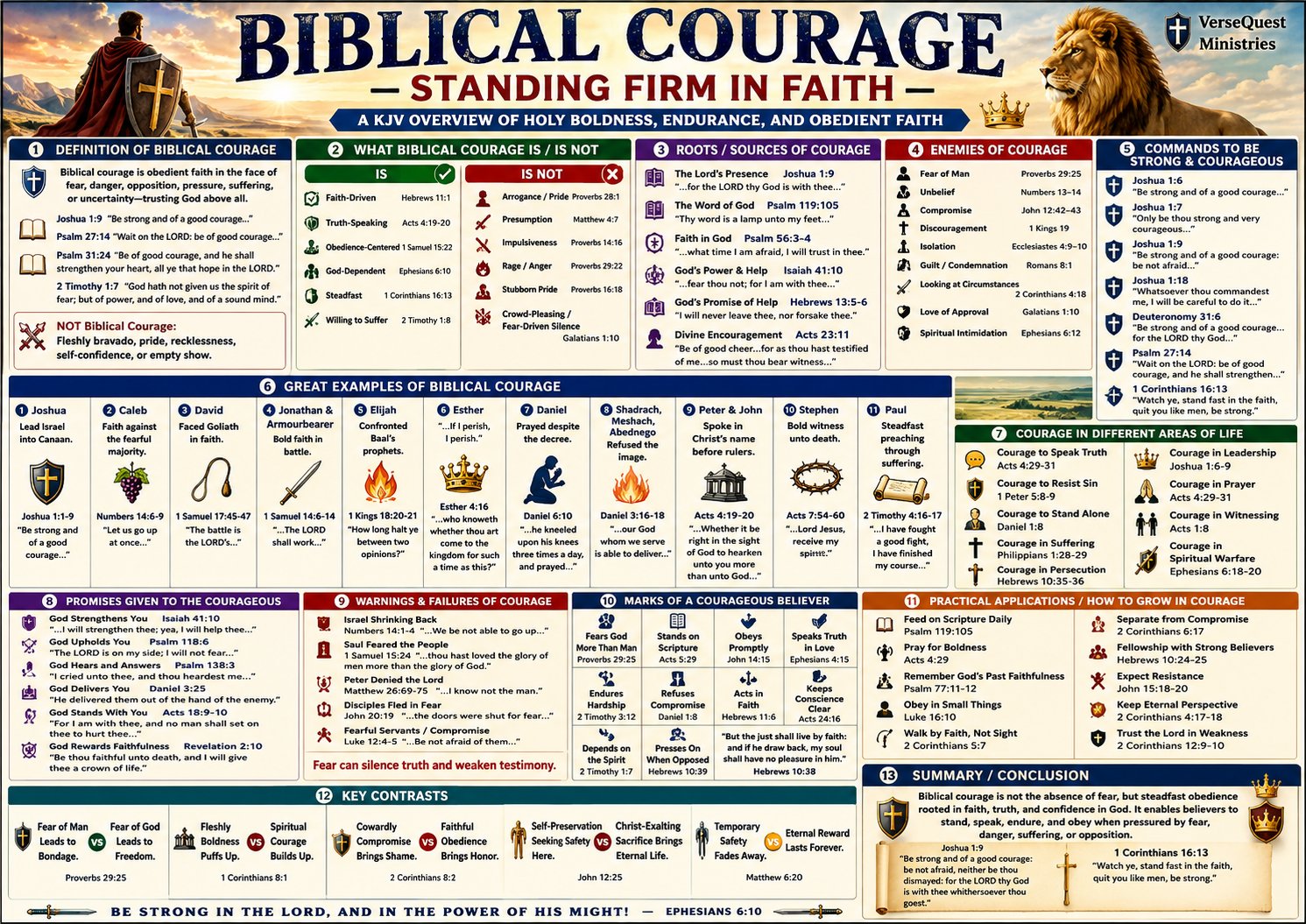
- Biblical Courage Bible Study Chart – Standing Firm in Faith, Holy Boldness, and Obedient Endurance (KJV)
- Stand firm in faith with this detailed KJV Bible study chart covering biblical courage, holy boldness, fear, endurance, obedient faith, spiritual warfare, persecution, and courageous Bible examples.
- $3.99
- Add to cart
-
-
Christian Living
-
-50%
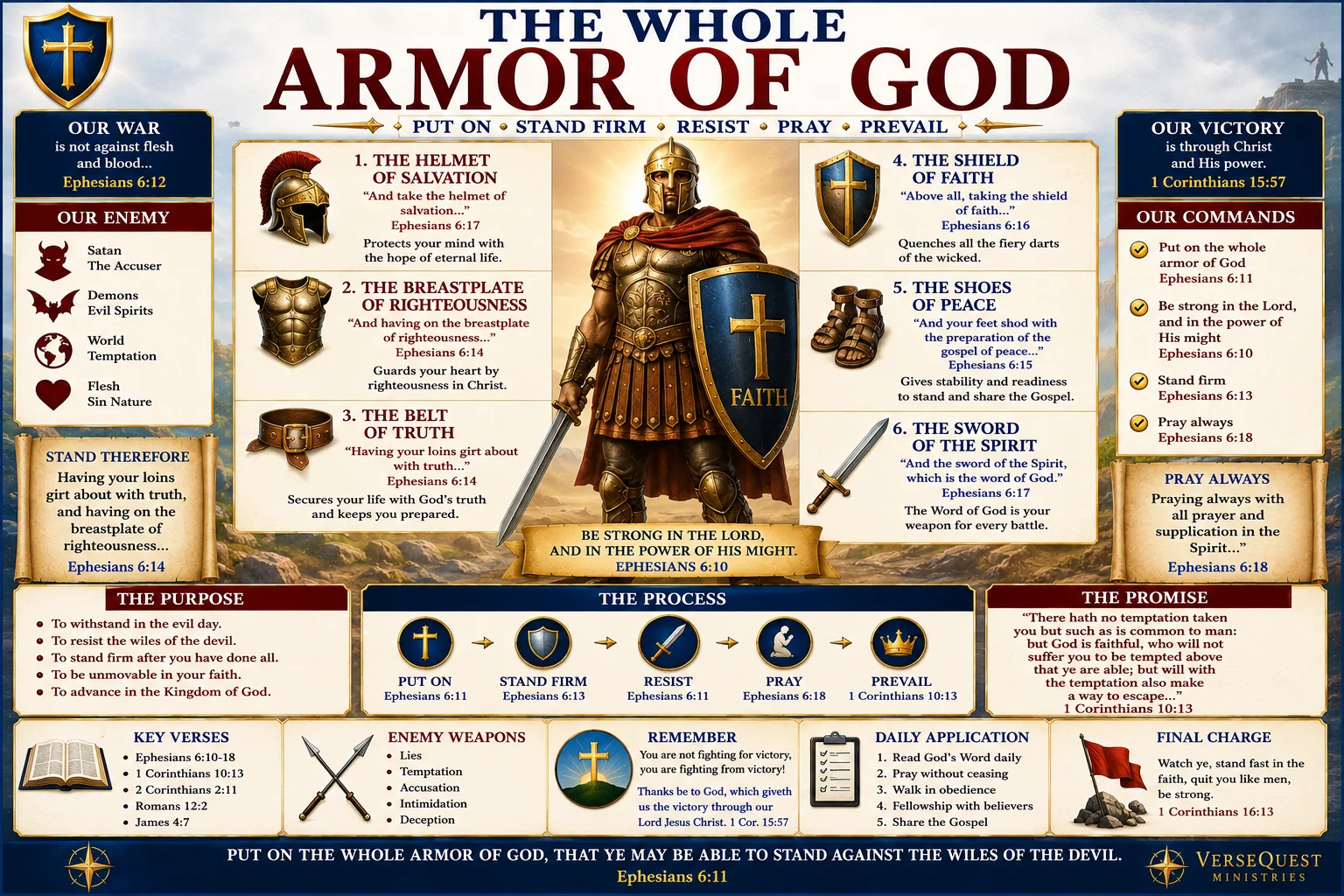
- The Whole Armor of God Chart — KJV Bible Study
- Premium printable KJV Bible study chart explaining the whole armor of God from Ephesians 6, including the helmet, breastplate, belt, shield, shoes, sword, prayer, and spiritual victory in Christ.
- Original price was: $10.00.$4.99Current price is: $4.99.
- Add to cart
-
-50%
-
Angels
-
-67%

- The Doctrine of Angels Made Plain – 620-Page KJV Bible Study PDF
- The Doctrine of Angels Made Plain is a 620-page KJV Bible study that traces angels from Genesis to Revelation. This premium VerseQuest PDF explains holy angels, Christ’s supremacy over angels,…
- Original price was: $29.99.$9.99Current price is: $9.99.
- Add to cart
-
-67%