
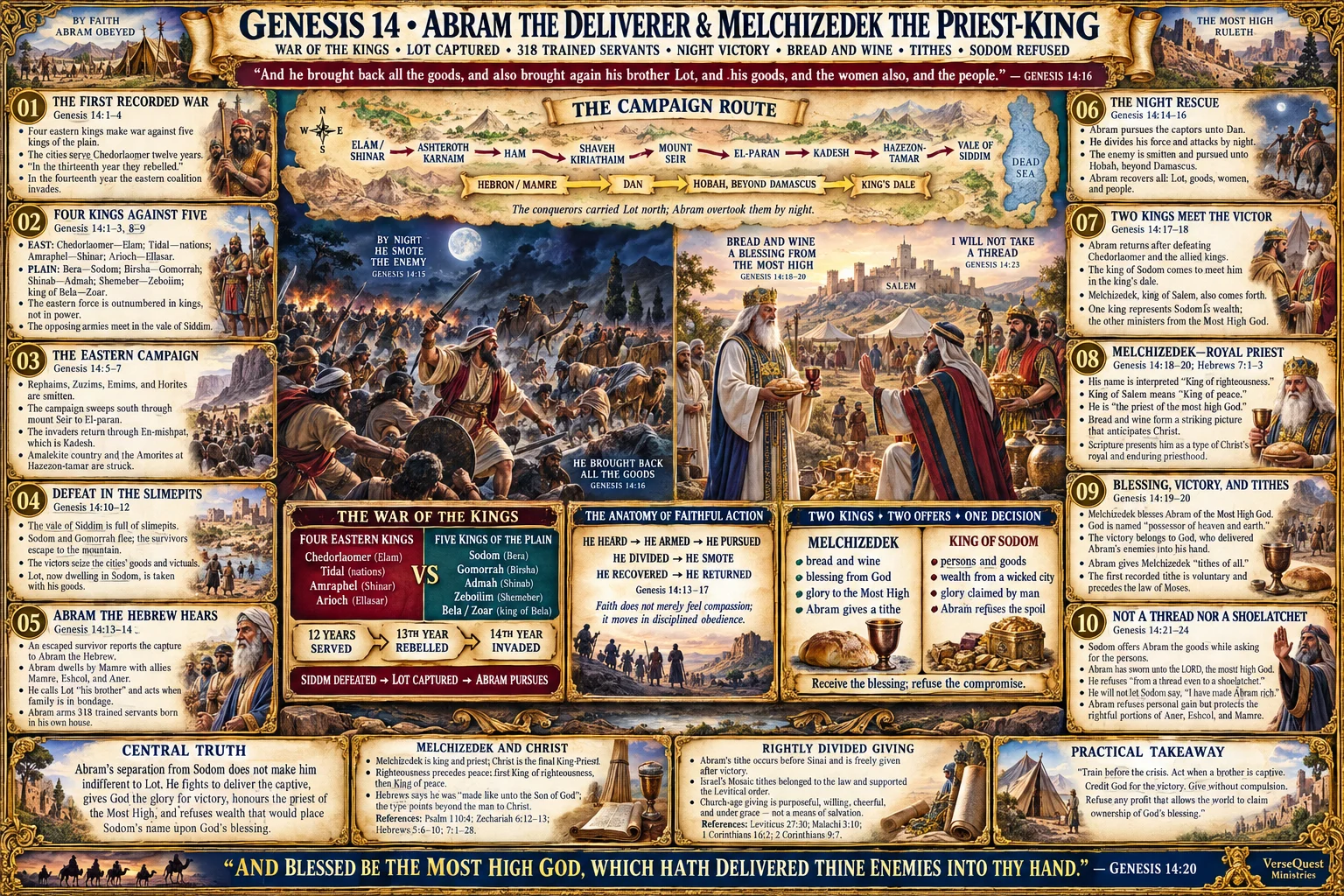
Genesis 14 – Abram the Deliverer and Melchizedek the Priest-King: War of the Kings, Lot Rescued, Bread and Wine, Tithes, and Sodom Refused (KJV Bible Study Chart)
Explore Genesis 14 with this detailed KJV Bible study chart covering the first recorded war in Scripture, the battle of four kings against five, Lot’s capture, Abram’s 318 trained servants, the night rescue, and the recovery of the captives. The chart also examines Abram’s remarkable meeting with Melchizedek, king of Salem and priest of the Most High God, including the bread and wine, blessing, tithe, and powerful typology pointing toward Christ’s royal priesthood. Follow the contrast between Melchizedek’s blessing and the king of Sodom’s offer as Abram refuses compromising wealth “from a thread even to a shoelatchet.” Ideal for personal study, sermon preparation, homeschool, Sunday school, Bible institute instruction, giving studies, and teaching on Hebrews 7 and Melchizedek.
$4.99
Description
Genesis 14: Abram the Deliverer and Melchizedek the Priest-King is a detailed KJV Bible study chart tracing the first recorded war in Scripture, Lot’s capture, Abram’s daring rescue mission, his meeting with Melchizedek, and his refusal to accept the wealth of Sodom. The chapter reveals Abram not merely as a pilgrim dwelling in tents, but as a disciplined man of faith capable of decisive action when his brother is taken captive.
Genesis 14 opens with a conflict between four eastern kings and five kings of the plain. The cities of Sodom and Gomorrah had served Chedorlaomer for twelve years, rebelled in the thirteenth, and faced invasion in the fourteenth. The eastern coalition sweeps through the region, defeats opposing peoples, and eventually strikes the kings of Sodom and Gomorrah in the vale of Siddim. The defeated forces flee, while the victors seize goods, provisions, and captives—including Lot, who by this point is dwelling in Sodom.
When Abram hears that his brother has been taken captive, he acts immediately. He arms 318 trained servants born in his own house, pursues the invading army unto Dan, divides his forces by night, defeats the enemy, and pursues them toward Hobah beyond Damascus. He brings back Lot, the goods, the women, and the people. Abram’s faith does not produce passivity. It produces courageous, disciplined action when intervention is necessary.
After the victory, two kings meet Abram. The king of Sodom represents the wealth and influence of a corrupt city, while Melchizedek, king of Salem and priest of the most high God, brings bread and wine and blesses Abram. Hebrews 7 later interprets Melchizedek’s name as “King of righteousness” and his title as king of Salem as “King of peace.” His combined offices of king and priest form a remarkable type of Jesus Christ, whose royal priesthood is superior to the Levitical order.
Melchizedek blesses Abram and gives glory to “the most high God, possessor of heaven and earth,” declaring that God delivered Abram’s enemies into his hand. Abram responds by giving Melchizedek “tithes of all.” This tithe occurs centuries before the Mosaic law and is voluntarily given after victory rather than imposed as part of Israel’s later legal system.
Abram then refuses the king of Sodom’s wealth. He will not take “from a thread even to a shoelatchet” lest the king say, “I have made Abram rich.” Abram protects the rightful portions of his allies but refuses personal enrichment from Sodom.
Genesis 14 therefore brings together warfare, loyalty, divine deliverance, worship, priesthood, giving, and separation from worldly compromise. Abram rescues Lot without becoming entangled with Sodom, honors the priest of the Most High God, credits God for victory, and refuses wealth that could compromise the testimony of God’s blessing.
Genesis 14, Abram the deliverer, Melchizedek, priest-king, king of Salem, King of righteousness, King of peace, war of the kings, Lot captured, 318 trained servants, night attack, divine victory, bread and wine, Most High God, possessor of heaven and earth, Abram’s tithe, tithes before the law, king of Sodom, Sodom refused, separation from compromise, royal priesthood, type of Christ, faith in action
Genesis 14 records the first large-scale war described in Scripture. Four eastern kings, headed by Chedorlaomer, fight against five kings of the plain after twelve years of tribute and a rebellion in the thirteenth year. The eastern forces conduct a broad military campaign before defeating the kings of Sodom and Gomorrah in the vale of Siddim. Lot is carried away because he has progressed from pitching his tent toward Sodom in Genesis 13 to dwelling within Sodom in Genesis 14.
When Abram hears that Lot has been taken, he immediately arms 318 trained servants born in his house. This reveals an organized and disciplined household rather than an isolated wandering shepherd. Abram pursues the invaders northward, divides his forces during a night attack, defeats them, and recovers Lot, the goods, the women, and the other captives. His actions demonstrate that biblical faith can include preparation, courage, strategy, and decisive intervention.
After the victory, Abram encounters two sharply contrasting kings. The king of Sodom approaches from a corrupt city, while Melchizedek comes as “king of Salem” and “priest of the most high God.” Hebrews 7 explains that Melchizedek’s name means King of righteousness and that king of Salem means King of peace. He therefore forms an extraordinary type of Christ, in whom kingship and priesthood are united.
Melchizedek brings bread and wine and blesses Abram in the name of “the most high God, possessor of heaven and earth.” Scripture does not explicitly state that the bread and wine constitute a prophecy of the Lord’s Supper, but within typology they naturally contribute to the striking parallels between Melchizedek and Christ. The strongest doctrinal connection comes from Psalm 110 and Hebrews 5–7, where Christ’s priesthood is explicitly described as being after the order of Melchizedek.
Melchizedek credits the victory to God, saying that the Most High “hath delivered thine enemies into thy hand.” Abram then gives him “tithes of all.” This tithe occurs before Sinai and before the Levitical priesthood. It should therefore be distinguished from Israel’s later mandatory tithing system. New Testament Church giving is taught as willing, purposeful, proportionate, and cheerful rather than as submission to the Mosaic tithe.
The king of Sodom offers Abram the goods while asking only for the people. Abram refuses personal enrichment, declaring that he will not take “from a thread even to a shoelatchet.” His concern is testimony: he refuses to allow Sodom’s king to claim, “I have made Abram rich.” Yet Abram does not impose his personal decision upon Aner, Eshcol, and Mamre, allowing his allies their rightful portions.
Genesis 14 therefore shows Abram rescuing Lot without joining Lot’s world. He receives blessing from God’s priest, gives honor to the Most High, and refuses Sodom’s wealth. Faith acts courageously, gives God the glory, and knows when material profit is too expensive spiritually.
Genesis 14 is valuable for teaching that faith does not produce inactivity, that believers may act courageously when others are in danger, and that preparation before a crisis matters. It also provides important material for studying Melchizedek, Christ’s royal priesthood, voluntary giving before the Mosaic law, and the difference between receiving God’s blessing and accepting compromising wealth. The chapter is well suited for personal Bible study, Sunday school, homeschool instruction, Bible institutes, sermon preparation, leadership training, studies on Christian giving, Hebrews 7 teaching, spiritual separation, and lessons on courage, loyalty, discernment, and crediting God for victory.
King James Bible, Strong’s Concordance, Thompson Chain-Reference Bible, Treasury of Scripture Knowledge, Nave’s Topical Bible, Genesis 13–15 study notes, Melchizedek Scripture studies, Psalm 110 studies, Hebrews 5–7 commentary notes, biblical priesthood charts, Abrahamic covenant studies, ancient Canaan campaign maps, Genesis patriarchal timelines, biblical giving and tithing studies, Sodom and Gomorrah charts, Christ as King and Priest studies, VerseQuest Genesis charts
Related products
-
Christian Growth
-
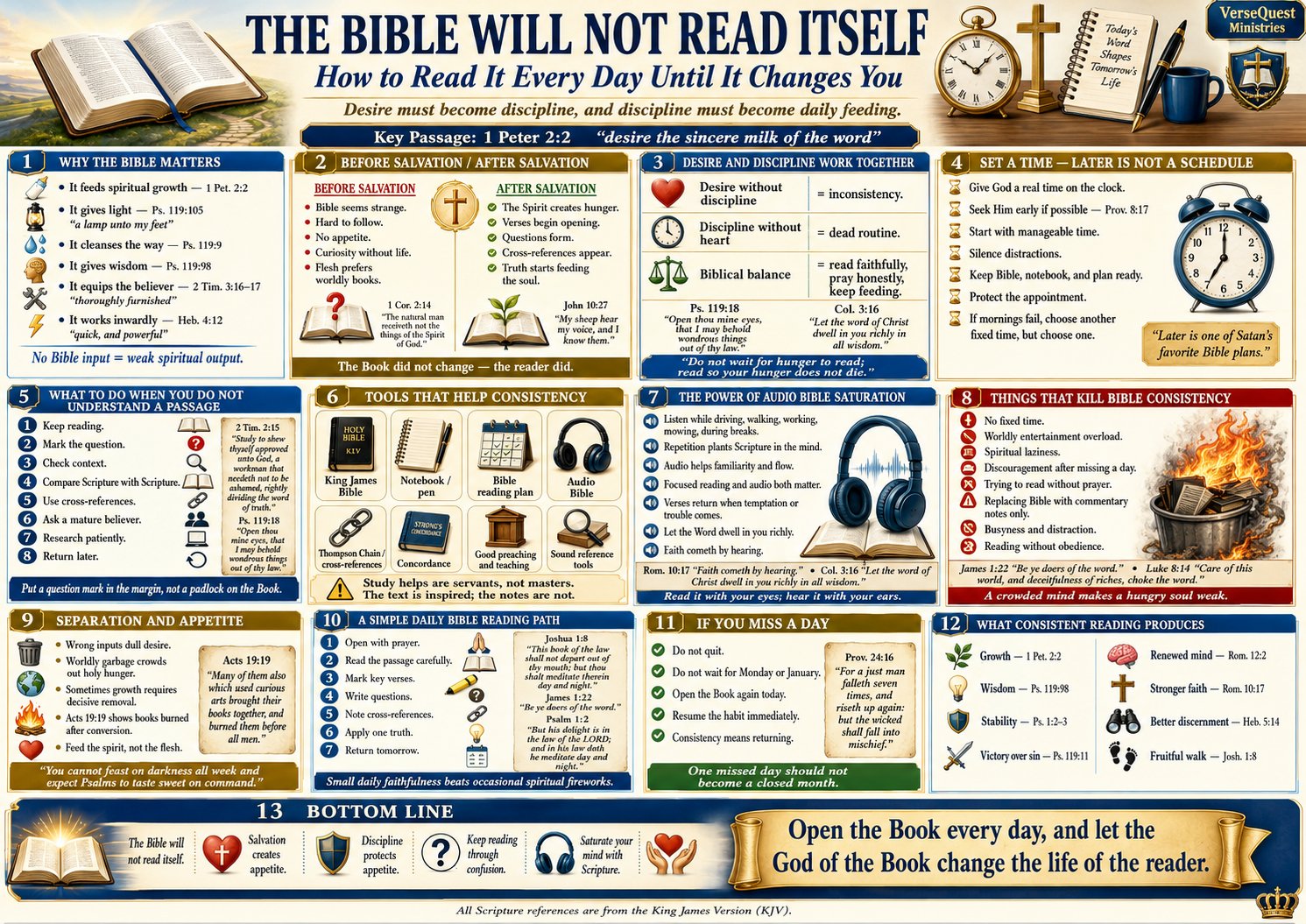
- The Bible Will Not Read Itself – How to Read the Bible Every Day Bible Study Chart (KJV)
- Build a consistent daily Bible reading habit with this detailed KJV Bible study chart. Learn practical steps for reading Scripture faithfully, overcoming inconsistency, understanding difficult passages, and growing spiritually through…
- $3.99
- Add to cart
-
-
Two Witnesses of Revelation
-
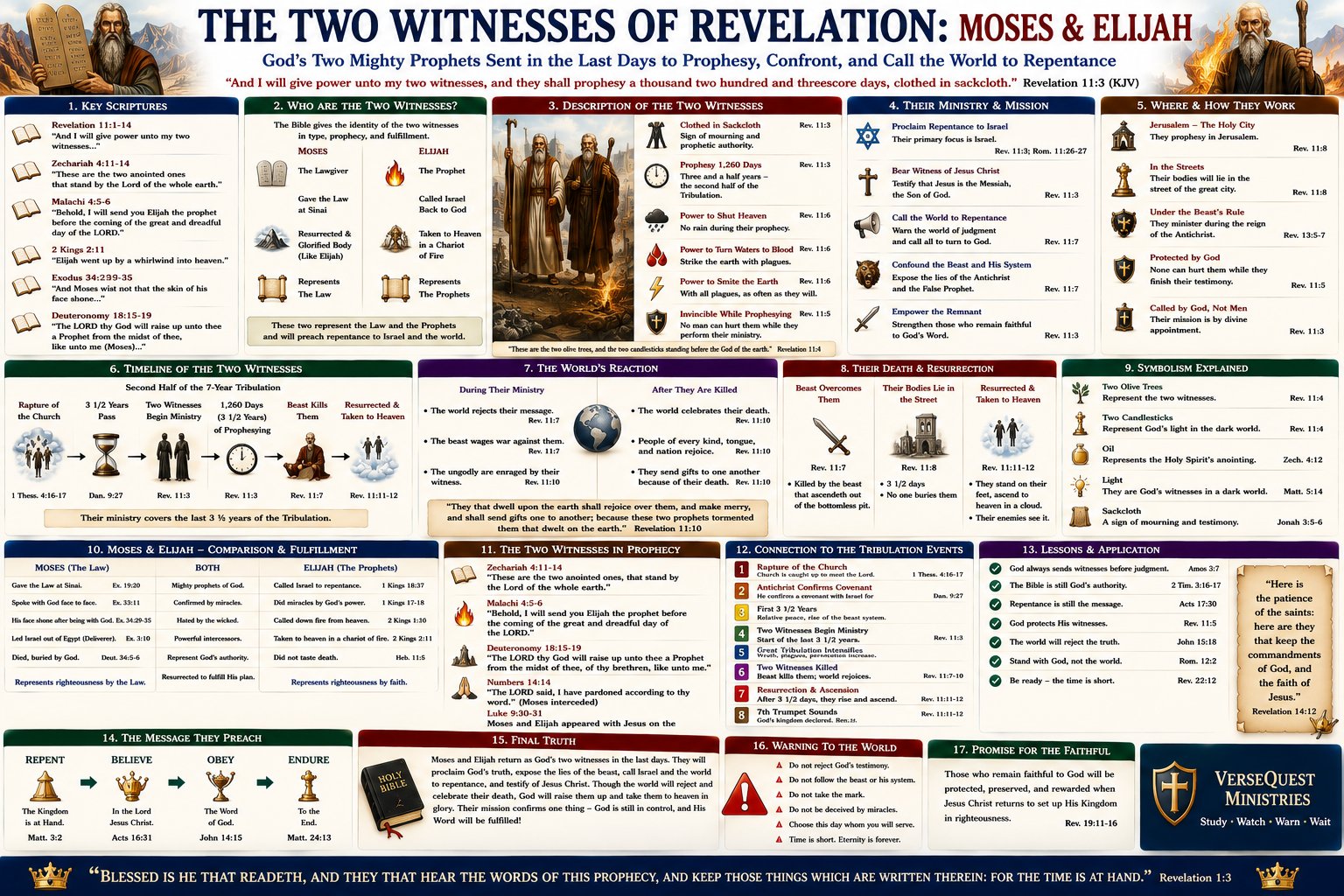
- The Two Witnesses of Revelation – Moses and Elijah, 1,260 Days of Prophecy, Their Death, Resurrection, and Ascension (KJV Bible Study Chart)
- Understand the two witnesses of Revelation with this detailed KJV chart examining the strong Moses-and-Elijah identification, their 1,260-day Tribulation ministry, sackcloth, supernatural powers, Jerusalem setting, conflict with the beast, public…
- $4.99
- Add to cart
-
-
Christian Living
-
-50%
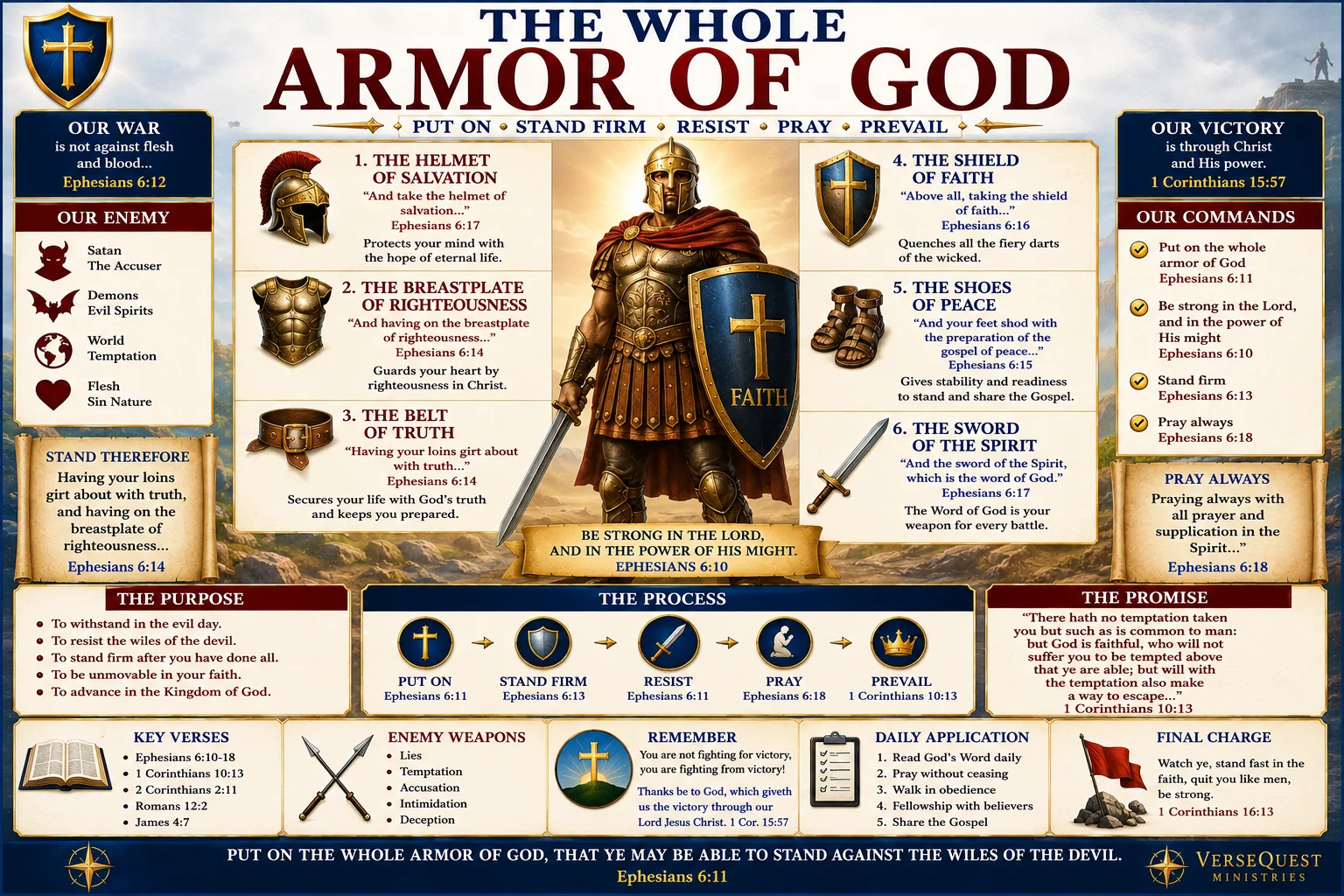
- The Whole Armor of God Chart — KJV Bible Study
- Premium printable KJV Bible study chart explaining the whole armor of God from Ephesians 6, including the helmet, breastplate, belt, shield, shoes, sword, prayer, and spiritual victory in Christ.
- Original price was: $10.00.$4.99Current price is: $4.99.
- Add to cart
-
-50%
-
Bible Study Chart
-
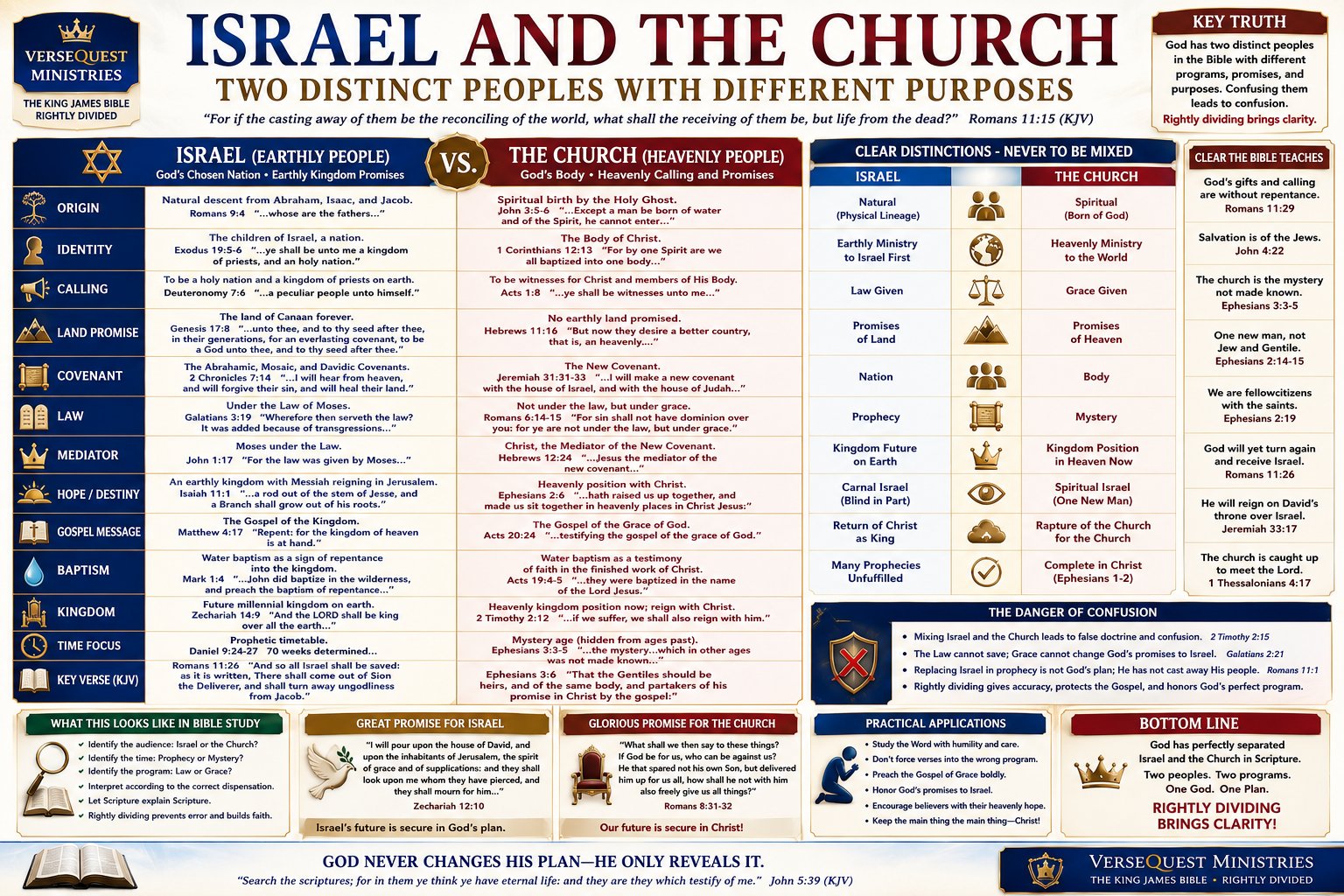
- Israel and the Church Bible Study Chart – Two Distinct Peoples with Different Purposes (KJV)
- Compare Israel and the Church with this detailed KJV Bible study chart covering their distinct origins, identities, covenants, callings, promises, gospel programs, and future destinies.
- $3.99
- Add to cart
-
-
Bitterness
-
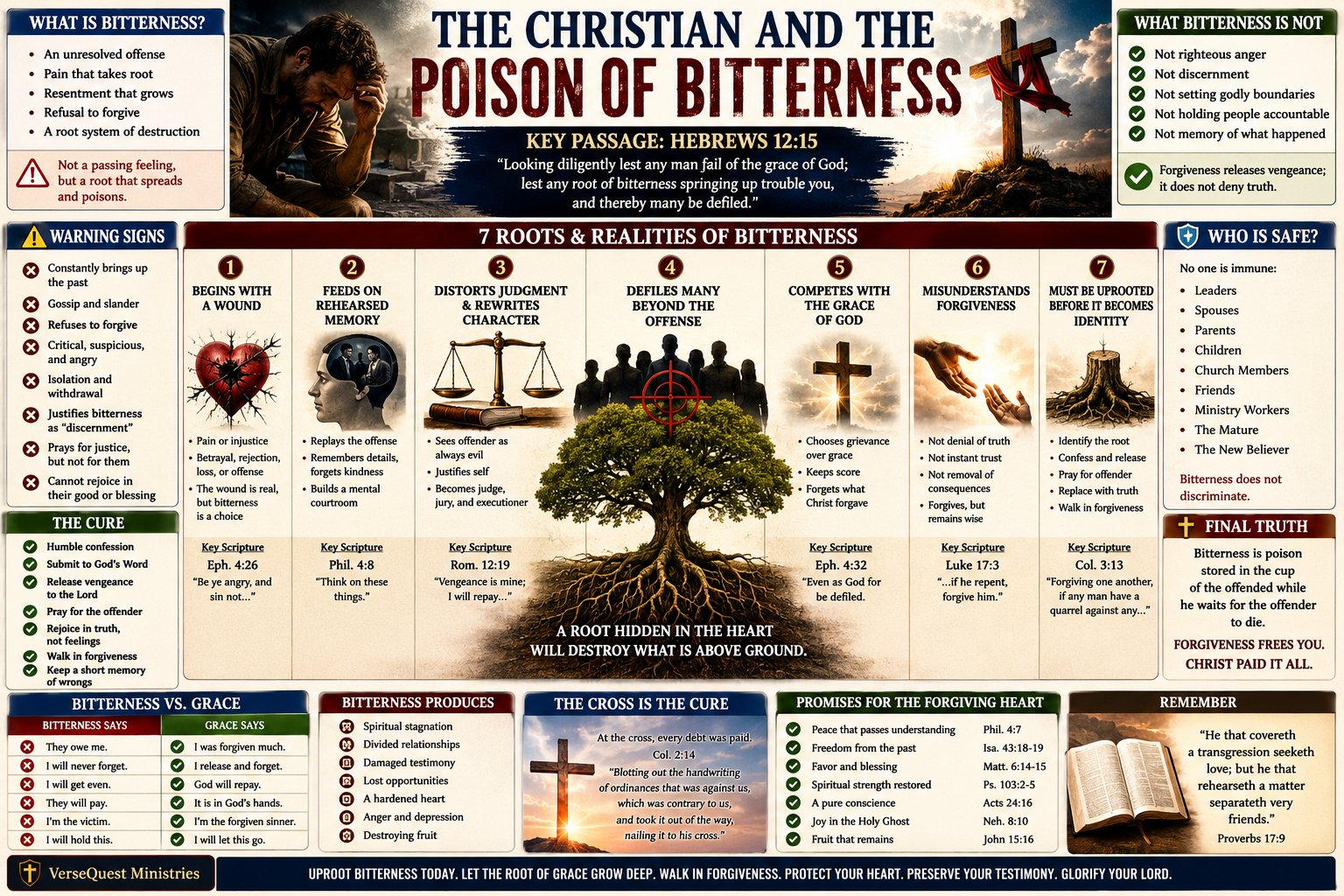
- The Christian and the Poison of Bitterness Bible Study Chart – Forgiveness, Grace, and Healing the Heart (KJV)
- Expose and uproot bitterness with this detailed KJV Bible study chart covering unresolved offenses, warning signs, forgiveness, grace, wise boundaries, the cross, and healing for the Christian heart.
- $3.99
- Add to cart
-