
Genesis 41 – Joseph from Prison to the Palace: Pharaoh’s Dreams, Seven Years of Plenty and Famine, and Joseph Exalted Over Egypt (KJV Bible Study Chart)
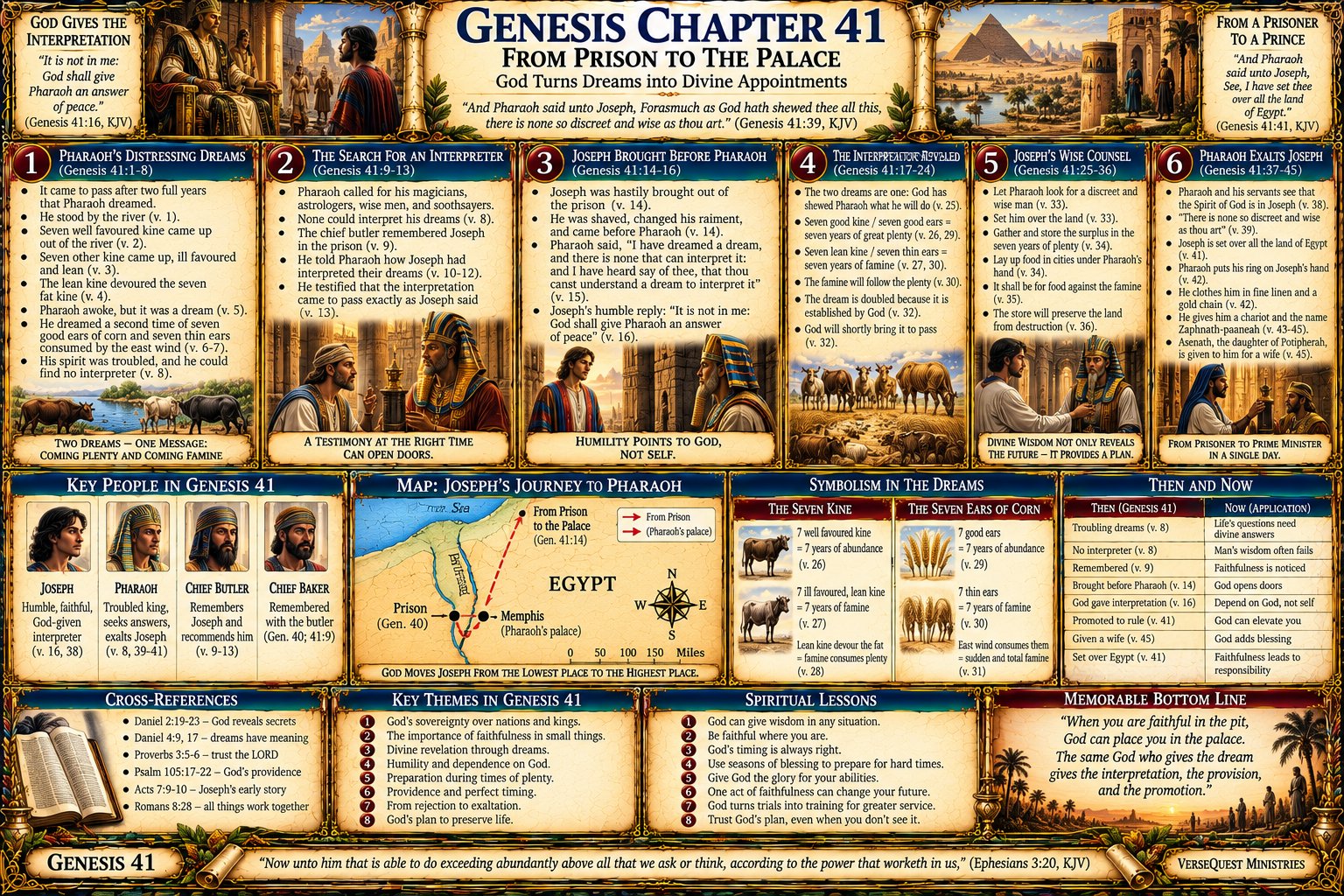
Explore Genesis 41 with this detailed KJV Bible study chart tracing Joseph’s dramatic rise from prison to ruler over Egypt. Follow Pharaoh’s two troubling dreams of seven cattle and seven ears of corn, the failure of Egypt’s magicians and wise men, the chief butler’s remembrance of Joseph, and Joseph’s humble declaration, “It is not in me: God shall give Pharaoh an answer of peace.” The chart explains the seven years of abundance, seven years of famine, Joseph’s wise plan for storing food, and Pharaoh’s decision to place him over the land of Egypt. It also highlights the signet ring, fine linen, gold chain, second chariot, and Joseph’s new position. Ideal for Bible study, sermon preparation, homeschool, Sunday school, leadership studies, providence teaching, and a deeper study of Joseph’s life.
$4.99
Description
Genesis 41: From Prison to the Palace is a detailed KJV Bible study chart tracing Joseph’s extraordinary rise from an Egyptian prison to authority over the land of Egypt. After two full years of waiting, Pharaoh receives two troubling dreams that none of Egypt’s magicians or wise men can interpret. The forgotten Hebrew prisoner is suddenly remembered, summoned before Pharaoh, and used by God to reveal both the coming crisis and the wisdom necessary to prepare for it.
Pharaoh first dreams of seven well-favoured and fat kine coming up from the river, followed by seven ill-favoured and lean kine that devour them. He then dreams of seven good ears of corn swallowed by seven thin ears blasted with the east wind. Troubled by these visions, Pharaoh calls for “all the magicians of Egypt, and all the wise men thereof,” but none can provide the interpretation.
At this decisive moment, the chief butler remembers Joseph. He recounts how Joseph accurately interpreted the dreams of both himself and the chief baker in prison. Joseph is quickly brought from the dungeon, shaved, changes his garments, and appears before Pharaoh. Yet he refuses to claim the ability as his own: “It is not in me: God shall give Pharaoh an answer of peace.”
Joseph explains that Pharaoh’s two dreams carry one message. Seven years of extraordinary plenty are coming upon Egypt, followed by seven years of severe famine so devastating that the abundance will be forgotten. The repetition of the dream demonstrates that “the thing is established by God” and will shortly come to pass.
Joseph does more than interpret the future. He recommends that Pharaoh appoint a discreet and wise man and establish officers to gather one-fifth of the produce during the seven plentiful years. Food is to be stored in the cities so Egypt can survive the famine. Divine wisdom reveals both the coming danger and the means of preparation.
Pharaoh recognizes that “the Spirit of God” is in Joseph and declares that none is as discreet and wise. Joseph is placed over Pharaoh’s house and over the land of Egypt. Pharaoh gives him his signet ring, clothes him in fine linen, places a gold chain around his neck, gives him the second chariot, and names him Zaphnath-paaneah. Joseph also receives Asenath, daughter of Potipherah priest of On, as his wife.
Genesis 41 therefore displays divine timing, wisdom, providence, preparation, and exaltation. The prisoner whom men forgot is raised in a single day because God had been preparing both the man and the moment. The pit, Potiphar’s house, and prison were not wasted stages; each prepared Joseph for responsibility when God’s appointed hour arrived.
Genesis 41, Joseph, Pharaoh, Pharaoh’s dreams, seven kine, seven ears of corn, seven years of plenty, seven years of famine, chief butler remembers Joseph, Joseph before Pharaoh, interpretations belong to God, Spirit of God, divine wisdom, famine preparation, storehouses, Joseph exalted, ruler over Egypt, Pharaoh’s signet ring, fine linen, gold chain, Zaphnath-paaneah, Asenath, divine providence, God’s timing, preparation for promotion
Genesis 41 begins “at the end of two full years,” connecting directly with the chief butler’s failure to remember Joseph in Genesis 40. Joseph has remained in prison while nothing visible suggested that his circumstances were changing. Yet the delay ends precisely when Pharaoh receives dreams that Egypt’s own wisdom cannot explain.
Pharaoh dreams first of seven healthy cattle coming from the river, followed by seven lean cattle that consume them while remaining ill-favoured. His second dream contains seven good ears of corn followed by seven thin ears blasted by the east wind, which swallow the good ears. Pharaoh is troubled and summons “all the magicians of Egypt, and all the wise men thereof.” Genesis 41:8 does not mention astrologers or soothsayers in this list.
The chief butler finally remembers Joseph and recounts the prison interpretations that were fulfilled exactly. Joseph is brought “hastily out of the dungeon,” shaves, changes his clothing, and appears before Pharaoh. His first recorded response demonstrates humility: “It is not in me: God shall give Pharaoh an answer of peace.” Joseph refuses to turn God’s gift into personal glory.
Pharaoh retells the dreams in verses 17–24. Joseph’s interpretation begins in verses 25–32. He explains that the two dreams are one message from God: seven abundant years will be followed by seven years of famine. The doubled dream means the matter is established by God and will shortly occur.
Joseph then offers practical counsel in verses 33–36. Pharaoh should appoint a discreet and wise man, establish officers, gather one-fifth during the plentiful years, and store food throughout Egypt. Biblical wisdom does not merely identify a problem; it prepares faithfully for what God has revealed.
Pharaoh recognizes Joseph’s unusual wisdom and says, “Can we find such a one as this is, a man in whom the Spirit of God is?” He places Joseph over his house and declares that only the throne will remain above him. Joseph is therefore elevated from prisoner to ruler over Egypt, although “prime minister” is a useful modern description rather than the biblical title.
Joseph receives Pharaoh’s ring, fine linen, a gold chain, the second chariot, and an Egyptian name. He also marries Asenath. Later in the chapter his sons Manasseh and Ephraim are born during the years of plenty, before famine comes.
Genesis 41 demonstrates that God’s preparation is often invisible while it is happening. Joseph’s years of slavery and imprisonment trained him in responsibility, administration, patience, and dependence upon God. When the appointed day arrives, God moves him from confinement to national authority with astonishing speed. Human beings may forget, but divine providence never loses the thread of the story.
Genesis 41 is useful for teaching patience during delayed promotion, humility when God gives ability, wise preparation in seasons of abundance, stewardship, leadership, crisis planning, and faithfulness before public opportunity arrives. Joseph demonstrates that wisdom should point people to God rather than to self and that hardship can become preparation for greater responsibility. The chapter is excellent for personal Bible study, Sunday school, homeschool instruction, Bible institutes, sermon preparation, leadership training, stewardship studies, workplace teaching, providence studies, and lessons on patience, wisdom, humility, preparation, and trusting God’s timing.
King James Bible, Strong’s Concordance, Thompson Chain-Reference Bible, Treasury of Scripture Knowledge, Nave’s Topical Bible, Genesis 37–50 study notes, Joseph life timeline, Joseph in Egypt charts, Psalm 105 Joseph studies, Acts 7 Joseph studies, Daniel 2 interpretation studies, biblical dream studies, famine and stewardship charts, leadership and wisdom Scripture chains, Romans 8:28 providence studies, Joseph and Christ typology charts, VerseQuest Genesis charts
Related products
-
Bible Study Chart
-
- Israel and the Church Bible Study Chart – Two Distinct Peoples with Different Purposes (KJV)
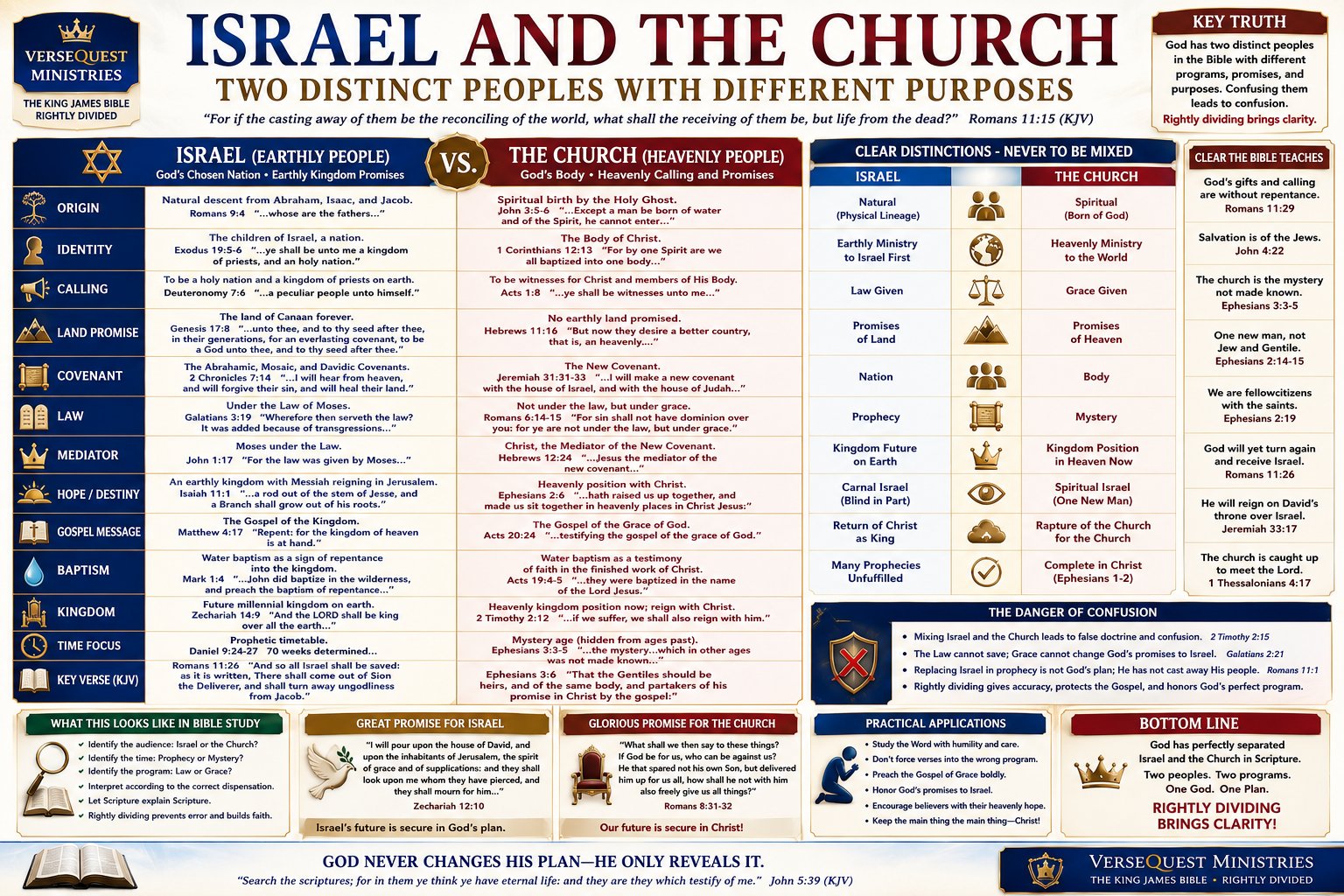
- Compare Israel and the Church with this detailed KJV Bible study chart covering their distinct origins, identities, covenants, callings, promises, gospel programs, and future destinies.
- $3.99
- Add to cart
-
-
Biblical Humility
-
- Biblical Humility Bible Study Chart – Lowliness Before God, Not Self-Glory Before Men (KJV)
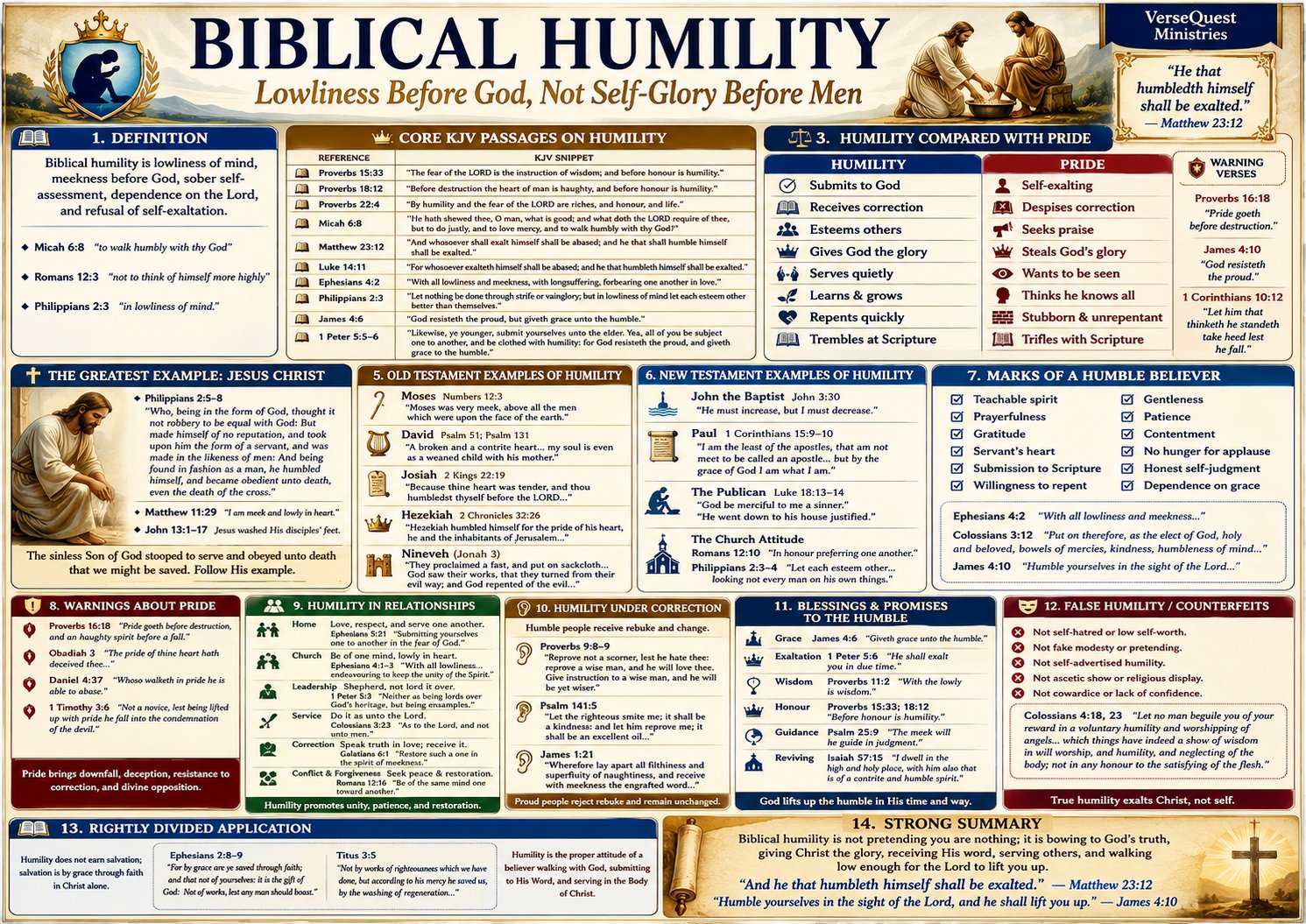
- Study biblical humility with this detailed KJV chart comparing humility and pride, Christ’s example, receiving correction, servant leadership, grace, and practical Christian living.
- $3.99
- Add to cart
-
-
Chart Collections
-
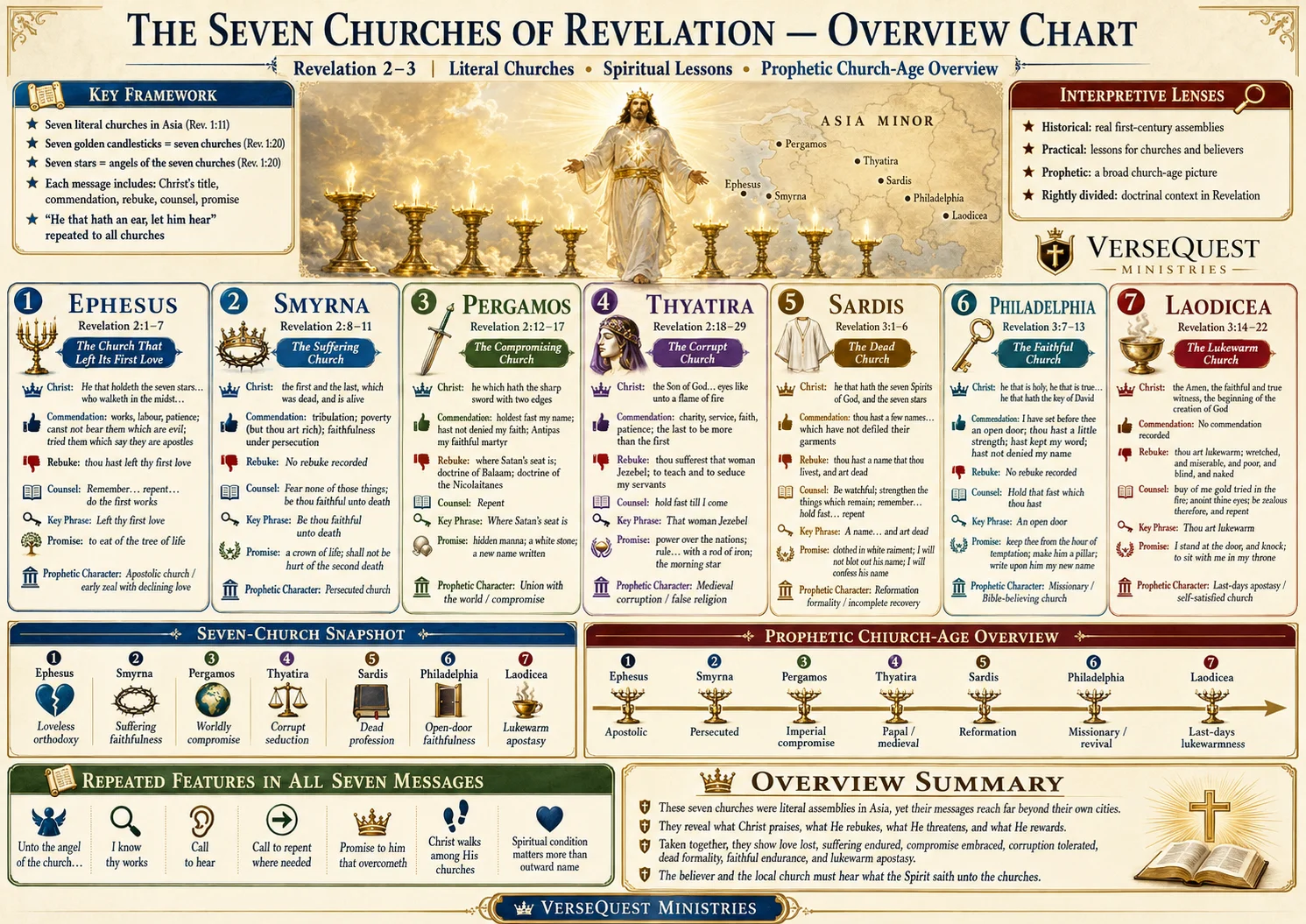
- The Seven Churches of Revelation Chart Collection – Christ Walking Among the Candlesticks
- A premium VerseQuest Ministries™ PDF chart collection covering the Seven Churches of Revelation in Revelation 2–3. Includes one overview chart plus individual KJV Bible study charts for Ephesus, Smyrna, Pergamos,…
- $12.99
- Add to cart
-
-
Cain and Abel
-
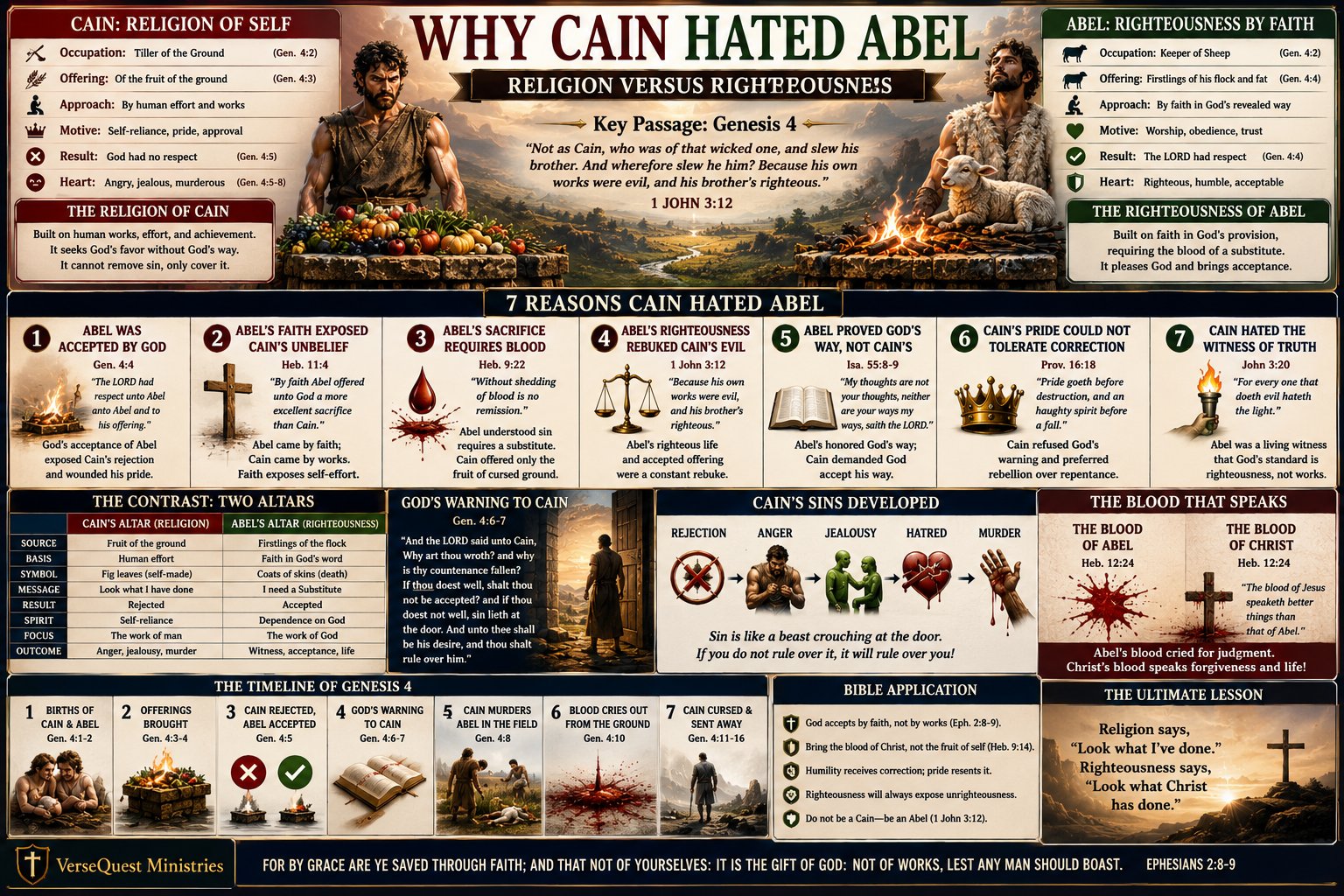
- Why Cain Hated Abel Bible Study Chart – Religion Versus Righteousness, Faith, Works, and Blood Sacrifice (KJV)
- Discover why Cain hated Abel with this detailed KJV Bible study chart comparing religion and righteousness, human works and faith, rejected worship, blood sacrifice, pride, jealousy, and salvation through Christ.
- $3.99
- Add to cart
-
-
Bitterness
-
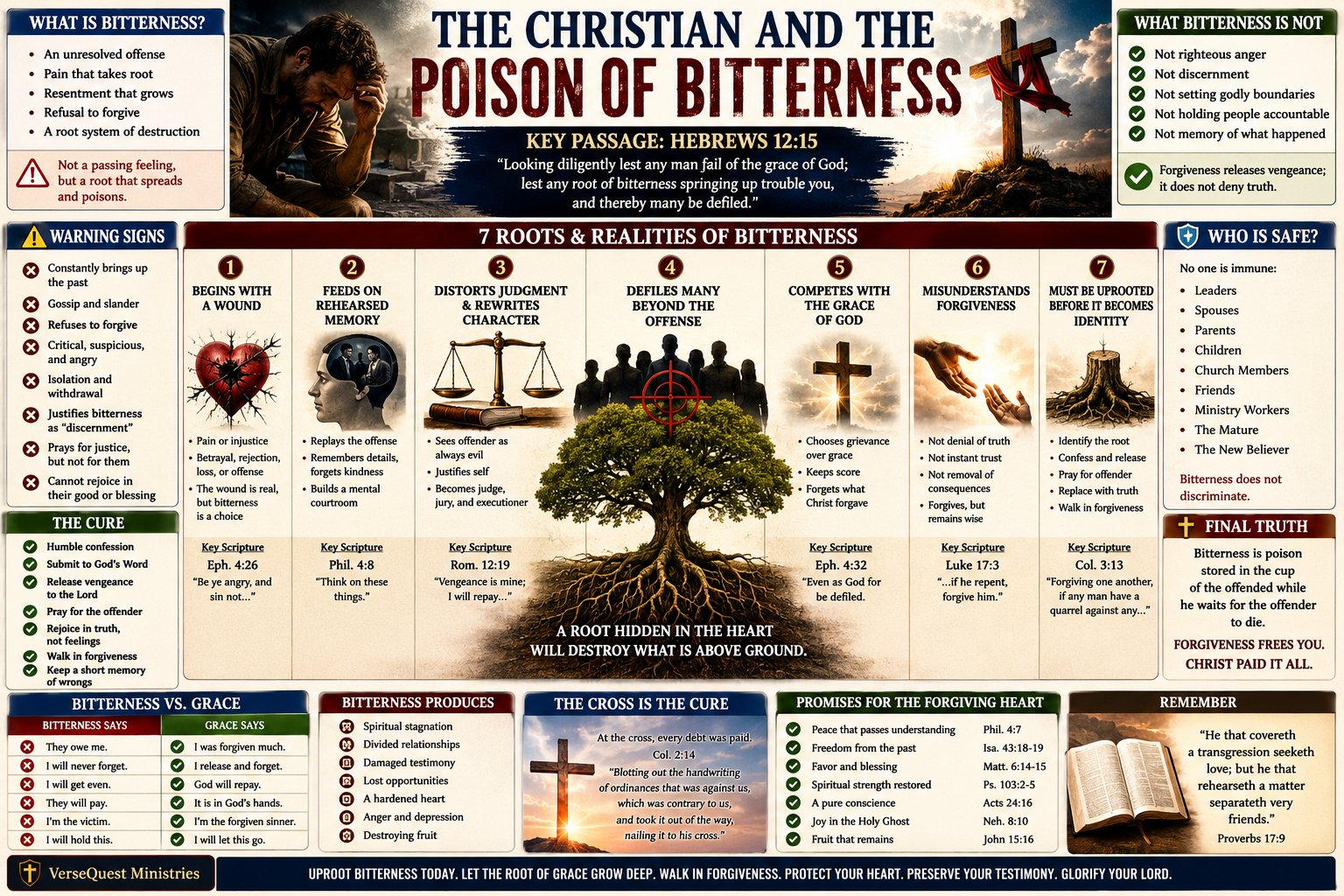
- The Christian and the Poison of Bitterness Bible Study Chart – Forgiveness, Grace, and Healing the Heart (KJV)
- Expose and uproot bitterness with this detailed KJV Bible study chart covering unresolved offenses, warning signs, forgiveness, grace, wise boundaries, the cross, and healing for the Christian heart.
- $3.99
- Add to cart
-