
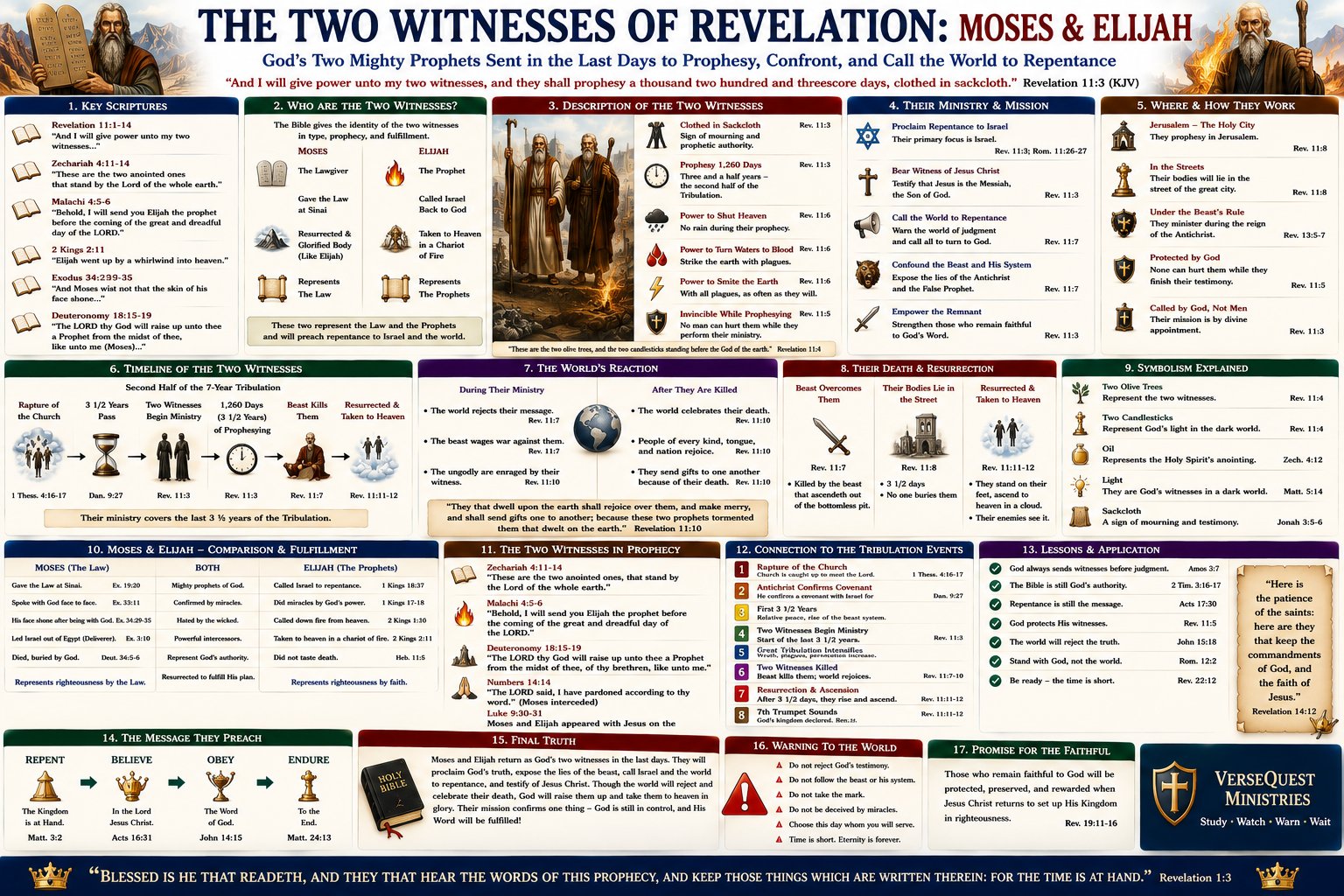
The Two Witnesses of Revelation – Moses and Elijah, 1,260 Days of Prophecy, Their Death, Resurrection, and Ascension (KJV Bible Study Chart)
Understand the two witnesses of Revelation with this detailed KJV chart examining the strong Moses-and-Elijah identification, their 1,260-day Tribulation ministry, sackcloth, supernatural powers, Jerusalem setting, conflict with the beast, public death, resurrection, ascension, and connection with Israel’s prophetic programme.
$4.99
Description
The Two Witnesses of Revelation: Moses and Elijah is a comprehensive, rightly divided KJV Bible study chart examining the two extraordinary prophets whom God raises up during the future Tribulation to confront rebellion, testify concerning Jesus Christ, warn of approaching judgment, and stand as divinely empowered witnesses in Jerusalem. Built primarily around Revelation 11:1–14, the chart studies their prophetic ministry, 1,260-day commission, supernatural powers, connection with Moses and Elijah, conflict with the beast, public death, worldwide reaction, bodily resurrection, and visible ascension into heaven.
Revelation 11:3 records God’s direct declaration: “And I will give power unto my two witnesses, and they shall prophesy a thousand two hundred and threescore days, clothed in sackcloth.” These men are not self-appointed religious celebrities, political activists, or miracle workers seeking a following. Their authority originates with God, their message confronts a rebellious world, and their ministry continues for exactly the period Heaven appoints. No government can silence them, no assassin can kill them prematurely, and even the beast cannot touch them until their testimony is finished.
The exact identity of the two witnesses is not stated by name in Revelation 11, but the chart develops the strong traditional identification of Moses and Elijah from biblical parallels. Elijah is especially compelling because Malachi 4:5–6 promises, “Behold, I will send you Elijah the prophet before the coming of the great and dreadful day of the LORD.” Elijah was taken bodily into heaven without experiencing ordinary death, and his Old Testament ministry included shutting heaven so that rain did not fall. Revelation 11:6 gives one of the two witnesses precisely that power.
Moses supplies the equally striking parallel. The witnesses possess authority over waters to turn them to blood and to smite the earth with plagues as often as they will, closely reflecting Moses’ ministry before Pharaoh in Exodus. Moses also appeared with Elijah beside Jesus Christ at the Transfiguration in Luke 9, where the Law and the Prophets stood together with the One to whom both ultimately testify.
For that reason, Moses and Elijah form a powerful prophetic pairing. Moses represents the Law and Elijah the Prophets, while Jesus Christ is the fulfillment and centre toward whom both ultimately point. Yet careful Bible study should distinguish between what Revelation states explicitly and what is inferred from scriptural comparison. Revelation explicitly gives two witnesses, their powers, duration, location, death, resurrection, and ascension; identifying them by name as Moses and Elijah is a strong interpretive conclusion rather than a direct statement of Revelation 11.
The witnesses are described as “the two olive trees, and the two candlesticks standing before the God of the earth.” This imagery connects them with Zechariah 4, where olive trees and anointed ones stand beside the Lord. Oil commonly carries associations with divine anointing and Spirit-enabled service, while candlesticks testify through light. These two men therefore stand as God-authorized witnesses in a world increasingly darkened by satanic deception.
Their clothing is equally meaningful. They prophecy “clothed in sackcloth.” Sackcloth is associated throughout Scripture with mourning, humiliation, repentance, warning, and judgment. They do not arrive dressed like prosperity preachers announcing that humanity is entering its greatest age. Their very appearance declares that something is terribly wrong with the world and that judgment is approaching.
Their ministry lasts 1,260 days, or three and one-half prophetic years. Within the prophetic framework presented by the chart, their ministry is placed in the latter half of Daniel’s seventieth week, though Revelation itself supplies the 1,260-day duration without explicitly labeling it “the final half.” Daniel and Revelation repeatedly use equivalent periods such as forty-two months, 1,260 days, and a time, times, and half a time, establishing the importance of the midpoint and the two halves of the final seven-year period.
Jerusalem forms the earthly centre of their activity. Revelation 11:8 identifies the great city where their bodies eventually lie as the place “where also our Lord was crucified.” The prophetic setting has therefore returned unmistakably to Jerusalem, Israel, Temple concerns, nations, judgment, and Messiah’s coming Kingdom. This setting reinforces the distinction between Israel’s prophetic programme and the present mystery Body of Christ.
Their ministry provides another strong demonstration that Revelation’s Tribulation setting is not merely a continuation of ordinary Church-age conditions. God’s dealings visibly return to Old Testament-style prophetic signs, Jewish geography, a measured Temple, Jerusalem, divinely empowered prophets, national conflict, supernatural judgment, and preparation for the coming King.
The witnesses proclaim God’s authority during a period when Antichrist seeks universal allegiance. The beast presents himself as ruler; God places His own witnesses in the very city central to biblical prophecy. The false prophet works deceptive miracles; God’s witnesses perform unmistakable judgments. Antichrist demands worship; the witnesses proclaim the authority of the true God.
Their primary prophetic environment is Israel, but their testimony becomes international because the entire world becomes aware of their ministry. Revelation describes peoples, kindreds, tongues, and nations watching the aftermath of their death. What occurs in Jerusalem becomes a global spectacle.
The witnesses call the rebellious world toward repentance. Revelation repeatedly shows men refusing repentance even while judgments fall. The prophetic message is therefore not merely prediction. True prophecy confronts sin, vindicates God’s Word, warns of judgment, and calls men to turn from rebellion.
They bear witness to Jesus Christ in an age dominated by another christ. The Antichrist is the counterfeit ruler, but these prophets stand in the city where the true Christ was crucified and testify during the closing movements leading to His return.
Their ministry also exposes the beast system. Governments may classify them as dangerous extremists, troublemakers, enemies of peace, or obstacles to the new global order, but Heaven identifies them as “my two witnesses.” Human labels do not alter divine ownership.
The witnesses possess power to shut heaven so that it does not rain during the days of their prophecy. This unmistakably recalls Elijah, who prayed and saw heaven shut during the reign of Ahab. James 5:17 specifically notes that Elijah’s drought lasted three years and six months, making the parallel with Revelation especially striking.
They also possess power over waters to turn them to blood, recalling the first great plague Moses brought upon Egypt. Water—the basic necessity of life—becomes an instrument of judgment when the world refuses the God who gave it.
The witnesses may smite the earth with all plagues, as often as they will. Their authority is extraordinary. Yet it is not personal magic or independent supernatural ability. They operate beneath a divine commission and remain accountable to the God whose message they carry.
They also possess supernatural protection. Revelation 11:5 declares that if any man attempts to hurt them, fire proceeds out of their mouth and devours their enemies. Their adversaries cannot merely arrange an assassination, raid their location, imprison them permanently, or silence the transmission.
This protection reveals a major biblical principle: a servant of God is immortal until God’s appointed testimony is finished. That does not mean God always prevents martyrs. It means no enemy can shorten the mission God has determined. When Heaven says the testimony continues, earth cannot vote to cancel it.
The beast therefore cannot kill the witnesses at the beginning of their ministry. Revelation specifically says that “when they shall have finished their testimony,” the beast ascending from the bottomless pit makes war against them, overcomes them, and kills them.
The timing matters. Their death is not evidence that Satan finally overcame God’s protection. Their death occurs only after God’s purpose has been fulfilled. The enemy receives permission after the testimony is completed.
Their deaths produce one of Revelation’s most astonishing pictures of human depravity. Instead of mourning two murdered prophets, the world celebrates. Their dead bodies lie publicly in Jerusalem for three and one-half days, and the nations refuse to allow them burial.
People “rejoice over them, and make merry, and shall send gifts one to another.” The deaths of God’s prophets become an international holiday. Humanity celebrates because the voices that tormented its conscience have finally been silenced.
The reaction reveals why the world hated them. Revelation says “these two prophets tormented them that dwelt on the earth.” Their torment was not wickedness but testimony. Truth feels like torment to a conscience determined to remain in rebellion.
The world can tolerate religion when religion asks nothing, judges nothing, and threatens nothing. It becomes enraged when God’s Word identifies sin, announces judgment, and refuses to negotiate with unbelief.
The image of people from many peoples, kindreds, tongues, and nations viewing their dead bodies is particularly remarkable. What once would have required months of travel or second-hand reports can now be imagined easily within an interconnected world capable of instant worldwide communication. Yet the doctrinal issue is not the technology; it is the global participation in rejoicing over God’s silenced witnesses.
The world’s celebration lasts only three and one-half days. Revelation 11:11 then states that “the Spirit of life from God entered into them, and they stood upon their feet.”
No physician raises them. No secret escape was arranged. No staged death explains the event. God publicly reverses the beast’s apparent victory by giving life to His slain prophets.
The effect upon their enemies is immediate: “great fear fell upon them which saw them.” The same people celebrating suddenly discover that God has not surrendered the battlefield.
A great voice from heaven then commands, “Come up hither.” The two witnesses ascend to heaven in a cloud while their enemies watch them.
Their ascension becomes another public vindication. The beast displayed their corpses as trophies of his victory, but God turns the exhibition into a resurrection platform. The world wanted proof that the prophets were finished; God makes the same location proof that their testimony was true.
Their death, resurrection, and ascension therefore form a miniature prophetic pattern of apparent defeat followed by divine vindication. The world celebrates for three and one-half days; Heaven answers with resurrection.
The chart connects the two witnesses with major Tribulation events. From a pre-Tribulation perspective, the Church is first caught away to meet Jesus Christ in the air. Daniel’s seventieth week then begins as Israel’s prophetic programme resumes and Antichrist rises.
Within the timeline presented by this chart, the witnesses minister during the latter three and one-half years following the midpoint crisis. They prophecy for 1,260 days while Antichrist’s openly blasphemous kingdom develops and the world moves toward final judgment.
The beast eventually kills them after their testimony is complete. The world celebrates, but God raises them after three and one-half days and receives them into heaven.
Revelation 11 then proceeds toward the seventh trumpet and the announcement that “The kingdoms of this world are become the kingdoms of our Lord, and of his Christ.” The witnesses’ ministry therefore belongs immediately within the great conflict over who possesses rightful authority over the earth.
Moses and Elijah also create a striking comparison between the two great divisions of Old Testament revelation. Moses is inseparably connected with the Law given at Sinai. Elijah stands among the greatest prophetic defenders of the true God against national apostasy.
Moses confronted Pharaoh, the ruler who refused God’s command and hardened his heart. Elijah confronted Ahab, Jezebel, Baal worship, and a nation divided between two opinions. In the Tribulation, similar spiritual conditions reappear on a global scale: tyrannical authority, false worship, supernatural conflict, persecution, apostasy, and the demand for decisive allegiance.
Moses demonstrated plagues; the witnesses possess authority to smite the earth with plagues. Elijah shut heaven; the witnesses shut heaven. Moses confronted the political ruler; Elijah confronted the religious corruption surrounding the throne. Together they form an extraordinary scriptural counterpart to the political beast and religious false prophet.
Both men also appeared with Jesus at the Transfiguration. Luke 9 records Moses and Elijah speaking with Christ concerning His decease at Jerusalem. The Lawgiver and Prophet stood with the Messiah whose finished work stands at the centre of God’s entire plan.
The chart also connects their appearance with Malachi 4:5–6, which promises Elijah before the great and dreadful Day of the Lord. This is one of the strongest reasons for identifying one witness as Elijah.
Deuteronomy 18:15–19 speaks of the Prophet like unto Moses, ultimately fulfilled in Jesus Christ. Moses remains so closely associated with God’s law, covenant dealings, plagues, and Israel that his identification as the second witness has long been considered compelling.
Another view identifies one of the witnesses as Enoch because Enoch, like Elijah, was translated without experiencing ordinary death. Hebrews 9:27 is sometimes used to argue that both men must return and die. Yet Hebrews 9:27 states the general appointment of death and judgment, not a rule requiring every translated Old Testament saint to return specifically so he can die once. Lazarus and others died more than once biologically, while living believers at the Rapture will never experience ordinary death.
For that reason, the Moses-and-Elijah identification rests better upon the witnesses’ actual powers, Malachi’s Elijah prophecy, their appearance together at the Transfiguration, and their representation of Law and Prophets than upon an argument that Elijah and Enoch are required to die.
The chart explains their symbolism through the two olive trees and two candlesticks. Zechariah 4 supplies the Old Testament imagery of anointed servants standing by the Lord. The olive tree points toward the supply of oil and divine enablement, while candlesticks suggest light-bearing testimony.
Their sackcloth represents mourning and prophetic warning. They are not entertainers invited to make the Tribulation more comfortable. Their mission is confrontational because truth must confront a world worshipping the beast.
The power of their ministry does not mean every believer should expect identical miracles today. Their powers belong to a specific prophetic commission within Daniel’s seventieth week. Right division prevents an extraordinary Tribulation ministry from being turned into the ordinary pattern for the present Body of Christ.
The chart’s message panel emphasizes repentance, belief, obedience, and endurance. These themes should be interpreted within their prophetic setting. Revelation’s Tribulation saints face conditions, commandments, and endurance requirements connected with that future period, while the present Church-age gospel is salvation by grace through faith in the finished work of Jesus Christ.
The witnesses undoubtedly testify of the true God and Jesus Christ, but Revelation 11 does not preserve a complete sermon transcript from either man. Therefore, exact formulas assigned to their preaching should be distinguished from the truths Scripture explicitly records about their ministry.
Their central significance is unmistakable: God has not left the Tribulation world without testimony. Even while Satan’s counterfeit ruler rises, Babylon corrupts the nations, judgments intensify, and humanity rejects God, two extraordinary witnesses stand publicly for divine truth.
Their ministry demonstrates that judgment follows rejected witness. Amos 3:7 establishes the pattern that God reveals His purpose through His servants the prophets. He warns before He strikes.
Their ministry demonstrates the authority of Scripture. Prophecy previously written becomes visible history. The same God who foretold the end brings it to pass exactly as promised.
Their ministry also demonstrates the importance of repentance. God’s judgments are not random acts of cruelty. They answer sin, blasphemy, idolatry, beast worship, persecution, and rebellion.
The witnesses show that popularity cannot determine truth. The whole world may celebrate their death while Heaven approves their testimony. A majority can be spectacularly wrong.
They show that persecution does not invalidate God’s servants. Their dead bodies appear to prove defeat only until God raises them.
They show that Satan cannot cross a boundary God has established. The beast kills them only after they finish their testimony.
They show that resurrection remains God’s answer to death. Antichrist’s greatest visible victory becomes a three-and-one-half-day intermission before God overturns it.
The chart’s lessons for believers therefore remain powerful even though the witnesses belong to another prophetic setting. God always sends testimony before judgment. His Word retains authority regardless of cultural hostility. The believer should value truth more than popularity, obedience more than safety, and Christ more than acceptance by the world.
Present believers should know Scripture so that deception does not move them. Second Timothy 3:16–17 teaches the sufficiency of Scripture for doctrine, reproof, correction, and instruction in righteousness.
Christians should stand with God rather than follow the world. Romans 12:2 warns believers against conformity to the present age. The fact that an entire culture applauds something does not make God’s verdict disappear.
The Church should also look for Christ rather than attempt to assume the programme of the two witnesses. From the pre-Tribulation perspective presented in the chart, the Body of Christ is caught away before these extraordinary Tribulation events unfold.
The Church’s calling today is to preach the gospel of grace, teach the Word, edify the Body, walk in holiness, and wait for Jesus Christ. The witnesses possess their own divine commission within Israel’s future prophetic programme.
Their story ends not with the beast but with God. The beast may kill them, the world may mock them, and Jerusalem may become the temporary stage for their humiliation, but resurrection and ascension demonstrate who possesses final authority.
The final truth is that God’s Word will be fulfilled. Moses confronted Pharaoh and Egypt fell beneath judgment. Elijah confronted Baal and fire answered from heaven. The two witnesses confront the final beast system, and once again the counterfeit kingdom will discover that God is not mocked.
Jesus Christ will return. Israel will see her Messiah. The beast and false prophet will fall. God’s witnesses will be vindicated. The kingdoms of this world will become the kingdoms of the Lord and His Christ.
This resource is ideal for personal Bible study, Revelation 11 teaching, studies of Moses and Elijah, Tribulation prophecy, two-witnesses debates, Daniel’s seventieth-week instruction, Israel-and-Church distinctions, Antichrist studies, resurrection and ascension studies, Malachi prophecy, Old Testament Law-and-Prophets comparisons, prophecy conferences, Sunday school, homeschool Bible curriculum, Christian schools, Bible institutes, pastoral training, and sermon preparation.
Two witnesses of Revelation, Revelation 11, Moses and Elijah, 1260 days, two olive trees, two candlesticks, witnesses in sackcloth, Tribulation prophets, Jerusalem prophecy, power to shut heaven, waters turned to blood, plagues upon the earth, fire against enemies, beast kills witnesses, dead bodies in Jerusalem, world celebrates their death, resurrection of the two witnesses, come up hither, ascension in a cloud, Law and Prophets, Malachi Elijah prophecy, Israel in the Tribulation
Revelation 11 explicitly reveals two witnesses whom God empowers to prophecy for 1,260 days while clothed in sackcloth. Their authority comes directly from God, and Revelation identifies them as His witnesses. The passage does not explicitly give their personal names, although the powers described and several Old Testament connections provide a strong traditional argument for Moses and Elijah.
Elijah is strongly suggested because the witnesses possess power to shut heaven so that no rain falls during their ministry, paralleling Elijah’s drought in First Kings and James 5. Malachi 4:5 also promises Elijah before the great and dreadful Day of the Lord. Moses is strongly suggested because the witnesses possess power to turn water into blood and strike the earth with plagues, closely paralleling Moses’ ministry against Egypt.
Moses and Elijah appeared together with Jesus Christ at the Transfiguration and fittingly represent the Law and the Prophets. This combination strengthens their traditional identification, but students should distinguish a strong scriptural inference from a name explicitly supplied by Revelation. Alternative interpretations, especially Elijah and Enoch, have historically been proposed.
The witnesses are described as two olive trees and two candlesticks standing before the God of the earth, connecting their ministry with Zechariah 4. Olive-tree imagery suggests anointed service, while candlestick imagery emphasizes testimony and light. Their sackcloth communicates mourning, repentance, warning, and impending judgment.
Their ministry lasts precisely 1,260 days, equivalent to three and one-half prophetic years. The chart places this ministry in the latter half of Daniel’s seventieth week, but Revelation 11 itself gives the duration without explicitly saying “the last half.” This timing should therefore be identified as the prophetic framework used by the chart rather than an undisputed textual statement.
Their earthly ministry is centred in Jerusalem. Revelation identifies the city where their bodies lie as the place where the Lord was crucified. The setting therefore reinforces Revelation’s return to Israel, Jerusalem, Temple concerns, national prophecy, and the future Kingdom programme rather than ordinary Church-age conditions.
The witnesses possess supernatural powers to defend themselves, shut heaven, turn waters to blood, and smite the earth with plagues. Their ministry displays direct divine authority during a time when Antichrist and the false prophet are also exercising extraordinary power. The contrast is between God’s genuine witnesses and Satan’s counterfeit kingdom.
No enemy can kill them until they finish their appointed testimony. Revelation specifically states that the beast kills them when they have finished. Their eventual death therefore does not demonstrate a failure of God’s protection; it demonstrates that God’s predetermined mission was complete.
After their death, their bodies remain publicly exposed for three and one-half days while peoples, kindreds, tongues, and nations view them. The earth-dwellers celebrate, make merry, and exchange gifts because the prophets who troubled their consciences have been silenced.
God then reverses the world’s celebration when the Spirit of life enters the witnesses and they stand upon their feet. Great fear falls upon their enemies, a voice from heaven declares “Come up hither,” and they ascend visibly in a cloud while their enemies behold them.
Their resurrection and ascension publicly vindicate their testimony and demonstrate God’s authority over Antichrist, death, and the world’s judgment. What appears to be the beast’s victory lasts only three and one-half days.
The witnesses should not be confused with the present Church or treated as the ordinary pattern for Church-age ministry. Their supernatural commission belongs to Israel’s future Tribulation setting. Within the chart’s pre-Tribulation framework, the Body of Christ has already been caught away before this prophetic ministry unfolds.
The exact content of every sermon they preach is not recorded in Revelation 11. Their ministry plainly involves prophecy, testimony, judgment, and allegiance to God, but detailed gospel formulas should not be attributed to them beyond what Scripture actually reveals.
Their story teaches enduring principles even for present believers: God gives witness before judgment, His servants remain secure until their appointed work is complete, cultural rejection cannot make truth false, persecution does not cancel divine approval, resurrection overturns apparent defeat, and God’s prophetic Word will ultimately be fulfilled.
Two-witnesses Bible studies, Revelation 11 teaching, Moses-and-Elijah studies, Elijah prophecy, Law-and-Prophets comparisons, Tribulation timelines, Daniel’s seventieth-week studies, Israel-and-Church distinctions, beast-system teaching, prophetic-sign studies, resurrection instruction, supernatural protection studies, Malachi 4 teaching, Zechariah 4 studies, prophecy conferences, Sunday school lessons, homeschool Bible curriculum, Christian school teaching, Bible institute classes, pastoral training, sermon preparation
King James Bible, Strong’s Concordance, Thompson Chain-Reference Bible, Treasury of Scripture Knowledge, Nave’s Topical Bible, Revelation 11 study notes, Zechariah 4 commentary materials, Malachi 4 studies, Moses and Elijah comparison charts, Daniel’s seventy-weeks resources, Tribulation timelines, Revelation 6–13 outlines, Antichrist and beast-system charts, Israel-and-Church comparison materials, Transfiguration studies, resurrection and ascension Scripture chains, pre-Tribulation Rapture resources, VerseQuest Revelation and prophecy charts
Related products
-
Premium Studies
-
-25%
- The Doctrine of Hell — Premium Essay Series PDF
- A 383-page premium VerseQuest PDF study book containing 54 KJV essays on hell, fire, darkness, judgment, the lake of fire, the second death, and Jesus Christ as the only escape.
- Original price was: $39.99.$29.99Current price is: $29.99.
- Add to cart
-
-25%
-
Genesis 41
-
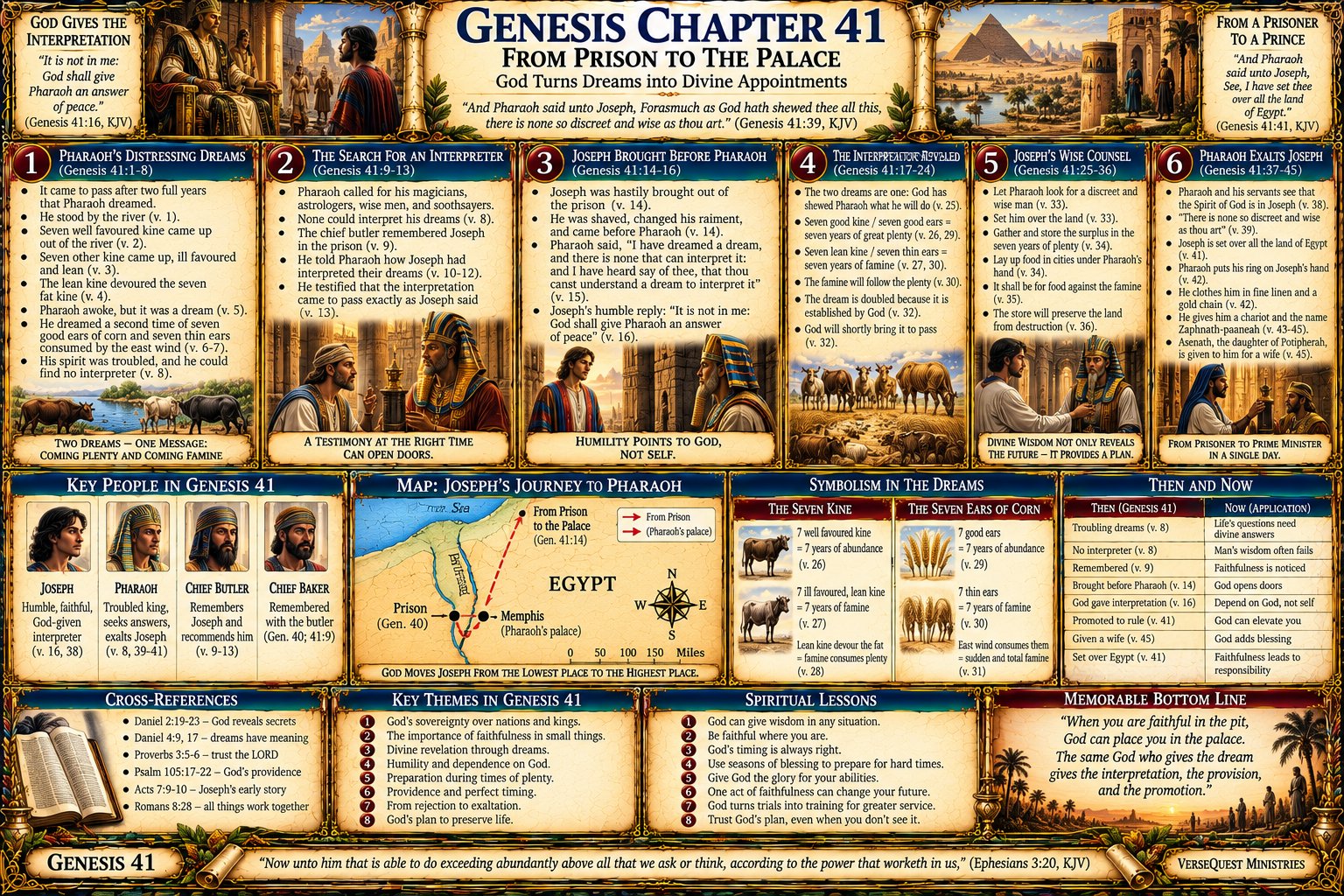
- Genesis 41 – Joseph from Prison to the Palace: Pharaoh’s Dreams, Seven Years of Plenty and Famine, and Joseph Exalted Over Egypt (KJV Bible Study Chart)
- Explore Genesis 41 with this detailed KJV Bible study chart tracing Joseph’s dramatic rise from prison to ruler over Egypt. Follow Pharaoh’s two troubling dreams of seven cattle and seven…
- $4.99
- Add to cart
-
-
Uncategorized
-
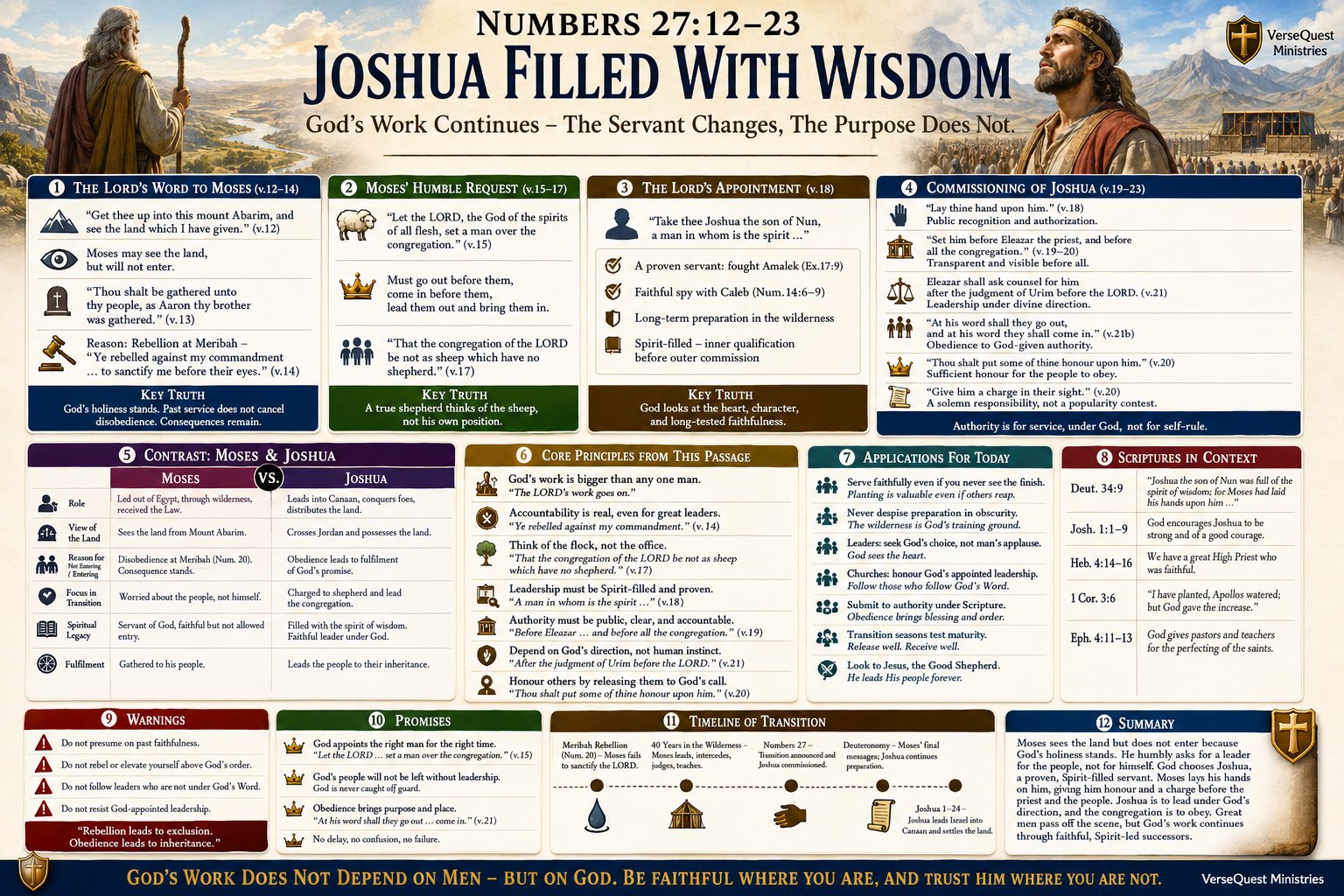
- Numbers 27:12–23 Bible Study Chart – Joshua Filled with Wisdom and Commissioned to Lead Israel (KJV)
- Study Numbers 27:12–23 with this detailed KJV chart covering Moses’ final request, Joshua’s appointment, the spirit of wisdom, public commissioning, leadership transition, and God’s continuing purpose.
- $3.99
- Add to cart
-
-
Premium VerseQuest Books
-
-75%
- Christ in the Old Testament Made Plain — 100-Essay KJV Study PDF
- A massive 670-page premium KJV Bible study PDF featuring 100 detailed essays showing Jesus Christ throughout the Old Testament in promise, type, sacrifice, Christophany, prophecy, suffering, resurrection, priesthood, and future…
- Original price was: $39.99.$9.99Current price is: $9.99.
- Add to cart
-
-75%
-
Uncategorized
-
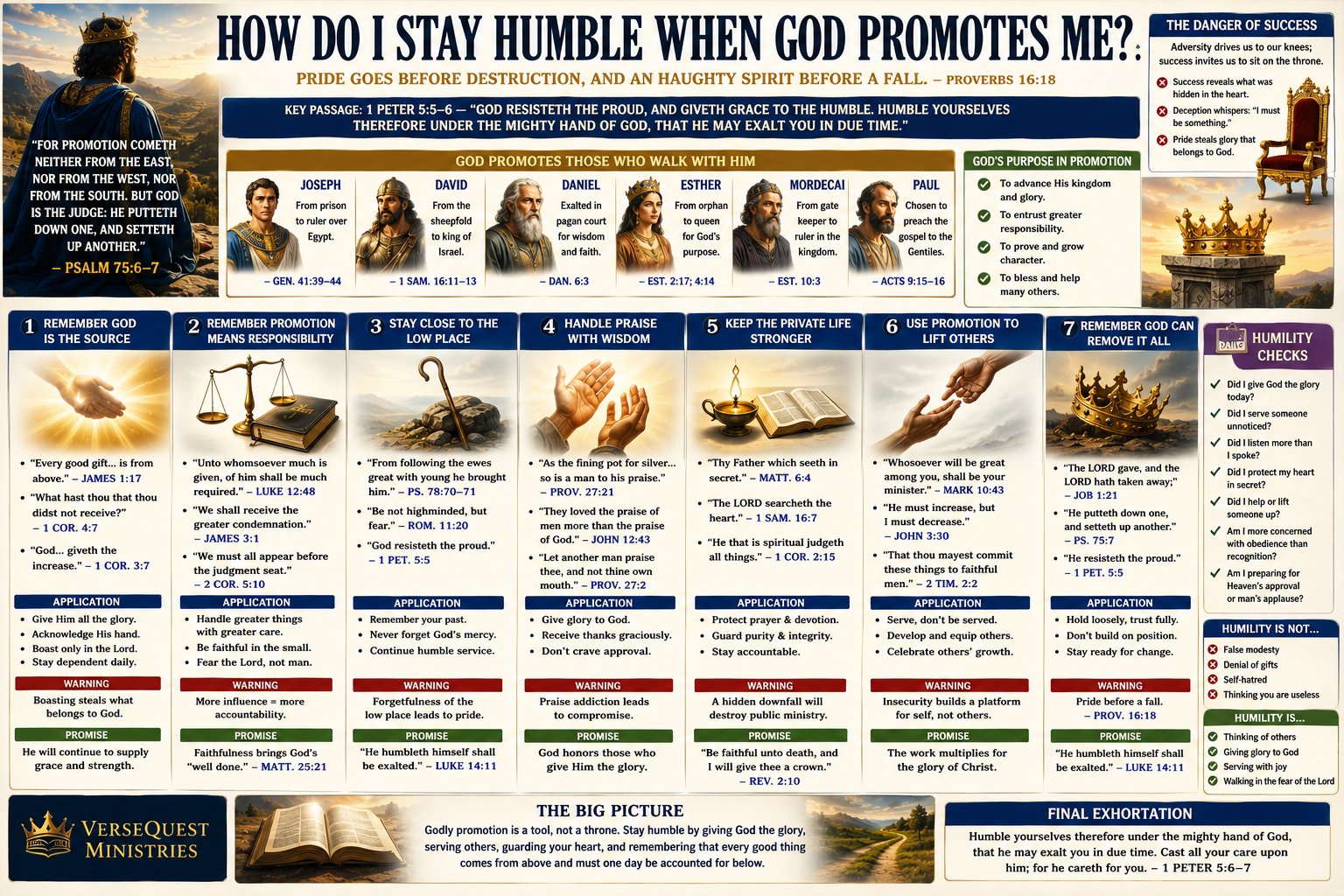
- How to Stay Humble When God Promotes You – Biblical Humility, Success, and Faithful Stewardship (KJV Bible Study Chart)
- Learn how to remain humble when God increases your influence with this detailed KJV Bible study chart covering pride, praise, responsibility, private devotion, servant leadership, and faithful stewardship.
- $3.99
- Add to cart
-