

Jesus in the Real World: Understanding and Applying the Teachings of Jesus Christ to Everyday Life – 681-Page PDF Book
Jesus in the Real World is a downloadable 681-page KJV Bible-study book containing a full introduction, 100 detailed studies, a comprehensive conclusion, and an illustrated master chart. It explains how to understand Christ’s teachings in their proper doctrinal setting and apply their enduring truth to everyday life.
The studies address the heart, marriage, family, relationships, forgiveness, money, work, leadership, school, athletics, religious hypocrisy, false teachers, social media, prayer, suffering, discipleship, evangelism, and the return of Christ. Salvation by grace, eternal security, Israel and the Church, and right division remain clear throughout.
This extensive $29.99 PDF resource is designed for personal study, sermon preparation, Sunday school teaching, family instruction, discipleship, and practical KJV Bible education.
$29.99
Description
Jesus in the Real World is a comprehensive, 681-page downloadable PDF book containing a full series introduction, 100 substantial Bible studies, a concluding study, and an illustrated master Bible-study chart. Priced at $29.99, this extensive KJV-centered resource examines how the teachings of Jesus Christ can be understood correctly, rightly divided doctrinally, and applied honestly to everyday decisions.
Many Bible students understand the importance of doctrine but still ask a necessary practical question: How do the words Christ spoke two thousand years ago govern life in a modern home, business, school, church, athletic team, workplace, family conflict, financial decision, digital environment, or private temptation? This book answers that question without reducing Christ’s teachings to sentimental slogans, inspirational fragments, psychological advice, or a works-based religious system. Each study begins with Scripture, establishes the original setting, identifies the unchanging biblical truth, compares that truth with the completed revelation given through Paul, and then carries the teaching into present-day life.
The opening studies establish the book’s doctrinal method. They explain why Christ’s words remain living and authoritative, how ancient truth enters modern crises, why Scripture must be rightly divided, and how to distinguish Israel’s Kingdom setting from doctrine addressed directly to the Church. The book rejects both red-letter religion that replaces Pauline Church doctrine and the opposite error that practically discards the earthly teachings of Christ. The Jesus who taught beside Galilee is the same risen Lord who revealed the gospel of grace and the mystery of the body of Christ through Paul.
Salvation remains firmly grounded in the finished work of Jesus Christ. The book does not teach that sinners obtain or retain eternal life by keeping the Sermon on the Mount, producing enough fruit, forgiving enough people, or accomplishing sufficient acts of service. Christ died for our sins, was buried, and rose again the third day. Salvation is received by grace through faith, apart from works, and the believer is eternally secure in Christ. At the same time, the studies refuse to turn grace into an excuse for careless living. Salvation is free, but discipleship, fellowship, testimony, service, fruitfulness, and eternal reward involve genuine obedience.
The first major portion of the book examines the inner life. Christ’s teachings are applied to the corruption of the heart, religious hypocrisy, pride, anxiety, anger, lust, covetousness, comparison, self-promotion, and the refusal to deny self. These studies show that outward conduct grows from inward loyalties. Modern society may rename sin, improve its presentation, or blame every evil upon external circumstances, but Christ identifies the motives and appetites operating beneath the visible act.
The book then turns to relationships, forgiveness, confrontation, compassion, discernment, and leadership. Readers will examine the Good Samaritan, enemy love, repeated offenses, biblical confrontation, hypocritical judgment, servant leadership, and the difference between kindness and spiritual gullibility. Biblical love is presented as something stronger than emotional agreement: it serves, tells the truth, bears burdens, protects the vulnerable, corrects wrongdoing, releases personal vengeance, and refuses to call evil good.
Marriage and family life receive a complete practical treatment. Christ’s teachings are applied to the divine foundation of marriage, hardness of heart, the value of children, the protection of little ones, care for aging parents, divided homes, prodigal family members, grief, and the construction of a household capable of enduring life’s storms. A Christian home is shown to be more than religious decoration and public appearance; it is built through truth, prayer, forgiveness, discipline, responsibility, fidelity, and sacrificial love.
Additional sections carry Christ’s words into employment, education, business, athletics, money, and leadership. The studies address salt and light in hostile environments, the Golden Rule, faithfulness in small duties, honest speech, peer pressure, satanic shortcuts, civil authority, results-driven institutions, fair compensation, generosity, financial repentance, envy, and the danger of allowing mammon to occupy God’s throne. Special attention is given to the modern obsession with winning, expansion, productivity, statistics, and profit at the expense of people.
Religion and spiritual discernment form another major emphasis. Readers will study Christ cleansing the temple, private prayer, vain repetition, fasting, the Sabbath controversy, religious tradition, blind guides, false prophets, corrupt fruit, and the broad road. The book provides biblical tests for examining teachers, ministries, institutions, doctrinal claims, financial practices, sexual integrity, treatment of people, and use of authority. It distinguishes biblical fruit inspection from gossip, suspicion, factionalism, and unsupported accusation.
The digital and ungodly world is addressed directly. Christ’s teachings are applied to idle words, private messages, hidden accounts, pornography, entertainment, social media, false information, corrupting influences, persecution, public courage, hostility, and the need to remain wise as serpents and harmless as doves. Technology may multiply the distance, speed, and audience of human conduct, but it does not reduce moral responsibility before God.
The closing sections examine prayer, faith, delay, suffering, grief, service, fruitfulness, evangelism, watchfulness, and the return of Christ. Readers will study the storm-tossed disciples, Peter walking upon the water, persistent prayer, Lazarus’s death and resurrection, Gethsemane, the cost of discipleship, abiding in the vine, divine pruning, the badge of Christian love, the waiting harvest, and the Church’s blessed hope. The book concludes with Christ’s promise, “I will come again, and receive you unto myself,” reminding readers that the real world is not the final world.
This downloadable PDF can be used as an extended personal study, a teaching reference, a source for sermon and Sunday school preparation, a family discipleship resource, or a structured topical course on practical Christian living. Its 100 individual studies allow readers to work through one subject at a time while the full book provides a unified doctrinal framework for bringing Christ’s words from the Bible page into everyday life.
The enduring authority of Christ’s words: Christ’s teachings remain living and necessary because the human heart, the nature of sin, and man’s need for truth have not changed. Rightly divided application: Every passage must be understood through its original audience, doctrinal setting, covenant context, and place within progressive revelation. Israel and the Church: Kingdom commands and prophetic warnings addressed to Israel must be distinguished from doctrine governing the body of Christ. The gospel of grace: Salvation rests entirely upon Christ’s death for sins, burial, and resurrection and is received by grace through faith. Salvation and discipleship: Eternal life is a free gift, while Christian service, obedience, fellowship, sacrifice, fruit, and reward concern discipleship. Standing and state: The believer’s secure position in Christ is distinguished from his daily conduct, usefulness, fellowship, and spiritual condition. The condition of the heart: Christ traces visible sin back to pride, lust, anger, covetousness, hypocrisy, resentment, and unbelief. Obedience in ordinary life: Christ’s teachings are carried into real decisions involving family, employment, school, money, leadership, and relationships. Marriage and family: The Creator’s authority over marriage, parental responsibility, care for children, divided homes, prodigals, and grief are examined. Biblical love and forgiveness: Love is distinguished from agreement with evil, and forgiveness is distinguished from immediate restoration of trust. Direct biblical confrontation: Matthew 18 is applied to private offenses, witnesses, authority, restoration, and the rejection of gossip. Servant leadership: Authority is exercised for the protection, correction, growth, and welfare of those entrusted to a leader. Winning and the bottom line: Results, profits, rankings, and statistics are exposed as false gods when people become expendable. Money and stewardship: Mammon, treasure, generosity, compensation, restitution, envy, possessions, and eternal accountability are examined. Spiritual discernment: Teachers and ministries are tested through doctrine, character, money, morality, authority, treatment of people, and long-term fruit. Religion and hypocrisy: Public performance, religious tradition, commercialized worship, and spiritual appearance are brought beneath Christ’s rebuke. Digital responsibility: Speech, private conduct, visual intake, secrecy, online conflict, and corrupting influence remain accountable before God. Prayer and faith: Biblical prayer is separated from vain repetition, prosperity teaching, positive thinking, and attempts to control God. Suffering and divine delay: Grief, unanswered prayer, weakness, persecution, and tribulation are interpreted through Christ’s presence and victory. Abiding and fruitfulness: Spiritual fruit grows from dependence upon Christ rather than religious strain, past success, or frantic activity. Evangelism and the harvest: Believers are directed toward family, neighbors, coworkers, customers, international contacts, and written ministry. The blessed hope: The Church awaits Christ’s pre-Tribulation return while serving faithfully in a temporary world. Eternal accountability: Christian labor will be examined at the Judgment Seat of Christ, even though the believer’s salvation remains secure.
Central Argument: The teachings of Jesus Christ remain living and authoritative, but faithful application begins with faithful interpretation. Christ’s words must be read in their original setting, rightly divided according to their audience and doctrinal purpose, compared with the completed revelation of Scripture, and then applied to the believer’s present conduct. Practical Christianity is not produced by ignoring doctrine; it is produced when sound doctrine is allowed to govern real decisions.
Doctrinal Foundation: Jesus Christ ministered to Israel under the law and presented Himself as the promised King. His earthly teachings contain direct Kingdom doctrine, covenant instruction, prophetic warnings, and universal spiritual truths. The risen Christ later revealed the mystery of the Church and the gospel of grace through Paul. These revelations must be distinguished without being treated as contradictions.
Salvation and Christian Living: Salvation is received by grace through faith in Christ’s finished work and cannot be earned or preserved by practical obedience. The believer is eternally secure, but his daily state, fellowship, testimony, usefulness, fruitfulness, and reward are affected by his choices. Good works are the fruit of salvation, never its purchase price.
The Heart Governs the Life: Christ consistently moves beneath outward conduct to identify the heart. Anger precedes murder, lust precedes adultery, pride feeds religious performance, covetousness turns money into a master, and comparison distracts believers from their own assignments. External reforms cannot substitute for internal honesty and spiritual dependence.
Relationships Test Doctrine: Love, forgiveness, confrontation, compassion, boundaries, and reconciliation reveal whether biblical truth has moved beyond vocabulary. Love does not approve sin; forgiveness does not erase every consequence; and kindness does not require gullibility. Biblical relationships join grace, truth, discernment, responsibility, and charity.
Leadership Reveals Character: Authority exposes whether a person views people as souls or resources. Christ’s towel provides the pattern for leadership, while His courage and correction prove that service is not weakness. True leadership protects, guides, equips, disciplines, and develops others instead of consuming them for institutional success.
Money Reveals Mastery: Christ does not condemn honest work, responsible planning, prosperity, or ownership. He condemns allowing mammon to control morality, identity, security, and obedience. Spending, giving, compensation, restitution, financial honesty, and reactions to another person’s prosperity reveal the heart’s loyalties.
Fruit Requires Careful Examination: Crowds, gifts, buildings, emotional experiences, charitable publicity, and expanding organizations do not automatically prove God’s approval. Biblical fruit inspection considers doctrine, character, finances, sexual integrity, treatment of people, use of authority, established patterns, and long-term consequences. Discernment must be grounded in Scripture and evidence rather than gossip or prejudice.
Modern Technology Does Not Cancel Ancient Accountability: Idle words, visual corruption, secret communications, digital gossip, anonymous attacks, and repeated exposure to falsehood remain moral issues before God. Technology multiplies reach and speed, but every use of it still proceeds from the heart.
Faith and Suffering: Biblical faith does not deny storms or guarantee that every requested cup will be removed. It rests upon what God has revealed. Christ’s delay at Lazarus’s grave, His sleep in the storm, His tears, and His submission in Gethsemane demonstrate that divine silence is not divine absence and that suffering does not cancel God’s purpose.
Service and Fruitfulness: Christian activity is not automatically spiritual fruit. Christ is the vine, and the believer’s usefulness depends upon present fellowship, Scripture, prayer, submission, and the Spirit’s working. Past faithfulness cannot replace present dependence. The pruning knife may remove wasted growth without threatening the believer’s secure standing in Christ.
Evangelistic Responsibility: The Church has been entrusted with the gospel of the grace of God. One believer may sow, another may reap, but God gives the increase. Evangelism requires lifting the eyes toward people already present in homes, workplaces, neighborhoods, schools, businesses, and digital communication.
Future Hope: The real world is not the final world. The Church awaits the personal return of Christ and will be caught up to meet Him in the air. Watchfulness is not date-setting or prophetic panic; it produces sobriety, faithfulness, purity, stewardship, urgency, and readiness.
Questions for Further Study: Which teachings of Christ belong directly to Israel’s Kingdom program? Which principles are reinforced in Paul’s epistles? How does eternal security differ from reward and fellowship? What is the relationship between doctrine and conduct? How should believers identify false teachers without descending into gossip? How does the blessed hope change present priorities? Which modern decisions most clearly reveal the master governing the heart?
Personal Bible Study: The 100-study structure allows readers to examine one teaching at a time, compare the Gospel setting with Pauline doctrine, and consider how the passage governs present conduct. The book can be read consecutively or consulted topically when a particular question arises.
Sermon Preparation: Pastors and preachers can use the individual studies to develop sermons on Christian character, family life, money, prayer, leadership, suffering, discipleship, evangelism, spiritual discernment, and the return of Christ. Each chapter provides a biblical foundation, doctrinal distinctions, practical examples, and memorable teaching lines.
Sunday School and Adult Bible Classes: The book can support an extended 100-lesson series or shorter units based upon its ten major subject divisions. Teachers can assign individual studies for advance reading and use the related passages, contrasts, and applications as classroom discussion material.
Small Groups and Discipleship: Groups can read one essay before each meeting, examine the key passage together, and discuss how the principle applies to actual decisions. The book is especially useful for connecting doctrinal knowledge with daily obedience.
Family Bible Study: Parents can select age-appropriate studies concerning children, speech, honesty, technology, peer pressure, forgiveness, work, money, and Christian testimony. More mature subjects can be used by parents when children are ready for direct biblical instruction.
Christian Schools and Homeschooling: Teachers and parents can use selected essays for Bible courses, character studies, writing assignments, classroom discussions, and instruction concerning biblical decision-making.
Leadership and Ministry Training: The studies concerning servant leadership, authority, accountability, money, false teachers, spiritual fruit, and treatment of people can be used when training pastors, ministry workers, teachers, coaches, and group leaders.
Topical Teaching: The included master chart and detailed table of contents make it possible to locate material quickly for counseling preparation, topical lessons, discipleship conversations, and practical Bible instruction.
The King James Bible: The primary resource for verifying every doctrinal conclusion and practical application in the book.
A Complete KJV Concordance: Useful for tracing recurring terms such as Kingdom, grace, disciple, fruit, faith, love, heart, watch, and servant throughout Scripture.
A KJV Cross-Reference Bible: Helpful for comparing Christ’s earthly teachings with Old Testament foundations and Pauline Church doctrine.
A Reliable Bible Dictionary: Useful for studying biblical customs, first-century geography, Jewish religious practices, agriculture, marriage, money, work, and political authority.
Bible Maps and Timelines: Helpful for understanding Galilee, Judea, Samaria, Jerusalem, the chronology of Christ’s ministry, the Passion Week, and the development of the Book of Acts.
A Dispensational Bible Study Chart: Valuable for distinguishing Israel from the Church, law from grace, the Kingdom offer from the gospel of grace, and the Rapture from the Second Advent.
The Included Jesus in the Real World Master Chart: Provides a visual review of the book’s interpretive method, doctrinal foundation, major practical subjects, gospel message, and concluding hope.
VerseQuest Law vs Grace Series: Complements the book’s distinction between Israel’s legal covenant and the Church’s standing under grace.
VerseQuest Understanding the Will of God Series: Provides further study concerning guidance, obedience, surrender, suffering, and biblical decision-making.
VerseQuest What Happens After You Die? Series: Expands upon death, resurrection, eternal security, judgment, reward, and the believer’s future hope.
VerseQuest Pre-Tribulation Rapture Studies: Complement the final essays concerning watchfulness, the blessed hope, the Rapture of the Church, and Christ’s visible Second Advent.
Related products
-
Jesus Christ
-
-67%

- The Millennium Made Plain – 416-Page KJV Study on Christ’s Future Reign
- A premium 416-page KJV, rightly divided Bible study on the literal future Millennial reign of Jesus Christ. The Millennium Made Plain explains Revelation 19–20, Israel’s restoration, Satan’s binding, the Kingdom…
- Original price was: $29.99.$9.99Current price is: $9.99.
- Add to cart
-
-67%
-
Doctrine
-
-50%
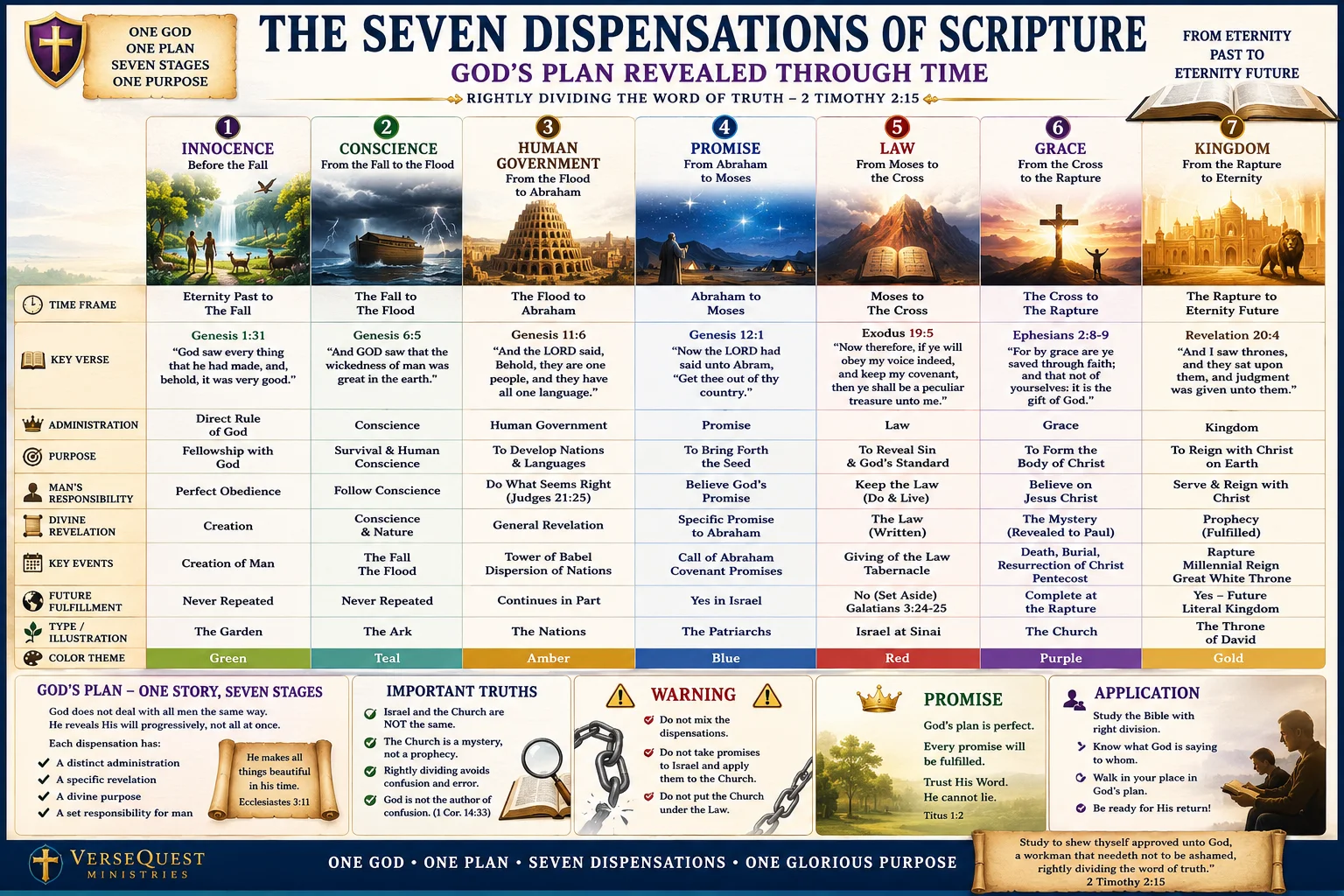
- The Seven Dispensations of Scripture Chart — KJV Rightly Divided (Copy)
- Premium printable KJV Bible study chart explaining the seven dispensations of Scripture from Innocence to the Kingdom. Rightly divided, visually organized, and designed for teaching, printing, and personal study.
- Original price was: $10.00.$4.99Current price is: $4.99.
- Add to cart
-
-50%
-
Bible Overview Series
-

- The New Jerusalem Made Plain — 621-Page PDF Study
- The New Jerusalem Made Plain is a massive 621-page KJV/rightly divided PDF study on the literal holy city revealed in Revelation 21–22. This 100-essay book makes the New Jerusalem plain…
- $34.99
- Add to cart
-
-
Doctrine
-
-50%
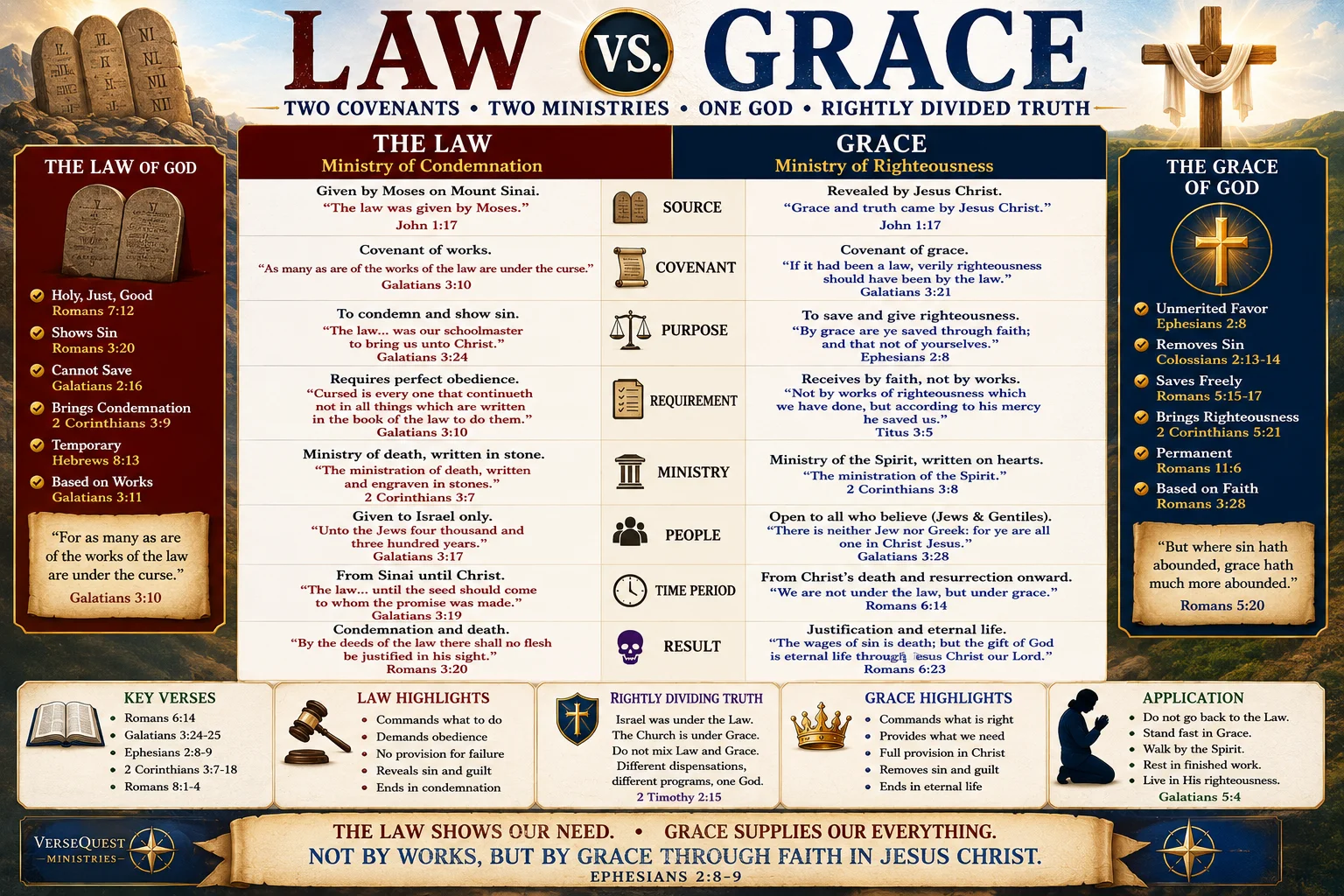
- Law vs. Grace Chart — KJV Rightly Divided
- Premium printable KJV Bible study chart comparing Law and Grace from a rightly divided perspective, showing works versus faith, condemnation versus righteousness, and Moses versus Christ.
- Original price was: $10.00.$4.99Current price is: $4.99.
- Add to cart
-
-50%
-
Digital Bible Study Collections
-
-53%
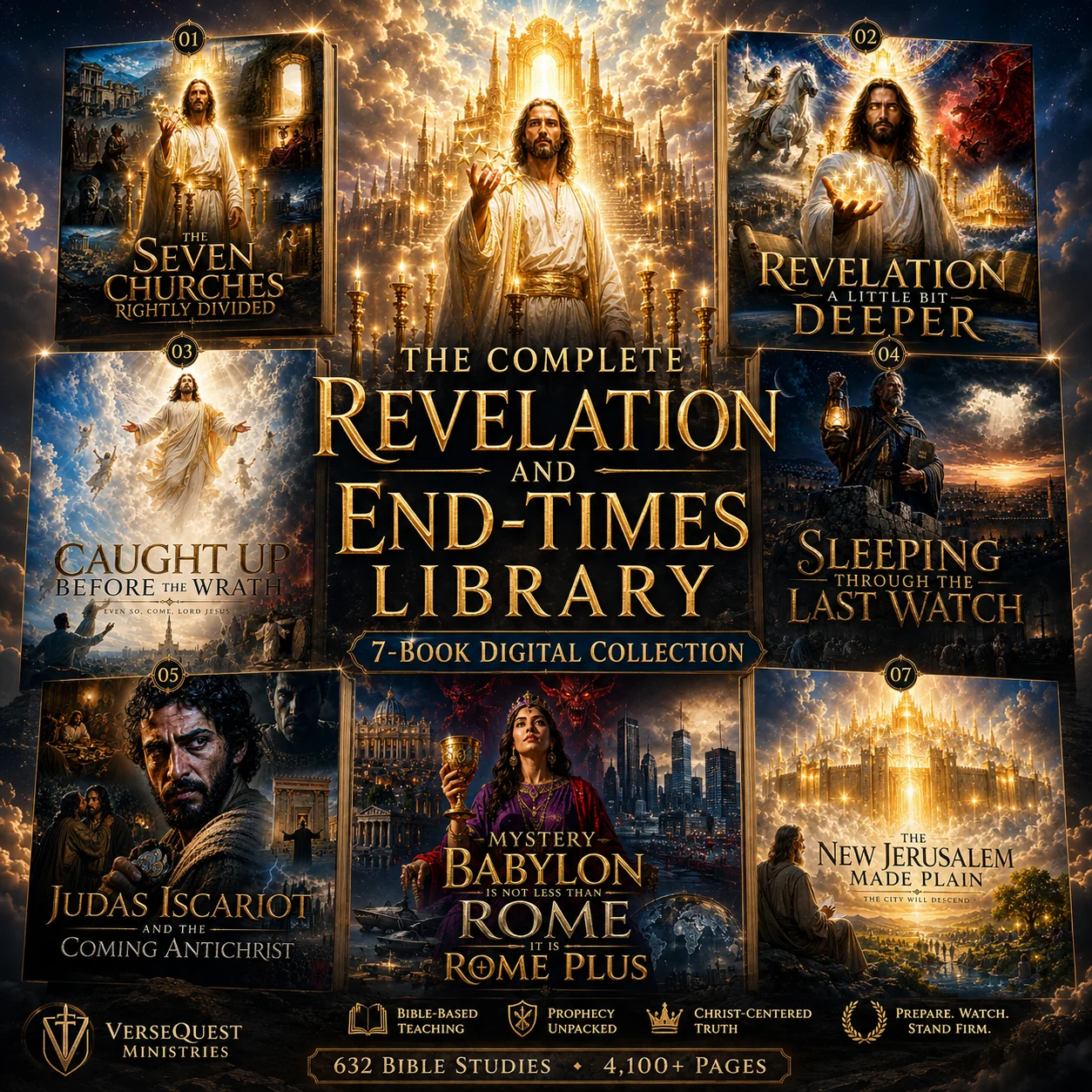
- The Complete Revelation and End-Times Library – 7-Book Digital Collection
- Seven complete KJV prophecy books in one premium digital collection—632 detailed Bible studies and more than 4,100 pages covering the seven churches, pre-Tribulation Rapture, last-days spiritual sleep, Judas and the…
- Original price was: $214.93.$99.99Current price is: $99.99.
- Add to cart
-
-53%