Genesis 9 – The Everlasting Noahic Covenant: The Bow in the Cloud, Blood, Human Government, Noah’s Vineyard, and the Prophecy of His Sons (KJV Bible Study Chart)
Explore Genesis 9 with this detailed KJV chart covering the renewed post-Flood commission, dominion and fear, meat given for food, the prohibition of blood, human accountability for murder, the everlasting Noahic covenant, the rainbow, Noah’s vineyard, the curse of Canaan, and the prophetic blessings of Shem and Japheth.
$4.99
Description
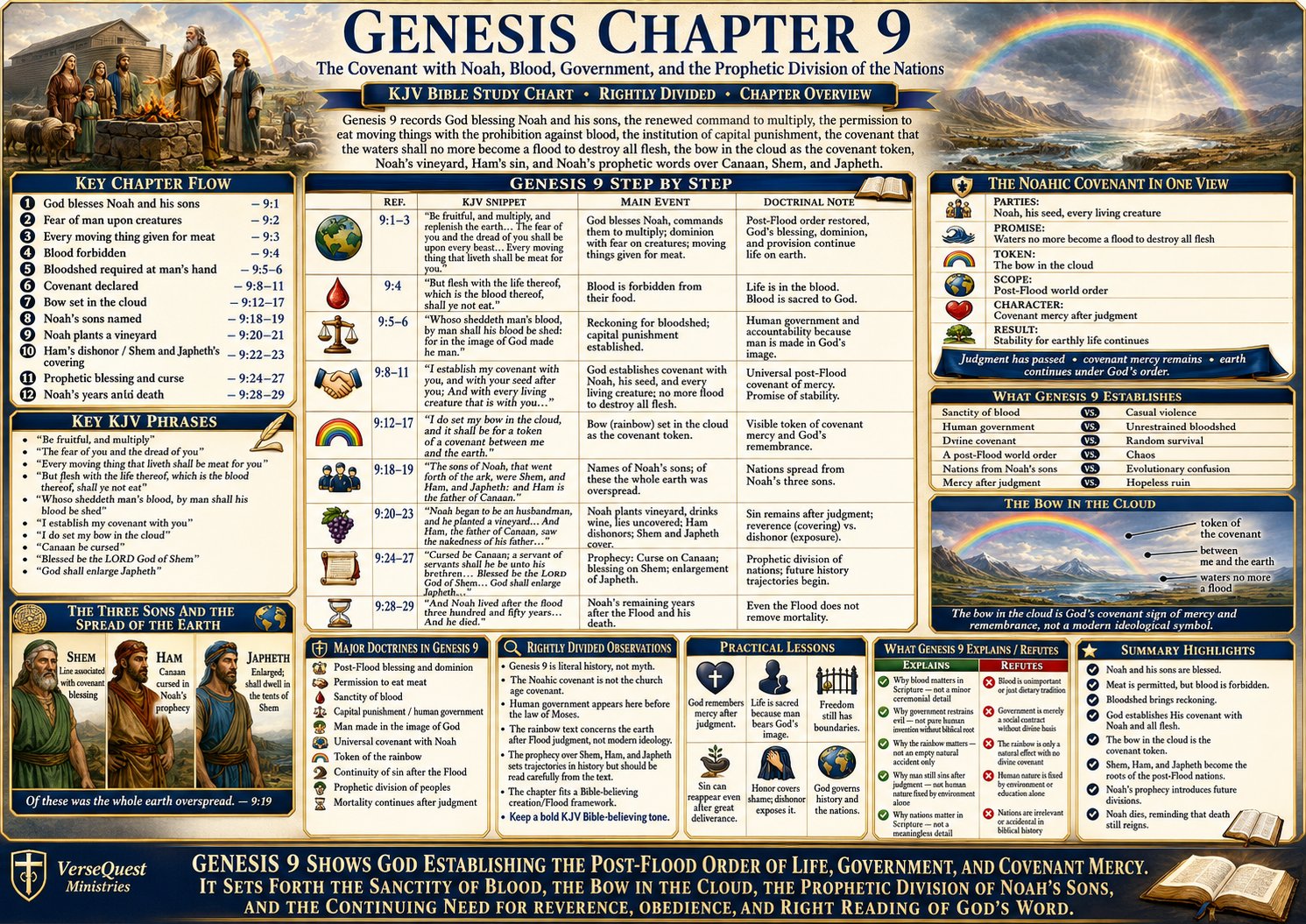
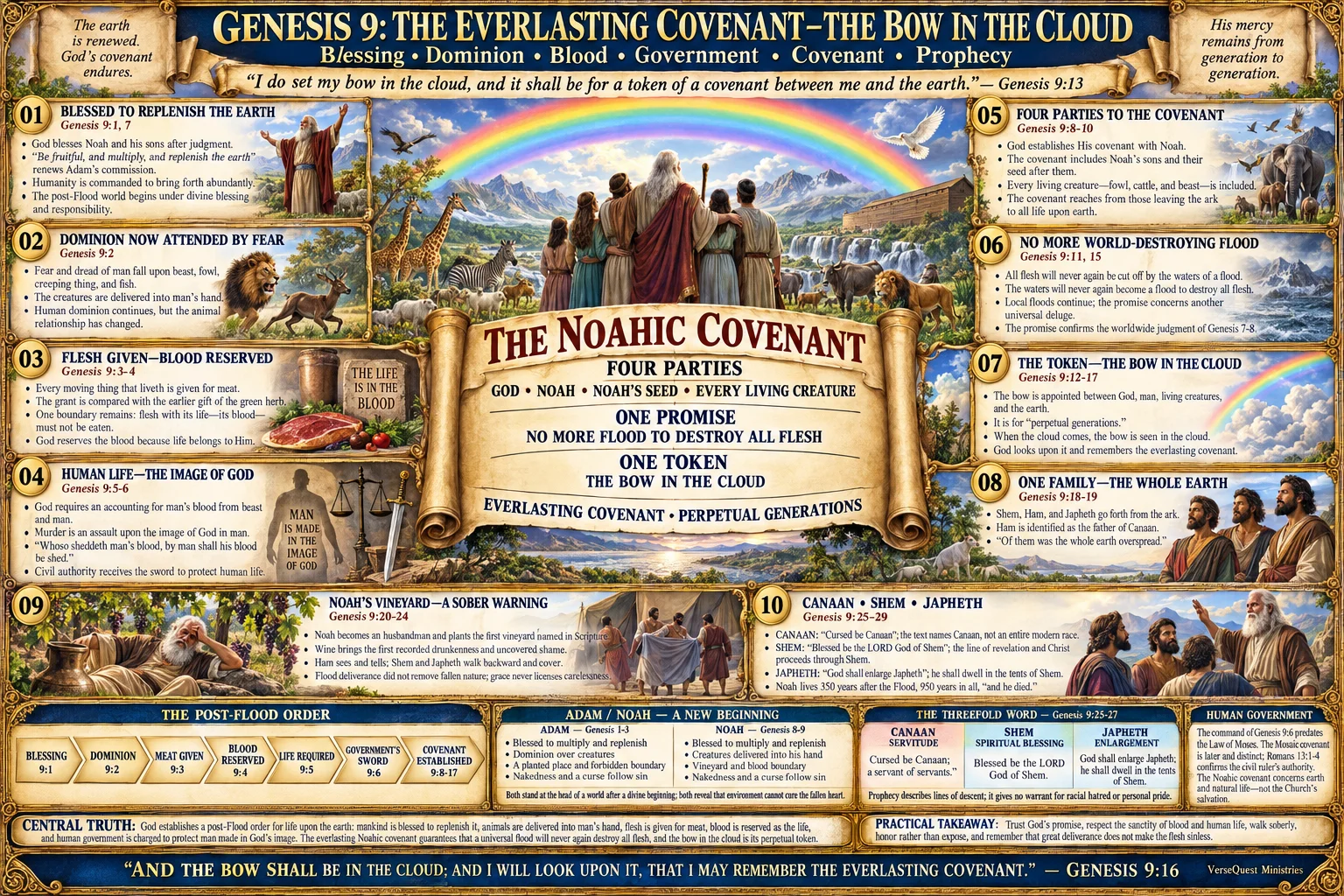
Genesis 9: The Everlasting Covenant — The Bow in the Cloud is a detailed KJV Bible study chart examining the new earthly order God establishes after Noah’s Flood. The chapter moves from renewed blessing and dominion to the permission to eat flesh, the sacredness of blood and human life, the establishment of human responsibility for murder, the everlasting Noahic covenant, the rainbow as its perpetual token, Noah’s vineyard and drunkenness, and the prophetic declarations concerning Canaan, Shem, and Japheth.
God begins by blessing Noah and his sons and commanding them, “Be fruitful, and multiply, and replenish the earth.” The post-Flood world therefore opens under divine blessing and renewed responsibility. Humanity again receives dominion over living creatures, but Genesis 9:2 shows that the relationship has changed: the fear and dread of man now rests upon beasts, birds, creeping things, and fish. Dominion continues after the Flood, but the peaceful relationship of the earlier creation has been altered.
Genesis 9:3 also introduces a major dietary change. God tells Noah, “Every moving thing that liveth shall be meat for you,” comparing this gift with the earlier provision of green herbs. Yet God immediately reserves one boundary: flesh with its life—its blood—is not to be eaten. Blood belongs uniquely to God because “the life of the flesh is in the blood,” a principle later developed extensively in Leviticus and ultimately fulfilled in the saving significance of the blood of Jesus Christ.
The chapter then establishes the sanctity of human life. God requires an accounting for man’s blood from both beast and man and declares, “Whoso sheddeth man’s blood, by man shall his blood be shed: for in the image of God made he man.” Murder is therefore uniquely serious because the victim bears God’s image. Within a dispensational framework, this becomes the foundation of the stewardship commonly called Human Government, formally introduced in the post-Flood world before the Mosaic law.
Genesis 9:8–17 records the Noahic covenant, made with Noah, his descendants, and every living creature. God promises never again to destroy all flesh by the waters of a universal Flood. The covenant is called everlasting and extends through perpetual generations. Its token is the bow in the cloud, placed by God as the visible reminder of His promise concerning the earth.
The chapter then turns from covenant glory to human weakness. Noah becomes a husbandman, plants a vineyard, drinks of the wine, becomes drunken, and lies uncovered in his tent. Flood judgment has removed the old civilization, but it has not removed the fallen Adamic nature. Ham sees his father’s nakedness and tells his brothers, while Shem and Japheth respectfully walk backward and cover Noah without looking upon him.
When Noah awakens, he pronounces prophetic words concerning his descendants. Canaan, not an entire modern race, is specifically cursed and called a servant of servants. Shem receives spiritual blessing through the LORD God, and the biblical line of revelation and ultimately Messiah proceeds through his descendants. Japheth is enlarged and associated with dwelling in the tents of Shem. Genesis 9 therefore establishes an enduring post-Flood order of blessing, dominion, blood, government, covenant, and prophecy while reminding the reader that divine grace does not eliminate the need for sobriety and obedience.
Genesis 9, Noahic covenant, everlasting covenant, bow in the cloud, rainbow covenant, Noah after the Flood, replenish the earth, dominion after the Flood, fear of animals, meat given for food, blood reserved, life is in the blood, sanctity of human life, image of God, capital punishment, Human Government, Noah’s vineyard, Noah’s drunkenness, Ham and Noah, curse of Canaan, blessing of Shem, enlargement of Japheth, post-Flood world
Genesis 9 establishes the new order governing human life after the Flood. God blesses Noah and his sons and repeats the command to be fruitful, multiply, and replenish the earth. This deliberately echoes Adam’s earlier commission and demonstrates that the Flood has not cancelled mankind’s earthly calling. Humanity begins again through one preserved family beneath renewed divine responsibility.
Human dominion continues, but Genesis 9:2 introduces fear and dread into the relationship between mankind and animals. The post-Flood world therefore differs from the earlier creation order. God delivers beasts, fowl, creeping things, and fish into man’s hand while maintaining man’s responsibility beneath the Creator.
Genesis 9:3 permits mankind to eat animal flesh, marking a clear dietary development from Genesis 1:29–30. God compares the gift of flesh with His earlier gift of green herbs. The later Mosaic distinctions between clean and unclean foods belong to Israel’s covenant and should not be read backward as a universal dietary code governing Noah’s descendants.
The permission to eat flesh is accompanied by a strict prohibition against consuming blood with the life. Scripture later develops this doctrine explicitly: the life of the flesh is in the blood, and God reserves blood for sacred purposes. The blood doctrine ultimately reaches its redemptive climax in Jesus Christ, though Genesis 9 itself concerns the sanctity of creaturely life rather than presenting the full New Testament doctrine of atonement.
Genesis 9:5–6 establishes special accountability for the shedding of human blood. God requires the murderer’s life because mankind bears the divine image. The Flood has not erased the image of God from fallen humanity. Human life therefore retains unique sacred value even after Adam’s sin and the worldwide judgment.
The statement “Whoso sheddeth man’s blood, by man shall his blood be shed” establishes human responsibility for executing judgment upon murder. Within traditional dispensational teaching, this becomes a foundational feature of the stewardship called Human Government. The term itself is theological rather than wording supplied by Genesis, while Romans 13 later explicitly describes civil rulers as bearing the sword.
The Noahic covenant includes four clearly identified parties or groups: God, Noah, Noah’s descendants, and every living creature. It therefore extends far beyond Noah personally. The covenant concerns the continuing earthly order and preservation of life rather than Church salvation or Israel’s later Mosaic covenant.
God promises never again to destroy all flesh through a worldwide Flood. Local floods may continue, but within the chart’s global-Flood interpretation the covenant specifically guarantees that Noah’s universal judgment will never be repeated upon all living flesh.
The bow in the cloud is God’s appointed token of the covenant. Genesis repeatedly calls the agreement everlasting and refers to perpetual generations. The rainbow therefore belongs first to God’s own covenant meaning before later cultures attach alternative symbolism to it.
Genesis 9:18–19 emphasizes that the entire post-Flood population descends from Noah’s sons, Shem, Ham, and Japheth. Ham is specifically identified as the father of Canaan, preparing the reader for the prophecy later in the chapter and the Table of Nations in Genesis 10.
Noah’s vineyard demonstrates that survival through judgment does not remove fallen human nature. Noah becomes drunk and uncovered, and his household immediately displays the continuing consequences of sin. Grace and covenant preservation never constitute permission for carelessness.
The curse falls specifically upon Canaan. Genesis does not curse every descendant of Ham, nor does the passage provide biblical justification for racial hatred, slavery based upon skin colour, or claims of ethnic superiority. Any interpretation extending Noah’s words into a blanket curse upon a modern race goes beyond the text.
Shem receives the statement “Blessed be the LORD God of Shem,” connecting his descendants with a special line of spiritual revelation. Abraham and ultimately Jesus Christ according to the flesh emerge from Shem’s line. Japheth receives enlargement and association with the tents of Shem, introducing prophetic themes developed through later national history.
Genesis 9 Bible studies, Noahic covenant teaching, rainbow covenant studies, biblical blood doctrine, sanctity-of-life lessons, human-government studies, capital-punishment teaching, post-Flood dispensational studies, Noah’s vineyard lessons, sobriety teaching, Ham and Canaan studies, Shem and Japheth prophecy, racial-interpretation correction, biblical covenant studies, homeschool Bible curriculum, Sunday school lessons, Christian school teaching, Bible institute classes, pastoral training, sermon preparation
King James Bible, Strong’s Concordance, Thompson Chain-Reference Bible, Treasury of Scripture Knowledge, Nave’s Topical Bible, Genesis 6–10 study notes, Noahic covenant charts, biblical covenant comparisons, blood-doctrine Scripture chains, Leviticus 17 studies, human-government dispensational charts, Romans 13 civil-government studies, Noah genealogy resources, Genesis 10 Table of Nations charts, Shem Ham and Japheth studies, Flood timelines, VerseQuest Genesis and covenant charts
Related products
-
Revelation
-
-71%
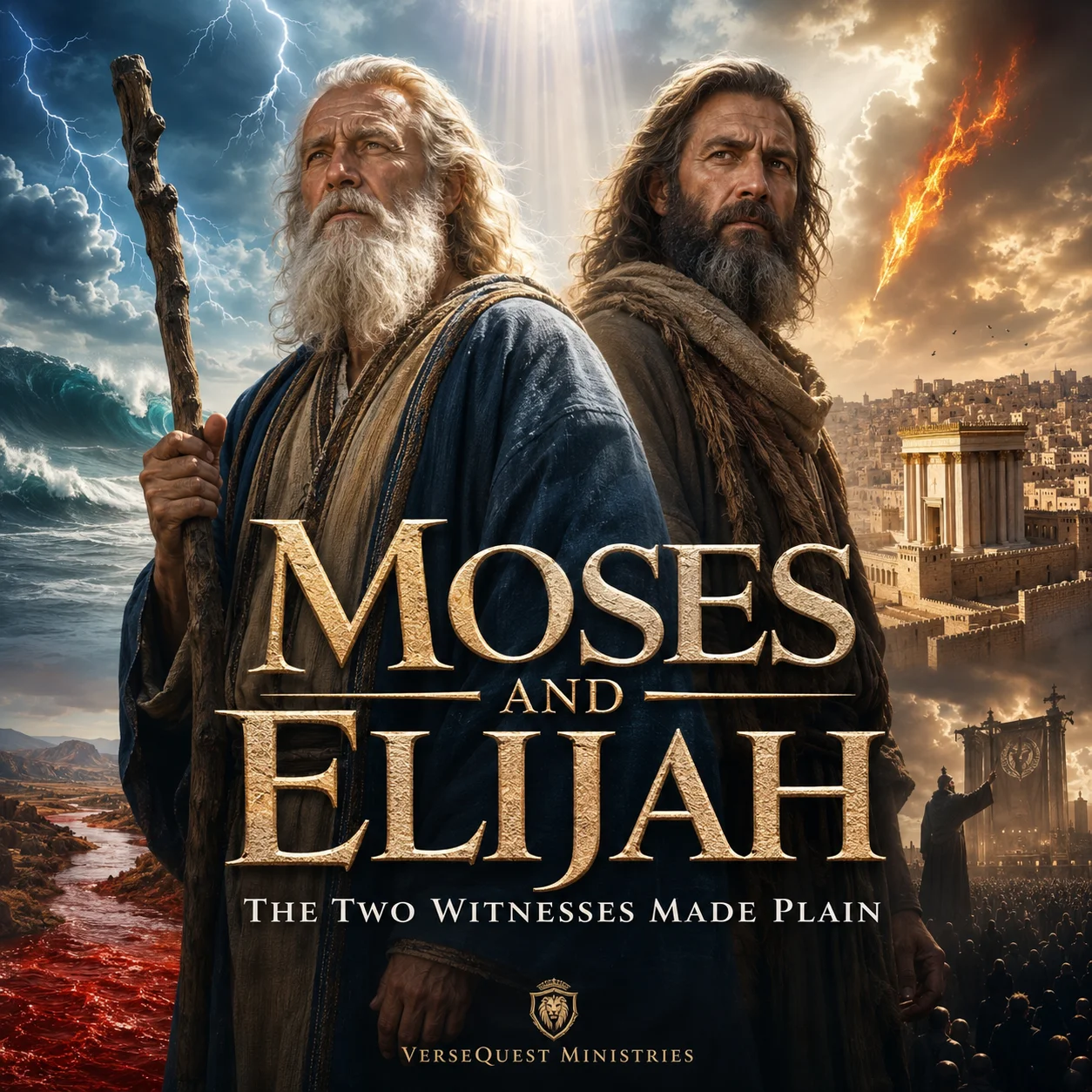
- Moses and Elijah: The Two Witnesses Made Plain
- Moses and Elijah: The Two Witnesses Made Plain is a 636-page premium VerseQuest PDF study proving from Scripture that the Two Witnesses of Revelation 11 are Moses and Elijah. This…
- Original price was: $34.99.$9.99Current price is: $9.99.
- Add to cart
-
-71%
-
VerseQuest Premium Library
-
-67%
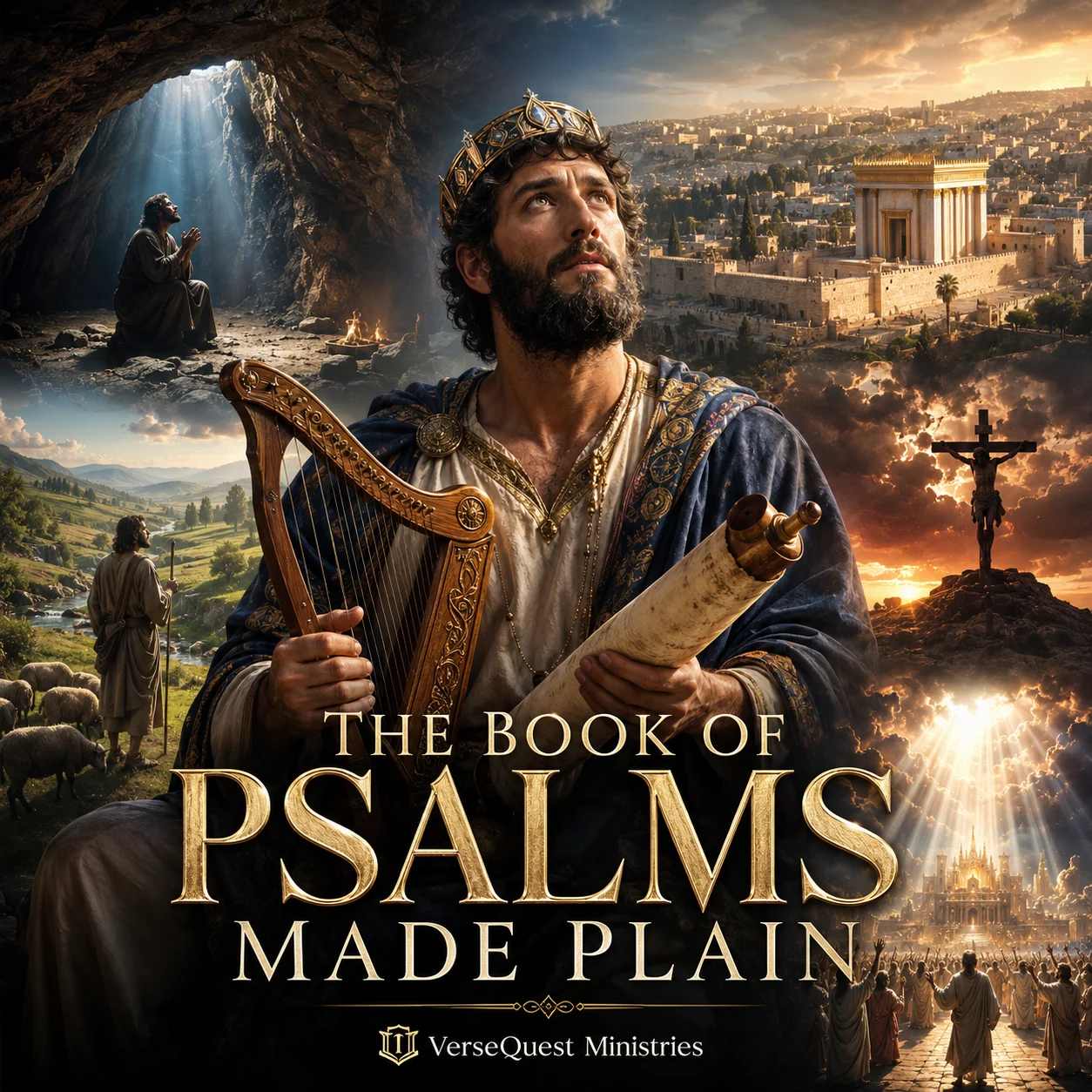
- The Book of Psalms Made Plain – 383-Page KJV Psalm Study
- The Book of Psalms Made Plain is a 383-page premium KJV Bible study featuring 54 detailed essays through the major themes, doctrines, prophecies, prayers, laments, and praises of the Psalms.…
- Original price was: $29.99.$9.99Current price is: $9.99.
- Add to cart
-
-67%
-
Chart Collections
-
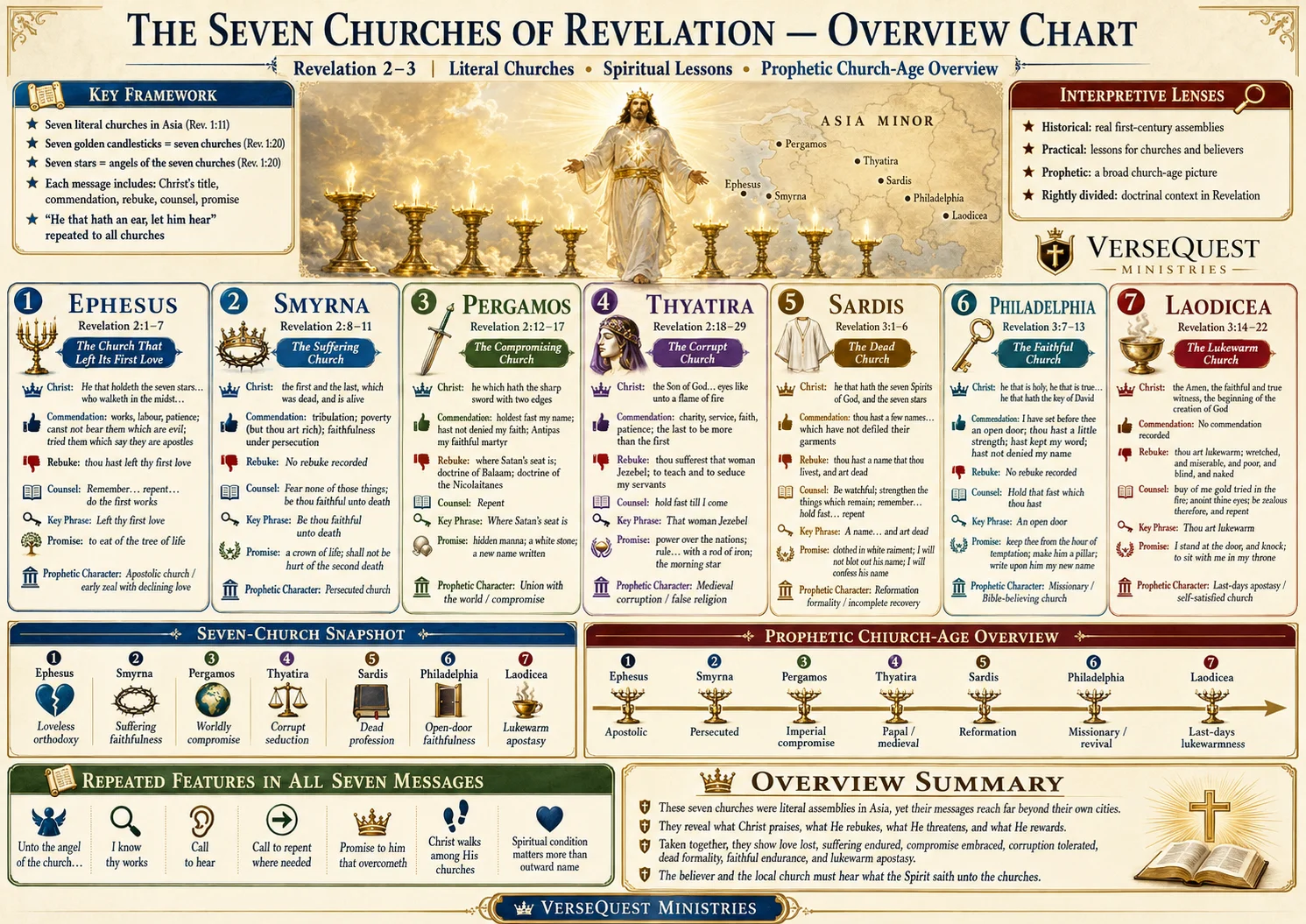
- The Seven Churches of Revelation Chart Collection – Christ Walking Among the Candlesticks
- A premium VerseQuest Ministries™ PDF chart collection covering the Seven Churches of Revelation in Revelation 2–3. Includes one overview chart plus individual KJV Bible study charts for Ephesus, Smyrna, Pergamos,…
- $12.99
- Add to cart
-
-
Doctrine Series
-
-14%
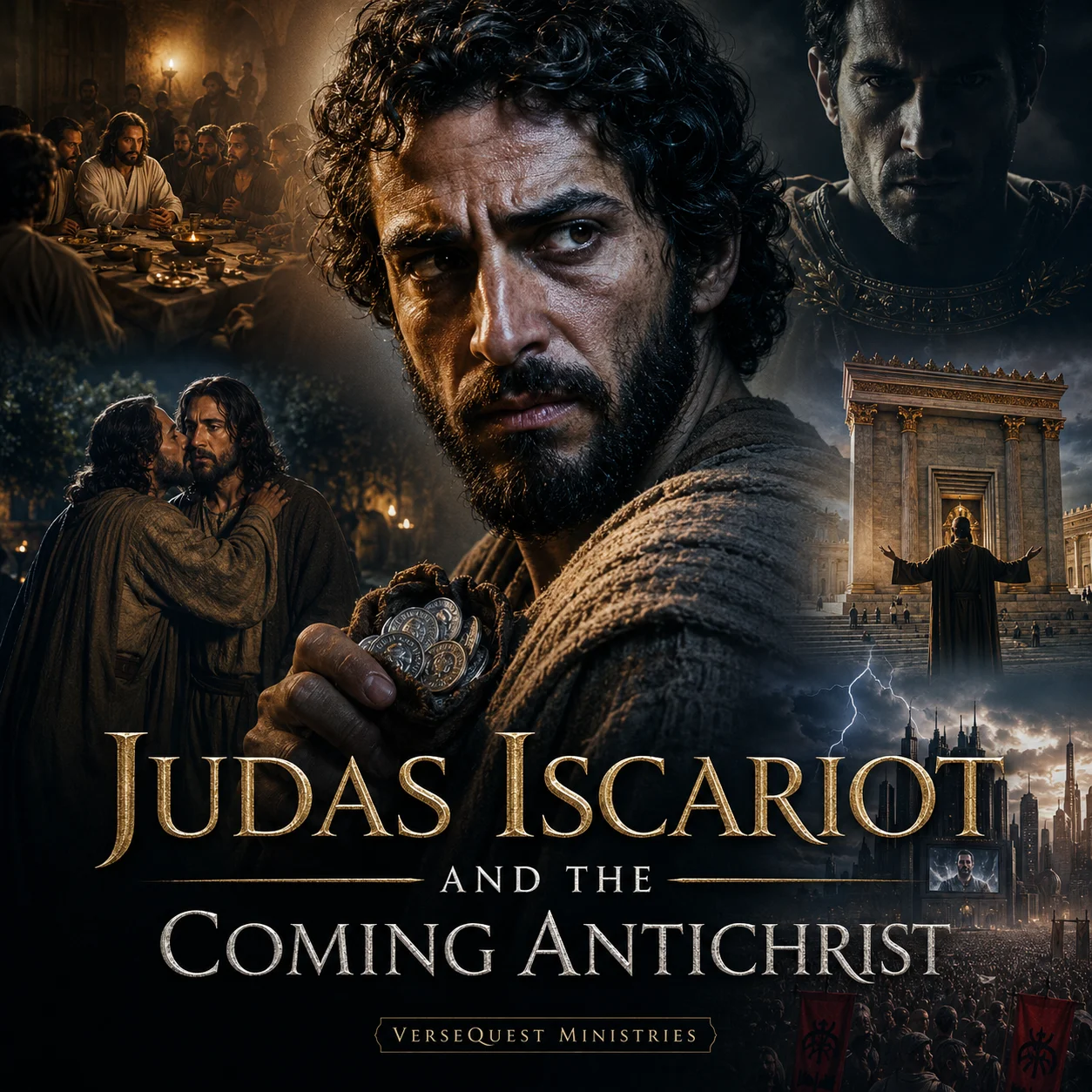
- Judas Iscariot and the Coming Antichrist – Premium KJV Prophecy Study
- A massive 459-page premium KJV prophecy study tracing the biblical connection between Judas Iscariot, the son of perdition, and the coming Antichrist. This detailed VerseQuest Ministries PDF examines Judas’ betrayal,…
- Original price was: $34.99.$29.99Current price is: $29.99.
- Add to cart
-
-14%
-
Doctrine Series