
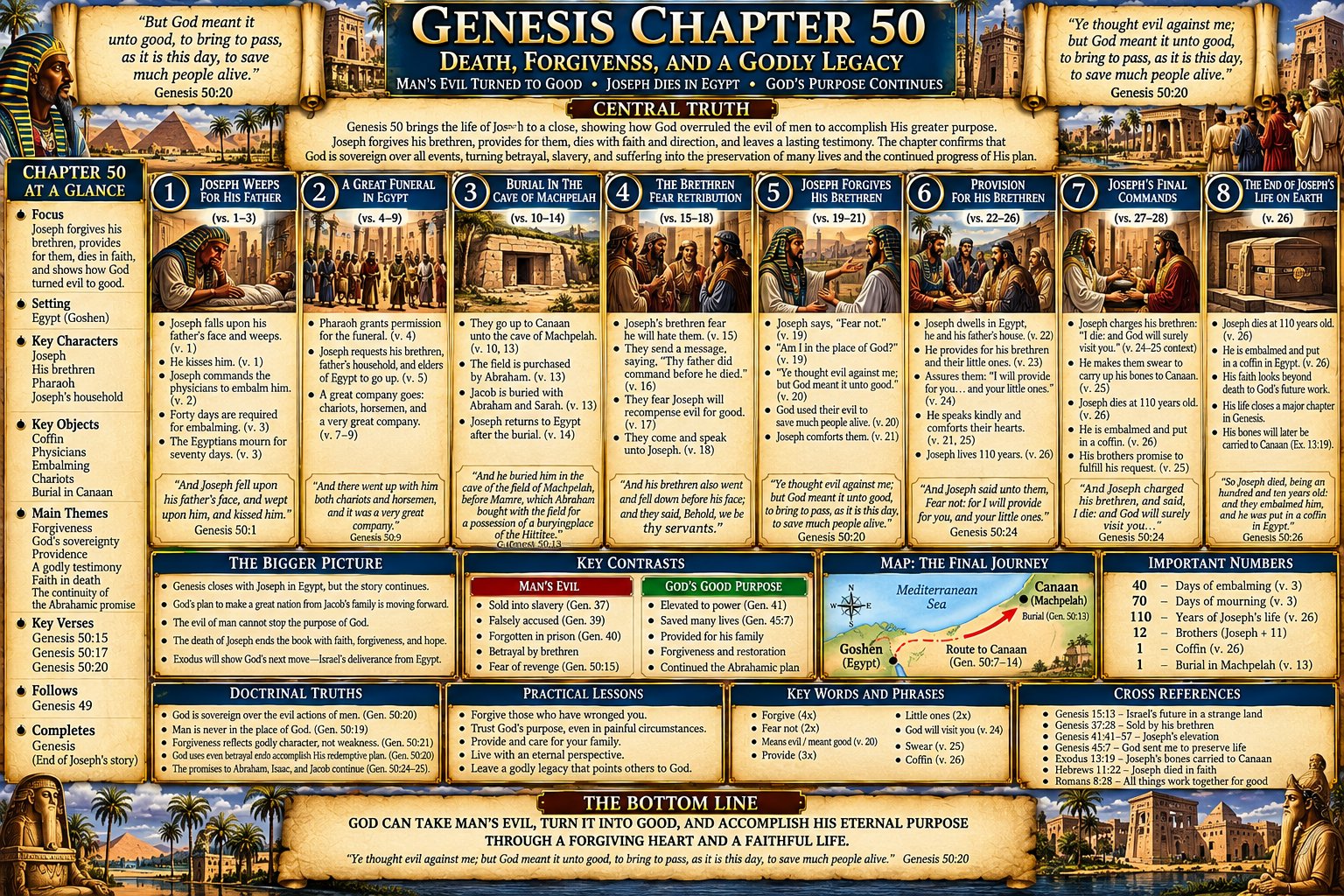
Genesis 50 – Death, Forgiveness, and a Godly Legacy: Jacob Buried in Machpelah, Joseph Forgives His Brothers, and God Means Evil for Good (KJV Bible Study Chart)
Explore Genesis 50 with this detailed KJV Bible study chart covering Jacob’s death, Joseph’s grief, the forty days of embalming, seventy days of mourning, and the great funeral journey to the cave of Machpelah in Canaan. Follow Joseph’s brothers as they fear retaliation after Jacob’s death and hear Joseph’s powerful response: “Ye thought evil against me; but God meant it unto good.” The chart also traces Joseph’s forgiveness, provision for his family, his later years, his assurance that God will surely visit Israel, and his command that his bones be carried from Egypt when God fulfills His promise. Genesis ends with a coffin in Egypt but faith looking toward Canaan. Ideal for Bible study, sermon preparation, homeschool, Sunday school, forgiveness studies, providence teaching, and a complete study of Joseph’s life.
$4.99
Description
Genesis 50: Death, Forgiveness, and a Godly Legacy is a detailed KJV Bible study chart examining the closing chapter of Genesis: Jacob’s death and burial, Joseph’s grief, the great funeral procession to Canaan, the brothers’ fear of retaliation, Joseph’s gracious response, and his final testimony of faith concerning Israel’s future deliverance from Egypt.
The chapter opens with Joseph falling upon his father’s face, weeping over him, and kissing him. Jacob is embalmed according to Egyptian custom, a process lasting forty days, while the Egyptians mourn him for seventy days. Joseph then requests Pharaoh’s permission to fulfill the oath he made to Jacob and bury his father in the cave of Machpelah in Canaan.
A remarkable funeral company travels from Egypt. Pharaoh’s servants, elders of Egypt, Joseph’s household, his brothers, chariots, and horsemen accompany the burial journey. After a period of mourning at the threshingfloor of Atad, Jacob’s sons carry their father to the field of Machpelah, the burial possession Abraham purchased from Ephron the Hittite. Joseph and the company then return to Egypt.
With Jacob gone, Joseph’s brothers become afraid. They fear that Joseph has merely postponed revenge until after their father’s death. They send a message asking forgiveness for their former wrongdoing and then come before Joseph, falling down and offering themselves as his servants.
Joseph weeps and responds with one of Genesis’s greatest declarations of providence: “Fear not: for am I in the place of God?” He does not deny their evil. Instead, he distinguishes their sinful intention from God’s sovereign purpose: “ye thought evil against me; but God meant it unto good, to bring to pass, as it is this day, to save much people alive.”
Joseph comforts them, speaks kindly to them, and promises provision for their families. Forgiveness does not redefine betrayal as righteousness; it refuses personal vengeance while recognizing that God was able to overrule evil for preservation and life.
Joseph lives to 110 years old and sees several generations of his family. Near death, he tells his brethren that God will surely visit them and bring them out of Egypt into the land promised to Abraham, Isaac, and Jacob. He requires an oath that his bones will eventually be carried out of Egypt.
Genesis closes with Joseph embalmed and placed in a coffin in Egypt—not because Egypt is the final destination, but because faith looks forward. Hebrews 11:22 specifically remembers Joseph’s command concerning his bones as an act of faith. Genesis ends with a coffin, yet also with confidence that God’s covenant story is far from finished.
Genesis 50, Joseph, Jacob, Israel, Jacob’s death, Joseph weeps, embalming, seventy days mourning, cave of Machpelah, burial in Canaan, funeral procession, Joseph’s brothers, fear of revenge, forgiveness, am I in the place of God, God meant it unto good, divine sovereignty, divine providence, Joseph comforts his brothers, Joseph age 110, God will surely visit you, Joseph’s bones, faith in the Exodus, covenant promise
Genesis 50 closes both Jacob’s life and the book of Genesis while deliberately leaving God’s covenant story unfinished. Joseph falls upon his father’s face, weeps, and kisses him. Jacob is embalmed for forty days, and Egypt mourns him seventy days. Joseph’s position has not erased genuine grief; biblical faith does not require pretending death brings no sorrow.
Joseph seeks Pharaoh’s permission to fulfill Jacob’s burial request. A large Egyptian and Hebrew company travels toward Canaan, demonstrating the honor Jacob’s household has gained in Egypt. After mourning at Atad, Jacob is buried in the cave of Machpelah, the burial property Abraham purchased in Genesis 23. His burial there testifies again that the family’s covenant hope remains connected with Canaan rather than Egypt.
After returning, Joseph’s brothers fear that Jacob’s death may remove the restraint preventing Joseph from taking revenge. They appeal for forgiveness and fall before him as servants. Joseph weeps. His response is decisive: “Fear not: for am I in the place of God?” He refuses to seize God’s position as final judge and avenger.
Genesis 50:20 gives the providential interpretation of Joseph’s entire story: “ye thought evil against me; but God meant it unto good.” The verse does not say the brothers’ evil became good or that God approved their sin. Their intention remained evil. God’s sovereign purpose, however, overruled what they intended and used the chain of events to preserve many lives during famine.
Joseph therefore comforts his brothers and promises, “I will nourish you, and your little ones.” This promise belongs to verse 21. Verses 22–23 then move forward to Joseph’s later years, recording his age and descendants.
Joseph lives 110 years and sees Ephraim’s children to the third generation as well as Machir’s children. Yet his final concern is not Egypt’s prosperity. He tells his brethren, “God will surely visit you,” and speaks of the land sworn to Abraham, Isaac, and Jacob.
In verses 24–25 Joseph makes the children of Israel swear that when God brings them out, they will carry his bones with them. Exodus 13:19 records Moses taking Joseph’s bones during the Exodus, and Joshua 24:32 records their eventual burial at Shechem.
Hebrews 11:22 identifies Joseph’s command concerning his bones as an act of faith. Genesis therefore ends with Joseph in a coffin in Egypt but spiritually looking toward Canaan. The coffin is not a symbol of defeated promise. It is a waiting testimony that God will visit His people, fulfill His covenant, and move the story forward into Exodus.
Genesis 50 is useful for teaching biblical forgiveness, refusing personal vengeance, trusting God’s providence through painful history, honoring family commitments, grieving with hope, and leaving a legacy of faith for the next generation. Joseph demonstrates that forgiveness can acknowledge real evil without remaining controlled by it, while his command concerning his bones shows faith looking beyond present circumstances toward God’s future promises. The chapter is ideal for personal Bible study, Sunday school, homeschool instruction, Bible institutes, sermon preparation, forgiveness and reconciliation studies, funeral or legacy teaching, providence studies, and lessons on faith, grief, sovereignty, hope, and finishing life well.
King James Bible, Strong’s Concordance, Thompson Chain-Reference Bible, Treasury of Scripture Knowledge, Nave’s Topical Bible, Genesis 37–50 study notes, Joseph life timeline, Joseph and his brothers charts, Cave of Machpelah studies, Genesis 50:20 providence studies, Exodus 1–13 studies, Joseph’s bones Scripture study, Hebrews 11 faith studies, Joshua 24 studies, forgiveness Scripture chains, Romans 8:28 studies, VerseQuest Genesis charts
Related products
-
VerseQuest Premium Library
-
-67%
- The Book of Psalms Made Plain – 383-Page KJV Psalm Study
- The Book of Psalms Made Plain is a 383-page premium KJV Bible study featuring 54 detailed essays through the major themes, doctrines, prophecies, prayers, laments, and praises of the Psalms.…
- Original price was: $29.99.$9.99Current price is: $9.99.
- Add to cart
-
-67%
-
The Rapture
-
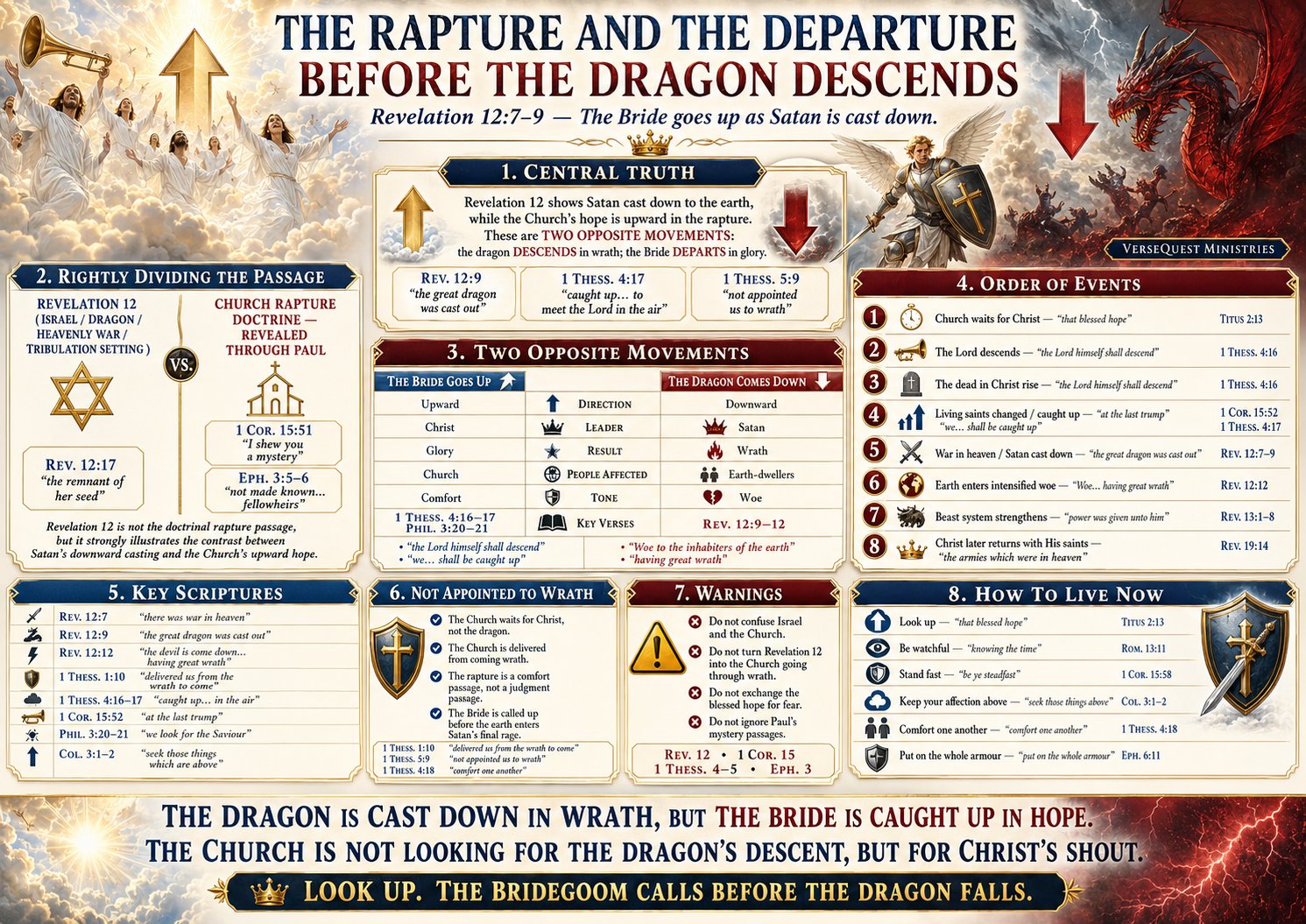
- The Rapture and the Departure Before the Dragon Descends – Printable Bible Study Chart
- Printable KJV Bible study chart on The Rapture and the Departure Before the Dragon Descends, showing the Bride caught up before Satan is cast down in wrath. This premium VerseQuest…
- $4.99
- Add to cart
-
-
Premium VerseQuest Books
-
-75%
- Christ in the Old Testament Made Plain — 100-Essay KJV Study PDF
- A massive 670-page premium KJV Bible study PDF featuring 100 detailed essays showing Jesus Christ throughout the Old Testament in promise, type, sacrifice, Christophany, prophecy, suffering, resurrection, priesthood, and future…
- Original price was: $39.99.$9.99Current price is: $9.99.
- Add to cart
-
-75%
-
Bible Overview Series
-
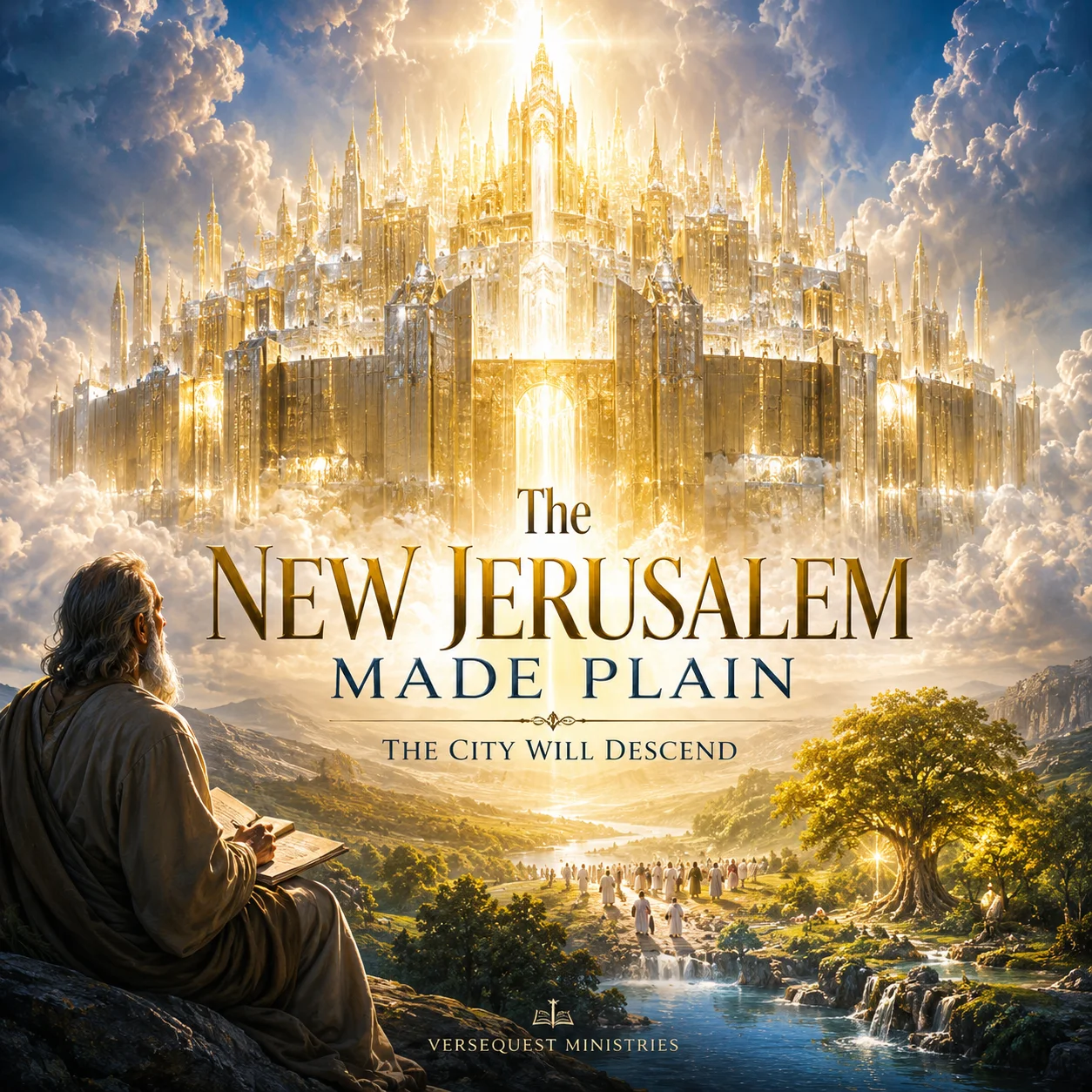
- The New Jerusalem Made Plain — 621-Page PDF Study
- The New Jerusalem Made Plain is a massive 621-page KJV/rightly divided PDF study on the literal holy city revealed in Revelation 21–22. This 100-essay book makes the New Jerusalem plain…
- $34.99
- Add to cart
-
-
The Rapture
-
-67%
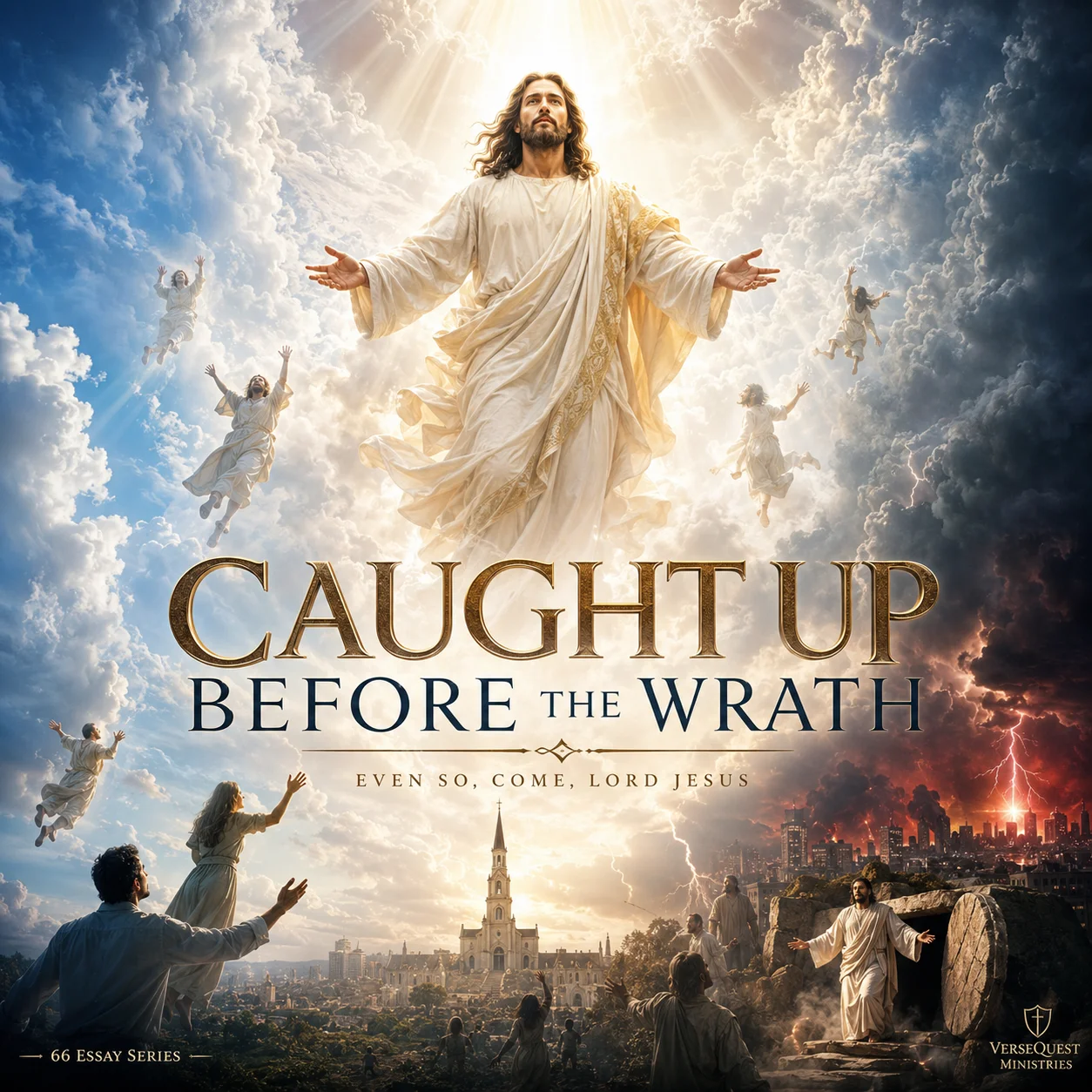
- Caught Up Before the Wrath – 66-Essay KJV Rapture Study
- Caught Up Before the Wrath is a 430-page premium KJV Bible study defending the pre-tribulation Rapture of the Church from a rightly divided, dispensational perspective. This 66-essay VerseQuest Ministries book…
- Original price was: $29.99.$9.99Current price is: $9.99.
- Add to cart
-
-67%