
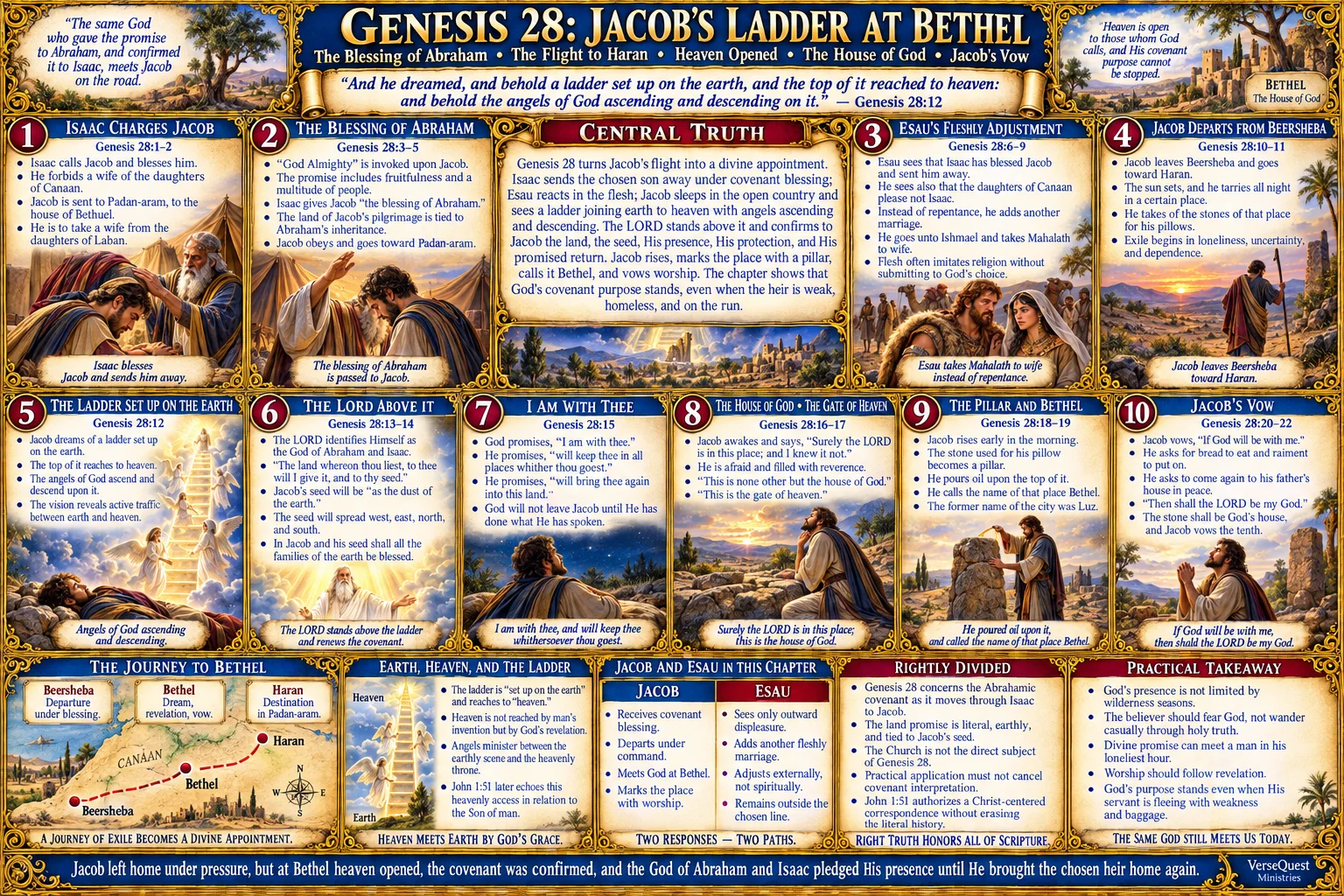
Genesis 28 – Jacob’s Ladder at Bethel: The Blessing of Abraham, Heaven Opened, the House of God, and Jacob’s Vow (KJV Bible Study Chart)
Explore Genesis 28 with this detailed KJV Bible study chart tracing Isaac’s blessing of Jacob, his departure from Beersheba toward Haran, and the unforgettable dream of a ladder stretching from earth to heaven. See the angels of God ascending and descending while the LORD stands above and reaffirms the Abrahamic covenant, promising Jacob the land, multiplied seed, divine presence, protection, and eventual return. The chart also examines Jacob’s awakening at Bethel, his declaration that the place is “the house of God” and “the gate of heaven,” the anointed pillar, and Jacob’s vow. It also highlights John 1:51’s Christ-centered correspondence with Jacob’s ladder while preserving the literal patriarchal history. Ideal for Bible study, sermon preparation, homeschool, Sunday school, covenant studies, and teaching on divine presence, worship, and promise.
$4.99
Description
Genesis 28: Jacob’s Ladder at Bethel is a detailed KJV Bible study chart tracing Jacob’s departure from Beersheba, Isaac’s covenant blessing, the journey toward Haran, the dream of the ladder reaching from earth to heaven, the LORD’s reaffirmation of the Abrahamic promises, and Jacob’s response at Bethel. The chapter transforms Jacob’s flight from home into one of the great divine encounters of Genesis.
Isaac begins by blessing Jacob and commanding him not to take a wife from the daughters of Canaan. Instead, Jacob must go to Padan-aram and take a wife from the family of Laban. Isaac explicitly gives Jacob “the blessing of Abraham,” connecting him with the promises of fruitfulness, multiplied seed, and inheritance in the land. The covenant line now clearly advances through Jacob.
Esau sees that the daughters of Canaan displease his parents and responds by taking another wife from Ishmael’s family. His action addresses the outward issue of marriage but does not place him within the chosen covenant line. Genesis continues contrasting Jacob, who leaves under covenant blessing, with Esau, who attempts an external adjustment.
Jacob then leaves Beersheba for Haran. As the sun sets, he stops at a certain place, takes stones for his pillows, and sleeps beneath the open sky. There he dreams of “a ladder set up on the earth, and the top of it reached to heaven,” with angels of God ascending and descending upon it.
Above the ladder stands the LORD, who identifies Himself as the God of Abraham and Isaac. He repeats the covenant promises concerning the land, Jacob’s descendants, worldwide blessing through his seed, divine presence, protection, and eventual return to the land. God declares, “I am with thee, and will keep thee in all places whither thou goest.”
Jacob awakens in awe and says, “Surely the LORD is in this place; and I knew it not.” He calls the location “the house of God” and “the gate of heaven.” The following morning he sets up the stone as a pillar, pours oil upon it, and names the place Bethel, replacing its former name Luz.
Jacob then makes a vow, acknowledging God’s promised presence, provision, preservation, and return. The chapter closes with Jacob committing himself to worship and promising a tenth unto God.
Genesis 28 therefore unites covenant, exile, revelation, heaven, worship, and promise. Jacob leaves home under pressure, but the LORD meets him in his loneliness. The chapter also provides a Christ-centered correspondence later echoed in John 1:51, where Jesus speaks of heaven opened and angels ascending and descending upon the Son of man. The literal history remains intact while the larger biblical pattern points toward the One who truly joins heaven and earth.
Genesis 28, Jacob’s ladder, Bethel, Jacob, Isaac, Esau, blessing of Abraham, Abrahamic covenant, Padan-aram, Haran, Beersheba, heaven opened, angels ascending and descending, house of God, gate of heaven, land promise, promised seed, divine presence, divine protection, Jacob’s vow, pillar and oil, Luz renamed Bethel, covenant continuity, Christ and Jacob’s ladder
Genesis 28 begins with Isaac formally blessing Jacob and sending him to Padan-aram to obtain a wife from Rebekah’s family. Isaac tells him not to marry a Canaanite woman and explicitly bestows “the blessing of Abraham.” The promises of multiplied seed, the land, and covenant continuity therefore move through Jacob. This agrees with God’s earlier declaration in Genesis 25:23 that the elder would serve the younger.
Esau observes that the Canaanite women displease Isaac and Rebekah and takes Mahalath, a daughter of Ishmael, as another wife. The action changes outward circumstances but does not alter God’s covenant choice. Genesis contrasts Esau’s external adjustment with Jacob’s departure under the spoken blessing.
Jacob leaves Beersheba and travels toward Haran. At sunset he stops in an unnamed location and sleeps using stones from the place. There God turns an ordinary stopping point into a place of revelation. Jacob dreams of “a ladder set up on the earth” whose top reaches heaven, with angels of God ascending and descending upon it.
The LORD stands above the ladder and identifies Himself as the God of Abraham and Isaac. He promises Jacob the land beneath him, descendants like the dust of the earth, expansion in every direction, worldwide blessing through his seed, His personal presence, preservation during the journey, and eventual return. The covenant rests first upon God’s declaration rather than Jacob’s maturity.
Jacob awakens afraid and declares, “Surely the LORD is in this place; and I knew it not.” He calls the location “the house of God” and “the gate of heaven.” The place becomes Bethel. Jacob sets up the stone as a pillar and pours oil upon it, marking the site of divine revelation and worship.
John 1:51 later provides an important Christ-centered correspondence. Jesus speaks of heaven opened and angels ascending and descending upon the Son of man. The New Testament therefore directs attention toward Christ as the true meeting point between heaven and earth. This does not erase Genesis 28 as literal history; rather, later revelation develops the pattern.
Jacob’s vow in verses 20–22 records his response to God’s promises concerning presence, provision, protection, and return. His language reflects a man still growing in faith. The chapter should not be read as though God’s covenant depended upon Jacob negotiating favorable terms. God had already spoken His unconditional covenant promises before Jacob responded.
Jacob also promises a tenth unto God. This occurs long before the Mosaic law and, like Abraham’s tithe in Genesis 14, should be distinguished from Israel’s later legal tithing system.
Genesis 28 therefore turns exile into appointment. Jacob leaves home uncertain and vulnerable, but heaven opens over the fugitive. God confirms the covenant, promises His presence, and begins the long process of shaping Jacob into the patriarch Israel.
Genesis 28 is useful for teaching that God’s presence is not limited by location, that covenant promises remain sure even when circumstances are uncertain, and that God can meet His servants in seasons of loneliness, displacement, and fear. It also provides important material for studying the Abrahamic covenant, Bethel, angelic ministry, worship after revelation, Jacob’s spiritual development, and John 1:51’s Christ-centered correspondence. The chart is valuable for personal Bible study, Sunday school, homeschool instruction, Bible institutes, sermon preparation, discipleship, covenant studies, Christological teaching, and lessons on divine guidance, assurance, worship, and faith during transition.
King James Bible, Strong’s Concordance, Thompson Chain-Reference Bible, Treasury of Scripture Knowledge, Nave’s Topical Bible, Genesis 27–35 study notes, Abrahamic covenant charts, Jacob and Esau comparison studies, patriarchal maps of Beersheba Bethel Haran and Padan-aram, Bethel Scripture studies, angelic ministry studies, John 1:51 studies, Hebrews 11 patriarchal studies, Jacob’s life timeline, biblical vow studies, VerseQuest Genesis charts
Related products
-
The Serpent's Footnotes
-
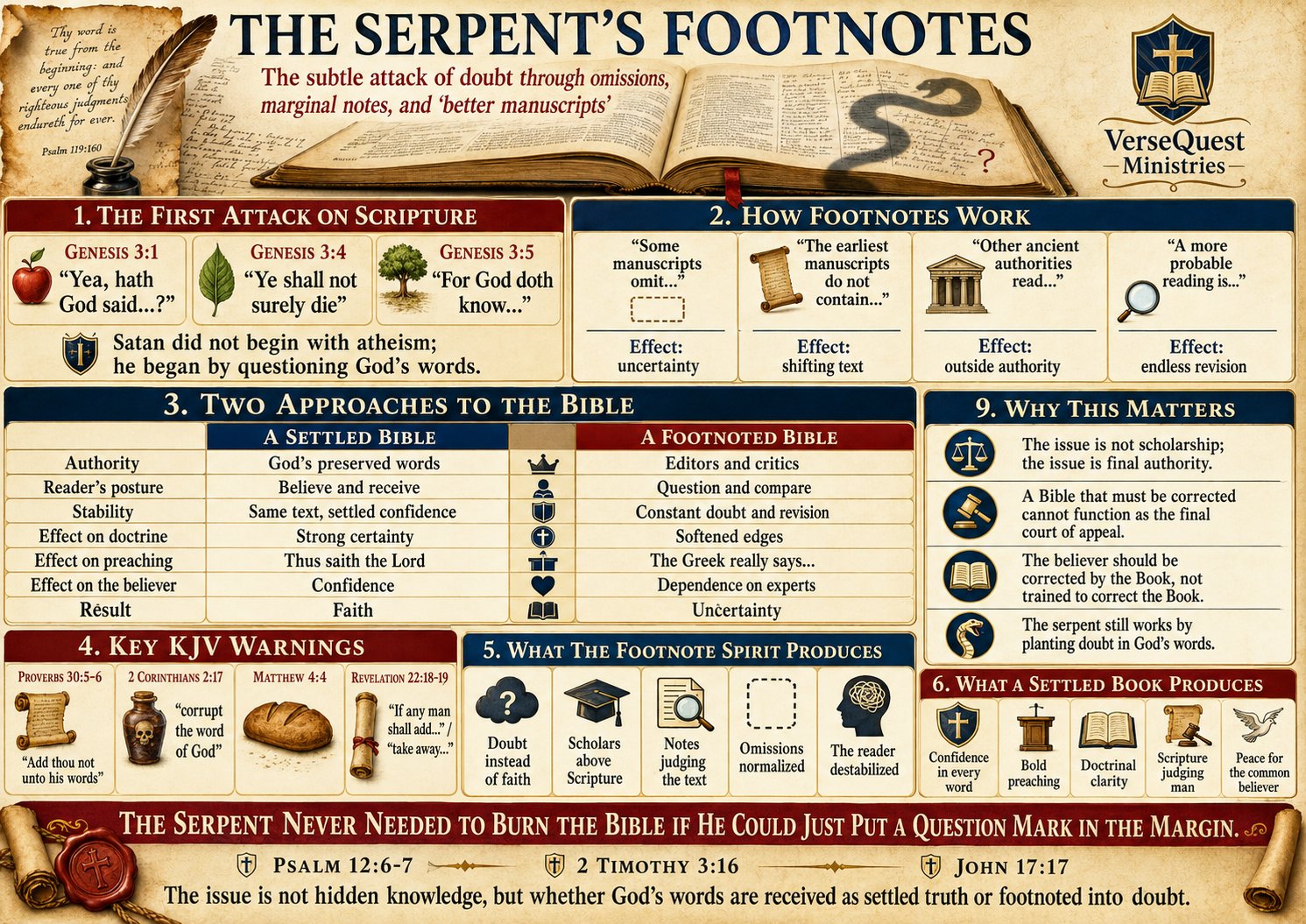
- The Serpent’s Footnotes Bible Study Chart – KJV Preservation, Textual Criticism, Omissions, and Manuscript Doubt
- Examine the attack of textual doubt with this detailed KJV Bible study chart covering manuscript footnotes, omissions, biblical preservation, final authority, and confidence in God’s settled words.
- $3.99
- Add to cart
-
-
Biblical Submission
-
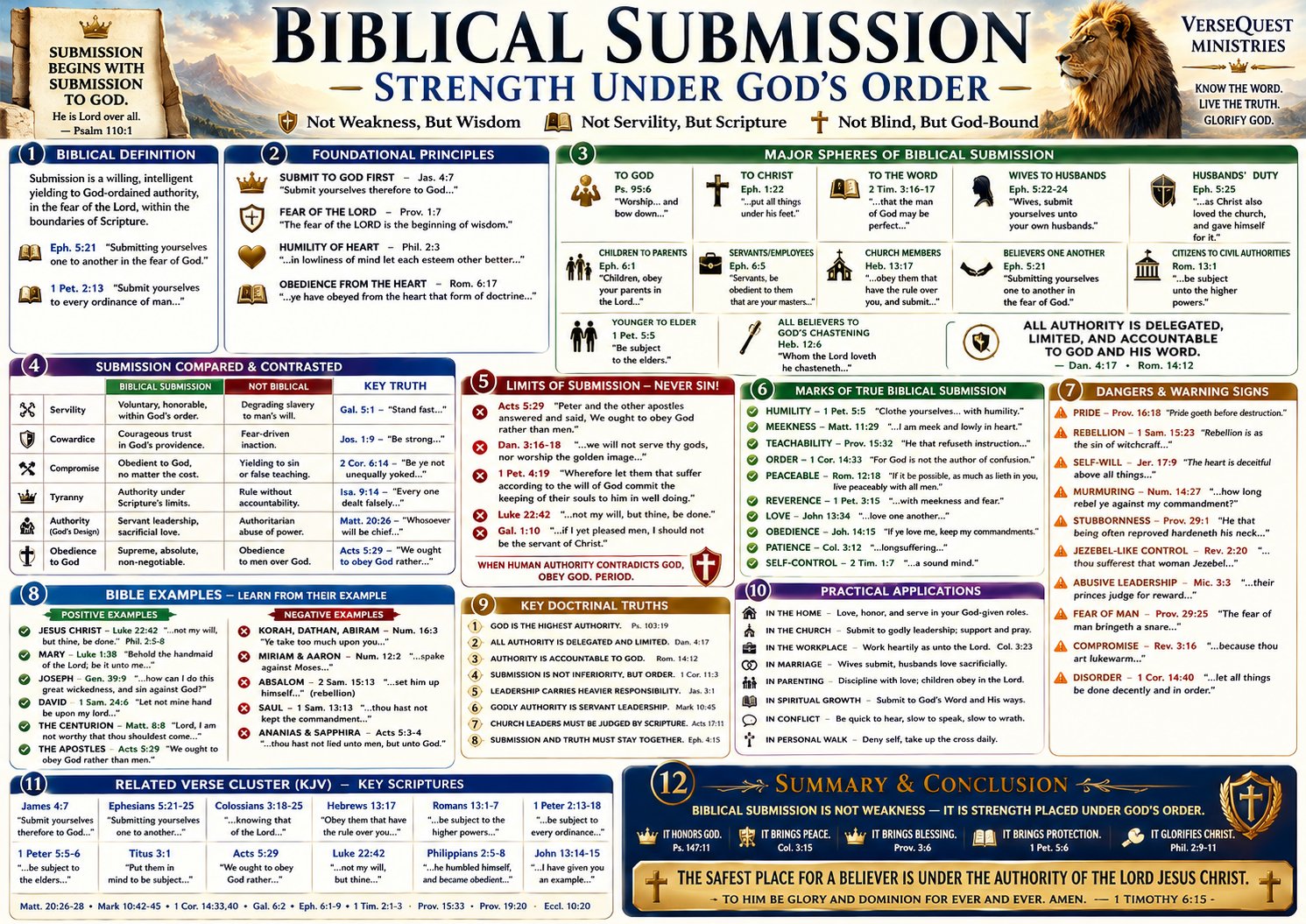
- Biblical Submission Bible Study Chart – Strength Under God’s Order, Authority, and Scriptural Limits (KJV) Product Description
- Study biblical submission with this detailed KJV chart covering God-ordained authority, servant leadership, obedience, marriage, church, government, and the Scriptural limits of submission.
- $3.99
- Add to cart
-
-
Spritual Dryness
-
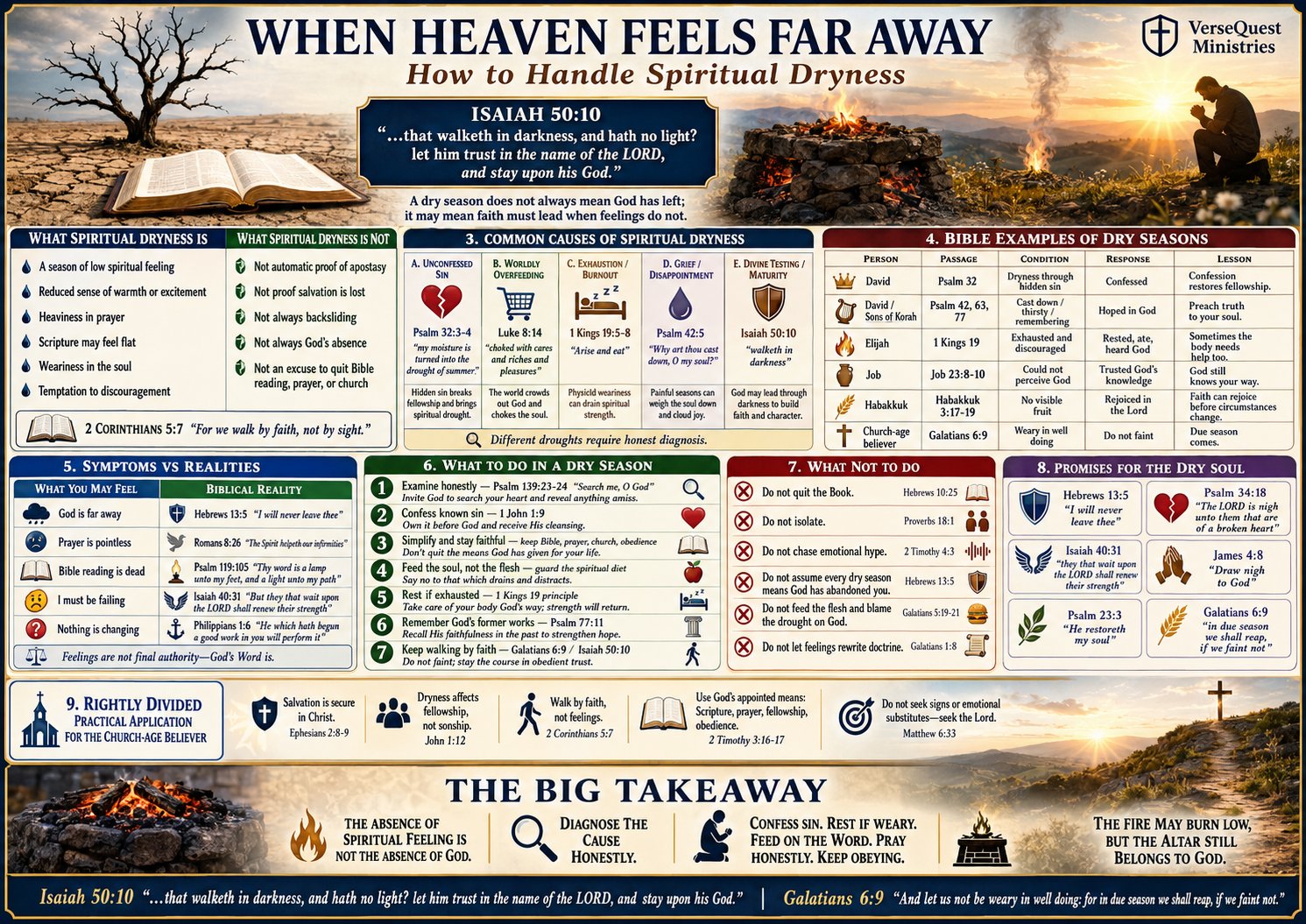
- When Heaven Feels Far Away – How to Handle Spiritual Dryness and Walk by Faith (KJV Bible Study Chart)
- Walk through spiritual dryness with this detailed KJV Bible study chart covering its causes, biblical examples, warning signs, promises, faithful habits, and the difference between feelings and truth.
- $3.99
- Add to cart
-
-
Spiritual Growth
-
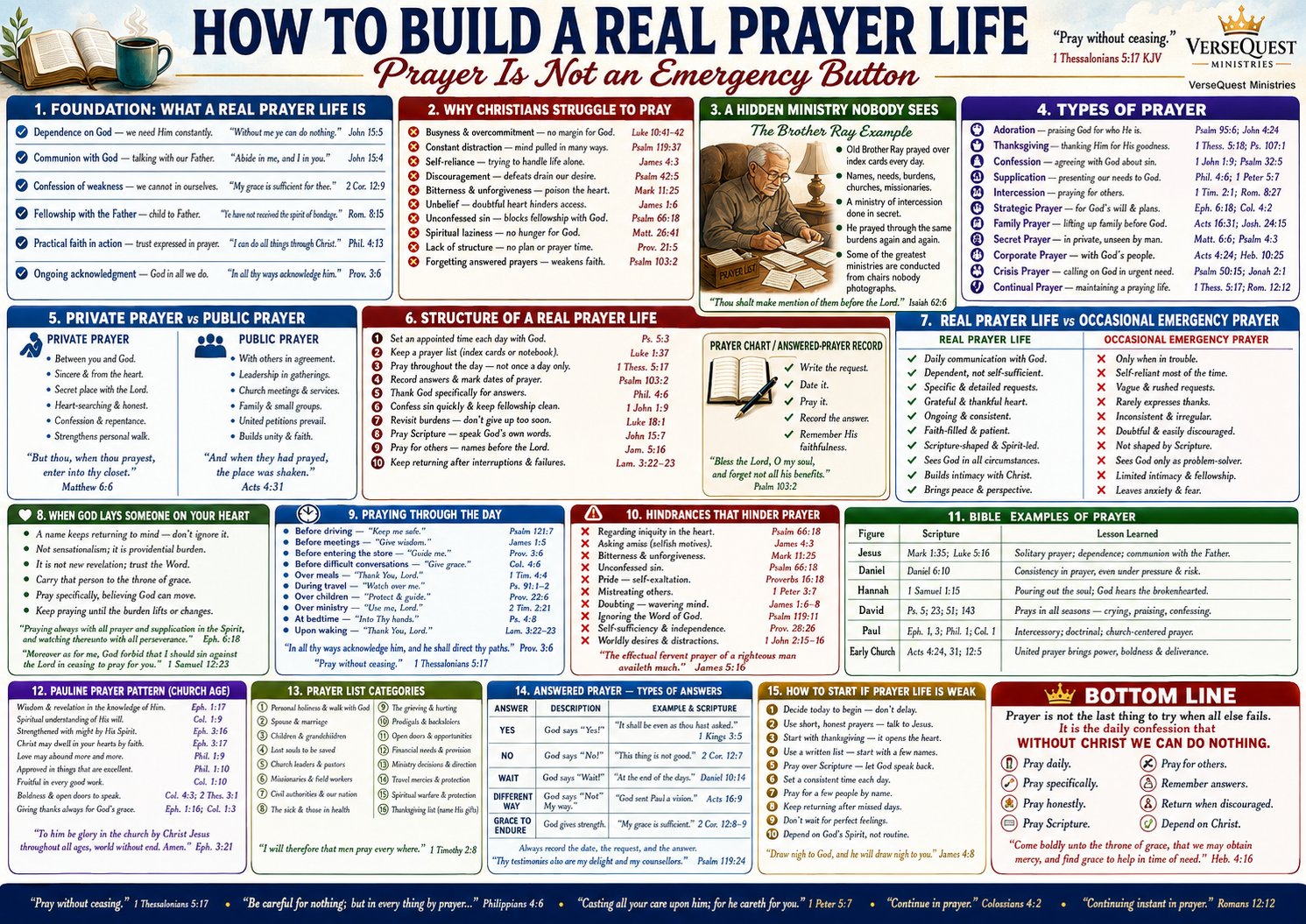
- How to Build a Real Prayer Life – Biblical Prayer Guide and KJV Bible Study Chart
- Build a consistent, biblical prayer life with this detailed KJV Bible study chart. Explore the foundations of prayer, types of prayer, common hindrances, answered prayer, Bible examples, and practical ways…
- $3.99
- Add to cart
-
-
Chart Collections
-
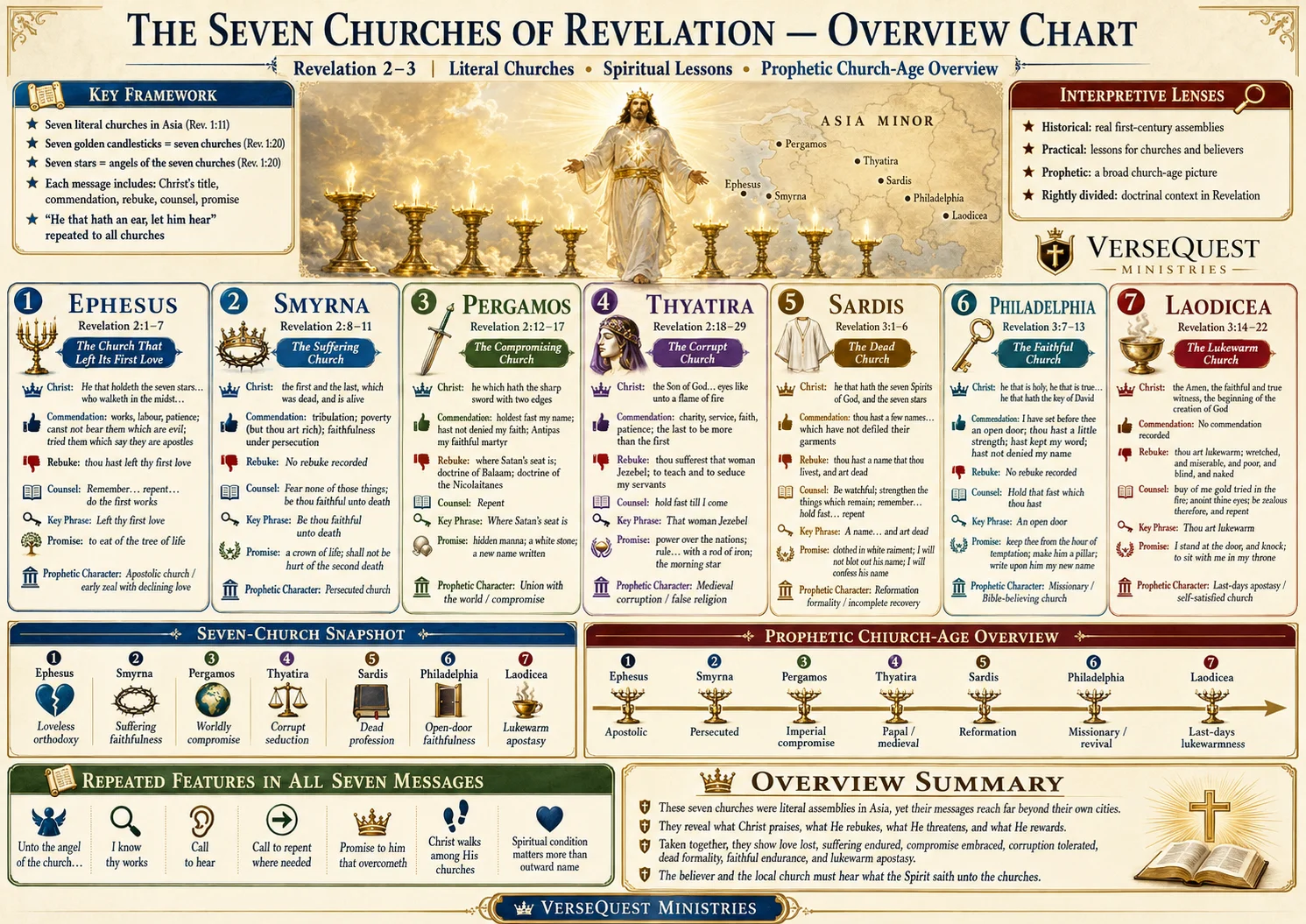
- The Seven Churches of Revelation Chart Collection – Christ Walking Among the Candlesticks
- A premium VerseQuest Ministries™ PDF chart collection covering the Seven Churches of Revelation in Revelation 2–3. Includes one overview chart plus individual KJV Bible study charts for Ephesus, Smyrna, Pergamos,…
- $12.99
- Add to cart
-