
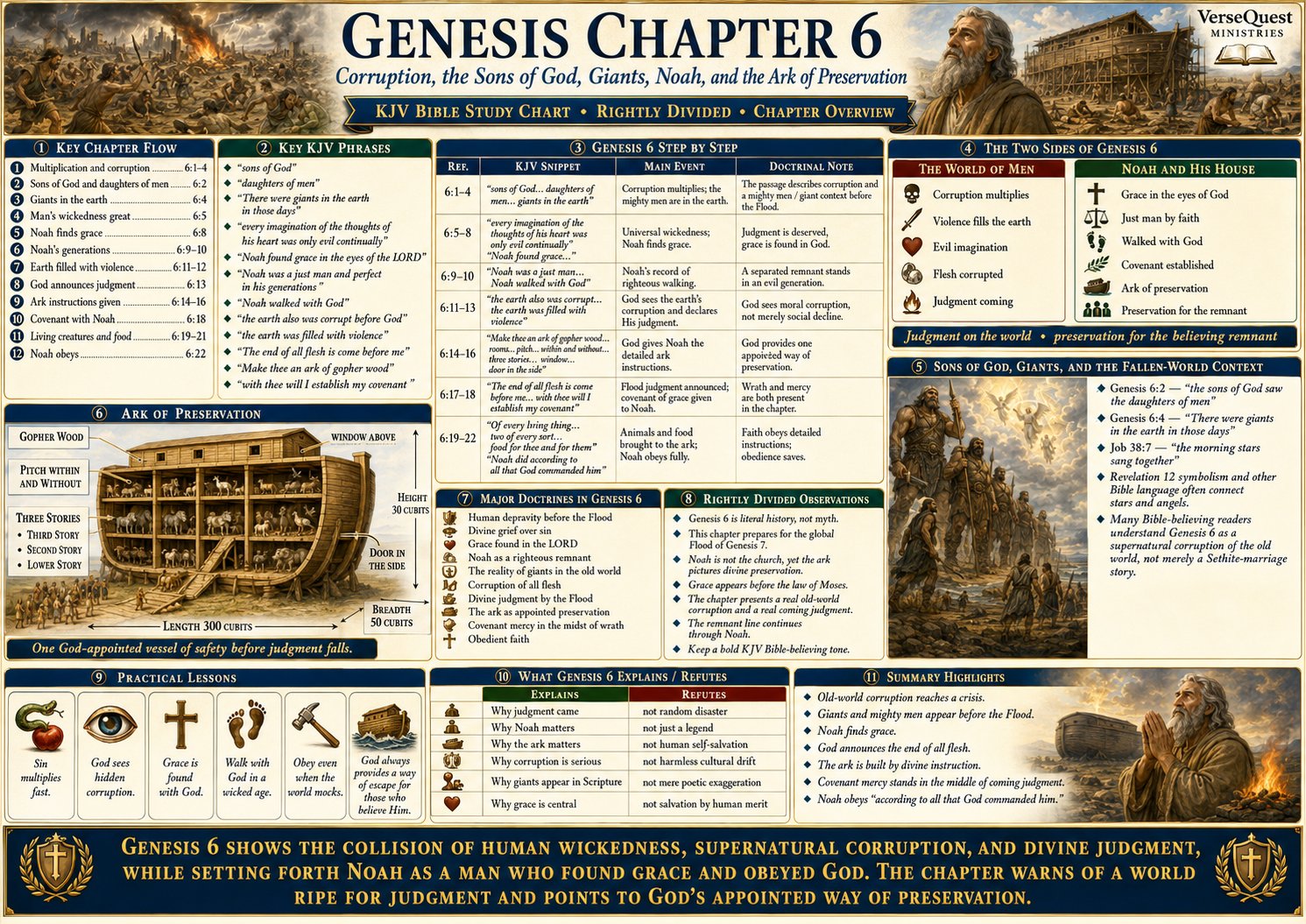
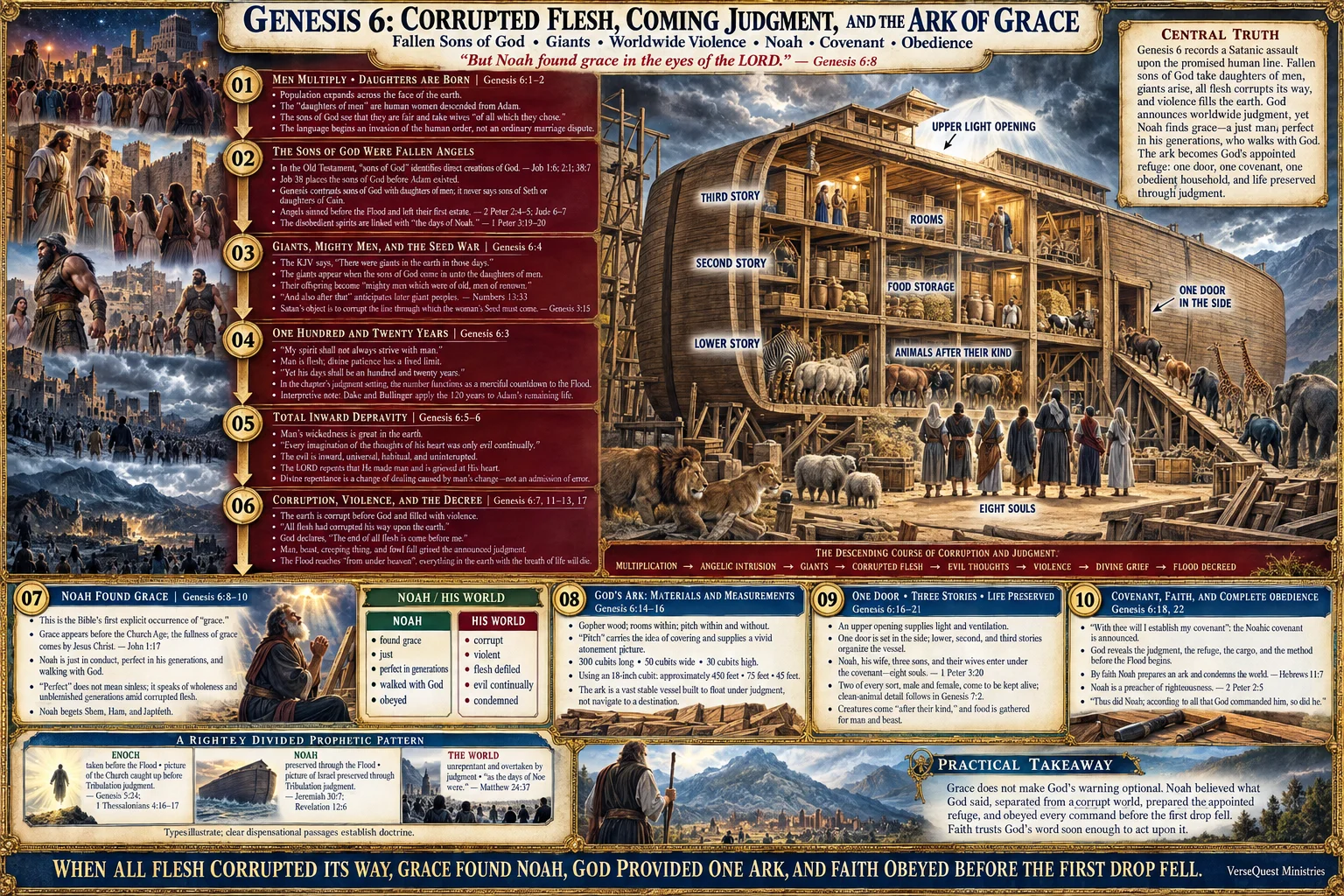
Genesis 6 – Corrupted Flesh, Coming Judgment, and the Ark of Grace: Sons of God, Giants, Noah, and the Coming Flood (KJV Bible Study Chart)
Explore Genesis 6 with this detailed KJV chart covering the fallen sons of God, giants, pre-Flood corruption, the 120-year warning, worldwide violence, Noah finding grace, the ark’s dimensions and design, God’s covenant, eight preserved souls, and the relationship between faith, obedience, grace, and coming judgment.
$4.99
Description
Genesis 6: Corrupted Flesh, Coming Judgment, and the Ark of Grace is a detailed KJV Bible study chart examining the world immediately before Noah’s Flood. It traces the chapter from rapid population growth and the intrusion of the sons of God, through the appearance of giants, universal corruption, violence, divine grief, and the decree of worldwide judgment, to the remarkable declaration that “Noah found grace in the eyes of the LORD.” Against the darkest background yet recorded in Genesis, God preserves one household and commands the construction of the ark through which human and animal life will survive the coming catastrophe.
Within the interpretive framework of this chart, the “sons of God” in Genesis 6 are fallen angelic beings rather than ordinary descendants of Seth. Job uses the expression “sons of God” for heavenly beings, while Second Peter and Jude describe angels who sinned and were reserved for judgment. Genesis then records that these sons of God took wives from the daughters of men and that “there were giants in the earth in those days.” The chart connects this angelic rebellion with Satan’s continuing assault against the promised human line through which the Seed of the woman would eventually come.
Genesis 6:3 introduces God’s declaration that man’s days will be 120 years. In the chart’s primary interpretation, this functions as a merciful countdown before the Flood rather than an immediate universal lifespan restriction. Divine patience has a limit: God warns before He judges. The following verses describe mankind’s condition in devastating terms—“every imagination of the thoughts of his heart was only evil continually.” Evil is no longer occasional or peripheral; corruption has penetrated the thoughts, conduct, society, and violence of the pre-Flood world.
Yet Genesis 6:8 interrupts the downward movement with one of Scripture’s great declarations: “But Noah found grace in the eyes of the LORD.” Grace appears long before the Church Age and demonstrates that God’s favour is never earned by human merit. Noah is described as just, perfect in his generations, and a man who walked with God. His righteousness does not eliminate grace; it shows the life of a man who believes God and responds obediently to His revelation.
God then commands Noah to build an ark of gopher wood, with rooms, pitch within and without, three stories, one door, and carefully specified dimensions. The ark is not designed for exploration but for preservation through judgment. God reveals the coming Flood, the refuge, the cargo, the method, and the covenant before the first drop falls. Hebrews 11:7 later explains that Noah, “moved with fear, prepared an ark to the saving of his house.”
The ark therefore becomes a powerful picture of divine refuge. Judgment is certain, but God provides one appointed means of preservation. Noah does not redesign the vessel according to personal preference; “according to all that God commanded him, so did he.” Genesis 6 joins grace and obedience without confusing them: Noah finds grace, believes God’s warning, and acts upon what God has spoken.
The chapter’s final lesson is unmistakable. Human multiplication, supernatural corruption, technological progress, and widespread violence cannot cancel divine judgment. Yet even when all flesh corrupts its way, God knows His own, preserves His purpose, and provides refuge. When the world rejected God’s warning, grace found Noah, God provided the ark, and faith obeyed before the rain ever began.
Genesis 6, Noah and the Flood, sons of God, fallen angels, daughters of men, giants in the earth, Nephilim, mighty men of renown, 120 years, corrupted flesh, worldwide violence, total depravity, Noah found grace, Noah walked with God, perfect in his generations, ark of gopher wood, one door of the ark, Noahic covenant, eight souls, worldwide Flood, judgment and grace, days of Noah
Genesis 6 records the rapid moral and spiritual collapse of the pre-Flood world. Population increases, daughters are born, the sons of God take wives from among the daughters of men, giants appear, wickedness becomes universal, violence fills the earth, and God announces judgment. Within the interpretive framework of this chart, the “sons of God” are fallen angelic beings, supported by the Old Testament use of that expression in Job and by the later New Testament references to angels who sinned in Second Peter and Jude.
Genesis 6:4 states plainly in the KJV that “there were giants in the earth in those days; and also after that.” The chart connects these giants and mighty men with the angelic intrusion and with the continuing conflict surrounding the promised Seed of Genesis 3:15. The phrase “and also after that” also anticipates later giant peoples appearing in the Old Testament record. This teaching forms part of the chart’s wider seed-war interpretation of early Genesis.
God declares in Genesis 6:3 that man’s days will be 120 years. The chart’s primary interpretation treats this as a countdown of divine longsuffering before the Flood. The wording should not be connected with Adam’s remaining lifetime, since Adam had died centuries earlier according to Genesis 5. An alternative interpretation understands the verse as referring generally to human lifespan, but the immediate judgment setting strongly supports the countdown view presented here.
The description of mankind in Genesis 6:5 is one of Scripture’s strongest statements concerning human depravity: every imagination of the thoughts of man’s heart is only evil continually. The problem is inward before it becomes outward. Genesis then describes the earth as corrupt before God and filled with violence. Moral corruption, fleshly corruption, and social violence move together toward divine judgment.
Genesis 6:8 provides the great turning point: “But Noah found grace in the eyes of the LORD.” Grace therefore appears explicitly centuries before the Mosaic law and long before the Church Age. Noah is also described as just, perfect in his generations, and walking with God. “Perfect” should not be treated as a claim that Noah was sinless; within this chart it emphasizes wholeness and the integrity of his generations amid widespread corruption.
God reveals the Flood before it occurs and commands Noah to construct the ark. The vessel is made of gopher wood, divided into rooms, pitched within and without, built to stated dimensions, arranged in three stories, and entered through one door in its side. God supplies both judgment warning and appointed refuge.
Genesis 6 distinguishes grace from disobedient presumption. Noah does not merely agree intellectually that judgment may occur. Hebrews 11:7 explains that by faith he prepares the ark to the saving of his house. His obedience does not purchase God’s grace; rather, faith acts upon God’s revealed Word.
The ark also supplies a powerful typological picture of preservation through judgment. Typology should not replace the historical reality of Noah and the Flood: the ark was a real vessel, Noah a real man, and the judgment a real worldwide catastrophe within the chart’s interpretation. The spiritual application grows out of the historical event rather than replacing it.
Within a dispensational prophetic comparison, Enoch’s earlier translation provides a fitting picture of the Church caught away before wrath, Noah pictures a remnant preserved through judgment, and the unbelieving world corresponds with those overtaken when divine judgment comes. These are typological parallels; the direct doctrines of the Rapture and Tribulation are established by their own New Testament passages.
Genesis 6 ultimately demonstrates that grace does not make God’s warning optional. Noah found grace and then believed what God said, prepared the appointed refuge, separated from a corrupt world, and obeyed God before visible evidence of the Flood appeared. Faith takes God at His Word before judgment arrives.
Genesis 6 Bible studies, sons-of-God studies, fallen-angel teaching, giants and Nephilim studies, pre-Flood corruption, seed-war teaching, days-of-Noah lessons, divine judgment studies, Noah and grace, ark construction studies, faith and obedience, Hebrews 11 teaching, Flood apologetics, biblical chronology, Christian homeschool curriculum, Sunday school lessons, Christian school teaching, Bible institute classes, pastoral training, sermon preparation
King James Bible, Strong’s Concordance, Thompson Chain-Reference Bible, Treasury of Scripture Knowledge, Nave’s Topical Bible, Genesis 5–9 study notes, sons-of-God Scripture studies, Job 1 and Job 38 cross-reference studies, Second Peter 2 commentary notes, Jude 6 studies, giant and Nephilim Scripture chains, Noah chronology charts, ark-dimension studies, Flood timelines, Hebrews 11 faith studies, days-of-Noah comparison charts, VerseQuest Genesis and Flood charts
Related products
-
Premium Studies
-
-25%
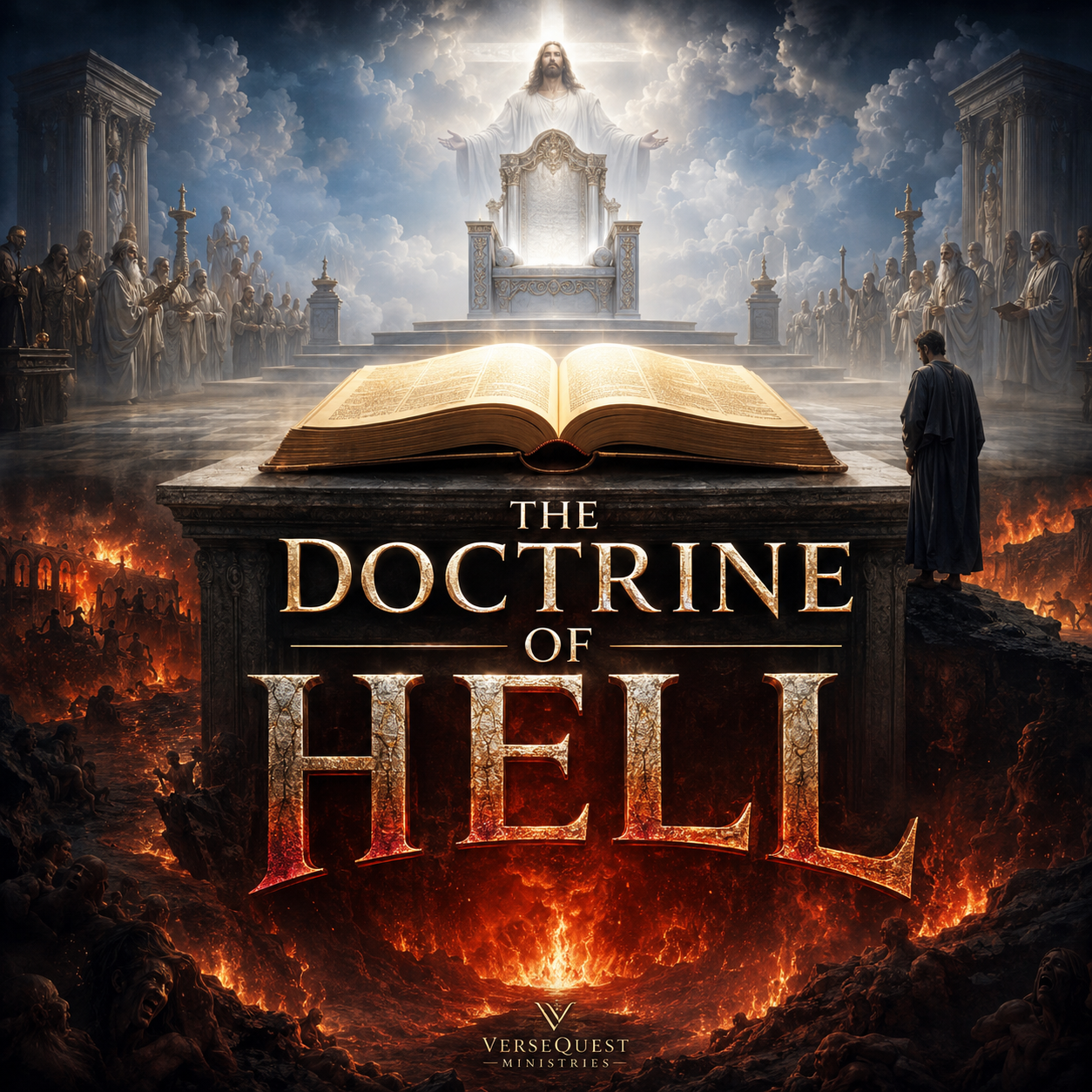
- The Doctrine of Hell — Premium Essay Series PDF
- A 383-page premium VerseQuest PDF study book containing 54 KJV essays on hell, fire, darkness, judgment, the lake of fire, the second death, and Jesus Christ as the only escape.
- Original price was: $39.99.$29.99Current price is: $29.99.
- Add to cart
-
-25%
-
Heaven
-
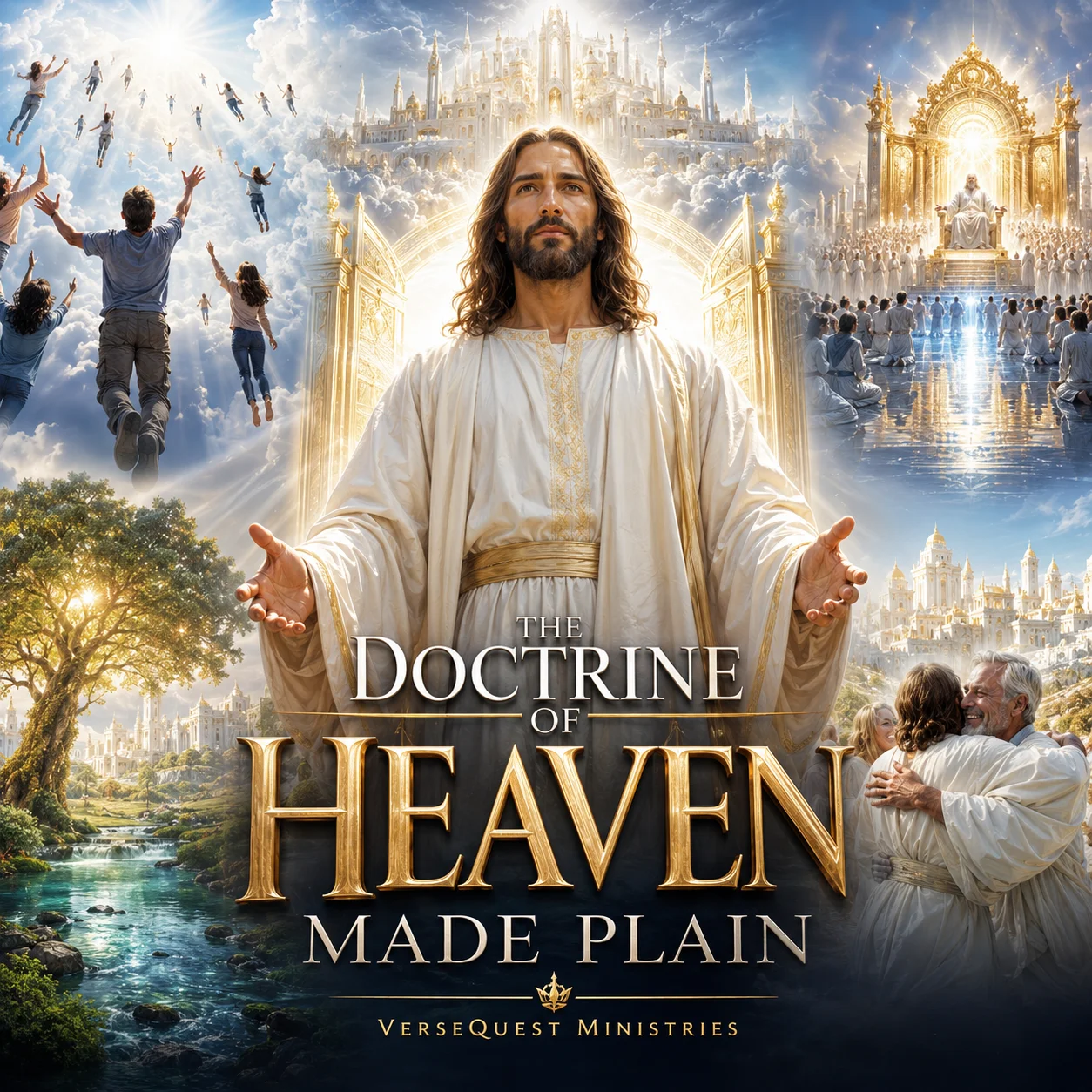
- The Doctrine of Heaven Made Plain — 599-Page KJV Bible Study PDF
- A massive 599-page KJV, rightly divided study on heaven, covering the present heaven, resurrection body, Rapture, Millennium, New Jerusalem, eternal state, hard questions, funeral lies, and cult errors.
- $34.99
- Add to cart
-
-
KJV Bible Study Resources
-
-60%
- Practical Christianity for Daily Battles – 329-Page KJV Study PDF
- A premium 329-page KJV study PDF with 40 full essays applying sound, rightly divided Bible doctrine to real daily Christian battles. Topics include temptation, anxiety, marriage, parenting, pornography, grief, church…
- Original price was: $24.99.$9.99Current price is: $9.99.
- Add to cart
-
-60%
-
Kingdom Hall
-
-71%

- Jehovah’s Witnesses Made Plain – 574-Page KJV Watchtower Study
- A massive 574-page VerseQuest study exposing the Watchtower system from the King James Bible. This detailed 100-essay book covers the false Christ, false gospel, New World Translation, failed prophecy, 144,000,…
- Original price was: $34.99.$9.99Current price is: $9.99.
- Add to cart
-
-71%
-
KJV Studies
-
-67%
- The Blood of Christ – 66-Study KJV Bible Doctrine PDF
- A 441-page premium VerseQuest PDF featuring 66 detailed KJV Bible studies on the blood of Jesus Christ. This powerful doctrinal resource covers redemption, justification, propitiation, cleansing, access to God, eternal…
- Original price was: $29.99.$9.99Current price is: $9.99.
- Add to cart
-
-67%