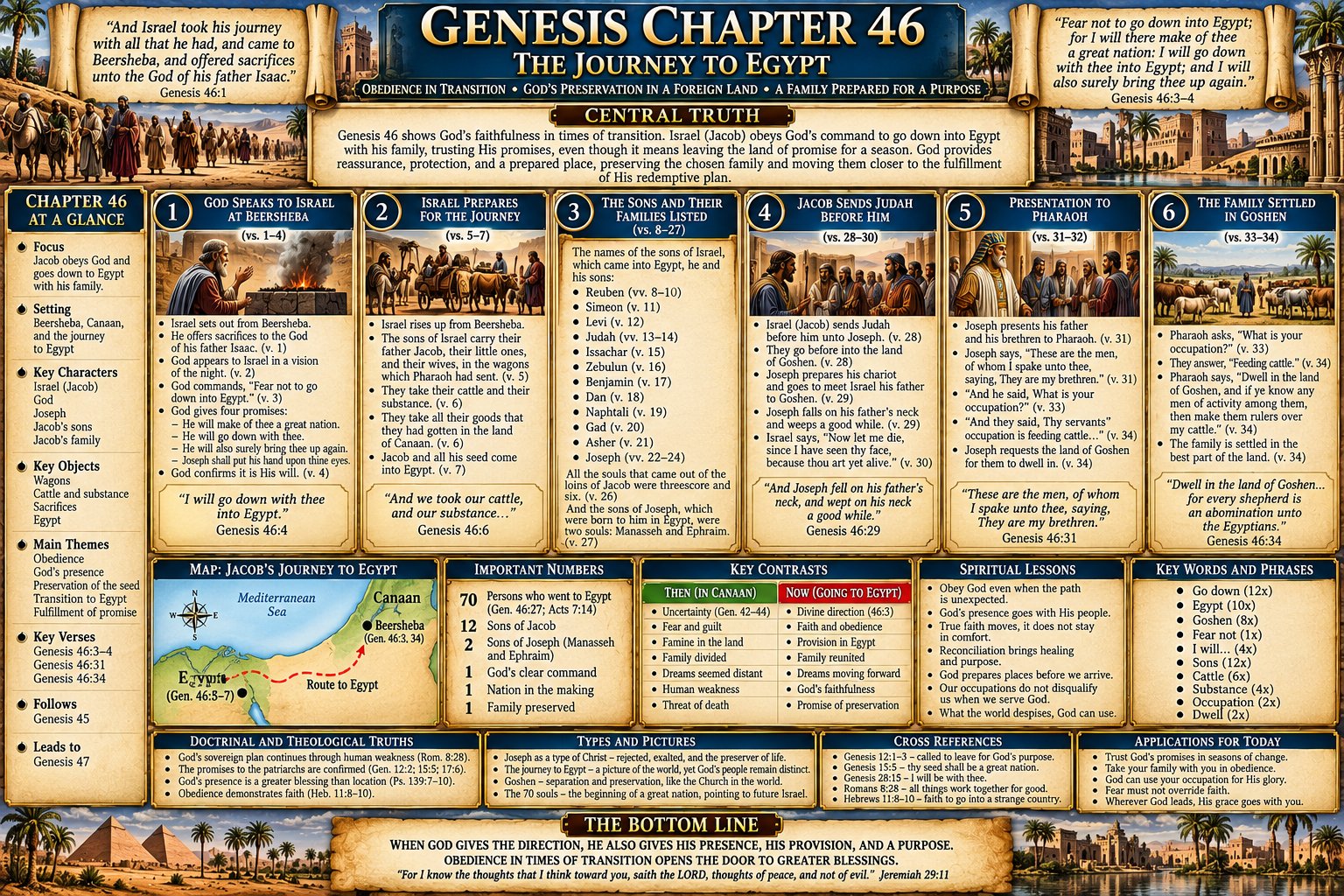
Genesis 46 – Jacob’s Journey to Egypt: Beersheba, God’s Promise, the Seventy Souls, Reunion with Joseph, and Preparation for Goshen (KJV Bible Study Chart)
Explore Genesis 46 with this detailed KJV Bible study chart tracing Jacob’s journey from Canaan into Egypt after learning that Joseph is alive. Follow Israel to Beersheba, where he offers sacrifices and receives God’s assurance, “Fear not to go down into Egypt.” The chart examines the wagons supplied by Pharaoh, Jacob’s family genealogy, the biblical count of seventy souls in his house, Judah being sent ahead toward Goshen, and the emotional reunion between Jacob and Joseph. It also explains Joseph’s instructions preparing his brothers to appear before Pharaoh and identify themselves as shepherds. Genesis 46 provides a powerful study of obedience during transition, covenant preservation, family restoration, divine guidance, and God’s presence in a foreign land. Ideal for Bible study, homeschool, Sunday school, sermon preparation, Israel studies, and patriarchal teaching.
$4.99
Description
Genesis 46: The Journey to Egypt is a detailed KJV Bible study chart tracing Israel’s departure from Canaan, God’s reassurance at Beersheba, the movement of Jacob’s entire household into Egypt, the listing of his descendants, his emotional reunion with Joseph, and the family’s preparation to appear before Pharaoh and dwell in Goshen. The chapter represents a major transition in biblical history: the covenant family leaves the land of promise temporarily, yet does so under the direct command and protection of God.
Israel begins the journey by stopping at Beersheba and offering sacrifices unto “the God of his father Isaac.” God speaks to him in the visions of the night and declares, “Fear not to go down into Egypt.” Earlier patriarchal journeys into Egypt had sometimes been associated with fear or compromise, but this journey is different. Jacob now goes because God expressly commands him.
The LORD promises to accompany Jacob into Egypt, make of him a great nation there, eventually bring him up again, and allow Joseph to be present at his death. The move therefore does not cancel the Abrahamic covenant or surrender the promised land. Egypt becomes the temporary setting in which Jacob’s family will multiply toward nationhood.
Jacob’s sons then place their father, wives, and children in the wagons Pharaoh provided. They carry their livestock and possessions from Canaan and journey into Egypt. Genesis carefully records the family genealogy, preserving the names of those connected with Israel’s developing household.
Genesis 46:26 states that the souls coming directly from Jacob’s loins, apart from his sons’ wives, were sixty-six. Verse 27 then gives the total of Jacob’s house in Egypt as seventy, including Joseph and his two sons already there. Acts 7:14 later gives a count of seventy-five, a textual and genealogical difference that should be handled separately rather than making the two verses say the same number.
Jacob sends Judah ahead to Joseph to direct the family toward Goshen. Joseph prepares his chariot, meets Israel there, falls upon his father’s neck, and weeps for a long time. Jacob can finally say, “Now let me die, since I have seen thy face, because thou art yet alive.”
Joseph then prepares his brothers for their coming meeting with Pharaoh. He explains that their occupation as shepherds should be stated openly so they may dwell in Goshen, separated from the central life of Egypt.
Genesis 46 therefore presents transition without abandonment. God accompanies Jacob into a foreign land, preserves the covenant family, reunites father and son, and prepares the next stage of Israel’s history.
Genesis 46, Jacob, Israel, Joseph, journey to Egypt, Beersheba, sacrifices at Beersheba, fear not to go into Egypt, God’s presence, Abrahamic covenant, seventy souls, Jacob’s genealogy, sons of Jacob, Judah sent ahead, Goshen, Joseph’s chariot, Joseph and Jacob reunited, Jacob sees Joseph alive, shepherds in Egypt, family preservation, covenant family, transition to Egypt, Israel becoming a nation, divine providence
Genesis 46 records one of the great transitions in patriarchal history. Jacob has learned that Joseph is alive and rules in Egypt, but before leaving Canaan he stops at Beersheba and offers sacrifices unto “the God of his father Isaac.” God then speaks in the visions of the night, calling him “Jacob, Jacob.” Israel answers, “Here am I.”
God identifies Himself as “the God of thy father” and commands, “Fear not to go down into Egypt.” This journey is therefore fundamentally different from a move prompted merely by famine or fear. Jacob enters Egypt under direct divine instruction. God promises to accompany him, make him a great nation there, eventually bring him up again, and assure him that Joseph will be present when he dies.
The wagons Pharaoh sent are used to carry Jacob, the little ones, and the women. The family also brings its cattle and possessions. God is not abandoning the covenant promise concerning Canaan; He is moving the covenant family temporarily into the setting where it will greatly multiply.
Verses 8–27 preserve Jacob’s genealogy. The numerical statements require careful reading. Genesis 46:26 gives sixty-six descendants coming from Jacob’s loins, excluding his sons’ wives. Verse 27 states that “all the souls of the house of Jacob, which came into Egypt, were threescore and ten.” This total incorporates Joseph and his two sons, who were already living in Egypt.
Acts 7:14 later gives seventy-five souls. The two verses should not be falsely harmonized by saying Acts 7:14 also reads seventy. The difference reflects an expanded genealogical count preserved in the textual tradition used in Stephen’s speech. Genesis 46 itself clearly gives seventy.
Jacob sends Judah ahead to Joseph to direct the family into Goshen. Judah’s developing leadership continues from Genesis 43–44. Joseph then prepares his chariot, meets his father, falls upon his neck, and weeps “a good while.” The father who mourned Joseph as dead finally sees him alive.
Genesis 46:31–34 does not yet record the family’s presentation to Pharaoh or actual settlement in Goshen. Joseph tells his brothers that he will report their arrival to Pharaoh and prepares them to answer honestly that they are cattlemen. Their occupation will help secure residence in Goshen. The formal presentation and settlement occur in Genesis 47.
Joseph’s separation of the family in Goshen also preserves their identity while living within a powerful foreign nation. Within the larger biblical narrative, Egypt becomes the place where Jacob’s household grows into the people later delivered in Exodus.
Genesis 46 therefore teaches that obedience may involve leaving familiar ground, but God’s presence travels with His people. The covenant remains intact, the family is preserved, and God continues moving history toward His promised purpose.
Genesis 46 is useful for teaching obedience during major transitions, confidence in God when His direction appears to move us away from familiar expectations, and assurance that God’s presence matters more than geography. Jacob’s journey also demonstrates the importance of worship before transition, family continuity, trusting God’s promises across generations, and recognizing that temporary circumstances do not cancel long-term covenant purposes. The chapter is valuable for personal Bible study, Sunday school, homeschool instruction, Bible institutes, sermon preparation, family studies, providence teaching, genealogy work, Israel studies, and lessons on obedience, transition, divine guidance, reconciliation, and preservation.
King James Bible, Strong’s Concordance, Thompson Chain-Reference Bible, Treasury of Scripture Knowledge, Nave’s Topical Bible, Genesis 45–50 study notes, Jacob and Joseph timelines, twelve tribes of Israel charts, Jacob family genealogy charts, maps of Beersheba Canaan Goshen and Egypt, Genesis 15 prophecy studies, Exodus 1–3 studies, Psalm 105 Joseph studies, Acts 7 patriarchal chronology studies, Abrahamic covenant charts, Goshen studies, VerseQuest Genesis charts
Related products
-
KJV Studies
-
-67%
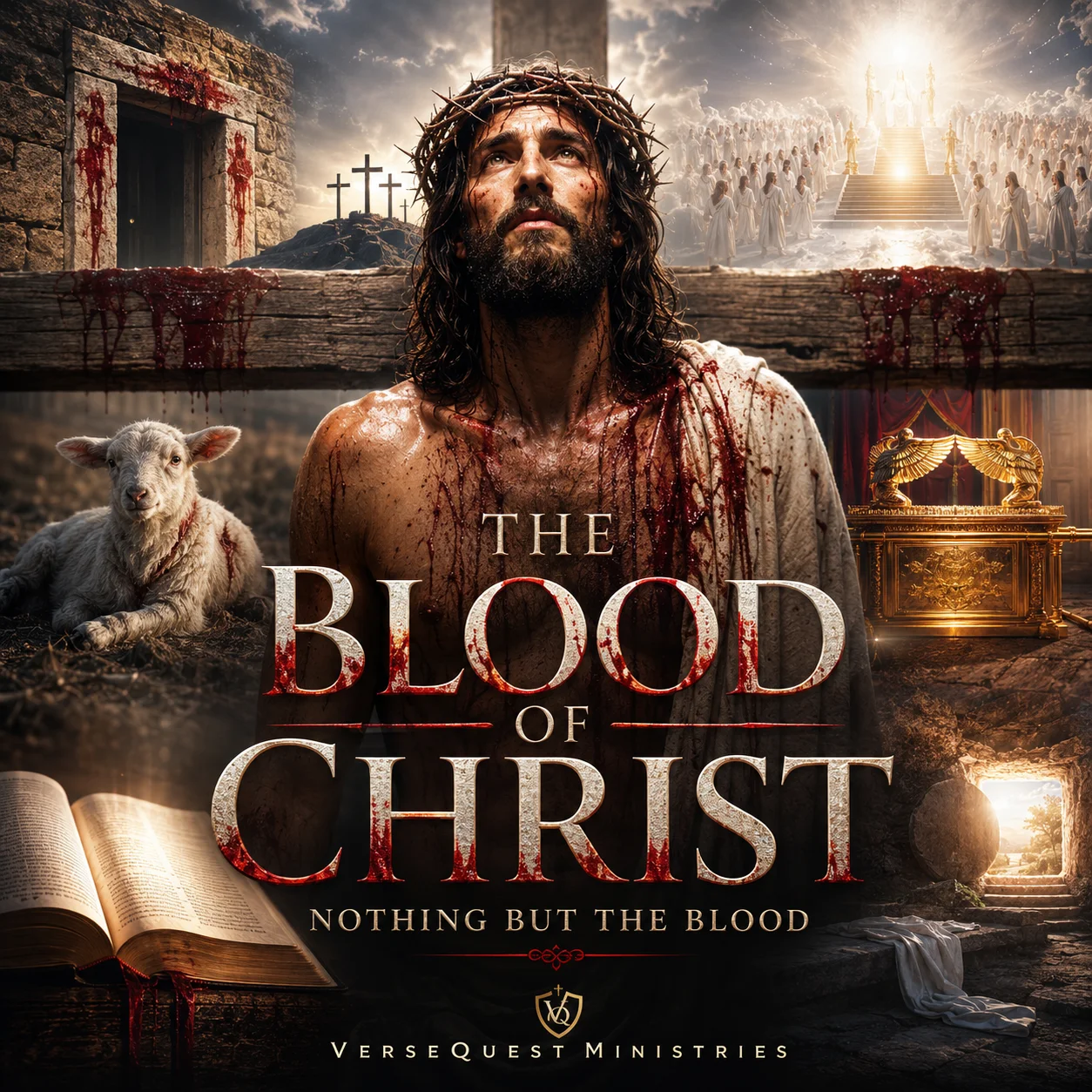
- The Blood of Christ – 66-Study KJV Bible Doctrine PDF
- A 441-page premium VerseQuest PDF featuring 66 detailed KJV Bible studies on the blood of Jesus Christ. This powerful doctrinal resource covers redemption, justification, propitiation, cleansing, access to God, eternal…
- Original price was: $29.99.$9.99Current price is: $9.99.
- Add to cart
-
-67%
-
Chart Collections
-
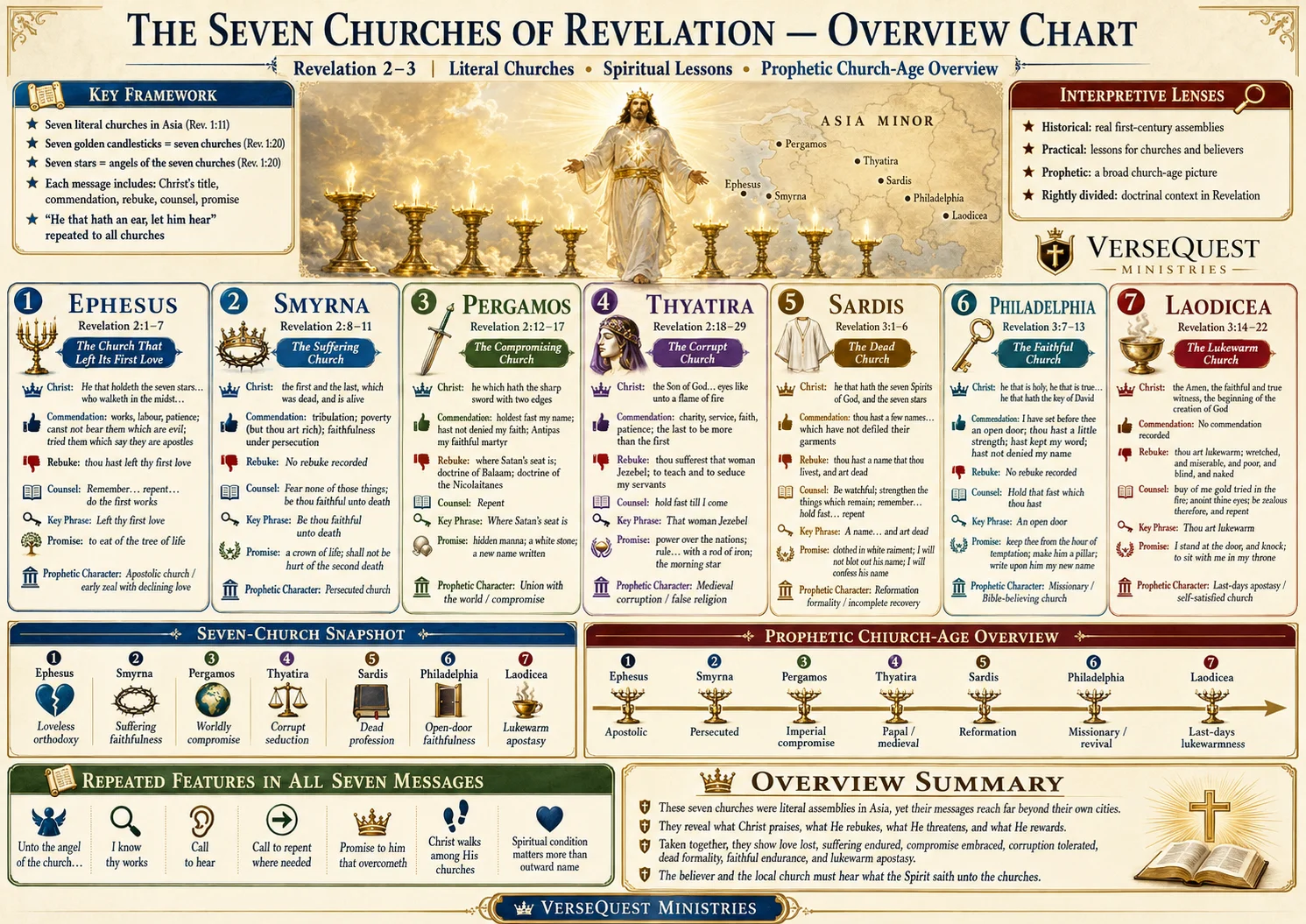
- The Seven Churches of Revelation Chart Collection – Christ Walking Among the Candlesticks
- A premium VerseQuest Ministries™ PDF chart collection covering the Seven Churches of Revelation in Revelation 2–3. Includes one overview chart plus individual KJV Bible study charts for Ephesus, Smyrna, Pergamos,…
- $12.99
- Add to cart
-
-
Angels
-
-67%
- The Doctrine of Angels Made Plain – 620-Page KJV Bible Study PDF
- The Doctrine of Angels Made Plain is a 620-page KJV Bible study that traces angels from Genesis to Revelation. This premium VerseQuest PDF explains holy angels, Christ’s supremacy over angels,…
- Original price was: $29.99.$9.99Current price is: $9.99.
- Add to cart
-
-67%
-
Jesus Christ
-
-10%
- The Lord Jesus Christ Made Plain – 637-Page KJV Bible Study
- A massive 637-page, 100-part KJV Bible study on the Person and work of the Lord Jesus Christ. This premium VerseQuest resource covers His deity, incarnation, blood, cross, resurrection, present ministry,…
- Original price was: $39.00.$34.99Current price is: $34.99.
- Add to cart
-
-10%
-
Doctrine Series