Topic: Spiritual Discernment
-
October 30, 2026
Speaker: Paul Tackett
Topic: Christ's preeminence, Christian conduct, Christian good works, Colossians 1 sermon outline, Colossians 1:10, fruitful in every good work, increasing in the knowledge of God, King James Bible study, KJV Sermon Outline, patience and longsuffering, pleasing the Lord, positional truth and practical sanctification, rightly dividing the word, Salvation by Grace, sound doctrine and obedience, Spiritual Discernment, spiritual maturity, The Believer’s Walk Worthy of the Lord, walk worthy of the Lord, Walking in the Spirit
Book: Colossians
This detailed sermon outline examines Colossians 1:10 and the Apostle Paul’s prayer that believers might “walk worthy of the Lord unto all pleasing, being fruitful in every good work, and increasing in the knowledge of God.” The message establishes that a worthy Christian walk begins with the believer’s secure spiritual position in Jesus Christ rather than an attempt to earn or maintain salvation through religious performance. Beginning with Colossians 1:9–14, the sermon explains why knowledge of God’s will, spiritual wisdom, and sound doctrine must precede practical obedience, and how the believer’s redemption through Christ’s blood provides the foundation for a life that honors the Saviour. It carefully examines what it means to walk worthy of the Lord in everyday conduct, why pleasing Jesus Christ must take priority over worldly approval and religious reputation, and how genuine spiritual fruitfulness differs from mere outward activity or works-based righteousness. Special attention is given to Paul’s command to be fruitful in every good work, increase continually in biblical knowledge, and depend upon God’s glorious power for patience, longsuffering, and joyfulness during trials. Drawing upon Colossians 1:9–18, Ephesians 4, Romans 6 and 12, Galatians 5, Philippians 1, and other Pauline passages, the outline demonstrates how salvation by grace should produce practical sanctification, spiritual maturity, doctrinal discernment, thanksgiving, and faithful Christian service. The sermon also emphasizes the importance of rightly dividing Scripture, distinguishing the believer’s standing in Christ from his daily walk, and recognizing Jesus Christ as the preeminent Head of the Church whose glory should govern every aspect of Christian living. Preachers, pastors, teachers, and Bible students will gain a comprehensive, KJV-based, sermon-ready framework for teaching Christian conduct, spiritual fruitfulness, increasing biblical knowledge, patience, humility, obedience, grace, and a walk that reflects the Lord who has already redeemed the believer through His finished work.
-
October 10, 2026
Speaker: Paul Tackett
Topic: authority of Scripture, biblical conviction, biblical self examination, confession and correction, deceitfulness of the heart, discerner of thoughts and intents, Hebrews 4:12, Hebrews 4:12 sermon outline, hidden sin, King James Bible study, KJV Sermon Outline, rightly dividing the word, sanctification through Scripture, Scripture exposes sin, Spiritual Discernment, The Word That Discerns the Heart, thoughts and motives, twoedged sword, word of God sermon, word of God sharper than a sword
Book: Hebrews
This detailed sermon outline examines Hebrews 4:12 and its declaration that the word of God is “quick, and powerful, and sharper than any twoedged sword,” piercing deeply enough to discern “the thoughts and intents of the heart.” The message explains the living and powerful character of Scripture, its sword-like ability to cut through spiritual deception, and its capacity to penetrate beyond outward religious appearance into thoughts, motives, hidden sin, and the true condition of the inner man. It explores how the Bible distinguishes spiritual realities that human feelings often confuse, exposes the deceitfulness of the heart, and brings concealed motives under the searching light of divine truth. The outline also shows that biblical conviction is intended to lead to confession, correction, and obedient living rather than mere condemnation, while emphasizing the necessity of rightly dividing Scripture without using doctrinal precision as an excuse to avoid personal application. Preachers, teachers, and Bible students will gain a sermon-ready framework for teaching biblical conviction, spiritual discernment, self-examination, confession, sanctification, right division, and the searching authority of the King James Bible.
-
October 5, 2026
Speaker: Paul Tackett
Topic: 1 Corinthians 2:13, authority of Scripture, Bible interpreting itself, Bible study principles, biblical cross references, clear passages interpret difficult passages, comparing Scripture with Scripture, comparing spiritual things sermon outline, comparing spiritual things with spiritual, context in Bible study, doctrinal stability, Holy Ghost teaches Scripture, illumination of Scripture, King James Bible study, KJV Sermon Outline, natural man and spiritual truth, rightly dividing the word, Scripture interprets Scripture, Spiritual Discernment, verbal inspiration
Book: 1 Corinthians
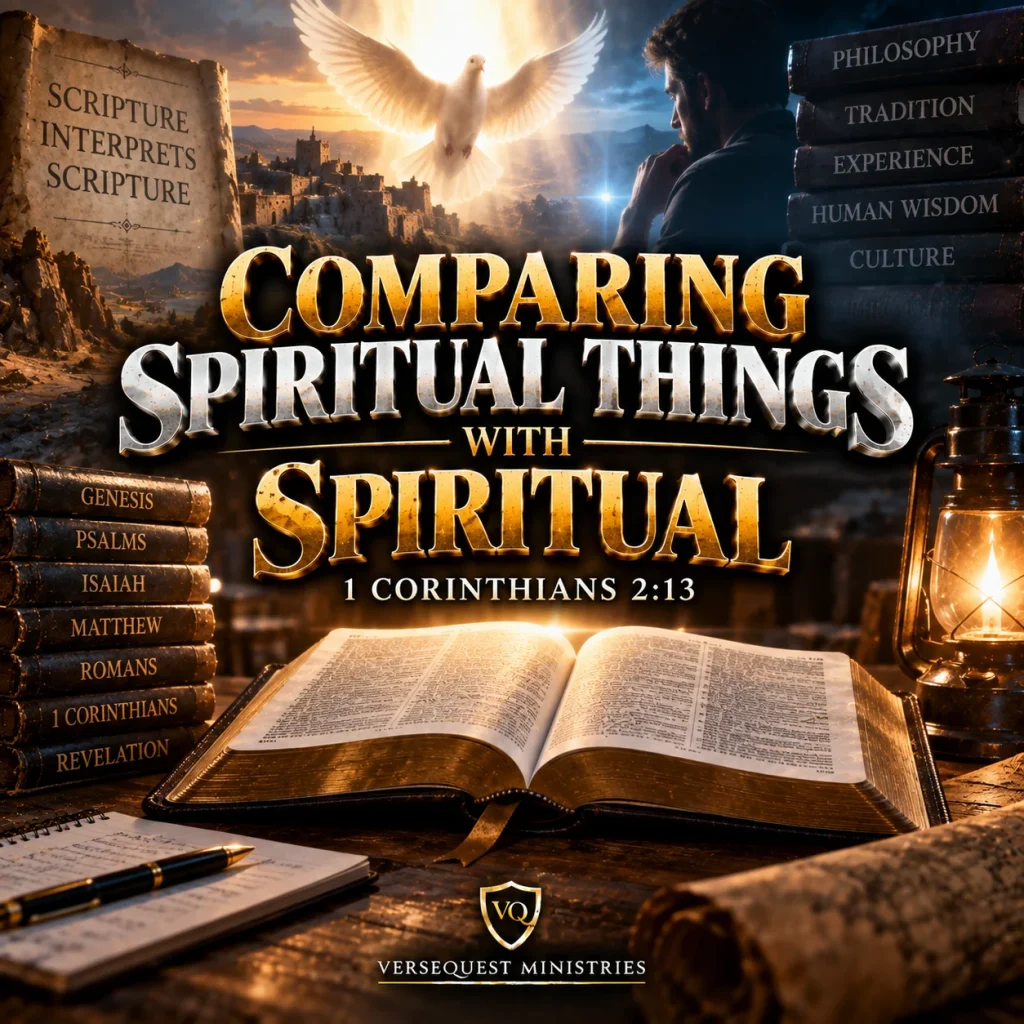
This detailed sermon outline examines 1 Corinthians 2:13 and Paul’s statement that believers are taught in “the words which the Holy Ghost teacheth,” while “comparing spiritual things with spiritual.” The message establishes the divine origin of spiritual truth, verbal inspiration of Scripture, and the principle that the Bible should be compared with itself rather than interpreted through philosophy, tradition, experience, or human wisdom. It explains why context must govern every cross-reference, why right division is essential when comparing passages, and how clear Scriptures help illuminate difficult ones without erasing distinctions between Israel, the Church, law, grace, prophecy, and mystery. The outline also distinguishes illumination from new revelation, examines why the natural man cannot properly receive spiritual truth, and shows how comparing Scripture with Scripture produces doctrinal stability and protects believers from isolated proof texts and false teaching. Preachers, teachers, and Bible students will gain a sermon-ready framework for studying the King James Bible through careful comparison, context, right division, spiritual discernment, and dependence upon the Holy Ghost who inspired the words.
-
October 4, 2026
Speaker: Paul Tackett
Topic: authority of Scripture, Bible believer final authority, Bible Doctrine, Biblical Authority, Christian decision making, final authority sermon outline, Isaiah 8:20, King James Bible authority, KJV Sermon Outline, rightly divided Bible study, Scripture versus experience, Scripture versus feelings, Scripture versus scholarship, Scripture versus tradition, Spiritual Discernment, sufficiency of Scripture, testing religious claims, to the law and testimony, what saith the Scripture, word of God authority
Book: Isaiah
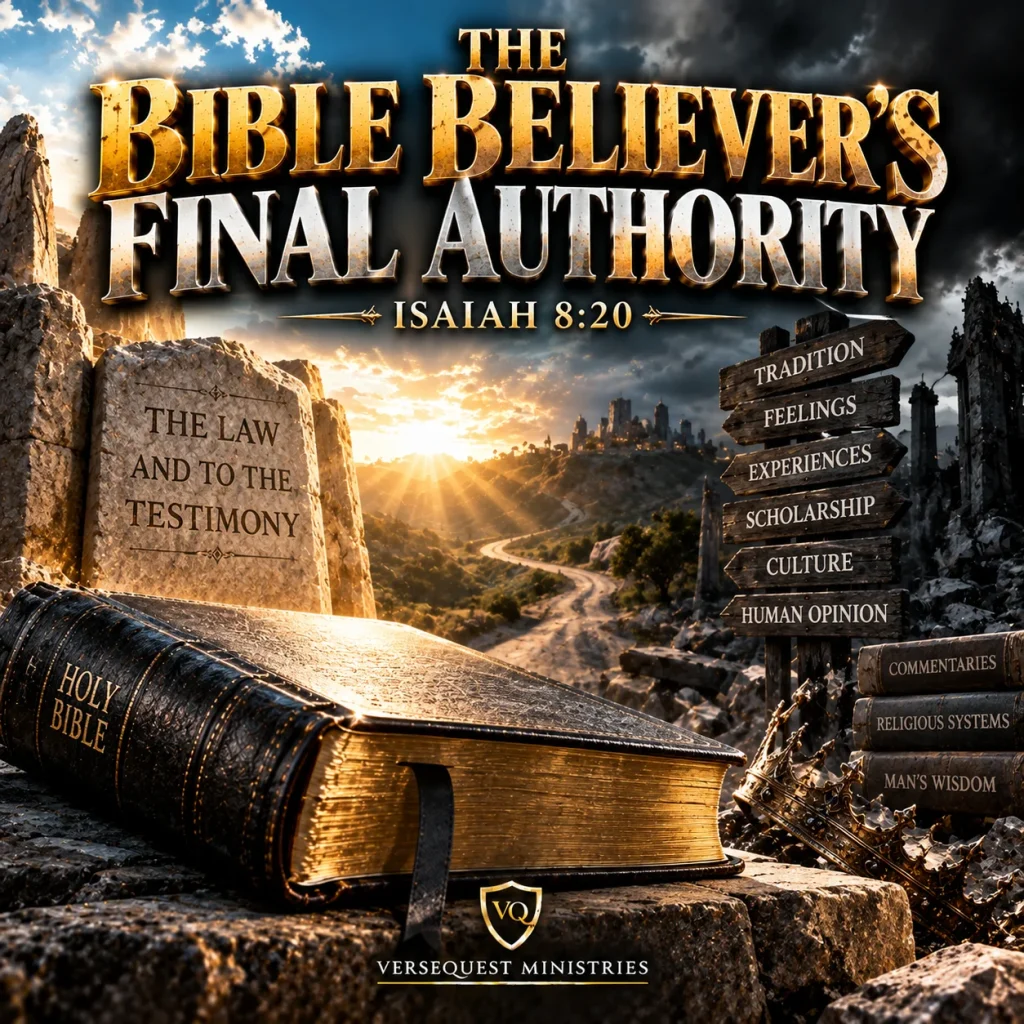
This detailed sermon outline examines Isaiah 8:20 and the command, “To the law and to the testimony,” establishing the principle that every religious, spiritual, and human claim must be tested by what God has revealed. Beginning with Isaiah’s warning against familiar spirits, wizards, and counterfeit supernatural guidance, the message develops the written word of God as the Bible believer’s final authority above tradition, feelings, experiences, scholarship, cultural opinion, religious systems, and personal reasoning. It shows how the Bereans tested preaching by Scripture, how even angelic claims must submit to revealed truth, why human learning and church tradition may serve beneath Scripture but never rule above it, and why subjective impressions cannot replace the objective word of God. The outline also emphasizes the necessity of rightly dividing Scripture, its sufficiency for doctrine, reproof, correction, and instruction in righteousness, and the practical test of final authority: whether the believer is willing to change when the Book proves him wrong. Preachers, teachers, and Bible students will gain a sermon-ready framework for teaching biblical authority, spiritual discernment, right division, Scripture’s sufficiency, and confidence in the King James Bible.
-
September 22, 2026
Speaker: Paul Tackett
Topic: 1 Corinthians 2:13–14, authority of the word of God, biblical discernment, carnality and discernment, Christian discernment, comparing spiritual things with spiritual, discerning truth from error, Holy Ghost teaching, Holy Spirit and discernment, illumination of Scripture, KJV Sermon Outline, natural man and spiritual man, preaching 1 Corinthians 2, rightly divided Bible study, Scripture compared with Scripture, Spiritual Discernment, spiritual discernment sermon outline, spiritual maturity, testing doctrine by Scripture, things of the Spirit of God
Book: 1 Corinthians
This detailed sermon outline examines 1 Corinthians 2:13–14 and Paul’s teaching that the things of God are “spiritually discerned.” It explains how spiritual discernment begins with divine revelation, why the Holy Ghost teaches through the words He gave, and why the natural man cannot properly receive spiritual truth on natural terms. The message develops Paul’s command to compare “spiritual things with spiritual,” showing the importance of comparing Scripture with Scripture and rightly dividing the word of truth. It also distinguishes biblical discernment from feelings, impressions, private experiences, and human wisdom; warns that carnality can hinder the spiritual understanding of saved believers; and shows how mature discernment protects Christians from false doctrine while keeping Jesus Christ and the written word of God central. Preachers, teachers, and Bible students will gain a sermon-ready framework for teaching biblical illumination, spiritual maturity, doctrinal testing, the authority of Scripture, and the practical necessity of measuring every teaching, experience, and opinion by the word of God.
-
September 15, 2026
Series: Led by the Spirit, Sons of God
Speaker: Paul Tackett
Topic: Abba Father, Assurance of Salvation, Children of God, Christian Sonship, Heirs of God, Holy Spirit Guidance, Joint Heirs With Christ, KJV Sermon Outline, Led by the Spirit, Mortify the Flesh, Pauline Doctrine, Rightly Dividing, Romans 8 Sermon Outline, Romans 8:14, Sons of God, Spirit Led Christian, Spirit of Adoption, Spirit of God, Spiritual Discernment, Walking in the Spirit
Book: Romans
This VerseQuest Ministries sermon outline on Romans 8:14 examines Paul’s declaration, “For as many as are led by the Spirit of God, they are the sons of God,” within the great doctrinal progression of Romans 8. The outline connects the Spirit’s leading with the believer’s secure family standing in Christ, the Spirit of adoption, the cry of “Abba, Father,” the Spirit’s witness that believers are the children of God, and their position as heirs of God and joint-heirs with Christ. It distinguishes genuine biblical Spirit-leading from emotional impulses, private revelation, mystical impressions, and fleshly desire, showing that the Holy Ghost leads consistently with the word He inspired and toward holiness rather than carnality. The sermon also addresses the conflict between flesh and Spirit, mortifying the deeds of the body, freedom from the spirit of bondage and fear, suffering with Christ, future glorification, and the practical conduct expected of those who belong to God’s family. Preachers, teachers, and Bible students will gain a strong KJV-based framework for teaching sonship, adoption, assurance, spiritual discernment, Spirit-controlled living, and the believer’s identity and inheritance in Jesus Christ.
-
September 13, 2026
Speaker: Paul Tackett
Topic: Biblical Spirituality, Christian Thanksgiving, Christian Worship, Colossians 3:16, Ephesians 5:18, Filled With the Spirit, Filled With the Word, Fruit of the Spirit, Holy Spirit Filling, Holy Spirit Sermon Outline, Indwelling Holy Spirit, KJV Sermon Outline, Pauline Doctrine, Practical Sanctification, Psalms Hymns Spiritual Songs, Rightly Dividing, Scripture Saturation, Spirit Filled Life, Spiritual Discernment, Word of Christ
Book: Ephesians
This VerseQuest Ministries sermon outline compares Ephesians 5:18 with Colossians 3:16 to show the close biblical relationship between being filled with the Holy Spirit and allowing “the word of Christ” to dwell richly within the believer. The outline distinguishes the Spirit’s permanent indwelling and sealing from His practical filling, contrasts Spirit-control with the controlling influence of wine, and demonstrates how the parallel passages produce similar results: wisdom, psalms, hymns, spiritual songs, thanksgiving, godly relationships, worship, discernment, and Christ-centered conduct. It also explains why genuine Spirit-filled living cannot be separated from Scripture, why emotional excitement and private impressions are not reliable measures of spirituality, and how the fruit of the Spirit reveals the Spirit’s practical control in daily life. Preachers, teachers, and Bible students will gain a strong KJV-based framework for teaching biblical spirituality, Spirit-filled living, Scripture saturation, practical sanctification, worship, and Christian usefulness without confusing spiritual growth with the basis of salvation.
-
September 11, 2026
Speaker: Paul Tackett
Topic: 1 Thessalonians 5:19, Chastening Not Condemnation, Christian Holiness, Christian Thanksgiving, Eternal Security, Fruit of the Spirit, Grieving the Holy Spirit, Holy Spirit Sermon, KJV Sermon Outline, Prayer Without Ceasing, Prove All Things, Quench Not the Spirit, Quench Not the Spirit Sermon Outline, Resisting the Holy Spirit, Rightly Dividing, Sealed by the Holy Spirit, Spirit Filled Life, Spiritual Discernment, Walk in the Spirit, Works of the Flesh
Book: 1 Thessalonians
This VerseQuest Ministries sermon outline on 1 Thessalonians 5:19 examines Paul’s brief but weighty command, “Quench not the Spirit.” The outline explains that the warning is addressed to saved believers who already possess the Holy Ghost and therefore concerns resisting or suppressing His practical work rather than losing salvation. It traces the immediate context of rejoicing, prayer, thanksgiving, prophesyings, spiritual discernment, holding fast what is good, and abstaining from evil; distinguishes quenching the Spirit from grieving the Spirit; and shows how fleshly living, neglected Scripture, prayerlessness, bitterness, lust, pride, and resistance to known truth hinder spiritual fruitfulness. The sermon also addresses the apostolic setting of prophecy, the necessity of proving all things by Scripture, sealing and eternal security, chastening versus condemnation, and the believer’s responsibility to walk in the Spirit. Preachers, teachers, and Bible students will gain a strong KJV-based framework for teaching Spirit-filled Christian living without confusing practical obedience with the believer’s secure standing in Jesus Christ.
-
September 8, 2026
Series: John 16:13, Spirit of Truth
Speaker: Paul Tackett
Topic: Apostolic Revelation, Bible Study Resources, Biblical Inspiration, Christ Centered Ministry, Holy Ghost and Scripture, Holy Spirit Guidance, Holy Spirit Sermon Outline, John 16:13, KJV Sermon Outline, Pauline Revelation, Rightly Dividing, Scripture Authority, Spirit of Truth, Spirit of Truth Sermon, Spiritual Discernment, Spiritual Illumination, Sword of the Spirit, Try the Spirits, Word of God, Word of Truth
Book: John
This VerseQuest Ministries sermon outline on John 16:13 examines the inseparable relationship between the Spirit of truth and the word of truth. Jesus promised the apostles that the Holy Ghost would guide them into truth, testify of Christ, bring His words to remembrance, reveal things to come, and glorify the Son. The outline carefully preserves the Upper Room setting and the special apostolic function of that promise while showing how the completed Scriptures give believers an objective standard by which every doctrine, spiritual impression, teacher, experience, and claimed revelation must be tested. It explains inspiration, illumination, Pauline revelation, right division, the Spirit’s Christ-centered ministry, and why the Holy Ghost never contradicts the Book He inspired. Preachers, teachers, and Bible students will gain a strong KJV-based framework for distinguishing biblical spiritual discernment from emotional impulse, private revelation, counterfeit spirituality, and religious experiences that refuse the authority of Scripture.