Topic: Walk in the Spirit
-

September 25, 2026
Speaker: Paul Tackett
Topic: 2 Corinthians 3:17, Christian freedom and holiness, Christian liberty and grace, Christian liberty sermon outline, Christian service and liberty, Freedom From Condemnation, Freedom in Christ, Galatians 5 liberty, KJV Sermon Outline, Law and Grace, legalism and license, liberty from the law, liberty in the Holy Spirit, liberty not license, ministration of the Spirit, rightly divided Bible study, Spirit of the Lord liberty, transformation by the Spirit, Walk in the Spirit, where the Spirit of the Lord is
Book: 2 Corinthians
This detailed sermon outline examines 2 Corinthians 3:17 and Paul’s declaration, “where the Spirit of the Lord is, there is liberty.” The message places Christian liberty in its proper doctrinal context by contrasting the ministration of the Spirit with the law written and engraven in stones, explaining the veil removed in Christ, and showing how believers are freed from condemnation and ceremonial bondage without being freed to serve the flesh. It carefully distinguishes biblical liberty from both legalism and license, develops Paul’s teaching that those led by the Spirit are not under the law, and shows why liberty must be governed by love, edification, holiness, and responsibility toward other believers. The outline also traces the transforming work of the Spirit in conforming the believer to Christ and presents voluntary service as one of the highest expressions of Christian freedom. Preachers, teachers, and Bible students will gain a sermon-ready framework for teaching grace, sanctification, Christian liberty, the law and the Spirit, freedom from sin’s dominion, and the proper use of liberty in the daily Christian walk.
-
September 24, 2026
Series: Ephesians 4:22–24, new man sermon outline
Speaker: Paul Tackett
Topic: Christian conduct, Christian maturity, Christian transformation, Ephesians 4 sermon, Ephesians 4:22–24, Grieve Not the Holy Spirit, Holy Spirit and Christian growth, KJV Sermon Outline, new creature in Christ, new man sermon outline, old man and new man, Practical Holiness, put off the old man, put on the new man, renewing the mind, righteousness and true holiness, rightly divided Bible study, sanctification sermon, spiritual renewal, Walk in the Spirit
Book: Ephesians
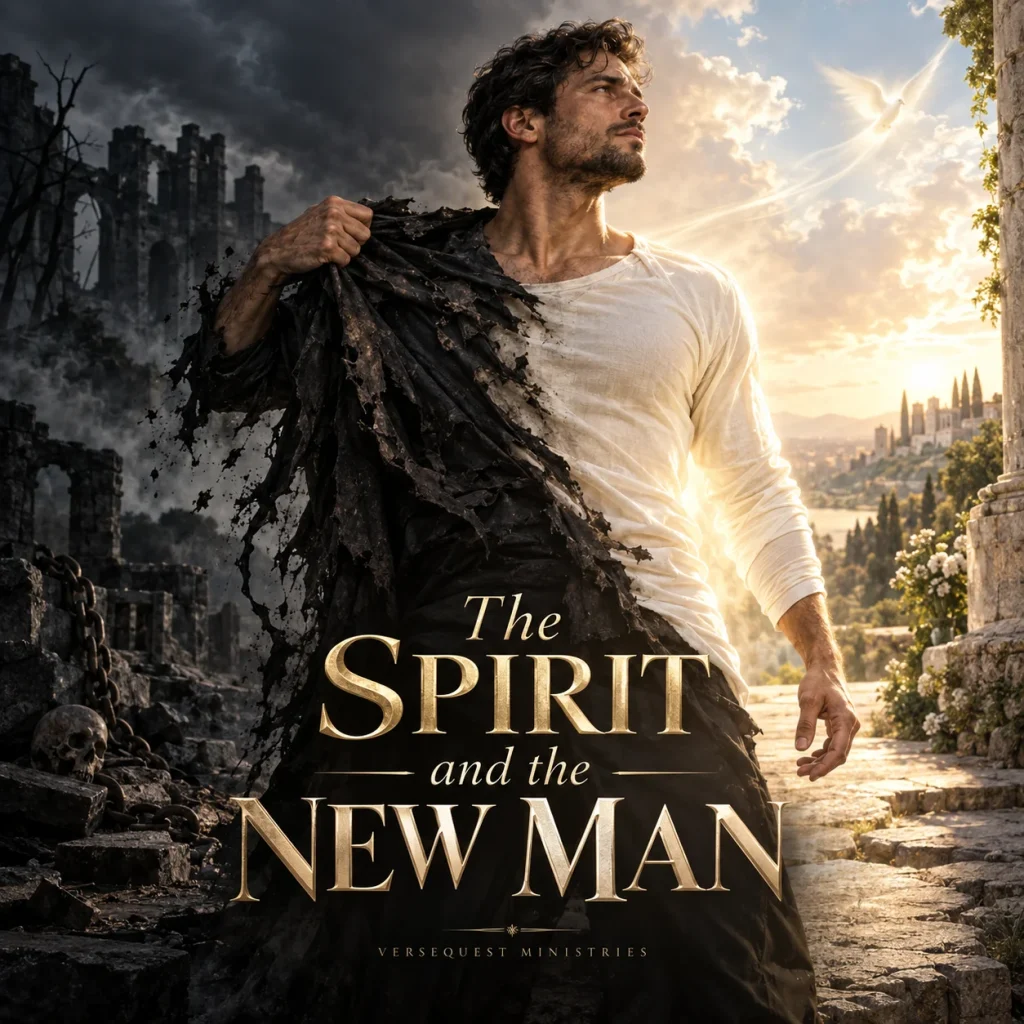
This detailed sermon outline examines Ephesians 4:22–24 and Paul’s command for believers to “put off” the old man, “be renewed in the spirit of your mind,” and “put on the new man,” which after God is created in righteousness and true holiness. The message carefully distinguishes the believer’s settled position in Christ from his daily Christian walk, showing that salvation does not consist of improving the old nature but of living consistently with the new identity God has already given the believer in Christ. It explores the corruption and deceitful lusts of the old man, the renewing of the mind through biblical truth, the new man as God’s creation, practical righteousness and holiness, the danger of grieving the Holy Spirit, and the visible changes that should follow spiritual growth. Preachers, teachers, and Bible students will gain a sermon-ready framework for teaching Christian transformation without confusing sanctification with salvation, while emphasizing grace, the indwelling Spirit, renewed thinking, practical holiness, and a daily walk worthy of the believer’s calling in Jesus Christ.
-

September 12, 2026
Series: Galatians 5:16, Walk in the Spirit
Speaker: Paul Tackett
Topic: Bible Study Resources, Christian Holiness, Christian Liberty, Eternal Security, Fruit of the Spirit, Galatians 5:16, Grace Based Living, Holy Spirit Guidance, KJV Sermon Outline, Law and Grace, Mortify the Flesh, Pauline Doctrine, Practical Sanctification, Rightly Dividing, Spirit Filled Life, Standing and State, Victory Over the Flesh, Walk in the Spirit, Walk in the Spirit Sermon Outline, Works of the Flesh
Book: Galatians
This VerseQuest Ministries sermon outline on Galatians 5:16 examines Paul’s command, “Walk in the Spirit, and ye shall not fulfil the lust of the flesh.” The outline explains that practical Christian victory does not come through reforming the flesh, returning to the law, trusting human willpower, or pursuing emotional religious experiences, but through daily yieldedness to the indwelling Holy Spirit. It explores the continuing conflict between flesh and Spirit, the works of the flesh, the fruit of the Spirit, mortification of sinful conduct, Christian liberty under grace, sealing and filling, and the distinction between the believer’s secure standing in Christ and his changing practical state. The sermon also shows why Spirit-filled living must remain grounded in Scripture, prayer, obedience, and rightly divided Pauline doctrine. Preachers, teachers, and Bible students will gain a strong KJV-based framework for teaching practical sanctification, victory over sin, grace-based holiness, and the daily responsibility of saved believers to walk under the Spirit’s control.
-
September 11, 2026
Speaker: Paul Tackett
Topic: 1 Thessalonians 5:19, Chastening Not Condemnation, Christian Holiness, Christian Thanksgiving, Eternal Security, Fruit of the Spirit, Grieving the Holy Spirit, Holy Spirit Sermon, KJV Sermon Outline, Prayer Without Ceasing, Prove All Things, Quench Not the Spirit, Quench Not the Spirit Sermon Outline, Resisting the Holy Spirit, Rightly Dividing, Sealed by the Holy Spirit, Spirit Filled Life, Spiritual Discernment, Walk in the Spirit, Works of the Flesh
Book: 1 Thessalonians
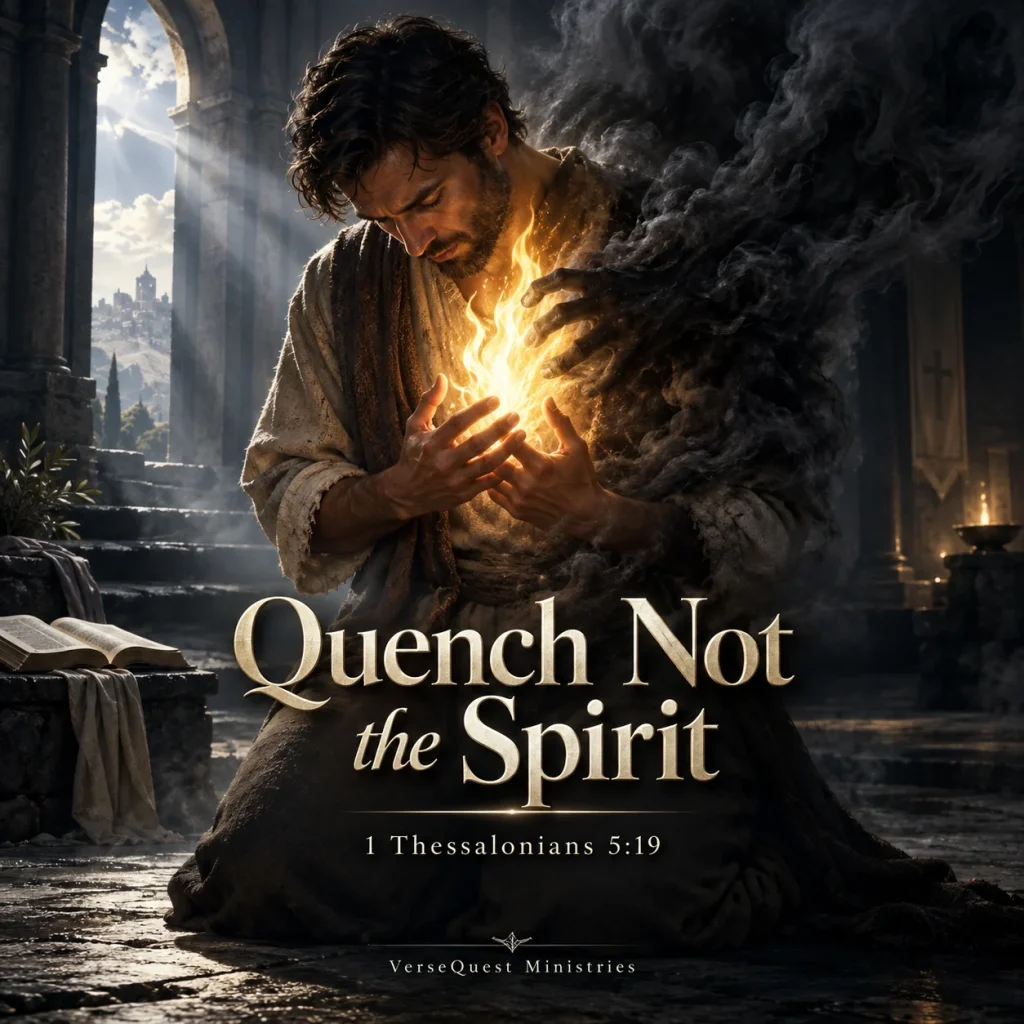
This VerseQuest Ministries sermon outline on 1 Thessalonians 5:19 examines Paul’s brief but weighty command, “Quench not the Spirit.” The outline explains that the warning is addressed to saved believers who already possess the Holy Ghost and therefore concerns resisting or suppressing His practical work rather than losing salvation. It traces the immediate context of rejoicing, prayer, thanksgiving, prophesyings, spiritual discernment, holding fast what is good, and abstaining from evil; distinguishes quenching the Spirit from grieving the Spirit; and shows how fleshly living, neglected Scripture, prayerlessness, bitterness, lust, pride, and resistance to known truth hinder spiritual fruitfulness. The sermon also addresses the apostolic setting of prophecy, the necessity of proving all things by Scripture, sealing and eternal security, chastening versus condemnation, and the believer’s responsibility to walk in the Spirit. Preachers, teachers, and Bible students will gain a strong KJV-based framework for teaching Spirit-filled Christian living without confusing practical obedience with the believer’s secure standing in Jesus Christ.
-
September 10, 2026
Speaker: Paul Tackett
Topic: Bible Study Resources, Body of Christ, Chastening Not Condemnation, Christian Holiness, Christian Sanctification, Ephesians 4:30, Eternal Security, Grieve Not the Holy Spirit, Grieving the Holy Spirit, Holy Spirit Seal, Holy Spirit Sermon, KJV Sermon Outline, Pauline Doctrine, Rightly Dividing, Sealed Unto the Day of Redemption, Sealing Versus Filling, Sonship and Fellowship, Spirit Filled Life, Standing and State, Walk in the Spirit
Book: Ephesians
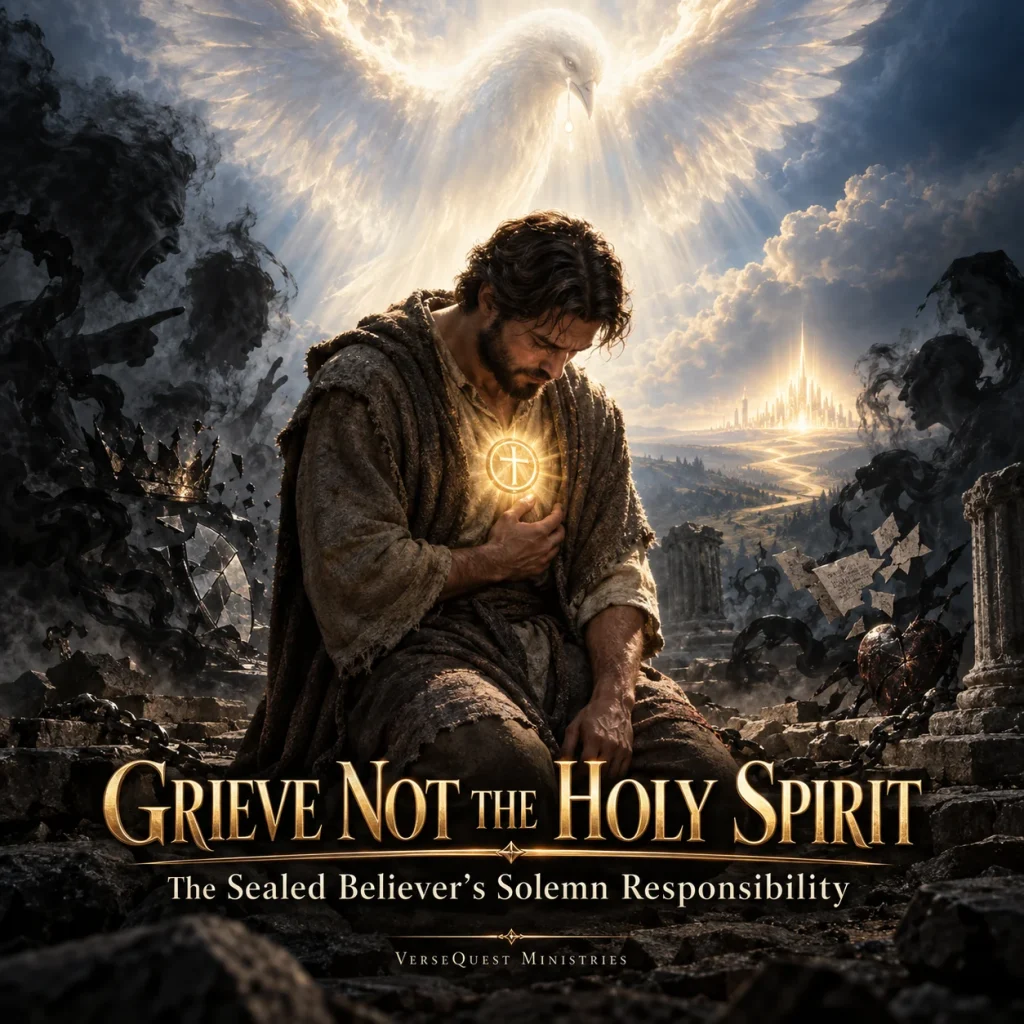
This VerseQuest Ministries sermon outline on Ephesians 4:30 examines Paul’s solemn command, “grieve not the holy Spirit of God,” while emphasizing the equally powerful security statement that believers are “sealed unto the day of redemption.” The outline explains the personality and deity of the Holy Spirit, why the indwelt believer can grieve Him, and how the immediate context identifies lying, sinful anger, stealing, corrupt communication, bitterness, wrath, clamour, evil speaking, and malice as conduct contrary to the Spirit’s holiness. It carefully distinguishes grieving the Spirit from losing the Spirit, sealing from filling, standing from state, sonship from fellowship, and fatherly chastening from eternal condemnation. The sermon also uses right division to distinguish David’s Old Testament prayer concerning the Holy Spirit from the Pauline doctrine of a Church-age believer sealed unto redemption day. Preachers, teachers, and Bible students will gain a strong KJV-based framework for teaching eternal security alongside practical sanctification, Christian accountability, confession, Spirit-filled living, and the responsibility to walk worthy of the calling believers have received in Christ.