Topic: Eternal Security
-

November 4, 2026
Series: Hebrews 2:1, The Danger of Spiritual Drift
Speaker: Paul Tackett
Topic: apostolic signs and wonders, Christian Perseverance, Christian spiritual growth, Eternal Security, give the more earnest heed, Hebrews 2 sermon outline, Hebrews 2:1, holding fast to Scripture, importance of Bible study, King James Bible preaching, KJV Sermon Outline, lest we let them slip, neglecting so great salvation, rightly divided Bible study, Sound Doctrine, spiritual negligence, spiritual watchfulness, superiority of Jesus Christ, The Danger of Spiritual Drift, warning against unbelief
Book: Hebrews
This detailed sermon outline examines Hebrews 2:1 and the solemn biblical warning, “Therefore we ought to give the more earnest heed to the things which we have heard, lest at any time we should let them slip,” revealing the danger of spiritual negligence, doctrinal instability, and gradually losing careful attention to divine revelation. The message establishes the passage’s original context within the Book of Hebrews, where the writer has demonstrated the supremacy of Jesus Christ over the angels, His divine authority, His finished work of purging sins, and His exaltation at the right hand of God. It explains why the opening word “Therefore” connects the warning directly to Christ’s superiority, why believers must give earnest attention to God’s revealed truth, and how spiritual drift can develop through continued indifference, neglected biblical instruction, worldly distractions, and increasing susceptibility to false doctrine. Special attention is given to Hebrews 2:1–4, including the warning against neglecting so great salvation, the difference between hearing the gospel and personally believing it, and the divine confirmation of Christ’s message through apostolic witnesses, signs, wonders, and miracles. The sermon carefully distinguishes the historical and doctrinal setting of Hebrews and its warnings concerning unbelief from the Church-Age believer’s eternal security through faith in Jesus Christ, avoiding the erroneous teaching that ordinary spiritual weakness or inconsistent Christian performance can undo the Saviour’s finished work. Drawing upon Hebrews 3–6, Hebrews 12, Ephesians 4, Colossians 2, 2 Timothy 2–3, and other New Testament passages, the outline develops the practical importance of sound doctrine, Scripture rightly divided, spiritual watchfulness, Christian perseverance, renewed thinking, and faithful obedience. It also examines why spiritual negligence can damage Christian growth, weaken biblical discernment, compromise one’s testimony, and waste valuable opportunities for service without invalidating the sufficiency of Christ’s redemption. Preachers, pastors, teachers, and Bible students will gain a comprehensive, KJV-based, rightly divided, sermon-ready framework for teaching the danger of spiritual drift, the authority of God’s Word, the seriousness of neglecting salvation, the preservation of sound doctrine, eternal security, and the importance of remaining firmly established in Jesus Christ rather than being carried away by the changing influences of the world.
-
October 26, 2026
Speaker: Paul Tackett
Topic: 1 Corinthians 15 sermon outline, 1 Corinthians 15:31, Christian Sanctification, Christian suffering, crucified with Christ, daily Christian faithfulness, Dying Daily in a Fleshly World, dying to self Bible study, Eternal Security, I die daily, KJV Sermon Outline, old man crucified, Paul's daily jeopardy, persecution for the gospel, resisting the flesh, resurrection hope, resurrection of the dead, rightly dividing the word, Salvation by Grace, Walking in the Spirit
Book: 1 Corinthians
This detailed sermon outline examines 1 Corinthians 15:31 and the Apostle Paul’s remarkable declaration, “I die daily,” carefully establishing its original context within his defense of the bodily resurrection of Jesus Christ and the future resurrection of believers. The message explains that Paul’s statement primarily concerns his continual exposure to danger, persecution, suffering, and possible death in gospel ministry rather than serving as a direct command for Christians to crucify their flesh every morning. From this doctrinal foundation, the outline develops the practical biblical principles of daily Christian consecration, the believer’s identification with Christ’s death and resurrection, and the continuing responsibility to resist the flesh while living in a world dominated by temporary pleasures, worldly ambitions, and opposition to God’s truth. Drawing upon Romans 6–8, Galatians 2 and 5, 2 Corinthians 4, and other Pauline passages, the sermon distinguishes salvation by grace from religious self-denial, eternal security from practical sanctification, and genuine Christian suffering from attempts to earn God’s acceptance through personal sacrifice. It examines why the old man was crucified with Christ, why the flesh remains present but must not be permitted to rule, how believers can walk in the Spirit, and why the resurrection gives eternal significance to present suffering and faithful Christian service. Preachers, teachers, and Bible students will gain a comprehensive, rightly divided, sermon-ready framework for teaching resurrection hope, perseverance, Christian sacrifice, victory over the flesh, spiritual discipline, and steadfast commitment to Jesus Christ in a hostile world.
-
October 25, 2026
Series: Galatians 2:20, The Crucified Life
Speaker: Paul Tackett
Topic: believer's identification with Christ, Christ liveth in me, Christian Liberty, Christian Sanctification, Eternal Security, faith of the Son of God, Galatians 2:20, Galatians 2:20 sermon outline, Galatians Bible preaching, grace versus law, I am crucified with Christ, Justification by Faith, King James Bible study, KJV Sermon Outline, old man crucified, rightly dividing the word, Romans 6 Bible study, Salvation by Grace, The Crucified Life, Walking in the Spirit
Book: Galatians
This detailed sermon outline examines Galatians 2:20 and the Apostle Paul’s remarkable declaration, “I am crucified with Christ: nevertheless I live; yet not I, but Christ liveth in me,” revealing the believer’s spiritual identification with the crucified and risen Lord Jesus Christ. The message places this foundational passage within its proper doctrinal setting, where Paul defends justification by faith apart from the works of the law and exposes the danger of mixing human performance with the finished work of Christ. It explains how the believer’s old Adamic standing was judicially dealt with at Calvary, why salvation provides genuine new life rather than merely reforming the flesh, and what Paul means when he declares that Christ now lives in him. The outline carefully distinguishes positional crucifixion from practical Christian conduct, explains why the continuing presence of fleshly temptation does not invalidate eternal salvation, and shows how believers are to reckon themselves dead to sin while walking in dependence upon the indwelling Holy Spirit. Special attention is given to the King James Bible’s wording, “the faith of the Son of God,” and Paul’s personal testimony concerning the Saviour “who loved me, and gave himself for me.” Drawing upon Romans 6–8, Galatians 3–5, Ephesians 4, and Colossians 3, the sermon further explores grace versus legalism, the believer’s two natures, eternal security, Christian liberty, sanctification, and the practical expression of Christ’s life through holiness, humility, obedience, and service. Preachers, teachers, and Bible students will gain a comprehensive, sermon-ready framework for teaching the crucified life without confusing surrender with salvation, spiritual growth with works-righteousness, or victory over the flesh with sinless perfection.
-

September 18, 2026
Series: earnest of our inheritance, Ephesians 1:14
Speaker: Paul Tackett
Topic: Assurance of Salvation, believer’s inheritance in Christ, Day of Redemption, dispensational Bible teaching, Earnest of Our Inheritance, Ephesians 1:14, Ephesians sermon outline, Eternal Security, Gospel of Salvation, hearing and believing, heavenly inheritance, Holy Spirit as earnest, Holy Spirit Seal, KJV Sermon Outline, praise of His glory, Purchased Possession, redemption of the body, Romans 8:23, salvation by grace through faith, Sealed With the Holy Spirit
Book: Ephesians
This detailed KJV sermon outline examines Ephesians 1:14 and the Holy Spirit as “the earnest of our inheritance,” God’s present pledge that He will complete the redemption He began. It explains the biblical order of hearing the gospel, believing on Jesus Christ, and being sealed with the Holy Spirit; the seal as God’s mark of ownership; the meaning of the earnest as a divine guarantee; and the believer’s heavenly inheritance in Christ. The outline also distinguishes present spiritual redemption from the future redemption of the body, establishes eternal security from Ephesians 4:30, and shows how the completed work will be “unto the praise of his glory.” Preachers, teachers, and Bible students will gain a sermon-ready treatment of salvation by grace, the Spirit’s sealing ministry, the purchased possession, bodily redemption, assurance, and faithful Christian living.
-
September 16, 2026
Speaker: Paul Tackett
Topic: Abba Father, Assurance of Salvation, Biblical Assurance, Children of God, Christian assurance sermon, eternal inheritance, Eternal Security, faith over feelings, Gospel of Grace, Holy Spirit Sermon Outline, Indwelling Holy Spirit, KJV Sermon Outline, rightly divided Bible teaching, Romans 8 Bible study, Romans 8:16, Sealed by the Holy Spirit, Spirit of Adoption, Spirit’s witness within the believer, witness of the Spirit, written record of God
Book: Romans
This detailed KJV sermon outline examines Romans 8:16 and the Holy Spirit’s inward witness that born-again believers are the children of God. It explains how this witness begins with the Spirit’s indwelling presence, agrees with God’s written record, confirms the believer’s adoption, and provides assurance that rests upon Jesus Christ rather than changing emotions or religious performance. The outline also addresses the believer’s confidence before the Father, the difference between biblical assurance and mystical impressions, the sealing of the Holy Spirit, and the eternal inheritance promised to every redeemed child of God. Preachers, teachers, and Bible students will gain a sermon-ready framework for teaching eternal security, the Spirit of adoption, faith over feelings, and the certainty of salvation through the finished work of Jesus Christ.
-
September 14, 2026
Series: Fruit of the Spirit, Works of the Flesh
Speaker: Paul Tackett
Topic: Chastening and Consequences, Christian Carnality, Christian Liberty, Christian Sanctification, Eternal Security, Fruit of the Spirit, Fruit of the Spirit Sermon Outline, Galatians 5:19–23, KJV Sermon Outline, Love Joy Peace, Meekness and Temperance, Ninefold Fruit of the Spirit, Pauline Doctrine, Practical Holiness, Rightly Dividing, Spirit Filled Living, Two Natures of the Believer, Walking in the Spirit, Works of the Flesh, Works of the Flesh Explained
Book: Galatians
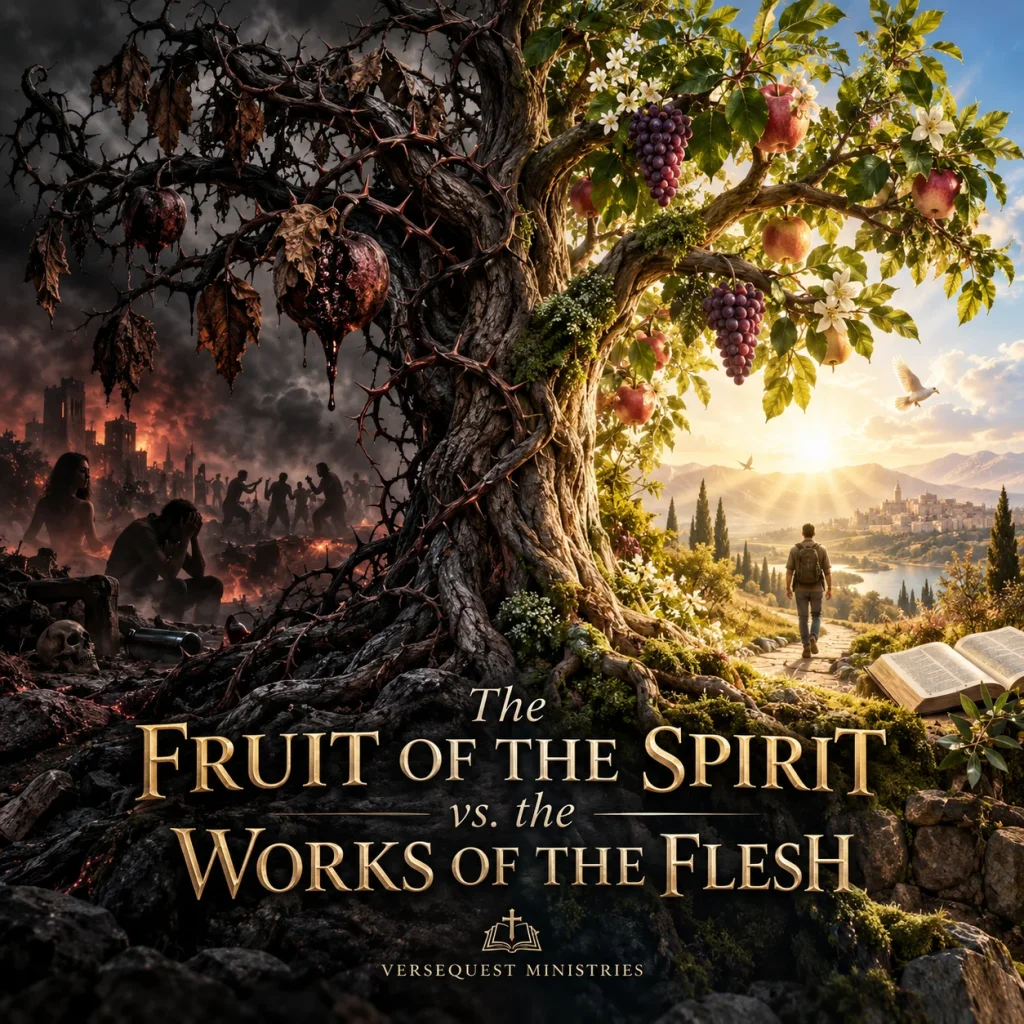
This VerseQuest Ministries sermon outline on Galatians 5:19–23 examines Paul’s sharp contrast between “the works of the flesh” and “the fruit of the Spirit,” revealing two radically different sources and two radically different harvests. The outline explains why fallen human nature naturally produces moral corruption, false spirituality, pride, strife, envy, excess, and bondage, while the Holy Ghost produces love, joy, peace, longsuffering, gentleness, goodness, faith, meekness, and temperance in the yielded believer. It also addresses the believer’s continuing conflict between flesh and Spirit, Christian liberty under grace, the warning concerning those who “shall not inherit the kingdom of God,” eternal security, chastening, loss of reward, and the difference between manufactured religious performance and genuine spiritual fruit. Preachers, teachers, and Bible students will gain a strong KJV-based framework for teaching practical sanctification, the believer’s two natures, Spirit-controlled living, and the necessity of sowing to the Spirit rather than feeding the flesh.
-

September 12, 2026
Series: Galatians 5:16, Walk in the Spirit
Speaker: Paul Tackett
Topic: Bible Study Resources, Christian Holiness, Christian Liberty, Eternal Security, Fruit of the Spirit, Galatians 5:16, Grace Based Living, Holy Spirit Guidance, KJV Sermon Outline, Law and Grace, Mortify the Flesh, Pauline Doctrine, Practical Sanctification, Rightly Dividing, Spirit Filled Life, Standing and State, Victory Over the Flesh, Walk in the Spirit, Walk in the Spirit Sermon Outline, Works of the Flesh
Book: Galatians
This VerseQuest Ministries sermon outline on Galatians 5:16 examines Paul’s command, “Walk in the Spirit, and ye shall not fulfil the lust of the flesh.” The outline explains that practical Christian victory does not come through reforming the flesh, returning to the law, trusting human willpower, or pursuing emotional religious experiences, but through daily yieldedness to the indwelling Holy Spirit. It explores the continuing conflict between flesh and Spirit, the works of the flesh, the fruit of the Spirit, mortification of sinful conduct, Christian liberty under grace, sealing and filling, and the distinction between the believer’s secure standing in Christ and his changing practical state. The sermon also shows why Spirit-filled living must remain grounded in Scripture, prayer, obedience, and rightly divided Pauline doctrine. Preachers, teachers, and Bible students will gain a strong KJV-based framework for teaching practical sanctification, victory over sin, grace-based holiness, and the daily responsibility of saved believers to walk under the Spirit’s control.
-
September 11, 2026
Speaker: Paul Tackett
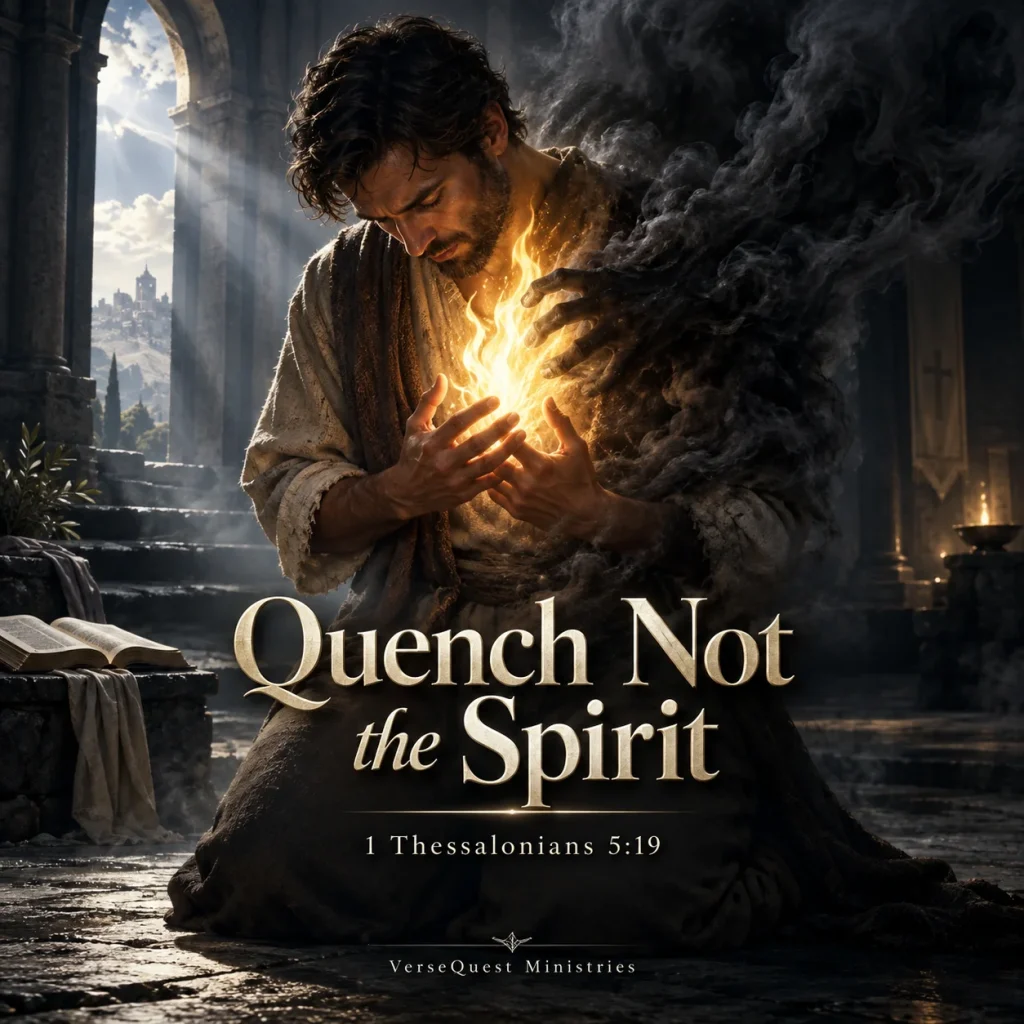
Topic: 1 Thessalonians 5:19, Chastening Not Condemnation, Christian Holiness, Christian Thanksgiving, Eternal Security, Fruit of the Spirit, Grieving the Holy Spirit, Holy Spirit Sermon, KJV Sermon Outline, Prayer Without Ceasing, Prove All Things, Quench Not the Spirit, Quench Not the Spirit Sermon Outline, Resisting the Holy Spirit, Rightly Dividing, Sealed by the Holy Spirit, Spirit Filled Life, Spiritual Discernment, Walk in the Spirit, Works of the Flesh
Book: 1 Thessalonians
This VerseQuest Ministries sermon outline on 1 Thessalonians 5:19 examines Paul’s brief but weighty command, “Quench not the Spirit.” The outline explains that the warning is addressed to saved believers who already possess the Holy Ghost and therefore concerns resisting or suppressing His practical work rather than losing salvation. It traces the immediate context of rejoicing, prayer, thanksgiving, prophesyings, spiritual discernment, holding fast what is good, and abstaining from evil; distinguishes quenching the Spirit from grieving the Spirit; and shows how fleshly living, neglected Scripture, prayerlessness, bitterness, lust, pride, and resistance to known truth hinder spiritual fruitfulness. The sermon also addresses the apostolic setting of prophecy, the necessity of proving all things by Scripture, sealing and eternal security, chastening versus condemnation, and the believer’s responsibility to walk in the Spirit. Preachers, teachers, and Bible students will gain a strong KJV-based framework for teaching Spirit-filled Christian living without confusing practical obedience with the believer’s secure standing in Jesus Christ.
-
September 10, 2026
Speaker: Paul Tackett
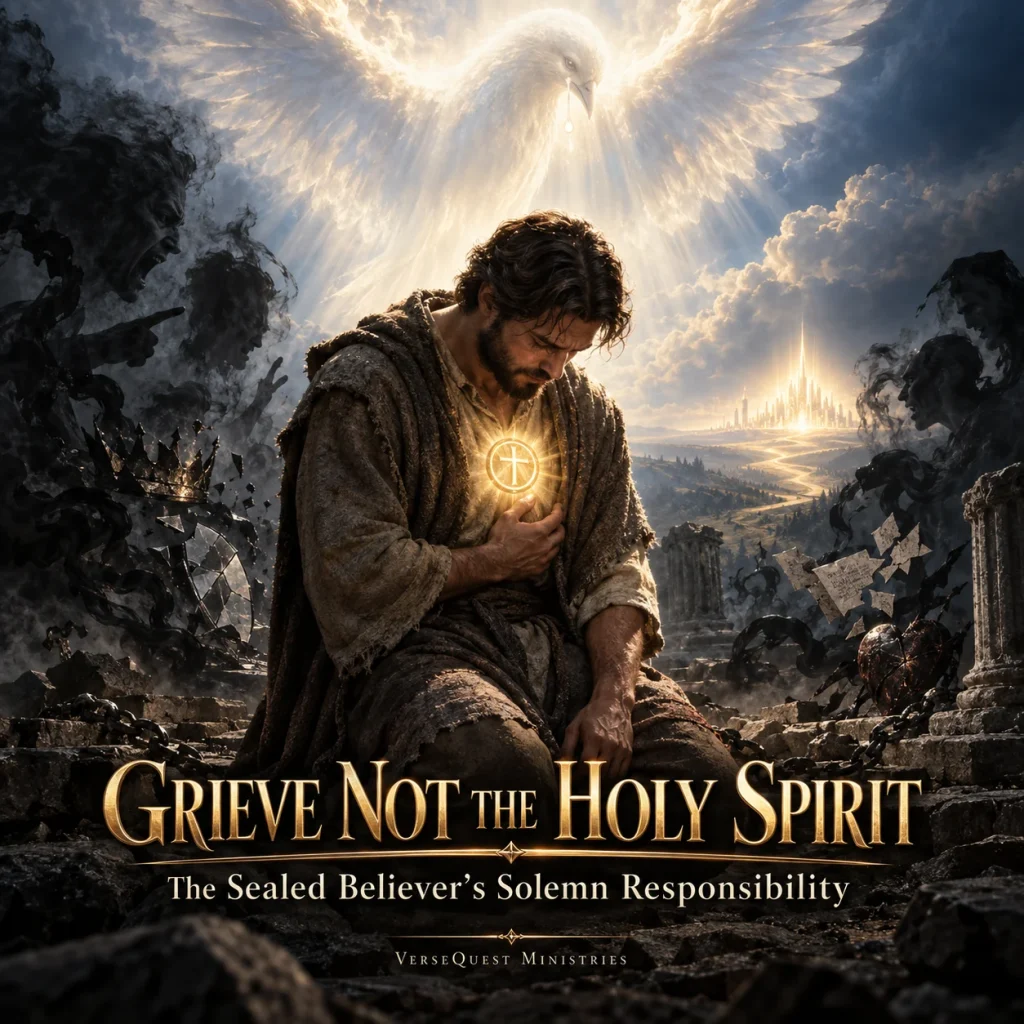
Topic: Bible Study Resources, Body of Christ, Chastening Not Condemnation, Christian Holiness, Christian Sanctification, Ephesians 4:30, Eternal Security, Grieve Not the Holy Spirit, Grieving the Holy Spirit, Holy Spirit Seal, Holy Spirit Sermon, KJV Sermon Outline, Pauline Doctrine, Rightly Dividing, Sealed Unto the Day of Redemption, Sealing Versus Filling, Sonship and Fellowship, Spirit Filled Life, Standing and State, Walk in the Spirit
Book: Ephesians
This VerseQuest Ministries sermon outline on Ephesians 4:30 examines Paul’s solemn command, “grieve not the holy Spirit of God,” while emphasizing the equally powerful security statement that believers are “sealed unto the day of redemption.” The outline explains the personality and deity of the Holy Spirit, why the indwelt believer can grieve Him, and how the immediate context identifies lying, sinful anger, stealing, corrupt communication, bitterness, wrath, clamour, evil speaking, and malice as conduct contrary to the Spirit’s holiness. It carefully distinguishes grieving the Spirit from losing the Spirit, sealing from filling, standing from state, sonship from fellowship, and fatherly chastening from eternal condemnation. The sermon also uses right division to distinguish David’s Old Testament prayer concerning the Holy Spirit from the Pauline doctrine of a Church-age believer sealed unto redemption day. Preachers, teachers, and Bible students will gain a strong KJV-based framework for teaching eternal security alongside practical sanctification, Christian accountability, confession, Spirit-filled living, and the responsibility to walk worthy of the calling believers have received in Christ.