Book: 1 Corinthians
-
November 14, 2026
Series: 2 Corinthians 12:7–10, When God Says No
Speaker: Paul Tackett
Topic: 2 Corinthians 12 sermon outline, 2 Corinthians 12:7–10, biblical unanswered prayer, Christian suffering and perseverance, divine strength in weakness, God's will in prayer, KJV Sermon Outline, messenger of Satan, My grace is sufficient for thee, Paul's thorn in the flesh, prayer and divine sovereignty, rightly divided Bible teaching, salvation by grace through faith, strength made perfect in weakness, suffering for Christ's sake, sufficient grace of Christ, thorn in the flesh explained, trusting God through suffering, when God does not answer as expected, When God Says No
Book: 1 Corinthians
This detailed sermon outline examines 2 Corinthians 12:7–10 and the Apostle Paul’s extraordinary experience of receiving an answer to prayer that differed from the deliverance he earnestly requested, revealing the sufficiency of Jesus Christ’s grace when suffering, weakness, and difficult circumstances remain. The message carefully establishes the passage’s original context within 2 Corinthians 11–12, where Paul describes his extraordinary apostolic revelations, the dangers of personal exaltation, and the thorn in the flesh given to him as a messenger of Satan to buffet him, lest he should be exalted above measure. Special attention is given to the fact that Scripture does not identify the precise nature of Paul’s thorn, warning against speculative interpretations that confidently declare it to be a particular physical disease, persecution, or other affliction without sufficient biblical evidence. The sermon examines Paul’s three earnest requests for the thorn’s removal, explaining why seeking relief from suffering is a legitimate expression of faith and why the Lord’s refusal to grant the requested deliverance does not mean that Paul’s prayers were ignored or that his faith was defective. Central to the outline is the Lord Jesus Christ’s declaration, “My grace is sufficient for thee: for my strength is made perfect in weakness,” demonstrating how divine assistance may consist of spiritual strength, perseverance, and sufficient grace rather than the immediate removal of difficult circumstances. Drawing upon Romans 8, 2 Corinthians 4, Ephesians 3, Philippians 4, Hebrews 4, and other supporting passages, the message explores the relationship between human weakness and divine power, the dangers of spiritual pride, and the distinction between God’s sovereign wisdom and man’s limited understanding of what ought to be requested in prayer. It directly confronts the false teaching that continued illness, financial hardship, persecution, or other afflictions necessarily prove that a Christian lacks sufficient faith, while explaining why believers should never romanticize suffering, refuse appropriate medical treatment, neglect legitimate assistance, or assume that every hardship has the same purpose as Paul’s thorn. The outline further examines Paul’s remarkable decision to glory in his infirmities so that the power of Christ might rest upon him, explaining the significance of enduring difficulties for Christ’s sake without turning suffering itself into a spiritual achievement. It also distinguishes salvation by grace through faith in the finished work of Jesus Christ from the continuing grace that sustains saved believers through practical Christian service, spiritual weakness, and earthly trials. Preachers, pastors, teachers, and Bible students will gain a comprehensive, KJV-based, rightly divided, sermon-ready framework for teaching answered prayer, God’s sufficient grace, Paul’s thorn in the flesh, Christian suffering, the danger of pride, spiritual perseverance, the will of God, and the strength of Jesus Christ made perfect in weakness.
-
November 3, 2026
Speaker: Paul Tackett
Topic: 1 Corinthians 4 sermon outline, 1 Corinthians 4:2, biblical faithfulness, Christian Perseverance, faithful Christian stewardship, faithful servants of Christ, faithfulness in ministry, faithfulness over popularity, humility in Christian ministry, Judgment Seat of Christ, King James Bible study, KJV Sermon Outline, quiet Christian service, rewards for faithful service, rightly dividing the word, Salvation by Grace, serving God without recognition, sound doctrine and stewardship, stewards of the mysteries of God, The Quiet Strength of Faithfulness
Book: 1 Corinthians
This detailed sermon outline examines 1 Corinthians 4:2 and the Apostle Paul’s declaration, “Moreover it is required in stewards, that a man be found faithful,” revealing the quiet but indispensable strength of Christian faithfulness and the believer’s responsibility to serve Jesus Christ without seeking worldly recognition or human applause. The message carefully establishes the passage’s original context within Paul’s correction of the Corinthian church, where divisions, carnality, religious personalities, and comparisons between ministers had distracted believers from the true purpose of Christian stewardship. Beginning with 1 Corinthians 4:1–5, the sermon explains why ministers are servants of Christ and stewards of the mysteries of God, emphasizing the responsibility to preserve sound doctrine, rightly divide Scripture, and faithfully handle divine revelation rather than altering biblical truth to attract popularity. It examines why faithfulness is a requirement rather than an optional quality, how the Lord measures stewardship differently from the world, and why public recognition, ministry size, natural ability, religious influence, and impressive accomplishments cannot substitute for humble obedience. Special attention is given to the often-overlooked faithfulness of ordinary Christians, including parents, Bible teachers, church helpers, gospel witnesses, and believers who continue serving faithfully through difficult circumstances without receiving public recognition. Drawing upon 1 Corinthians 3–4, 2 Corinthians 5, Colossians 3, Galatians 6, and other Pauline passages, the outline explores perseverance, humility, freedom from religious competition, faithful service in everyday responsibilities, and the danger of allowing personal ambition to corrupt Christian ministry. The sermon also examines the Judgment Seat of Christ, where the Lord will reveal the hidden motives of the heart and evaluate the quality of Christian service, carefully distinguishing salvation by grace through faith from the rewards or losses associated with the believer’s stewardship. Preachers, pastors, teachers, and Bible students will gain a comprehensive, KJV-based, rightly divided, sermon-ready framework for teaching Christian faithfulness, biblical stewardship, sound doctrine, perseverance, humility, eternal rewards, and the lasting spiritual value of serving Jesus Christ faithfully whether anybody notices or not.
-
October 26, 2026
Speaker: Paul Tackett
Topic: 1 Corinthians 15 sermon outline, 1 Corinthians 15:31, Christian Sanctification, Christian suffering, crucified with Christ, daily Christian faithfulness, Dying Daily in a Fleshly World, dying to self Bible study, Eternal Security, I die daily, KJV Sermon Outline, old man crucified, Paul's daily jeopardy, persecution for the gospel, resisting the flesh, resurrection hope, resurrection of the dead, rightly dividing the word, Salvation by Grace, Walking in the Spirit
Book: 1 Corinthians
This detailed sermon outline examines 1 Corinthians 15:31 and the Apostle Paul’s remarkable declaration, “I die daily,” carefully establishing its original context within his defense of the bodily resurrection of Jesus Christ and the future resurrection of believers. The message explains that Paul’s statement primarily concerns his continual exposure to danger, persecution, suffering, and possible death in gospel ministry rather than serving as a direct command for Christians to crucify their flesh every morning. From this doctrinal foundation, the outline develops the practical biblical principles of daily Christian consecration, the believer’s identification with Christ’s death and resurrection, and the continuing responsibility to resist the flesh while living in a world dominated by temporary pleasures, worldly ambitions, and opposition to God’s truth. Drawing upon Romans 6–8, Galatians 2 and 5, 2 Corinthians 4, and other Pauline passages, the sermon distinguishes salvation by grace from religious self-denial, eternal security from practical sanctification, and genuine Christian suffering from attempts to earn God’s acceptance through personal sacrifice. It examines why the old man was crucified with Christ, why the flesh remains present but must not be permitted to rule, how believers can walk in the Spirit, and why the resurrection gives eternal significance to present suffering and faithful Christian service. Preachers, teachers, and Bible students will gain a comprehensive, rightly divided, sermon-ready framework for teaching resurrection hope, perseverance, Christian sacrifice, victory over the flesh, spiritual discipline, and steadfast commitment to Jesus Christ in a hostile world.
-
October 5, 2026
Speaker: Paul Tackett
Topic: 1 Corinthians 2:13, authority of Scripture, Bible interpreting itself, Bible study principles, biblical cross references, clear passages interpret difficult passages, comparing Scripture with Scripture, comparing spiritual things sermon outline, comparing spiritual things with spiritual, context in Bible study, doctrinal stability, Holy Ghost teaches Scripture, illumination of Scripture, King James Bible study, KJV Sermon Outline, natural man and spiritual truth, rightly dividing the word, Scripture interprets Scripture, Spiritual Discernment, verbal inspiration
Book: 1 Corinthians
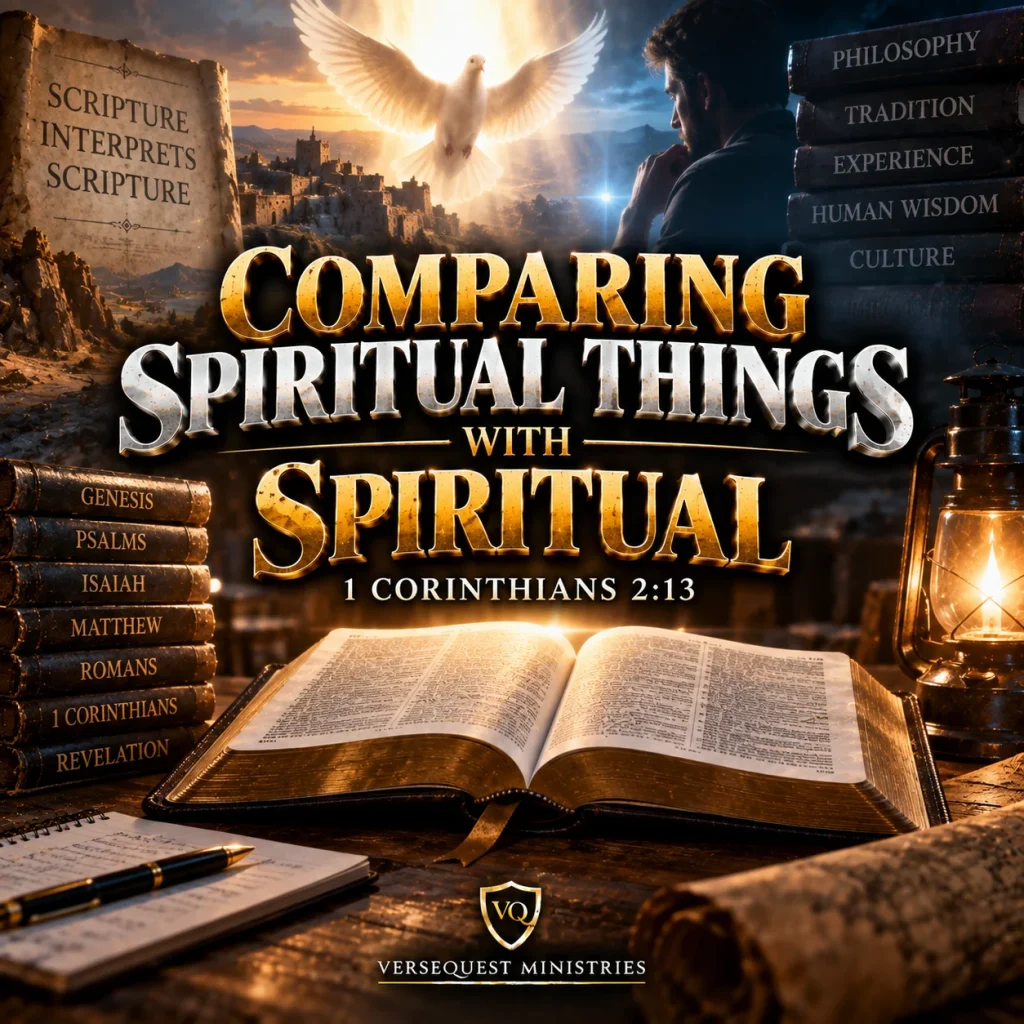
This detailed sermon outline examines 1 Corinthians 2:13 and Paul’s statement that believers are taught in “the words which the Holy Ghost teacheth,” while “comparing spiritual things with spiritual.” The message establishes the divine origin of spiritual truth, verbal inspiration of Scripture, and the principle that the Bible should be compared with itself rather than interpreted through philosophy, tradition, experience, or human wisdom. It explains why context must govern every cross-reference, why right division is essential when comparing passages, and how clear Scriptures help illuminate difficult ones without erasing distinctions between Israel, the Church, law, grace, prophecy, and mystery. The outline also distinguishes illumination from new revelation, examines why the natural man cannot properly receive spiritual truth, and shows how comparing Scripture with Scripture produces doctrinal stability and protects believers from isolated proof texts and false teaching. Preachers, teachers, and Bible students will gain a sermon-ready framework for studying the King James Bible through careful comparison, context, right division, spiritual discernment, and dependence upon the Holy Ghost who inspired the words.
-
September 22, 2026
Speaker: Paul Tackett
Topic: 1 Corinthians 2:13–14, authority of the word of God, biblical discernment, carnality and discernment, Christian discernment, comparing spiritual things with spiritual, discerning truth from error, Holy Ghost teaching, Holy Spirit and discernment, illumination of Scripture, KJV Sermon Outline, natural man and spiritual man, preaching 1 Corinthians 2, rightly divided Bible study, Scripture compared with Scripture, Spiritual Discernment, spiritual discernment sermon outline, spiritual maturity, testing doctrine by Scripture, things of the Spirit of God
Book: 1 Corinthians
This detailed sermon outline examines 1 Corinthians 2:13–14 and Paul’s teaching that the things of God are “spiritually discerned.” It explains how spiritual discernment begins with divine revelation, why the Holy Ghost teaches through the words He gave, and why the natural man cannot properly receive spiritual truth on natural terms. The message develops Paul’s command to compare “spiritual things with spiritual,” showing the importance of comparing Scripture with Scripture and rightly dividing the word of truth. It also distinguishes biblical discernment from feelings, impressions, private experiences, and human wisdom; warns that carnality can hinder the spiritual understanding of saved believers; and shows how mature discernment protects Christians from false doctrine while keeping Jesus Christ and the written word of God central. Preachers, teachers, and Bible students will gain a sermon-ready framework for teaching biblical illumination, spiritual maturity, doctrinal testing, the authority of Scripture, and the practical necessity of measuring every teaching, experience, and opinion by the word of God.
-
September 6, 2026
Speaker: Paul Tackett
Topic: 1 Corinthians 3:11–15, Bible Study Resources, Christian Rewards, Christian Stewardship, Eternal Security, Gold Silver Precious Stones, Gospel of Grace, He Himself Shall Be Saved, Jesus Christ the Foundation, Judgment Seat Not Great White Throne, Judgment Seat of Christ, KJV Sermon Outline, Loss of Reward, Reward for Faithful Service, Rightly Dividing, Salvation and Rewards, Salvation by Grace, Saved by Grace Rewarded for Service, Wood Hay and Stubble, Works After Salvation
Book: 1 Corinthians
This VerseQuest Ministries sermon outline on 1 Corinthians 3:11–15 explains the crucial Bible distinction between the free gift of salvation and rewards earned through faithful Christian service. Jesus Christ is the only foundation, and salvation rests entirely upon His finished work, received by grace through faith apart from works. After salvation, however, every believer builds upon that foundation with works pictured as gold, silver, precious stones, wood, hay, or stubble. The outline examines the Judgment Seat of Christ, the testing of Christian service by fire, reward for faithful labour, loss for worthless works, and Paul’s unmistakable statement that even when a believer’s work burns, “he himself shall be saved.” It also distinguishes salvation from reward, justification from service, eternal life from wages, and the Judgment Seat of Christ from the Great White Throne. Preachers, teachers, and Bible students will gain a strong KJV-based framework for teaching eternal security alongside serious Christian accountability and faithful stewardship.
-
August 7, 2026
Speaker: Paul Tackett
Topic: 1 Corinthians 15:1–4, Believe the Gospel, Bodily Resurrection, Christ Died for Our Sins, Death Burial and Resurrection, Empty Tomb, Finished Work of Christ, Gospel of Grace, KJV Sermon Outlines, Not by Works, Paul’s Gospel, Pauline Doctrine, Rightly Dividing, Saving Gospel, The Gospel That Saves Today
Book: 1 Corinthians
The Gospel That Saves Today is a detailed KJV sermon outline from VerseQuest Ministries built on 1 Corinthians 15:1–4. This study explains Paul’s clear declaration of the gospel by which sinners are saved: Christ died for our sins according to the Scriptures, He was buried, and He rose again the third day according to the Scriptures. The outline shows that the saving gospel today is not religion, law-keeping, baptism, sacraments, church membership, moral reform, emotional experience, social activism, or human merit, but the finished work of Jesus Christ. Designed for pastors, preachers, teachers, Bible students, and believers, this sermon resource explains substitutionary death, burial, bodily resurrection, justification, salvation by grace through faith, and the danger of mixing the gospel with religious additions. With strong King James Bible emphasis, it defends Paul’s gospel of grace and points sinners to Christ alone.
-

July 20, 2026
Series: Christ Died For Our Sins
Speaker: Paul Tackett
Topic: 1 Corinthians 15:3–4, Blood of Jesus Christ, Christ Died for Our Sins, Death Burial and Resurrection, Finished Work of Christ, Gospel of Grace, KJV Sermon Outlines, Pauline Doctrine, Propitiation, Raised for Our Justification, Redemption, Rightly Dividing, Salvation Apart From Works, Salvation by Grace, Substitutionary Atonement
Book: 1 Corinthians
Christ Died for Our Sins is a detailed KJV sermon outline from VerseQuest Ministries built on 1 Corinthians 15:3–4. This study explains the substitutionary death, burial, and bodily resurrection of the Lord Jesus Christ as the saving gospel of grace. It shows why human sin made the cross necessary, how the sinless Christ bore our guilt, satisfied divine justice, shed His blood for redemption, and redeemed believers from the curse of the law. The sermon also explains why Christ’s burial confirms His actual death and why His resurrection secures justification, eternal life, and victory over the grave. Designed for pastors, preachers, teachers, Bible students, and believers, this resource exposes religious additions involving works, law, sacraments, ceremonies, and human merit. It presents the finished work of Christ as the only foundation of salvation and calls sinners to believe the gospel and trust Jesus Christ alone.
-
July 15, 2026
Speaker: Paul Tackett
Topic: 1 Corinthians 10:11, Acts Transition, All Scripture Is for Us, Bible Context, Biblical Audiences, Dispensational Truth, Every Page Is Profitable, Israel and the Church, KJV Sermon Outlines, Law and Grace, Pauline Doctrine, Prophecy and Mystery, Rightly Dividing, Sound Doctrine, Written for Our Admonition
Book: 1 Corinthians
All Scripture Is for Us, Not All Scripture Is to Us is a detailed KJV sermon outline from VerseQuest Ministries built on 1 Corinthians 10:11. This study explains how every passage of Scripture remains inspired, authoritative, profitable, and written for the believer’s learning without making every command, covenant, promise, warning, or ordinance direct doctrine for the Body of Christ. It shows how Israel’s experiences admonish the Church, how historical and spiritual applications differ from direct doctrinal application, and why God’s stated audiences must be respected. Designed for pastors, preachers, teachers, Bible students, and believers, this sermon resource clarifies Israel and the Church, law and grace, prophecy and mystery, the Gospels, Acts as a transition book, and Pauline doctrine. With strong King James Bible emphasis, this outline helps Christians study Genesis through Revelation without stealing another audience’s promises or instructions.