
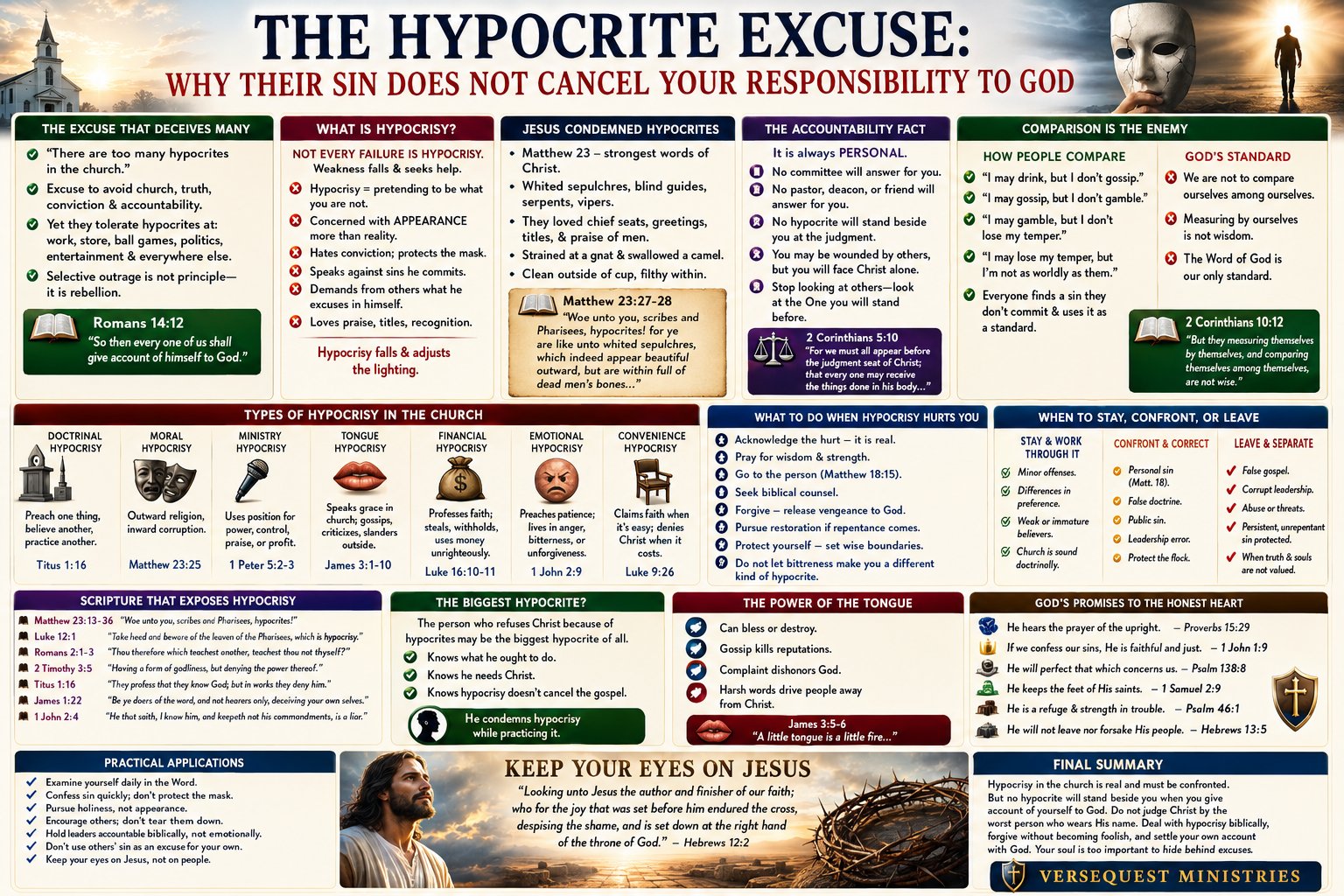
The Hypocrite Excuse – Why Their Sin Does Not Cancel Your Responsibility to God (KJV Bible Study Chart)
Confront the hypocrite excuse with this detailed KJV chart covering church hypocrisy, personal accountability, religious pretense, comparison, church hurt, correction, boundaries, and keeping your eyes on Jesus.
$3.99
Description
The Hypocrite Excuse: Why Their Sin Does Not Cancel Your Responsibility to God is a detailed KJV Bible study chart confronting one of the most common reasons people give for rejecting church, resisting biblical truth, avoiding conviction, or refusing to respond personally to Jesus Christ: “There are too many hypocrites in the church.”
The chart does not deny that hypocrisy exists among professing Christians, church members, preachers, leaders, and religious institutions. Jesus Christ spoke some of His strongest words against hypocrites. He exposed religious leaders who appeared righteous outwardly while hiding pride, corruption, greed, unbelief, and spiritual death within.
Hypocrisy in the church is real, harmful, and worthy of biblical confrontation. Yet another person’s hypocrisy does not erase God’s truth, cancel the gospel, change the identity of Jesus Christ, remove personal accountability, or provide an excuse for disobedience.
Romans 14:12 declares, “So then every one of us shall give account of himself to God.” No hypocritical pastor, dishonest church member, corrupt ministry, unfaithful parent, or counterfeit believer will stand in another person’s place at the judgment. Every individual must answer personally to God.
The chart begins by exposing the selective nature of the hypocrite excuse. People may refuse church because hypocrites attend, yet continue working with hypocrites, voting for hypocrites, watching hypocrites, socializing with hypocrites, purchasing from hypocrites, and participating in institutions filled with imperfect people.
Selective outrage is not principle. It becomes an excuse when hypocrisy is condemned only where truth, conviction, worship, repentance, and accountability are involved.
The presence of counterfeit money does not prove that genuine money is worthless. In the same way, the existence of false Christians does not prove that Jesus Christ is false. Counterfeits exist because something real is valuable enough to imitate.
The chart carefully defines hypocrisy. Not every weakness, failure, inconsistency, or spiritual struggle is hypocrisy. A believer may stumble, confess his sin, seek help, receive correction, and continue growing without pretending to be something he is not.
Hypocrisy is deliberate religious pretense. It is maintaining an outward appearance that hides an inward reality. The hypocrite protects the mask, resists conviction, speaks against sins he secretly practises, and demands standards from others that he repeatedly excuses in himself.
The hypocrite is more concerned with appearance than truth. He adjusts the lighting rather than removing the mask. He wants the reputation of holiness without the repentance, humility, obedience, and private integrity holiness requires.
Jesus condemned religious hypocrisy openly. Matthew 23 records His warnings against scribes and Pharisees who loved titles, praise, public greetings, chief seats, and outward recognition while neglecting truth, mercy, judgment, and inward cleansing.
Christ compared them to whited sepulchres—beautiful on the outside but filled with dead men’s bones. They strained at a gnat while swallowing a camel, cleaned the outside while leaving the inside filthy, and placed burdens upon others that they refused to bear themselves.
These warnings demonstrate that exposing hypocrisy is not hatred, bitterness, or unnecessary controversy. Jesus Christ confronted religious deceit because hypocrisy misrepresented God, injured people, concealed sin, and corrupted spiritual leadership.
At the same time, Christ’s condemnation of hypocrites never gave His hearers permission to reject God. The hypocrisy of the Pharisees did not make the Scriptures false, excuse personal sin, or eliminate the responsibility to believe and obey the truth.
A central section establishes the accountability fact: accountability before God is always personal. No committee, denomination, pastor, parent, spouse, friend, or church will answer in another person’s place.
Second Corinthians 5:10 teaches that every believer will appear before the judgment seat of Christ and receive according to the things done in the body. The conduct of others may wound, discourage, tempt, or influence us, but it cannot remove our individual responsibility.
A hypocrite may stand beside someone at work, church, or home, but no hypocrite will stand between that person and Jesus Christ at the judgment. The proper response is not to keep looking at the worst representative of Christianity but to look unto the perfect Christ.
The chart also exposes comparison as an enemy. People often excuse one sin by finding another person guilty of a different sin: “I may drink, but I do not gossip,” “I may gossip, but I do not gamble,” or “I may lose my temper, but I am not as worldly as they are.”
Everyone can find a sin he does not commit and use it as a false standard. Second Corinthians 10:12 warns that those who measure themselves by themselves and compare themselves among themselves are not wise.
God’s Word—not the failures of another person—is the standard. A sinner is not righteous merely because someone else appears worse. Another person’s disobedience cannot transform our disobedience into obedience.
The chart identifies several forms of hypocrisy within religious life. Doctrinal hypocrisy preaches one doctrine while believing or practising another. It may publicly defend Scripture while privately disregarding its authority.
Moral hypocrisy maintains an outward appearance of purity while secretly tolerating corruption. Jesus rebuked those who cleaned the outside while remaining inwardly full of extortion and excess.
Ministry hypocrisy uses a position, title, pulpit, platform, or spiritual influence to gain praise, money, control, admiration, or personal power. Biblical leadership should feed and protect the flock rather than exploit it.
Tongue hypocrisy speaks about grace, kindness, and Christian love while gossiping, slandering, criticizing, and destroying reputations. James warns that the same tongue should not bless God and curse people.
Financial hypocrisy professes faith and generosity while stealing, withholding, manipulating offerings, misusing ministry funds, or treating godliness as a way to make financial gain.
Emotional hypocrisy preaches patience, forgiveness, joy, and self-control while living in anger, resentment, bitterness, unforgiveness, and emotional manipulation.
Convenience hypocrisy claims faithfulness while obedience is easy but denies Christ when truth becomes costly, unpopular, embarrassing, or dangerous.
These categories invite honest self-examination rather than merely giving believers additional labels to place upon others. The first duty is not to identify every hypocrite in sight but to ask whether any hypocrisy is hiding within our own heart.
The chart gathers Scriptures that expose hypocrisy, including Christ’s warnings in Matthew 23, His warning concerning the leaven of the Pharisees, Paul’s rebuke of those who teach others while failing to practise the truth themselves, and James’s command to be doers rather than hearers only.
Titus 1:16 describes those who profess to know God but deny Him through their works. Second Timothy warns of people possessing a form of godliness while denying its power. First John teaches that claiming to know Christ while refusing His commandments exposes a false profession.
The chart also confronts what may be called the biggest hypocrite: the person who condemns hypocrisy as his reason for refusing Christ while practising hypocrisy himself. He knows what he ought to do, knows that he needs the Saviour, and knows that another person’s inconsistency does not disprove the gospel.
He condemns religious hypocrisy while using it to conceal his own resistance to God. The hypocrite excuse can therefore become hypocrisy wearing the language of moral outrage.
The proper response when church hypocrisy causes genuine pain is neither denial nor revenge. The hurt should be acknowledged honestly. Spiritual betrayal, leadership failure, gossip, manipulation, public scandal, and abuse can cause serious wounds.
The wounded believer should pray for wisdom, seek biblical counsel, go to the person when appropriate, follow the principles of Matthew 18, forgive by releasing personal vengeance to God, and establish wise boundaries.
Forgiveness does not require pretending nothing happened. It does not eliminate the need for truth, repentance, accountability, restitution, church discipline, reporting criminal conduct, or separation from ongoing danger.
Restoration should be pursued when repentance is genuine, but restoration must be biblical rather than sentimental. Trust may need to be rebuilt over time, and some consequences may remain even after forgiveness is extended.
The believer must also refuse to allow bitterness to turn him into another kind of hypocrite. It is possible to condemn the bitterness, deception, or cruelty of others while slowly becoming bitter, deceptive, and cruel in response.
The chart provides guidance for knowing when to stay, confront, correct, or leave. Believers may remain and work through minor offenses, differences in preference, immature conduct, or correctable weaknesses within a doctrinally sound church.
Personal sin, public wrongdoing, false teaching, and leadership failure may require direct confrontation and biblical correction. Matthew 18, pastoral accountability, church discipline, and protection of the flock should not be ignored merely to maintain outward peace.
Separation may become necessary when a church or ministry teaches another gospel, protects persistent unrepentant sin, tolerates corrupt leadership, excuses abuse, threatens those who speak truth, or demonstrates that souls and Scripture are less important than reputation and institutional survival.
Leaving a corrupt church is not the same as leaving Jesus Christ. Rejecting an unhealthy congregation does not require rejecting the Body of Christ, sound doctrine, Christian fellowship, or the Lord who purchased the Church with His blood.
The power of the tongue receives special attention because much church hypocrisy operates through speech. The tongue can bless or destroy, comfort or condemn, clarify truth or spread suspicion.
Gossip kills reputations without providing a fair hearing. Complaining may dishonour God by presenting every difficulty as proof that He has failed. Harsh words may drive wounded people farther from Christian fellowship.
James compares the tongue to a small fire capable of setting an entire course aflame. Believers should therefore speak truthfully, directly, graciously, and responsibly rather than feeding private campaigns, rumours, factions, or character assassination.
The chart also presents God’s promises to the honest heart. The LORD hears the prayer of the upright, forgives confessed sin, perfects what concerns His people, preserves His saints, provides refuge in trouble, and promises never to leave or forsake those who belong to Him.
The answer to hypocrisy is not abandoning Christ but drawing nearer to Him. Human representatives may fail, but Jesus Christ never lies, manipulates, gossips, steals, abuses, compromises truth, or betrays those who trust Him.
Hebrews 12:2 commands believers to look unto Jesus, the Author and Finisher of faith. The Christian standard is not the worst church member who wears Christ’s name. The standard is the Lord Jesus Christ Himself.
Practical applications include examining oneself through Scripture, confessing sin quickly, refusing to protect a religious mask, pursuing holiness rather than appearance, encouraging wounded believers, holding leaders accountable, and refusing to use another person’s sin as permission for personal rebellion.
The believer should keep his eyes upon Jesus rather than people. This does not mean ignoring wrongdoing or refusing necessary action. It means that human failure is not permitted to redefine the character, truth, gospel, or faithfulness of Christ.
The final doctrinal conclusion is clear: hypocrisy within the church is real and must be addressed biblically. Yet no hypocrite will stand beside us when we give account of ourselves to God.
We must not judge Jesus Christ by the worst person who uses His name. We must deal with hypocrisy truthfully, forgive without becoming foolish, maintain accountability, refuse bitterness, seek sound fellowship, and settle our own account with God.
This resource is ideal for personal Bible study, church-hurt counseling, pastoral leadership, hypocrisy and integrity studies, accountability training, conflict resolution, discipleship, youth ministry, Sunday school, homeschool Bible curriculum, Bible institutes, sermon preparation, and evangelistic conversations with those using church hypocrisy as a reason to reject Christ.
The hypocrite excuse, church hypocrisy, personal accountability before God, religious pretense, whited sepulchres, judging by appearance, comparison and self-righteousness, doctrinal hypocrisy, moral hypocrisy, ministry hypocrisy, financial hypocrisy, tongue hypocrisy, church hurt, biblical confrontation, forgiveness and boundaries, corrupt church leadership, keeping your eyes on Jesus, Christian integrity, judgment seat of Christ, responsibility to God
The existence of hypocrisy among professing Christians does not disprove Jesus Christ, the gospel, or the authority of Scripture. It proves that people may use religious appearance while resisting inward truth.
Not every failure is hypocrisy. A believer who sins, confesses honestly, receives correction, and seeks restoration is not necessarily pretending to be sinless.
Hypocrisy is the deliberate maintenance of an appearance that conceals a contradictory reality. It protects the mask rather than correcting the heart.
Jesus Christ condemned hypocrisy more severely than many outwardly scandalous sins because it used religion to conceal corruption and misrepresent God.
Christ’s condemnation of hypocrites never gave others permission to reject Him. The Pharisees were false, but Christ remained true.
Romans 14:12 establishes personal accountability. Each person will answer for his own response to God rather than for the failures of another church member.
Second Corinthians 5:10 teaches that believers will appear before the judgment seat of Christ. Another person’s failure will not erase our stewardship or responsibility.
Comparison is a false moral standard. Finding someone who appears worse does not make our conduct righteous.
God’s Word is the final standard. The believer must compare his doctrine, motives, conduct, speech, finances, relationships, and ministry with Scripture.
Doctrinal hypocrisy occurs when a person publicly teaches truth that he privately denies or refuses to practise.
Moral hypocrisy creates an appearance of purity while protecting secret corruption.
Ministry hypocrisy turns spiritual leadership into a tool for control, profit, praise, recognition, or personal power.
Tongue hypocrisy speaks about Christian love while gossiping, slandering, criticizing, and destroying reputations.
Financial hypocrisy professes faith while stealing, manipulating offerings, withholding what is owed, or using ministry money dishonestly.
Emotional hypocrisy preaches forgiveness, patience, and peace while nourishing anger, resentment, bitterness, and manipulation.
Convenience hypocrisy follows Christ while obedience remains comfortable but abandons truth when faithfulness becomes costly.
Church hurt should be acknowledged rather than minimized. Betrayal by religious people may cause genuine emotional, relational, and spiritual damage.
Forgiveness releases personal vengeance to God but does not require instant trust, denial, continued danger, or erased consequences.
Matthew 18 provides a pattern for addressing personal offenses. Serious public sin, criminal behaviour, or abuse may require broader accountability and lawful reporting.
A believer may remain within a sound church while working through immaturity, minor offenses, and differences in preference.
False doctrine, another gospel, corrupt leadership, protected abuse, and persistent unrepentant sin may require separation.
Leaving an unhealthy congregation does not mean leaving Christ or abandoning the need for sound Christian fellowship.
The believer must guard against becoming bitter toward all Christians because of the conduct of some. Pain should lead toward truth and healing rather than permanent isolation.
Gossip is not biblical confrontation. Truth should be taken to the proper person and handled through scriptural means rather than private campaigns.
The person who rejects Christ because hypocrites exist may be using the failures of others to hide his own refusal to obey God.
Jesus Christ is the proper object of faith. Human representatives may fail, but the Lord remains holy, truthful, faithful, and without hypocrisy.
Hebrews 12:2 directs believers to look unto Jesus. Christian endurance cannot depend upon every church member behaving perfectly.
The practical response is to examine yourself, confess sin, reject pretense, speak truth, pursue holiness, hold leadership accountable, forgive wisely, and continue following Christ.
Church-hurt counseling, responding to religious hypocrisy, Christian integrity studies, pastoral accountability, evaluating church leadership, confronting public sin, Matthew 18 conflict resolution, biblical church discipline, overcoming bitterness, forgiveness and boundaries, helping wounded believers, answering objections to Christianity, evangelistic conversations, youth discipleship, Sunday school lessons, homeschool Bible curriculum, Christian school teaching, Bible institute classes, sermon preparation
King James Bible, Strong’s Concordance, Thompson Chain-Reference Bible, Treasury of Scripture Knowledge, Nave’s Topical Bible, Matthew 23 study notes, Romans 2 commentary materials, James 3 tongue studies, church-discipline resources, biblical counseling materials, forgiveness and boundaries worksheets, pastoral-accountability guides, church-hurt recovery studies, Scripture memory cards, Christian integrity workbooks, VerseQuest Christian Living and doctrine charts
Related products
-
How To Live By Faith
-
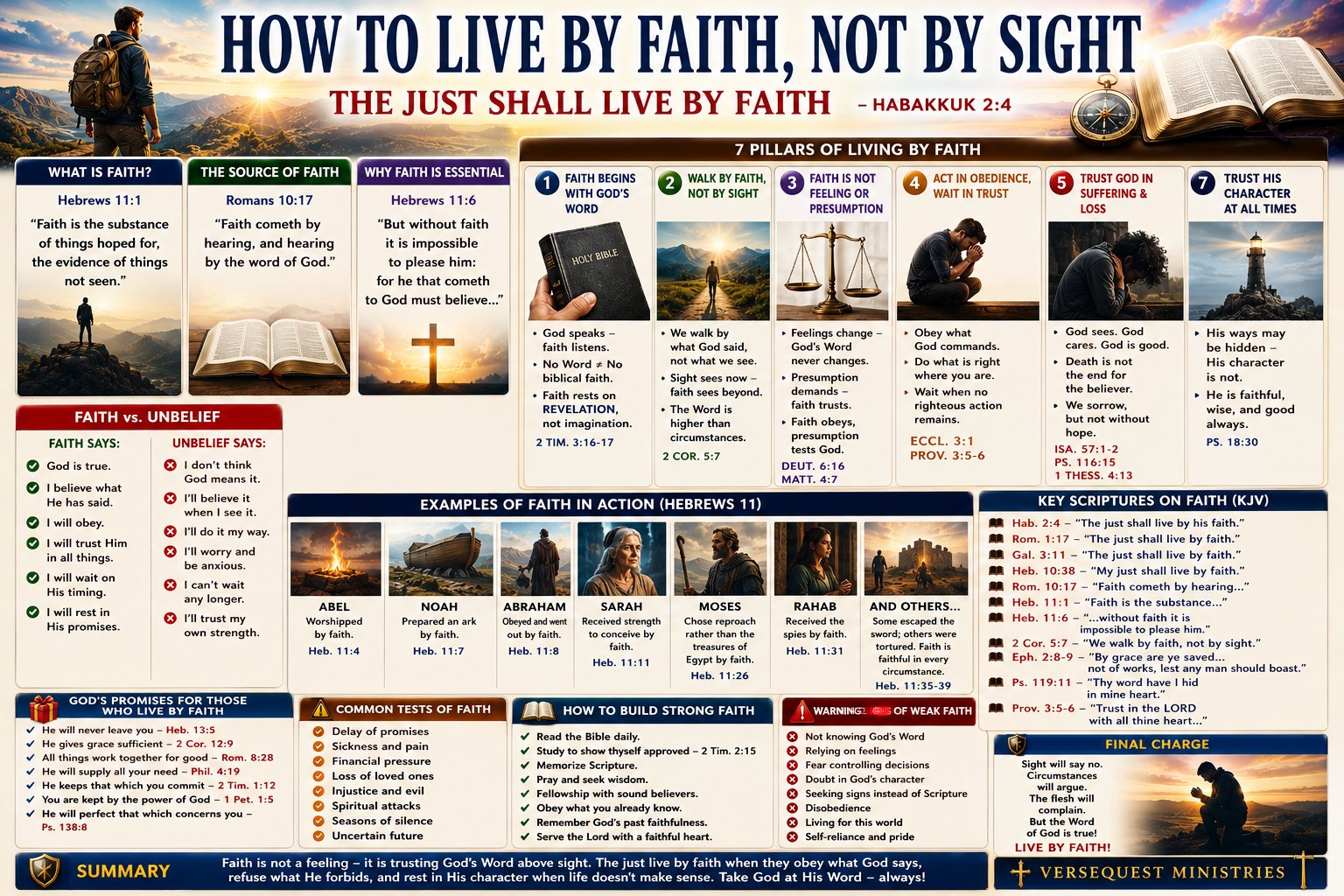
- How to Live by Faith, Not by Sight – Seven Pillars of Trusting God’s Word Through Every Circumstance (KJV Bible Study Chart)
- Learn how to live by faith rather than sight with this detailed KJV chart covering God’s Word, obedience, waiting, suffering, Hebrews 11 examples, trials of faith, and trust in God’s…
- $3.99
- Add to cart
-
-
Uncategorized
-
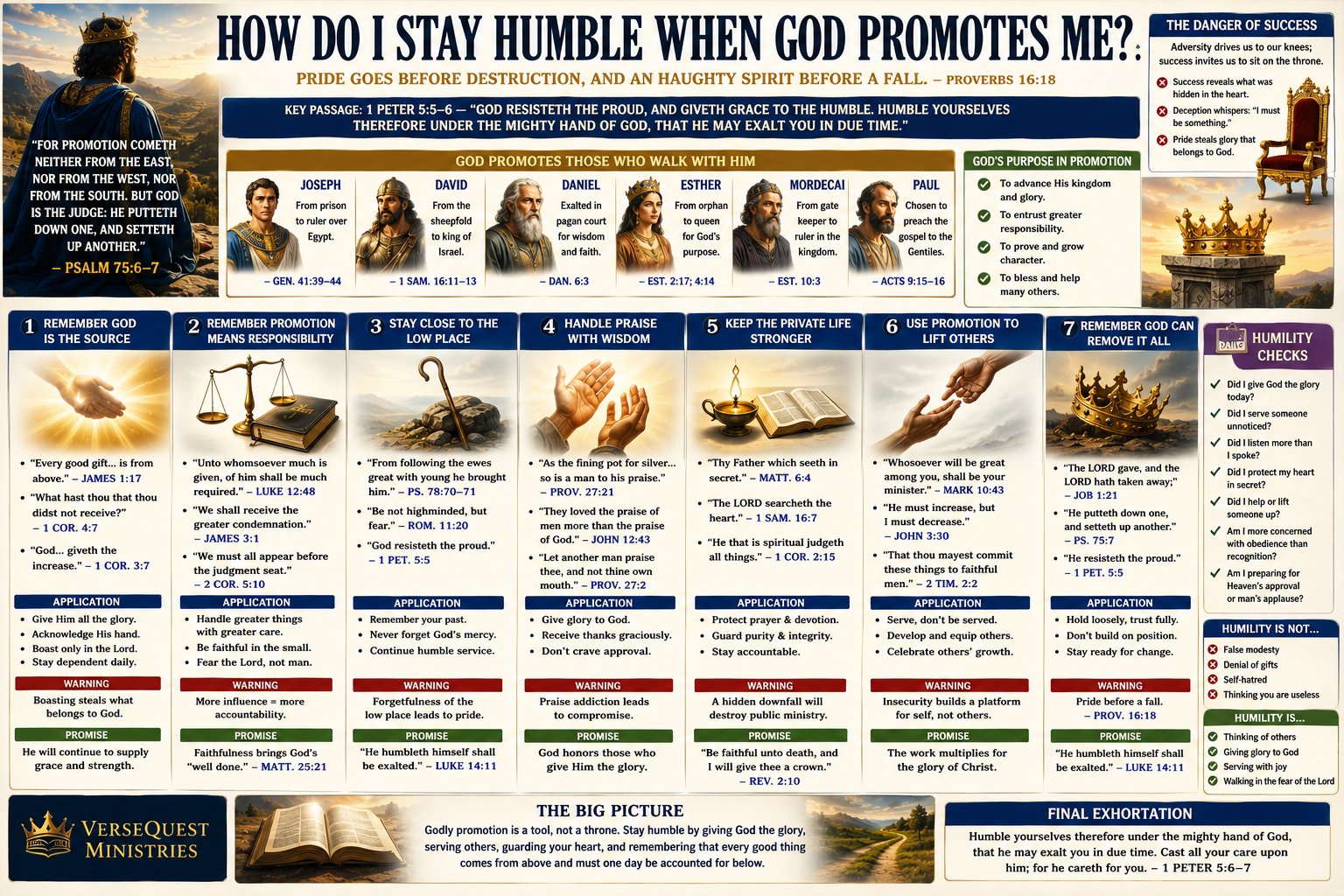
- How to Stay Humble When God Promotes You – Biblical Humility, Success, and Faithful Stewardship (KJV Bible Study Chart)
- Learn how to remain humble when God increases your influence with this detailed KJV Bible study chart covering pride, praise, responsibility, private devotion, servant leadership, and faithful stewardship.
- $3.99
- Add to cart
-
-
Unity of the Spirit
-
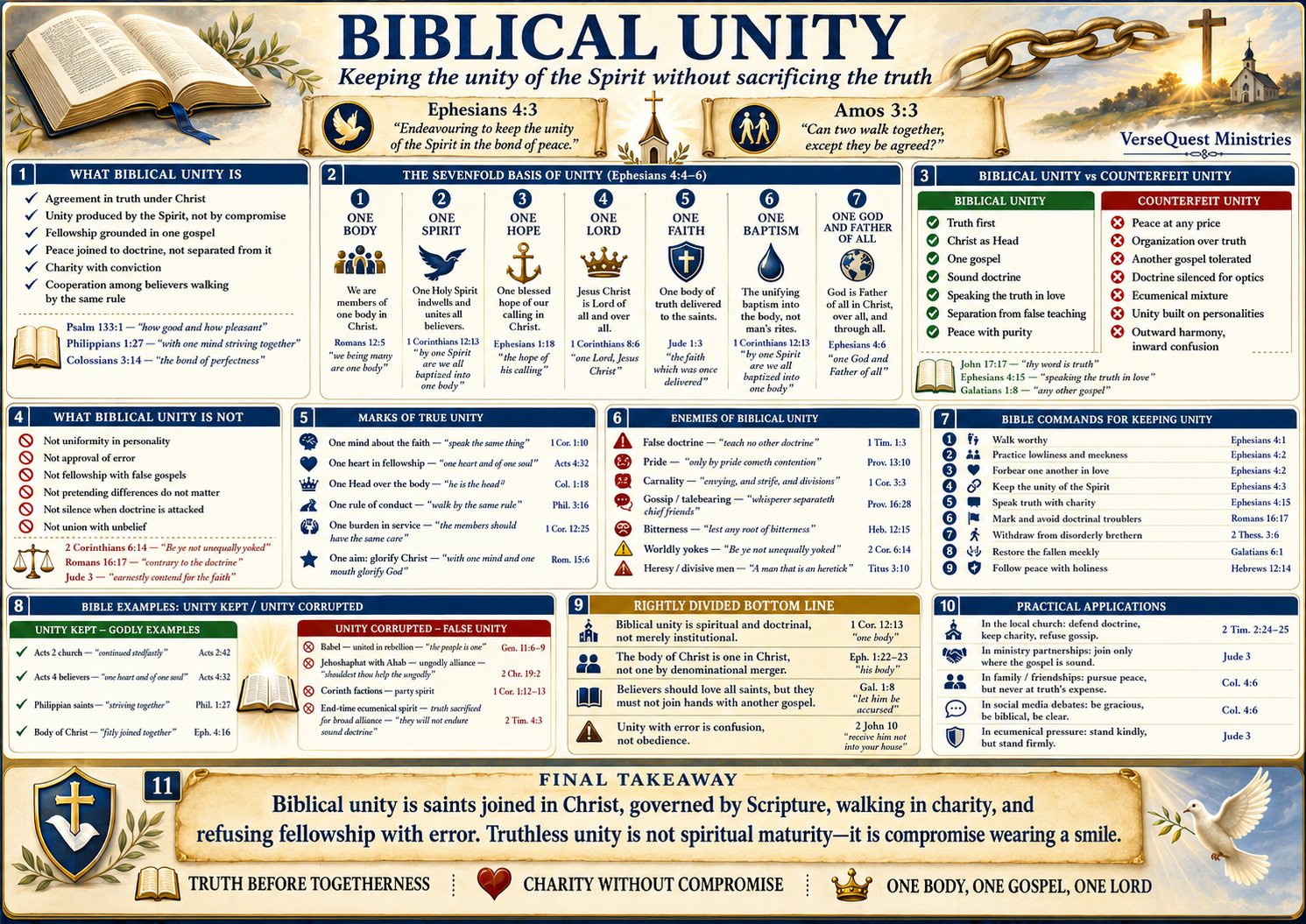
- Biblical Unity – Keeping the Unity of the Spirit Without Sacrificing Truth (KJV Bible Study Chart)
- Understand biblical unity with this detailed KJV chart covering the sevenfold unity of Ephesians 4, one Body, one gospel, sound doctrine, charity, separation from error, and peace without compromise.
- $3.99
- Add to cart
-
-
Questioning God
-
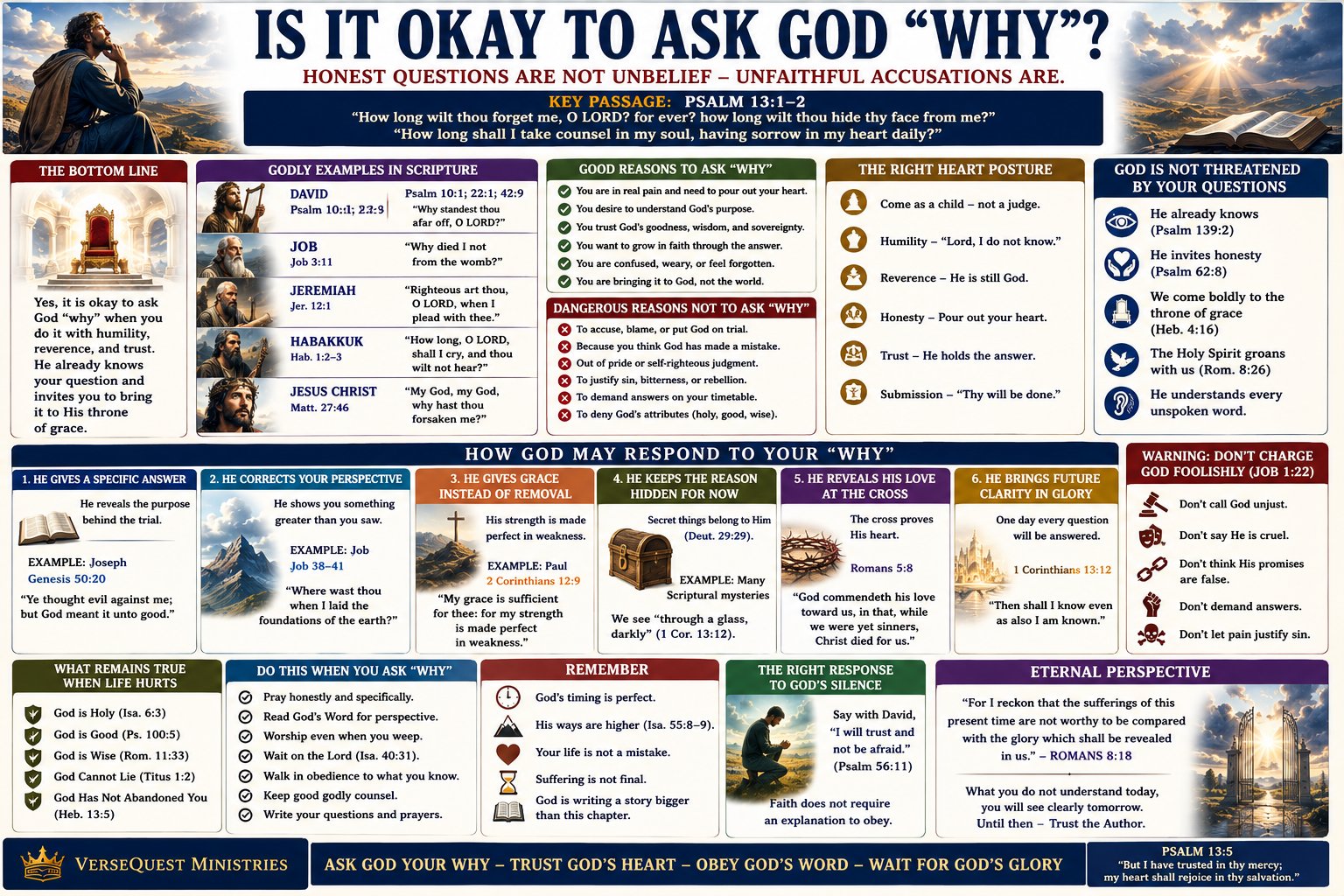
- Is It Okay to Ask God “Why”? – Honest Questions, Suffering, Faith, and Trusting God’s Heart (KJV Bible Study Chart)
- Learn how to bring honest questions to God with this detailed KJV Bible study chart covering suffering, unanswered prayer, biblical lament, humility, trust, divine silence, and eternal hope.
- $3.99
- Add to cart
-
-
Biblical Courage
-
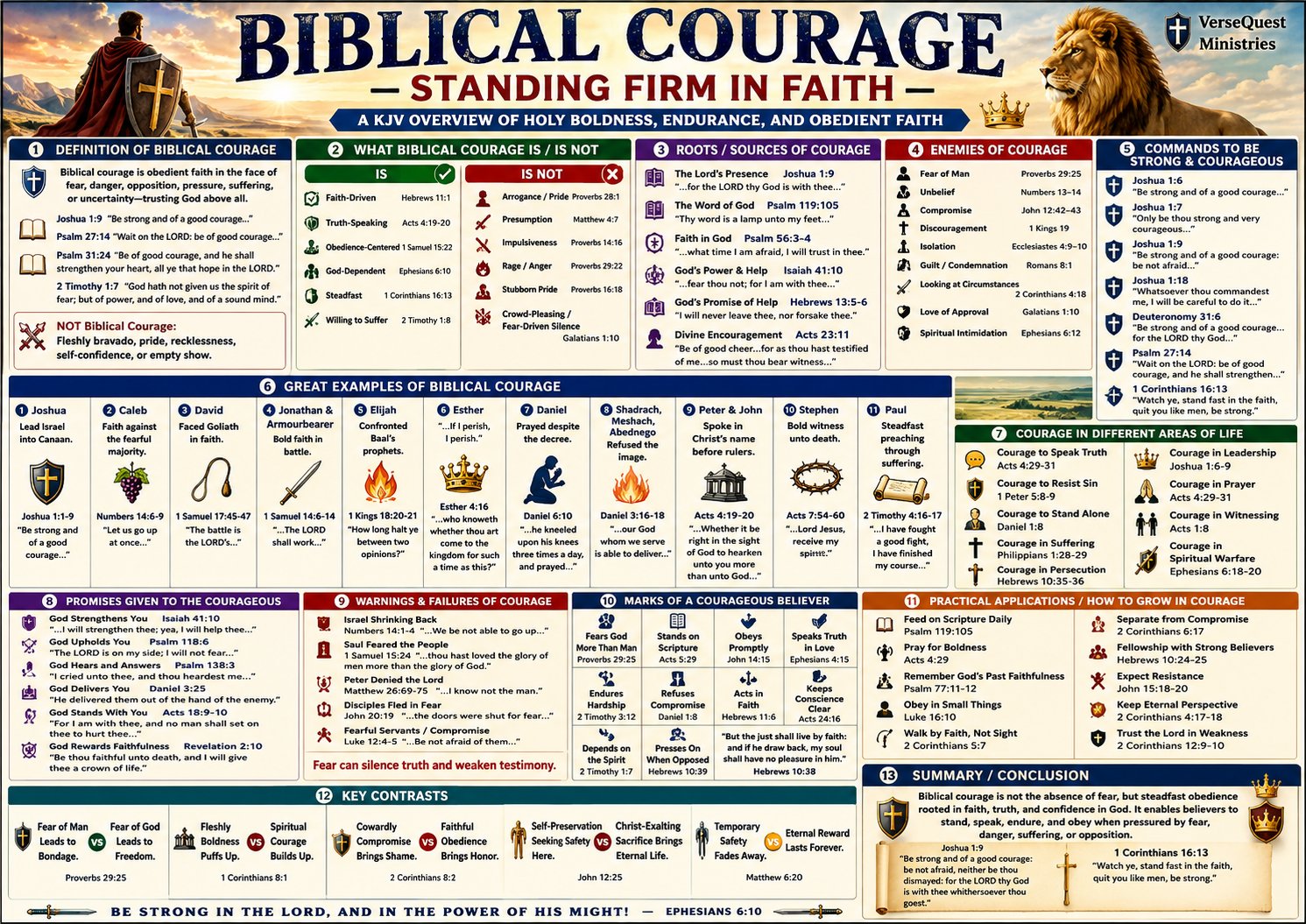
- Biblical Courage Bible Study Chart – Standing Firm in Faith, Holy Boldness, and Obedient Endurance (KJV)
- Stand firm in faith with this detailed KJV Bible study chart covering biblical courage, holy boldness, fear, endurance, obedient faith, spiritual warfare, persecution, and courageous Bible examples.
- $3.99
- Add to cart
-