
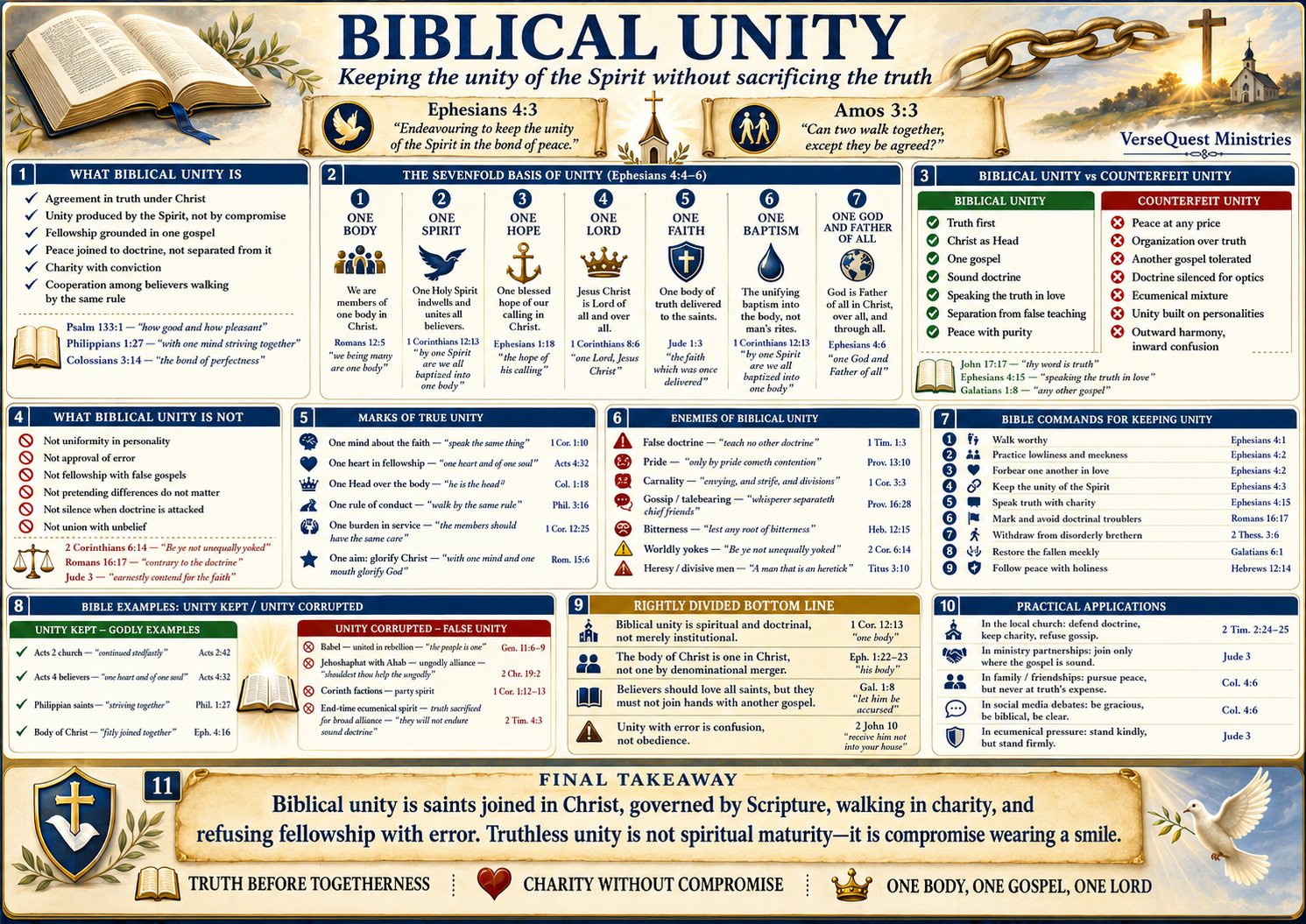
Biblical Unity – Keeping the Unity of the Spirit Without Sacrificing Truth (KJV Bible Study Chart)
Understand biblical unity with this detailed KJV chart covering the sevenfold unity of Ephesians 4, one Body, one gospel, sound doctrine, charity, separation from error, and peace without compromise.
$3.99
Description
Biblical Unity: Keeping the Unity of the Spirit Without Sacrificing Truth is a detailed KJV Bible study chart explaining the spiritual, doctrinal, and practical foundation of true Christian unity. Built around Ephesians 4:3–6, Amos 3:3, Ephesians 4:15, and Galatians 1:6–9, this chart distinguishes the unity produced by the Holy Spirit from counterfeit unity created through compromise, doctrinal silence, organizational pressure, or fellowship with another gospel.
Biblical unity is not merely Christians standing in the same building, belonging to the same organization, attending the same event, or agreeing to avoid controversial subjects. It is the fellowship of saved believers who are joined to Jesus Christ, members of one Body, grounded in one gospel, governed by Scripture, and committed to walking together in truth and charity.
Ephesians 4 does not command believers to manufacture spiritual unity through human negotiation. It tells them to keep the unity of the Spirit. The Holy Spirit creates the one Body by placing every saved believer into Jesus Christ. Christians are responsible to preserve that God-given unity through humility, meekness, longsuffering, sound doctrine, holiness, and love.
The chart begins by defining biblical unity as agreement in truth under Christ. It is unity produced by the Spirit rather than by compromise, fellowship grounded in the gospel, peace joined to doctrine, charity with conviction, and cooperation among believers who are walking according to the same biblical rule.
Psalm 133 describes the goodness and pleasantness of brethren dwelling together in unity. Philippians calls believers to strive together with one mind for the faith of the gospel, while Colossians identifies charity as the bond of perfectness. These passages present unity as a precious Christian blessing, but never as an excuse to abandon truth.
The central foundation is the sevenfold basis of unity in Ephesians 4:4–6: one Body, one Spirit, one hope, one Lord, one faith, one baptism, and one God and Father of all. Biblical unity cannot be separated from these seven truths without becoming an imitation of what God established.
The one Body is the Church, the Body of Christ. Saved Jews and Gentiles are united spiritually in Jesus Christ and become members one of another. Unity begins with the believer’s relationship to Christ, not membership in a human federation or denominational alliance.
The one Spirit is the Holy Spirit who indwells believers, seals them unto the day of redemption, and baptizes them into one Body. Christian unity is therefore spiritual in origin. It cannot be reproduced by political cooperation, emotional enthusiasm, or institutional planning.
The one hope is the shared expectation and heavenly calling of those who belong to Christ. Believers await the Lord Jesus Christ and the completion of His saving purpose. A common hope gives Christians a common direction beyond the temporary pressures and ambitions of this world.
The one Lord is Jesus Christ. He is the Head of the Body, the centre of the gospel, the final authority over the Church, and the One to whom every believer belongs. True unity exalts Christ rather than personalities, movements, denominations, celebrities, or institutions.
The one faith is the body of revealed truth once delivered to the saints. Faith is not an undefined religious feeling that allows every contradictory belief to stand equally. Christian fellowship is grounded in the doctrine God revealed concerning Christ, salvation, Scripture, holiness, the Church, and the gospel.
The one baptism is the unifying work of the Holy Spirit by which believers are placed into one Body. First Corinthians 12:13 teaches that by one Spirit believers are baptized into one Body. This spiritual baptism creates a unity that no outward ceremony, denominational membership, or organizational agreement can produce.
The one God and Father of all is the God revealed in Scripture, not a generic deity constructed to accommodate conflicting religions. Biblical unity rests upon the true God, the true Christ, the true Spirit, and the true gospel.
The chart compares biblical unity with counterfeit unity. Biblical unity places truth first, recognizes Christ as Head, preserves one gospel, teaches sound doctrine, speaks the truth in love, separates from false teaching, and seeks peace without sacrificing purity.
Counterfeit unity places peace at any price, organization above truth, personalities above doctrine, and outward harmony above inward agreement. It tolerates another gospel, silences necessary teaching, and creates an ecumenical mixture in which biblical differences are hidden rather than answered.
Truthless unity may appear peaceful because no one is permitted to identify error. Yet silence does not create agreement. It merely hides confusion beneath polite language and religious cooperation.
The chart also explains what biblical unity is not. It is not uniformity of personality, preference, culture, gifting, background, or ministry style. God does not require every Christian to possess the same temperament, abilities, or responsibilities.
Unity is not approval of error. Love does not require believers to treat false doctrine as harmless. A Christian may remain gracious while refusing teachings that contradict the gospel or undermine the authority of Scripture.
Unity is not fellowship with false gospels. Galatians 1 warns that a corrupted gospel brings divine condemnation. Believers cannot preserve gospel unity by joining hands with teachers who redefine Christ, grace, faith, salvation, or His finished work.
Unity does not mean pretending meaningful differences do not exist. Honest disagreement is better than artificial peace. Biblical maturity addresses doctrinal questions through Scripture rather than burying them beneath slogans about togetherness.
Unity does not require silence when doctrine is attacked. Jude commands believers to contend earnestly for the faith. Romans 16 instructs Christians to mark and avoid those who cause divisions contrary to the doctrine they have learned.
Neither is unity a spiritual partnership with unbelief. Second Corinthians 6 warns against unequal yokes, while Scripture repeatedly distinguishes the Church from the world and truth from error.
A major section presents the marks of true unity. Believers possess one mind concerning the faith, one heart in fellowship, one Head over the Body, one rule governing conduct, one burden in service, and one central aim: the glory of Jesus Christ.
The command to “speak the same thing” does not eliminate careful study or honest questions. It calls believers away from factions and contradictory teaching toward agreement grounded in apostolic doctrine.
One heart in fellowship means believers care for one another sincerely rather than forming competing groups around personalities. Acts records Christians united in prayer, generosity, worship, and testimony.
One Head means Jesus Christ governs the Church. A ministry ceases to promote biblical unity when loyalty to a leader, institution, or tradition becomes more important than obedience to Christ.
One rule of conduct means believers walk according to Scripture. Philippians calls Christians to walk by the same rule and mind the same thing. Unity becomes impossible when each person treats private opinion as final authority.
One burden in service means the members care for one another. The suffering of one member should matter to the others, and the strength of one member should be used for the good of the Body rather than personal elevation.
One aim means glorifying Christ. Christian cooperation should never become a competition for recognition, influence, attendance, or control. Unity thrives when believers remember that the ministry belongs to the Lord.
The chart identifies several enemies of biblical unity. The first is false doctrine. First Timothy warns against teaching another doctrine because error attacks the common truth that holds believers together.
Pride is another enemy. Proverbs teaches that contention comes by pride. Personal ambition, refusal to receive correction, and the need to win every dispute can turn legitimate doctrinal discussion into unnecessary strife.
Carnality creates envying, division, and party spirit. The Corinthians gathered around preferred personalities and turned faithful ministers into competing religious brands. Paul rebuked them because Christ, not the preacher, had been crucified for them.
Gossip and talebearing divide close relationships. A whisperer separates chief friends by spreading accusations, selective information, private offenses, and suspicions that have never been handled biblically.
Bitterness also destroys unity. Hebrews warns that a root of bitterness can spring up and defile many. One unresolved offense may spread through an entire family, church, or ministry as people are pressured to choose sides.
Worldly yokes compromise unity by building spiritual partnerships upon goals that are not governed by Scripture. Cooperation is not automatically biblical merely because it produces influence, publicity, or visible results.
Heresy and division reveal corrupted loyalties and false doctrine. The Christian must distinguish between unity being disturbed by a faithful defense of truth and unity being destroyed by someone introducing error.
The chart gathers practical Bible commands for keeping unity. Believers are instructed to walk worthy of their calling, practise lowliness and meekness, forbear one another in love, keep the unity of the Spirit, speak truth with charity, identify doctrinal troublemakers, withdraw from disorderly brethren, restore the fallen meekly, and pursue peace with holiness.
Humility is essential because unity cannot survive where everyone demands personal recognition, immediate agreement, or control. Lowliness enables believers to listen, receive correction, and consider the needs of others.
Meekness is strength under God’s control. It allows the Christian to defend truth without cruelty, answer error without fleshly rage, and remain firm without becoming quarrelsome.
Forbearance recognizes that believers remain imperfect. Not every personal annoyance, difference in judgment, or minor failure requires separation. Charity covers many offenses while doctrine determines the boundaries of fellowship.
Speaking the truth in love prevents two opposite errors. Truth without charity may become harsh, proud, and needlessly destructive. Charity without truth becomes sentimental compromise. Biblical unity requires both.
Marking doctrinal troublemakers is not contrary to unity. It protects the Church from teachers whose doctrines create confusion and lead believers away from apostolic truth.
Withdrawing from disorderly brethren is also sometimes necessary. Fellowship is meaningful and therefore cannot be treated as though conduct, truth, and obedience never matter.
Restoring a fallen believer in meekness demonstrates that correction should seek recovery rather than humiliation. Biblical unity is strengthened when sin is handled honestly and restoration is pursued wisely.
Peace must be joined with holiness. A peaceful atmosphere that depends upon tolerating wickedness or false teaching is not the peace Scripture commands.
The chart provides biblical examples of unity maintained and unity corrupted. The early believers continued steadfastly in the apostles’ doctrine, fellowship, breaking of bread, and prayer. Their unity was doctrinal before it was organizational.
Acts 4 describes believers of one heart and one soul. The Philippians were commanded to strive together for the faith of the gospel. Ephesians presents the Body as fitly joined together, with every member contributing to spiritual growth.
Counterfeit examples include Babel, where mankind united in rebellion against God. Unity itself was not virtuous when its purpose opposed divine authority.
Jehoshaphat formed an alliance with the ungodly and received rebuke. Cooperation with error does not become righteous merely because it appears peaceful or politically useful.
Corinthian factions corrupted unity through pride and personality worship. End-times ecumenical religion similarly sacrifices sound doctrine for outward agreement and broad religious acceptance.
The rightly divided bottom line is that biblical unity is spiritual and doctrinal, not merely institutional. The Body of Christ is already one in Jesus Christ; it is not made one through denominational merger.
Believers should love all saved people, but they must not join hands with another gospel. Christian affection does not require ministry partnership with everyone who uses Christian vocabulary.
Unity with error creates confusion rather than obedience. Second John warns against receiving and endorsing teachers who do not bring the doctrine of Christ. Fellowship can communicate approval, and approval carries responsibility.
Right division protects unity by placing Scripture in its proper audience, context, and doctrinal setting. Many unnecessary divisions arise because passages from Israel’s law, Kingdom program, Tribulation setting, and the Body of Christ are mixed together without distinction.
Sound doctrine does not destroy real unity. It gives unity its content, boundaries, stability, and purpose. Christians can walk together because they agree about the gospel, Christ, Scripture, and the doctrine governing the present Body.
Practical applications are given for the local church, ministry partnerships, families, friendships, online discussions, and ecumenical pressure. In the local church, believers should defend sound doctrine, cultivate charity, refuse gossip, and resolve offenses biblically.
Ministry partnerships should be based upon genuine gospel agreement rather than publicity, influence, money, audience size, or institutional opportunity. A shared project does not justify ignoring a corrupted gospel.
In family and friendships, Christians should pursue peace without pretending that truth is irrelevant. Charity should govern words, but love should never require participation in sin or approval of falsehood.
Online discussions should be gracious, biblical, and clear. Cruelty does not defend truth well, but fear of criticism should not silence necessary correction.
Under ecumenical pressure, believers should stand kindly but firmly. The goal is not isolation for its own sake but faithfulness to Jesus Christ and protection of the gospel entrusted to the Church.
The chart’s final takeaway is direct: biblical unity is saints joined in Christ, governed by Scripture, walking in charity, and refusing fellowship with error. Truthless unity is not spiritual maturity; it is compromise wearing a smile.
True unity places truth before togetherness, practises charity without compromise, and confesses one Body, one gospel, and one Lord. It protects peace without surrendering purity and welcomes fellowship without abandoning discernment.
This resource is ideal for personal Bible study, church leadership, doctrinal teaching, conflict resolution, ministry partnership decisions, ecumenism studies, pastoral training, Christian discipleship, Sunday school, homeschool Bible curriculum, Bible institutes, sermon preparation, and believers seeking to understand the biblical boundaries of Christian unity.
Biblical unity, unity of the Spirit, bond of peace, sevenfold basis of unity, one Body, one Spirit, one hope, one Lord, one faith, one baptism, one God and Father, truth and charity, sound doctrine, Christian fellowship, unity without compromise, counterfeit unity, ecumenism, another gospel, doctrinal separation, speaking the truth in love, peace with purity
Ephesians 4 connects unity with doctrine. One Body, Spirit, hope, Lord, faith, baptism, and God form the inspired basis upon which believers walk together.
The one Body is composed of everyone saved and spiritually joined to Jesus Christ. Denominational membership does not create or define that Body.
The one Spirit indwells and seals every believer. Unity that ignores the Holy Spirit’s written revelation cannot claim to be spiritual unity.
The one hope gives believers a shared heavenly expectation in Jesus Christ. The Church is not united around earthly power, cultural influence, or political control.
The one Lord is Jesus Christ. Loyalty to Him must remain higher than loyalty to a denomination, ministry, teacher, tradition, or personal relationship.
The one faith is revealed truth, not an undefined feeling of spirituality. Jude calls believers to contend for the faith once delivered to the saints.
The one baptism is the Spirit’s work of placing believers into one Body. It is the divine basis of unity rather than a denominational ceremony.
Biblical unity is not uniformity. Christians may differ in personality, gifting, culture, preferences, and nonessential judgments while remaining united in Christ.
Unity does not mean approving error. Love should be patient and gracious, but it must not rename false teaching as harmless diversity.
Another gospel destroys the foundation of fellowship. Galatians does not instruct believers to accommodate gospel corruption for the sake of visible unity.
Truth and love must remain together. Truth without charity can become harsh, while charity without truth becomes compromise.
Speaking truth in love requires both doctrinal accuracy and a godly spirit. The goal is edification, correction, protection, and restoration rather than personal victory.
False doctrine divides because it moves believers away from the common truth delivered by God. Correcting error may reveal an existing division rather than create it.
Pride produces contention. Many church conflicts survive because people defend reputation, control, and personal preference rather than Scripture.
Carnality creates factions around personalities. Paul rebuked the Corinthians for dividing around ministers who were only servants through whom they had believed.
Gossip damages unity by spreading accusations outside the biblical process of correction. Private offenses should not become public campaigns.
Bitterness defiles many because resentment recruits others into a conflict. Forgiveness, truth, and biblical resolution protect the wider Body.
Forbearance is necessary because believers remain imperfect. Charity does not magnify every irritation into a doctrinal crisis.
Separation is sometimes required. Romans 16 commands believers to mark and avoid those teaching contrary doctrine, while Second Thessalonians addresses disorderly conduct.
Biblical separation should be governed by Scripture rather than personal dislike. Not every disagreement justifies withdrawal, but some doctrines and practices make fellowship impossible.
Restoration should be pursued in meekness when a believer repents. Correction should not become an excuse for cruelty, humiliation, or permanent suspicion.
Babel demonstrates that unity is not automatically righteous. People may cooperate efficiently while rebelling collectively against God.
The early Church’s unity rested upon continued devotion to the apostles’ doctrine. Fellowship followed truth rather than replacing it.
Ecumenical unity often reverses the biblical order by placing organizational cooperation first and treating doctrine as an obstacle.
The Body of Christ is one in Christ, but this does not require every believer to join every ministry, church, coalition, or religious campaign.
Right division strengthens unity by preventing contradictions created through mixing different biblical peoples, periods, covenants, and programs.
Local churches preserve unity through sound teaching, humble leadership, biblical discipline, charitable communication, prayer, forgiveness, and shared service.
The final rule is clear: pursue peace, practise charity, defend the gospel, reject false doctrine, and keep Jesus Christ as the Head of the Body.
Christian unity studies, local-church harmony, doctrinal discernment, church-conflict resolution, ministry partnership evaluation, teaching Ephesians 4, resisting ecumenical compromise, handling doctrinal disagreement, overcoming gossip and bitterness, restoring fallen believers, biblical separation, pastoral leadership, family and friendship conflicts, online Christian discussions, Sunday school lessons, homeschool Bible curriculum, Christian school instruction, Bible institute classes, sermon preparation
King James Bible, Strong’s Concordance, Thompson Chain-Reference Bible, Treasury of Scripture Knowledge, Nave’s Topical Bible, Ephesians 4 study notes, Romans 14–16 commentary materials, 1 Corinthians church-unity studies, Galatians 1 gospel worksheets, biblical-separation resources, church-conflict resolution guides, Christian fellowship studies, spiritual-gifts materials, prophecy-and-mystery charts, Israel-and-Church comparison resources, VerseQuest Christian Living and doctrine charts
Related products
-
Biblical Submission
-
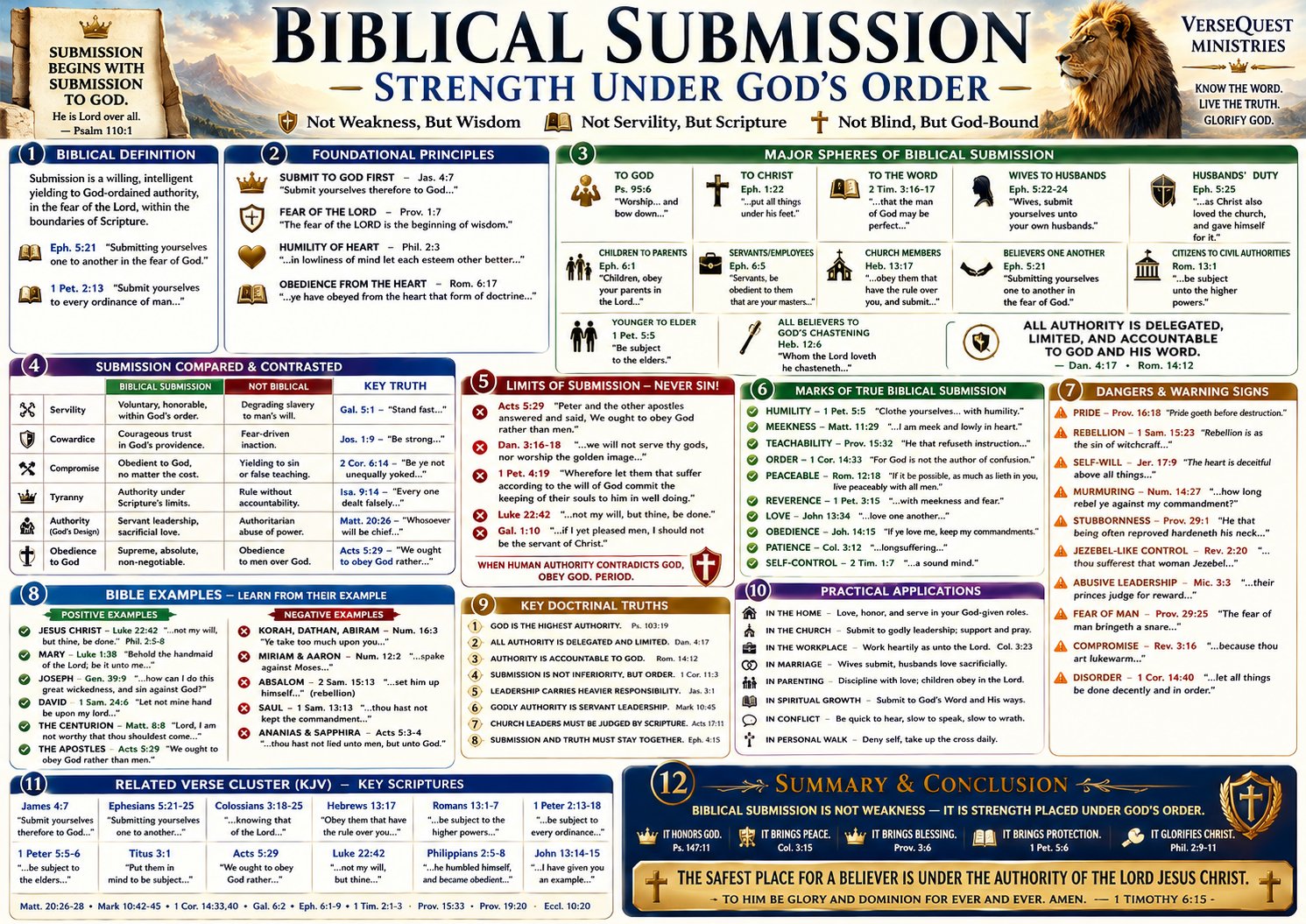
- Biblical Submission Bible Study Chart – Strength Under God’s Order, Authority, and Scriptural Limits (KJV) Product Description
- Study biblical submission with this detailed KJV chart covering God-ordained authority, servant leadership, obedience, marriage, church, government, and the Scriptural limits of submission.
- $3.99
- Add to cart
-
-
Christian Living
-
-50%
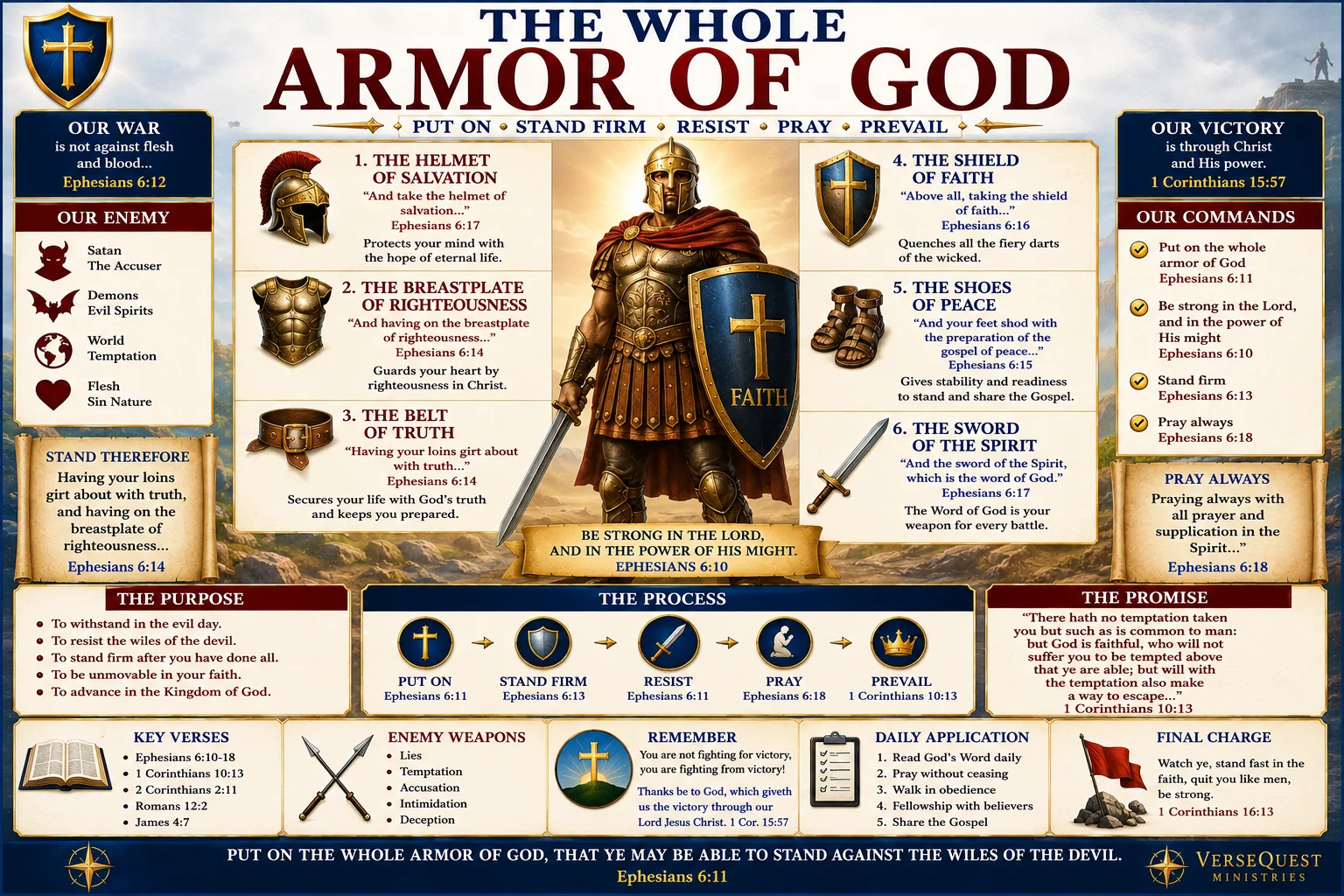
- The Whole Armor of God Chart — KJV Bible Study
- Premium printable KJV Bible study chart explaining the whole armor of God from Ephesians 6, including the helmet, breastplate, belt, shield, shoes, sword, prayer, and spiritual victory in Christ.
- Original price was: $10.00.$4.99Current price is: $4.99.
- Add to cart
-
-50%
-
KJV Bible Study Resources
-
-60%

- Practical Christianity for Daily Battles – 329-Page KJV Study PDF
- A premium 329-page KJV study PDF with 40 full essays applying sound, rightly divided Bible doctrine to real daily Christian battles. Topics include temptation, anxiety, marriage, parenting, pornography, grief, church…
- Original price was: $24.99.$9.99Current price is: $9.99.
- Add to cart
-
-60%
-
Christian Growth
-

- The Bible Will Not Read Itself – How to Read the Bible Every Day Bible Study Chart (KJV)
- Build a consistent daily Bible reading habit with this detailed KJV Bible study chart. Learn practical steps for reading Scripture faithfully, overcoming inconsistency, understanding difficult passages, and growing spiritually through…
- $3.99
- Add to cart
-
-
October 2026 Devotional
-

- VerseQuest Daily — October 2026: Identity in Christ and the Daily Walk
- VerseQuest Daily — October 2026 is a 67-page downloadable PDF containing thirty-one KJV devotionals on identity in Christ and the daily Christian walk. Each reading includes an assigned Scripture passage,…
- $6.99
- Add to cart
-