
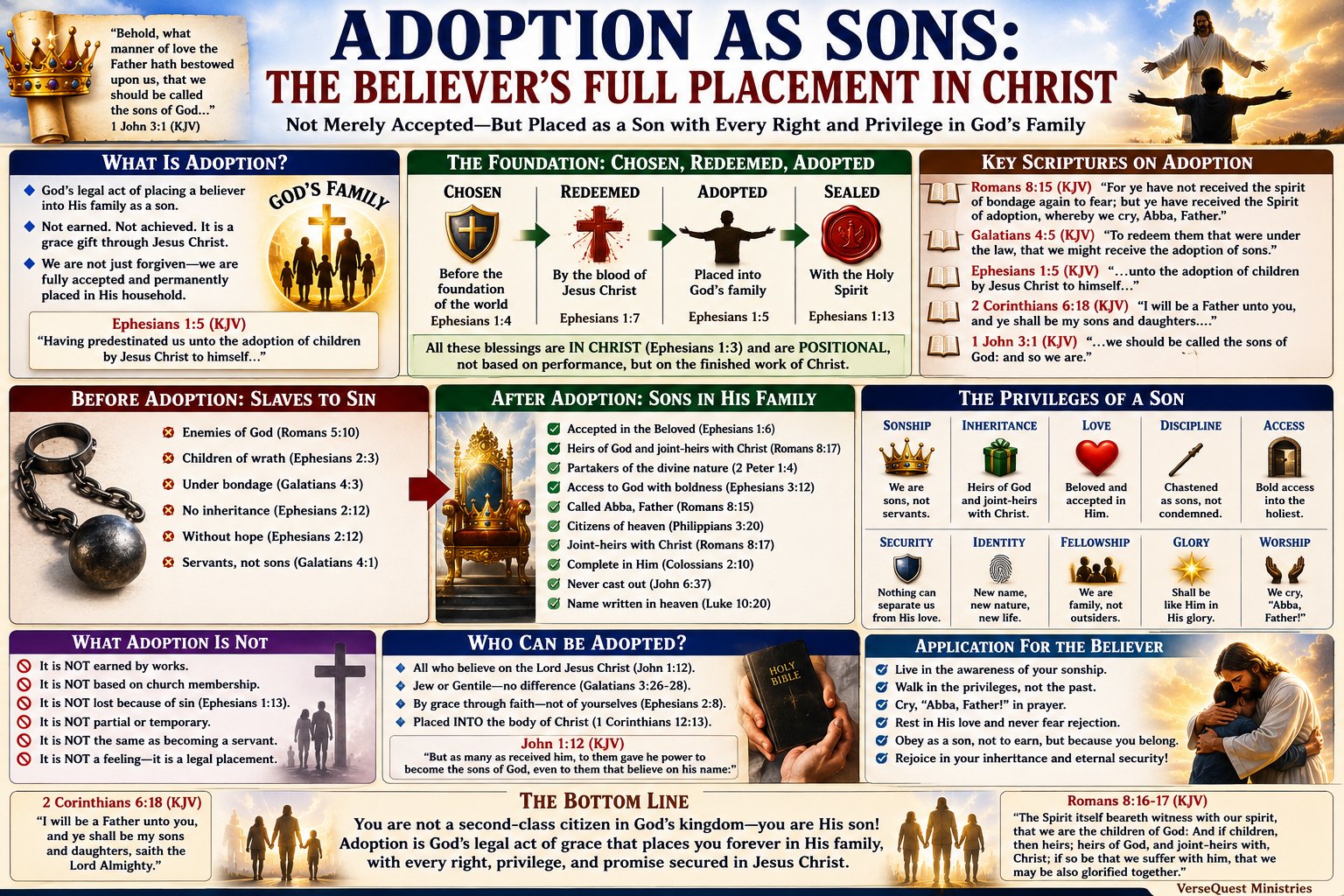
Adoption as Sons – The Believer’s Full Placement, Privileges, Inheritance, and Security in Christ (KJV Bible Study Chart)
Understand biblical adoption with this detailed KJV chart covering the believer’s full placement as a son, redemption, acceptance, inheritance, access, discipline, security, the Spirit of adoption, and future glorification in Jesus Christ.
$3.99
Description
Adoption as Sons: The Believer’s Full Placement in Christ is a detailed KJV Bible study chart explaining how every person who believes on the Lord Jesus Christ is not merely forgiven from a distance but permanently received into God’s household with the standing, privileges, access, inheritance, discipline, identity, and security of a son.
Built around Ephesians 1:5, Romans 8:15–17, Galatians 4:4–7, 1 John 3:1, 2 Corinthians 6:18, and John 1:12, this chart presents adoption as an act of divine grace rather than a reward earned through religious performance.
The believer is not a second-class citizen standing outside the door of God’s household. He is not merely a pardoned criminal who has been released but remains unwanted. Through Jesus Christ, he is forgiven, redeemed, accepted, sealed, and given full sonship standing before God.
Ephesians 1:5 declares that God has “predestinated us unto the adoption of children by Jesus Christ to himself, according to the good pleasure of his will.” Adoption originates in God’s purpose, is accomplished through Jesus Christ, and rests upon divine grace rather than human merit.
The chart begins by defining adoption as God’s act of placing the believer into His family with the standing of a son. This placement is not achieved through morality, religious effort, church membership, baptism, law-keeping, family background, or lifelong performance.
Adoption is a gift flowing from salvation in Jesus Christ. The sinner does not negotiate his entrance into God’s family or prove that he deserves a place. He receives Christ by faith, and God gives him the standing of a son.
John 1:12 states, “But as many as received him, to them gave he power to become the sons of God, even to them that believe on his name.” Sonship is therefore connected with receiving Jesus Christ through faith.
The doctrine of adoption should be understood alongside regeneration. The new birth gives the believer spiritual life, while adoption emphasizes his full placement, standing, rights, privileges, and inheritance within God’s family.
The believer is both born of God and placed as a son. He possesses new life and a new legal standing. God does not merely change his future destination; He changes his relationship, identity, household, access, and inheritance.
A major section of the chart presents the foundation of adoption through four connected truths: the believer is chosen, redeemed, adopted, and sealed.
The believer is chosen in Christ according to God’s gracious purpose. Ephesians 1:4 speaks of believers being chosen in Christ before the foundation of the world.
This truth does not give man a reason for pride. The believer was not chosen because God discovered superior virtue in him. Election magnifies God’s grace and centres every spiritual blessing in Jesus Christ.
The believer is then redeemed by the blood of Jesus Christ. Ephesians 1:7 states, “In whom we have redemption through his blood, the forgiveness of sins, according to the riches of his grace.”
Adoption does not ignore the sinner’s guilt. God’s holiness required that sin be answered. Jesus Christ bore the penalty, shed His blood, and purchased redemption so guilty sinners could be forgiven and received.
The believer is adopted through Jesus Christ. Ephesians 1:5 places adoption entirely within the work and Person of the Saviour.
God does not adopt sinners apart from Christ, through general religious sincerity, or because all humanity is automatically part of one spiritual family. Sonship belongs to those who have received Jesus Christ.
The believer is also sealed by the Holy Spirit. Ephesians 1:13 teaches that after hearing and believing the gospel, the Christian is sealed with the Holy Spirit of promise.
The Spirit’s seal identifies the believer as God’s possession and guarantees the inheritance awaiting him. Adoption is therefore not a temporary arrangement depending upon the believer’s emotional strength.
These blessings are all “in Christ.” They are positional truths grounded in the finished work of the Saviour rather than rewards produced through performance.
The chart gathers several major Scriptures on adoption. Romans 8:15 declares, “For ye have not received the spirit of bondage again to fear; but ye have received the Spirit of adoption, whereby we cry, Abba, Father.”
Before salvation, the sinner lives beneath fear, bondage, guilt, condemnation, and uncertainty. In Christ, he receives the Spirit of adoption and may approach God as Father.
The cry “Abba, Father” expresses closeness, confidence, relationship, and access. The believer does not address God merely as an unknown Judge or distant Creator. He approaches the God who has received him through Jesus Christ.
Galatians 4:4–5 teaches that God sent His Son, made of a woman and made under the law, “to redeem them that were under the law, that we might receive the adoption of sons.”
Jesus Christ entered the world, fulfilled the law, and accomplished redemption so believers could receive sonship. Adoption rests upon His obedience, not ours.
Galatians continues by declaring that because believers are sons, God has sent the Spirit of His Son into their hearts, crying, “Abba, Father.”
The passage moves from redemption to adoption, from adoption to the Spirit’s presence, and from sonship to inheritance.
Galatians 4:7 concludes, “Wherefore thou art no more a servant, but a son; and if a son, then an heir of God through Christ.”
The believer may serve God faithfully, but he does not serve as an outsider attempting to earn family membership. He serves as a son who already belongs to the Father.
Ephesians 1:5 describes adoption as occurring according to God’s good pleasure. The doctrine therefore reveals the Father’s loving purpose rather than reluctant acceptance.
First John 3:1 exclaims, “Behold, what manner of love the Father hath bestowed upon us, that we should be called the sons of God.”
The language invites wonder. The sinner was rebellious, guilty, spiritually dead, and unworthy, yet the Father’s love placed him within His family.
Second Corinthians 6:18 records God’s promise, “And will be a Father unto you, and ye shall be my sons and daughters, saith the Lord Almighty.”
The believer’s family relationship should affect conduct. Those received by God should separate from spiritual uncleanness and live in a manner honouring their Father.
The chart contrasts the believer’s condition before adoption with his standing afterward. Before salvation, sinners are described as enemies of God.
Romans 5:10 teaches that we were enemies before being reconciled through the death of God’s Son. Adoption therefore does not begin with neutral people who merely require a new title. It begins with enemies who need reconciliation.
Before Christ, sinners are children of wrath. Ephesians 2:3 describes mankind’s natural condition beneath divine judgment.
They are under bondage. Galatians 4 compares the former condition with servitude beneath the elements of the world.
They possess no rightful inheritance in God’s household. Ephesians 2 describes Gentiles as strangers from the covenants of promise, having no hope and without God in the world.
They may perform religious service, but they do not possess sonship merely through activity. Servants may work inside a house without owning its inheritance.
After adoption, everything changes. The believer becomes accepted in the Beloved. Ephesians 1:6 grounds acceptance in Jesus Christ.
The Christian does not need to earn the Father’s approval through a daily performance test. His acceptance rests upon the worthiness of the Son.
The believer becomes an heir of God and joint-heir with Christ. Romans 8:17 states, “And if children, then heirs; heirs of God, and joint-heirs with Christ.”
This inheritance is not gained because the believer contributed to Christ’s redemptive payment. It belongs to him because God has placed him in Christ.
The believer is also described as a partaker of the divine nature. Second Peter 1:4 does not mean Christians become gods or share God’s incommunicable deity.
It means they have received spiritual life, God’s promises, and the power necessary to escape the corruption operating through lust.
The adopted believer possesses bold access to God. Ephesians 3:12 states that in Christ “we have boldness and access with confidence by the faith of him.”
The believer does not need an earthly priest, religious institution, departed saint, or sacramental system to gain entrance to the Father. Jesus Christ is the one Mediator.
The believer may cry, “Abba, Father.” Romans 8:15 replaces bondage and fear with filial confidence.
The believer also possesses heavenly citizenship. Philippians 3:20 teaches that the Christian’s conversation is in heaven.
He lives upon earth, but his ultimate home, inheritance, hope, and identity are connected with Christ above.
The believer is complete in Jesus Christ. Colossians 2:10 states, “And ye are complete in him.”
The adopted son still requires maturity, obedience, discipline, and growth, but he cannot become more accepted than he already is in Christ.
The believer will never be cast out by the Saviour. John 6:37 records Christ’s promise, “him that cometh to me I will in no wise cast out.”
His security rests upon Christ’s faithfulness rather than the fluctuating quality of his own walk.
The believer’s name is written in heaven. Luke 10:20 teaches believers to rejoice because their names are written in heaven rather than grounding joy primarily in outward ministry success.
A major section presents the privileges belonging to a son. The first privilege is sonship itself. The believer is not merely an employee in God’s organization. He belongs to God’s family.
The second privilege is inheritance. The adopted believer is an heir of God and joint-heir with Jesus Christ.
The inheritance includes eternal life, resurrection glory, heavenly blessing, and participation in the future purposes of God through Christ.
The third privilege is love. The believer is loved and accepted in Jesus Christ.
God’s love is not fragile sentiment that disappears after every failure. It is covenantal and redemptive love grounded in the relationship established through His Son.
The fourth privilege is fatherly discipline. Hebrews 12 teaches that God chastens those He loves.
Chastening is not evidence that the believer has been expelled from the family. It is evidence that the Father remains committed to the spiritual growth of His child.
An earthly judge condemns the criminal. A father corrects his son. The believer may experience serious chastening, but discipline must not be confused with eternal condemnation.
The fifth privilege is access. The believer may come boldly to the throne of grace to obtain mercy and find help.
Access does not mean irreverence. God remains holy, majestic, and worthy of fear. Yet the Christian approaches with confidence because Christ has opened the way.
The sixth privilege is security. Romans 8 declares that nothing can separate the believer from the love of God in Christ Jesus.
Death, life, angels, principalities, powers, present events, future events, height, depth, and every other created thing are unable to sever the relationship God established.
The seventh privilege is new identity. The believer receives a new name, new nature, new standing, new life, and new relationship.
He should no longer define himself primarily by former sins, failures, worldly labels, family history, social position, or the accusations of others.
The eighth privilege is fellowship. The believer belongs to God’s household and joins a spiritual family composed of other saved people.
Christian fellowship is imperfect because believers still carry the flesh, but it remains one of God’s gifts for encouragement, correction, worship, service, and growth.
The ninth privilege is future glory. Romans 8:17 connects suffering with future glorification.
The adopted child of God may experience rejection, persecution, hardship, and loss now, but his future is connected with the glory of Jesus Christ.
The tenth privilege is worship. The Spirit of adoption moves the believer to cry, “Abba, Father.”
Christian worship is not merely public ceremony. It is the response of a redeemed son to the Father who loved, saved, received, and secured him.
The chart carefully explains what adoption is not. Adoption is not earned by good works.
Ephesians 2:8–9 teaches that salvation is by grace through faith and not of works. No sinner can perform enough righteous deeds to purchase a place in God’s family.
Adoption is not based upon church membership. A person may join a local congregation without ever receiving Jesus Christ.
An earthly membership roll cannot create spiritual sonship. The sinner becomes a child of God through faith in Christ.
Adoption is not lost whenever the believer sins. Ephesians 1:13 teaches that believers are sealed with the Holy Spirit.
Sin damages fellowship, joy, testimony, usefulness, and reward. It may bring chastening. It does not make the believer spiritually unborn or cancel the Father’s act of placement.
Adoption is not partial or temporary. The believer is not placed on probation until God determines whether his performance deserves permanent acceptance.
God’s saving gifts are grounded in Christ and are secure because His work is complete.
Adoption is not the same as becoming a servant. Every believer should serve the Lord, but service flows from sonship.
A servant may work for wages. The adopted child serves because he belongs to the Father and loves the One who received him.
Adoption is not a feeling. Emotional awareness of sonship may rise or fall according to circumstances, spiritual health, fatigue, temptation, and understanding.
The believer remains God’s child when he feels weak, discouraged, chastened, or uncertain. His position rests upon Scripture rather than emotion.
The chart answers the question, “Who can be adopted?” The invitation is extended to all who believe on the Lord Jesus Christ.
John 1:12 connects sonship with receiving Christ by faith. Acts 16:31 gives the direct saving response: “Believe on the Lord Jesus Christ, and thou shalt be saved.”
Jew and Gentile receive equal standing in the Body of Christ. Galatians 3:26–28 teaches that all believers are children of God through faith in Christ Jesus.
This spiritual equality does not erase every distinction in Scripture or cancel Israel’s future. It means that believing Jews and Gentiles possess equal standing in the one Body during the present dispensation.
Adoption is received by grace through faith, not through human merit. Ephesians 2 removes boasting by presenting salvation as God’s gift.
Every believer is placed into the Body of Christ by the Holy Spirit. First Corinthians 12:13 teaches that by one Spirit believers are baptized into one Body.
Water baptism cannot perform adoption. Physical circumcision cannot perform adoption. Religious ceremony cannot perform adoption. The Spirit places the believer into Christ when the gospel is believed.
The chart’s applications are practical. First, believers should live in the awareness of their sonship.
The Christian should not walk through life as though he were an abandoned spiritual orphan trying to persuade God to notice him.
He has a Father, an Advocate, a great High Priest, the indwelling Holy Spirit, access to grace, promises in Scripture, and an eternal inheritance.
Second, believers should walk in their privileges rather than remain chained to the past.
The believer’s former sins may carry earthly consequences, but they no longer define his standing. God calls him accepted, redeemed, justified, complete, and adopted.
Third, believers should cry, “Abba, Father,” in prayer.
Prayer is not an attempt to shout loudly enough for an unwilling God to listen. It is confident access through Jesus Christ to the Father who has already received the believer.
Fourth, believers should rest in divine love and refuse the fear of rejection.
This does not mean ignoring conviction or treating sin lightly. It means receiving correction as a son rather than interpreting every difficulty as evidence of abandonment.
Fifth, the believer should obey as a son. Obedience does not purchase sonship; it honours the relationship already established.
Jesus said, “If ye love me, keep my commandments.” Love is not the price of salvation, but it should become the motive for Christian conduct.
Sixth, believers should rejoice in their inheritance and eternal security.
Earthly possessions may vanish, health may decline, people may disappoint, and present circumstances may become painful. The inheritance reserved through Christ remains secure.
The doctrine of adoption also corrects the idea that God merely tolerates believers. The Father does not keep the Christian in a spiritual corner as an unwanted guest.
The believer has been fully received through the merit of Jesus Christ. God’s acceptance is not reluctant, temporary, or incomplete.
The doctrine protects assurance because it locates the relationship in God’s act rather than human performance. A son may fail, but failure does not rewrite his birth or adoption record.
The doctrine protects grace because no person can boast that superior righteousness earned him family status.
The doctrine also encourages holiness. A believer who knows he belongs to God should desire to honour the family name.
Paul repeatedly connects doctrine with conduct. Because believers are sons, heirs, saints, and members of Christ’s Body, they should walk worthy of their calling.
Adoption gives dignity without encouraging pride. The Christian may possess enormous privilege, but every privilege was purchased by Christ and bestowed through grace.
The adopted believer can boast only in the Lord. His crown, inheritance, standing, and access all testify to the generosity of the Father and the sufficiency of the Son.
Adoption also brings responsibility toward other believers. Those who share one Father should not behave as permanent enemies.
Christian fellowship requires forgiveness, charity, humility, patience, truth, and a willingness to serve.
The believer should also distinguish sonship from present maturity. A newborn Christian possesses full family standing even though he has little knowledge or experience.
Maturity affects usefulness, wisdom, conduct, service, and reward. It does not create a higher grade of sonship.
The youngest believer and the most experienced saint both stand complete in Jesus Christ. Their growth may differ greatly, but their acceptance rests upon the same Saviour.
The chart’s doctrine should also be balanced with Romans 8:23, which speaks of believers waiting for “the adoption, to wit, the redemption of our body.”
Believers possess the Spirit of adoption now, yet the full bodily manifestation of their sonship awaits resurrection and glorification.
The present aspect concerns standing, relationship, the Spirit’s witness, and inheritance. The future aspect concerns the redemption of the body and the open manifestation of the sons of God.
This future completion does not mean present adoption is uncertain. It means God will finish outwardly and bodily what He has already established spiritually and positionally in Christ.
The believer’s body still experiences weakness, sickness, aging, temptation, pain, and death. At the resurrection or Rapture, the body will be transformed and conformed to Christ’s glorious body.
The adoption doctrine therefore joins present assurance with future hope. The believer is already God’s son, yet he awaits the glory belonging to that sonship.
The chart’s bottom line is powerful: the believer is not a second-class citizen in God’s household. He is a son.
Adoption is God’s gracious act placing the believer permanently within His family, with every right, privilege, promise, access, discipline, inheritance, and future hope secured through Jesus Christ.
The sinner does not become a son by performing for God. He becomes a son by receiving Jesus Christ through faith.
The adopted believer does not obey to earn a place at the Father’s table. He obeys because Christ has already brought him into the household.
He is chosen in Christ, redeemed by Christ’s blood, adopted through Christ, and sealed by the Holy Spirit.
He has moved from bondage to sonship, fear to confidence, alienation to fellowship, condemnation to acceptance, hopelessness to inheritance, and spiritual death to life.
This resource is ideal for personal Bible study, Christian-identity teaching, assurance counseling, eternal-security studies, new-believer discipleship, Romans 8 classes, Ephesians instruction, Galatians studies, standing-versus-state teaching, pastoral counseling, Sunday school, homeschool Bible curriculum, Christian schools, Bible institutes, sermon preparation, and church membership instruction.
Adoption as sons, believer’s placement in Christ, sons of God, Spirit of adoption, Abba Father, God’s family, chosen in Christ, redeemed by Christ’s blood, adopted through Jesus Christ, sealed by the Holy Spirit, heirs of God, joint-heirs with Christ, accepted in the Beloved, Christian inheritance, access to God, fatherly chastening, eternal security, Christian identity, redemption of the body, glorification of believers
Biblical adoption is God’s gracious placement of the believer into His family with the full standing of a son.
Adoption is accomplished through Jesus Christ rather than human works, ritual, morality, or religious membership.
Ephesians 1:5 connects adoption with God’s purpose and the good pleasure of His will.
The believer is chosen in Christ, redeemed through Christ’s blood, adopted through Jesus Christ, and sealed by the Holy Spirit.
All spiritual blessings are grounded in Christ rather than in the believer’s performance.
Regeneration and adoption are related but distinct truths. Regeneration gives spiritual life; adoption emphasizes full sonship placement and privilege.
John 1:12 connects becoming a son of God with receiving Christ by faith.
Romans 8:15 contrasts the spirit of bondage and fear with the Spirit of adoption.
The believer may cry, “Abba, Father,” because God has received him into a real family relationship.
Galatians 4 teaches that Christ redeemed those under the law so that they might receive adoption.
The believer is no longer merely a servant but a son and heir through Jesus Christ.
Sonship does not remove Christian service. It changes the foundation and motive of service.
The Christian serves because he belongs to God rather than serving to purchase acceptance.
Before salvation, the sinner is an enemy of God, under wrath, in bondage, without inheritance, and without hope.
After salvation, the believer is accepted, reconciled, complete, secure, and an heir with Christ.
The believer possesses bold access to God through Jesus Christ.
No earthly priest, institution, saint, or ceremony is needed to mediate the believer’s approach to the Father.
The privileges of adoption include sonship, inheritance, divine love, fatherly discipline, access, security, identity, fellowship, glory, and worship.
Fatherly chastening does not mean condemnation. God disciplines His children because they belong to Him.
The believer’s security rests upon God’s love and Christ’s finished work.
Nothing can separate the believer from the love of God in Christ Jesus.
Adoption is not earned by works or maintained by performance.
Adoption is not produced by church membership, water baptism, or physical ancestry.
Adoption is not partial, temporary, or merely emotional.
The believer’s feelings may change while his standing remains secure in Christ.
Sin may damage fellowship, joy, usefulness, testimony, and reward without cancelling sonship.
A struggling believer needs confession, correction, and growth rather than another adoption.
Jew and Gentile possess equal spiritual standing in the Body of Christ through faith.
This equality does not erase Israel’s national identity or future prophetic promises.
The Holy Spirit places every genuine believer into the Body of Christ.
The Spirit also bears witness with the believer’s spirit that he is a child of God.
The believer should pray with confidence, obey from love, rest in divine acceptance, and rejoice in his inheritance.
Sonship should produce holiness because the believer now represents the household and name of his Father.
Adoption gives dignity without providing grounds for pride because every privilege was given through grace.
The believer possesses the Spirit of adoption now but awaits the future redemption of his body.
Romans 8:23 presents the bodily completion of adoption at resurrection and glorification.
Present sonship is secure; future glory will openly display what God has already established in Christ.
The central truth is that the believer is not merely tolerated by God. He has been permanently received as a son through Jesus Christ.
Adoption Bible studies, Christian-identity teaching, assurance-of-salvation counseling, eternal-security instruction, Romans 8 studies, Galatians 4 teaching, Ephesians 1 classes, new-believer discipleship, standing-versus-state instruction, inheritance studies, fatherly chastening lessons, overcoming fear of rejection, prayer and access to God, pastoral counseling, church membership classes, Sunday school lessons, homeschool Bible curriculum, Christian school teaching, Bible institute classes, sermon preparation
King James Bible, Strong’s Concordance, Thompson Chain-Reference Bible, Treasury of Scripture Knowledge, Nave’s Topical Bible, Romans 8 study notes, Galatians 3–4 commentary materials, Ephesians 1–3 outlines, sonship and inheritance worksheets, eternal-security Scripture cards, Christian-identity studies, standing-versus-state charts, new-believer discipleship materials, Holy Spirit sealing studies, resurrection and glorification charts, Pauline epistle outlines, VerseQuest salvation and Christian Living charts
Related products
-
Jesus Christ
-
-10%
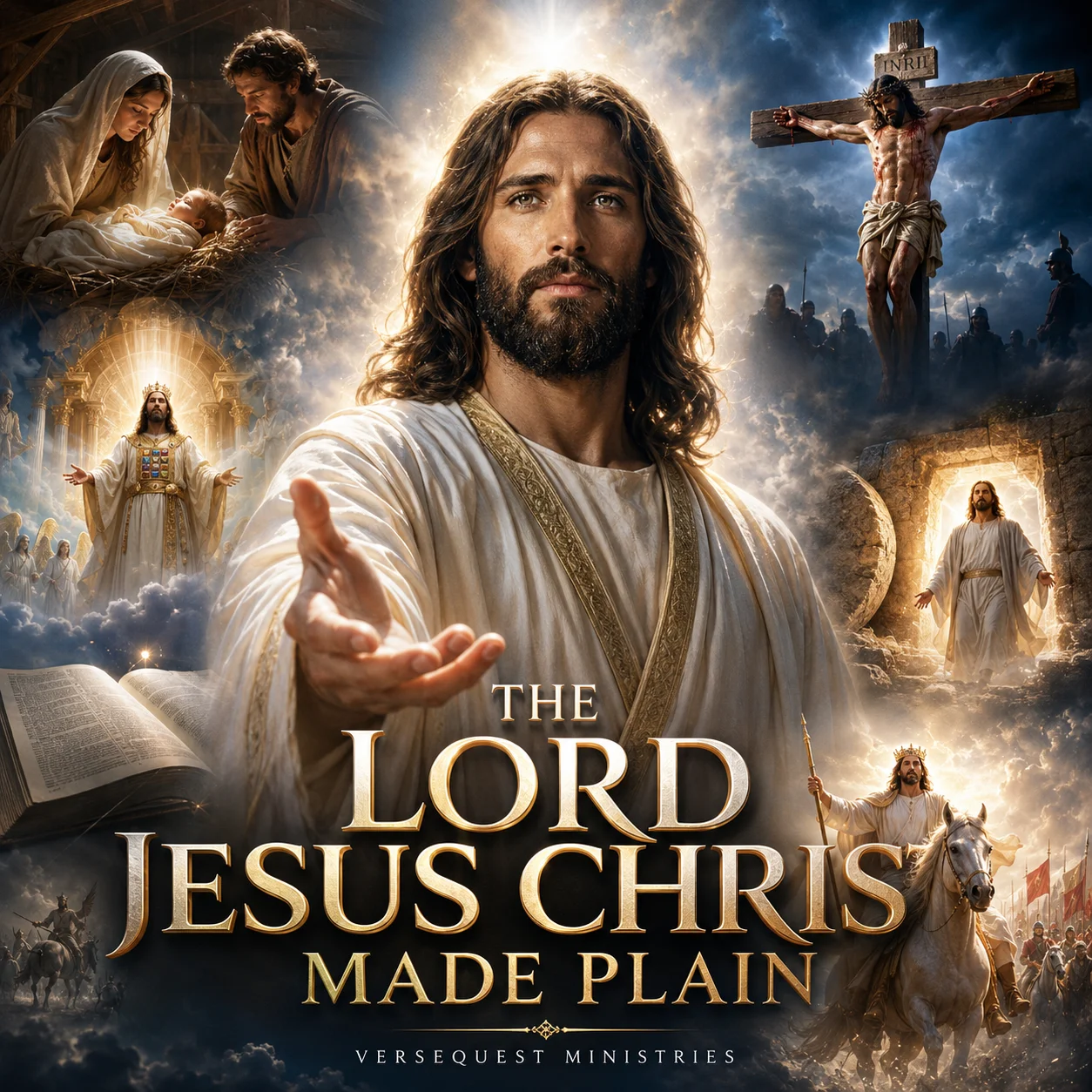
- The Lord Jesus Christ Made Plain – 637-Page KJV Bible Study
- A massive 637-page, 100-part KJV Bible study on the Person and work of the Lord Jesus Christ. This premium VerseQuest resource covers His deity, incarnation, blood, cross, resurrection, present ministry,…
- Original price was: $39.00.$34.99Current price is: $34.99.
- Add to cart
-
-10%
-
Doctrine Series
-

- The Lost Tribes Myth Exposed (213-Page Premium Study)
- A 213-page premium KJV study exposing the Lost Tribes myth, tribal identity errors, prophecy abuse, race theories, and false Israel claims through 35 detailed essays.
- $24.99
- Add to cart
-
-
Heaven
-
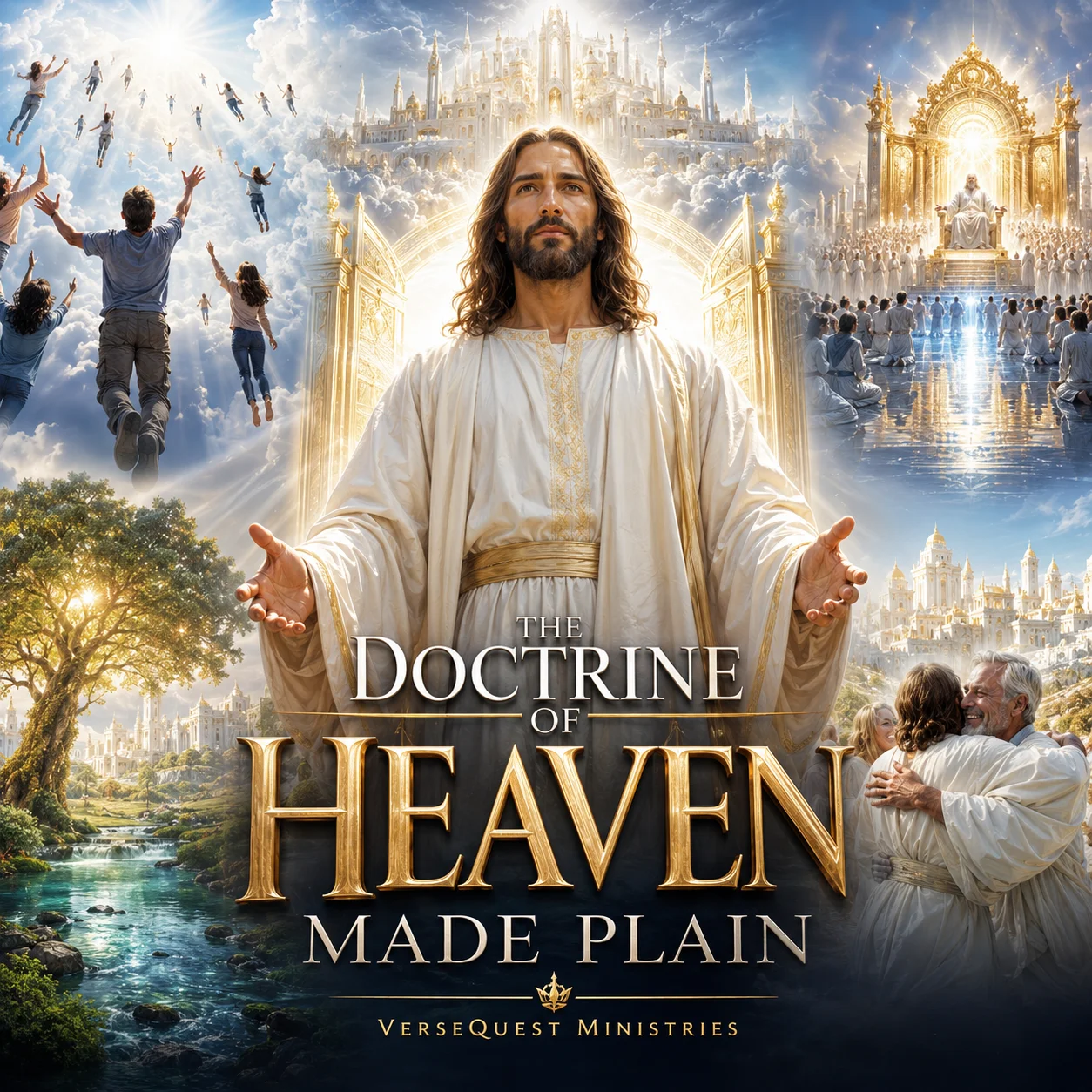
- The Doctrine of Heaven Made Plain — 599-Page KJV Bible Study PDF
- A massive 599-page KJV, rightly divided study on heaven, covering the present heaven, resurrection body, Rapture, Millennium, New Jerusalem, eternal state, hard questions, funeral lies, and cult errors.
- $34.99
- Add to cart
-
-
Kingdom Hall
-
-71%

- Jehovah’s Witnesses Made Plain – 574-Page KJV Watchtower Study
- A massive 574-page VerseQuest study exposing the Watchtower system from the King James Bible. This detailed 100-essay book covers the false Christ, false gospel, New World Translation, failed prophecy, 144,000,…
- Original price was: $34.99.$9.99Current price is: $9.99.
- Add to cart
-
-71%
-
Names of Christ
-
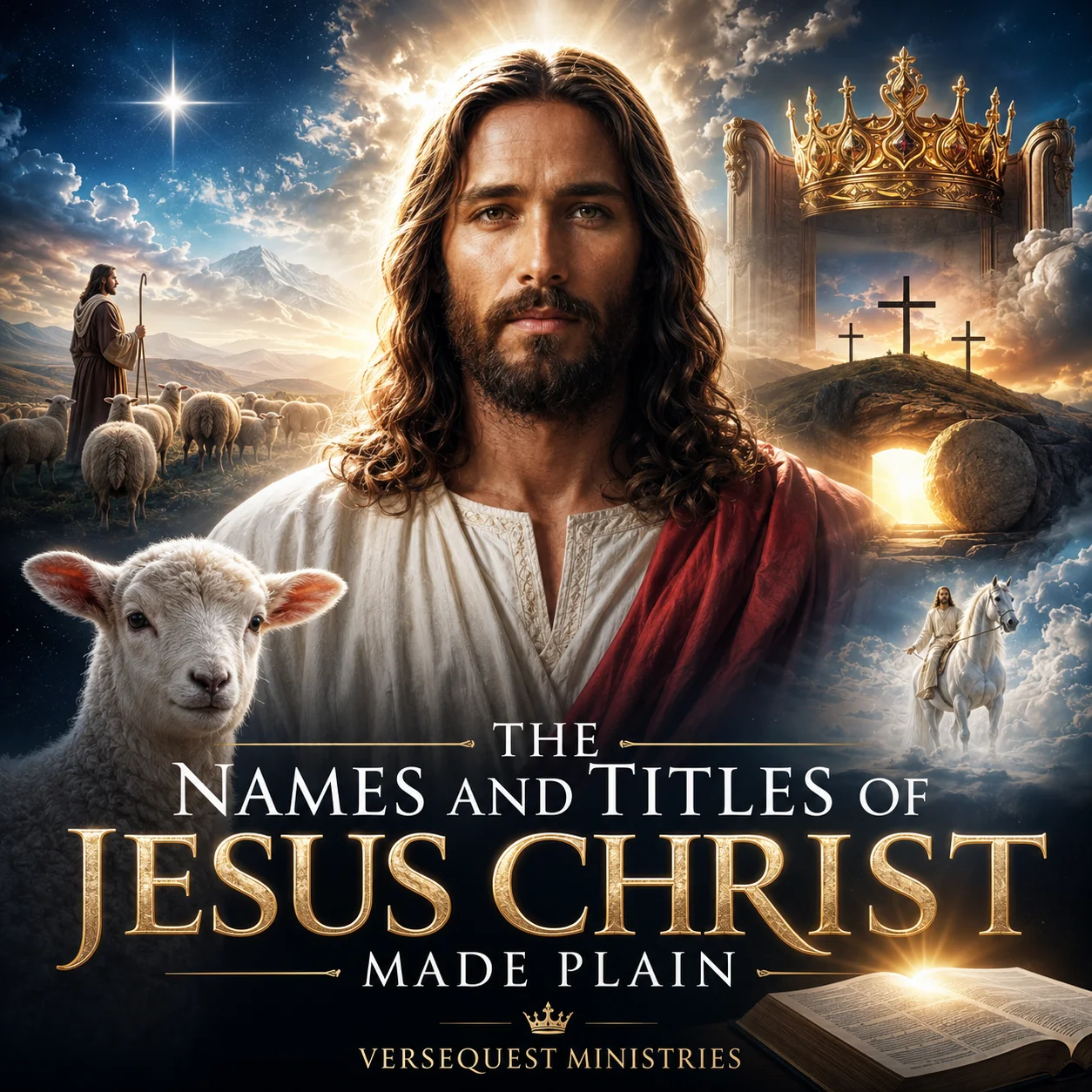
- The Names and Titles of Jesus Christ Made Plain
- A complete 100-essay KJV Bible study on the names and titles of the Lord Jesus Christ, showing His deity, humanity, blood atonement, resurrection, priesthood, headship over the Church, shepherd care,…
- $29.99
- Add to cart
-