
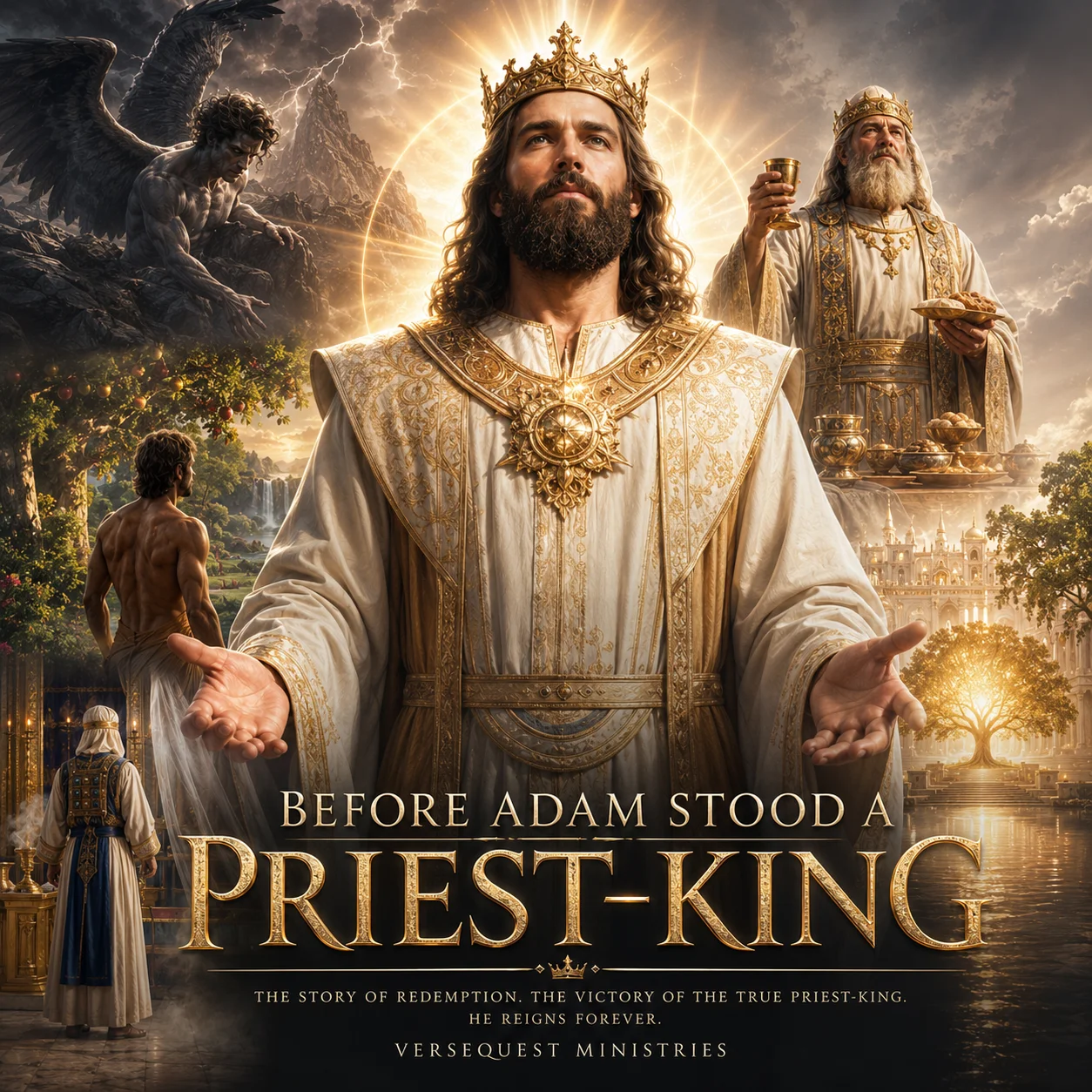
Before Adam Stood a Priest-King: The Fallen Cherub, the Lost Dominion, Melchizedek’s Order, and the Final Reign of Jesus Christ
A 395-page KJV Bible study tracing the royal-priestly pattern from the fallen cherub and Adam’s lost dominion to Melchizedek, Aaron, David, Calvary, and the everlasting reign of Jesus Christ. Includes 50 detailed essays, a full introduction and conclusion, and an extensive Bible-study chart.
$9.99
Description
Before Adam Stood a Priest-King is a massive 395-page King James Bible study examining one of the deepest and most overlooked doctrinal patterns running through Scripture: the connection between sacred guardianship, delegated dominion, priesthood, kingship, rebellion, sacrifice, and the everlasting reign of Jesus Christ.
The study begins before Adam was formed from the dust. It examines the original creation of Genesis 1:1, the ruined condition appearing in Genesis 1:2, the morning stars and sons of God present when the foundations of the earth were laid, and the exalted station of the anointed cherub described in Ezekiel 28. Lucifer stood in Eden, walked upon the holy mountain of God, moved among the stones of fire, possessed sanctuaries, wore precious stones, and occupied a covering station associated with sacred authority. His fall through pride provides the first great warning of the book: delegated glory becomes rebellion when the creature begins treating God’s gifts as personal ownership.
The study then turns to Adam, the man God formed by hand and placed within Eden to “dress it and to keep it.” Adam received dominion over the earth, stood as the representative head of mankind, and served within a garden that displayed many features later associated with sacred space. Although Genesis does not formally call Adam a priest or king, his dominion, guardianship, access, service, representation, and accountability reveal a powerful royal-priestly pattern. Adam failed as guardian, husband, ruler, and representative. He was not deceived; he knowingly surrendered to the serpent’s word and brought sin, death, exile, and curse into the human world.
The book follows that lost dominion into Satan’s present titles as the god of this world and prince of the power of the air. It explains how Satan exercises real but temporary usurped influence without ever challenging the absolute sovereignty of God. The world system bears the character of its prince through pride, deception, violence, traffick, merchandise, false worship, and rebellion presented as liberty.
The study then moves to the mysterious appearance of Melchizedek in Genesis 14. He walks out of Salem as both king and priest, brings bread and wine, blesses Abraham, and receives tithes from the patriarch. He appears without recorded father, mother, descent, beginning of days, end of life, successor, or funeral. These essays carefully examine whether Melchizedek was an extraordinary natural man, a specially created man, or a uniquely appointed supernatural figure. The book preserves the distinction between what Scripture explicitly states, what the evidence strongly suggests, and what must remain a responsible possibility rather than a new article of faith.
Melchizedek’s priesthood is shown to be older than Levi, superior to Abraham, independent of Aaronic genealogy, and foundational to understanding the everlasting priesthood of Jesus Christ. The book rejects the claim that Melchizedek was simply Shem wearing another title and also explains why the phrase “made like unto the Son of God” indicates that Melchizedek resembled Christ without being Christ Himself.
The Levitical priesthood is then examined in full detail. Aaron’s garments, breastplate, precious stones, tribal names, washings, sacrifices, blood, veil, altar, genealogy, and repeated ministry all taught Israel the holiness of God and the terrible cost of sin. Aaron’s order was divinely appointed and should never be mocked as primitive religion. Yet its repeated sacrifices, dying priests, guarded veil, and inability to perfect the conscience proved that it was temporary. Levi could teach the need for a final Priest, but Levi could not become that Priest.
The study carefully distinguishes Israel’s national calling as a kingdom of priests from both Aaron’s official priesthood and the present Body of Christ. It defends the continuing distinction between Israel and the Church, rejects replacement theology, and shows that Israel’s prophetic kingdom promises remain connected with Zion, Jerusalem, David’s throne, and the visible return of Jesus Christ.
Psalm 110 becomes the great prophetic bridge connecting Melchizedek’s order, Christ’s present heavenly session, His future reign from Zion, the judgment of rebellious nations, and the divine oath establishing Him as Priest forever. Jesus Christ did not repair Aaron’s order or become an improved Levitical priest. He came from Judah, entered by divine oath, offered Himself once, rose by the power of an endless life, and possesses an unchangeable priesthood.
The final chapters contrast the first Adam with the last Adam. Adam reached for a forbidden tree and brought death. Jesus Christ submitted to the cross and brought resurrection. Adam hid among trees; Christ was displayed upon one. Adam blamed his bride; Christ gave Himself for His Church. Adam surrendered dominion to the serpent; Christ spoiled principalities and powers. The curse of thorns, sweat, blood, death, and exile converged at Calvary, where the obedient Son answered the failed guardian and opened the living way back to God.
The book concludes with the everlasting Priest-King who will never need a replacement. Lucifer fell, Adam failed, Melchizedek vanished from the historical account, Aaron died, Levi’s order changed, Israel’s kings corrupted their thrones, and death removed generation after generation. Jesus Christ alone possesses perfect obedience, finished sacrifice, endless life, unchangeable priesthood, universal authority, and an everlasting kingdom. He will return, crush the serpent, restore Israel, judge the nations, reign from Zion, abolish death, remove the curse, and bring the redeemed to the tree of life within the holy city.
This is not light devotional reading. It is strong meat for serious Bible students willing to compare Scripture with Scripture, preserve rightly divided distinctions, and carefully separate explicit revelation from responsible biblical inference.
Pre-Adamic creation, Lucifer’s original station, the fall of the covering cherub, divine judgment, Genesis 1:2 restoration, Adamic dominion, Eden as sacred space, Adam’s royal-priestly pattern, the serpent’s usurpation, Melchizedek’s mystery, priesthood before Levi, Aaron’s temporary ministry, the superiority of Christ, Israel’s kingdom calling, David’s throne, the order of Melchizedek, Calvary as the reversal of Eden, Christ’s unchangeable priesthood, the restoration of Israel, the future reign from Zion, the defeat of Satan, the removal of the curse, and the tree of life in New Jerusalem
This publication deliberately distinguishes direct biblical statements from strong doctrinal implications and responsible possibilities. It does not require agreement with every inference as a test of salvation, orthodoxy, or fellowship. The purpose is to examine the full biblical evidence surrounding the pre-Adamic order, Lucifer’s station, Adam’s sacred responsibility, Melchizedek’s unusual identity, Aaron’s temporary priesthood, and Christ’s final supremacy without weakening extraordinary language or presenting speculation as inspired fact.
This study can be used for advanced personal Bible study, small-group doctrinal teaching, Bible institute instruction, sermon preparation, dispensational study, Genesis and Hebrews comparison, study of biblical priesthood, examination of the pre-Adamic world, teaching on Adam and Christ, study of Israel’s prophetic kingdom, and instruction concerning the eternal priesthood and future reign of Jesus Christ.
King James Bible, The Companion Bible by E. W. Bullinger, The Scofield Reference Bible by C. I. Scofield, Dispensational Truth by Clarence Larkin, The Two Adams by Arthur C. Custance, Without Form and Void by Arthur C. Custance, The Gap Fact by Peter S. Ruckman, The Book of Genesis commentary by Peter S. Ruckman, The Book of Hebrews commentary by Peter S. Ruckman, The Book of Ezekiel commentary by Peter S. Ruckman, The Book of Revelation commentary by Peter S. Ruckman, Great Doctrines of the Bible by William Evans, Figures of Speech Used in the Bible by E. W. Bullinger, Number in Scripture by E. W. Bullinger, The Witness of the Stars by E. W. Bullinger, The Epistle to the Hebrews by E. W. Bullinger, The Tabernacle: Priesthood and Offerings by H. W. Soltau, The Tabernacle, the Priesthood and the Offerings by Henry W. Soltau, The Temple and Its Ministry and Services by Alfred Edersheim, The Life and Times of Jesus the Messiah by Alfred Edersheim, The Coming Prince by Sir Robert Anderson, and a complete Strong’s Concordance for locating related King James Bible passages. These resources are recommended for comparative study and further investigation; their inclusion does not indicate agreement with every doctrinal position, textual conclusion, or interpretation presented by their authors.
Related products
-
Bible Overview Series
-
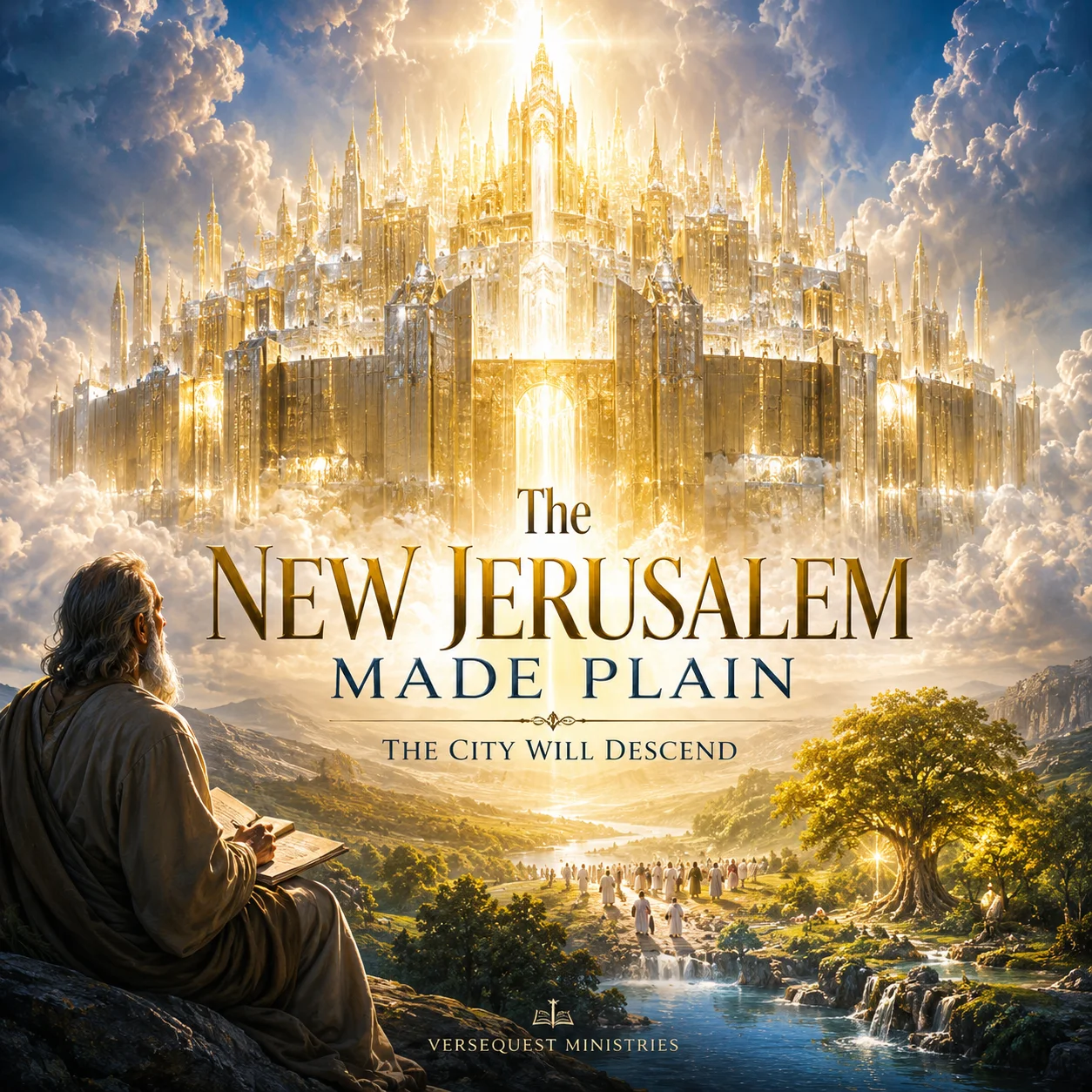
- The New Jerusalem Made Plain — 621-Page PDF Study
- The New Jerusalem Made Plain is a massive 621-page KJV/rightly divided PDF study on the literal holy city revealed in Revelation 21–22. This 100-essay book makes the New Jerusalem plain…
- $34.99
- Add to cart
-
-
Bible Prophecy Charts
-
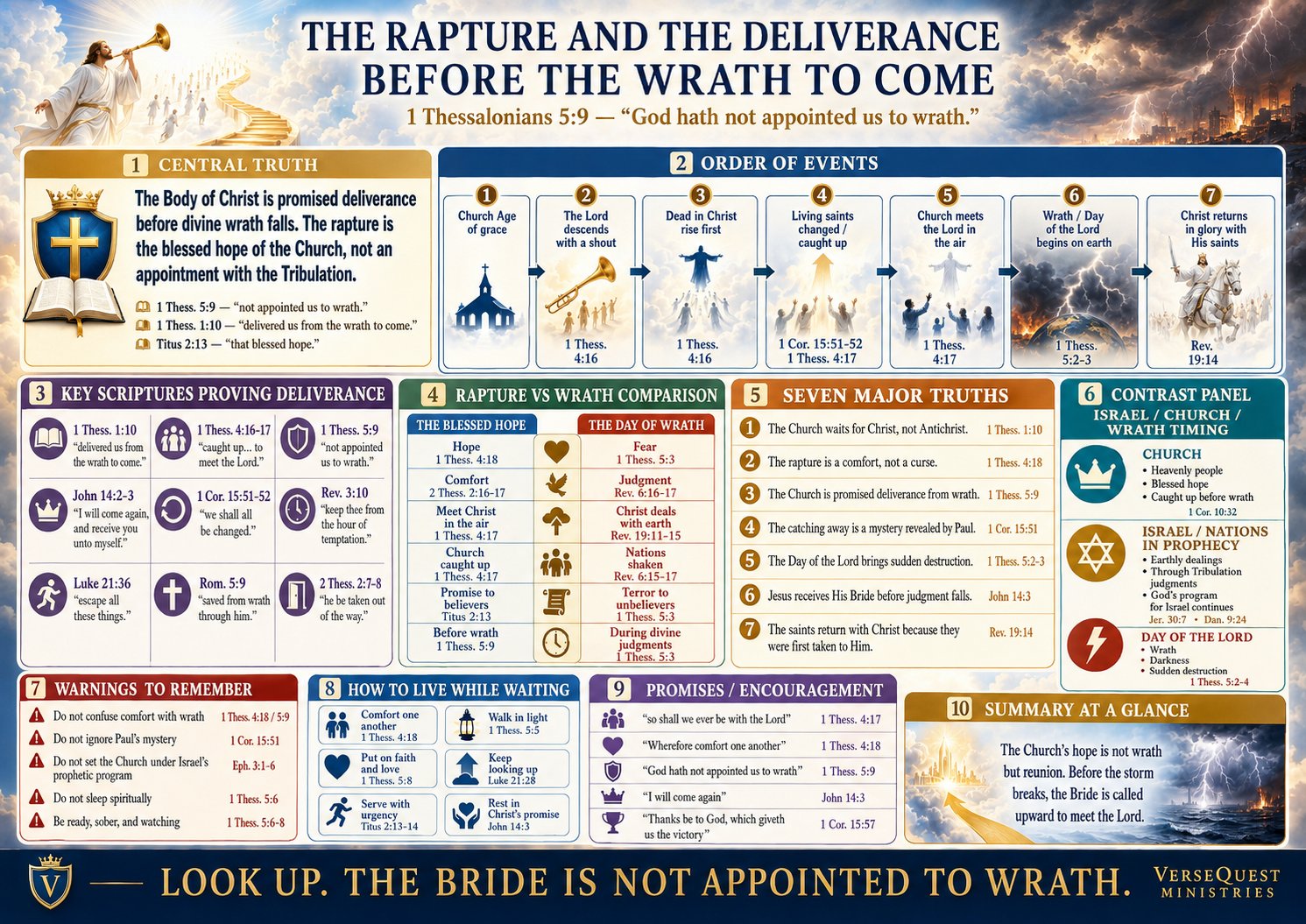
- The Rapture and the Deliverance Before the Wrath to Come – Printable Bible Study Chart
- Printable KJV Bible study chart on The Rapture and the Deliverance Before the Wrath to Come, showing from 1 Thessalonians 5:9 that the Church is not appointed to wrath. This…
- $4.99
- Add to cart
-
-
Doctrine
-
-50%
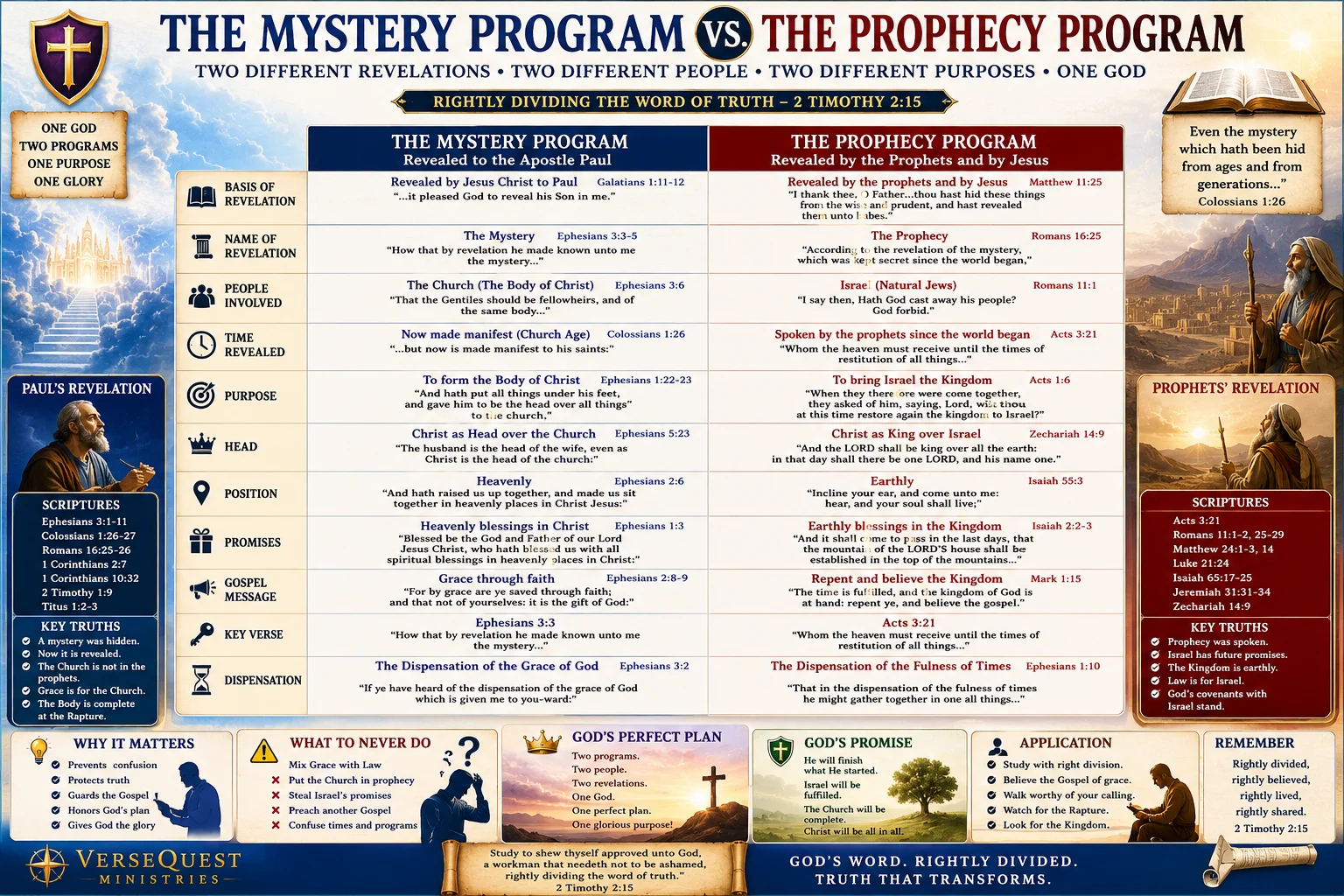
- The Mystery Program vs. Prophecy Program Chart — KJV Rightly Divided
- Premium printable KJV Bible study chart comparing the mystery program revealed through Paul with the prophecy program spoken by the prophets. Rightly divided and designed for teaching and personal study.
- Original price was: $10.00.$4.99Current price is: $4.99.
- Add to cart
-
-50%
-
Revelation
-
-71%
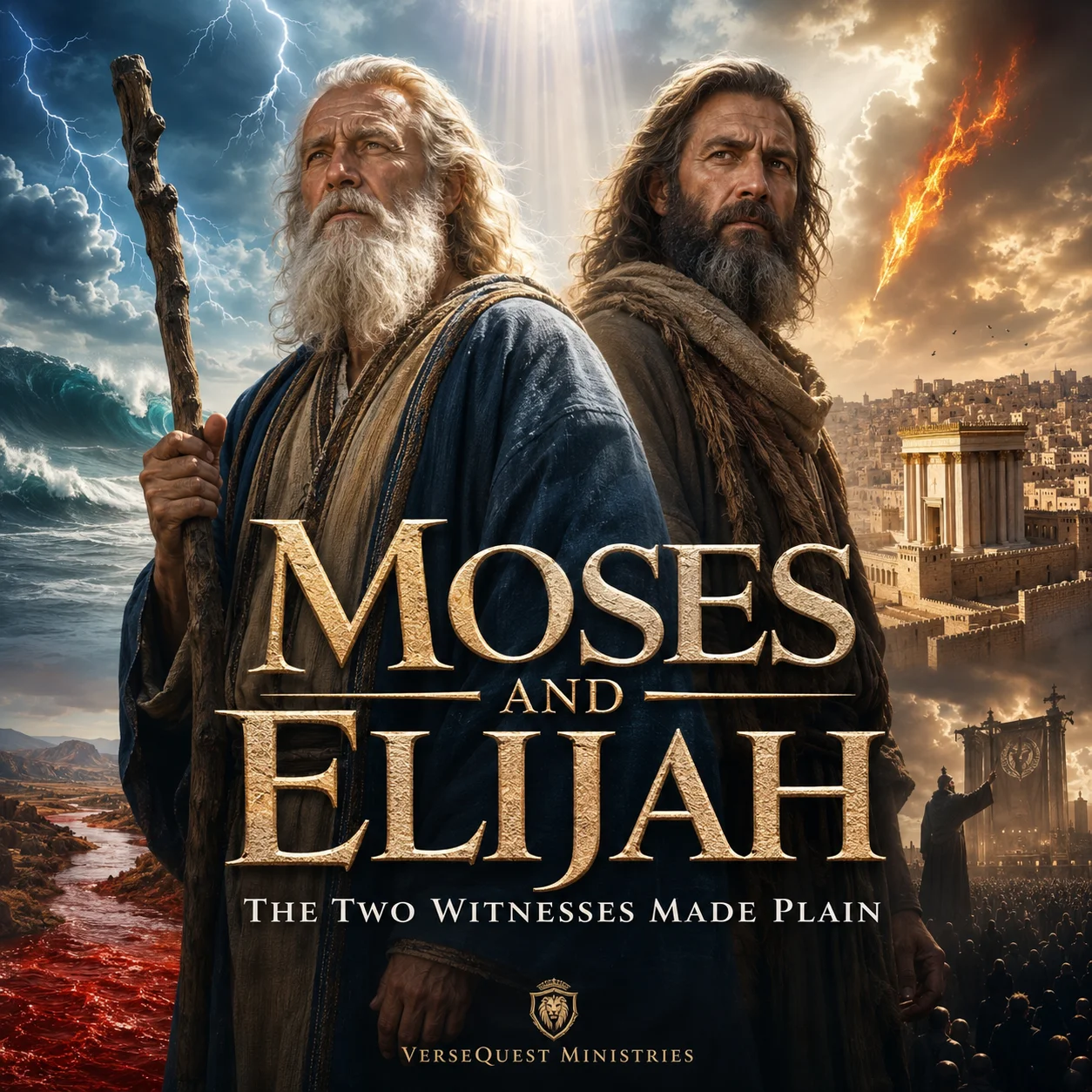
- Moses and Elijah: The Two Witnesses Made Plain
- Moses and Elijah: The Two Witnesses Made Plain is a 636-page premium VerseQuest PDF study proving from Scripture that the Two Witnesses of Revelation 11 are Moses and Elijah. This…
- Original price was: $34.99.$9.99Current price is: $9.99.
- Add to cart
-
-71%
-
Premium Studies
-
-25%
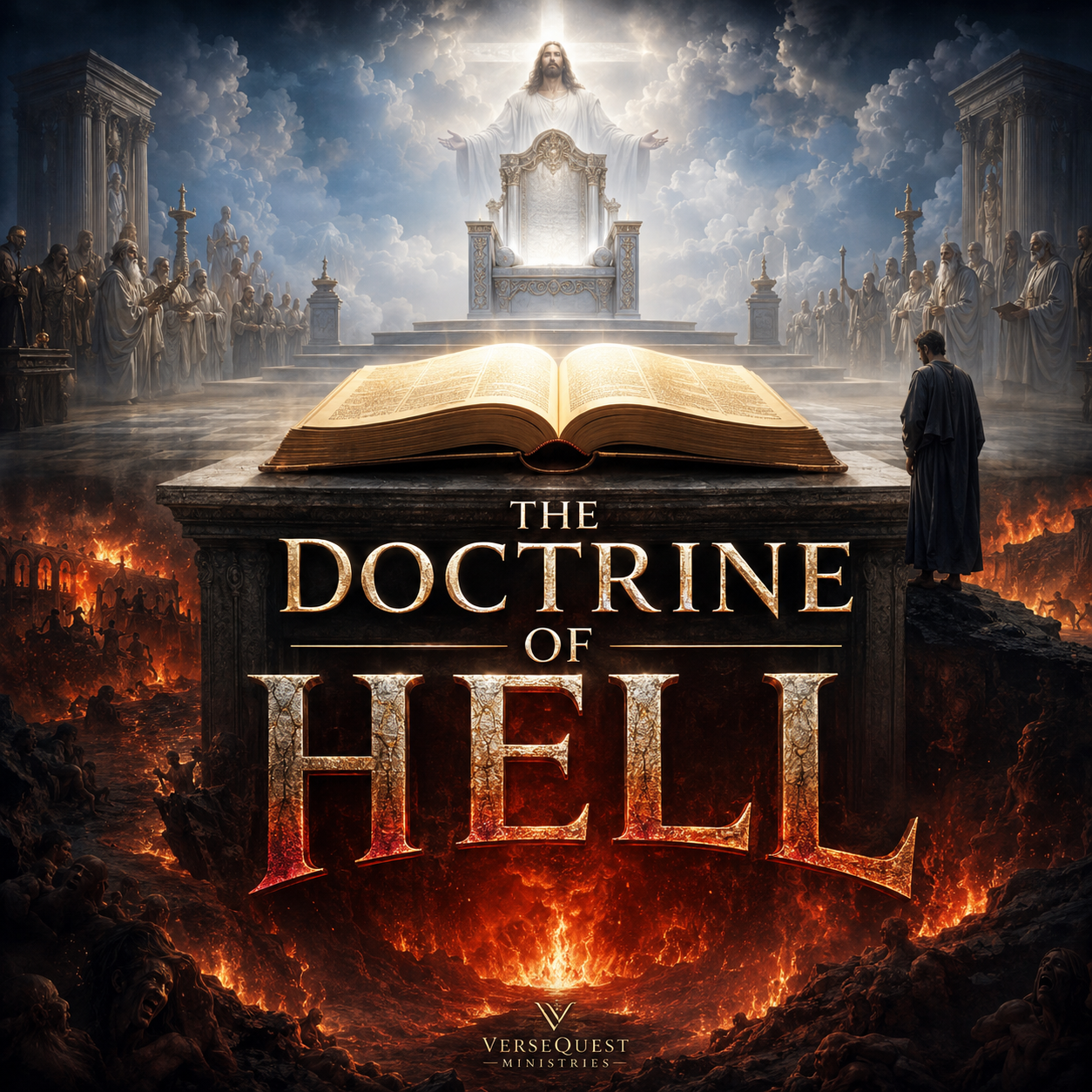
- The Doctrine of Hell — Premium Essay Series PDF
- A 383-page premium VerseQuest PDF study book containing 54 KJV essays on hell, fire, darkness, judgment, the lake of fire, the second death, and Jesus Christ as the only escape.
- Original price was: $39.99.$29.99Current price is: $29.99.
- Add to cart
-
-25%