
Is It Okay to Ask God “Why”? – Honest Questions, Suffering, Faith, and Trusting God’s Heart (KJV Bible Study Chart)
Learn how to bring honest questions to God with this detailed KJV Bible study chart covering suffering, unanswered prayer, biblical lament, humility, trust, divine silence, and eternal hope.
$3.99
Description
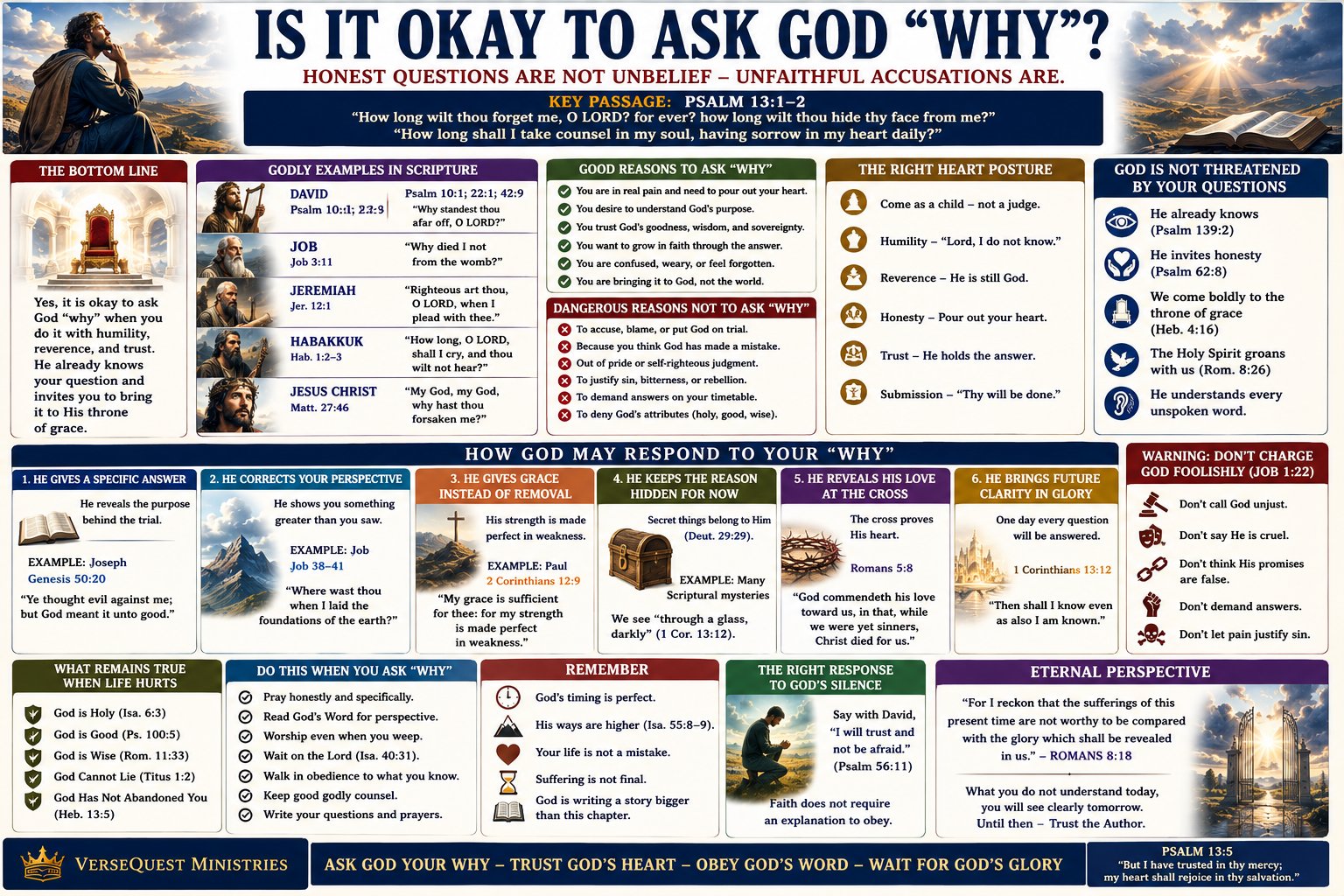
Is It Okay to Ask God “Why”? is a detailed KJV Bible study chart addressing one of the most personal questions believers face during grief, suffering, disappointment, confusion, delay, unanswered prayer, and seasons when God’s purpose cannot be clearly seen.
Built around Psalm 13:1–2, the chart explains that honest questions are not automatically unbelief. David openly asked how long the LORD would appear to forget him, hide His face, and permit sorrow to remain in his heart. Yet David did not abandon God, deny His character, or replace prayer with rebellion. He brought his pain directly to the Lord and ended the Psalm by trusting in divine mercy.
The central distinction is between a question asked in humility and an accusation made in unbelief. A believer may ask why while remaining reverent, obedient, and submitted to God. The danger begins when suffering is used to charge God with injustice, deny His goodness, reject His Word, or demand that the Creator explain Himself according to a human timetable.
Scripture contains many godly examples of people who brought difficult questions to the Lord. David repeatedly cried, “How long?” and asked why God appeared far away. Job asked why he had been born into such suffering. Jeremiah pleaded with the LORD concerning the prosperity of the wicked. Habakkuk asked how long violence would continue without visible intervention.
Even the Lord Jesus Christ cried from the cross, “My God, my God, why hast thou forsaken me?” This was not sinful unbelief but the fulfillment of Scripture and the agonizing expression of the sinless Substitute bearing judgment. The presence of such questions in Scripture proves that honest grief may speak plainly before God.
The chart presents several good reasons for asking why. A believer may be experiencing genuine pain, seeking to understand God’s purpose, trying to grow through hardship, feeling weary or forgotten, or choosing to bring confusion to the Lord rather than pouring it into bitterness, gossip, isolation, or worldly counsel.
Dangerous motives are also identified. A person may ask why in order to accuse God, justify sin, defend bitterness, demand immediate answers, exalt personal judgment over divine wisdom, or deny God’s revealed attributes. The same word may express either humble dependence or proud rebellion depending upon the heart behind it.
The proper posture combines humility, reverence, honesty, trust, and submission. The believer approaches God as a child rather than a judge. He admits that he does not know everything, remembers that God remains holy and sovereign, pours out his heart truthfully, trusts the Lord with the unknown answer, and ultimately says, “Thy will be done.”
God is not threatened by sincere questions. He already knows every thought before it is spoken. Scripture invites believers to pour out their hearts before Him and come boldly to the throne of grace. The Holy Spirit helps their infirmities and makes intercession when grief becomes too deep for clear words.
The chart explains several ways God may answer a believer’s why. He may give a specific explanation, as Joseph eventually recognized that God used human evil to preserve life. He may correct the believer’s limited perspective, as He did when answering Job from the whirlwind.
At other times, God may give sustaining grace instead of removing the burden. Paul asked for his thorn to depart, but the Lord answered, “My grace is sufficient for thee.” The response did not explain every detail, but it supplied enough strength for faithful endurance.
God may also keep the reason hidden. Deuteronomy 29:29 teaches that secret things belong unto the LORD. Faith must sometimes continue without receiving a full earthly explanation. The absence of an answer does not prove the absence of divine purpose.
The cross provides the clearest revelation of God’s heart. When circumstances appear to question His love, Romans 5:8 points to Christ dying for sinners. The believer may not understand what God is presently doing, but Calvary proves that divine love is not cold, distant, indifferent, or imaginary.
Some answers will become clear only in glory. First Corinthians 13:12 explains that believers presently see through a glass darkly but will one day know more fully. Eternal perspective prevents temporary suffering from becoming the final interpretation of God’s character.
The chart strongly warns against charging God foolishly. Job suffered devastating losses, yet Scripture says he did not sin by accusing God of wrongdoing. Pain is real, but it must not be allowed to redefine the Lord as unjust, cruel, unfaithful, or dishonest.
Several truths remain unchanged when life hurts. God is holy, good, wise, truthful, and incapable of lying. He has not abandoned those who belong to Him. Circumstances change rapidly, but God’s character remains settled.
Practical steps include praying honestly and specifically, reading Scripture for perspective, worshipping while grieving, waiting upon the LORD, obeying what is already known, seeking godly counsel, and writing questions and prayers rather than allowing them to ferment into resentment.
The chart also emphasizes the right response to God’s silence: “I will trust and not be afraid.” Faith does not require a complete explanation before obeying. Trust rests upon who God is when the believer cannot yet understand what He is doing.
Romans 8:18 places present suffering beside future glory and declares that the two are not worthy to be compared. What appears unbearable within one earthly chapter will be understood differently when viewed within God’s eternal story.
The final message is pastoral and direct: ask God your why, but trust God’s heart. Bring Him your confusion, but do not abandon His Word. Wait for His timing, obey the light already given, and remember that suffering is not the conclusion of the believer’s story.
This chart is ideal for personal Bible study, grief ministry, pastoral counseling, discipleship, suffering and faith studies, Christian encouragement, prayer ministry, Sunday school, homeschool Bible curriculum, small groups, Bible institutes, sermon preparation, and anyone struggling with unanswered questions.
Asking God why, honest questions, suffering and faith, unanswered prayer, trusting God’s heart, God’s silence, grief and disappointment, biblical lament, humility before God, reverence, submission, divine sovereignty, God’s goodness, God’s wisdom, sufficient grace, eternal perspective, faith during confusion, prayer in suffering, waiting on the LORD, hope in glory
The Bible does not condemn every question addressed to God. David, Job, Jeremiah, Habakkuk, and other faithful servants openly expressed confusion, grief, and longing before the Lord.
The spiritual condition of the questioner matters. A humble question seeks God, while a proud accusation places God on trial. The words may sound similar, but the posture of the heart is entirely different.
Psalm 13 begins with “How long?” but ends with confidence in God’s mercy. Biblical lament pours out pain without surrendering faith.
Honesty before God is not disrespect. He already knows the believer’s thoughts, fears, anger, grief, and confusion. Prayer allows those burdens to be brought under divine truth rather than hidden beneath religious performance.
Humility acknowledges the limits of human understanding. The believer sees one moment, while God sees the beginning, end, and eternal consequences of every event.
Reverence remembers that God remains God even when life becomes painful. The sufferer may speak honestly without speaking arrogantly.
Job’s experience warns against measuring God’s wisdom by the narrow limits of human perception. God did not explain every heavenly detail to Job, but He revealed enough of His majesty to restore Job’s perspective.
Paul received grace rather than removal. Sometimes the Lord answers why by demonstrating that His sustaining presence is greater than the absence of suffering.
Joseph eventually saw a specific purpose behind years of betrayal, slavery, false accusation, and imprisonment. Some answers become visible only after a long season has passed.
Other reasons remain among the secret things belonging to God. Faith does not collapse merely because every detail has not been disclosed.
The cross is the permanent proof of God’s love. Circumstances may feel dark, but Calvary prevents the believer from concluding that God is indifferent toward human pain.
God’s silence is not abandonment. Hebrews 13:5 remains true when no immediate answer is heard: “I will never leave thee, nor forsake thee.”
Suffering must never be used as permission to sin. Pain does not justify bitterness, unbelief, rebellion, cruelty, or the rejection of Scripture.
Faith obeys what is clear while waiting for what remains hidden. The believer may not understand the road but can still follow the Guide.
Godly counsel can protect a suffering person from isolation and distorted conclusions. Scripture, prayer, fellowship, worship, and patient obedience remain essential when answers are delayed.
Future glory will place present suffering within its complete context. The believer will not remain confused forever. What is now seen dimly will one day be understood in the presence of Christ.
The proper conclusion is not that every question receives an immediate explanation, but that every believer may entrust the unanswered question to a perfectly holy, good, wise, and faithful God.
Grief counseling, suffering and faith studies, pastoral care, unanswered-prayer lessons, Christian encouragement, biblical lament, helping discouraged believers, prayer ministry, trusting God during loss, teaching divine sovereignty, developing eternal perspective, Sunday school lessons, homeschool Bible curriculum, small-group studies, Christian school instruction, Bible institute classes, discipleship training, sermon preparation
King James Bible, Strong’s Concordance, Thompson Chain-Reference Bible, Treasury of Scripture Knowledge, Nave’s Topical Bible, personal prayer journal, grief and lament notebook, Scripture memory cards, Psalms study notes, Job commentary notes, Habakkuk study materials, biblical counseling resources, suffering and sovereignty studies, Romans 8 cross-reference notes, VerseQuest Christian Living charts
Related products
-
The Clock Is Eating Your Life
-
- The Clock Is Eating Your Life – How to Redeem the Time Before It Is Gone (KJV Bible Study Chart)
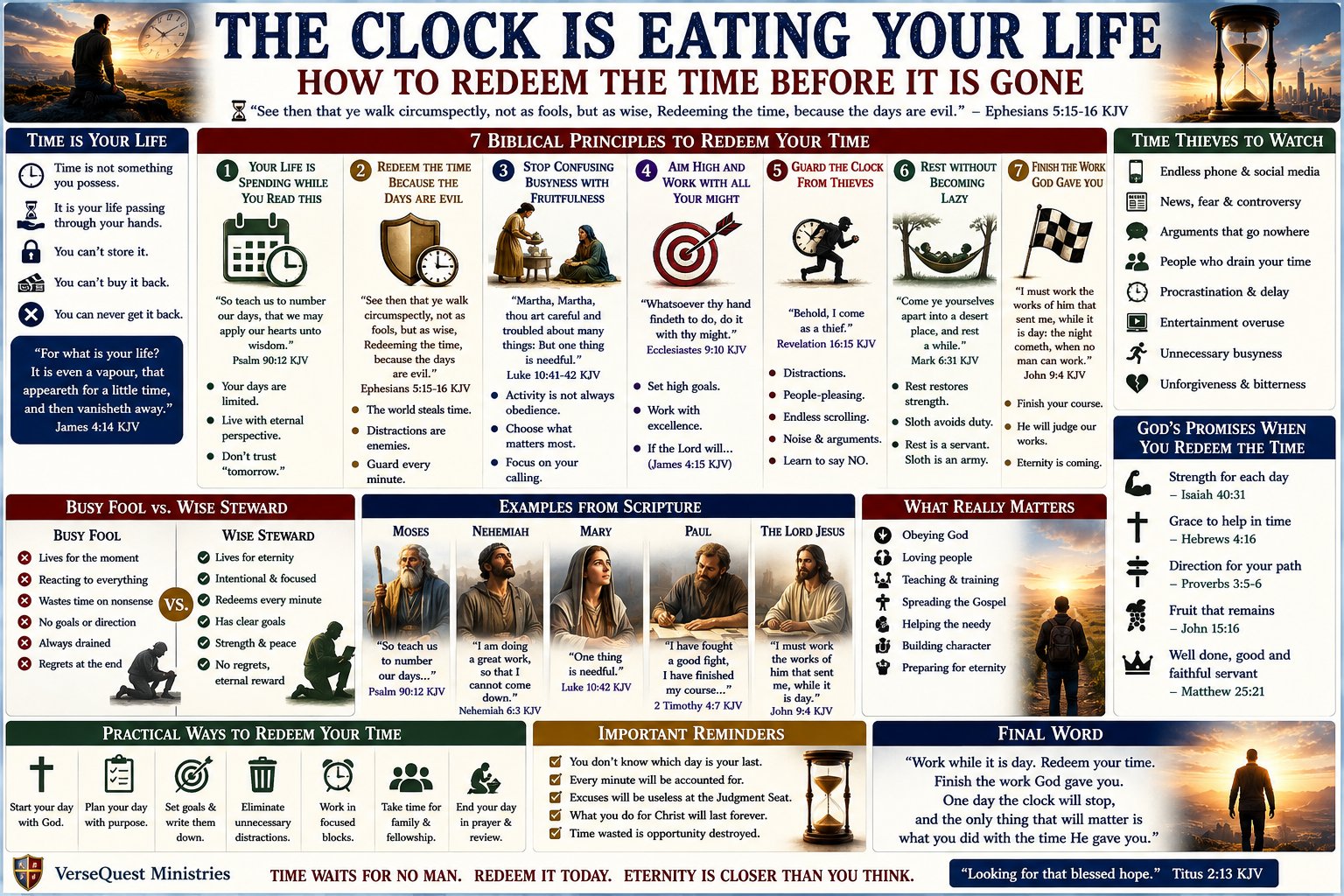
- Learn how to redeem the time with this detailed KJV chart covering biblical priorities, busyness versus fruitfulness, time thieves, diligence, proper rest, practical scheduling, eternal purpose, and finishing the work…
- $3.99
- Add to cart
-
-
Spiritual Growth
-
- How to Build a Real Prayer Life – Biblical Prayer Guide and KJV Bible Study Chart
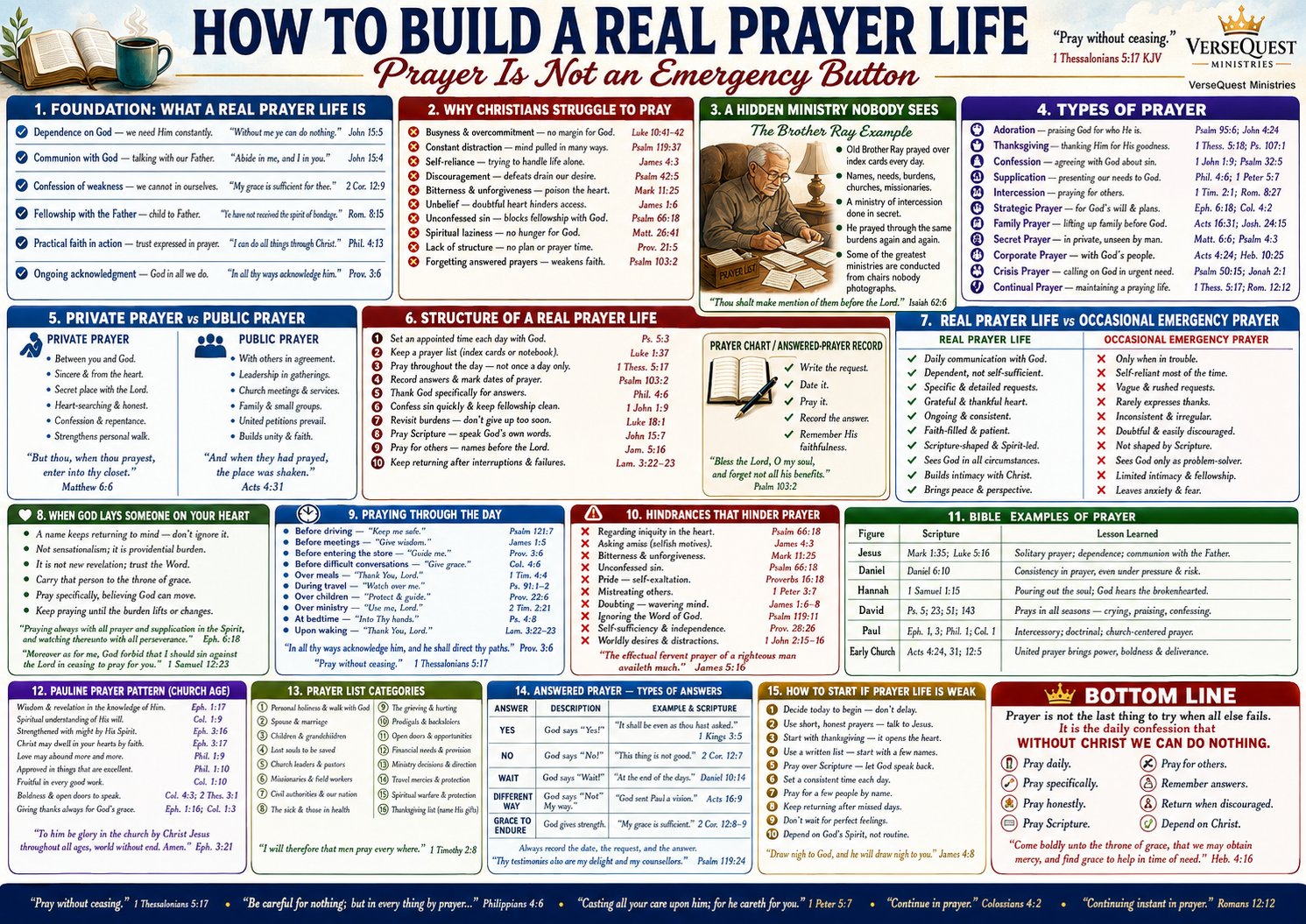
- Build a consistent, biblical prayer life with this detailed KJV Bible study chart. Explore the foundations of prayer, types of prayer, common hindrances, answered prayer, Bible examples, and practical ways…
- $3.99
- Add to cart
-
-
KJV Bible Study Resources
-
-60%

- Practical Christianity for Daily Battles – 329-Page KJV Study PDF
- A premium 329-page KJV study PDF with 40 full essays applying sound, rightly divided Bible doctrine to real daily Christian battles. Topics include temptation, anxiety, marriage, parenting, pornography, grief, church…
- Original price was: $24.99.$9.99Current price is: $9.99.
- Add to cart
-
-60%
-
Church Hypocrisy
-
- The Hypocrite Excuse – Why Their Sin Does Not Cancel Your Responsibility to God (KJV Bible Study Chart)
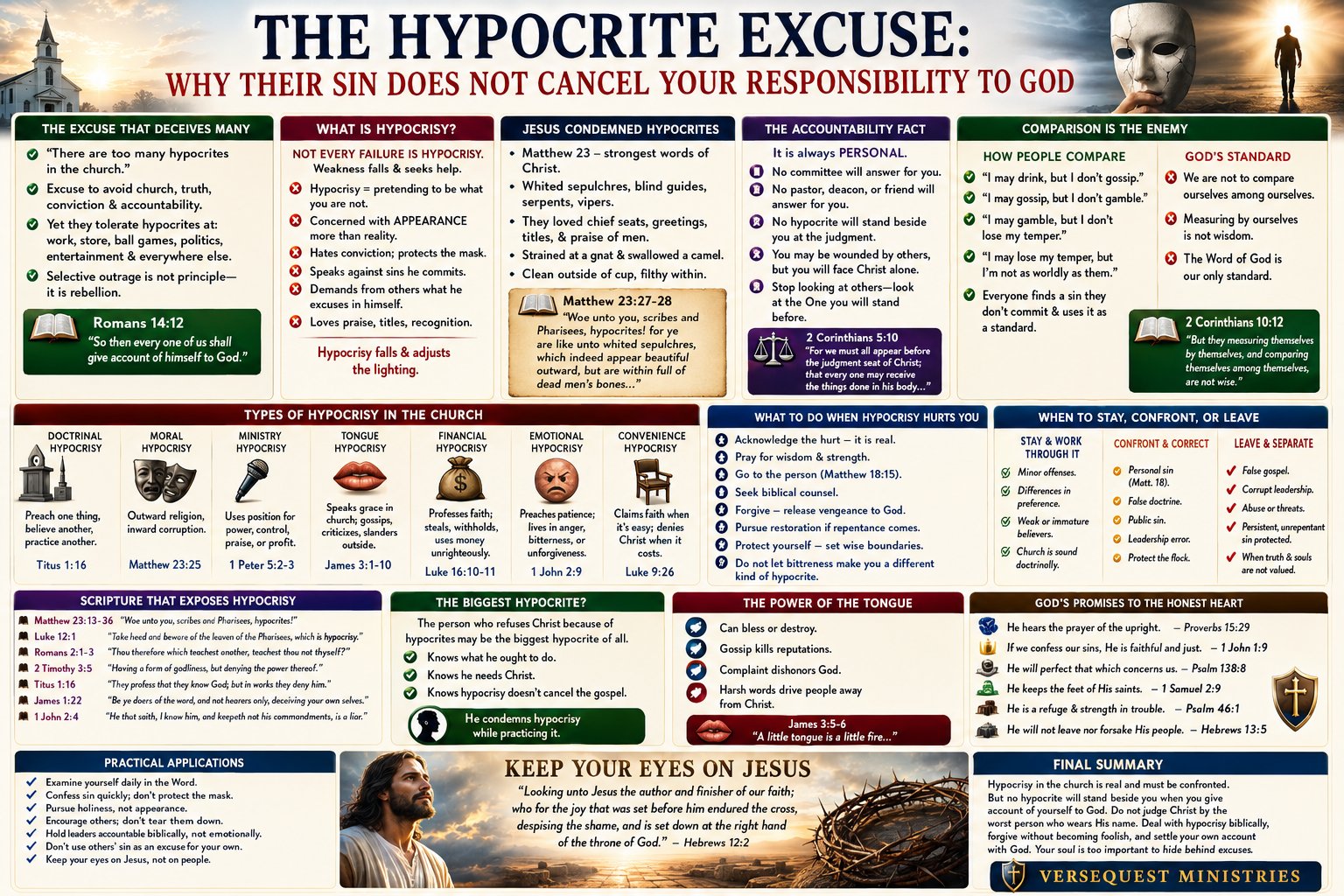
- Confront the hypocrite excuse with this detailed KJV chart covering church hypocrisy, personal accountability, religious pretense, comparison, church hurt, correction, boundaries, and keeping your eyes on Jesus.
- $3.99
- Add to cart
-
-
Uncategorized
-
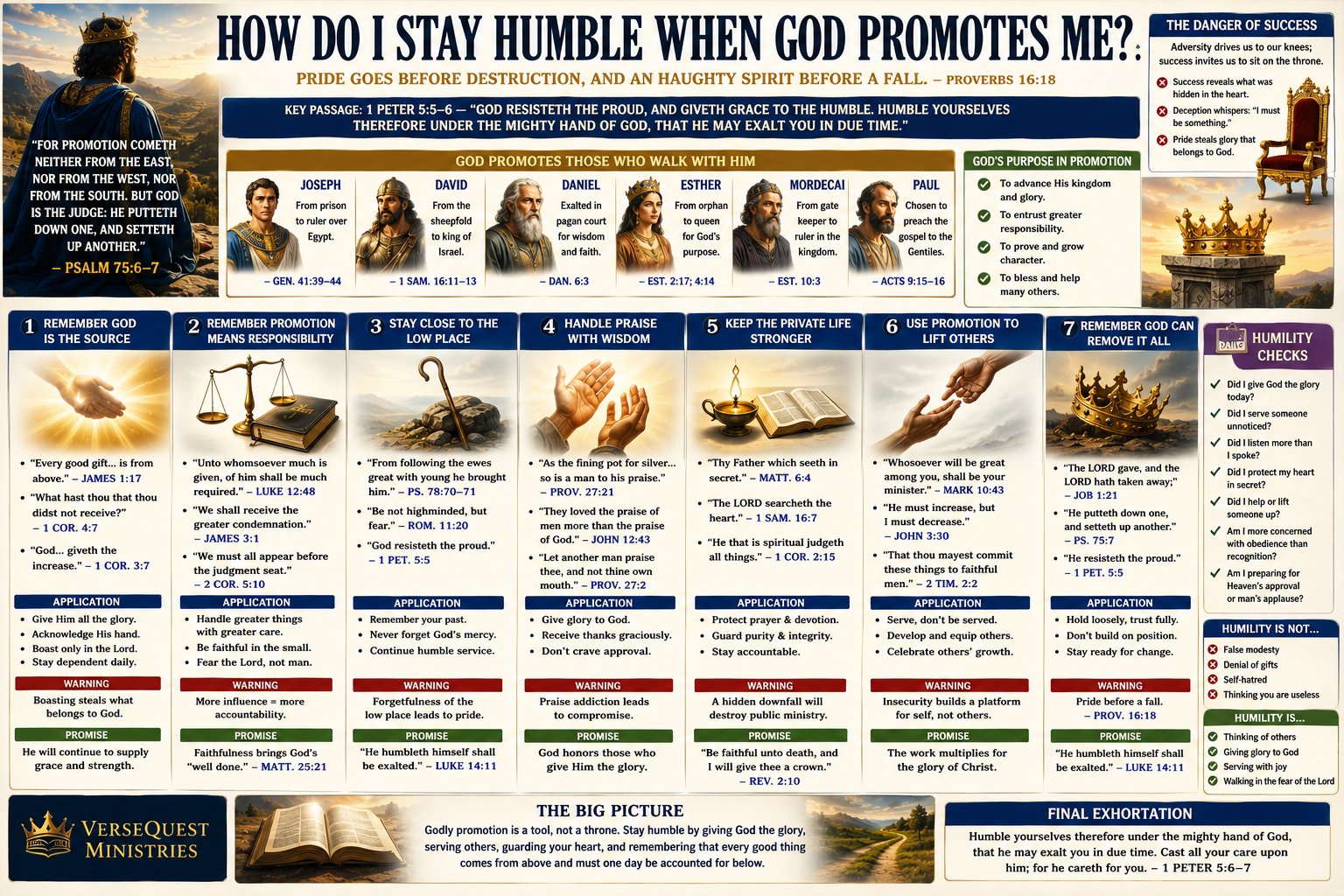
- How to Stay Humble When God Promotes You – Biblical Humility, Success, and Faithful Stewardship (KJV Bible Study Chart)
- Learn how to remain humble when God increases your influence with this detailed KJV Bible study chart covering pride, praise, responsibility, private devotion, servant leadership, and faithful stewardship.
- $3.99
- Add to cart
-