
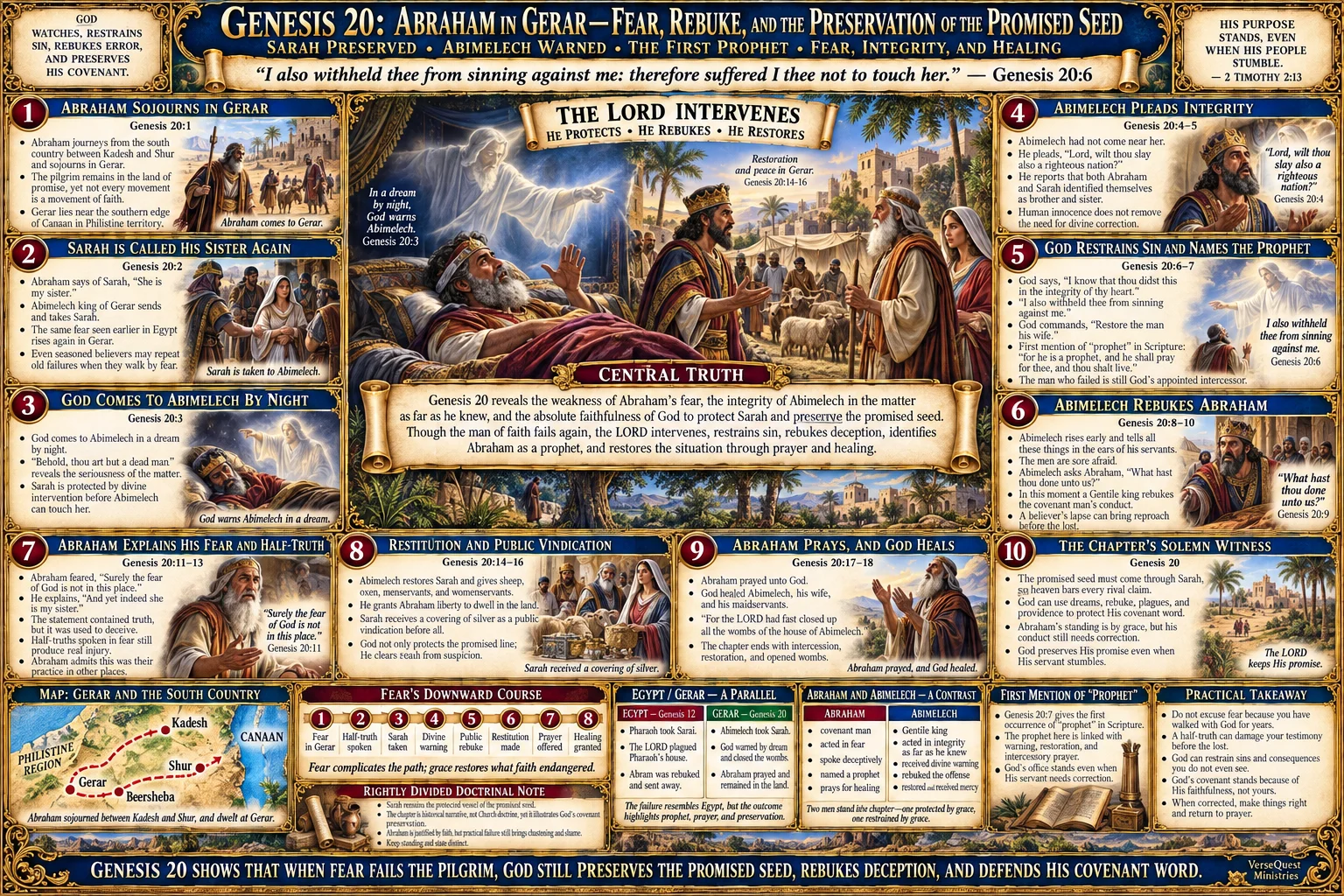
Genesis 20 – Abraham in Gerar: Fear, Abimelech’s Rebuke, the First Prophet, Sarah Preserved, and the Promised Seed Protected (KJV Bible Study Chart)
Explore Genesis 20 with this detailed KJV Bible study chart tracing Abraham’s sojourn in Gerar, his repeated fear concerning Sarah, and Abimelech’s encounter with God in a dream. The chart examines Abraham’s half-truth, God’s declaration “I also withheld thee from sinning against me,” the first biblical occurrence of the word prophet, Abimelech’s rebuke, Sarah’s restoration and public vindication, Abraham’s intercessory prayer, and God’s healing of Abimelech’s household. It also shows how the LORD sovereignly protects Sarah immediately before Isaac’s birth, preserving the promised seed despite Abraham’s failure. Ideal for personal Bible study, Sunday school, homeschool, sermon preparation, Bible institutes, Abrahamic covenant studies, and teaching on fear, integrity, grace, providence, prayer, and God’s faithfulness.
$4.99
Description
Genesis 20: Abraham in Gerar—Fear, Rebuke, and the Preservation of the Promised Seed is a detailed KJV Bible study chart examining Abraham’s repeated failure concerning Sarah, God’s warning to Abimelech, the first occurrence of the word “prophet” in Scripture, divine restraint upon sin, Abraham’s intercession, and God’s preservation of the covenant line immediately before Isaac’s birth.
Abraham journeys from the south country, dwells between Kadesh and Shur, and sojourns in Gerar. Although he remains within the broader land of promise, his old fear resurfaces. Abraham again identifies Sarah as his sister, and Abimelech king of Gerar takes her. Genesis 20 deliberately echoes the earlier Egypt episode of Genesis 12, showing that an old weakness may reappear even after years of walking with God.
Before Abimelech touches Sarah, God comes to him in a dream by night and warns, “Behold, thou art but a dead man.” Abimelech pleads that he acted in the integrity of his heart and innocency of his hands because both Abraham and Sarah had represented themselves as brother and sister. God acknowledges his integrity but adds one of the chapter’s most important statements: “I also withheld thee from sinning against me.” Divine providence has actively protected Sarah and restrained Abimelech from completing the act.
God then commands Abimelech to restore Sarah and identifies Abraham as “a prophet.” This is the first occurrence of the word prophet in the biblical record. Remarkably, Abraham is still God’s appointed intercessor despite having failed in the very situation from which God must now rescue him. His standing rests upon God’s grace, though his conduct brings shame and deserved rebuke.
Abimelech confronts Abraham publicly, asking, “What hast thou done unto us?” Abraham admits that fear motivated his deception and explains that Sarah truly is his half-sister. The statement contains factual truth but was used to conceal the more important truth that she was his wife. Genesis therefore exposes the danger of using a technically correct statement to produce a false impression.
Abimelech restores Sarah and gives Abraham sheep, oxen, servants, liberty to dwell in the land, and a thousand pieces of silver connected with Sarah’s public vindication. Abraham then prays, and God heals Abimelech, his wife, and his maidservants, whose wombs had been closed because of Sarah.
Genesis 20 demonstrates that God’s covenant purpose does not rest upon Abraham’s flawless conduct. The promised seed must come through Sarah, and God sovereignly protects that line. Fear causes failure, a Gentile king rebukes the covenant man, and yet the LORD restrains sin, restores order, hears prayer, and keeps His promise.
Genesis 20, Abraham in Gerar, Abraham and Abimelech, Sarah preserved, Abraham’s fear, Sarah called sister, half-truth, divine restraint, God warns Abimelech, dream by night, integrity of heart, first prophet, Abraham the prophet, promised seed, covenant preservation, intercessory prayer, divine healing, public vindication, fear versus faith, human failure, God’s faithfulness, Gerar, Kadesh and Shur, grace and restoration
Genesis 20 takes place immediately before the birth of Isaac, making Sarah’s preservation especially important. Abraham sojourns in Gerar and again says of Sarah, “She is my sister.” The failure resembles Genesis 12 in Egypt. Years of genuine faith have not made Abraham incapable of repeating an old weakness. Scripture records the failures of its great men honestly rather than presenting them as flawless heroes.
Abimelech takes Sarah, but God intervenes before the relationship can be consummated. In a dream God warns him, “Behold, thou art but a dead man.” Abimelech answers that he acted in integrity because Abraham and Sarah had represented themselves as brother and sister. God acknowledges this and declares, “I also withheld thee from sinning against me.” The passage provides a striking example of divine restraint: God can providentially prevent a man from carrying an intended action to completion.
God commands Abimelech to restore Sarah and says of Abraham, “he is a prophet, and he shall pray for thee.” This is the first occurrence of the word prophet in the biblical text. The designation is especially instructive because Abraham has just failed morally in his testimony. His prophetic position does not excuse his conduct, but his failure does not cancel God’s calling. Grace preserves his standing while correction addresses his state.
Abimelech rebukes Abraham and asks what he has done. Abraham admits that fear controlled his thinking: “Surely the fear of God is not in this place; and they will slay me for my wife’s sake.” He also explains that Sarah is genuinely his half-sister. The statement was factually true but intentionally incomplete. A half-truth can function as deception when it is designed to create a false conclusion.
Abimelech restores Sarah and gives Abraham livestock and servants. Genesis 20:16 specifically states that Abimelech gives Abraham a thousand pieces of silver, describing this in relation to Sarah as “a covering of the eyes.” The transaction publicly clears the situation and restores Sarah before the household.
Abraham then prays for Abimelech, and God heals him, his wife, and his maidservants. The LORD had closed the wombs of Abimelech’s household because of Sarah and now opens them through Abraham’s intercession. The failed man remains the appointed prophet through whom prayer is offered.
The larger covenant issue is crucial. Isaac must come through Sarah. God therefore protects her from any rival claim concerning the promised seed. Genesis 20 demonstrates that the covenant rests ultimately upon God’s faithfulness. Abraham stumbles, Abimelech is warned, Sarah is preserved, sin is restrained, prayer is heard, and the promised line remains secure.
Genesis 20 is useful for teaching the danger of recurring spiritual weaknesses, the deceptive power of fear, the difference between literal truth and misleading half-truths, and God’s ability to restrain sin providentially. It also teaches that spiritual standing does not excuse poor conduct, that God may use unexpected people to rebuke His servants, and that divine faithfulness preserves His promises despite human failure. The chapter is valuable for personal Bible study, Sunday school, homeschool instruction, Bible institutes, sermon preparation, discipleship, prayer studies, studies on Abraham, covenant preservation, and teaching on grace, restoration, integrity, and testimony.
King James Bible, Strong’s Concordance, Thompson Chain-Reference Bible, Treasury of Scripture Knowledge, Nave’s Topical Bible, Genesis 12–21 study notes, Abraham and Sarah timelines, Abrahamic covenant charts, Genesis 12 and Genesis 20 comparison studies, Abimelech studies, biblical prophecy and prophet studies, intercessory prayer Scripture chains, Romans 4 studies, Hebrews 11 faith studies, covenant-promise studies, patriarchal maps of Gerar Kadesh and Shur, VerseQuest Genesis charts
Related products
-
Genesis Chapter 2
-
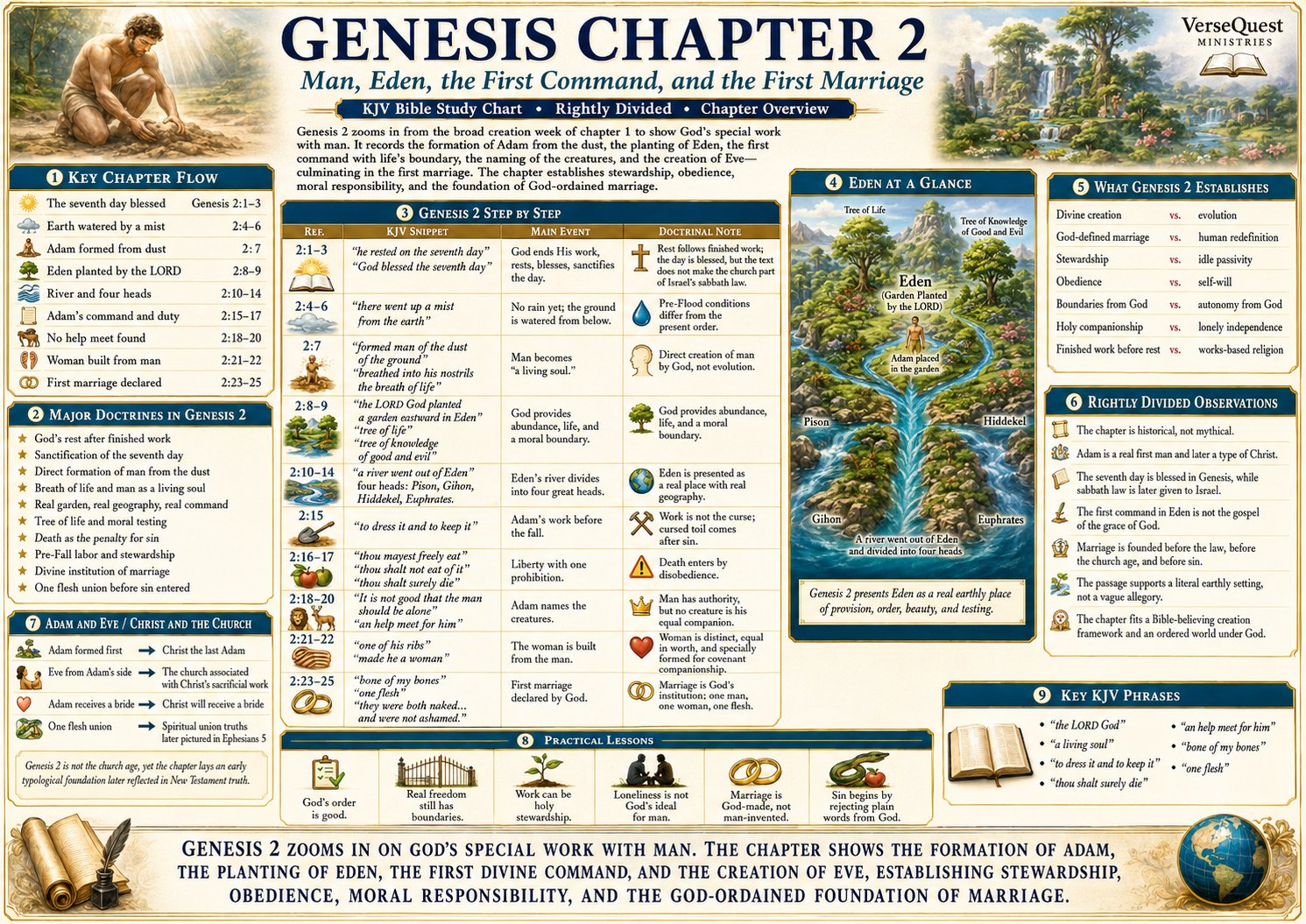
- Genesis Chapter 2 Bible Study Chart – Adam, Eden, the First Command, and the First Marriage (KJV)
- Explore Genesis Chapter 1 with this detailed KJV Bible study chart covering the six days of creation, the firmament, light, fixed kinds, man in God’s image, major doctrines, recurring phrases,…
- $3.99
- Add to cart
-
-
Cain and Abel
-
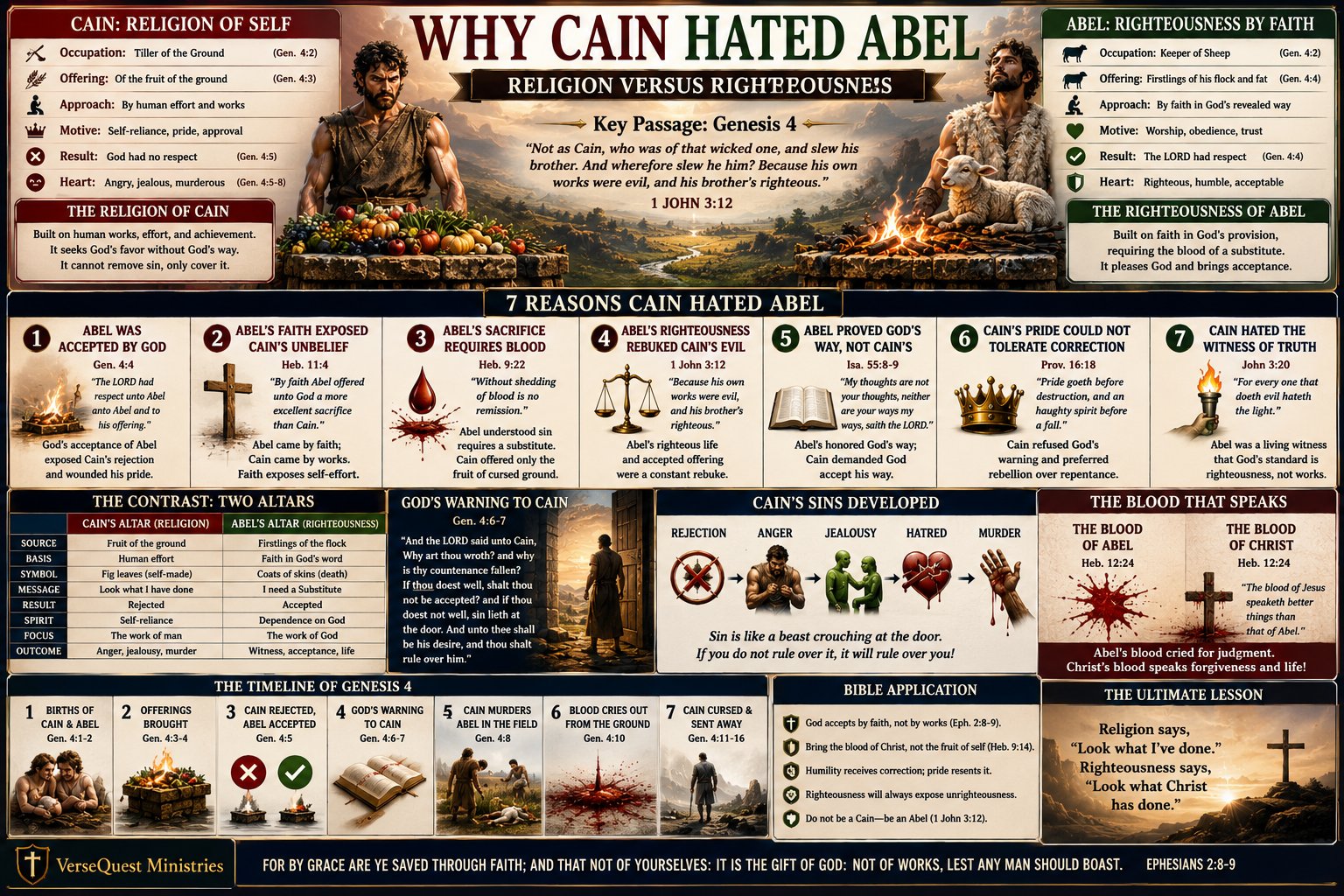
- Why Cain Hated Abel Bible Study Chart – Religion Versus Righteousness, Faith, Works, and Blood Sacrifice (KJV)
- Discover why Cain hated Abel with this detailed KJV Bible study chart comparing religion and righteousness, human works and faith, rejected worship, blood sacrifice, pride, jealousy, and salvation through Christ.
- $3.99
- Add to cart
-
-
Biblical Humility
-
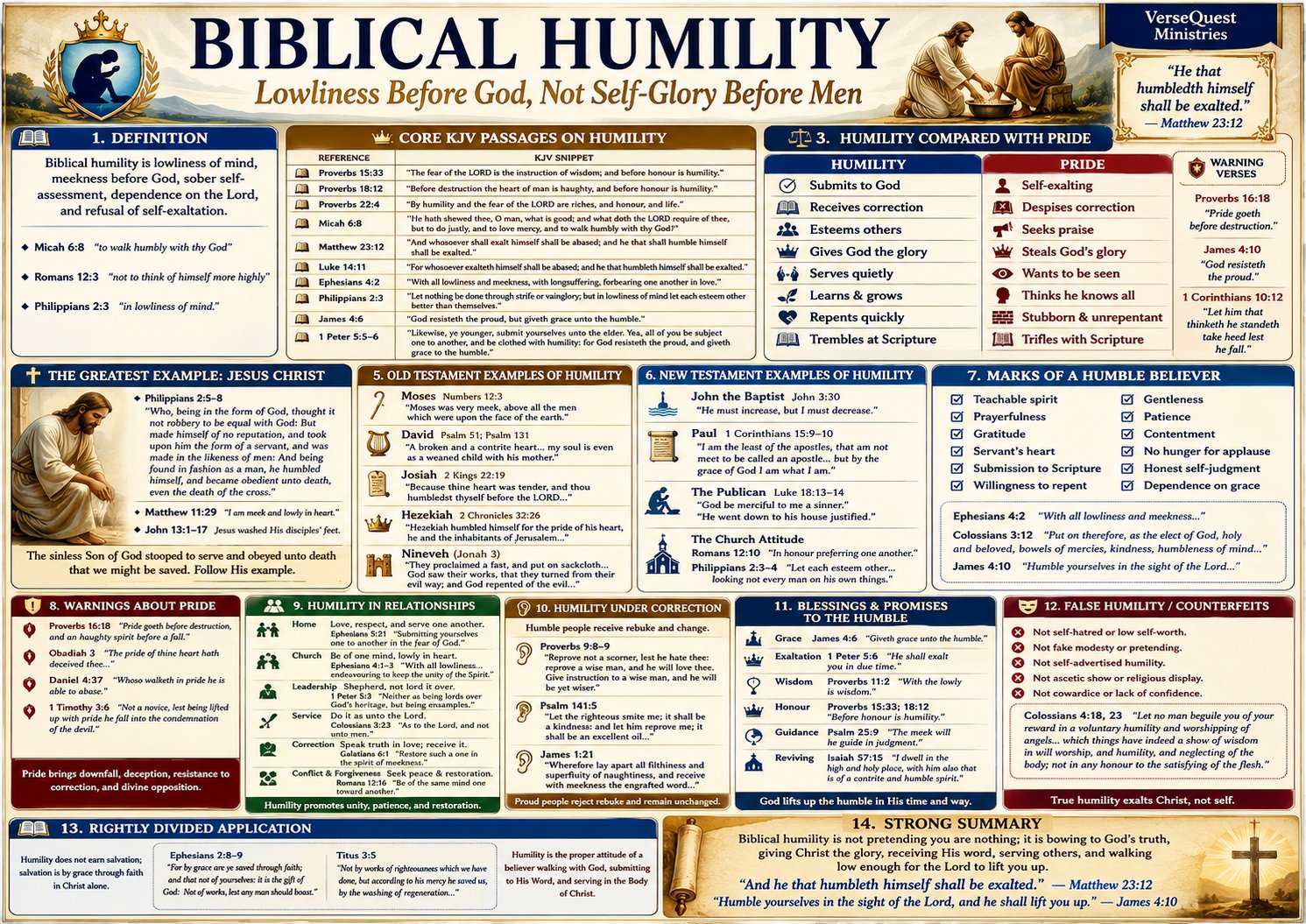
- Biblical Humility Bible Study Chart – Lowliness Before God, Not Self-Glory Before Men (KJV)
- Study biblical humility with this detailed KJV chart comparing humility and pride, Christ’s example, receiving correction, servant leadership, grace, and practical Christian living.
- $3.99
- Add to cart
-
-
Hath God Said
-
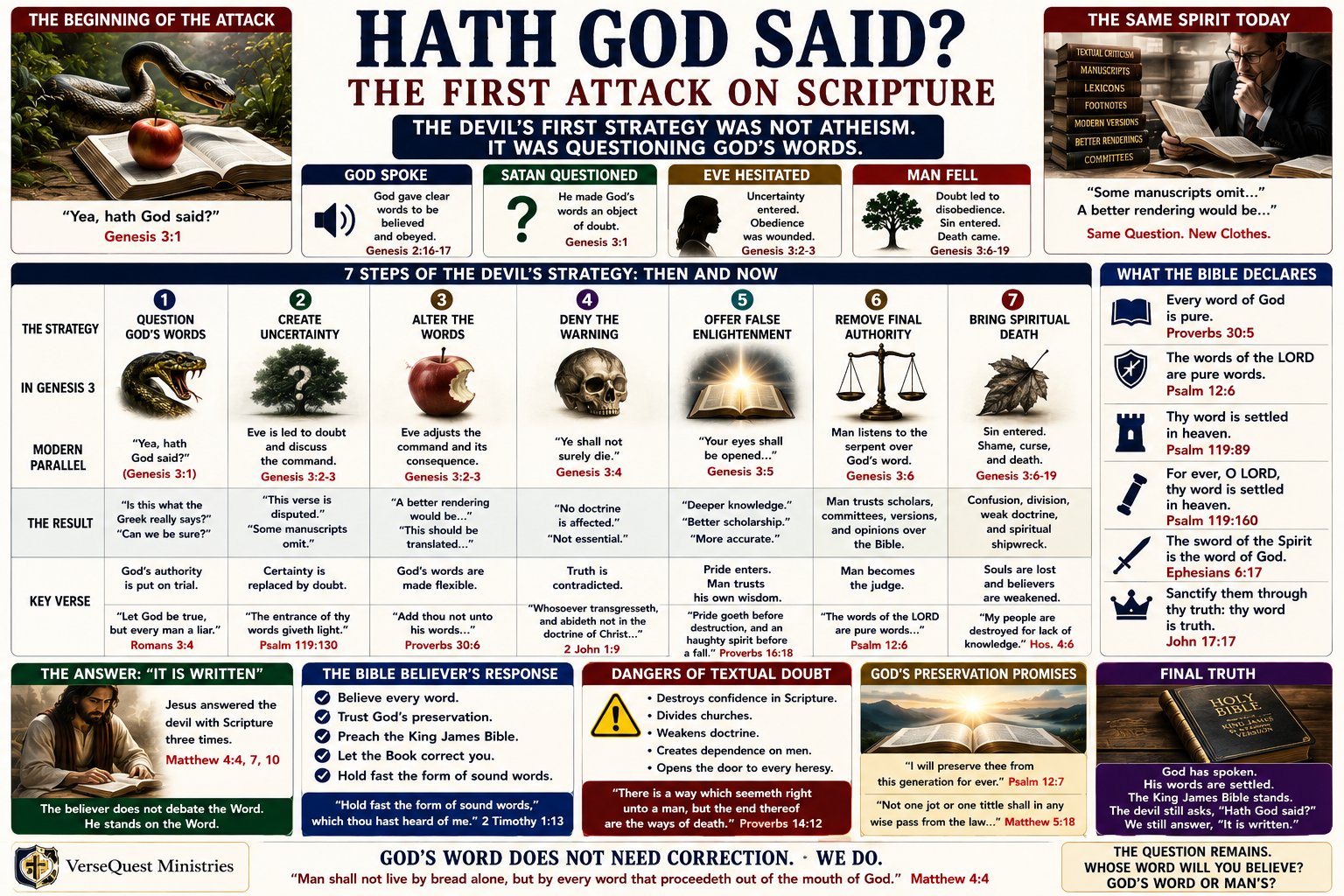
- Hath God Said? Bible Study Chart – The First Attack on Scripture, Textual Doubt, and KJV Preservation
- Trace Satan’s first attack on Scripture with this detailed KJV Bible study chart covering Genesis 3:1, textual doubt, altered words, false enlightenment, Bible preservation, and final authority.
- $3.99
- Add to cart
-
-
Heavenly Program
-
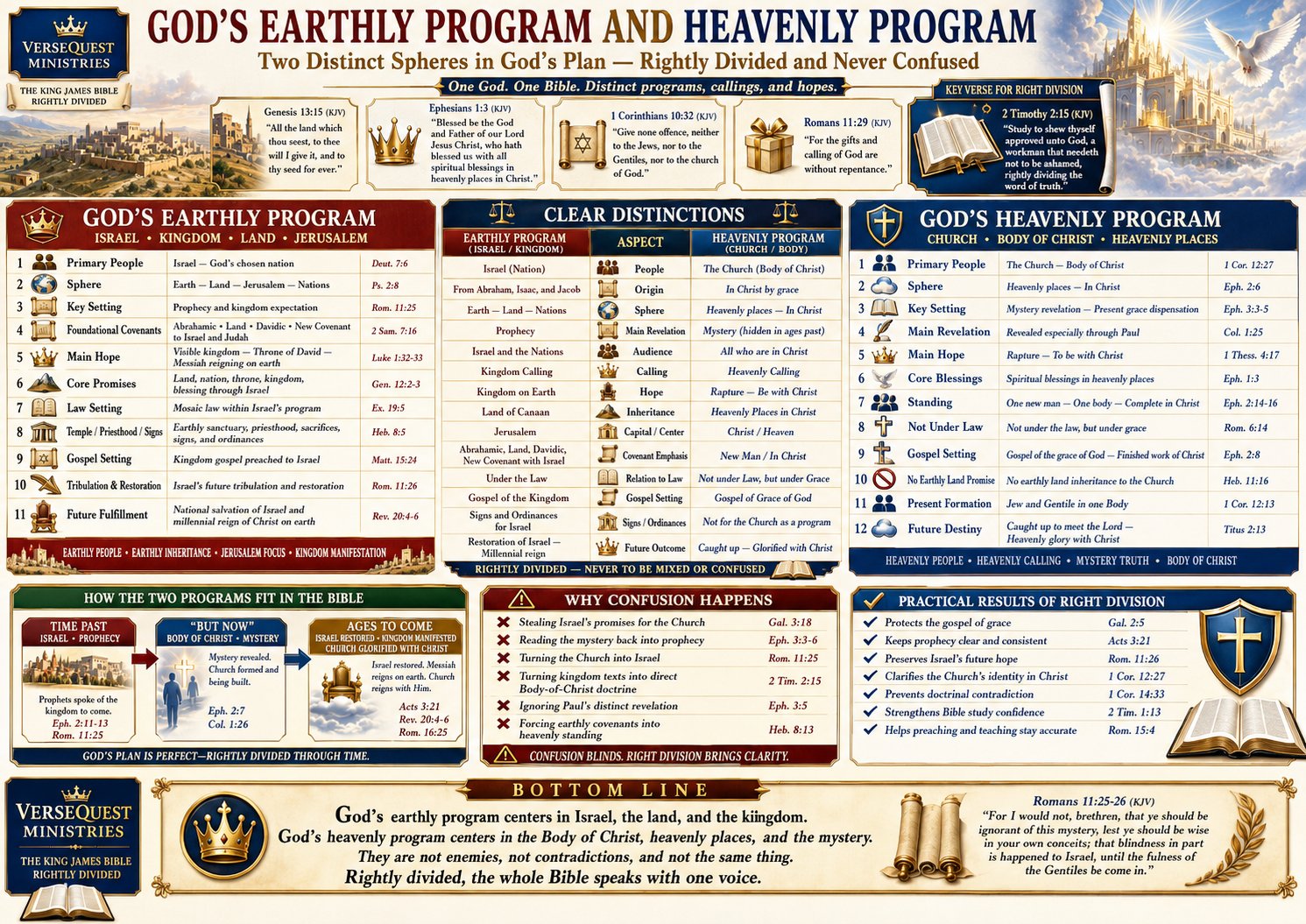
- Israel and the Church: Earthly and Heavenly Callings – KJV Bible Study Chart
- Printable digital KJV Bible study chart comparing Israel’s earthly promises and kingdom hope with the Church’s heavenly calling in Christ. Covers prophecy and mystery, biblical covenants, law and grace, the…
- $3.99
- Add to cart
-