
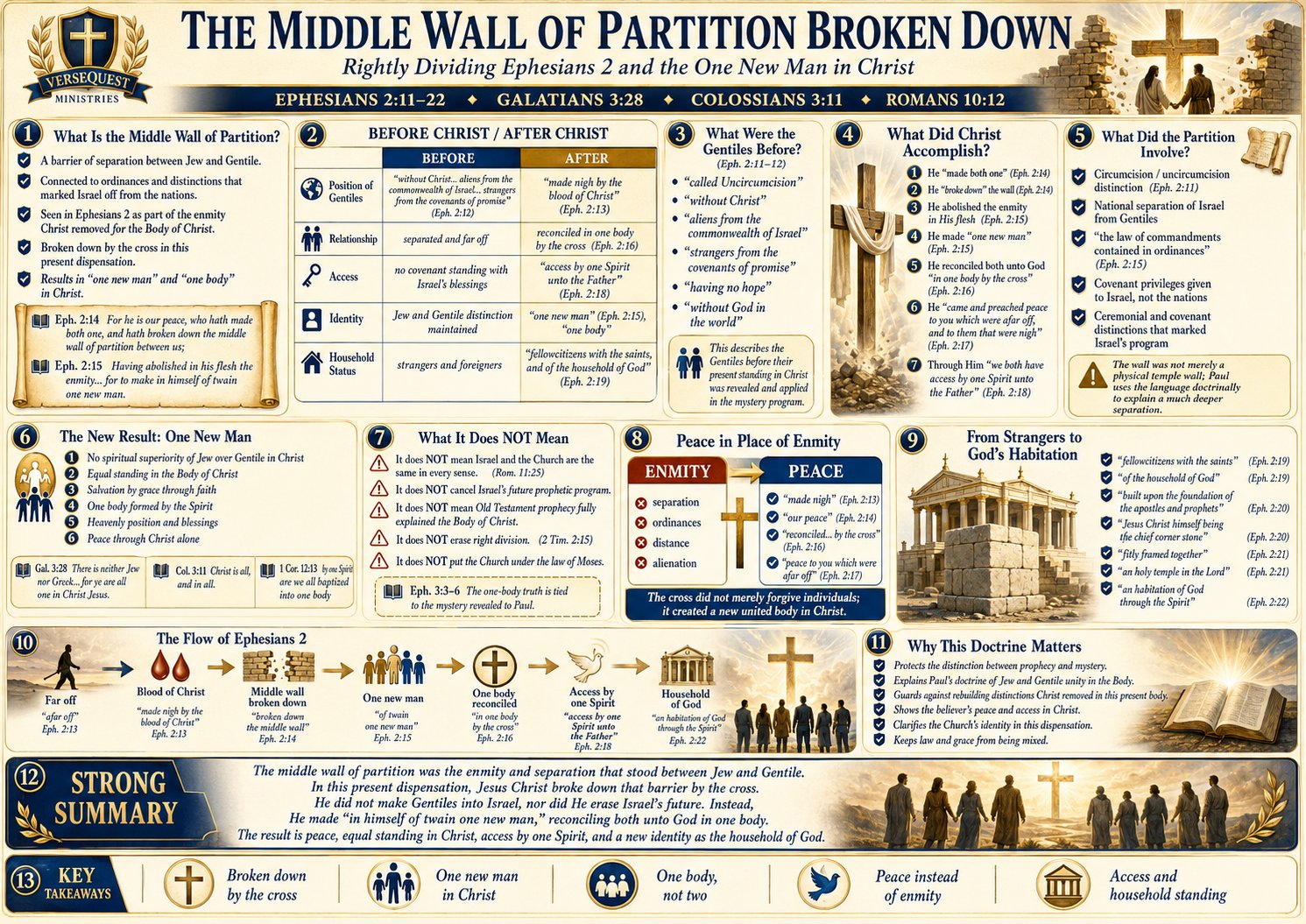
The Middle Wall of Partition Broken Down – Ephesians 2, the One New Man, and the Body of Christ (KJV Bible Study Chart)
Understand the middle wall of partition with this detailed KJV chart covering Ephesians 2, Christ’s blood, Jew-and-Gentile reconciliation, the one new man, one Body, and access to the Father.
$3.99
Description
The Middle Wall of Partition Broken Down: Rightly Dividing Ephesians 2 and the One New Man in Christ is a detailed KJV Bible study chart explaining how the cross of Jesus Christ removed the enmity that separated Jew and Gentile and created a new spiritual unity within the Church, the Body of Christ.
Built around Ephesians 2:11–22, this chart traces the Gentiles’ former position outside Israel’s covenant privileges, their present nearness through the blood of Christ, and the formation of “one new man” in whom saved Jews and Gentiles possess equal spiritual standing.
Before the present dispensation, Scripture maintained a real distinction between Israel and the Gentile nations. Israel possessed the covenants, promises, Mosaic ordinances, priesthood, Temple worship, national identity, and expectation of the Messianic Kingdom. Gentiles were described as aliens from the commonwealth of Israel, strangers from the covenants of promise, without Christ, without hope, and without God in the world.
This separation did not mean that no Gentile could ever believe God or receive mercy. Rahab, Ruth, Naaman, Nineveh, and other examples demonstrate that Gentiles could respond to divine revelation. However, the nations did not possess Israel’s covenant standing, national promises, law, priesthood, or privileged position within God’s prophetic earthly program.
Circumcision served as a visible covenant distinction between Abraham’s physical descendants and the uncircumcised nations. Israel’s ordinances, ceremonies, dietary distinctions, holy days, sacrifices, and national laws reinforced the separation established within the Mosaic program.
Ephesians 2 announces a decisive change with the words, “But now in Christ Jesus.” Gentiles who were once far off are made nigh, not by becoming national Israelites, accepting circumcision, entering the Mosaic covenant, or adopting Israel’s ceremonial ordinances, but “by the blood of Christ.”
Jesus Christ Himself is the believer’s peace. Through His cross, He broke down the middle wall of partition, abolished the enmity in His flesh, and reconciled saved Jews and Gentiles unto God in one Body.
The wall was not merely social prejudice or personal hostility between ethnic groups. Paul connects the enmity with “the law of commandments contained in ordinances.” These covenant distinctions marked Israel as separate from the Gentile nations and stood as a barrier to equal spiritual standing within one unified Body.
The chart acknowledges the familiar Temple-wall imagery while emphasizing Paul’s deeper doctrinal purpose. The physical Temple contained visible divisions, but Ephesians 2 uses the wall to explain the larger covenant and dispensational separation between Jew and Gentile.
Christ did not merely encourage the two groups to tolerate each other. He created “in himself of twain one new man.” The result is not two spiritual Bodies cooperating from a distance, nor Gentiles being absorbed into national Israel, but an entirely new spiritual organism united in Jesus Christ.
This new man is the Church, the Body of Christ. First Corinthians 12:13 explains that believers are baptized by one Spirit into one Body. Membership is not determined by physical descent, circumcision, nationality, Mosaic observance, social status, or religious heritage. It is produced by the saving and uniting work of the Holy Spirit.
The new result is complete equality of standing within Christ. There is no spiritually superior Jew or inferior Gentile within the Body. Both are saved by the same grace, justified through the same faith, redeemed by the same blood, indwelt by the same Spirit, and made complete in the same Lord.
Galatians 3:28 states that there is neither Jew nor Greek in relation to the believer’s spiritual standing in Christ. Colossians 3:11 similarly declares that Christ is all and in all. These passages do not erase every earthly distinction, personal responsibility, or biblical category; they establish equal acceptance and unity within the Body.
The chart carefully explains what the doctrine does not mean. It does not mean Israel and the Church are identical in every respect. It does not cancel Israel’s future prophetic restoration, transfer all of Israel’s national promises to the Church, or make Gentiles the new physical Israel.
Neither does the breaking down of the wall erase every distinction found throughout Scripture. First Corinthians 10:32 still identifies Jews, Gentiles, and the Church of God as meaningful biblical categories. Right division recognizes the unity of believers within Christ without destroying God’s prophetic distinctions.
The one-Body doctrine belongs to the mystery revealed especially through the apostle Paul. Ephesians 3 explains that saved Gentiles are fellowheirs, members of the same Body, and partakers of God’s promise in Christ by the gospel. This truth was not fully made known in previous ages as it was later revealed.
The cross is therefore central to both redemption and the formation of the Body. Christ’s death paid for sin, removed the covenant enmity, opened direct access to the Father, and made possible the reconciliation of Jew and Gentile in one spiritual Body.
The chart presents the change from enmity to peace. Before, there was separation, distance, alienation, and covenant ordinances distinguishing Israel from the nations. Through Christ, believers are made nigh, reconciled by the cross, and granted peace with God.
This peace is not merely the absence of personal conflict. It is a new spiritual standing established through Christ’s finished work. Both Jew and Gentile now have access by one Spirit unto the Father.
The chart also follows the believer’s movement from stranger to household member. Those who were formerly strangers and foreigners become fellowcitizens with the saints and members of the household of God.
The Church is built upon the foundation of the apostles and prophets, with Jesus Christ Himself as the chief cornerstone. The whole building is fitly framed together and grows into a holy temple in the Lord.
This spiritual habitation should not be confused with Israel’s physical Temple or future Kingdom sanctuary. God now dwells within His people through the Spirit. Every believer is part of a living spiritual structure whose unity and stability depend upon Jesus Christ.
A visual flow summarizes Ephesians 2: Gentiles were far off, made nigh by Christ’s blood, the wall was broken down, one new man was created, both were reconciled in one Body, access was opened by one Spirit, and former strangers became members of God’s household.
Understanding this doctrine protects the distinction between prophecy and mystery. Israel’s national program was spoken through the prophets and retains future fulfillment. The one Body was hidden in previous ages and revealed through Paul for the present dispensation of grace.
It also guards against rebuilding distinctions that Christ removed within the Body. Believers should not create spiritual classes based upon ethnicity, nationality, ceremonial observance, religious background, or personal heritage. Every saved person stands complete in Christ.
At the same time, the doctrine protects against replacement theology. The Church’s spiritual unity does not prove that God permanently rejected Israel or reassigned every national covenant to the Body of Christ. Romans 11 teaches that Israel’s present blindness is partial and that God’s gifts and calling are without repentance.
The middle wall was removed so that Jew and Gentile could be reconciled together in one Body—not so that the Church could steal Israel’s identity. Christ created something new while leaving God’s prophetic faithfulness intact.
This chart is ideal for personal Bible study, Pauline doctrine, dispensational teaching, Ephesians chapter studies, Israel-and-Church comparisons, prophecy-and-mystery classes, law-and-grace instruction, Sunday school, homeschool Bible curriculum, Bible institutes, pastoral training, sermon preparation, and new-believer discipleship.
Middle wall of partition, Ephesians 2, one new man, one Body in Christ, Jew and Gentile reconciliation, blood of Christ, peace through the cross, circumcision and uncircumcision, commonwealth of Israel, covenants of promise, Gentiles made nigh, access by one Spirit, household of God, Body of Christ, mystery revealed through Paul, Israel and the Church, prophecy and mystery, law and grace, spiritual unity, rightly dividing Scripture
The middle wall of partition represents the covenant and dispensational separation that existed between Israel and the Gentile nations. Paul connects the wall directly with the commandments and ordinances that distinguished Israel.
Gentiles were once described as without Christ, aliens from Israel’s commonwealth, strangers from the covenants of promise, without hope, and without God in the world.
This description concerns their former dispensational position. It does not mean that no Gentile could ever exercise faith or receive mercy before the present Church Age.
Israel possessed national covenant privileges that the Gentile nations did not possess. These included circumcision, the Mosaic law, priesthood, Temple worship, promises, and an earthly Kingdom hope.
The words “But now in Christ Jesus” announce a dispensational change. Gentiles are made nigh through Christ’s blood rather than by entering Israel’s covenant standing.
The wall was broken down through the cross. Human goodwill, political reform, philosophical tolerance, and religious cooperation could not accomplish what Christ achieved through His sacrifice.
Christ abolished the enmity connected with the law of commandments contained in ordinances. This does not mean God abolished every moral truth or removed all Christian responsibility.
The new result is one new man. The Church is not merely Israel enlarged by the addition of Gentiles but a new spiritual Body created in Christ.
Saved Jews and Gentiles possess equal standing in the Body. Neither physical descent nor lack of Jewish ancestry determines spiritual superiority.
First Corinthians 12:13 explains that the Holy Spirit places believers into one Body. This spiritual baptism, not physical circumcision, establishes membership in Christ’s Body.
The middle wall’s removal does not erase Israel’s future. Romans 11 teaches that God has not permanently cast away His covenant people.
The doctrine does not support replacement theology. Gentiles are not transformed into national Israel, and the Church does not inherit Israel’s identity by cancelling the nation.
The phrase “neither Jew nor Greek” concerns standing and unity in Christ. Scripture may still identify Jews, Gentiles, and the Church when discussing distinct historical or dispensational categories.
Christ made peace between believing Jews and Gentiles by reconciling both to God. Unity begins vertically through reconciliation with God and then operates horizontally among believers.
Both groups have access to the Father through Christ by one Spirit. No believer requires Israel’s priesthood, Temple, sacrifices, or ceremonial system to approach God.
Former strangers become fellowcitizens and members of God’s household. The believer’s new identity rests upon Christ rather than nationality or religious heritage.
Jesus Christ is the chief cornerstone. The Church’s unity cannot be sustained by sentiment alone; it depends upon its common relationship to Him and submission to sound doctrine.
The Church is a spiritual habitation of God through the Spirit. This present spiritual temple should not be confused with Israel’s historical Temple or its prophetic Kingdom promises.
Ephesians 3 connects the one-Body doctrine with the mystery revealed through Paul. This protects the distinction between Israel’s prophetic program and the present dispensation.
Right division allows believers to celebrate complete unity in Christ while also preserving the distinctions and promises God established elsewhere in Scripture.
Ephesians 2 chapter studies, teaching the one new man, Body of Christ doctrine, Jew-and-Gentile reconciliation, Israel-and-Church distinctions, Pauline doctrine classes, prophecy-and-mystery teaching, law-and-grace comparisons, refuting replacement theology, explaining spiritual unity, local-church discipleship, Sunday school lessons, homeschool Bible curriculum, Christian school teaching, Bible institute classes, pastoral training, sermon preparation, new-believer instruction
King James Bible, Strong’s Concordance, Thompson Chain-Reference Bible, Treasury of Scripture Knowledge, Nave’s Topical Bible, Ephesians 2–3 study notes, Romans 9–11 study materials, Pauline epistle outlines, Israel-and-Church comparison charts, prophecy-and-mystery worksheets, law-and-grace studies, Body of Christ resources, biblical Temple background notes, dispensational timelines, VerseQuest right-division and doctrine charts
Related products
-
Daniel Bible study
-
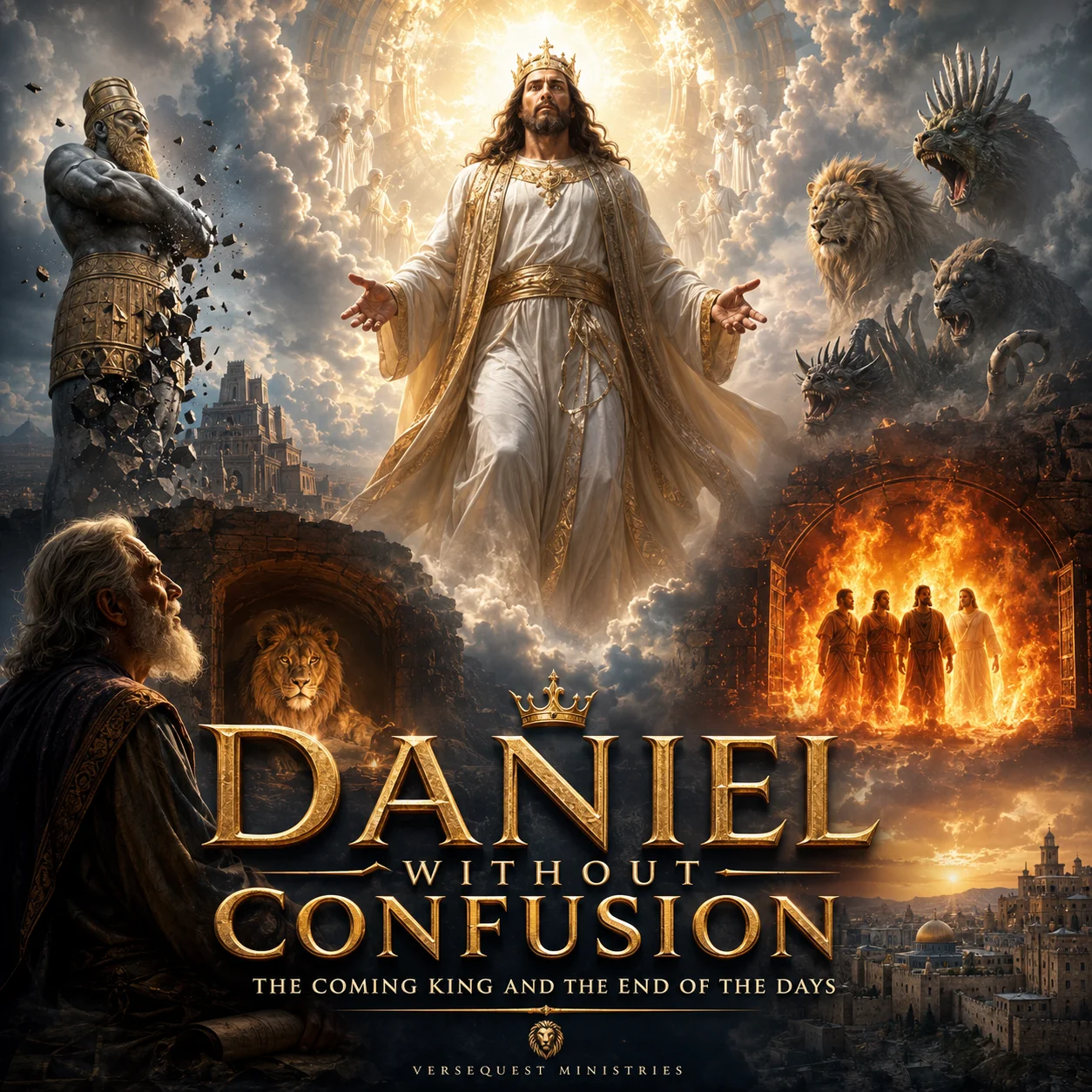
- Daniel Without Confusion — KJV Prophecy Study PDF Book
- A 392-page KJV Bible study through the book of Daniel, covering Babylon, Gentile kingdoms, the seventy weeks, Antichrist, Jacob’s trouble, resurrection, and the coming King. Digital PDF download. Price: $9.99.
- $9.99
- Add to cart
-
-
Not Under Law But Grace
-
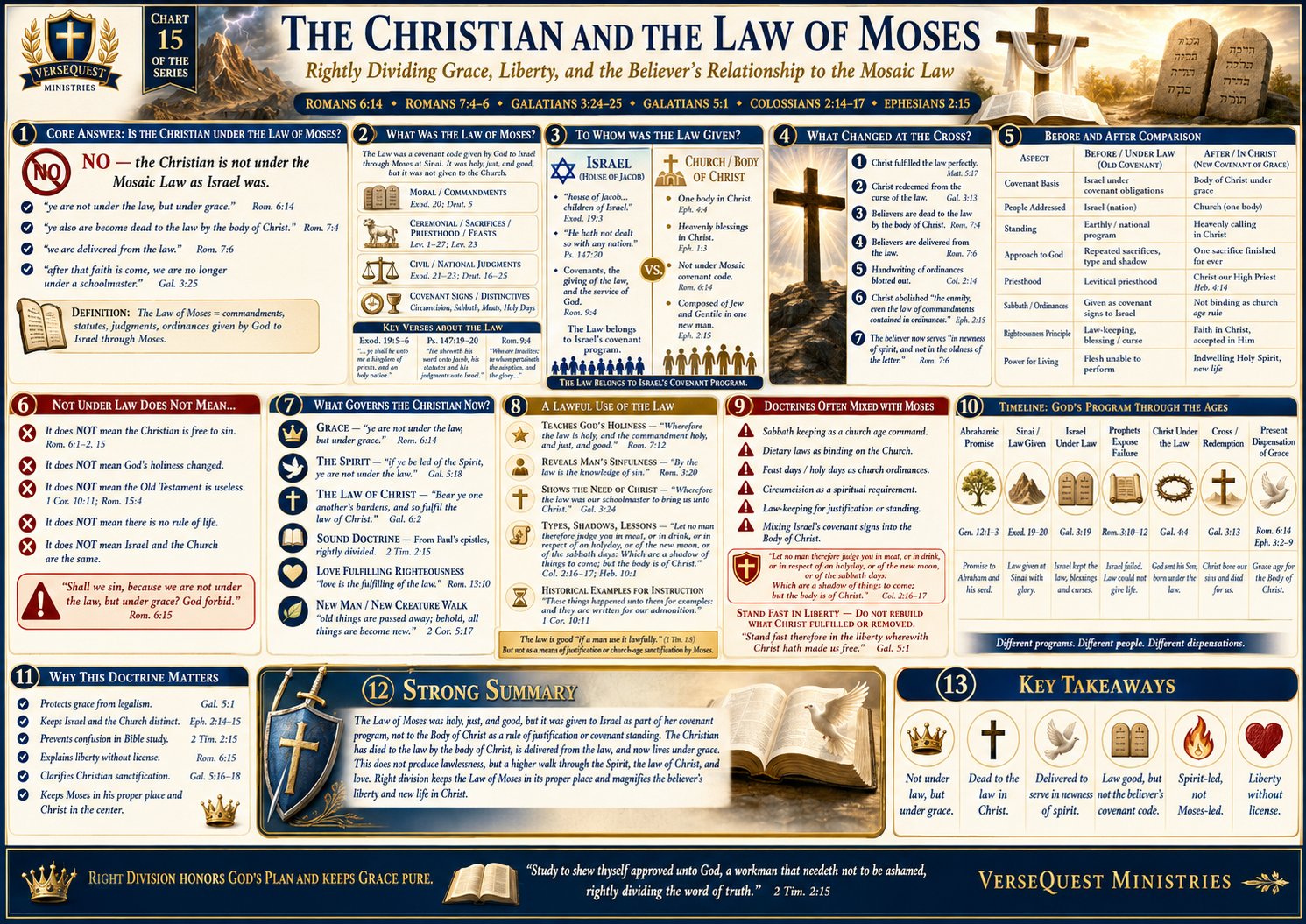
- The Christian and the Law of Moses – Grace, Liberty, and the Believer’s Relationship to the Mosaic Law (KJV Bible Study Chart)
- Understand the Christian’s relationship to the law of Moses with this detailed KJV chart covering Israel’s covenant, grace, liberty, the cross, the law of Christ, and Spirit-led living.
- $3.99
- Add to cart
-
-
Study Books (PDF)
-
-25%
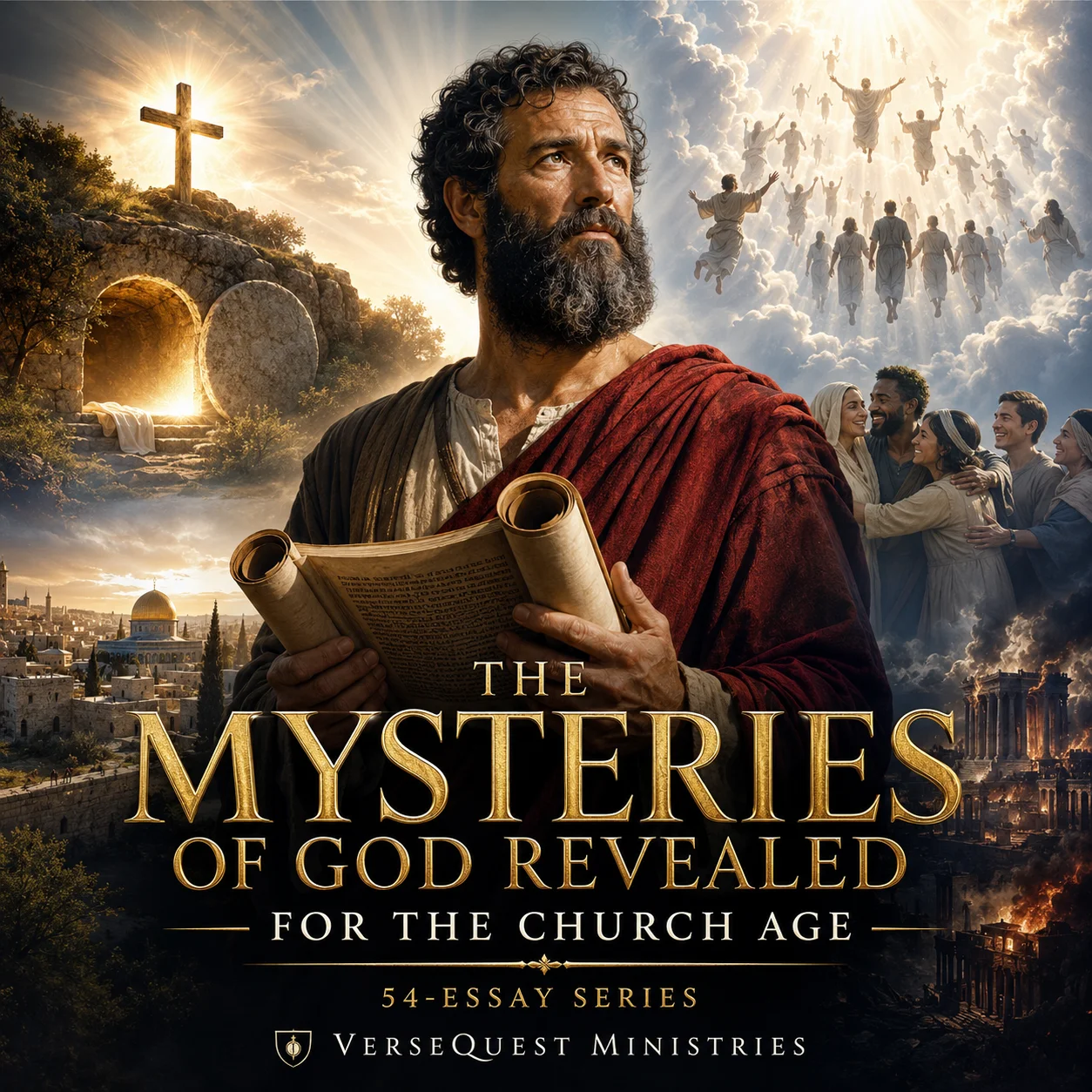
- The Mysteries of God Revealed for the Church Age – Premium Essay Series PDF
- A premium 404-page VerseQuest Ministries digital PDF study book featuring 54 detailed KJV-only essays on the mysteries of God revealed for the Church Age. This rightly divided study covers the…
- Original price was: $39.99.$29.99Current price is: $29.99.
- Add to cart
-
-25%
-
The Seven Dispensations
-
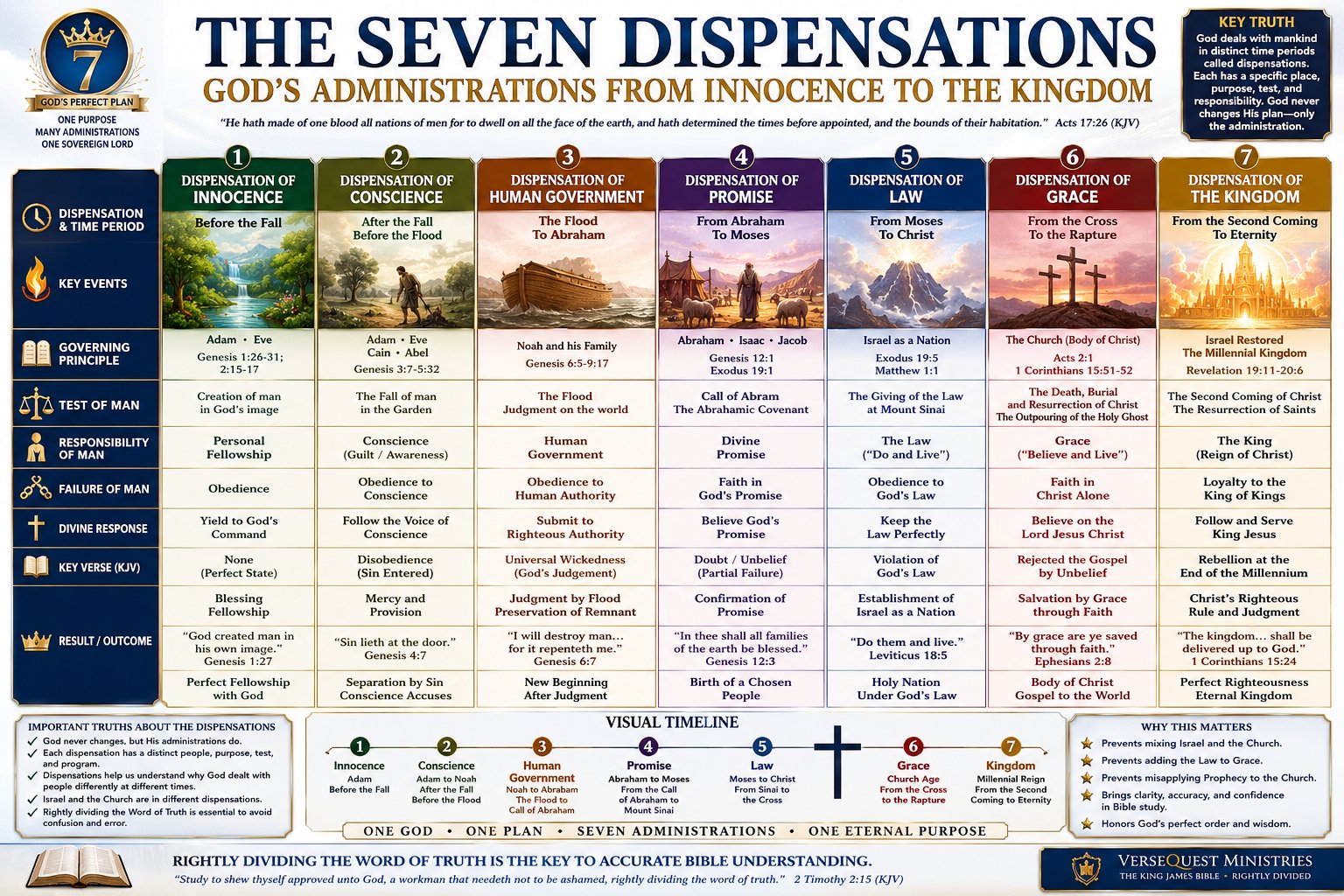
- The Seven Dispensations Bible Study Chart – God’s Administrations from Innocence to the Kingdom (KJV)
- Explore the seven dispensations with this detailed KJV Bible study chart covering Innocence, Conscience, Human Government, Promise, Law, Grace, the Kingdom, and the importance of rightly dividing Scripture.
- $3.99
- Add to cart
-
-
Doctrine
-
-50%
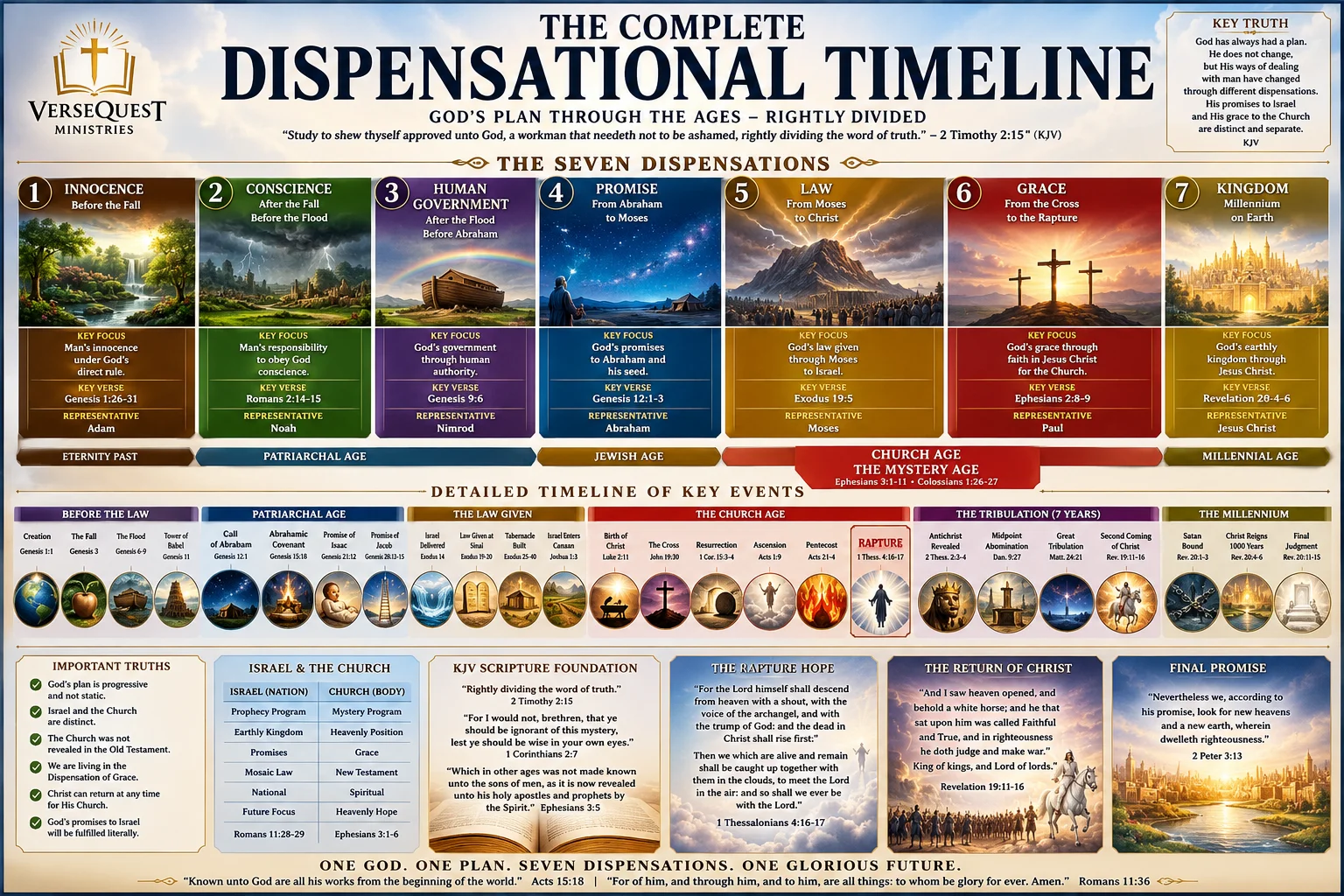
- The Complete Dispensational Timeline Chart — KJV Rightly Divided
- Premium printable KJV Bible study chart showing God's dispensational plan from Genesis to the eternal state. Rightly divided, visually organized, and designed for pastors, teachers, Bible students, and personal study.
- Original price was: $10.00.$4.99Current price is: $4.99.
- Add to cart
-
-50%