Topic: Body of Christ
-
September 10, 2026
Speaker: Paul Tackett
Topic: Bible Study Resources, Body of Christ, Chastening Not Condemnation, Christian Holiness, Christian Sanctification, Ephesians 4:30, Eternal Security, Grieve Not the Holy Spirit, Grieving the Holy Spirit, Holy Spirit Seal, Holy Spirit Sermon, KJV Sermon Outline, Pauline Doctrine, Rightly Dividing, Sealed Unto the Day of Redemption, Sealing Versus Filling, Sonship and Fellowship, Spirit Filled Life, Standing and State, Walk in the Spirit
Book: Ephesians
This VerseQuest Ministries sermon outline on Ephesians 4:30 examines Paul’s solemn command, “grieve not the holy Spirit of God,” while emphasizing the equally powerful security statement that believers are “sealed unto the day of redemption.” The outline explains the personality and deity of the Holy Spirit, why the indwelt believer can grieve Him, and how the immediate context identifies lying, sinful anger, stealing, corrupt communication, bitterness, wrath, clamour, evil speaking, and malice as conduct contrary to the Spirit’s holiness. It carefully distinguishes grieving the Spirit from losing the Spirit, sealing from filling, standing from state, sonship from fellowship, and fatherly chastening from eternal condemnation. The sermon also uses right division to distinguish David’s Old Testament prayer concerning the Holy Spirit from the Pauline doctrine of a Church-age believer sealed unto redemption day. Preachers, teachers, and Bible students will gain a strong KJV-based framework for teaching eternal security alongside practical sanctification, Christian accountability, confession, Spirit-filled living, and the responsibility to walk worthy of the calling believers have received in Christ.
-

September 9, 2026
Speaker: Paul Tackett
Topic: Assurance of Salvation, Bible Study Resources, Body of Christ, Day of Redemption, Earnest of Our Inheritance, Ephesians 1:13–14, Eternal Security, Gospel of Your Salvation, Grieving the Holy Spirit, Holy Spirit of Promise, Holy Spirit Seal, Indwelling Holy Spirit, KJV Sermon Outline, Pauline Doctrine, Purchased Possession, Rightly Dividing, Sealed After Believing, Sealed With the Holy Spirit, Sealing Versus Filling, Standing and State
Book: Ephesians
This VerseQuest Ministries sermon outline on Ephesians 1:13–14 examines Paul’s declaration that after hearing “the word of truth, the gospel of your salvation” and believing in Jesus Christ, the believer is “sealed with that holy Spirit of promise.” The outline traces the biblical order from hearing the gospel to believing, trusting, and receiving the Spirit’s seal; explains the Holy Ghost as God’s mark of ownership and the “earnest” of the believer’s inheritance; and shows why Ephesians 4:30 says believers are sealed “unto the day of redemption.” It carefully distinguishes sealing from filling, grieving the Spirit from losing the Spirit, standing from state, salvation from service, and divine preservation from careless Christian living. The sermon also places the doctrine within the Pauline revelation concerning the Church which is Christ’s Body and explains why Old Testament operations of the Spirit must not be confused with the Church-age believer’s sealed position in Christ. Preachers, teachers, and Bible students will gain a strong KJV-based framework for teaching eternal security, the indwelling Holy Spirit, future bodily redemption, Christian holiness, and the faithfulness of God to complete what He has begun.
-
July 18, 2026
Speaker: Paul Tackett
Topic: Blessed Hope, Body of Christ, Colossians 3:1–4, David’s Throne, Dispensational Truth, Earthly Kingdom, Heavenly Calling, Israel and the Church, Kingdom of Heaven, KJV Sermon Outlines, Matthew 6:10, Pauline Doctrine, Rapture and Second Advent, Rightly Dividing, Seek Things Above
Book: Matthew
The Earthly Kingdom and the Heavenly Calling is a detailed KJV sermon outline from VerseQuest Ministries built on Matthew 6:10 and Colossians 3:1–4. This study explains the biblical distinction between Israel’s promised earthly kingdom and the Church’s heavenly position, affection, and hope in Christ. It shows how the kingdom is connected to Israel, David’s throne, Jerusalem, the judgment of the nations, and the visible reign of Jesus Christ, while the Body of Christ is seated in heavenly places and awaits the Saviour from heaven. Designed for pastors, preachers, teachers, Bible students, and believers, this sermon resource clarifies kingdom truth, Pauline doctrine, the Rapture, the Second Advent, Israel and the Church, and the danger of replacement theology and political kingdom-building. With strong King James Bible emphasis, this outline equips Christians to seek things above, preserve Israel’s promises, preach the gospel of grace, and rightly divide God’s earthly and heavenly purposes.
-
July 17, 2026
Speaker: Paul Tackett
Topic: Abrahamic Covenant, Blessed Hope, Body of Christ, Church’s Heavenly Hope, Covenant Promises, Dispensational Truth, Earthly Kingdom, Genesis 12:1-3, Heavenly Calling, Israel and the Church, KJV Sermon Outlines, Pauline Doctrine, Philippians 3:20, Replacement Theology, Rightly Dividing
Book: Philippians
The Covenant Promises and the Church’s Heavenly Hope is a detailed KJV sermon outline from VerseQuest Ministries built on Genesis 12:1–3 and Philippians 3:20. This study explains the distinction between Israel’s earthly covenant promises and the Church’s heavenly calling in Jesus Christ. It shows how God promised Abraham a land, seed, nation, blessing, and worldwide purpose, confirmed those promises through Isaac and Jacob, and will fulfill them literally in restored Israel. It also explains how the Church is the Body of Christ, blessed in heavenly places and awaiting the Saviour from heaven. Designed for pastors, preachers, teachers, Bible students, and believers, this sermon resource exposes replacement theology, preserves Israel’s future, clarifies Pauline doctrine, and distinguishes the earthly kingdom from the heavenly Body. The outline demonstrates how both programs magnify the faithfulness, wisdom, and glory of Jesus Christ.
-
July 12, 2026
Speaker: Paul Tackett
Topic: 2 Timothy 2:7, Blessed Hope, Body of Christ, Church Age Doctrine, Consider What Paul Says, Dispensation of Grace, Gospel of Grace, Israel and the Church, KJV Sermon Outlines, Paul’s Apostleship, Pauline Doctrine, Prophecy and Mystery, Revelation of the Mystery, Rightly Dividing, Sound Doctrine
Book: Ephesians
Consider What Paul Says is a detailed KJV sermon outline from VerseQuest Ministries built on 2 Timothy 2:7. This study explains why the Lord gives Church-age understanding when believers seriously consider the doctrine Christ revealed through the apostle Paul. It shows how Pauline teaching clarifies the gospel of grace, salvation apart from works, the dispensation of grace, the revelation of the mystery, the Body of Christ, Israel and the Church, law and grace, prophecy and mystery, and the blessed hope. Designed for pastors, preachers, teachers, Bible students, and believers, this sermon resource exposes the confusion created when churches quote Paul selectively while rejecting his distinct apostleship and doctrinal authority. With strong King James Bible emphasis, this outline equips Christians to study Paul’s epistles, rightly divide all Scripture, stand firmly in grace, understand their position in Christ, and serve God as approved workmen.
-
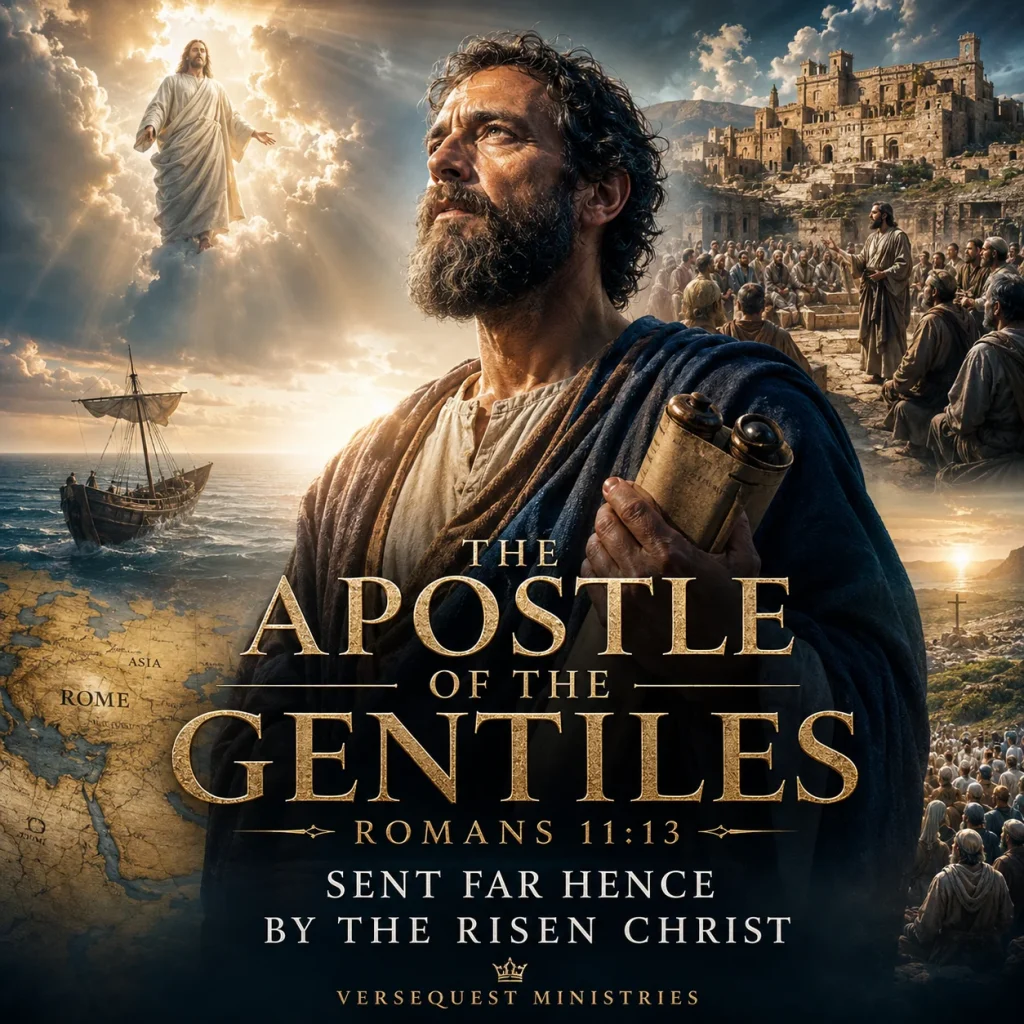
July 11, 2026
Speaker: Paul Tackett
Topic: Acts Transition, Body of Christ, Dispensation of Grace, Gentile Ministry, Gospel of Grace, Israel and the Church, KJV Sermon Outlines, Paul’s Apostleship, Pauline Doctrine, Peter and Paul, Revelation of the Mystery, Rightly Dividing, Romans 11:13, Sent Far Hence, The Apostle of the Gentiles
Book: Romans
The Apostle of the Gentiles is a detailed KJV sermon outline from VerseQuest Ministries built on Romans 11:13. This study explains why Paul magnified his office as the apostle of the Gentiles and why his distinct ministry is essential for understanding the present dispensation of grace. It shows how Paul was called directly by the risen Christ, sent far hence unto the Gentiles, entrusted with the gospel of grace, and given the revelation of the mystery concerning the Body of Christ. Designed for pastors, preachers, teachers, Bible students, and believers, this sermon resource clarifies Paul’s apostleship, the Twelve, Israel and the Church, prophecy and mystery, Acts as a transition book, salvation by grace, and the future restoration of Israel. With strong King James Bible emphasis, this outline helps Christians rightly divide Scripture, understand Paul’s doctrine, and preach Christ’s finished work clearly.
-
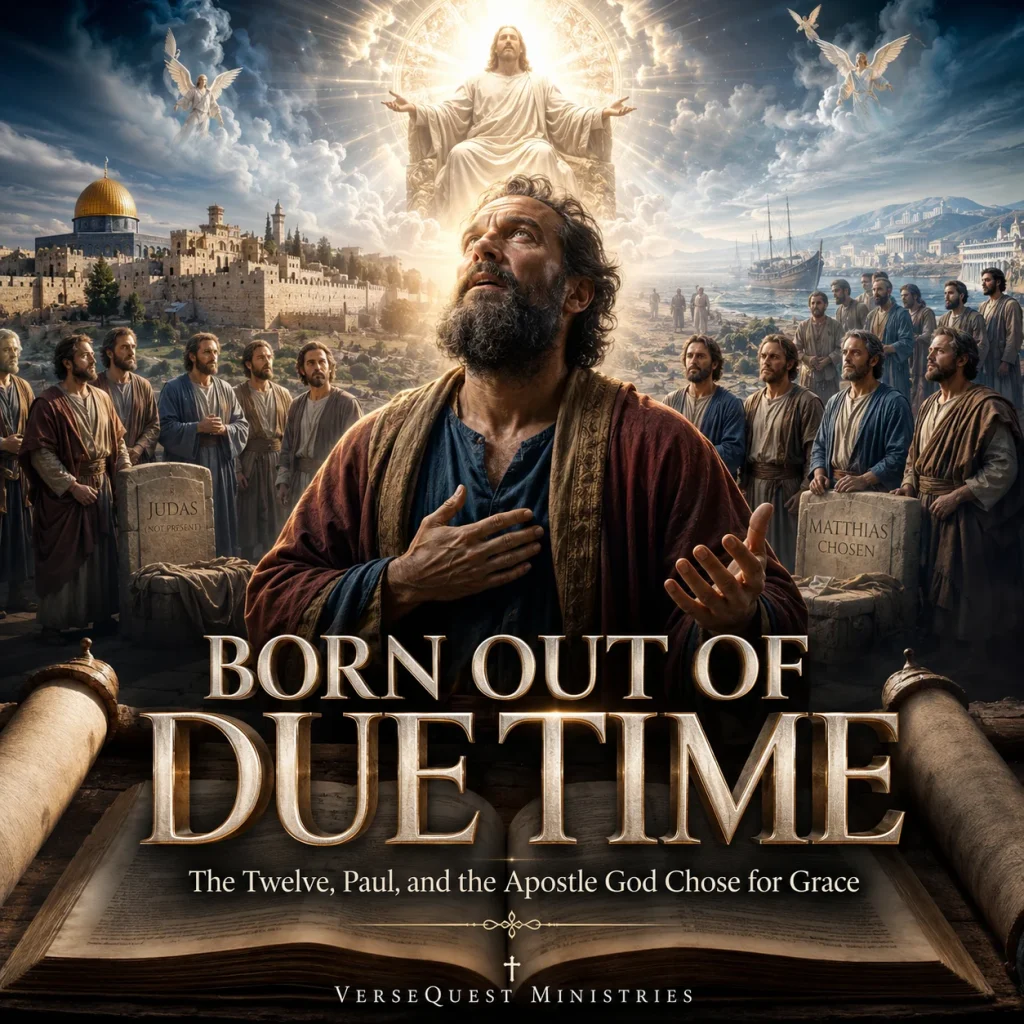
July 10, 2026
Speaker: Paul Tackett
Topic: 1 Corinthians 15:8, Acts Transition, Apostle of the Gentiles, Apostle Paul, Body of Christ, Born Out of Due Time, Gospel of Grace, Israel and the Church, KJV Sermon Outlines, Matthias Chosen, Paul Not One of the Twelve, Pauline Doctrine, Revelation of the Mystery, Rightly Dividing, The Twelve Apostles
Book: 1 Corinthians
Born Out of Due Time is a detailed KJV sermon outline from VerseQuest Ministries built on 1 Corinthians 15:8. This study explains the difference between the twelve apostles chosen during Christ’s earthly ministry to Israel and the apostle Paul, who was saved later by the risen Christ from heaven. It shows why Matthias properly replaced Judas, why Paul was not one of the Twelve, and why Paul’s apostleship is distinct as the apostle of the Gentiles. Designed for pastors, teachers, Bible students, and believers, this sermon resource clarifies the Twelve, Paul’s calling, Acts as a transition book, Israel and the Church, prophecy and mystery, the gospel of grace, and the Body of Christ. With strong King James Bible emphasis, this outline helps Christians rightly divide Paul’s ministry, avoid doctrinal confusion, and preach the grace of God clearly.
-
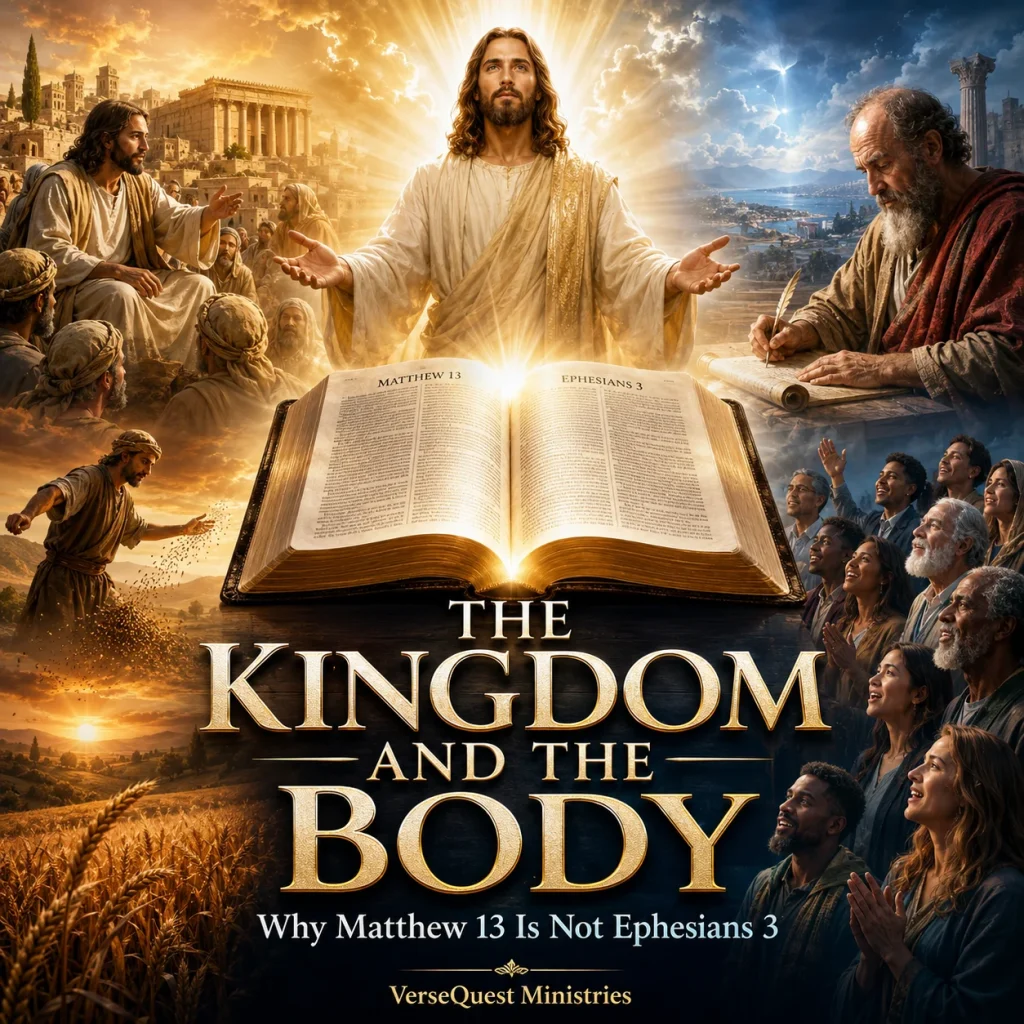
July 7, 2026
Speaker: Paul Tackett
Topic: Body of Christ, Dispensational Truth, Ephesians 3, Gospel of Grace, Israel and the Church, Kingdom of Heaven, KJV Sermon Outlines, Matthew 13, Mysteries of the Kingdom, Pauline Doctrine, Prophecy and Mystery, Revelation of the Mystery, Rightly Dividing, Sound Doctrine, The Kingdom and the Body
Book: Matthew
The Kingdom and the Body is a detailed KJV sermon outline from VerseQuest Ministries built on Matthew 13:11 and Ephesians 3:6. This study explains why the mysteries of the kingdom of heaven in Matthew 13 are not the same as the mystery of the Body of Christ revealed through Paul in Ephesians 3. It shows how the kingdom of heaven is connected to Israel, prophecy, the King, parables, earthly rule, and the hidden form of the kingdom during Christ’s rejection, while the Body of Christ is connected to the dispensation of grace, Pauline doctrine, Jew and Gentile in one Body, and the Church’s heavenly calling. Designed for pastors, teachers, Bible students, and believers, this sermon resource clarifies kingdom truth, Body truth, prophecy and mystery, Israel and the Church, right division, and gospel clarity.
-
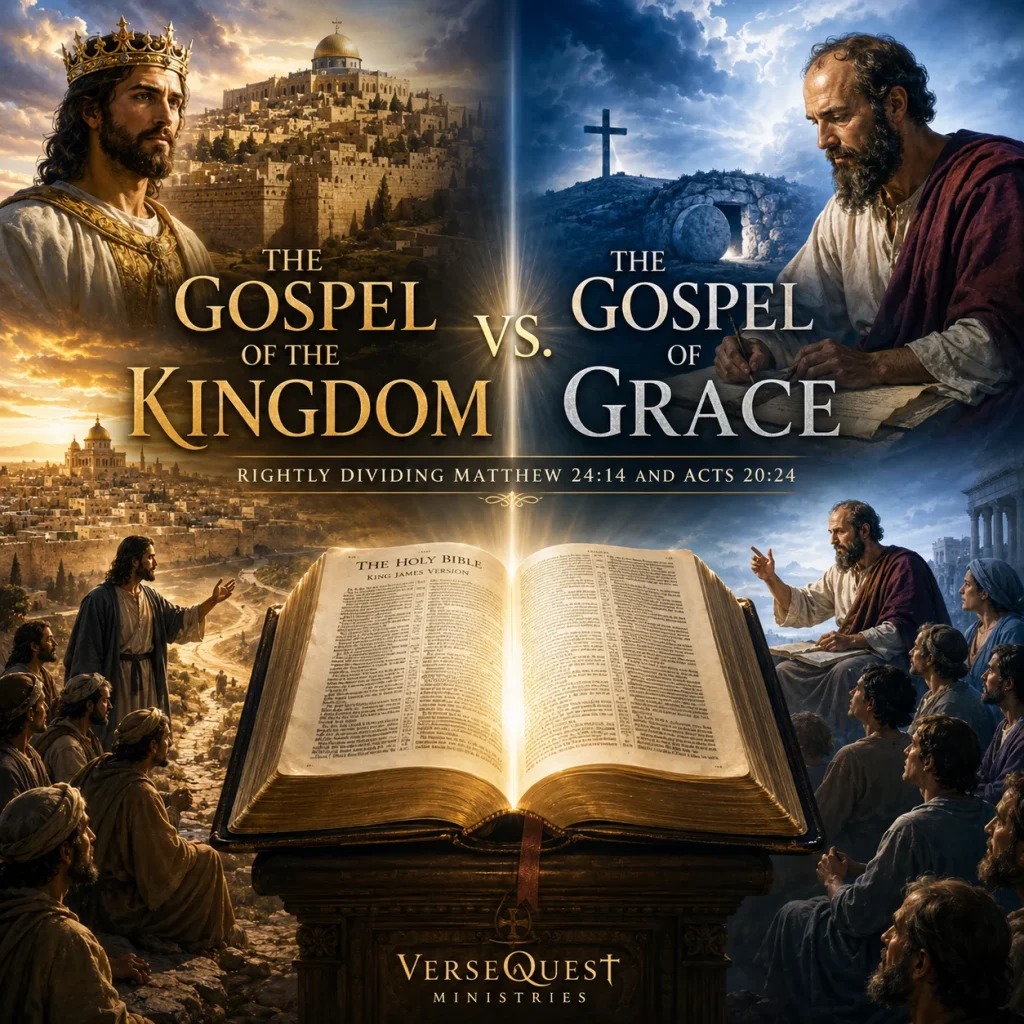
July 6, 2026
Series: Gospel of the Kingdom
Speaker: Paul Tackett
Topic: Acts 20:24, Body of Christ, Dispensation of Grace, Finished Work of Christ, Gospel of Grace, Gospel of the Kingdom, Israel and the Church, Kingdom vs Grace, KJV Sermon Outlines, Matthew 24:14, Paul’s Gospel, Peter and Paul, Prophecy and Mystery, Rightly Dividing, Sound Doctrine
Book: Galatians
The Gospel of the Kingdom vs. the Gospel of Grace is a detailed KJV sermon outline from VerseQuest Ministries built on Matthew 24:14 and Acts 20:24. This study explains the difference between the gospel of the kingdom preached in connection with Israel, prophecy, the coming King, the tribulation, and the end of the age, and the gospel of the grace of God committed to Paul for the present dispensation. It shows how Paul’s gospel centers on Christ’s death for our sins, burial, and resurrection, salvation by grace through faith, the revelation of the mystery, and the Body of Christ. Designed for pastors, teachers, Bible students, and believers, this sermon resource clarifies kingdom truth, grace truth, Israel and the Church, prophecy and mystery, Peter and Paul, right division, and gospel clarity while warning against mixing messages God placed in different contexts.