Book: Matthew
-
November 10, 2026
Speaker: Paul Tackett
Topic: biblical motives for prayer, Father who sees in secret, Judgment Seat of Christ, kingdom teaching of Jesus, KJV Sermon Outline, Matthew 6 sermon outline, Matthew 6:6, prayer and sincerity, prayer closet Bible study, prayer under grace, praying to be seen of men, private devotion, religious hypocrisy, reward thee openly, rightly divided Bible study, salvation by grace through faith, secret prayer, Sermon on the Mount, The Prayer Closet and the Public Reward, vain repetitions in prayer
Book: Matthew
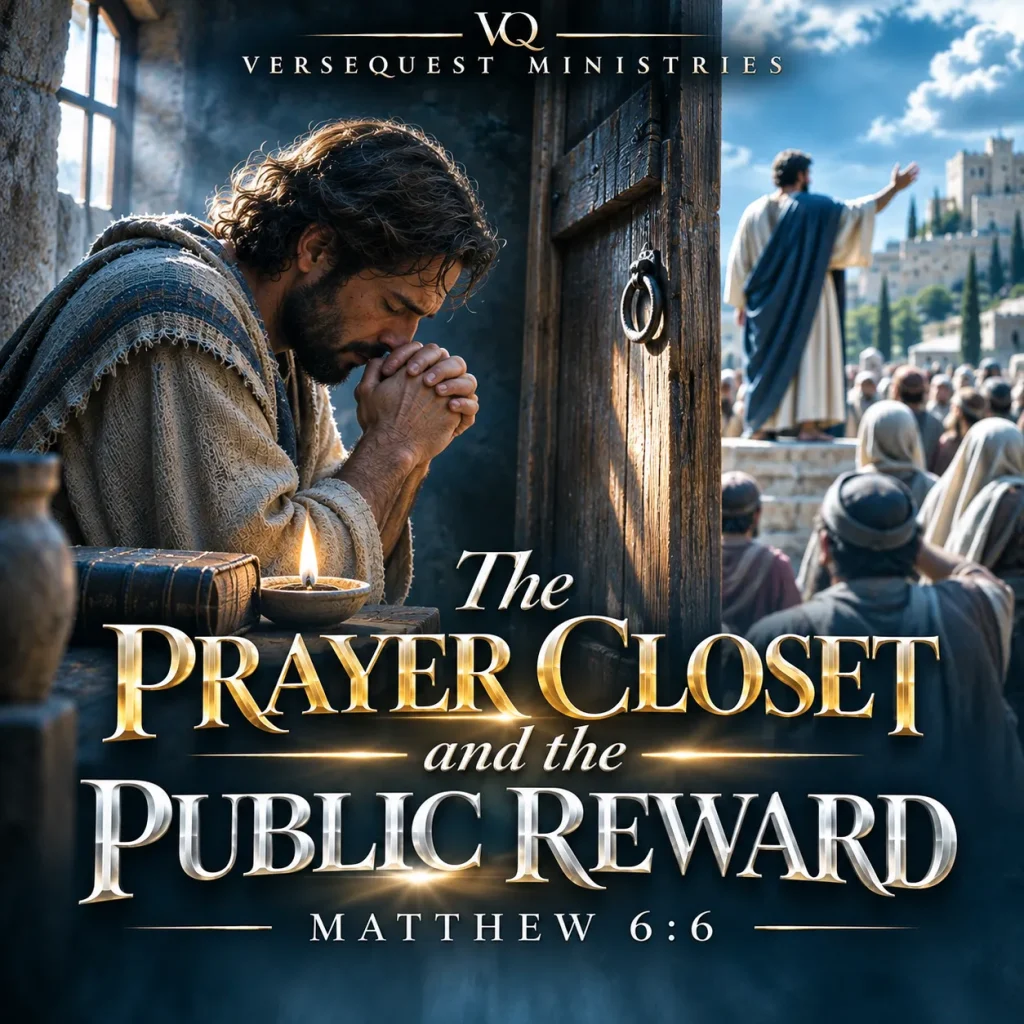
This detailed sermon outline examines Matthew 6:6 and the Lord Jesus Christ’s instruction, “But thou, when thou prayest, enter into thy closet, and when thou hast shut thy door, pray to thy Father which is in secret; and thy Father which seeth in secret shall reward thee openly,” revealing the difference between sincere private communion with God and religious devotion performed for the recognition of men. The message carefully establishes the passage’s original context within the Sermon on the Mount, where Jesus Christ warns His disciples against the hypocrisy of those who give alms, pray, and fast primarily to attract public admiration. Beginning with Matthew 6:1–8, the sermon examines why Christ condemned the motives of hypocritical worshippers rather than the legitimate practice of public prayer, and why receiving human applause may constitute the only reward sought by someone performing religious activities for personal recognition. Special attention is given to the expressions “enter into thy closet,” “when thou hast shut thy door,” “thy Father which seeth in secret,” and “shall reward thee openly,” explaining the importance of genuine sincerity, spiritual humility, private devotion, and the Father’s complete knowledge of hidden motives. The outline also examines the danger of vain repetitions, mechanical religious formulas, impressive public performances, and confusing lengthy prayers with genuine dependence upon God. Drawing upon Matthew 6:9–15, the sermon considers Christ’s pattern of prayer, including reverence for the Father, the coming kingdom, submission to God’s will, daily provision, forgiveness, and deliverance from temptation. The message carefully preserves the original kingdom setting of Christ’s earthly ministry to Israel while distinguishing that instruction from the Church-Age believer’s salvation by grace through faith, spiritual position in Jesus Christ, and access to the Father through the Holy Spirit. Additional passages from Romans 8, Ephesians 2–3, Philippians 4, Colossians 4, and 1 Timothy 2 demonstrate why genuine Christian prayer should include thanksgiving, intercession, perseverance, scriptural understanding, and sincere dependence upon the Lord. The sermon further examines the distinction between divine reward and the false assumption that private prayer guarantees earthly fame, financial prosperity, or public recognition, while drawing a careful comparison with the future Judgment Seat of Christ, where the quality and motives of Christian service will be examined. Preachers, pastors, teachers, and Bible students will gain a comprehensive, KJV-based, rightly divided, sermon-ready framework for teaching secret prayer, biblical sincerity, religious hypocrisy, spiritual humility, divine reward, faithful Christian stewardship, and the importance of seeking God’s approval above the applause of men.
-
September 29, 2026
Series: man shall live by every word, Matthew 4:4
Speaker: Paul Tackett
Topic: Bible as spiritual food, Bible study sermon, Biblical Authority, Christian spiritual growth, every word of God is pure, every word of God sermon outline, Genesis 3 deception, it is written, KJV Sermon Outline, living by Scripture, man shall live by every word, Matthew 4:4, preserved word of God, rightly dividing the word, Satan twists Scripture, Scripture and obedience, spiritual nourishment, temptation of Jesus, verbal inspiration, word of God and temptation
Book: Matthew
This detailed sermon outline examines Matthew 4:4 and Christ’s declaration, “Man shall not live by bread alone, but by every word that proceedeth out of the mouth of God.” The message explains why physical provision alone cannot sustain the whole man, why Jesus emphasized “every word,” and how His repeated use of “It is written” in the wilderness establishes the written word of God as the believer’s weapon against temptation and deception. It also traces Satan’s attacks upon Scripture through questioning, contradiction, and misapplication; emphasizes the necessity of rightly dividing the word of truth; presents Scripture as spiritual nourishment for the inner man; and shows that genuine submission to God’s word requires obedience rather than mere knowledge. Preachers, teachers, and Bible students will gain a sermon-ready framework for teaching verbal inspiration, biblical authority, spiritual warfare, proper interpretation, daily Bible intake, Christian obedience, and the necessity of living by the preserved words of God rather than by feelings, traditions, or religious experience.
-
August 12, 2026
Speaker: Paul Tackett
Topic: Death Burial and Resurrection, Empty Tomb, Finished Work Accepted, Forgiveness of Sins, Full Pardon, Gospel of Grace, He Is Risen, KJV Sermon Outlines, Matthew 28:6, No Condemnation, Pauline Doctrine, Raised for Our Justification, Resurrection of Christ, Rightly Dividing, The Empty Tomb and the Full Pardon
Book: Matthew
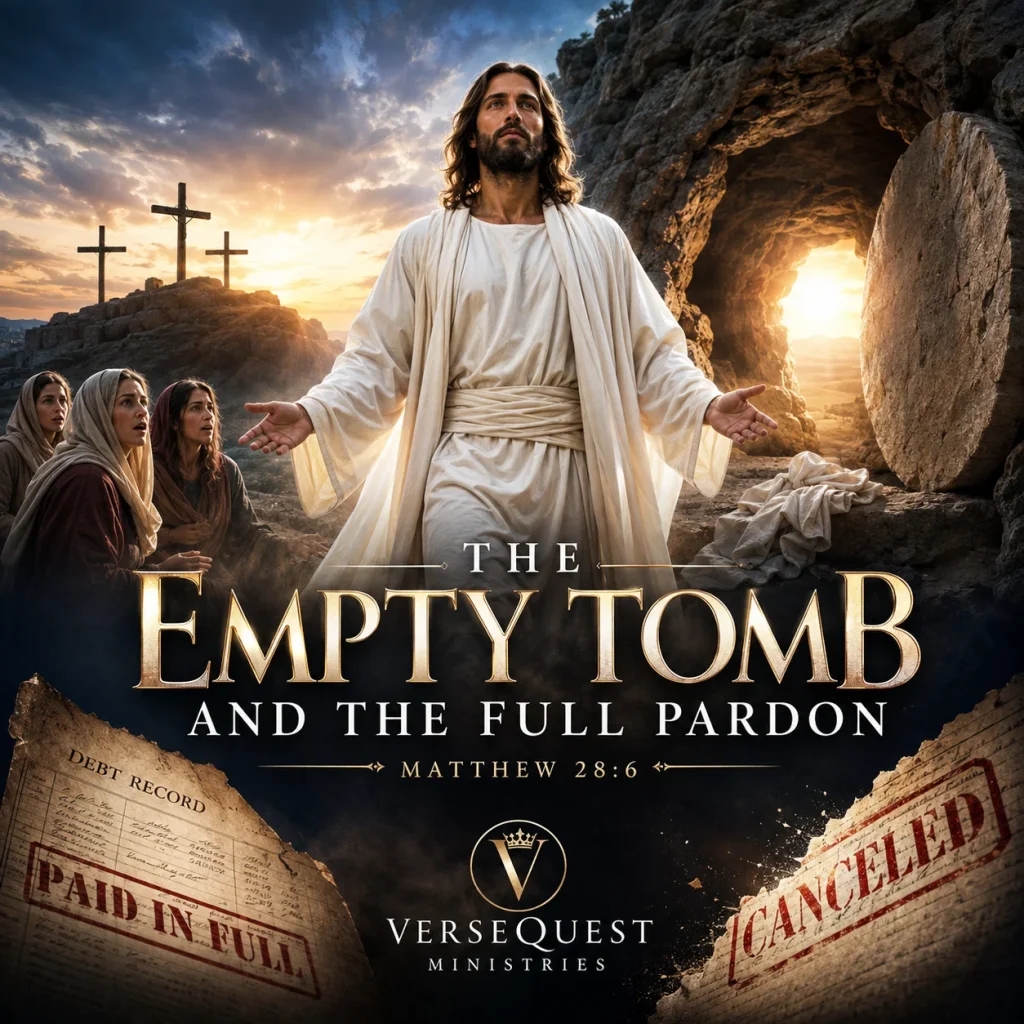
The Empty Tomb and the Full Pardon is a detailed KJV sermon outline from VerseQuest Ministries built on Matthew 28:6. This study explains the angelic announcement, “He is not here: for he is risen, as he said,” and shows why the empty tomb proves the finished work of Christ was accepted by God. The outline teaches that Jesus Christ truly died, was truly buried, and truly rose again, securing full pardon, justification, forgiveness of sins, and freedom from condemnation for every believer. Designed for pastors, preachers, teachers, Bible students, and believers, this sermon resource connects Matthew 28 with Paul’s gospel of Christ’s death, burial, and resurrection in 1 Corinthians 15:1–4. With strong King James Bible emphasis, it exposes dead religion, works salvation, and sacramental uncertainty while magnifying the risen Lord Jesus Christ as the living proof that the believer’s pardon is complete.
-
July 18, 2026
Speaker: Paul Tackett
Topic: Blessed Hope, Body of Christ, Colossians 3:1–4, David’s Throne, Dispensational Truth, Earthly Kingdom, Heavenly Calling, Israel and the Church, Kingdom of Heaven, KJV Sermon Outlines, Matthew 6:10, Pauline Doctrine, Rapture and Second Advent, Rightly Dividing, Seek Things Above
Book: Matthew
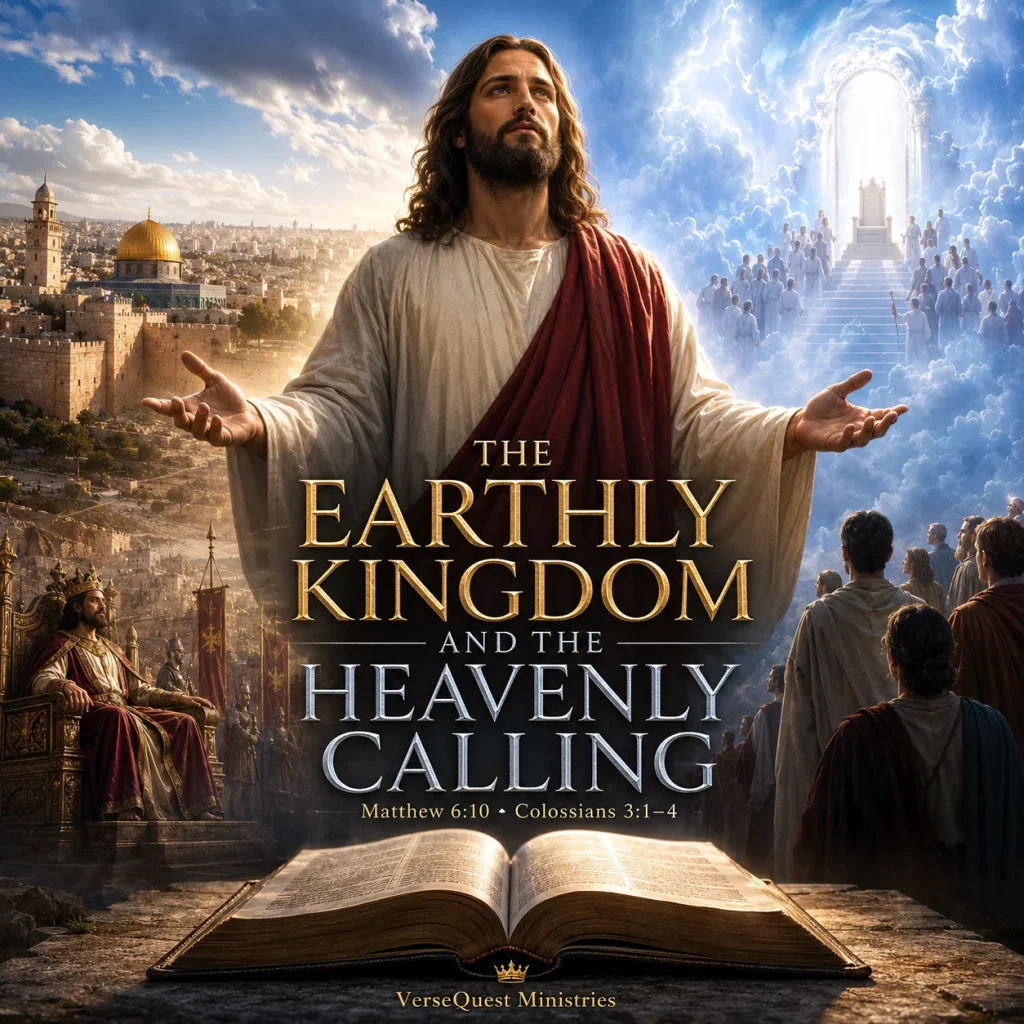
The Earthly Kingdom and the Heavenly Calling is a detailed KJV sermon outline from VerseQuest Ministries built on Matthew 6:10 and Colossians 3:1–4. This study explains the biblical distinction between Israel’s promised earthly kingdom and the Church’s heavenly position, affection, and hope in Christ. It shows how the kingdom is connected to Israel, David’s throne, Jerusalem, the judgment of the nations, and the visible reign of Jesus Christ, while the Body of Christ is seated in heavenly places and awaits the Saviour from heaven. Designed for pastors, preachers, teachers, Bible students, and believers, this sermon resource clarifies kingdom truth, Pauline doctrine, the Rapture, the Second Advent, Israel and the Church, and the danger of replacement theology and political kingdom-building. With strong King James Bible emphasis, this outline equips Christians to seek things above, preserve Israel’s promises, preach the gospel of grace, and rightly divide God’s earthly and heavenly purposes.
-
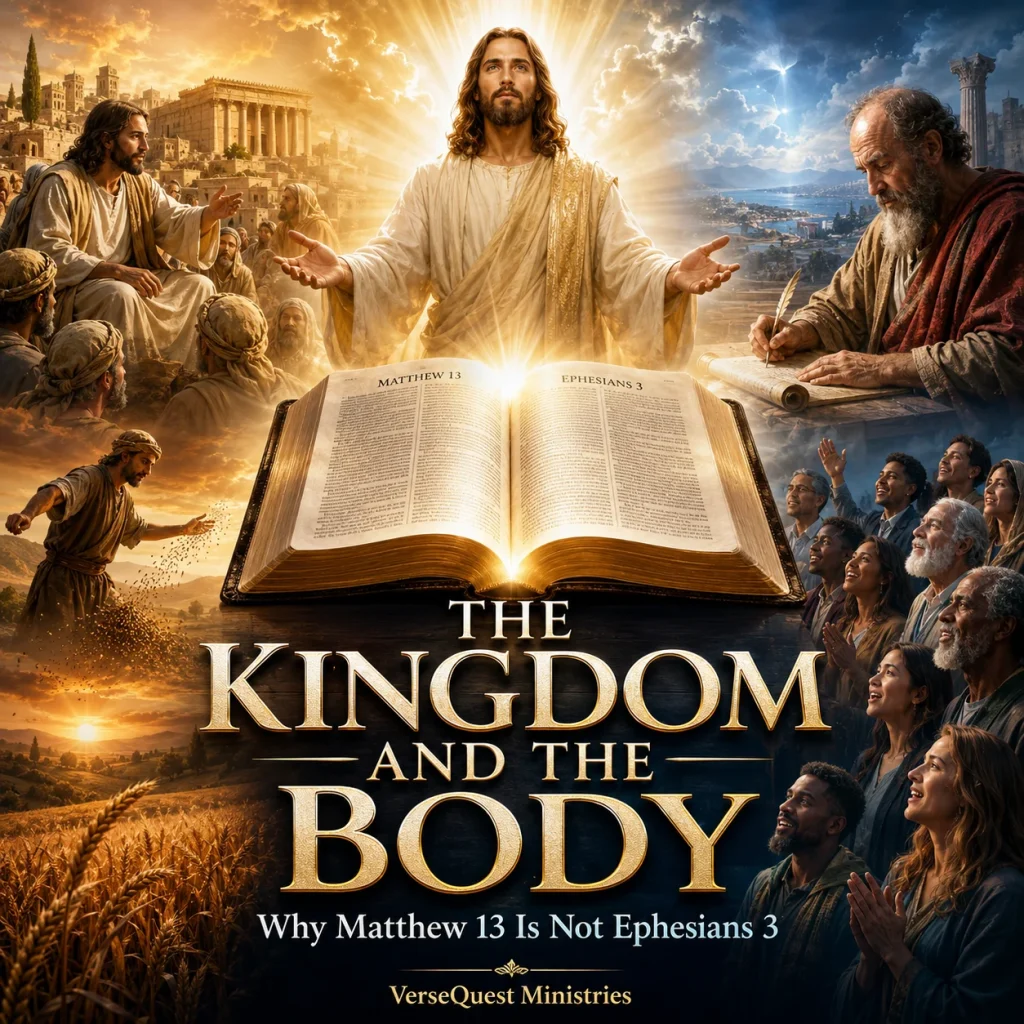
July 7, 2026
Speaker: Paul Tackett
Topic: Body of Christ, Dispensational Truth, Ephesians 3, Gospel of Grace, Israel and the Church, Kingdom of Heaven, KJV Sermon Outlines, Matthew 13, Mysteries of the Kingdom, Pauline Doctrine, Prophecy and Mystery, Revelation of the Mystery, Rightly Dividing, Sound Doctrine, The Kingdom and the Body
Book: Matthew
The Kingdom and the Body is a detailed KJV sermon outline from VerseQuest Ministries built on Matthew 13:11 and Ephesians 3:6. This study explains why the mysteries of the kingdom of heaven in Matthew 13 are not the same as the mystery of the Body of Christ revealed through Paul in Ephesians 3. It shows how the kingdom of heaven is connected to Israel, prophecy, the King, parables, earthly rule, and the hidden form of the kingdom during Christ’s rejection, while the Body of Christ is connected to the dispensation of grace, Pauline doctrine, Jew and Gentile in one Body, and the Church’s heavenly calling. Designed for pastors, teachers, Bible students, and believers, this sermon resource clarifies kingdom truth, Body truth, prophecy and mystery, Israel and the Church, right division, and gospel clarity.