Topic: Judgment Seat of Christ
-
November 10, 2026
Speaker: Paul Tackett
Topic: biblical motives for prayer, Father who sees in secret, Judgment Seat of Christ, kingdom teaching of Jesus, KJV Sermon Outline, Matthew 6 sermon outline, Matthew 6:6, prayer and sincerity, prayer closet Bible study, prayer under grace, praying to be seen of men, private devotion, religious hypocrisy, reward thee openly, rightly divided Bible study, salvation by grace through faith, secret prayer, Sermon on the Mount, The Prayer Closet and the Public Reward, vain repetitions in prayer
Book: Matthew
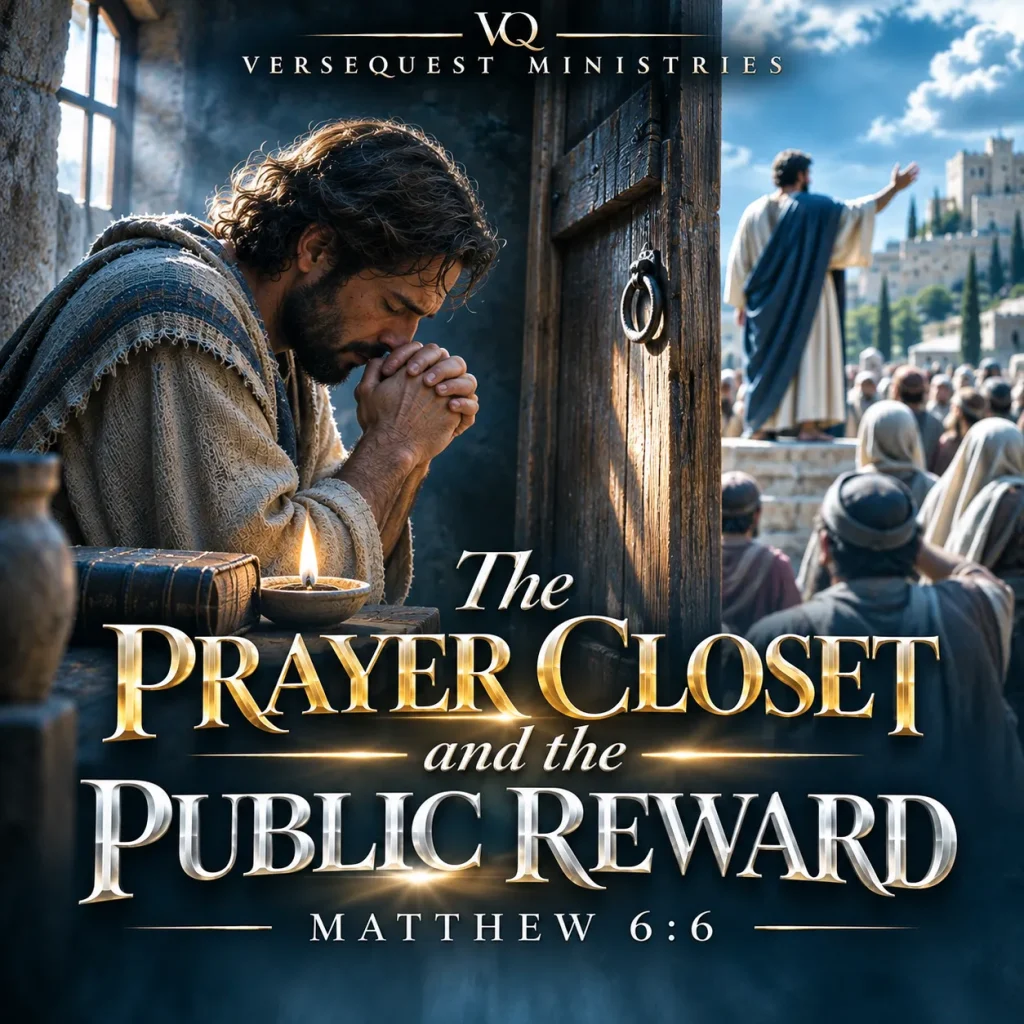
This detailed sermon outline examines Matthew 6:6 and the Lord Jesus Christ’s instruction, “But thou, when thou prayest, enter into thy closet, and when thou hast shut thy door, pray to thy Father which is in secret; and thy Father which seeth in secret shall reward thee openly,” revealing the difference between sincere private communion with God and religious devotion performed for the recognition of men. The message carefully establishes the passage’s original context within the Sermon on the Mount, where Jesus Christ warns His disciples against the hypocrisy of those who give alms, pray, and fast primarily to attract public admiration. Beginning with Matthew 6:1–8, the sermon examines why Christ condemned the motives of hypocritical worshippers rather than the legitimate practice of public prayer, and why receiving human applause may constitute the only reward sought by someone performing religious activities for personal recognition. Special attention is given to the expressions “enter into thy closet,” “when thou hast shut thy door,” “thy Father which seeth in secret,” and “shall reward thee openly,” explaining the importance of genuine sincerity, spiritual humility, private devotion, and the Father’s complete knowledge of hidden motives. The outline also examines the danger of vain repetitions, mechanical religious formulas, impressive public performances, and confusing lengthy prayers with genuine dependence upon God. Drawing upon Matthew 6:9–15, the sermon considers Christ’s pattern of prayer, including reverence for the Father, the coming kingdom, submission to God’s will, daily provision, forgiveness, and deliverance from temptation. The message carefully preserves the original kingdom setting of Christ’s earthly ministry to Israel while distinguishing that instruction from the Church-Age believer’s salvation by grace through faith, spiritual position in Jesus Christ, and access to the Father through the Holy Spirit. Additional passages from Romans 8, Ephesians 2–3, Philippians 4, Colossians 4, and 1 Timothy 2 demonstrate why genuine Christian prayer should include thanksgiving, intercession, perseverance, scriptural understanding, and sincere dependence upon the Lord. The sermon further examines the distinction between divine reward and the false assumption that private prayer guarantees earthly fame, financial prosperity, or public recognition, while drawing a careful comparison with the future Judgment Seat of Christ, where the quality and motives of Christian service will be examined. Preachers, pastors, teachers, and Bible students will gain a comprehensive, KJV-based, rightly divided, sermon-ready framework for teaching secret prayer, biblical sincerity, religious hypocrisy, spiritual humility, divine reward, faithful Christian stewardship, and the importance of seeking God’s approval above the applause of men.
-
November 3, 2026
Speaker: Paul Tackett
Topic: 1 Corinthians 4 sermon outline, 1 Corinthians 4:2, biblical faithfulness, Christian Perseverance, faithful Christian stewardship, faithful servants of Christ, faithfulness in ministry, faithfulness over popularity, humility in Christian ministry, Judgment Seat of Christ, King James Bible study, KJV Sermon Outline, quiet Christian service, rewards for faithful service, rightly dividing the word, Salvation by Grace, serving God without recognition, sound doctrine and stewardship, stewards of the mysteries of God, The Quiet Strength of Faithfulness
Book: 1 Corinthians
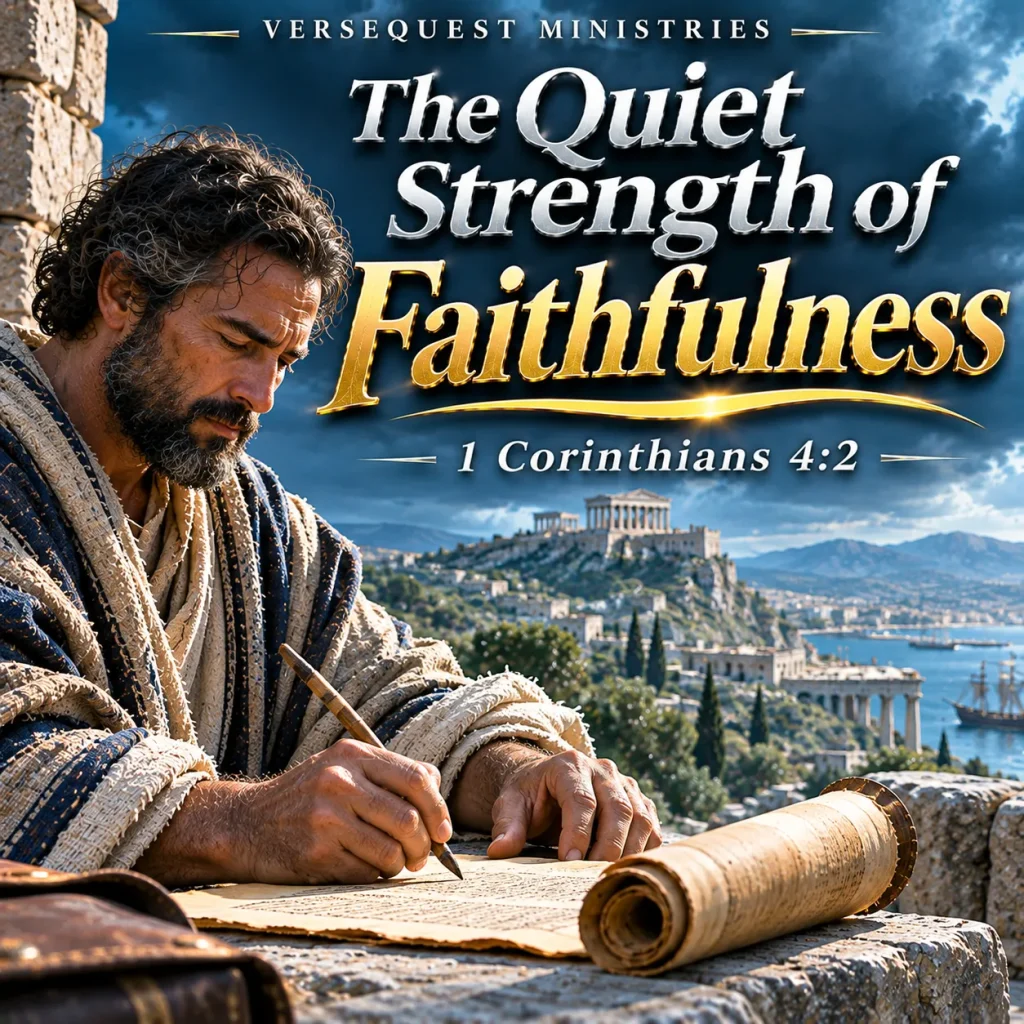
This detailed sermon outline examines 1 Corinthians 4:2 and the Apostle Paul’s declaration, “Moreover it is required in stewards, that a man be found faithful,” revealing the quiet but indispensable strength of Christian faithfulness and the believer’s responsibility to serve Jesus Christ without seeking worldly recognition or human applause. The message carefully establishes the passage’s original context within Paul’s correction of the Corinthian church, where divisions, carnality, religious personalities, and comparisons between ministers had distracted believers from the true purpose of Christian stewardship. Beginning with 1 Corinthians 4:1–5, the sermon explains why ministers are servants of Christ and stewards of the mysteries of God, emphasizing the responsibility to preserve sound doctrine, rightly divide Scripture, and faithfully handle divine revelation rather than altering biblical truth to attract popularity. It examines why faithfulness is a requirement rather than an optional quality, how the Lord measures stewardship differently from the world, and why public recognition, ministry size, natural ability, religious influence, and impressive accomplishments cannot substitute for humble obedience. Special attention is given to the often-overlooked faithfulness of ordinary Christians, including parents, Bible teachers, church helpers, gospel witnesses, and believers who continue serving faithfully through difficult circumstances without receiving public recognition. Drawing upon 1 Corinthians 3–4, 2 Corinthians 5, Colossians 3, Galatians 6, and other Pauline passages, the outline explores perseverance, humility, freedom from religious competition, faithful service in everyday responsibilities, and the danger of allowing personal ambition to corrupt Christian ministry. The sermon also examines the Judgment Seat of Christ, where the Lord will reveal the hidden motives of the heart and evaluate the quality of Christian service, carefully distinguishing salvation by grace through faith from the rewards or losses associated with the believer’s stewardship. Preachers, pastors, teachers, and Bible students will gain a comprehensive, KJV-based, rightly divided, sermon-ready framework for teaching Christian faithfulness, biblical stewardship, sound doctrine, perseverance, humility, eternal rewards, and the lasting spiritual value of serving Jesus Christ faithfully whether anybody notices or not.
-
November 1, 2026
Series: Ephesians 5:16, Redeeming the Time
Topic: biblical discernment, biblical wisdom, Christian family responsibilities, Christian priorities, Christian responsibility, Christian time stewardship, Ephesians 5 sermon outline, Ephesians 5:16, gospel witness opportunities, Judgment Seat of Christ, King James Bible preaching, KJV Sermon Outline, Redeeming the Time, redeeming time Bible study, rightly divided Scripture, Salvation by Grace, the days are evil, understanding God's will, walk circumspectly, Walking in the Spirit
Book: Ephesians
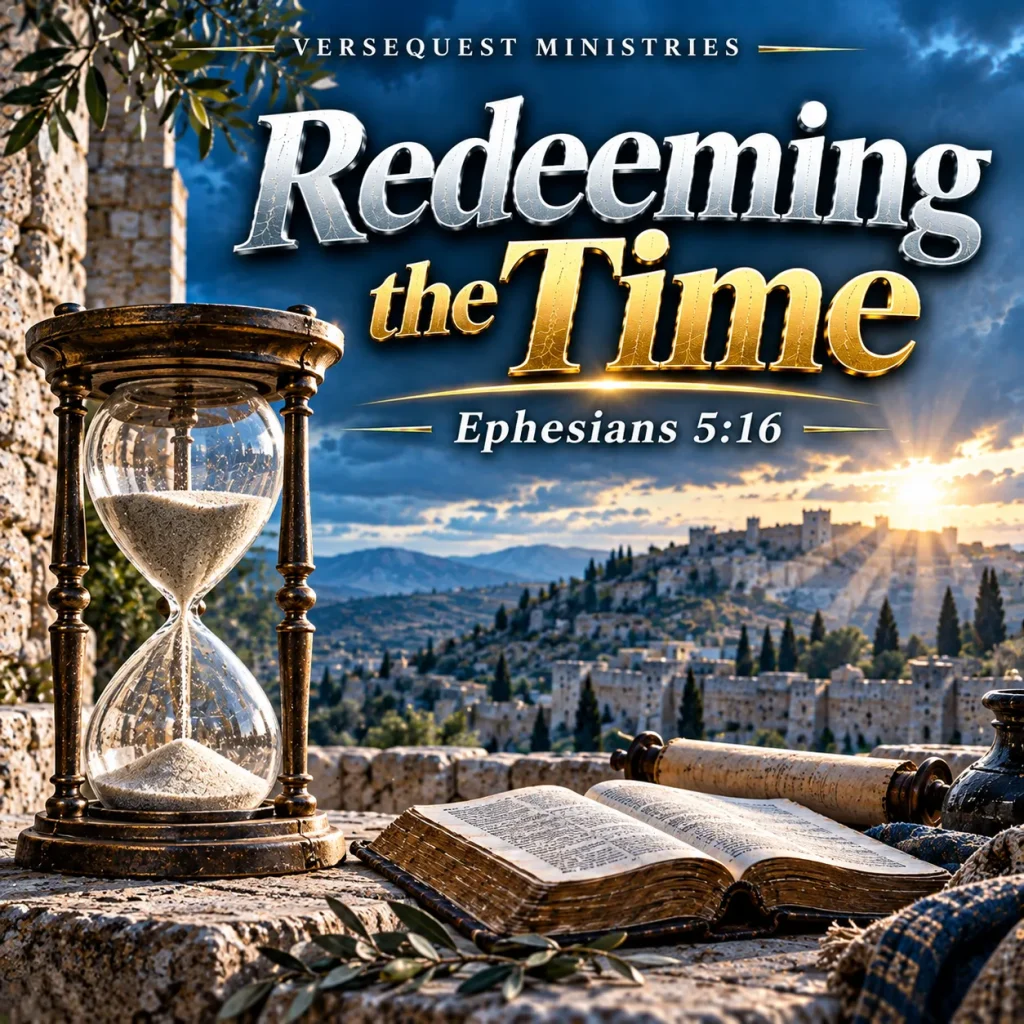
This detailed sermon outline examines Ephesians 5:16 and the Apostle Paul’s command, “Redeeming the time, because the days are evil,” revealing the believer’s responsibility to make wise use of God-given opportunities while living faithfully in a fallen and spiritually hostile world. The message carefully establishes the passage’s immediate context in Ephesians 5:15–17, where Paul instructs Christians to walk circumspectly, not as fools but as wise, and to understand what the will of the Lord is. It explains why redeeming the time involves more than careful scheduling, worldly productivity, financial success, or remaining constantly busy, emphasizing instead the importance of biblical wisdom, spiritual discernment, sound doctrine, and faithful obedience to Jesus Christ. The outline examines why earthly time is limited, how the present evil world continually competes for the believer’s attention, and how fleshly desires, unnecessary distractions, procrastination, misplaced priorities, and worldly ambitions can consume opportunities that can never be recovered. Special attention is given to the distinction between salvation through Christ’s finished work and the saved believer’s responsibility to steward his remaining earthly life, demonstrating that faithful service does not purchase eternal life but should follow redemption by grace. Drawing upon Ephesians 5, Colossians 4:5–6, Romans 12, Galatians 5, 2 Corinthians 5, and other Pauline passages, the sermon explores walking in the Spirit, understanding God’s revealed will, fulfilling family and workplace responsibilities, maintaining Christian fellowship, and recognizing opportunities for gospel witness. It further examines the Judgment Seat of Christ, where believers’ works will be evaluated, carefully distinguishing eternal security from the rewards or losses associated with Christian stewardship. Preachers, pastors, teachers, and Bible students will gain a comprehensive, KJV-based, rightly divided, sermon-ready framework for teaching Christian time stewardship, spiritual priorities, biblical wisdom, practical sanctification, gospel opportunities, faithful service, and the eternal importance of living for Jesus Christ while time remains.
-

October 27, 2026
Speaker: Paul Tackett
Topic: author and finisher of faith, biblical perseverance, Chastening of the Lord, Christian discipline, Christian race of faith, enduring trials as a Christian, finish the Christian race, great cloud of witnesses, Hebrews 12 sermon outline, Hebrews 12:1–2, Jesus endured the cross, Judgment Seat of Christ, KJV Sermon Outline, laying aside every weight, looking unto Jesus, rightly dividing the word, run with patience, Running the Race With Patience, sin which easily besets us, spiritual endurance
Book: Hebrews
This detailed sermon outline examines Hebrews 12:1–2 and the biblical command to “run with patience the race that is set before us,” revealing the importance of spiritual endurance, faithful service, and keeping our attention fixed upon the Lord Jesus Christ. Beginning with the great cloud of witnesses described in Hebrews 11, the message explains how the recorded testimony of faithful Old Testament believers encourages perseverance through hardship, opposition, uncertainty, and suffering. It carefully distinguishes unnecessary spiritual weights from actual sins, showing why Christians must examine not only sinful habits but also lawful activities, ambitions, distractions, and earthly concerns that interfere with faithful service. The outline explores the meaning of biblical patience, the importance of running the particular course set before each believer, and the danger of comparing ourselves with other Christians rather than concentrating upon our own responsibilities before God. Special attention is given to Jesus Christ as “the author and finisher of our faith,” His endurance of the cross, His victory over death, and His exaltation at the right hand of God. Drawing upon Hebrews 12:3–13, the sermon also examines divine chastening, spiritual weariness, correction, and the necessity of continuing faithfully when circumstances become difficult. The message further connects the race of faith with Paul’s athletic illustrations in 1 Corinthians 9, his determination in Philippians 3, and his final testimony in 2 Timothy 4:7, while maintaining the important doctrinal distinction between salvation by grace and the believer’s future accountability for Christian service. Preachers, teachers, and Bible students will gain a comprehensive, rightly divided, sermon-ready framework for teaching Christian perseverance, spiritual discipline, resistance to sin, patience during suffering, the example of Christ, eternal rewards, and the importance of finishing the Christian race faithfully.
-
October 17, 2026
Speaker: Paul Tackett
Topic: 2 Timothy 4:2, authority of Scripture, Bible preaching, biblical preaching, Christian ministry, Doctrinal Preaching, faithful preaching, Judgment Seat of Christ, King James Bible study, KJV Sermon Outline, pastoral responsibility, preach in season out of season, preach the word sermon outline, preacher accountability, preacher under Scripture, pulpit authority, reprove rebuke exhort, rightly dividing the word, Sound Doctrine, The Bible That Judges the Preacher
Book: 2 Timothy
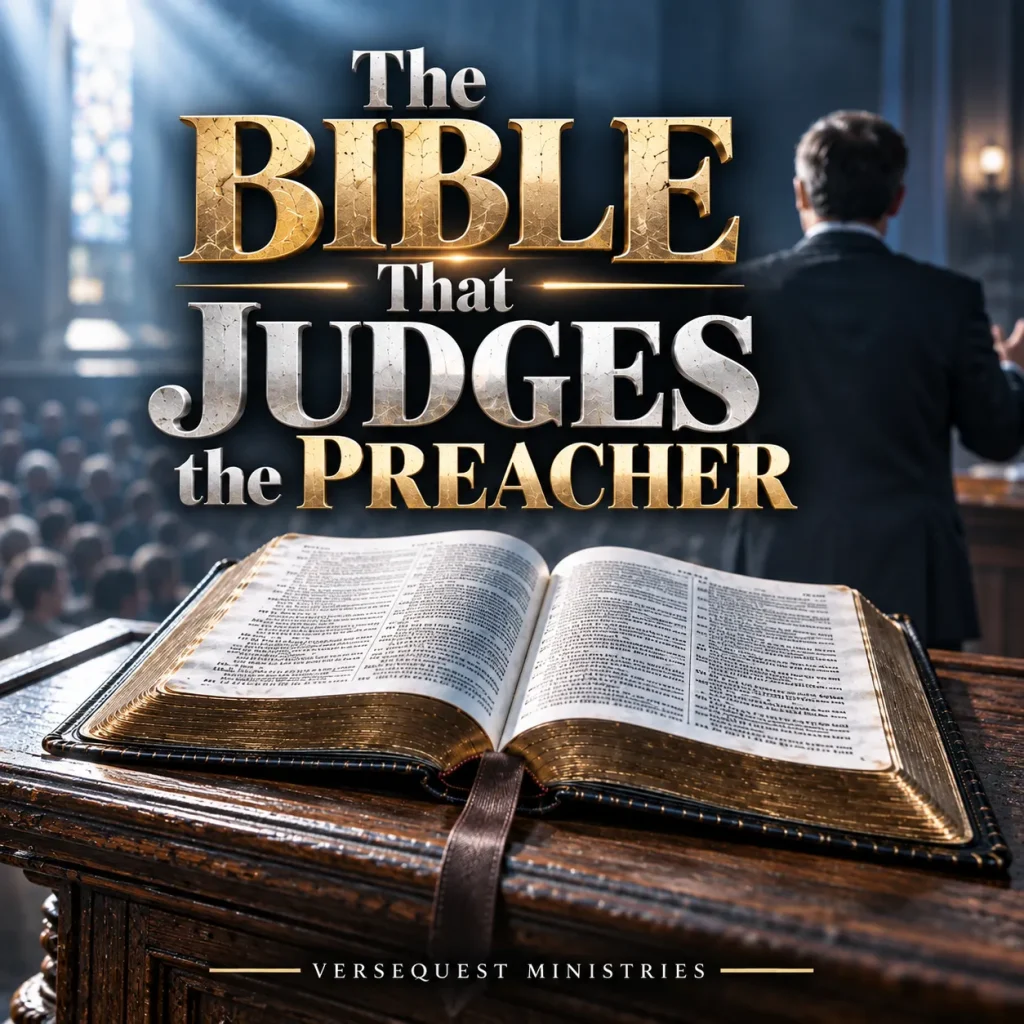
This detailed sermon outline examines 2 Timothy 4:2 and Paul’s solemn command to Timothy: “Preach the word; be instant in season, out of season; reprove, rebuke, exhort with all longsuffering and doctrine.” The message establishes that the preacher does not stand above Scripture as its master but beneath Scripture as a steward who will answer to God for how faithfully he handles and proclaims it. It explores why the word—not personality, popularity, entertainment, personal opinion, or cultural approval—must control the pulpit; why faithful preaching includes reproof and rebuke as well as exhortation; and why longsuffering must keep doctrinal boldness from becoming fleshly aggression. The outline also shows why sound doctrine is essential, why preaching must continue when truth becomes unpopular, how right division protects the congregation from misapplied Scripture, and why every preacher should minister in view of Christ’s future examination of his stewardship. Preachers, teachers, pastors, and Bible students will gain a sermon-ready framework for biblical preaching, ministerial accountability, pulpit authority, doctrinal faithfulness, right division, and submission to the King James Bible.
-
September 6, 2026
Speaker: Paul Tackett
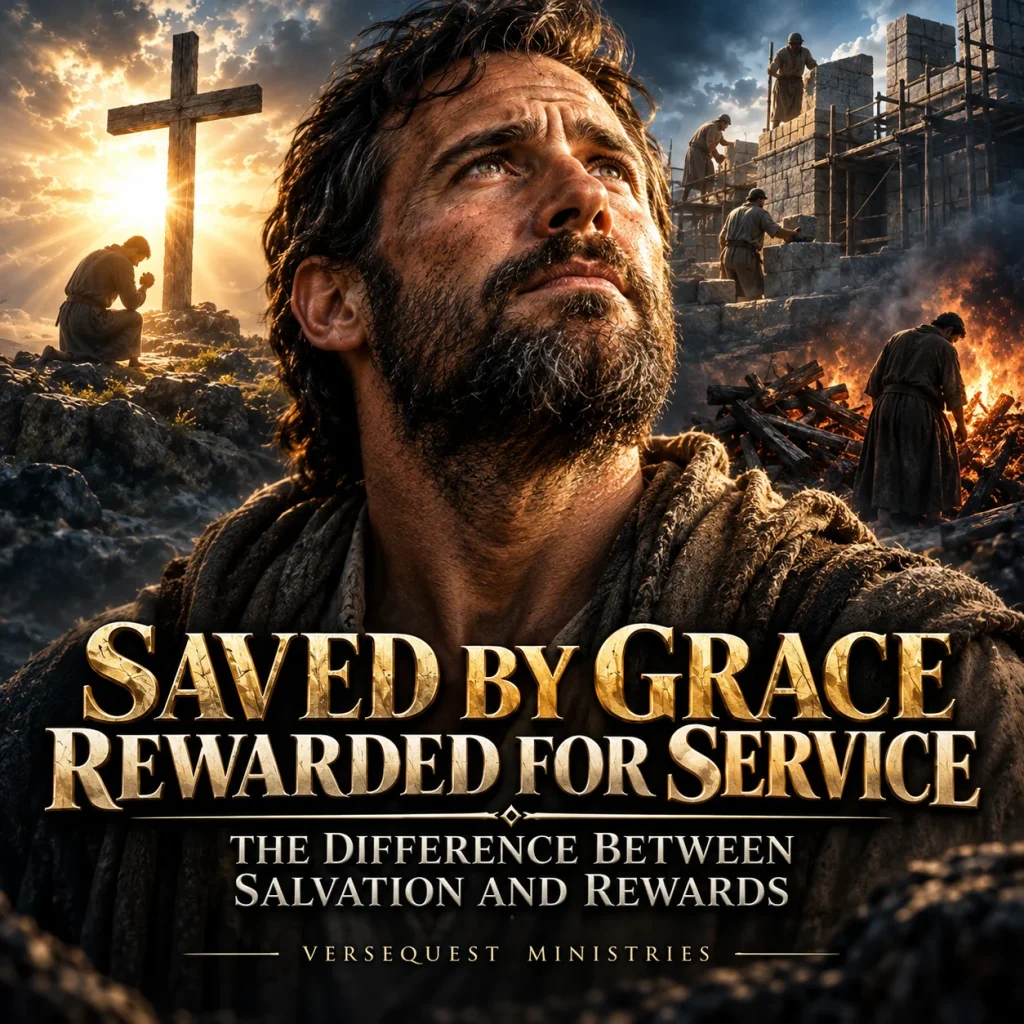
Topic: 1 Corinthians 3:11–15, Bible Study Resources, Christian Rewards, Christian Stewardship, Eternal Security, Gold Silver Precious Stones, Gospel of Grace, He Himself Shall Be Saved, Jesus Christ the Foundation, Judgment Seat Not Great White Throne, Judgment Seat of Christ, KJV Sermon Outline, Loss of Reward, Reward for Faithful Service, Rightly Dividing, Salvation and Rewards, Salvation by Grace, Saved by Grace Rewarded for Service, Wood Hay and Stubble, Works After Salvation
Book: 1 Corinthians
This VerseQuest Ministries sermon outline on 1 Corinthians 3:11–15 explains the crucial Bible distinction between the free gift of salvation and rewards earned through faithful Christian service. Jesus Christ is the only foundation, and salvation rests entirely upon His finished work, received by grace through faith apart from works. After salvation, however, every believer builds upon that foundation with works pictured as gold, silver, precious stones, wood, hay, or stubble. The outline examines the Judgment Seat of Christ, the testing of Christian service by fire, reward for faithful labour, loss for worthless works, and Paul’s unmistakable statement that even when a believer’s work burns, “he himself shall be saved.” It also distinguishes salvation from reward, justification from service, eternal life from wages, and the Judgment Seat of Christ from the Great White Throne. Preachers, teachers, and Bible students will gain a strong KJV-based framework for teaching eternal security alongside serious Christian accountability and faithful stewardship.
-
September 2, 2026
Speaker: Paul Tackett
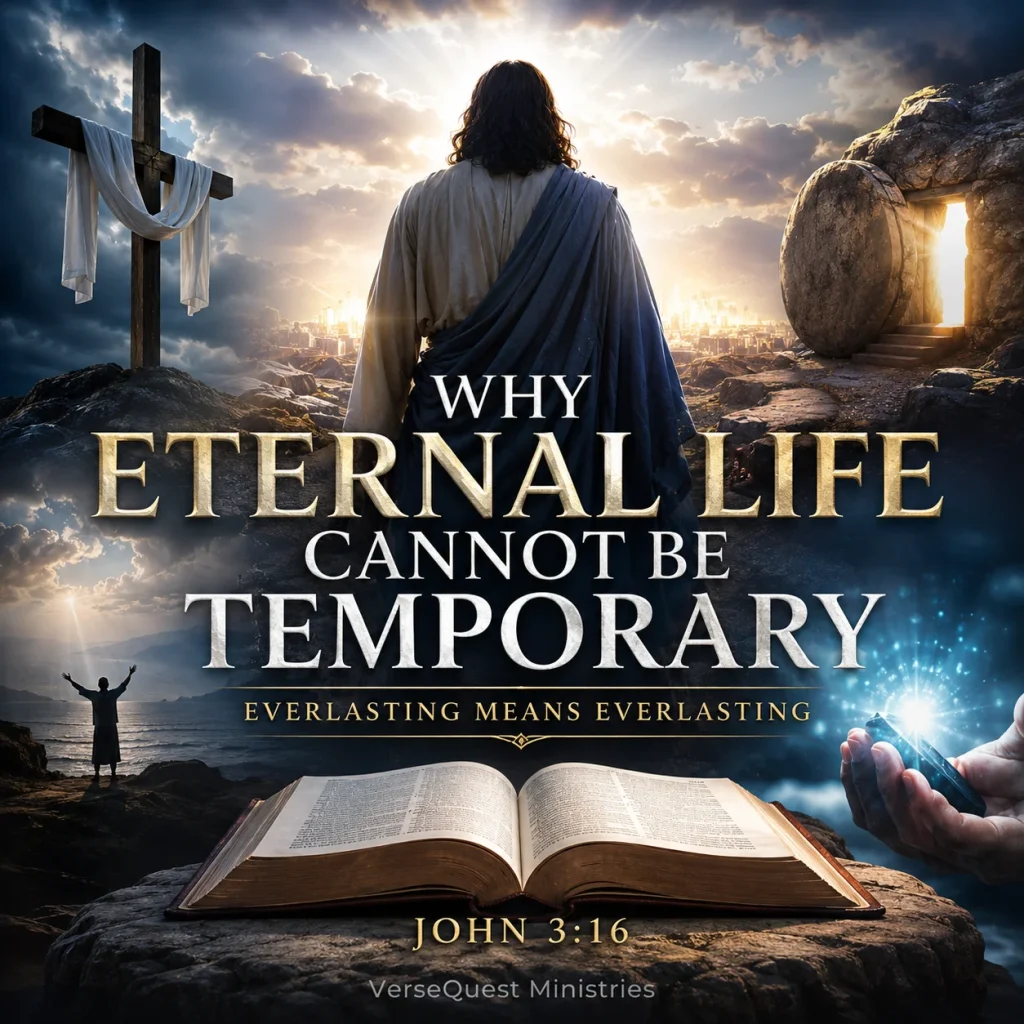
Topic: Assurance of Salvation, Chastening Not Condemnation, Eternal Life Sermon Outline, Eternal Security, Everlasting Life, Everlasting Means Everlasting, Gift of Eternal Life, Gospel of Grace, Holy Spirit Seal, John 10:28, John 3:16, Judgment Seat of Christ, KJV Sermon Outline, Life in Christ, Never Perish, Rightly Dividing, Sealed Unto Redemption Day, Shall Not Perish, Whosoever Believeth, Why Eternal Life Cannot Be Temporary
Book: John
This VerseQuest Ministries sermon outline on John 3:16 examines the plain biblical meaning of Christ’s promise that whosoever believes in Him should not perish but have everlasting life. The outline shows why everlasting life cannot logically or scripturally become temporary life, tracing the doctrine through John 3:36, John 5:24, John 6:47, John 10:27–30, Romans 6:23, Ephesians 1:13–14, and 1 John 5:11–13. It explains eternal life as a present possession found in the Son, Christ’s promise that His sheep shall never perish, the Holy Spirit’s seal unto redemption day, and the difference between salvation, fellowship, chastening, practical state, and reward. Preachers, teachers, and Bible students will gain a strong KJV-based framework for teaching eternal security without excusing sin, assurance without presumption, and the unchanging sufficiency of Jesus Christ as the source and keeper of everlasting life.
-
August 30, 2026
Speaker: Paul Tackett
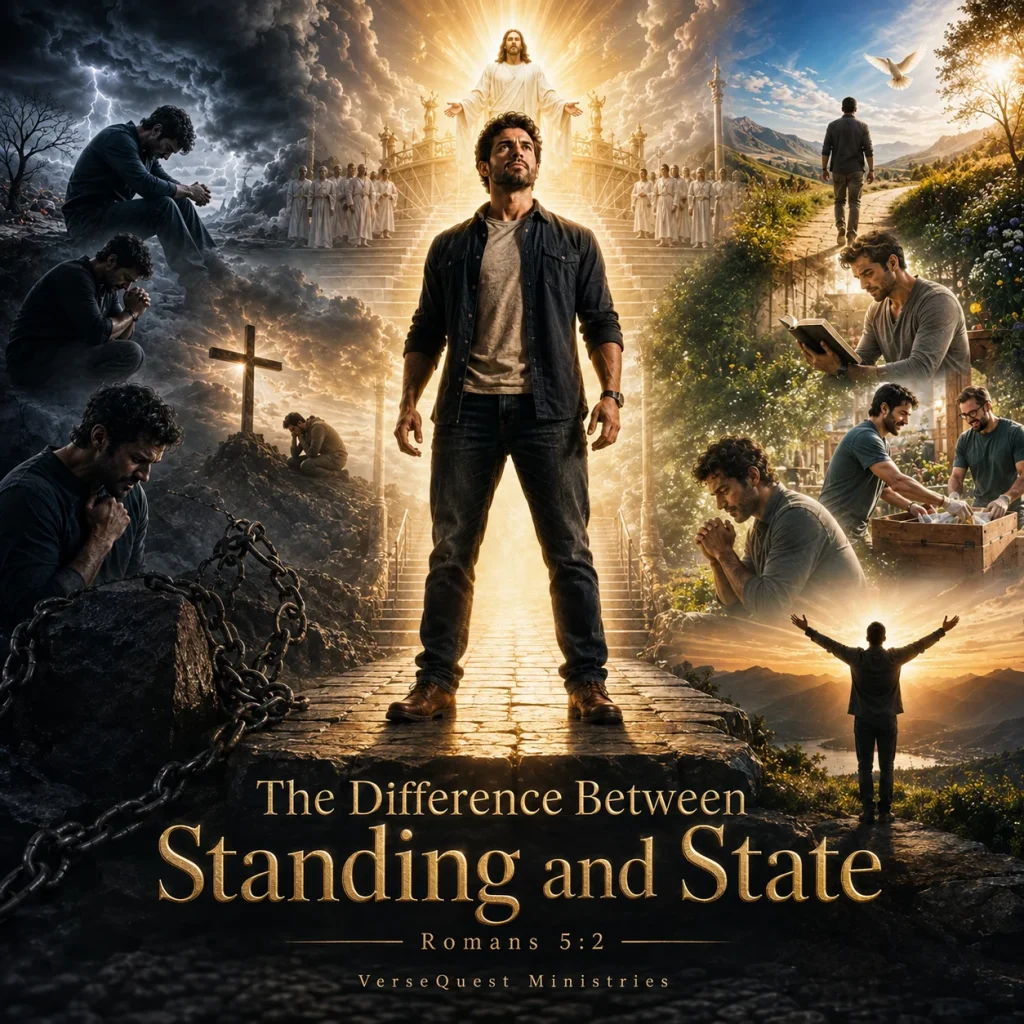
Topic: Accepted in the Beloved, Believer’s Position in Christ, Bible Study Resources, Chastening Not Condemnation, Christian Sanctification, Christian Walk, Complete in Christ, Difference Between Standing and State, Eternal Security, Judgment Seat of Christ, Justification by Faith, KJV Sermon Outline, No Condemnation, Rightly Dividing, Romans 5:2, Sonship and Fellowship, Spiritual Growth, Standing and State, Standing and State Sermon Outline, Standing in Grace
Book: Romans
This VerseQuest Ministries sermon outline on Romans 5:2 explains the vital Bible distinction between the believer’s standing and his state. Standing describes the believer’s settled position before God in Jesus Christ—justified by faith, standing in grace, accepted in the Beloved, complete in Christ, redeemed through His blood, sealed by the Holy Spirit, and free from condemnation. State describes the believer’s changing practical condition: his daily walk, fellowship, obedience, spiritual growth, fruitfulness, service, and response to sin. The outline shows how a believer may have a poor practical state while retaining a secure standing in Christ, why broken fellowship is not broken sonship, how chastening and the Judgment Seat of Christ relate to conduct rather than eternal salvation, and why secure grace should produce holiness rather than carelessness. Preachers, teachers, and Bible students will gain a strong KJV-based framework for teaching assurance, sanctification, Christian growth, and the distinction between salvation and service.
-
August 28, 2026
Speaker: Paul Tackett
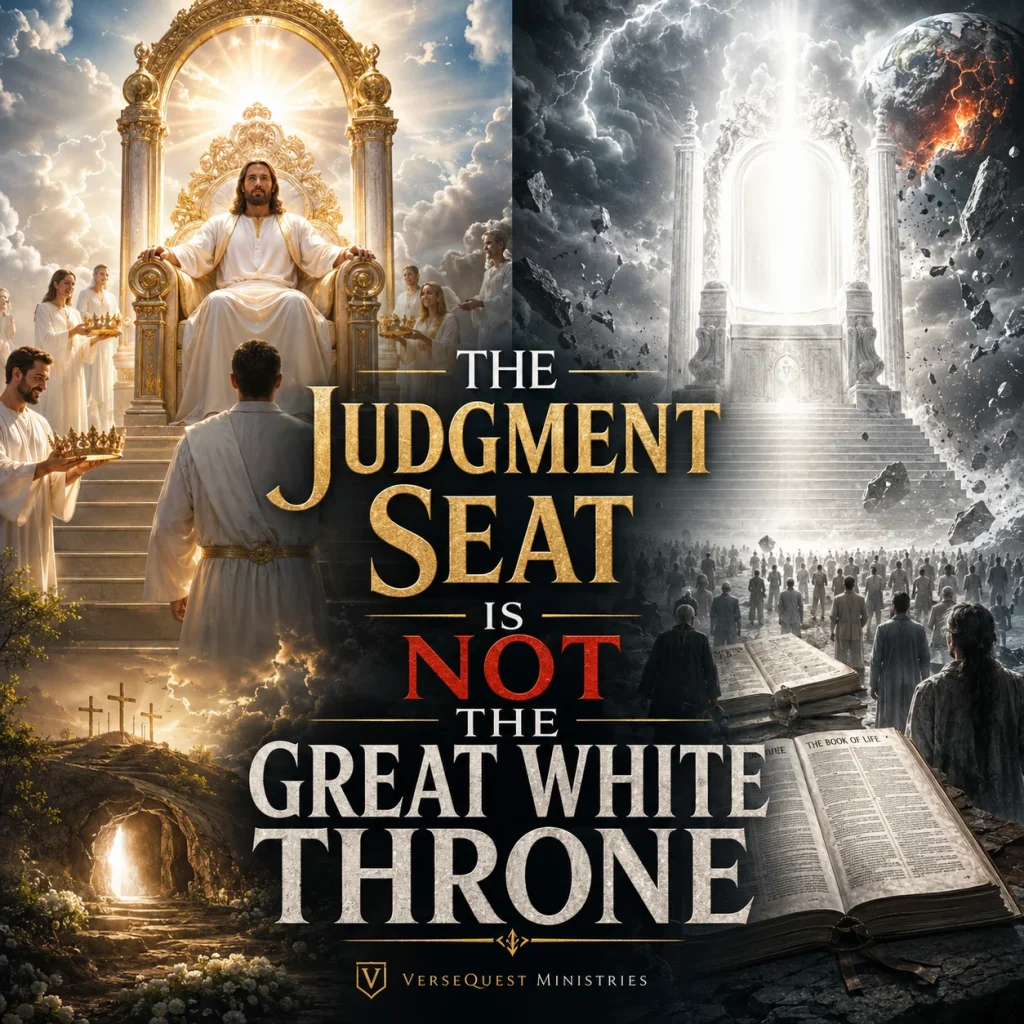
Topic: 2 Corinthians 5:10, Bible Study Resources, Book of Life, Christian Accountability, Eternal Security, Great White Throne, Great White Throne Sermon, Judgment of the Dead, Judgment Seat of Christ, Judgment Seat Sermon Outline, KJV Sermon Outline, Lake of Fire, Loss of Reward, Millennial Kingdom, Pauline Doctrine, Prophecy and Mystery, Revelation 20:11-15, Rewards for Believers, Rightly Dividing, Saved by Grace
Book: 2 Corinthians
This VerseQuest Ministries sermon outline on 2 Corinthians 5:10 and Revelation 20:11–15 explains the crucial distinction between the Judgment Seat of Christ and the Great White Throne. The outline shows that the Judgment Seat concerns saved believers whose eternal standing in Christ is already settled and whose service, motives, stewardship, and works are examined for reward or loss, while the Great White Throne occurs after the Millennium and concerns the final judgment of the dead, the opening of the books, the book of life, and the second death. It carefully distinguishes salvation from reward, accountability from condemnation, the Church from the final resurrection of the lost, and present grace truth from future prophetic judgment. Preachers, teachers, and Bible students will gain a strong KJV-based framework for teaching Christian accountability without undermining eternal security and for explaining why these two judgments must never be confused.