
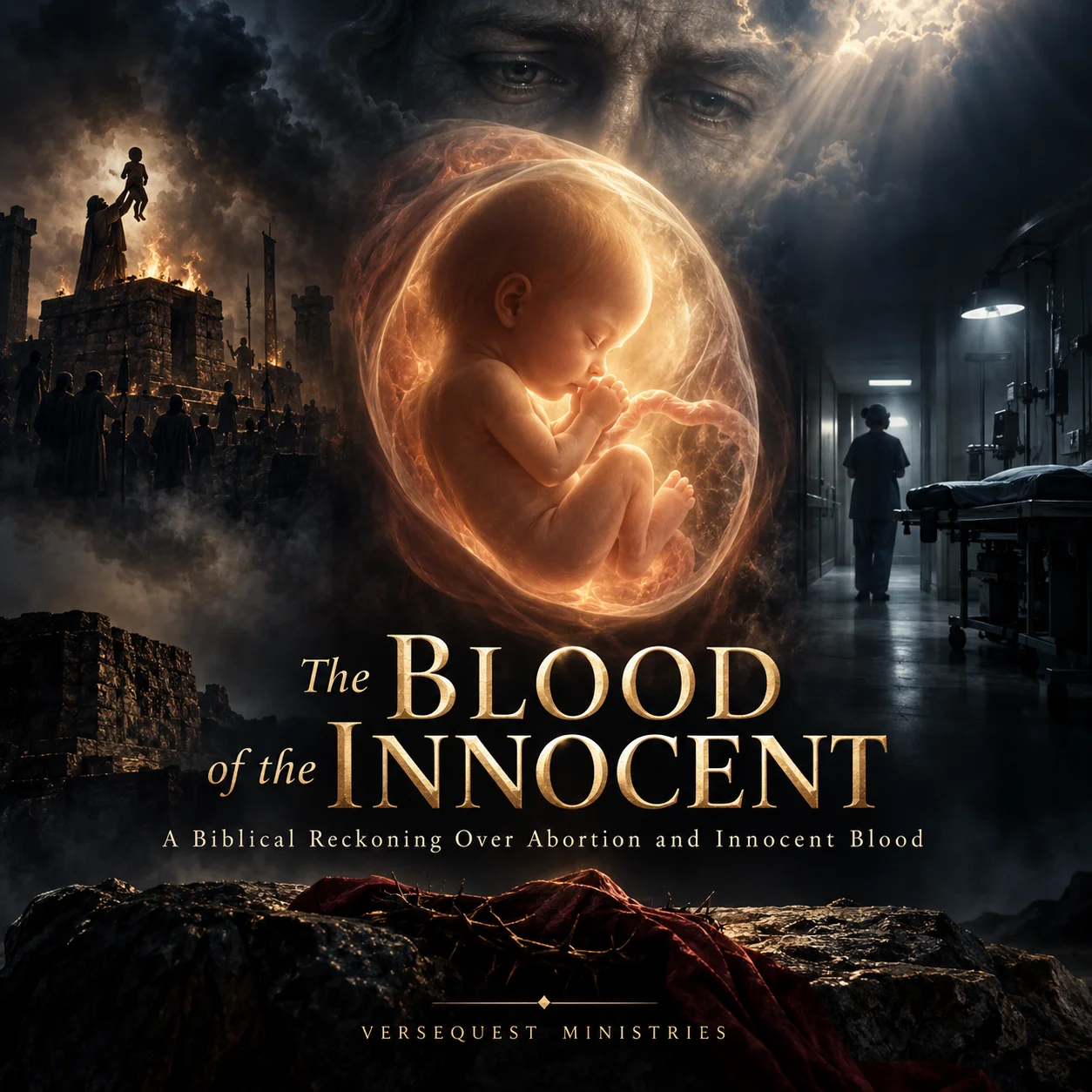
The Blood of the Innocent — A 40-Part KJV Bible Study on Abortion, Life, Law, and the Unborn
The Blood of the Innocent is a comprehensive 333-page downloadable PDF book containing a forty-part KJV-centered examination of abortion, the unborn child, innocent blood, ancient child sacrifice, modern abortion history, Supreme Court decisions, viability, medical procedures, bodily autonomy, disability, abortion survivors, fathers, repentance, and the gospel.
Designed for serious Bible students, pastors, teachers, preachers, Christian families, and ministry leaders, this extensive VerseQuest study goes far beyond slogans to examine the biblical, historical, legal, medical, and philosophical questions surrounding abortion. The book includes a full introduction, forty detailed studies, a concluding chapter bringing the entire argument together, and a companion Bible-study chart.
333 pages | Downloadable PDF Digital Book | $24.99
$24.99
Description
The Blood of the Innocent is a comprehensive 333-page downloadable PDF digital book examining abortion through the authority of the King James Bible while also addressing the history, law, medicine, philosophy, language, and cultural arguments surrounding the subject. Priced at $24.99, this substantial VerseQuest study brings together forty detailed essays, a full introduction and conclusion, and a companion Bible-study chart into one organized reference work designed for serious study and teaching.
The book begins where the Christian discussion must begin: with God and the unborn child. It examines what Scripture says about God’s activity in the womb, prenatal life, innocent blood, children before birth, responsibility toward the helpless, and the biblical condemnation of shedding innocent blood. Passages involving Jeremiah, David, Jacob and Esau, John the Baptist, Job, the Proverbs, and numerous other portions of the King James Bible establish the biblical foundation before the study moves into history and modern controversy.
From there, the book examines ancient child sacrifice, Molech, Tophet, pagan attitudes toward unwanted children, infant exposure, and the early Christian rejection of practices that treated weak human life as disposable. These historical chapters carefully distinguish ancient practices from modern abortion while examining the recurring moral principle of stronger adults determining whether weaker children will be permitted to live.
A major portion of the book traces the development of the modern abortion movement. Readers are taken through the years before Roe v. Wade, abortion-law reform, the movement from exceptional cases toward abortion on demand, and the influence of physicians, attorneys, clergy, political movements, and cultural arguments. The study then examines Roe v. Wade, Doe v. Bolton, Planned Parenthood v. Casey, the viability standard, Dobbs v. Jackson Women’s Health Organization, and the post-Dobbs landscape of differing state abortion laws.
The book also confronts the vocabulary that surrounds abortion. It examines terms such as fetus, pregnancy, viability, health care, bodily autonomy, choice, wantedness, and reproductive freedom, asking whether changing terminology can change the underlying moral reality. Special attention is given to the transition from the language of “safe, legal, and rare” toward broader efforts to normalize abortion and remove the implication that abortion should be morally exceptional.
Medical and biological questions are treated directly rather than hidden behind slogans. The study discusses prenatal human development, continuity from conception through birth, abortion procedures, medication abortion, abortion by mail, later abortion, viability, fetal diagnoses, and the distinction between elective abortion and genuine medical emergencies such as ectopic pregnancy, miscarriage management, and urgent delivery. The book does not confuse every difficult pregnancy intervention with elective abortion, nor does it pretend that medical terminology settles the moral question.
Several chapters address the hardest cases normally brought into the debate, including rape, incest, threats to the mother’s life, severe fetal abnormality, disability, and later pregnancy. Rather than avoiding these subjects, The Blood of the Innocent examines them carefully and asks whether tragedy changes the identity or value of the unborn child.
The philosophical chapters move beyond purely religious arguments. The reader encounters the question of whether abortion deprives the unborn child of an entire human future, whether moral value can depend upon what will happen later, whether bodily dependence destroys human worth, and whether birth provides a philosophically defensible point at which human value suddenly appears. These chapters are especially useful for teaching students how to answer secular abortion arguments without relying only upon a Bible quotation the other person may reject.
The book also restores people to the discussion who are often reduced to political symbols. It examines women who report relief, women who experience regret or grief, women who later become Christians, documented abortion survivors, children born alive following attempted abortion, fathers who pressure women toward abortion, fathers who abandon their responsibilities, fathers who wanted their children but had little legal power to prevent an abortion, and men who regret their participation years later.
The gospel remains central throughout the closing portion of the book. Abortion is not treated as an unforgivable sin. The same Bible that condemns the shedding of innocent blood declares that “the blood of Jesus Christ his Son cleanseth us from all sin” in 1 John 1:7. The book therefore combines uncompromising opposition to abortion with an equally uncompromising proclamation of grace for women, fathers, physicians, activists, and others who repent and come to Jesus Christ.
The final chapters examine international efforts to remove abortion restrictions and a modern American example involving the continuing debate over gestational limits and medical discretion. The series ultimately returns to the responsibility of the Church: defend unborn life, preach biblical sexual responsibility, hold fathers accountable, help pregnant women practically, support families facing difficult circumstances, and proclaim the gospel rather than allowing political activism to become a substitute for Christian ministry.
This 333-page PDF is suited for pastors, Bible teachers, preachers, Sunday school teachers, Christian families, homeschool study, ministry training, apologetics preparation, topical Bible studies, and serious individual readers who want far more than a collection of slogans. Its forty-part structure allows the material to be studied consecutively as a complete book or used individually for sermons, lessons, discussions, and topical research.
God’s Knowledge of the Unborn — The biblical witness concerning God’s activity, knowledge, and workmanship in the womb. The Identity of the Unborn Child — How Scripture speaks of prenatal human life and children before birth. Innocent Blood — The seriousness with which Scripture treats the shedding of innocent human blood. Molech and Tophet — Biblical child sacrifice and the moral lessons that can legitimately be drawn from those passages. Abortion and the Pagan World — Historical treatment of abortion, infant exposure, unwanted children, and weak human life. Early Christianity and Abandoned Children — The contrast between pagan disposability and Christian protection of vulnerable life. The Rise of Modern Abortion Rights — The development from reform and exceptional cases toward broader abortion access. Roe v. Wade and Doe v. Bolton — The landmark 1973 cases and their influence on American abortion law. Casey, Viability, and the Undue-Burden Standard — The changing constitutional structure surrounding abortion. Dobbs and the Post-Roe United States — The return of abortion regulation to state political processes and the resulting legal patchwork. The Language of Abortion — Fetus, choice, reproductive freedom, health care, wantedness, and other terms shaping public perception. Prenatal Human Development — Biological continuity from conception through pregnancy, birth, infancy, and adulthood. Abortion Procedures — Medication abortion, aspiration, dilation and evacuation, later abortion, and related medical distinctions. Abortion by Mail and Telemedicine — The movement of abortion from clinics into private homes. Viability and Later Abortion — The strengths and limitations of viability as a legal and moral boundary. Rape, Incest, and Medical Emergencies — Careful examination of the hardest cases commonly raised in abortion debates. Disability and Prenatal Diagnosis — Whether disability or severe diagnosis changes human worth. Wantedness and Human Value — The danger of making another person’s desire the measure of a child’s worth. Bodily Autonomy — The conflict between maternal bodily rights and the existence of another dependent human organism. The Future Taken by Abortion — The argument that killing deprives the unborn child of an entire possible human future. Abortion Survivors and Born-Alive Children — Cases in which the child survives an attempted abortion or is born alive. Relief, Regret, and Grief — The differing experiences reported by women following abortion. Fathers and Abortion — Male responsibility, coercion, abandonment, powerlessness, and regret. Grace After Abortion — Forgiveness and cleansing through Jesus Christ for those who repent. The Church’s Responsibility — Biblical preaching combined with practical help for mothers, fathers, children, and families. International Abortion Policy — The movement toward decriminalization and fewer abortion restrictions. Law Versus Morality — The distinction between what civil government permits and what God declares righteous. The Blood of Christ — The final gospel answer to guilt, judgment, repentance, and redemption.
The central argument of The Blood of the Innocent is that the moral status of abortion cannot be settled merely by changing terminology, changing laws, changing medical procedures, or changing public attitudes. The fundamental question remains the identity and value of the developing child in the womb.
Scripture presents the womb as a place of divine activity. Jeremiah was known before birth, David described God seeing his developing substance, Jacob and Esau were called children before birth, and John the Baptist was called a babe while still in Elisabeth’s womb. These passages must be handled in their proper biblical contexts, but together they demonstrate that Scripture does not treat prenatal life as morally meaningless.
The biblical condemnation of innocent blood provides one of the governing moral principles of the study. Proverbs 6, Psalm 106, Jeremiah, and the account of Abel show that God does not regard the deliberate destruction of innocent human life as morally neutral.
Ancient Molech worship and modern abortion should not be carelessly treated as historically identical practices. The legitimate comparison lies in the moral structure: adults sacrificing or disposing of children because another interest has been judged more important.
Modern abortion law developed over time. Roe v. Wade did not create abortion, and Dobbs did not abolish it. The modern debate must therefore be studied through the wider history of reform, repeal, court decisions, cultural attitudes, state legislation, and philosophical changes.
Viability is medically significant but does not determine when biological humanity begins. It describes the possibility of survival outside the womb under existing medical conditions, not the creation of a new human organism.
Birth is a dramatic physiological transition but does not transform one species into another. The developing organism before delivery is biologically continuous with the newborn after delivery.
Bodily autonomy raises serious questions because pregnancy physically burdens the woman in a way no father experiences. Yet bodily autonomy alone does not answer the separate question of the moral standing of the unborn child.
Wantedness cannot provide a stable foundation for human worth. The same child can be wanted one day and unwanted the next without undergoing any biological change.
Disability should not be confused with diminished humanity. A prenatal diagnosis may profoundly change expectations, medical needs, and family circumstances without changing the child’s basic human identity.
Medical precision matters. Treatment of an ectopic pregnancy, management of miscarriage, emergency delivery, and intentional elective abortion should not be automatically collapsed into one category merely because some procedures or medications overlap.
Women do not report one universal emotional response after abortion. Some describe relief, some regret, some grief, and some mixed experiences. The morality of abortion cannot be determined simply by predicting a particular emotional outcome.
Fathers belong in the moral discussion. A man may pressure an abortion, finance it, abandon the mother, desperately oppose it, or later regret his involvement. Biological fatherhood creates responsibility even when pregnancy occurs in the woman’s body.
Abortion survivors and born-alive cases force the discussion to confront continuity of identity. The individual capable of later testimony is the same living organism whose life the abortion was intended to end.
Law and morality must remain distinct. Something may be legally permitted without becoming morally righteous, and something may be morally right without being perfectly protected by civil law.
The Church’s responsibility extends beyond preaching against abortion. Christians who defend unborn life should be willing to help mothers, support children, confront irresponsible fathers, assist families facing difficult pregnancies, and provide practical expressions of biblical charity.
The gospel is indispensable. The book condemns abortion without presenting abortion as an unforgivable sin. The cleansing blood of Jesus Christ remains sufficient for women, fathers, physicians, and others who repent and believe.
A major question for further study is how Christians should formulate abortion law while maintaining distinctions between moral guilt, legal culpability, coercion, medical emergencies, provider responsibility, and the circumstances surrounding individual cases.
Another important area for study is the relationship between prenatal diagnosis and disability ethics. Christians should ask whether principles used to defend disabled persons after birth are being consistently applied before birth.
Students should also examine how vocabulary affects moral perception. Does a change in terminology reveal greater precision, or can terminology sometimes distance the listener from the reality being described?
The final teaching point is simple: the unborn child should not have to become strong enough to defend himself before the strong decide he is worth defending.
The Blood of the Innocent can serve as a major personal topical study for Christians who want to understand abortion from more than one angle. Individual readers can move through the forty chapters consecutively, tracing the argument from Scripture and ancient history through modern law, medicine, philosophy, and gospel application.
Pastors and preachers can use individual chapters as research foundations for sermons dealing with life in the womb, innocent blood, Christian responsibility, sexual morality, fatherhood, disability, government, abortion law, repentance, and grace. Because each essay focuses on a distinct issue, the book provides substantial material for an extended teaching series without requiring every subject to be covered in a single sermon.
Sunday school teachers and adult Bible-study leaders can use the book for topical lesson preparation. The chapters on Molech, Tophet, Psalm 139, Jeremiah 1, Proverbs 6, Luke 1, and Romans 9 are especially suited for direct biblical study, while the legal and philosophical chapters can help students understand arguments they encounter outside the church.
Christian families and homeschool students can use the book as an advanced study of biblical ethics, modern history, government, law, medical terminology, argumentation, and Christian apologetics. Parents should determine which chapters are appropriate for the age and maturity of individual students because some sections necessarily discuss abortion procedures and difficult pregnancy circumstances.
The resource can also support ministry training by helping Christians learn how to defend unborn life without relying upon exaggerated claims. It teaches students to distinguish elective abortion from miscarriage treatment, ectopic pregnancy, emergency delivery, and other medical circumstances; to acknowledge that women report different emotional experiences after abortion; and to combine moral clarity with the gospel.
A King James Bible should remain the primary companion to this study, particularly for tracing the passages dealing with the womb, innocent blood, children, parental responsibility, government, judgment, repentance, and redemption.
A Strong’s Exhaustive Concordance or another reliable KJV concordance can assist readers in tracing biblical terms such as womb, child, babe, innocent blood, seed, children, father, mother, kill, and blood throughout Scripture.
A traditional Bible dictionary can provide useful background on Molech, Tophet, the valley of Hinnom, ancient Israel, child sacrifice, and other historical settings encountered throughout the book.
A KJV cross-reference Bible or treasury of biblical cross-references will help readers compare passages concerning prenatal life, children, murder, innocent blood, responsibility toward the weak, civil authority, and the cleansing power of Christ’s blood.
A Bible atlas and historical map collection can help readers locate Jerusalem, the valley of Hinnom, ancient Canaanite territories, and other locations connected with the historical biblical sections.
A United States Supreme Court timeline or legal reference work covering Roe v. Wade, Doe v. Bolton, Planned Parenthood v. Casey, and Dobbs v. Jackson Women’s Health Organization can be useful when studying the legal chapters.
The accompanying The Blood of the Innocent Bible Study Chart provides a visual review of the major biblical, historical, legal, medical, and doctrinal themes developed throughout the book.
Related products
-
Jesus Christ Studies
-
-67%
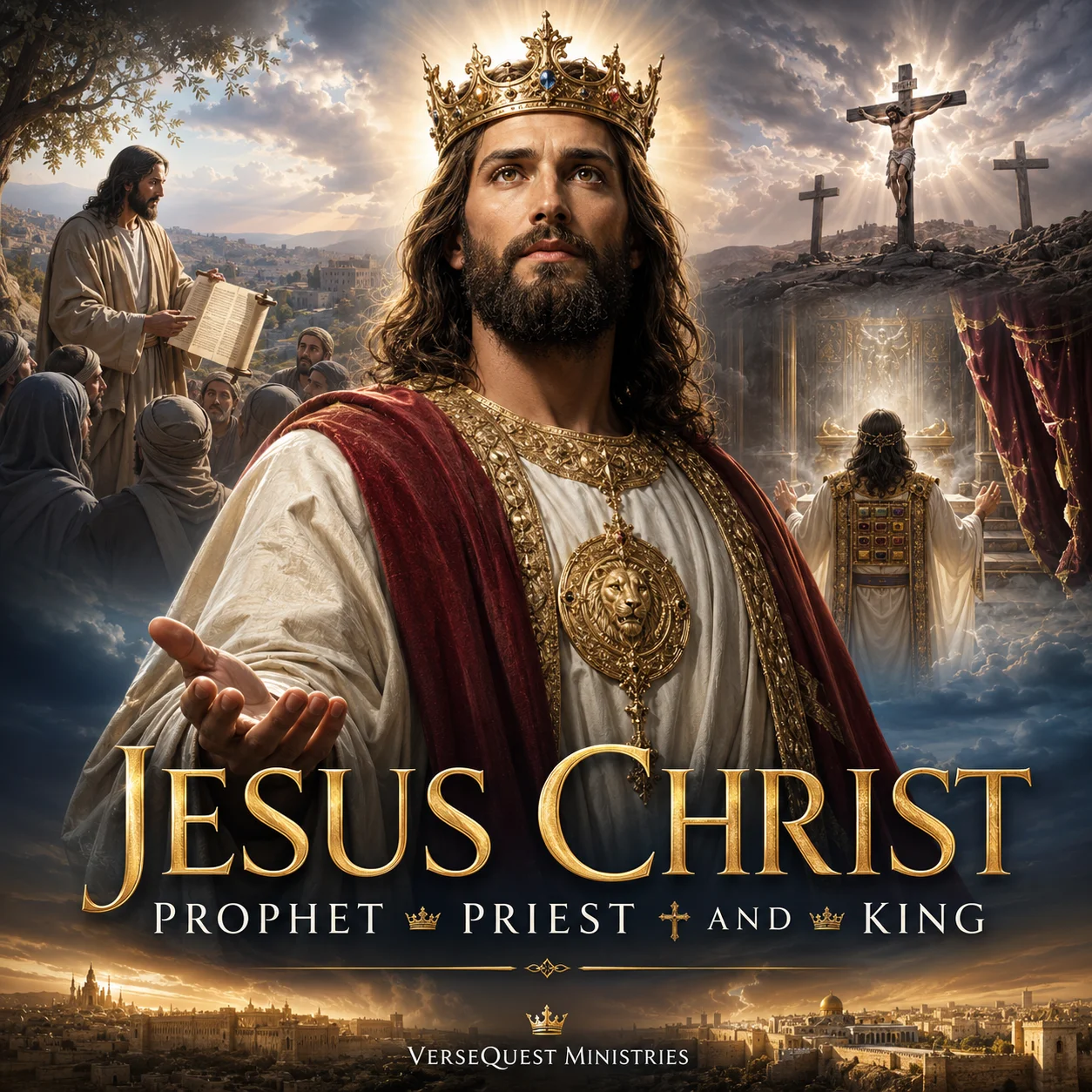
- Jesus Christ Prophet Priest and King – 441-Page PDF Study
- A 441-page premium KJV PDF study on Jesus Christ as Prophet, Priest, and King. This detailed VerseQuest book covers Christ’s prophetic ministry to Israel, His finished sacrifice and present intercession…
- Original price was: $29.99.$9.99Current price is: $9.99.
- Add to cart
-
-67%
-
Bible Prophecy Charts
-
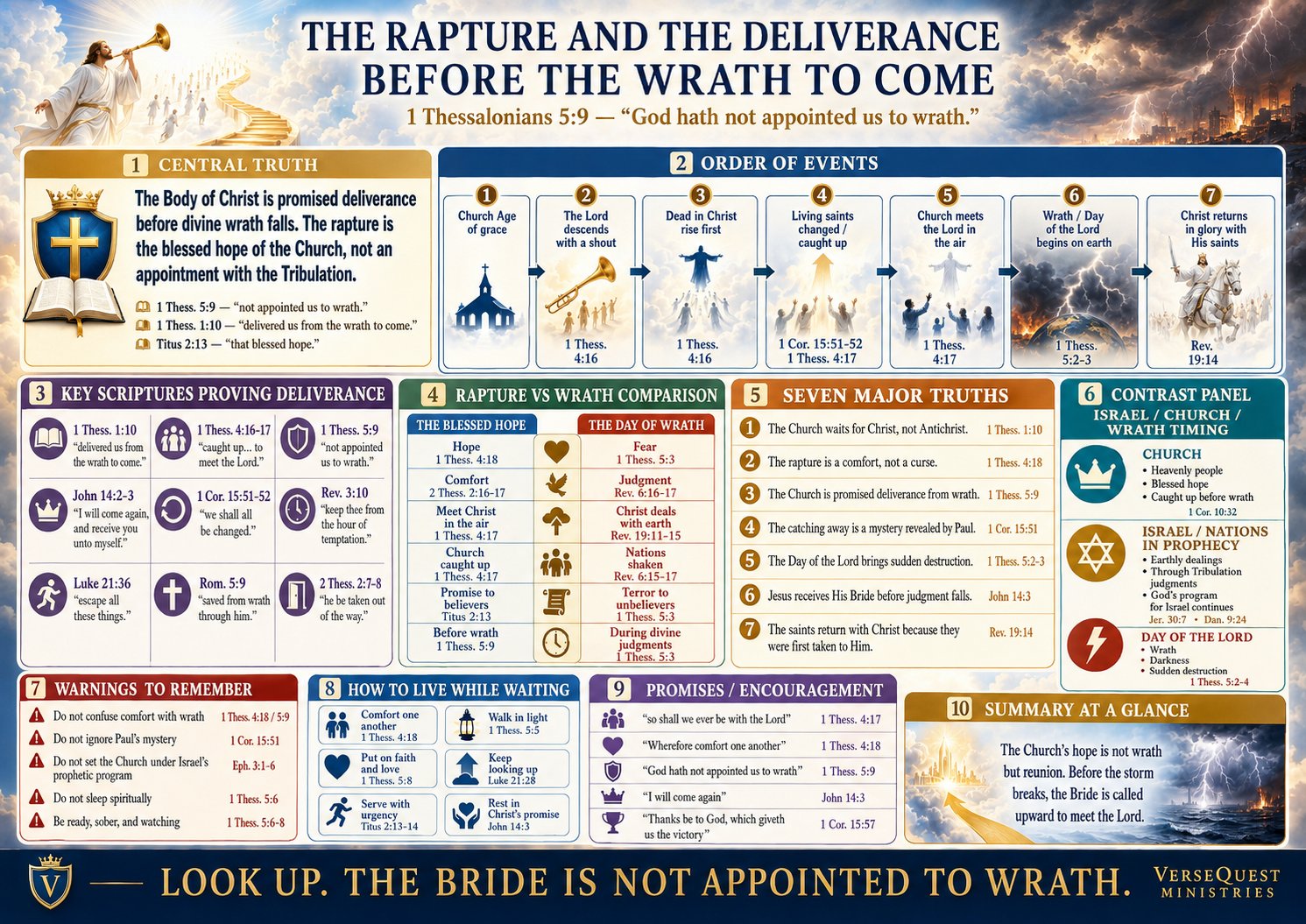
- The Rapture and the Deliverance Before the Wrath to Come – Printable Bible Study Chart
- Printable KJV Bible study chart on The Rapture and the Deliverance Before the Wrath to Come, showing from 1 Thessalonians 5:9 that the Church is not appointed to wrath. This…
- $4.99
- Add to cart
-
-
Premium Studies
-
-25%
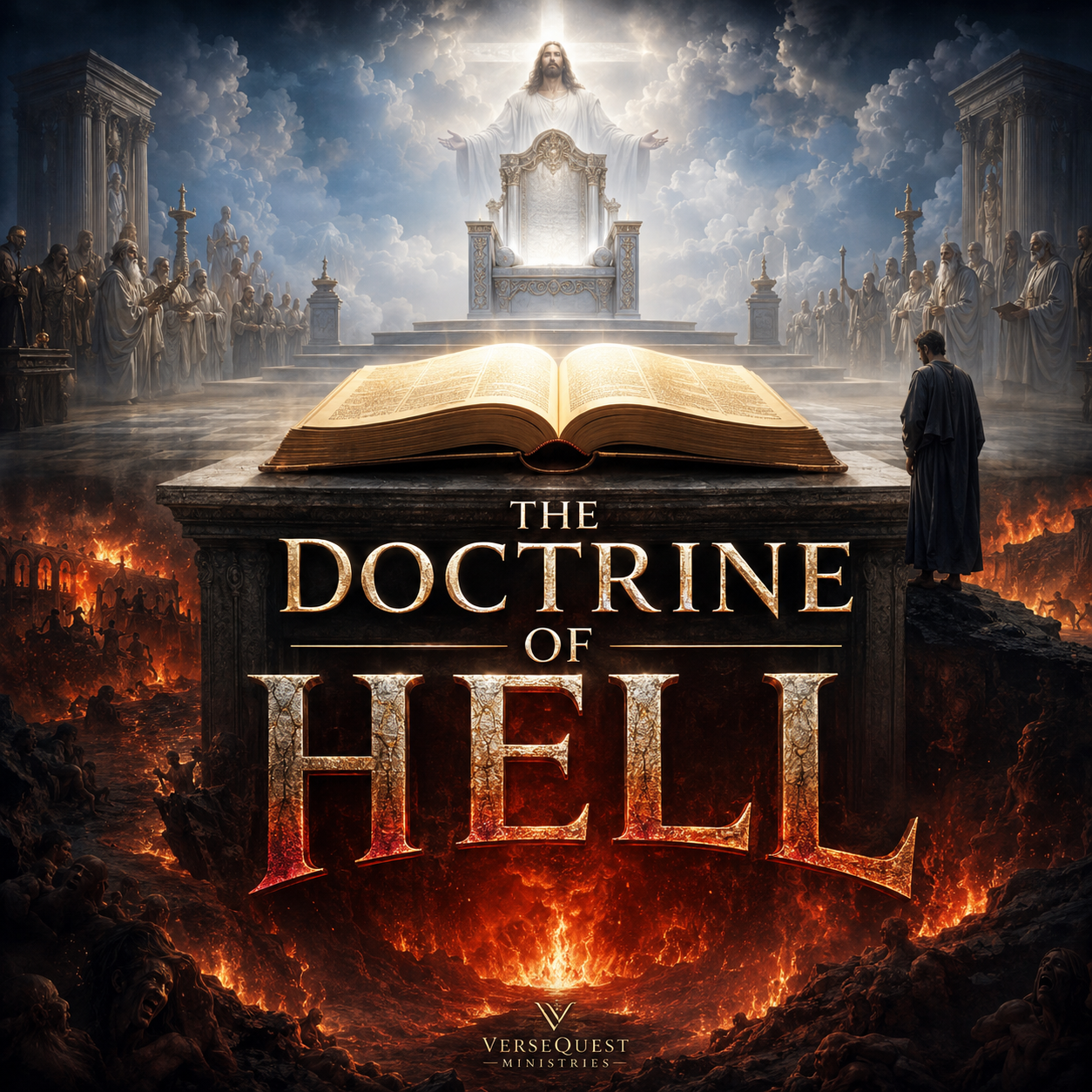
- The Doctrine of Hell — Premium Essay Series PDF
- A 383-page premium VerseQuest PDF study book containing 54 KJV essays on hell, fire, darkness, judgment, the lake of fire, the second death, and Jesus Christ as the only escape.
- Original price was: $39.99.$29.99Current price is: $29.99.
- Add to cart
-
-25%
-
Angels
-
-67%
- The Doctrine of Angels Made Plain – 620-Page KJV Bible Study PDF
- The Doctrine of Angels Made Plain is a 620-page KJV Bible study that traces angels from Genesis to Revelation. This premium VerseQuest PDF explains holy angels, Christ’s supremacy over angels,…
- Original price was: $29.99.$9.99Current price is: $9.99.
- Add to cart
-
-67%
-
KJV Studies
-
-67%
- The Blood of Christ – 66-Study KJV Bible Doctrine PDF
- A 441-page premium VerseQuest PDF featuring 66 detailed KJV Bible studies on the blood of Jesus Christ. This powerful doctrinal resource covers redemption, justification, propitiation, cleansing, access to God, eternal…
- Original price was: $29.99.$9.99Current price is: $9.99.
- Add to cart
-
-67%