
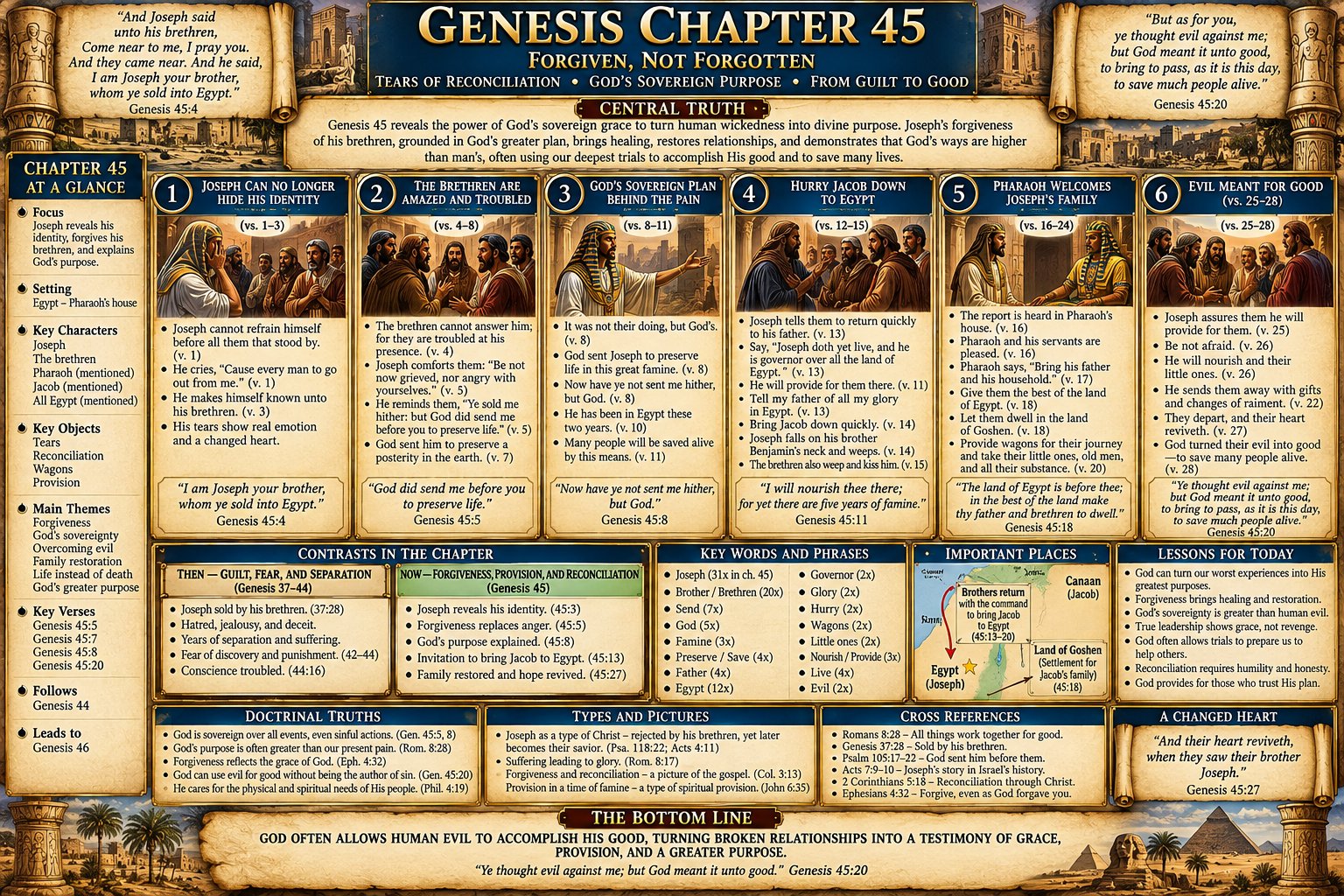
Genesis 45 – Joseph Reveals Himself: Forgiveness, Reconciliation, God’s Sovereign Purpose, and Jacob’s Heart Revived (KJV Bible Study Chart)
Explore Genesis 45 with this detailed KJV Bible study chart tracing the emotional moment when Joseph can no longer hide his identity and declares to his astonished brothers, “I am Joseph.” Follow Joseph as he names their past betrayal yet explains God’s sovereign purpose: “God did send me before you to preserve life.” The chart covers Joseph’s reconciliation with Benjamin and his brothers, the promise of provision in Goshen, Pharaoh’s generous welcome, the wagons sent to Canaan, and Jacob’s astonishing response when he learns his beloved son is still alive. Genesis 45 provides a powerful study of forgiveness, reconciliation, divine providence, family restoration, grace, provision, and God’s ability to overrule human evil for a greater purpose.
$4.99
Description
Genesis 45: Forgiven, Not Forgotten is a detailed KJV Bible study chart tracing the emotional climax of the Joseph narrative as Joseph finally reveals himself to the brothers who sold him into Egypt. After years of separation, suffering, testing, and hidden identity, Judah’s self-sacrificial plea in Genesis 44 proves that the brothers have changed. Joseph can no longer restrain himself, sends the Egyptians from the room, weeps openly, and declares, “I am Joseph.”
His brothers are immediately troubled and unable to answer him. Joseph therefore calls them closer and identifies himself again as “Joseph your brother, whom ye sold into Egypt.” He does not deny their guilt, minimize their betrayal, or rewrite the past. Yet he interprets the painful history beneath the sovereignty of God: “God did send me before you to preserve life.” Their actions were sinful, but their wickedness did not overthrow God’s larger purpose.
Joseph explains that only two years of famine have passed and five more remain. God sent him ahead to preserve a remnant, sustain life through a great deliverance, and prepare provision for the family. Genesis 45 therefore gives one of Scripture’s clearest demonstrations that divine sovereignty does not make human evil righteous; rather, God can overrule sinful acts and accomplish purposes the offenders never intended.
Joseph urges his brothers to return quickly to Jacob and tell him about Joseph’s glory and authority in Egypt. He promises that Jacob and his household can dwell in Goshen, remain near Joseph, and be nourished through the remaining famine. Joseph embraces Benjamin, weeps upon his neck, kisses all his brothers, and restores open fellowship.
When Pharaoh hears that Joseph’s brothers have arrived, he and his servants are pleased. Pharaoh supplies wagons and promises the family “the good of the land of Egypt” and “the fat of the land.” The family once threatened by famine is now invited into extraordinary provision.
Joseph sends his brothers home with garments, provisions, wagons, and gifts, warning them, “See that ye fall not out by the way.” When they tell Jacob that Joseph is alive and governor over Egypt, his heart initially faints because he cannot believe them. But when he sees the wagons Joseph sent, “the spirit of Jacob their father revived.”
Genesis 45 moves from concealed identity to revelation, guilt to reconciliation, famine to provision, and grief to renewed hope. Joseph forgives without pretending evil never occurred, and God demonstrates that no pit, prison, betrayal, or famine can defeat His providential purpose.
Genesis 45, Joseph reveals himself, Joseph and his brothers, forgiveness, reconciliation, Joseph weeps, I am Joseph, God sent me before you, preserve life, divine sovereignty, divine providence, famine in Egypt, great deliverance, Benjamin, Judah, Jacob, Goshen, Pharaoh, wagons to Canaan, Jacob’s heart revived, family restoration, grace, God’s greater purpose, Joseph as a type of Christ
Genesis 45 begins exactly where Genesis 44 ends. Judah has offered himself as a bondman in Benjamin’s place, proving that the brothers who once abandoned Joseph are no longer willing to sacrifice another son of Rachel for their own safety. Joseph’s final test has revealed genuine change, and he can no longer restrain himself.
Joseph orders every Egyptian from the room and weeps so loudly that Pharaoh’s household hears of it. He announces, “I am Joseph; doth my father yet live?” His brothers cannot answer because they are troubled at his presence. The man they betrayed now possesses enormous authority over their lives.
Joseph calls them closer and says, “I am Joseph your brother, whom ye sold into Egypt.” Forgiveness does not require falsifying history. Joseph names their action plainly. Yet he immediately tells them not to be grieved or angry with themselves because “God did send me before you to preserve life.”
Verse 8 says, “it was not you that sent me hither, but God.” This must be understood alongside Joseph’s explicit statement that they sold him. Scripture holds both truths together: the brothers acted sinfully and remain responsible, while God sovereignly overruled their evil actions to accomplish a purpose far beyond their intentions.
Two years of famine have passed, with five years remaining. Joseph explains that God sent him before the family “to preserve you a posterity in the earth, and to save your lives by a great deliverance.” Joseph’s authority in Egypt becomes the means by which the covenant family will survive.
Joseph promises that Jacob may dwell in Goshen in verse 10. He embraces Benjamin and kisses his brothers, after which they are finally able to speak with him. Reconciliation now replaces fear.
Pharaoh hears of Joseph’s family and welcomes them. In verses 17–20 he offers wagons, provisions, and “the good of the land of Egypt.” Goshen should not be attributed specifically to verse 18; Joseph had already named Goshen in verse 10.
The brothers return to Canaan and tell Jacob that Joseph is alive and governs Egypt. Jacob initially cannot believe them, but the wagons change his response: “the spirit of Jacob their father revived.” He resolves to see Joseph before he dies.
The famous statement “Ye thought evil against me; but God meant it unto good” belongs to Genesis 50:20, not Genesis 45:20. Genesis 45 nevertheless teaches the same providential truth through Joseph’s explanation that God sent him ahead to preserve life.
Genesis 45 is useful for teaching forgiveness without denying wrongdoing, reconciliation after genuine change, God’s sovereignty over painful circumstances, and the difference between human intention and divine providence. Joseph demonstrates that grace does not require pretending betrayal never happened; he names the wrong while recognizing God’s greater purpose. The chapter also provides rich instruction on family restoration, emotional healing, generosity, provision, and renewed hope after prolonged grief. It is well suited for personal Bible study, Sunday school, homeschool instruction, Bible institutes, sermon preparation, forgiveness studies, family reconciliation, discipleship, providence teaching, and studies of Joseph as a type of Christ
King James Bible, Strong’s Concordance, Thompson Chain-Reference Bible, Treasury of Scripture Knowledge, Nave’s Topical Bible, Genesis 37–50 study notes, Joseph life timeline, Joseph and his brothers charts, Genesis 50:20 providence studies, Psalm 105 Joseph studies, Acts 7 studies, biblical forgiveness Scripture chains, reconciliation studies, Romans 8:28 studies, Goshen and Egypt maps, Joseph and Christ typology charts, VerseQuest Genesis charts
Related products
-
Spritual Dryness
-
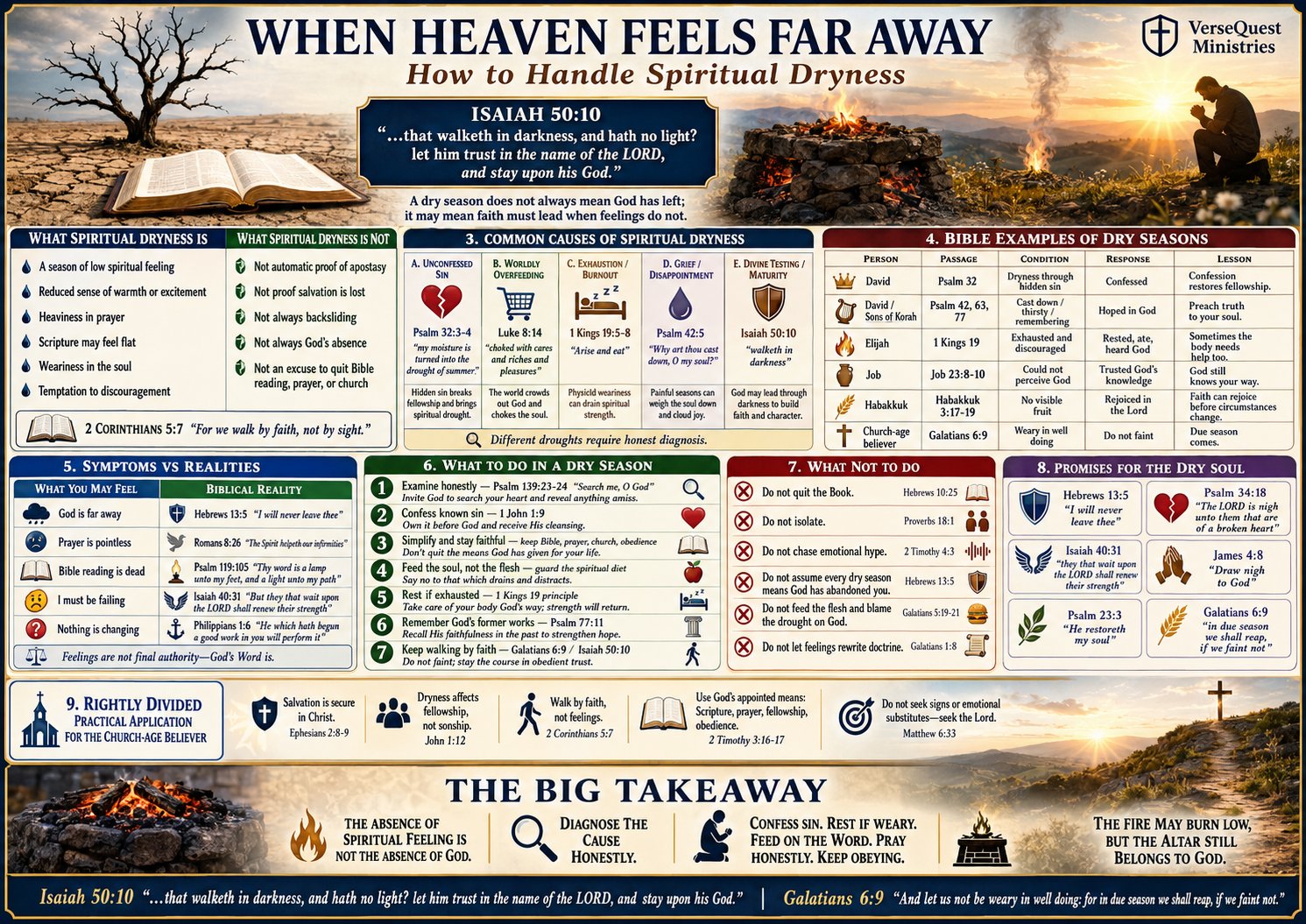
- When Heaven Feels Far Away – How to Handle Spiritual Dryness and Walk by Faith (KJV Bible Study Chart)
- Walk through spiritual dryness with this detailed KJV Bible study chart covering its causes, biblical examples, warning signs, promises, faithful habits, and the difference between feelings and truth.
- $3.99
- Add to cart
-
-
Genesis Chapter 2
-
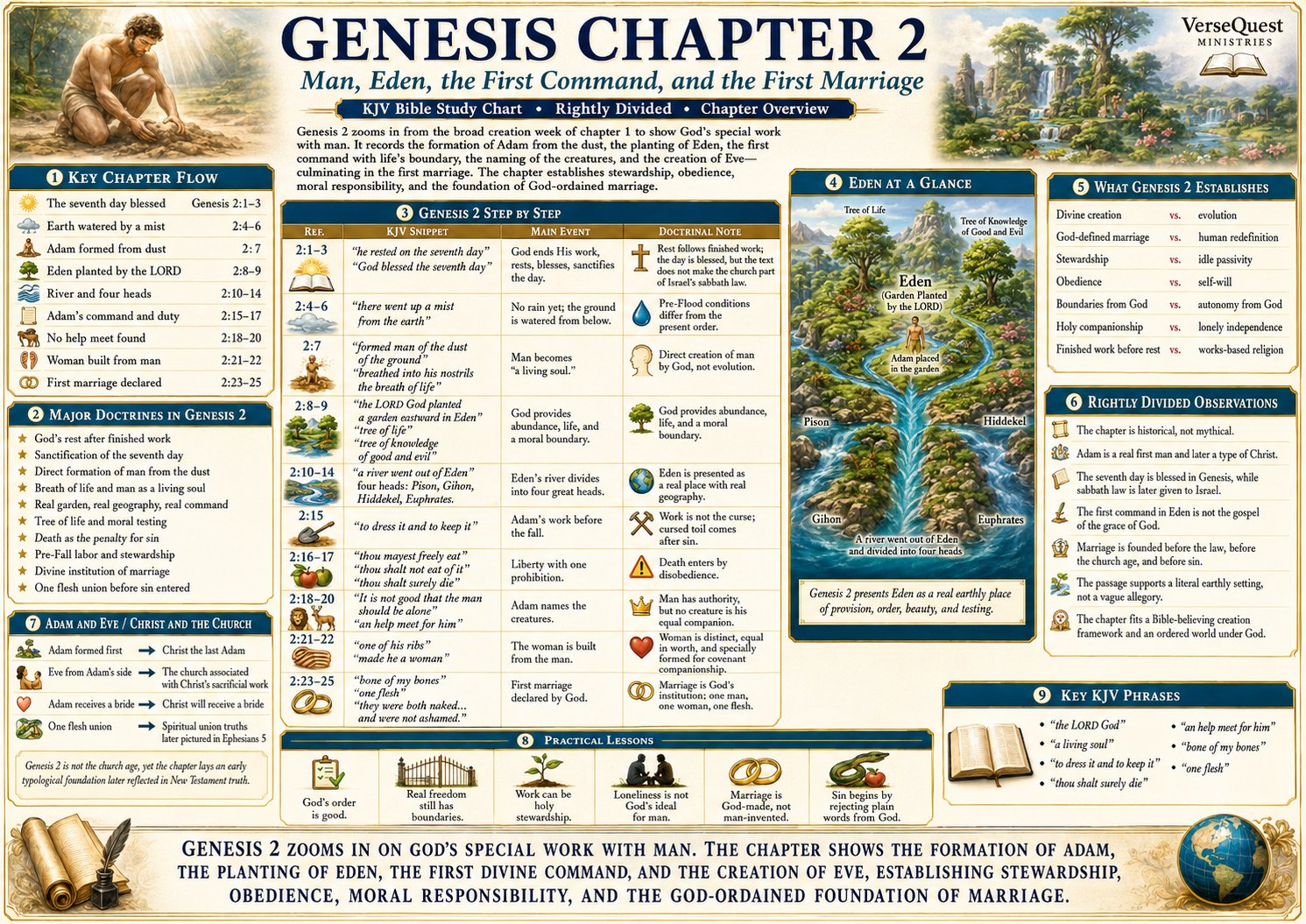
- Genesis Chapter 2 Bible Study Chart – Adam, Eden, the First Command, and the First Marriage (KJV)
- Explore Genesis Chapter 1 with this detailed KJV Bible study chart covering the six days of creation, the firmament, light, fixed kinds, man in God’s image, major doctrines, recurring phrases,…
- $3.99
- Add to cart
-
-
Paul and the Twelve
-
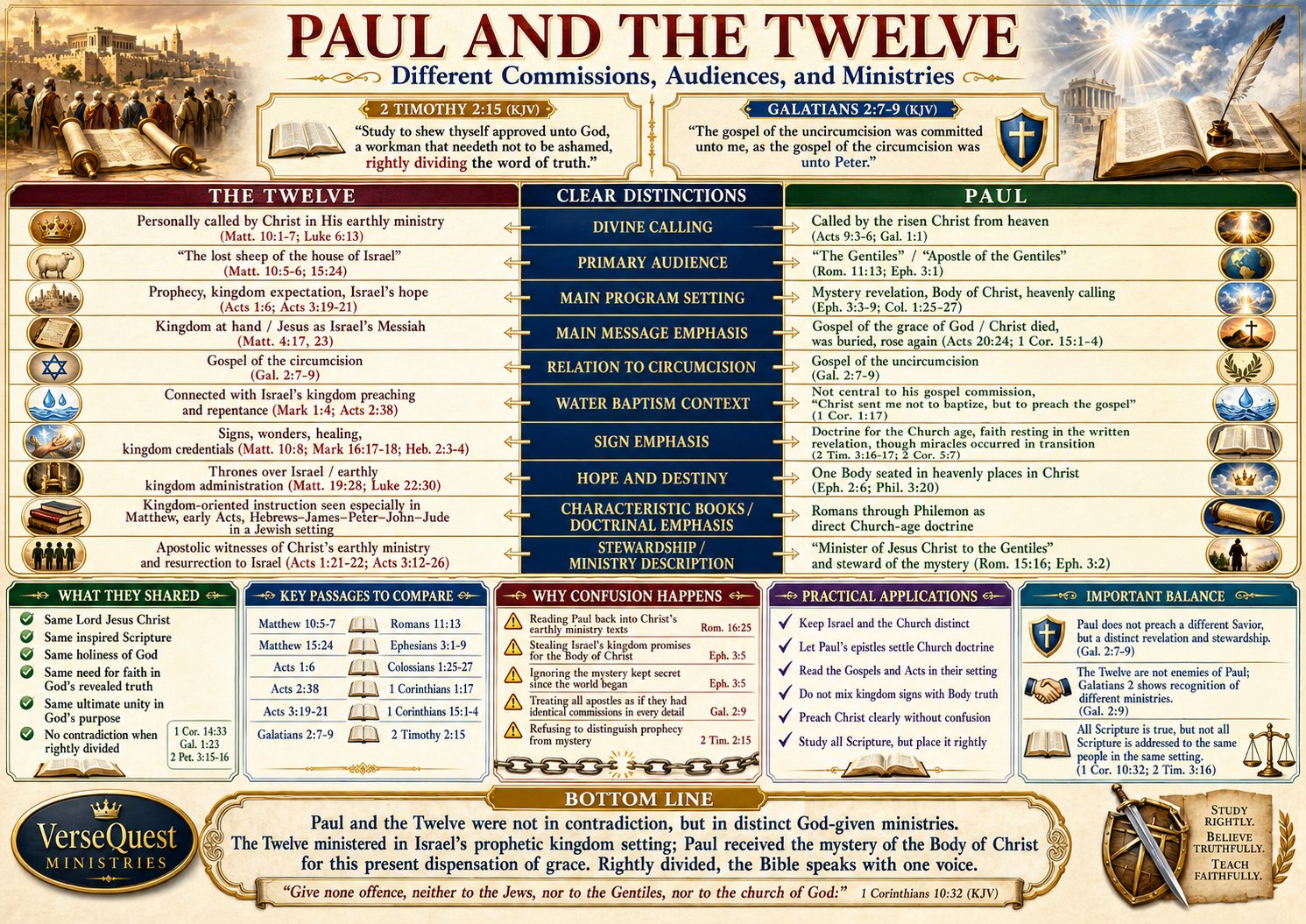
- Paul and the Twelve Bible Study Chart – Different Commissions, Audiences, and Ministries (KJV)
- Compare Paul and the Twelve with this detailed KJV Bible study chart covering their distinct callings, audiences, Kingdom and mystery settings, gospel stewardships, baptism contexts, signs, and future hopes.
- $3.99
- Add to cart
-
-
Genesis Study
-
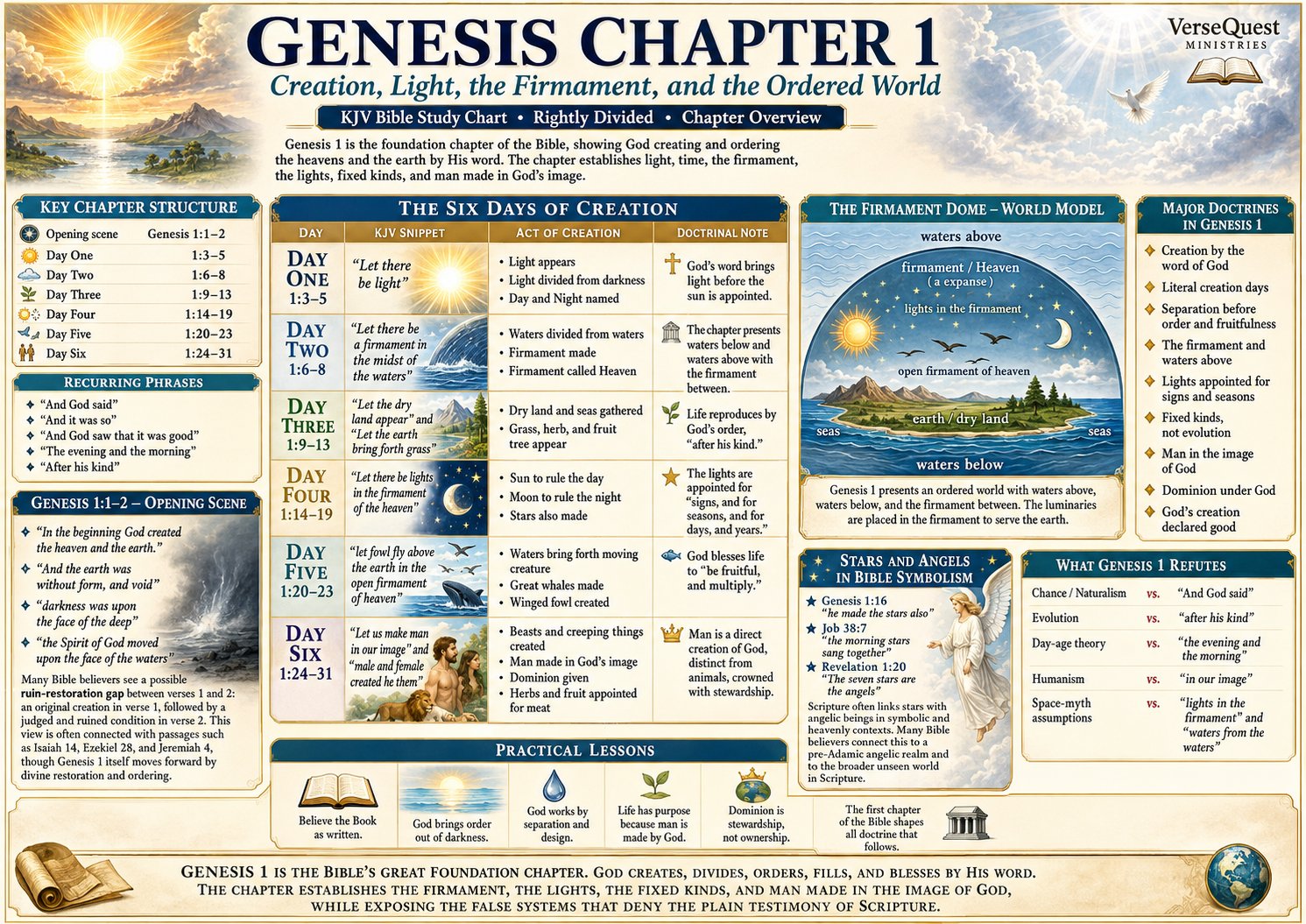
- Genesis Chapter 1 Bible Study Chart – Creation, Light, the Firmament, and the Ordered World (KJV)
- Explore Genesis Chapter 1 with this detailed KJV Bible study chart covering the six days of creation, the firmament, light, fixed kinds, man in God’s image, major doctrines, recurring phrases,…
- $3.99
- Add to cart
-
-
Uncategorized
-
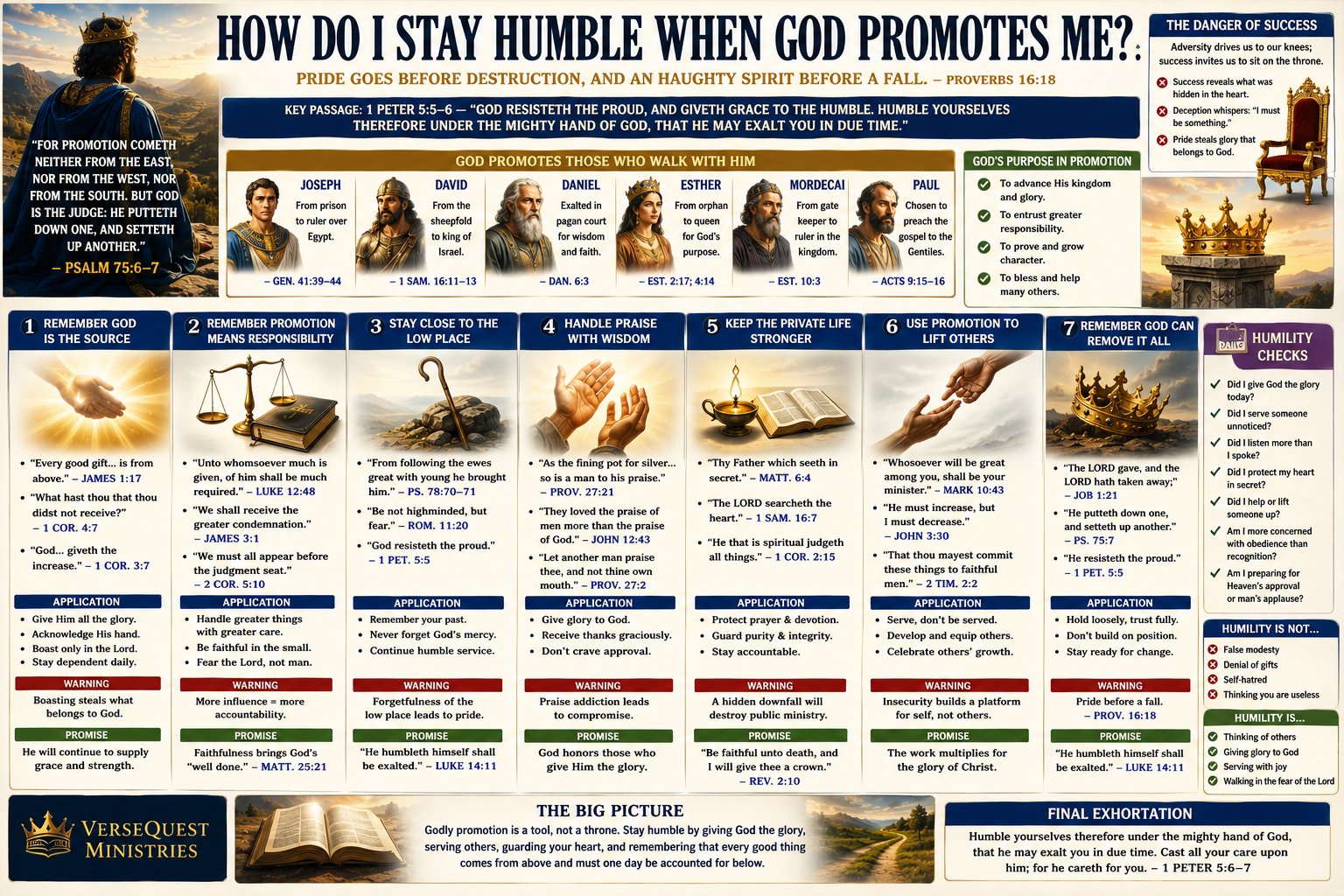
- How to Stay Humble When God Promotes You – Biblical Humility, Success, and Faithful Stewardship (KJV Bible Study Chart)
- Learn how to remain humble when God increases your influence with this detailed KJV Bible study chart covering pride, praise, responsibility, private devotion, servant leadership, and faithful stewardship.
- $3.99
- Add to cart
-