
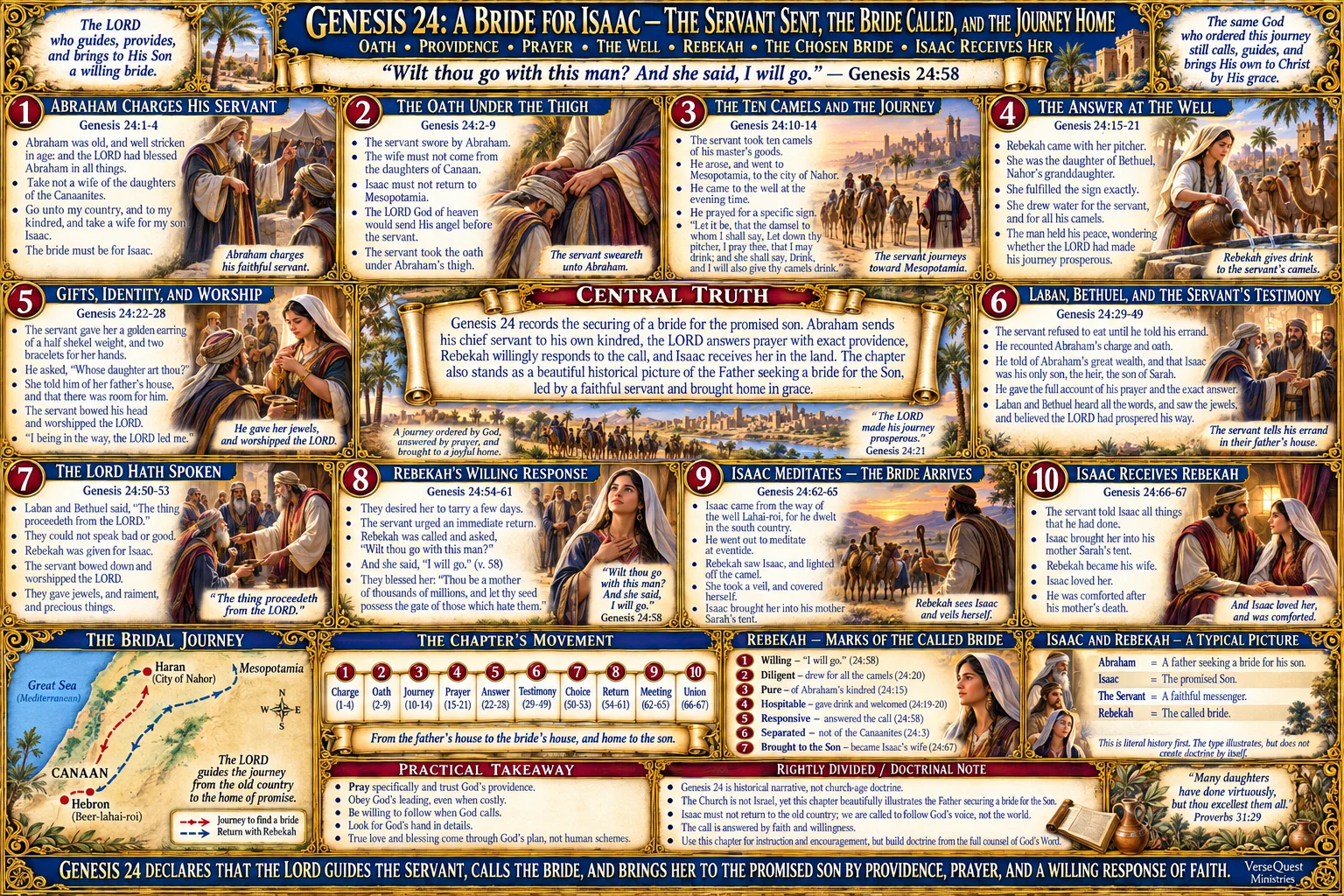
Genesis 24 – A Bride for Isaac: Abraham’s Servant, Providential Prayer, Rebekah’s Call, and the Journey Home (KJV Bible Study Chart)
Explore Genesis 24 with this detailed KJV Bible study chart tracing Abraham’s commission to his faithful servant, the oath concerning Isaac’s bride, the journey into Mesopotamia, and the remarkable answer to prayer at the well. Follow Rebekah as she waters the servant’s camels, receives his testimony, hears that “the LORD hath prospered my way,” and answers the great question “Wilt thou go with this man?” with “I will go.” The chart also follows the return journey to Canaan, Isaac meditating in the field, and his reception of Rebekah as his wife. It highlights prayer, providence, covenant continuity, willing faith, and the beautiful typological picture of a bride brought to the promised son. Ideal for Bible study, Sunday school, homeschool, sermon preparation, marriage studies, and Genesis teaching.
$4.99
Description
Genesis 24: A Bride for Isaac—The Servant Sent, the Bride Called, and the Journey Home is a detailed KJV Bible study chart tracing Abraham’s commission to his faithful servant, the journey into Mesopotamia, prayer at the well, God’s providential answer through Rebekah, her willing decision to leave home, and Isaac’s joyful reception of his bride.
Abraham is old and “the LORD had blessed Abraham in all things.” Concerned for the covenant line, he charges the eldest servant of his house not to take a wife for Isaac from the daughters of the Canaanites. Instead, the servant must return to Abraham’s country and kindred. Isaac, however, must not be taken back there. Abraham trusts that “the LORD God of heaven” will send His angel before the servant and prosper the mission.
The servant departs with ten camels and his master’s goods, traveling to Mesopotamia and the city of Nahor. At evening he stops beside a well and asks God for a specific providential confirmation. The woman who willingly offers water not only to him but also to his camels will be the one God has appointed. Before he finishes speaking, Rebekah arrives. She fulfills the request precisely, drawing water repeatedly until the camels have finished drinking.
After learning her identity, the servant bows his head and worships the LORD, declaring, “I being in the way, the LORD led me.” Rebekah is the daughter of Bethuel and a descendant of Abraham’s family. The servant gives her jewelry and is welcomed into the household, where he refuses to eat until he has explained his mission.
He recounts Abraham’s wealth, Isaac’s miraculous place as Sarah’s son and heir, the oath concerning Isaac’s wife, his prayer at the well, and God’s exact answer. Laban and Bethuel recognize divine providence and respond, “The thing proceedeth from the LORD.”
The following day the family desires a delay, but the servant requests an immediate return. Rebekah is asked directly, “Wilt thou go with this man?” She answers simply, “I will go.” Her willingness becomes one of the chapter’s most memorable expressions of responsive faith.
Back in Canaan, Isaac goes into the field to meditate at eventide. Rebekah sees him, takes a veil, and prepares to meet him. The servant tells Isaac all that he has done, and Isaac receives Rebekah into Sarah’s tent. “She became his wife; and he loved her.”
Genesis 24 is literal patriarchal history, yet it also provides a beautiful typological picture of a father seeking a bride for his promised son through a faithful messenger. The type should illustrate rather than replace doctrine. The chapter’s direct lesson remains powerful: God guides, prayer matters, providence works through details, obedience requires willingness, and the LORD can bring His purposes to completion without human manipulation.
Genesis 24, Isaac and Rebekah, bride for Isaac, Abraham’s servant, Abrahamic covenant, providence, prayer at the well, ten camels, city of Nahor, Mesopotamia, Rebekah, Bethuel, Laban, willing bride, I will go, LORD led me, divine guidance, answered prayer, covenant marriage, Isaac meditates, bride journey, faithful servant, promised son, typology of Christ and the Church
formula for seeking signs but as a specific prayer within a unique providential mission. Rebekah arrives before the servant has finished speaking and fulfills the requested action exactly.
Her diligence is significant. Watering ten thirsty camels would require sustained effort. She acts hospitably before knowing the servant’s full identity or purpose. After discovering that she belongs to Abraham’s extended family, the servant bows and worships, saying, “I being in the way, the LORD led me.” Guidance becomes clear while he is faithfully carrying out his assigned duty.
At Bethuel’s house, the servant refuses to eat until he has explained his errand. He recounts Abraham’s commission, Isaac’s position as heir, the prayer at the well, and Rebekah’s exact response. Laban and Bethuel acknowledge, “The thing proceedeth from the LORD.” The gifts that follow accompany the agreement and honor Rebekah and her family.
When the family asks for additional delay, the servant presses to return because the LORD has prospered his journey. Rebekah is personally asked, “Wilt thou go with this man?” Her answer, “I will go,” demonstrates willingness to leave the familiar and enter a future she has not yet seen.
Isaac is later found meditating in the field at eventide. Rebekah sees him, veils herself, and the servant recounts the entire mission. Isaac brings her into Sarah’s tent, she becomes his wife, he loves her, and he is comforted after his mother’s death.
The chapter can fittingly illustrate the Father, the promised Son, a faithful messenger, and a called bride, but Genesis 24 is historical narrative first. The typology enriches the chapter without replacing its direct teaching concerning providence, prayer, obedience, marriage, covenant continuity, and a willing response to God’s leading.
Genesis 24 is useful for teaching prayer, providence, obedience, discernment, marriage, willingness to follow God’s leading, faithfulness in assigned responsibility, and trust in God when the journey is uncertain. It also provides excellent material for studying Abraham’s covenant family, Rebekah’s character, Isaac’s marriage, biblical hospitality, and the distinction between historical narrative and typological application. The chapter works especially well for personal Bible study, Sunday school, homeschool instruction, Bible institutes, marriage teaching, sermon preparation, discipleship, youth studies, covenant studies, and lessons on divine guidance and faithful service.
King James Bible, Strong’s Concordance, Thompson Chain-Reference Bible, Treasury of Scripture Knowledge, Nave’s Topical Bible, Genesis 22–26 study notes, Abrahamic covenant charts, Isaac and Rebekah studies, patriarchal genealogy charts, maps of Canaan Mesopotamia and Haran, biblical marriage studies, prayer and providence Scripture chains, Proverbs 31 studies, Ephesians 5 bride studies, Hebrews 11 faith studies, biblical typology resources, VerseQuest Genesis charts
Related products
-
Genesis Study
-
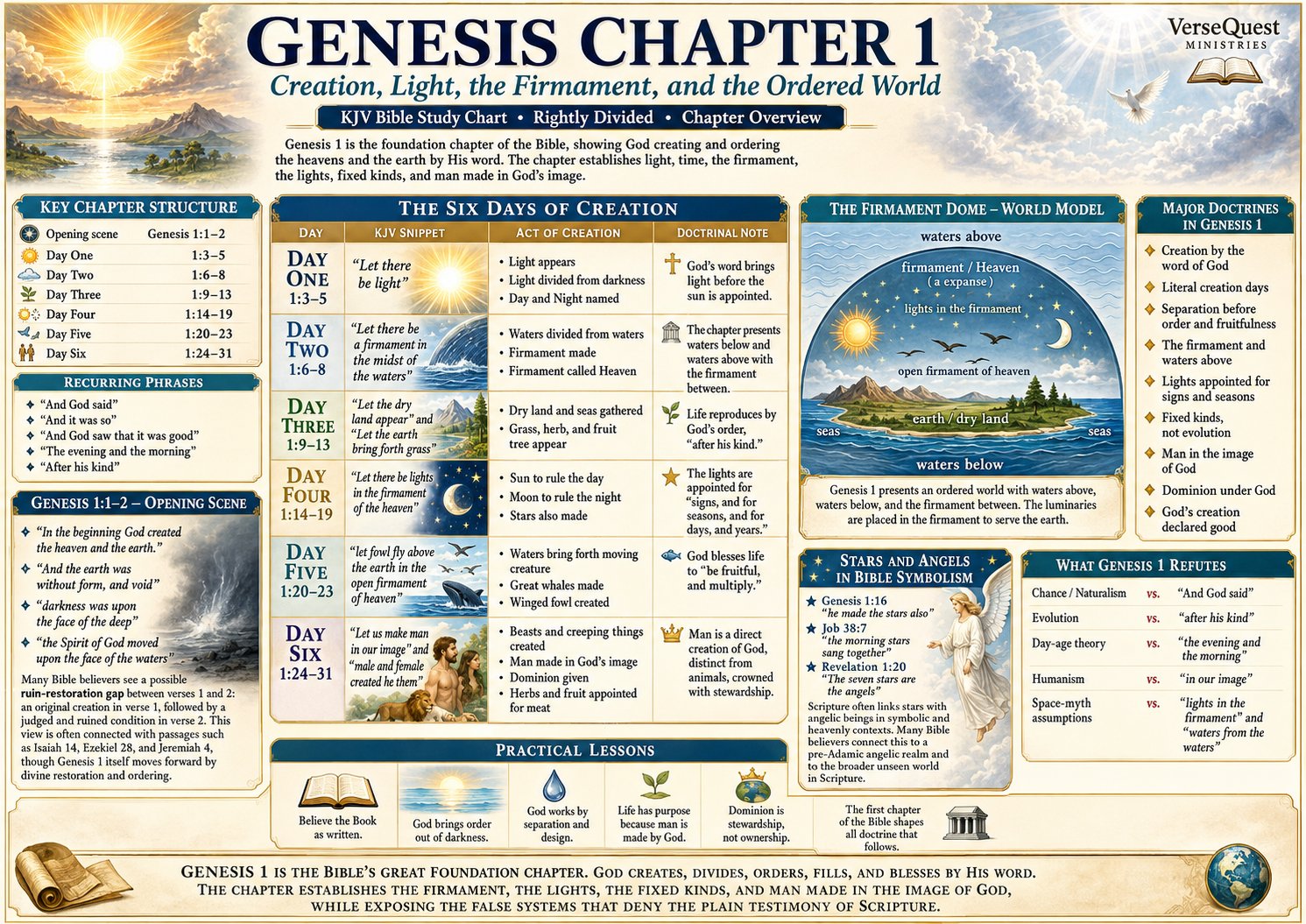
- Genesis Chapter 1 Bible Study Chart – Creation, Light, the Firmament, and the Ordered World (KJV)
- Explore Genesis Chapter 1 with this detailed KJV Bible study chart covering the six days of creation, the firmament, light, fixed kinds, man in God’s image, major doctrines, recurring phrases,…
- $3.99
- Add to cart
-
-
The Serpent's Footnotes
-
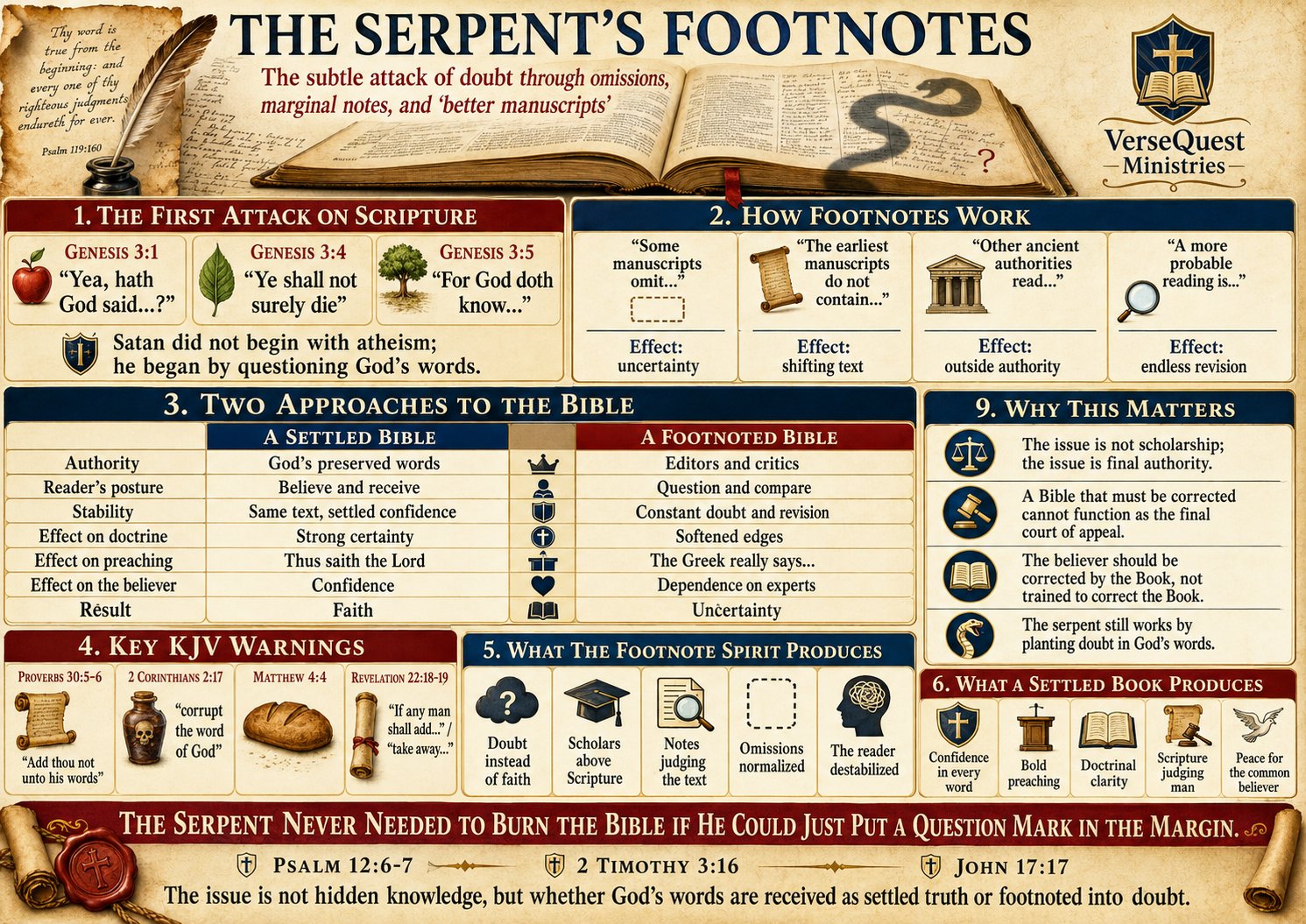
- The Serpent’s Footnotes Bible Study Chart – KJV Preservation, Textual Criticism, Omissions, and Manuscript Doubt
- Examine the attack of textual doubt with this detailed KJV Bible study chart covering manuscript footnotes, omissions, biblical preservation, final authority, and confidence in God’s settled words.
- $3.99
- Add to cart
-
-
Bitterness
-
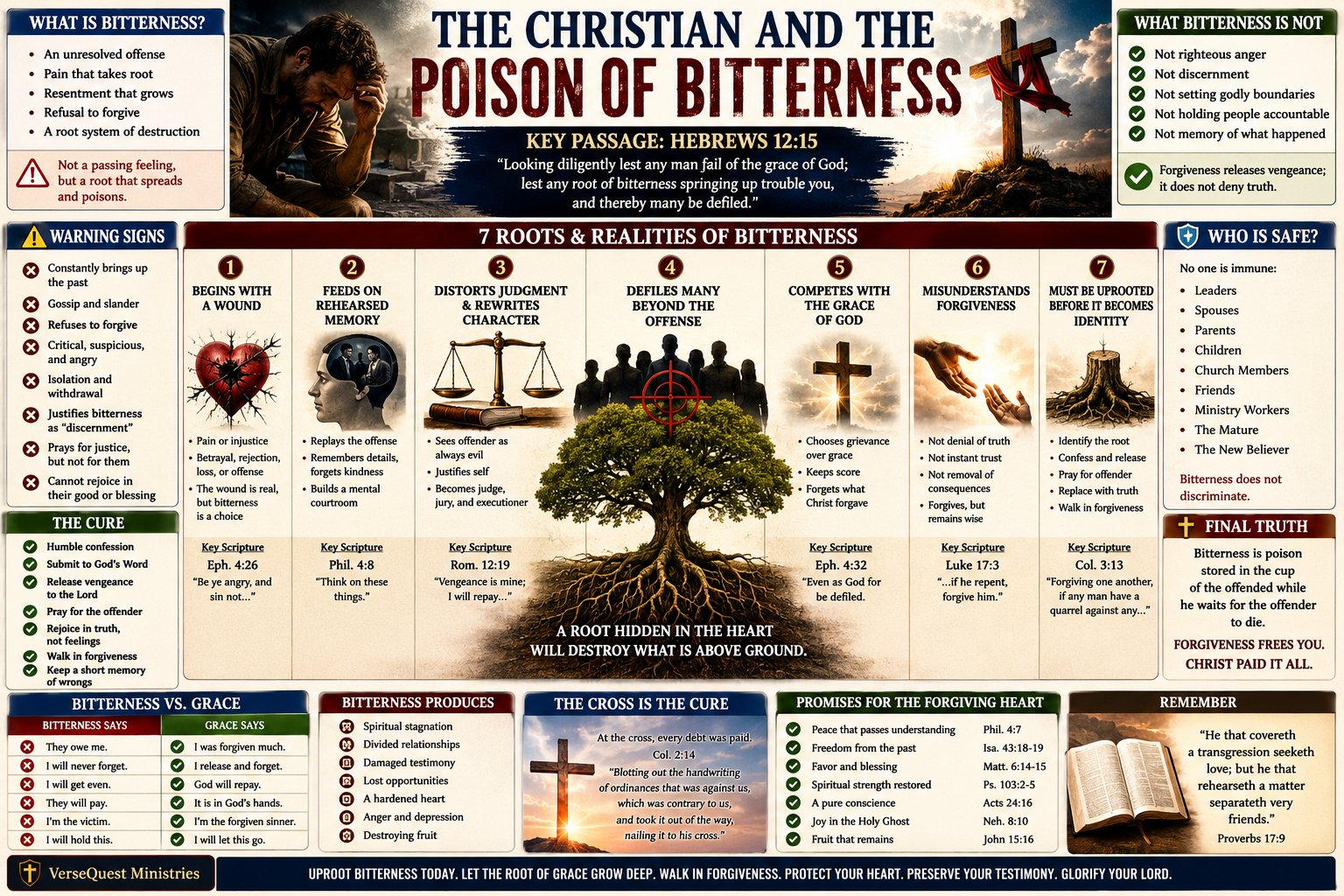
- The Christian and the Poison of Bitterness Bible Study Chart – Forgiveness, Grace, and Healing the Heart (KJV)
- Expose and uproot bitterness with this detailed KJV Bible study chart covering unresolved offenses, warning signs, forgiveness, grace, wise boundaries, the cross, and healing for the Christian heart.
- $3.99
- Add to cart
-
-
The Seven Dispensations
-
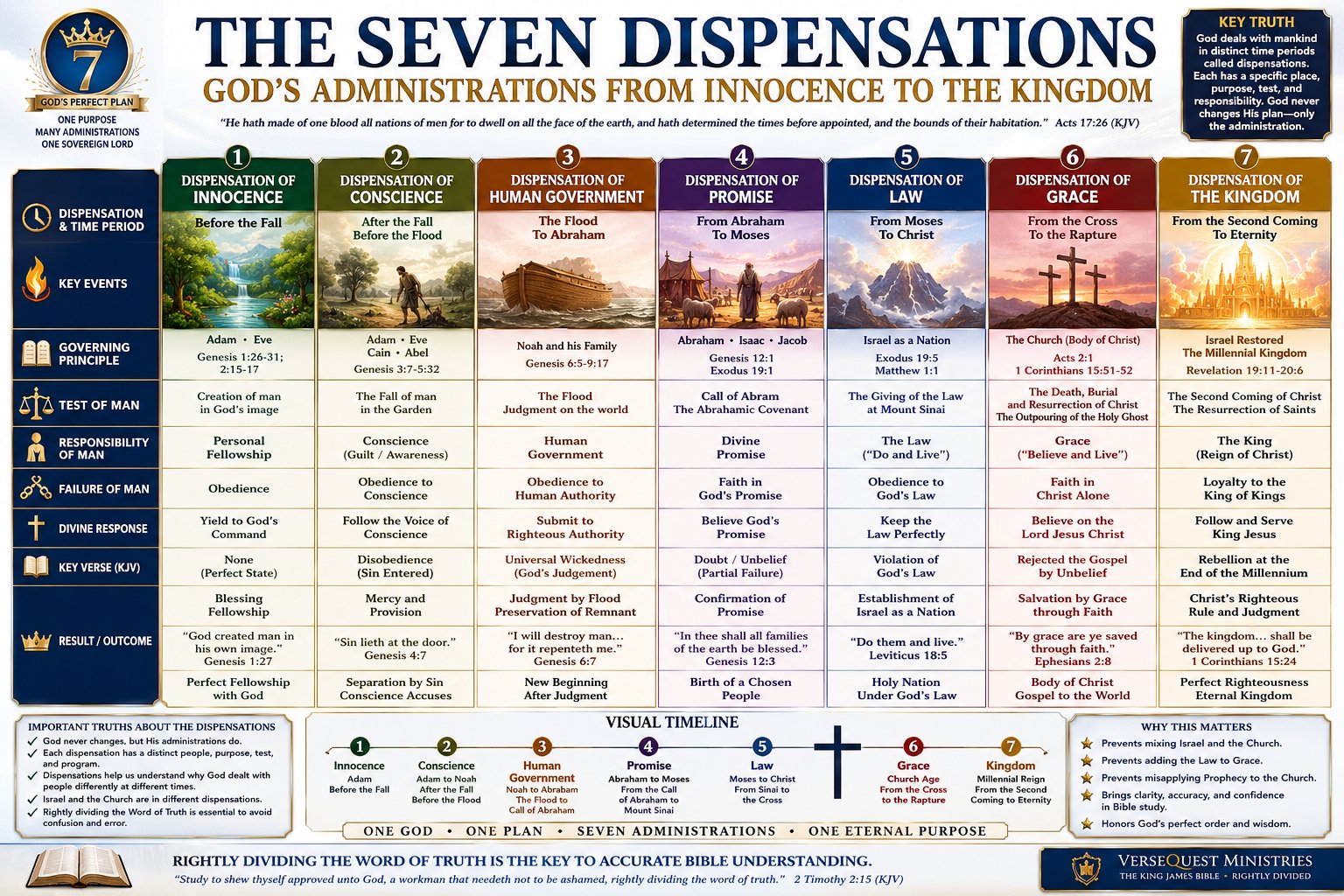
- The Seven Dispensations Bible Study Chart – God’s Administrations from Innocence to the Kingdom (KJV)
- Explore the seven dispensations with this detailed KJV Bible study chart covering Innocence, Conscience, Human Government, Promise, Law, Grace, the Kingdom, and the importance of rightly dividing Scripture.
- $3.99
- Add to cart
-
-
Spiritual Growth
-
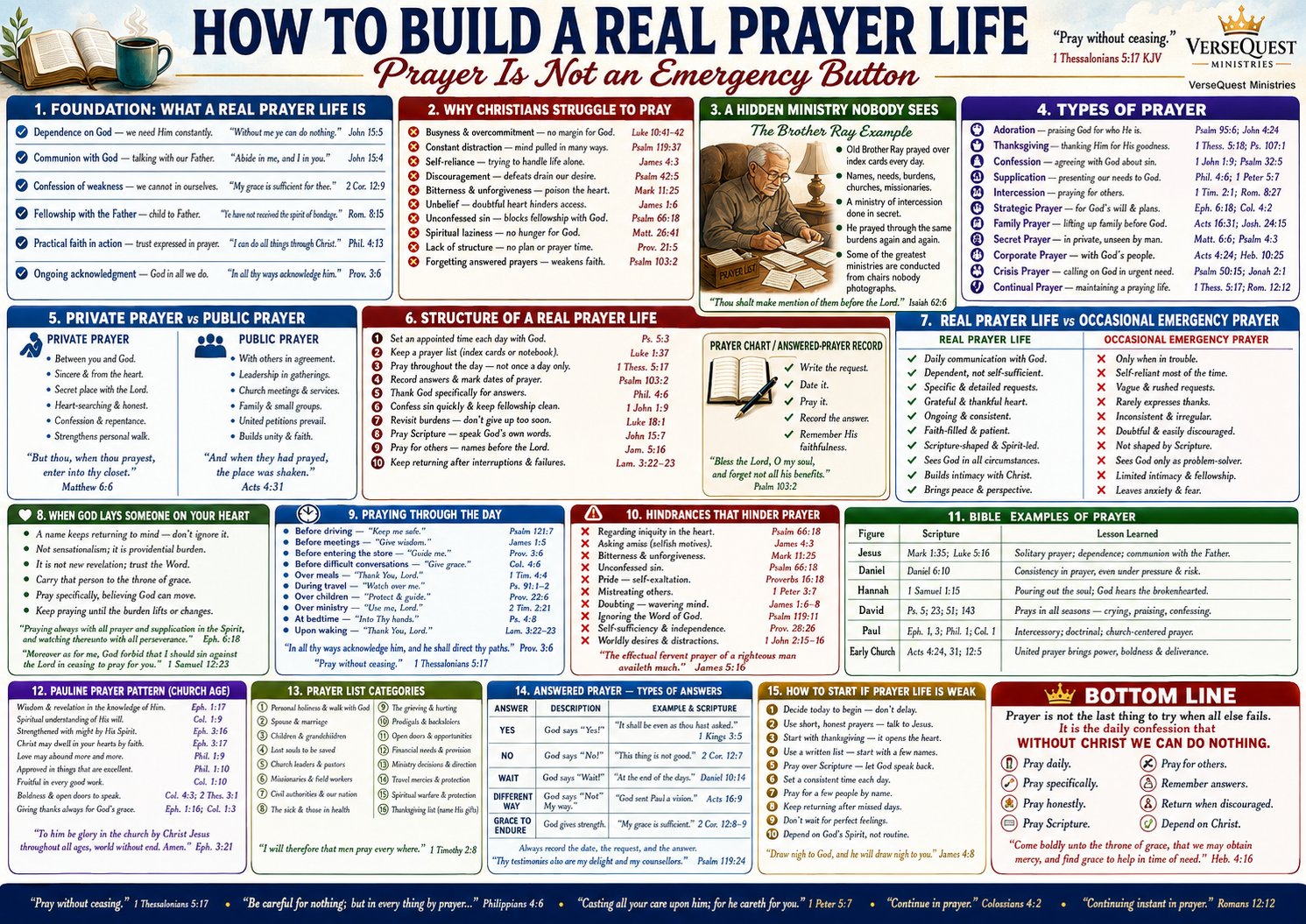
- How to Build a Real Prayer Life – Biblical Prayer Guide and KJV Bible Study Chart
- Build a consistent, biblical prayer life with this detailed KJV Bible study chart. Explore the foundations of prayer, types of prayer, common hindrances, answered prayer, Bible examples, and practical ways…
- $3.99
- Add to cart
-