
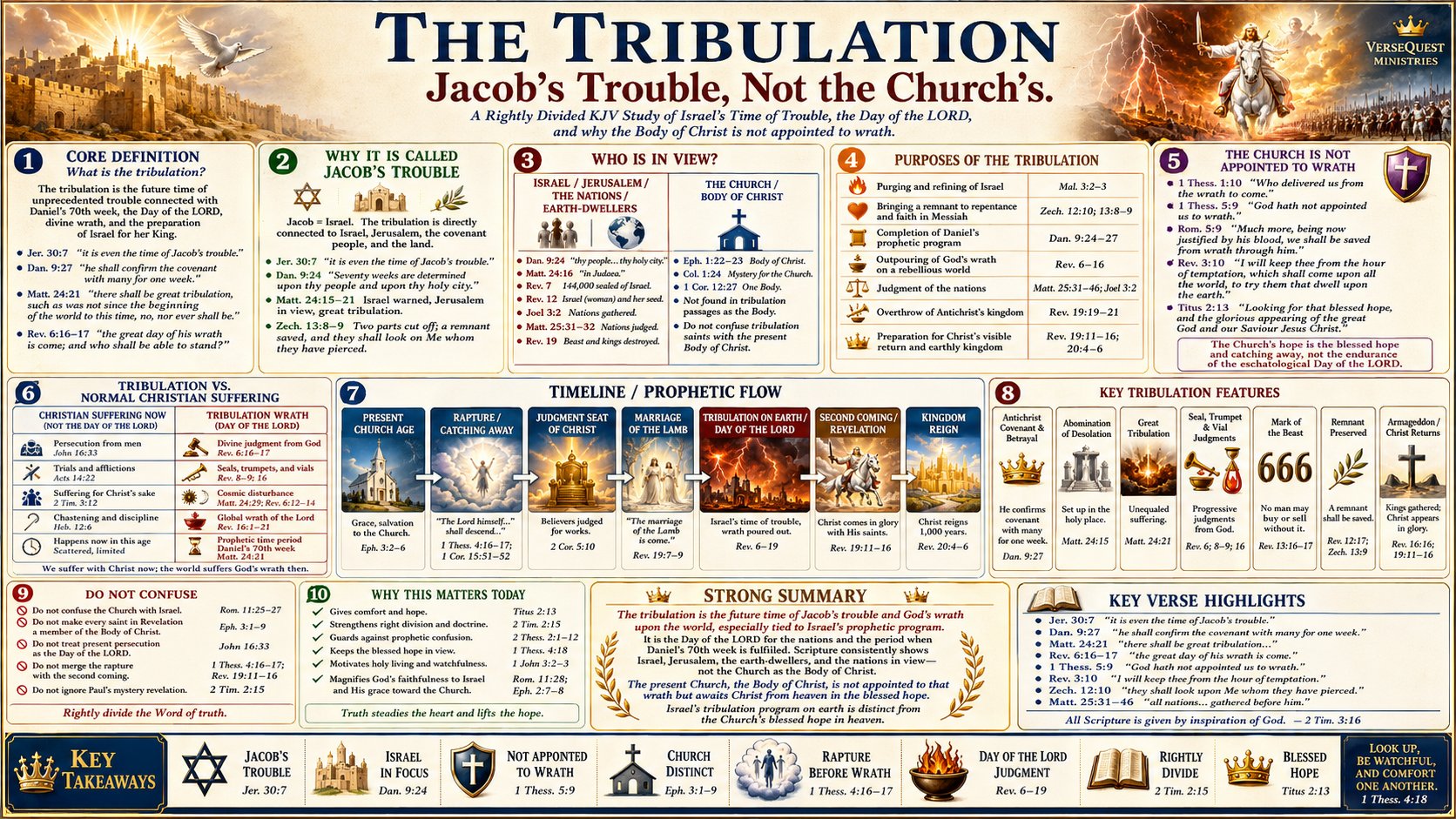
The Tribulation – Jacob’s Trouble, Not the Church’s: Israel, the Day of the Lord, and the Coming Wrath of God (KJV Bible Study Chart)
Understand why the Tribulation is Jacob’s trouble rather than the Church’s with this detailed KJV chart covering Israel, Jerusalem, Daniel’s seventieth week, the Day of the Lord, divine wrath, Antichrist, the Rapture, the Second Coming, and Christ’s Kingdom.
$3.99
Description
The Tribulation: Jacob’s Trouble, Not the Church’s is a detailed, rightly divided KJV Bible study chart explaining the people, purpose, timing, character, and prophetic setting of the future Tribulation. It demonstrates why Daniel’s seventieth week concerns Israel, Jerusalem, the nations, and rebellious earth-dwellers rather than the present Church, the Body of Christ.
Built around Jeremiah 30:7, Daniel 9:24–27, Matthew 24:15–31, Revelation 6–19, 1 Thessalonians 1:10, 1 Thessalonians 4:13–18, 1 Thessalonians 5:9, Revelation 3:10, Zechariah 12:10, and Titus 2:13, this chart distinguishes ordinary Christian suffering from the future outpouring of God’s prophetic wrath.
The Tribulation is the future period of unprecedented trouble connected with Daniel’s seventieth week, the Day of the Lord, the rise and reign of the Antichrist, the judgment of rebellious nations, and God’s preparation of Israel for the return of her Messiah and King.
Jeremiah 30:7 identifies this period unmistakably: “Alas! for that day is great, so that none is like it: it is even the time of Jacob’s trouble.” Jacob is Israel. The verse does not call the period the Church’s trouble, the Body of Christ’s purification, or the final stage of Christian sanctification.
The expression “Jacob’s trouble” connects the Tribulation directly with Israel’s national and prophetic future. Israel, Jerusalem, the covenant people, the holy city, the Temple setting, and the promised earthly Kingdom stand at the centre of the passages describing this coming crisis.
Daniel 9:24 declares that seventy weeks are determined upon “thy people and upon thy holy city.” Daniel’s people are Israel, and Daniel’s holy city is Jerusalem. The prophecy does not identify the mystery Body of Christ as the subject of the seventy weeks.
Sixty-nine weeks were fulfilled in connection with Israel’s prophetic calendar and the coming of Messiah. One final week remains. Daniel 9:27 describes a covenant confirmed for one week and broken in the midst of that week, when sacrifice and oblation cease and the abomination of desolation is established.
The seventieth week is a seven-year prophetic period. Its midpoint divides the week into two halves and introduces the most severe stage of the Tribulation, commonly called the Great Tribulation.
Matthew 24:21 records Christ’s warning: “For then shall be great tribulation, such as was not since the beginning of the world to this time, no, nor ever shall be.” This is not a general description of every difficult century, war, persecution, plague, or political crisis.
The Great Tribulation is an unparalleled prophetic period. Jesus places it within a Jewish setting involving Judea, the holy place, the abomination spoken of by Daniel, the Sabbath day, false messiahs, cosmic signs, and the gathering connected with His visible return.
The chart identifies those primarily in view during this period. Israel and Jerusalem occupy the prophetic centre. The nations are gathered and judged. Earth-dwellers experience divine wrath. The Antichrist and his kingdom rise, persecute, deceive, and are finally destroyed.
Revelation 7 presents 144,000 sealed from the tribes of Israel. Revelation 12 pictures the woman, the dragon, the remnant, and the conflict surrounding Israel’s prophetic purpose. Joel speaks of the nations gathered for judgment. Matthew 25 presents the judgment of the nations when the Son of Man comes in glory.
The present Church, by contrast, is the Body of Christ, a mystery revealed especially through Paul. Ephesians 1 identifies Christ as Head over all things to the Church, which is His Body. First Corinthians 12:13 teaches that believers are baptized by one Spirit into one Body.
The Church is not national Israel. It is not Jerusalem. It is not one of the nations under judgment. It is the one new Body formed from saved Jews and Gentiles during the present dispensation of grace.
The Church’s blessings, calling, position, and hope are heavenly. The Tribulation’s central setting is earthly, national, covenantal, judicial, and prophetic.
Right division does not deny that people will believe God during the Tribulation. Scripture plainly reveals Tribulation saints, martyrs, a preserved remnant, sealed Israelites, and those who refuse the beast.
The existence of saved people during the Tribulation does not prove that the present Body of Christ remains upon earth. God had believers before the Church began, and He will have believers after the Church is caught away.
Not every saint in the Bible is a member of the Body of Christ. The word saint describes one set apart unto God, but the person’s program, calling, promises, doctrine, and dispensational setting must still be identified from context.
The chart explains several divine purposes of the Tribulation. One purpose is the purging and refining of Israel. Malachi speaks of a refining fire, while the prophets repeatedly describe a remnant brought through judgment.
Another purpose is to bring Israel to repentance and faith in the Messiah. Zechariah 12:10 foretells a future day when Israel will look upon the One whom they pierced and mourn for Him.
The nation that rejected Jesus Christ at His first coming will be brought through severe prophetic circumstances until the surviving remnant recognizes Him as the true Messiah.
The Tribulation also completes Daniel’s prophetic program. God does not cancel the final week, transfer it to a spiritual institution, or quietly absorb it into Church history. He completes what He determined upon Daniel’s people and city.
Another purpose is the outpouring of divine wrath upon a rebellious world. Revelation 6–16 describes seals, trumpets, vials, warfare, famine, death, demonic activity, cosmic disturbances, poisoned waters, darkness, torment, and global judgment.
These judgments are not merely the natural results of human sin or the wrath of political rulers. They proceed from heaven and form part of the righteous judgment of God.
Revelation 6 describes men attempting to hide from the face of the One seated upon the throne and from “the wrath of the Lamb.” The Lamb who once offered mercy now executes judgment upon the world that rejected Him.
The Tribulation also brings judgment upon the nations. The nations have rebelled against God, persecuted His people, opposed Israel, and followed the beast. Christ returns to judge their rebellion and establish righteousness.
The period also overthrows the kingdom of Antichrist. The beast may exercise extraordinary political, military, economic, and religious authority, but his reign is temporary.
Revelation 19 presents Jesus Christ returning as King of kings and Lord of lords. The beast and false prophet are cast alive into the lake of fire, and the gathered armies are defeated.
The Tribulation prepares the way for Christ’s visible return and earthly Kingdom. The world does not evolve gradually into the Millennium through diplomacy, education, political reform, or ecumenical religion.
Jesus Christ returns personally, destroys His enemies, delivers Israel, and establishes His righteous reign. Revelation 20 describes Him reigning for one thousand years.
The chart carefully distinguishes Tribulation wrath from normal Christian suffering. Christians may experience persecution from men. Jesus said believers would have tribulation in the world.
The apostles endured imprisonment, beatings, rejection, deprivation, and martyrdom. Second Timothy 3:12 warns that all who live godly in Christ Jesus shall suffer persecution.
Christians also face trials and afflictions. The present world contains disease, bereavement, economic hardship, warfare, injustice, temptation, opposition, and natural consequences arising from life in a fallen creation.
Believers may suffer for Christ’s sake. They may lose friendships, employment, freedom, comfort, reputation, or life because they refuse to deny biblical truth.
Saved believers may also experience fatherly chastening. Hebrews 12 teaches that God disciplines those whom He loves.
None of these present sufferings is identical to the future Day-of-the-Lord wrath. Human persecution is not the same as the Lamb opening the seals. Fatherly chastening is not the same as God judging earth-dwellers through the Tribulation.
Normal Christian suffering is scattered, limited, and experienced throughout the present age. Tribulation wrath is global, prophetic, concentrated, unprecedented, and tied to Daniel’s seventieth week.
The chart therefore rejects the claim that Christians must enter the Tribulation merely because Scripture says believers will suffer. The existence of present persecution does not erase the distinct future period called Jacob’s trouble.
The Church is not appointed to wrath. First Thessalonians 5:9 declares, “For God hath not appointed us to wrath, but to obtain salvation by our Lord Jesus Christ.”
First Thessalonians 1:10 describes Jesus as the One “which delivered us from the wrath to come.” The Church waits for the Deliverer, not for the wrath from which He promised deliverance.
Romans 5:9 grounds this promise in Christ’s blood: “Much more then, being now justified by his blood, we shall be saved from wrath through him.”
The believer’s deliverance is not based upon his ability to survive prophetic judgments. It is based upon justification through the blood of Jesus Christ and God’s distinct purpose for the Body of Christ.
Revelation 3:10 promises deliverance from “the hour of temptation, which shall come upon all the world, to try them that dwell upon the earth.” The promise concerns a global hour aimed at earth-dwellers.
Titus 2:13 directs the Church toward “that blessed hope, and the glorious appearing of the great God and our Saviour Jesus Christ.” The Church’s hope is the Saviour, not the beast, the mark, the abomination, or the vials.
The chart connects the Church’s deliverance with the Rapture. First Thessalonians 4:16–17 declares that the Lord Himself will descend from heaven, the dead in Christ will rise first, and living believers will be caught up together with them to meet the Lord in the air.
First Corinthians 15:51–52 identifies the transformation of living saints as a mystery. The Church is changed and removed before the final prophetic week resumes.
The Rapture is not the Second Coming. At the Rapture, Christ comes for His Church, and believers meet Him in the air. At the Second Coming, Christ returns with His saints to the earth in judgment and glory.
The Rapture brings comfort, resurrection, transformation, reunion, and deliverance. The Second Coming brings judgment upon Christ’s enemies and establishes the Kingdom.
The chart’s prophetic timeline begins with the present Church Age. During this mystery dispensation, salvation by grace is preached, and the Body of Christ is formed.
The Church Age is followed by the Rapture or catching away. The dead in Christ rise, living saints are changed, and the entire Body is gathered to the Lord.
The Judgment Seat of Christ follows for saved believers. Their works, stewardship, faithfulness, and motives are examined for reward, not to decide whether Christ’s blood was sufficient.
The marriage of the Lamb follows in the heavenly sequence, displaying the union and celebration of Christ with His redeemed Church.
The Tribulation then unfolds upon the earth as the Day of the Lord and the time of Jacob’s trouble. Israel, Jerusalem, the nations, earth-dwellers, the beast, and the prophetic judgments are in view.
Jesus Christ then returns visibly in the Second Coming. He appears with His saints, destroys His enemies, delivers Israel, and claims His earthly throne.
The millennial Kingdom follows, during which Christ reigns upon the earth for one thousand years.
This order preserves the distinction between prophecy and mystery, Israel and the Church, the Rapture and the Second Coming, heavenly reward and earthly judgment.
The chart identifies several major Tribulation features. The Antichrist confirms a covenant and later betrays it. Daniel 9:27 places this covenant within the final week.
The abomination of desolation is established in the holy place. Jesus directly connects this event with Daniel’s prophecy and the flight of those in Judea.
The period includes the Great Tribulation, described as unparalleled suffering.
The seals, trumpets, and vials present progressive judgments from God. The judgments intensify as the world refuses to repent.
The mark of the beast becomes a global test of worship, economic participation, and loyalty. Revelation 13 declares that no man may buy or sell without the mark, name, or number of the beast.
God preserves a remnant of Israel. The existence of wrath does not mean God has forgotten His promises. He judges rebellion while protecting the remnant through whom His prophetic purposes will continue.
The period culminates in Armageddon and Christ’s return. The world’s kings gather for war, but their combined power collapses before the appearing of Jesus Christ.
The chart warns against several common confusions. The Church must not be confused with Israel. Romans 11 teaches that Israel’s blindness is partial and temporary.
Not every saint mentioned in Revelation is a member of the Body of Christ. Audience and program must be determined from the context.
Present persecution must not be called the Day of the Lord merely because it is severe. The Day of the Lord possesses specific prophetic markers and purposes.
The Rapture must not be merged with the Second Coming. One gathers the Church to Christ; the other brings Christ and His saints to earth.
Paul’s revelation concerning the mystery Body must not be ignored. Second Timothy 2:15 commands believers to rightly divide the Word of Truth.
The chart explains why this doctrine matters today. It gives comfort and hope to believers who understand that Christ has not appointed His Body to future wrath.
It strengthens right division by keeping Israel’s prophetic program distinct from the Church’s mystery calling.
It guards against prophetic confusion and prevents passages about Judea, the Temple, Israel’s remnant, and Daniel’s week from being forced into Church doctrine.
It keeps the blessed hope in view. The Church is instructed to look for Jesus Christ rather than organize its hope around the rise of Antichrist.
The doctrine motivates holy living and watchfulness. First John teaches that everyone possessing this hope should purify himself.
It magnifies God’s faithfulness to Israel. God has not abandoned the nation, transferred every promise, or forgotten the covenant fathers.
It magnifies His grace toward the Church. The Body of Christ is rescued through Jesus Christ, not because believers are superior but because Christ’s redemption is complete.
The strong summary is clear: the Tribulation is the future time of Jacob’s trouble and God’s wrath upon a rebellious world, especially tied to Israel’s prophetic program.
It is the Day of the Lord for the nations and the period in which Daniel’s seventieth week is fulfilled. Scripture consistently places Israel, Jerusalem, earth-dwellers, and the nations in view—not the present Church as the Body of Christ.
The Church is not appointed to Tribulation wrath. It awaits the blessed hope and the catching away before God resumes the final week of Israel’s prophetic calendar.
Israel’s Tribulation program upon the earth is distinct from the Church’s blessed hope in heaven. Right division keeps both programs clear and allows every promise to remain where God placed it.
The final exhortation is not to panic, speculate, or set dates. It is to look up, watch, comfort one another, preach the gospel, walk in holiness, and remain faithful until Jesus Christ comes.
The Tribulation, Jacob’s trouble, Jeremiah 30:7, Daniel’s seventieth week, Daniel 9:27, Day of the Lord, Great Tribulation, Israel in prophecy, Jerusalem in prophecy, Church versus Israel, Body of Christ, Church not appointed to wrath, pre-Tribulation Rapture, wrath to come, Antichrist covenant, abomination of desolation, mark of the beast, remnant of Israel, Second Coming of Christ, millennial Kingdom
The Tribulation is a future prophetic period connected with Daniel’s seventieth week, the Day of the Lord, Israel, Jerusalem, the nations, and divine wrath.
Jeremiah 30:7 identifies it as the time of Jacob’s trouble.
Jacob is Israel; the period is not called the Church’s trouble.
Daniel 9:24 states that the seventy weeks concern Daniel’s people and holy city.
Daniel’s people are Israel, and the holy city is Jerusalem.
The seventieth week is a seven-year period completing Israel’s prophetic calendar.
The Antichrist confirms a covenant for one week and breaks it in the middle.
The abomination of desolation occurs in the holy place.
Matthew 24 presents a Jewish setting involving Judea, the Sabbath, Daniel’s prophecy, the holy place, and the elect.
The Great Tribulation is unprecedented and should not be reduced to ordinary persecution or hardship.
The people primarily in view include Israel, Jerusalem, the nations, earth-dwellers, the remnant, the beast, and Tribulation saints.
The Church is the Body of Christ, a mystery people formed from saved Jews and Gentiles during the present age.
The Church has not replaced Israel.
Israel retains literal covenants, promises, national identity, and future restoration.
Not every saint in Revelation is automatically a member of the present Body of Christ.
God had saints before the Church and will have saints after its removal.
The Tribulation purges and refines Israel.
It brings a surviving remnant to repentance and recognition of Jesus Christ.
It completes Daniel’s prophetic program.
It pours divine wrath upon the rebellious world.
It judges the nations and overthrows Antichrist’s kingdom.
It prepares the earth for Christ’s visible return and millennial reign.
Tribulation wrath must be distinguished from Christian suffering in the present age.
Believers may experience persecution from men, satanic opposition, trials, afflictions, and fatherly chastening.
Present suffering does not prove that the Church has entered Daniel’s seventieth week.
The seals, trumpets, and vials are prophetic judgments proceeding from God.
The Church is not appointed to wrath.
Jesus Christ delivers believers from the wrath to come.
The believer’s deliverance rests upon Christ’s blood and finished work.
Revelation 3:10 promises deliverance from the worldwide hour of temptation.
The Church’s hope is the blessed hope and the catching away.
At the Rapture, the dead in Christ rise and living believers are changed.
The Church meets Jesus Christ in the air before the Tribulation.
The Rapture is distinct from the Second Coming.
At the Second Coming, Christ returns visibly with His saints to the earth.
The prophetic order is the Church Age, Rapture, Judgment Seat, marriage of the Lamb, Tribulation, Second Coming, and Kingdom reign.
The major Tribulation features include Antichrist’s covenant, the abomination, Great Tribulation, seals, trumpets, vials, the mark, the preserved remnant, Armageddon, and Christ’s return.
Right division prevents Israel’s prophetic passages from being forced upon the Body of Christ.
The doctrine should produce comfort, hope, holiness, watchfulness, gospel urgency, and confidence in God’s faithfulness.
The Church waits for Jesus Christ, not for Tribulation wrath.
Tribulation Bible studies, Jacob’s-trouble teaching, Daniel’s seventieth-week instruction, Church-and-Israel distinctions, pre-Tribulation Rapture studies, Day-of-the-Lord lessons, interpreting Matthew 24, Revelation 6–19 classes, Antichrist prophecy, abomination-of-desolation studies, mark-of-the-beast teaching, Israel’s future restoration, Rapture-versus-Second-Coming comparisons, prophecy timelines, Sunday school lessons, homeschool Bible curriculum, Christian school teaching, Bible institute classes, pastoral training, sermon preparation
King James Bible, Strong’s Concordance, Thompson Chain-Reference Bible, Treasury of Scripture Knowledge, Nave’s Topical Bible, Daniel 9 seventy-weeks charts, Jeremiah 30 study notes, Matthew 24 comparison materials, Revelation 6–19 outlines, Day-of-the-Lord studies, Church-versus-Israel charts, pre-Tribulation Rapture timelines, Antichrist prophecy studies, mark-of-the-beast resources, Second Coming charts, millennial Kingdom studies, Pauline mystery outlines, VerseQuest prophecy and right-division charts
Related products
-
Holy Spirit in the Believer
-
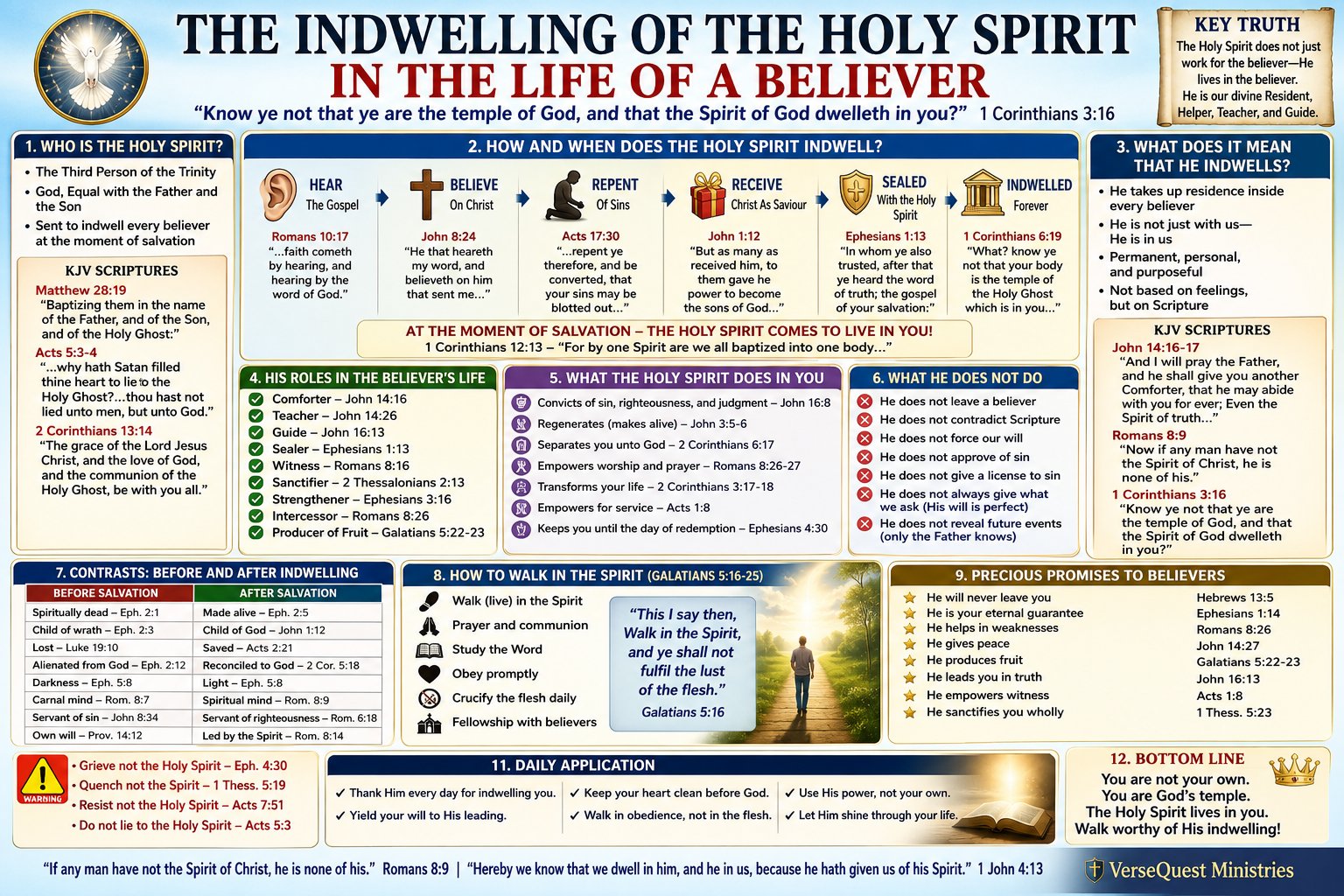
- The Indwelling of the Holy Spirit in the Life of a Believer – Sealed, Taught, Guided, Sanctified, and Empowered (KJV Bible Study Chart)
- Understand the indwelling of the Holy Spirit with this detailed KJV chart covering salvation, regeneration, spiritual baptism, sealing, guidance, prayer, sanctification, fruit, Christian service, and walking in the Spirit.
- $3.99
- Add to cart
-
-
Circumcision
-
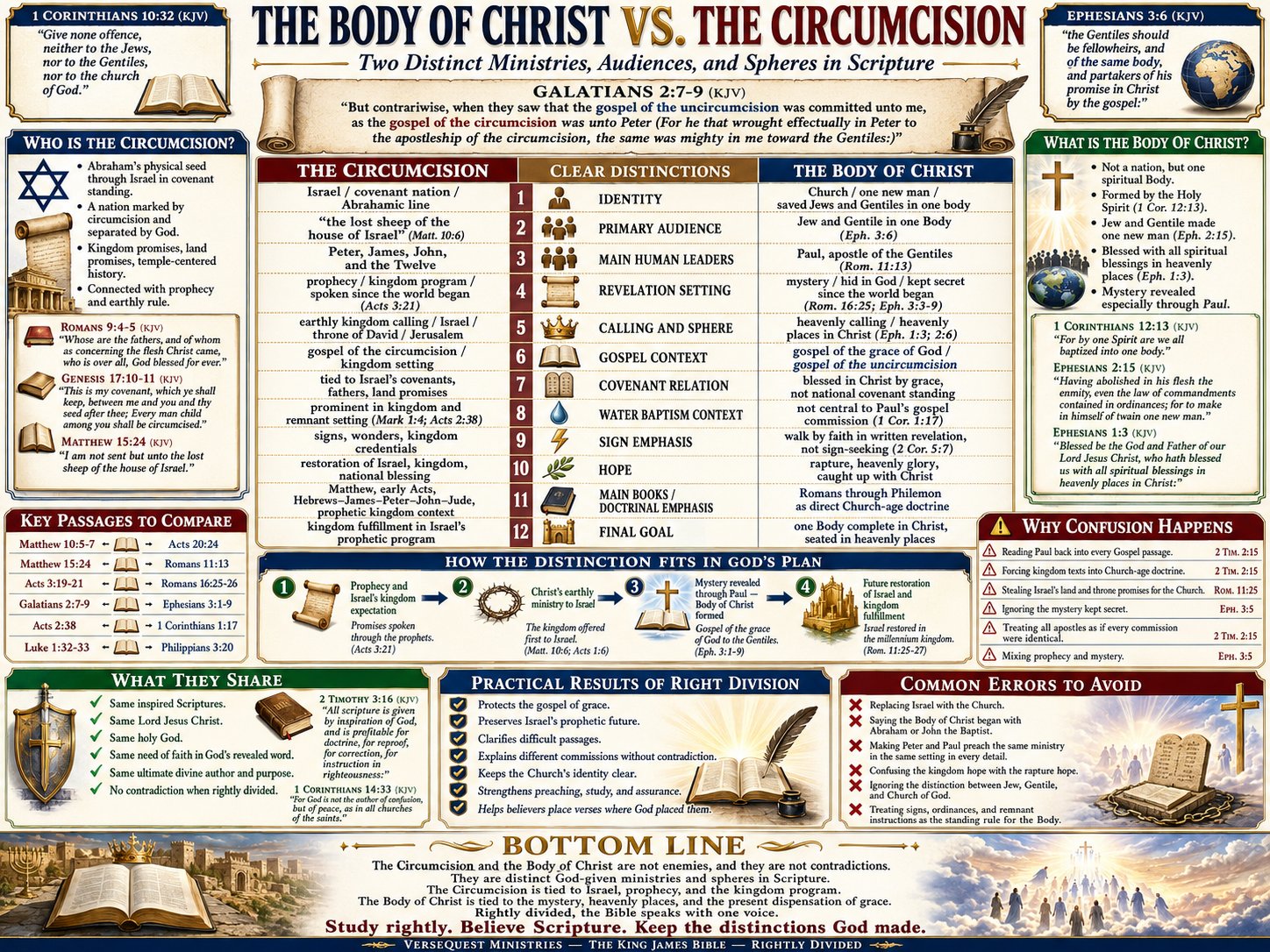
- The Body of Christ vs. the Circumcision – Two Distinct Ministries, Audiences, and Spheres in Scripture (KJV Bible Study Chart)
- Compare the Body of Christ and the circumcision with this detailed KJV chart covering Israel, Peter, Paul, prophecy, mystery, covenant promises, baptism, signs, and the Church’s heavenly hope.
- $3.99
- Add to cart
-
-
The Church Age vs The Tribulation
-
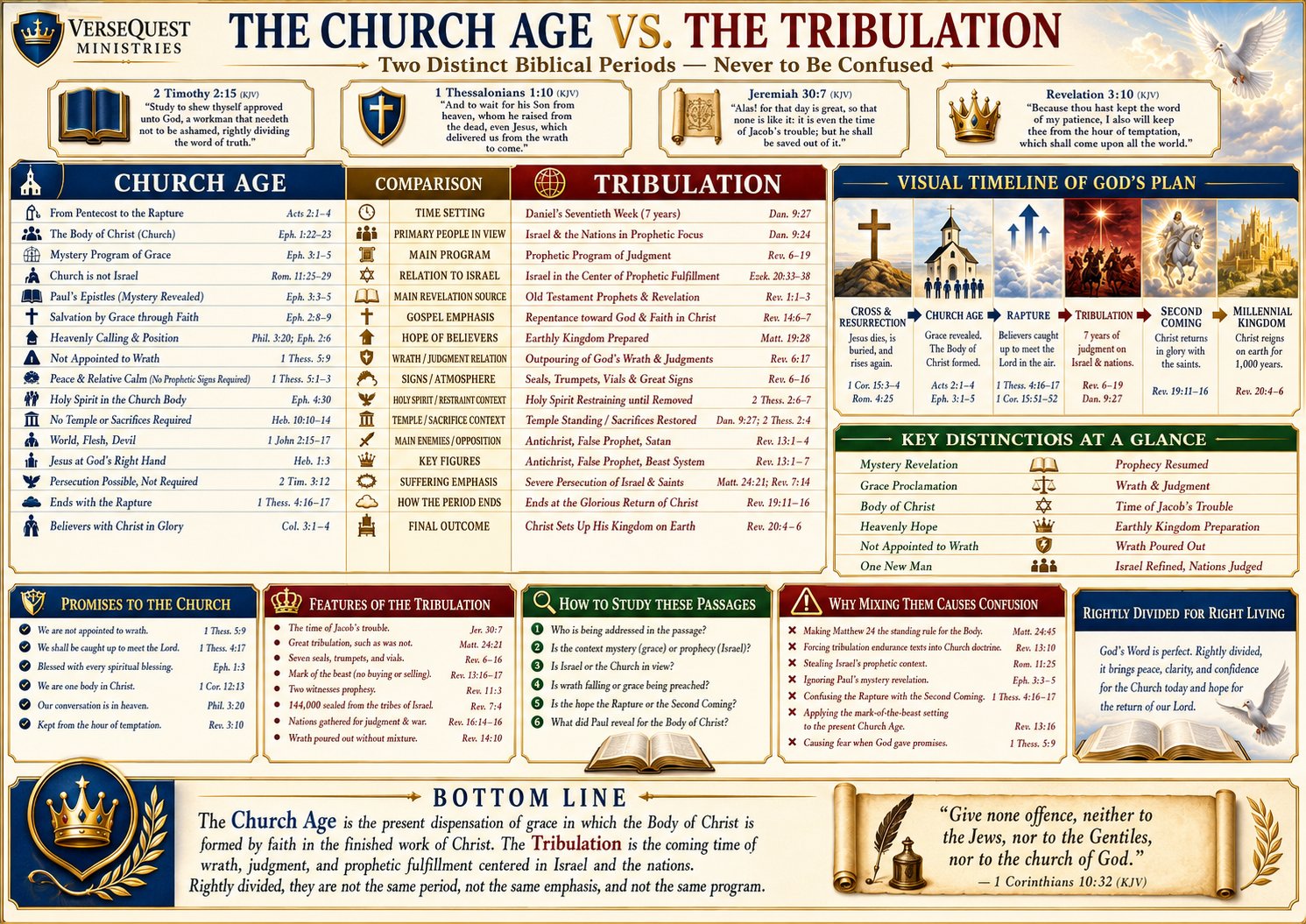
- The Church Age vs. the Tribulation – Two Distinct Biblical Periods KJV Bible Study Chart
- Compare the Church Age and the Tribulation with this detailed KJV chart covering the Body of Christ, Israel, grace, wrath, the Rapture, Antichrist, the Second Coming, and the millennial Kingdom.
- $3.99
- Add to cart
-
-
Mystery of Iniquity
-
- The Mystery of the Restrainer — 50-Study Bible Prophecy PDF Book
- Who is restraining the man of sin—and what happens when that restraint is removed? The Mystery of the Restrainer is a massive 399-page, 50-study Bible prophecy book examining 2 Thessalonians…
- $9.99
- Add to cart
-
-
Water Baptism Across the Bible
-
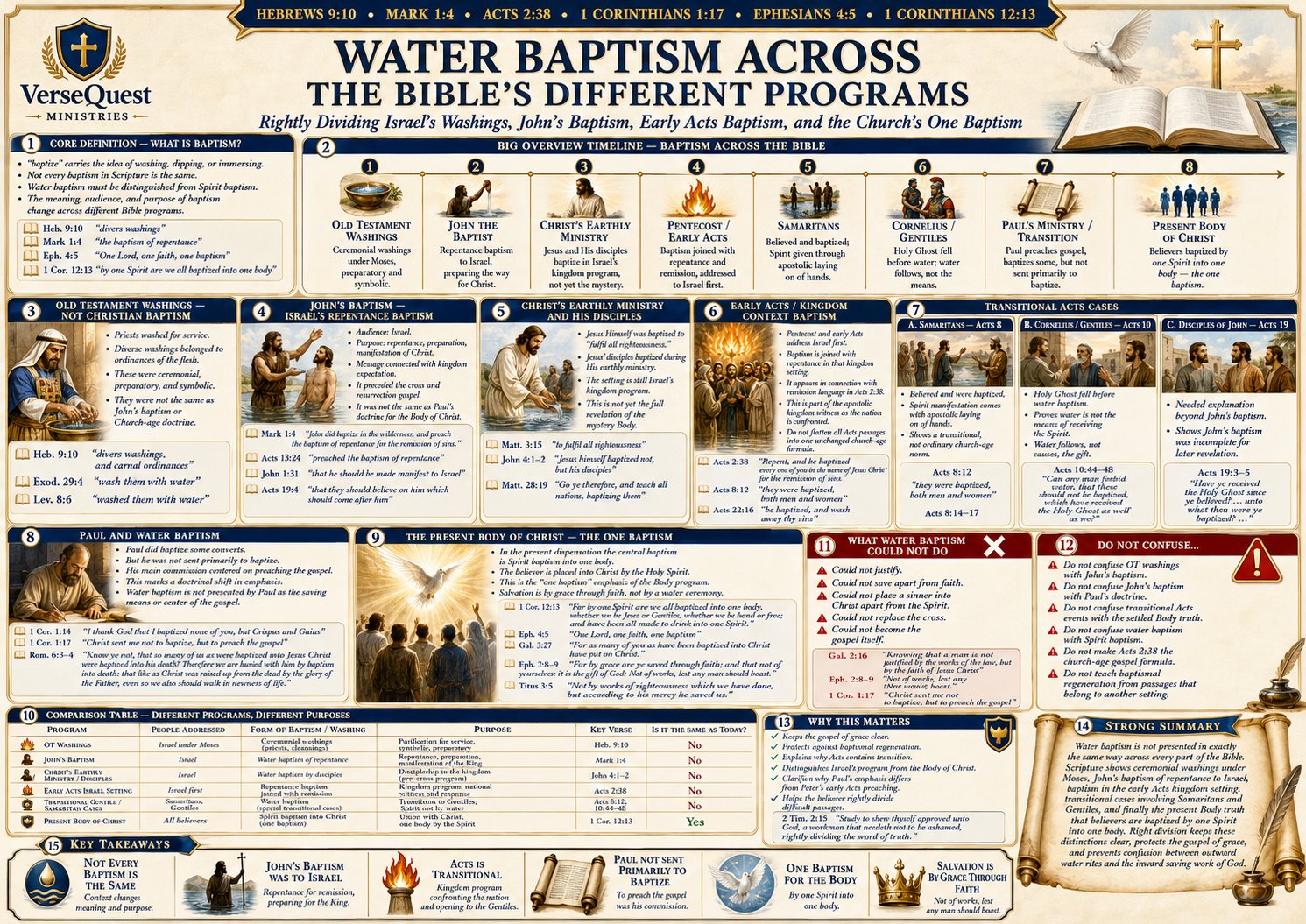
- Water Baptism Across the Bible’s Different Programs – Israel’s Washings, John’s Baptism, Acts, Paul, and the Church’s One Baptism (KJV Bible Study Chart)
- Compare water baptism throughout Scripture with this detailed KJV chart covering Old Testament washings, John’s baptism, Christ’s ministry, early Acts, transitional cases, Paul, and the one Spirit baptism of the…
- $3.99
- Add to cart
-