


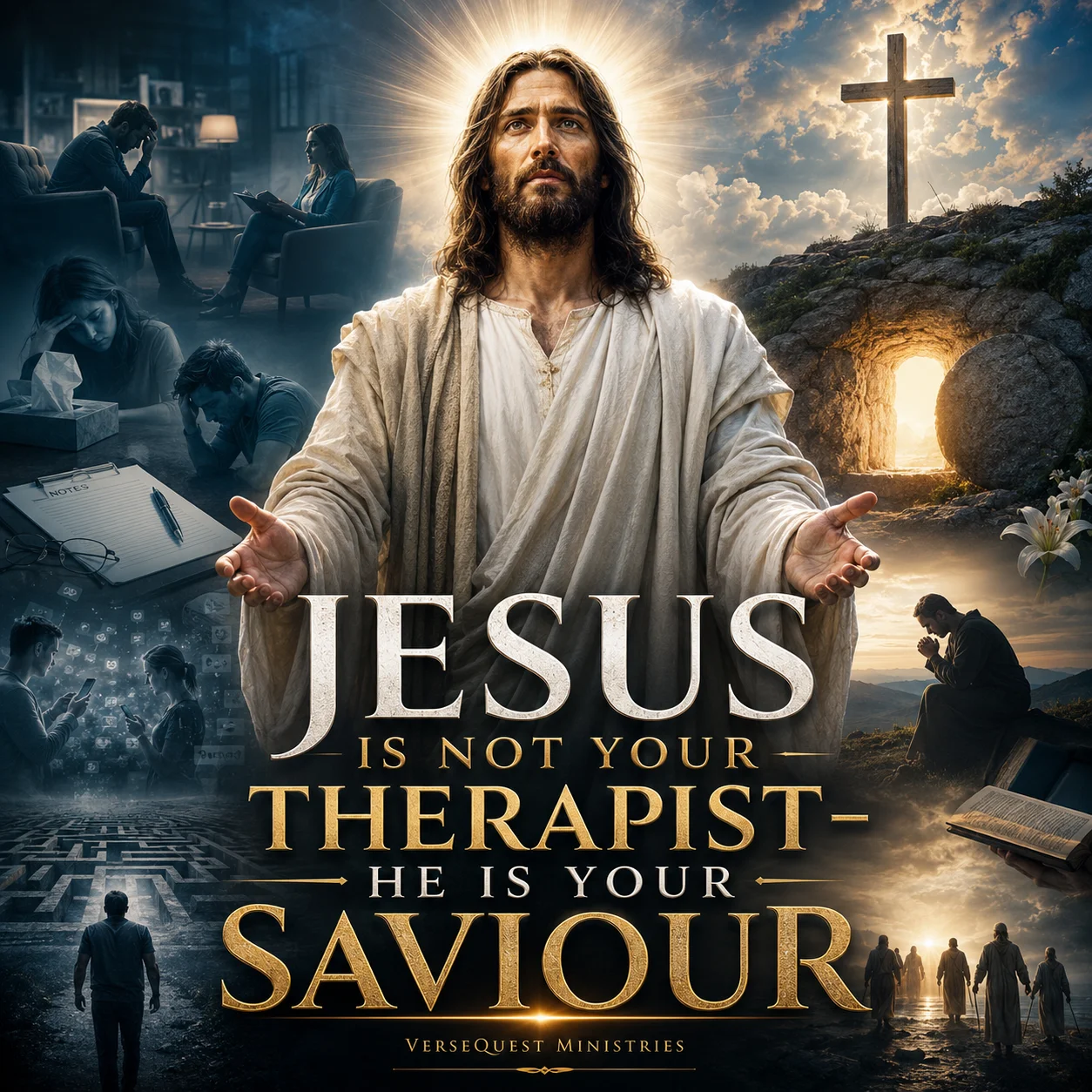
Jesus Is Not Your Therapist—He Is Your Saviour
Jesus Is Not Your Therapist—He Is Your Saviour is an extensive 440-page King James Bible study examining how modern therapeutic language has reshaped Christian teaching about sin, guilt, identity, suffering, correction, relationships, church discipline, and the person of Jesus Christ.
Through 70 detailed essays, this book contrasts the therapeutic Jesus—who exists mainly to affirm, validate, comfort, and support the self—with the biblical Jesus Christ, who came to save sinners, bear judgment, give eternal life, transform believers, and raise the dead.
Digital PDF | 440 pages | $19.99
Original price was: $19.99.$9.99Current price is: $9.99.
Description
Two very different versions of Jesus are being presented to the modern world.
One is the Jesus Christ of the King James Bible: the eternal Son of God, the Lamb of God, the risen Saviour, the Lord of glory, the Head of the church, the coming King, and the only Mediator between God and men.
The other is a therapeutic reconstruction designed for a culture centred upon self-esteem, emotional safety, personal fulfilment, identity, validation, boundaries, trauma language, and self-acceptance.
The therapeutic Jesus rarely speaks of sin, judgment, wrath, repentance, self-denial, chastening, holiness, or the death of the old man. He functions primarily as a life coach, emotional-support companion, relationship adviser, trauma specialist, and protector of personal peace.
The biblical Jesus says:
“Christ Jesus came into the world to save sinners.”
—1 Timothy 1:15
This book examines what happens when Christianity begins treating man primarily as wounded rather than guilty, emotionally distressed rather than spiritually dead, and in need of affirmation rather than regeneration.
The result is not merely a change in counseling vocabulary. It is a different doctrine of man, a different explanation of sin, a different understanding of salvation, and ultimately another Jesus.
Across 70 detailed essays, this study traces the intellectual and religious development of therapeutic Christianity and examines how its assumptions now influence sermons, counseling, family relationships, church discipline, social-media accusations, Christian identity, and the interpretation of familiar Bible verses.
The book addresses subjects such as:
- How sin became a symptom
- How guilt became toxic shame
- How conviction became trauma
- How repentance became self-awareness
- How regeneration became rehabilitation
- How sanctification became a healing journey
- How self-denial was replaced by self-expression
- How boundaries can protect bitterness
- How “protecting my peace” can destroy reconciliation
- How victimhood can become a permanent identity
- How clinical labels are weaponized in ordinary conflict
- How pastors became managers of feelings
- How churches became support groups rather than functioning bodies
- How Bible verses are removed from context to promote therapeutic ideas
This book does not deny the reality of grief, trauma, abuse, bodily illness, emotional distress, depression, fear, exhaustion, neurological conditions, or the lawful usefulness of physicians and properly trained counselors.
It does not teach that every emotional struggle is hidden rebellion or that every suffering person simply needs a harsher sermon.
Instead, it establishes careful biblical distinctions between:
- Sin and suffering
- Guilt and painful emotion
- Conviction and condemnation
- Correction and cruelty
- Protection and vengeance
- Wise boundaries and sinful avoidance
- Medical care and spiritual regeneration
- Human assistance and divine salvation
- Temporary emotional relief and eternal life
The Bible contains suffering saints, brokenhearted prophets, frightened disciples, exhausted servants, grieving families, and believers pressed beyond their natural strength. Yet Scripture never allows pain to become the final authority over doctrine, morality, identity, or obedience.
David confessed his sin.
Judas felt terrible and died lost.
Peter wept bitterly and was restored.
Cain’s hurt feelings concealed murder.
Jonah used distance to flee duty.
Jeremiah was brokenhearted without becoming faithless.
Paul was pressed out of measure without being processed out of ministry.
These biblical accounts reveal that emotional intensity does not automatically establish innocence, repentance, truth, or spiritual maturity.
The concluding sections of the book examine the church’s responsibility to care for hurting people without rewriting the gospel. Pastors must recognize their limitations, encourage appropriate medical care, report crime, protect victims, and avoid pretending to possess expertise they do not have.
At the same time, shepherds must not outsource souls.
The church must continue preaching Scripture, comforting the weak, warning the unruly, supporting the suffering, confronting sin, practising discipline, bearing burdens, and pointing every person toward the crucified and risen Christ.
Therapy may help someone understand patterns, communicate more effectively, endure a crisis, or function more responsibly in a fallen world.
But therapy cannot:
- Remove guilt before God
- Justify the ungodly
- Regenerate a dead spirit
- Reconcile sinners to their Creator
- Give eternal security
- Destroy death
- Raise the body incorruptible
- Grant eternal life
That is where the counselor’s couch ends and the cross and empty tomb begin.
Jesus Is Not Your Therapist—He Is Your Saviour calls the church back to the whole counsel of God, genuine Christian compassion, doctrinal clarity, righteous judgment, and faith in the only One who can save the soul.
- 440 pages of detailed biblical teaching
- 70 complete doctrinal essays
- King James Bible throughout
- Strong introduction and concluding doctrinal summary
- Detailed therapeutic Jesus versus biblical Jesus comparison chart
- Examines psychology, self-esteem, trauma language, boundaries, identity, and modern church culture
- Distinguishes genuine suffering from personal rebellion
- Defends victims without turning victimhood into a permanent identity
- Explains the proper roles of pastors, physicians, counselors, and civil authorities
- Corrects frequently misused Bible passages
- Designed for pastors, teachers, counselors, parents, churches, and serious Bible students
- Ideal for individual study, group discussion, ministry training, and discipleship
Readers will learn:
- Why therapeutic Christianity produces a different doctrine of Jesus
- How modern psychology changed the church’s language about sin and salvation
- Why emotional pain does not automatically establish innocence
- Why guilt cannot be processed away
- Why repentance is more than self-awareness
- Why regeneration is more than rehabilitation
- Why sanctification cannot be reduced to emotional healing
- How to distinguish conviction from condemnation
- How to distinguish wise boundaries from protected bitterness
- How clinical labels can become weapons of accusation
- Why “my truth” cannot replace objective truth
- Why church discipline remains necessary
- How pastors can care for the suffering without pretending to be physicians
- How the church can protect victims while maintaining biblical justice
- Why the cross and resurrection answer needs therapy cannot reach
This book is especially useful for:
- Pastors and preachers
- Bible teachers
- Church leaders
- Christian counselors
- Ministry students
- Bible institute students
- Homeschool families
- Christian school instructors
- Parents and grandparents
- Christians confused by modern therapy language
- Believers recovering from abusive churches or relationships
- Readers interested in biblical counseling
- Christians studying identity, guilt, shame, and emotional health
- Churches developing discipleship or counseling ministries
- Anyone seeking a KJV-based critique of therapeutic Christianity
Therapeutic Christianity, the biblical Jesus Christ, sin and guilt, repentance, confession, justification, regeneration, sanctification, eternal security, conviction, condemnation, biblical comfort, suffering, trauma, abuse, victimhood, self-esteem, self-love, self-denial, personal identity, boundaries, bitterness, reconciliation, forgiveness, church discipline, righteous judgment, pastoral care, physicians and counselors, the local church, the cross, resurrection, eternal life
Study Notes
Jesus Is Not Your Therapist—He Is Your Saviour should be studied as a doctrinal examination of the growing influence of therapeutic language, psychological assumptions, self-esteem teaching, emotional individualism, and recovery culture upon modern Christianity.
The central issue is not whether physicians, counselors, medicine, practical observation, or emotional support can ever be useful. The issue is whether those things are permitted to redefine man’s deepest problem, replace the Bible’s moral categories, weaken personal responsibility, or transform Jesus Christ from the Saviour of sinners into a spiritual manager of feelings.
Central Doctrinal Question
The primary question running through the entire book is:
Did Jesus Christ come mainly to help wounded people feel emotionally whole, or did He come to save guilty sinners through His death, burial, and resurrection?
The King James Bible answers plainly:
“Christ Jesus came into the world to save sinners.”
—1 Timothy 1:15
The biblical gospel begins with:
- The holiness of God
- The fall and guilt of man
- The reality of sin
- The certainty of judgment
- The necessity of blood atonement
- Salvation by grace through faith
- Regeneration by the Holy Ghost
- The believer’s new life in Christ
- The future resurrection of the body
Therapeutic Christianity frequently begins with:
- Emotional pain
- Unmet personal needs
- Low self-esteem
- Personal identity
- Trauma language
- Self-acceptance
- Emotional safety
- Personal fulfilment
- The removal of uncomfortable relationships or obligations
These starting points produce two very different versions of Jesus.
The Two Jesuses Examined
The book contrasts the therapeutic Jesus with the Jesus Christ of Scripture.
The therapeutic Jesus exists primarily to:
- Validate the self
- Protect emotional comfort
- Affirm personal identity
- Improve relationships
- Heal self-esteem
- Reduce guilt
- Support personal goals
- Help people reach their preferred future
The biblical Jesus Christ came to:
- Save sinners
- Bear the judgment of sin
- Call men to repentance
- Give eternal life
- Regenerate the spiritually dead
- Justify the ungodly
- Sanctify believers
- Rule as Lord
- Raise the dead
- Judge the world in righteousness
The therapeutic counterfeit does not usually deny Jesus openly. It changes His mission until salvation becomes emotional improvement rather than reconciliation with God.
Important Biblical Distinctions
Throughout the study, carefully preserve the following distinctions.
Sin and Suffering
Not every person who suffers is being punished for personal sin. Job, Joseph, Jeremiah, Paul, and many others suffered because of circumstances, persecution, bodily weakness, or the wickedness of other people.
At the same time, suffering does not make every response righteous. A person may be genuinely wounded and still respond with bitterness, lying, hatred, rebellion, or false accusation.
Guilt and Guilty Feelings
A person may feel guilty for something God has not condemned, especially when the conscience has been misinformed.
A person may also be truly guilty before God while feeling little emotional distress.
Biblical guilt is an objective moral condition before God. Guilty feelings are an emotional response that may or may not correspond perfectly to the facts.
Conviction and Condemnation
Conviction identifies sin and directs the sinner toward confession, repentance, cleansing, and restoration.
Condemnation announces guilt and judgment without hope.
The believer in Christ is free from eternal condemnation, but he remains subject to conviction, correction, chastening, church discipline, and earthly consequences.
Correction and Abuse
Correction may be painful without being abusive.
Abuse may involve cruelty, coercion, violence, humiliation, manipulation, exploitation, criminal conduct, or misuse of authority.
Biblical correction should be truthful, specific, proportionate, properly authorized, and aimed at restoration.
Forgiveness and Reconciliation
Forgiveness releases personal vengeance and refuses to cultivate hatred.
Reconciliation requires truth, repentance, safety, and willingness from both parties.
A person may forgive an offender while maintaining distance, lawful consequences, or permanent restrictions upon access.
Forgiveness and Trust
Forgiveness may be granted before trust is restored.
Trust is rebuilt through honesty, time, accountability, changed conduct, and the visible fruits of repentance.
Forgiveness does not require foolishness.
Explanation and Justification
A person’s history may help explain why certain temptations, fears, reactions, or habits became strong.
Explanation does not automatically justify conduct.
A wound may explain anger without making sinful wrath holy. Fear may explain avoidance without making disobedience righteous.
Medical Care and Spiritual Care
Bodily or neurological conditions may require qualified medical evaluation and treatment.
Pastors should not pretend to possess medical expertise they do not have.
Medical care may treat bodily symptoms, while Scripture continues to address guilt, faith, obedience, forgiveness, hope, worship, and spiritual responsibility.
Therapy and Salvation
Therapy may help a person:
- Recognize behavioural patterns
- Communicate more effectively
- Survive a crisis
- Establish practical routines
- Understand emotional reactions
- Function more responsibly
- Seek appropriate protection or treatment
Therapy cannot:
- Remove guilt before God
- Justify the ungodly
- Regenerate the dead spirit
- Reconcile sinners to God
- Give eternal security
- Destroy death
- Raise the body incorruptible
- Grant eternal life
Theological Foundations
The book should be read upon the following doctrinal foundation.
The Authority of Scripture
The King James Bible is the final authority for doctrine, correction, morality, spiritual identity, salvation, and Christian living.
Human theories, personal experiences, clinical observations, and emotional reactions must be examined beneath Scripture rather than used to reinterpret it.
The Fall of Man
Human beings possess dignity because they were created by God, but they are fallen in Adam.
The natural man is not merely wounded. He is also guilty, spiritually dead, alienated from God, and unable to save himself.
The Finished Work of Christ
Jesus Christ died for our sins, was buried, and rose again the third day according to the Scriptures.
Salvation rests upon His completed work rather than personal improvement, emotional recovery, religious performance, or psychological insight.
Salvation by Grace through Faith
The ungodly sinner is justified by grace through faith in Jesus Christ.
Salvation is not earned through works, therapy, self-forgiveness, personal growth, confession to human authorities, emotional intensity, or religious discipline.
Regeneration
The new birth is not improved behaviour with Christian language.
Regeneration is the work of God by which the believing sinner receives eternal life and becomes a new creature in Christ.
Eternal Security
The believer is sealed by the Holy Spirit and kept by the power of God.
Failure may damage fellowship, testimony, usefulness, rewards, relationships, and earthly circumstances, but it does not reverse the believer’s new birth.
Sanctification
Sanctification is the believer’s practical growth in holiness, truth, obedience, and conformity to Christ.
It may include correction, chastening, self-denial, suffering, confession, discipline, and the mortification of sinful habits.
The Resurrection
The Christian hope is not merely better emotional adjustment within a dying world.
Jesus Christ rose bodily from the dead and will raise believers incorruptible.
Final healing lies beyond the reach of every physician, counselor, medicine, diagnosis, and grave.
Biblical Case Studies to Observe
Pay close attention to the biblical figures examined in this study.
David
David did not explain his guilt until it disappeared. He confessed his transgression, sought mercy, and asked God for cleansing and restored fellowship.
Judas
Judas experienced intense remorse, returned the silver, and confessed innocent blood, yet he did not turn to Christ in saving faith. Emotional agony is not the same as repentance.
Peter
Peter denied Christ and wept bitterly, but his failure did not become his permanent identity. The risen Christ restored him and returned him to service.
Cain
Cain felt rejected and became angry, but his emotional pain did not establish innocence. Envy, pride, and murder were hiding beneath the fallen countenance.
Jonah
Jonah used distance to avoid duty and resented mercy shown to enemies. Not every boundary is wisdom; some are boats travelling away from God.
Jeremiah
Jeremiah experienced loneliness, rejection, fear, grief, and emotional devastation while remaining faithful to the word God gave him.
Paul
Paul was troubled, perplexed, persecuted, cast down, and pressed beyond strength. His distress did not automatically cancel his ministry or prove that God had abandoned him.
Therapeutic Language to Examine Carefully
The book does not forbid every use of modern terminology, but it warns against careless, manipulative, or unbiblical use of terms such as:
- Narcissist
- Gaslighter
- Toxic
- Unsafe
- Abuse
- Trauma bond
- Triggered
- Protecting my peace
- My truth
- Emotional boundaries
- Self-love
- Self-forgiveness
- Authentic self
- Toxic shame
- Religious trauma
When such words are used, ask:
- What specific conduct occurred?
- What facts and witnesses support the claim?
- Is the term being used descriptively or as a moral weapon?
- Has the accused been permitted to answer?
- Is ordinary disagreement being confused with abuse?
- Is correction being confused with cruelty?
- Is personal discomfort being treated as proof of wrongdoing?
- Does the language clarify the matter or hide biblical categories?
- Is the person seeking safety, vengeance, truth, or control?
- What does Scripture call the conduct?
Questions for Personal Examination
After each essay, consider the following questions:
- Have I used emotional pain as proof that another person was wrong?
- Have I mistaken correction for rejection?
- Have I used boundaries to protect bitterness?
- Have I called avoidance wisdom because obedience was uncomfortable?
- Have I expected Christ to support my plans rather than rule my life?
- Have I confused inner calm with peace with God?
- Have I treated guilt as a feeling to escape instead of a condition requiring confession?
- Have I used therapeutic language to avoid personal responsibility?
- Have I diagnosed people I dislike instead of naming specific conduct?
- Have I refused reconciliation without doing what lies within me?
- Have I used grace to silence correction?
- Have I judged another person without hearing the whole matter?
- Have I made suffering, diagnosis, failure, or victimhood my highest identity?
- Have I replaced the authority of Scripture with personal experience?
- Is my understanding of Jesus centred upon salvation or self-fulfilment?
Questions for Church Leaders
Pastors and ministry leaders should consider:
- Does our preaching clearly address sin, repentance, judgment, grace, and salvation?
- Have practical talks replaced sound doctrine?
- Can members confess struggles without being mocked or exposed carelessly?
- Can public sin be confronted without the process being labelled automatically abusive?
- Do we protect victims and report criminal conduct appropriately?
- Do we distinguish bodily illness from spiritual rebellion?
- Do we refer wisely without abandoning pastoral responsibility?
- Are our leaders accountable to Scripture and proper witnesses?
- Do we restore repentant believers where restoration is biblically possible?
- Have we allowed emotional safety to become more important than truth?
- Are members being equipped to serve, or trained to remain dependent upon professionals?
- Does our counseling strengthen responsibility, faith, obedience, and fellowship?
- Are we preaching the biblical Christ or a therapeutic substitute?
Questions for Counselors and Helpers
Those providing counsel should ask:
- Am I listening before answering?
- Have I distinguished suffering from sin?
- Is immediate safety required?
- Does the matter involve crime, medical care, pastoral care, or several together?
- Am I naming specific conduct rather than assigning careless labels?
- Am I helping the person accept responsibility where responsibility exists?
- Am I protecting a victim without encouraging bitterness or false accusation?
- Am I recognizing bodily factors without reducing the person to chemistry?
- Am I directing the person toward Christ, Scripture, prayer, fellowship, and obedience?
- Have I confused temporary emotional relief with spiritual healing?
- Am I offering hope grounded in the gospel rather than merely in personal recovery?
Practical Ministry Framework
A biblical response to serious suffering should usually include several of the following steps:
- Listen carefully.
Do not answer before the matter is heard. - Determine immediate safety.
Protect those facing violence, abuse, threats, or criminal danger. - Involve proper authorities.
Report criminal conduct and cooperate truthfully with lawful investigation. - Recognize bodily factors.
Encourage appropriate medical evaluation when symptoms may involve illness or injury. - Identify spiritual realities.
Distinguish grief, fear, exhaustion, temptation, guilt, rebellion, and unbelief. - Name sin accurately.
Do not disguise lying, adultery, wrath, bitterness, theft, or abuse beneath therapeutic language. - Preach Christ clearly.
Offer forgiveness, justification, regeneration, and eternal life through the gospel. - Provide practical help.
Assistance may include meals, transportation, housing, financial support, accountability, or companionship. - Maintain biblical boundaries.
Forgiveness does not require unsafe access or immediate restoration of trust. - Remain present.
Many burdens require months or years of patient discipleship.
Warnings for Study
Avoid the following errors while reading:
Do Not Mock Genuine Suffering
This book is not permission to ridicule depression, fear, exhaustion, grief, trauma symptoms, or bodily illness.
Do Not Diagnose from a Distance
Specific moral conduct may be judged biblically. Clinical diagnosis requires appropriate knowledge, evidence, and competence.
Do Not Conceal Abuse
Forgiveness, church unity, pastoral authority, and Matthew 18 must never be used to hide criminal conduct or return victims to danger.
Do Not Make Therapy the Enemy of Every Lawful Help
The issue is not whether practical observations can be useful. The issue is whether they replace Scripture, moral responsibility, or the gospel.
Do Not Use Doctrine Cruelly
Truth should be spoken in love, with patience, evidence, proper authority, and concern for restoration.
Do Not Use Compassion to Excuse Rebellion
Pain deserves care, but pain does not transform sin into righteousness.
Do Not Confuse Eternal Security with Freedom from Consequences
Believers remain secure in Christ while still facing chastening, damaged fellowship, lost trust, earthly consequences, or disqualification from certain offices.
Final Study Emphasis
The final question is not whether a person has found the perfect therapeutic explanation for every feeling, wound, habit, or conflict.
The final question is:
What has that person done with Jesus Christ?
The counselor’s couch may help explain a pattern.
The physician may treat the body.
The magistrate may restrain evil.
The pastor may shepherd the flock.
The church may bear the burden.
But only Jesus Christ can save the sinner.
“Neither is there salvation in any other.”
—Acts 4:12
The proper conclusion of this study is not hostility toward every form of human assistance. It is the recovery of proper order.
Let physicians practise medicine.
Let lawful authorities punish crime.
Let competent counselors offer careful observations.
Let pastors preach the word and shepherd souls.
Let churches protect the weak, warn the unruly, comfort the feebleminded, and support the suffering.
Above all, let Jesus Christ remain what Scripture declares Him to be—not a therapist for the self, but the crucified, risen, and coming Saviour of sinners.
This book may be used for:
Adult Sunday school
Bible institute coursework
Pastoral training
Biblical counseling education
Small-group study
Church leadership discussion
Homeschool or Christian school electives
Personal discipleship
Sermon preparation
Family Bible study
Ministry volunteer training
Church discipline and pastoral-care policy development
Christian worldview classes
Apologetics against therapeutic Christianity
Discussion groups addressing self-esteem, identity, boundaries, trauma language, and modern church culture
King James Bible
Strong’s or Young’s Concordance
Treasury of Scripture Knowledge
Bible dictionary
Notebook or study journal
Scripture index
Topical Bible
VerseQuest comparison chart included with this book
Additional VerseQuest studies on salvation, Christian living, church doctrine, suffering, repentance, eternal security, and rightly dividing the word of truth
Related products
-
The Rapture
-
-67%

- Caught Up Before the Wrath – 66-Essay KJV Rapture Study
- Caught Up Before the Wrath is a 430-page premium KJV Bible study defending the pre-tribulation Rapture of the Church from a rightly divided, dispensational perspective. This 66-essay VerseQuest Ministries book…
- Original price was: $29.99.$9.99Current price is: $9.99.
- Add to cart
-
-67%
-
Chart Collections
-
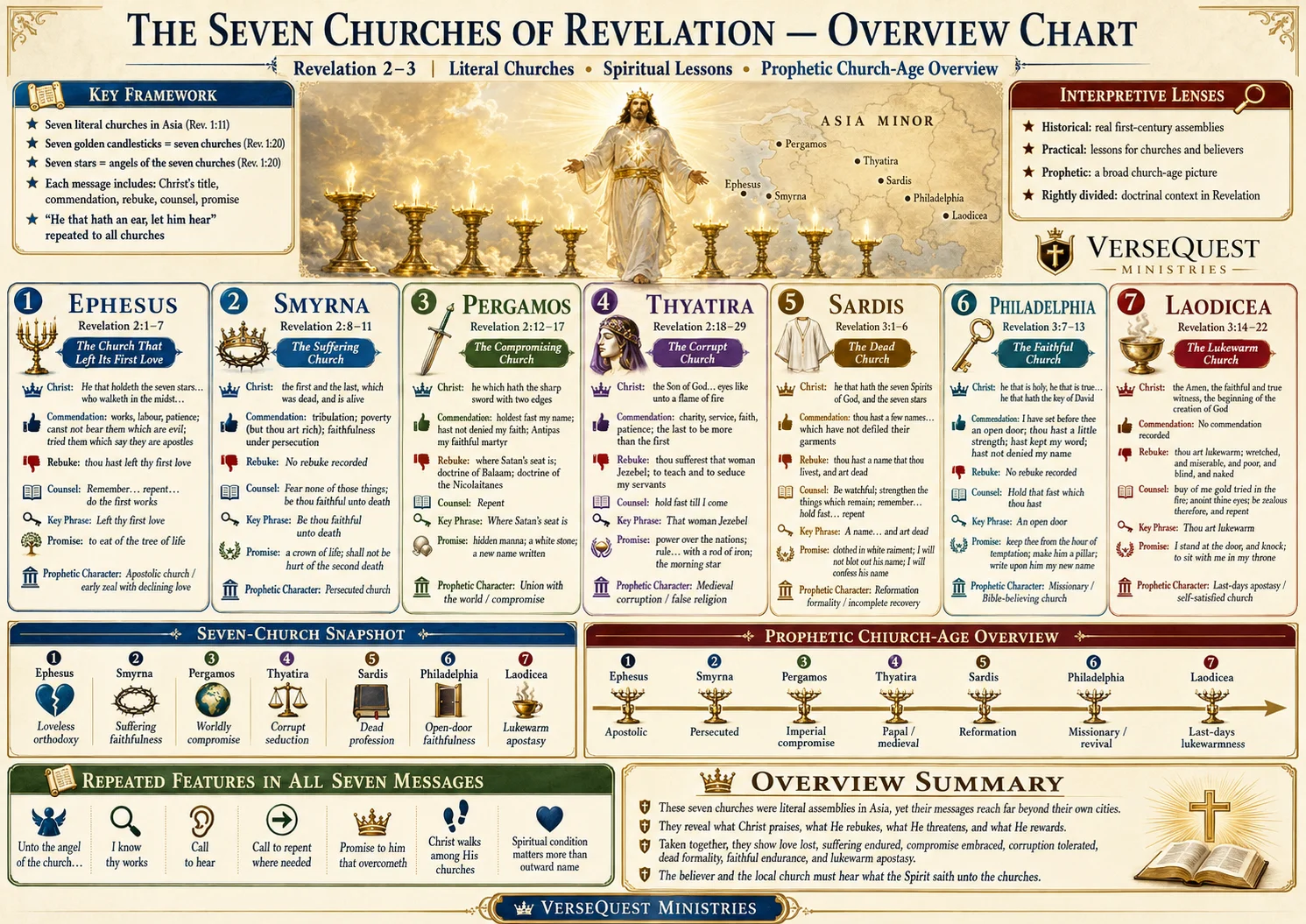
- The Seven Churches of Revelation Chart Collection – Christ Walking Among the Candlesticks
- A premium VerseQuest Ministries™ PDF chart collection covering the Seven Churches of Revelation in Revelation 2–3. Includes one overview chart plus individual KJV Bible study charts for Ephesus, Smyrna, Pergamos,…
- $12.99
- Add to cart
-
-
Doctrine Series
-
-14%

- Judas Iscariot and the Coming Antichrist – Premium KJV Prophecy Study
- A massive 459-page premium KJV prophecy study tracing the biblical connection between Judas Iscariot, the son of perdition, and the coming Antichrist. This detailed VerseQuest Ministries PDF examines Judas’ betrayal,…
- Original price was: $34.99.$29.99Current price is: $29.99.
- Add to cart
-
-14%
-
Jesus Christ
-
-10%

- The Lord Jesus Christ Made Plain – 637-Page KJV Bible Study
- A massive 637-page, 100-part KJV Bible study on the Person and work of the Lord Jesus Christ. This premium VerseQuest resource covers His deity, incarnation, blood, cross, resurrection, present ministry,…
- Original price was: $39.00.$34.99Current price is: $34.99.
- Add to cart
-
-10%
-
Names of Christ
-

- The Names and Titles of Jesus Christ Made Plain
- A complete 100-essay KJV Bible study on the names and titles of the Lord Jesus Christ, showing His deity, humanity, blood atonement, resurrection, priesthood, headship over the Church, shepherd care,…
- $29.99
- Add to cart
-